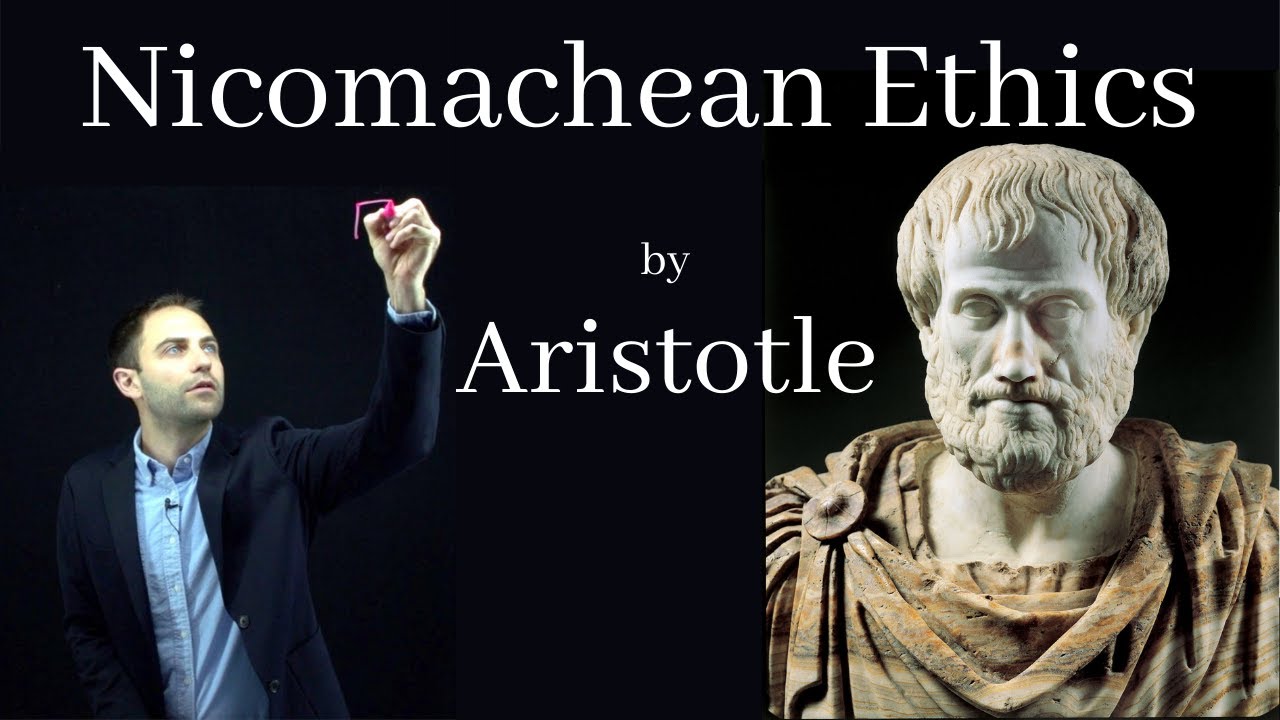
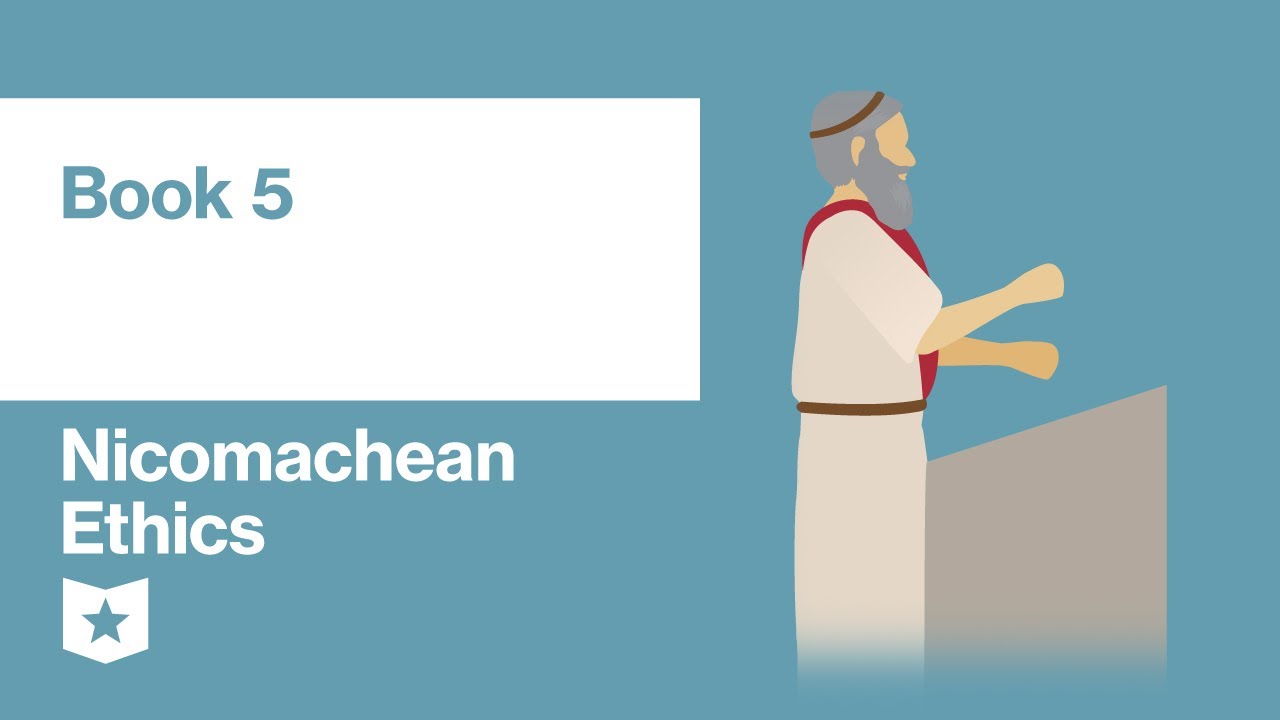
[Music] book two of Nicomachean ethics is broken into nine sections section one analyzes virtues of character and illuminates what aristotle means by virtue in general and why he considers virtue so important virtues of thought can be taught they take experience in time virtues of character come from habits the virtues of character do not come to people naturally but they can be acquired through actions in practice in Section two aristotle wants his readers to read with the goal of action not study the point is not to know what virtue is but to become good virtuous can
be corrupted by excess and deficiency in action like eating and drinking we're too much or too little damages health virtues like temperance and bravery are ruined by either extreme Aristotle's doctrine of the mean is outlined here a general explanation he will gradually defend in section 3 people will take pleasure in doing the right thing as long as they're in a virtuous state Aristotle clarifies the distinction between actions and states true virtue requires both virtue and vice are about pleasures and pains and everyone seeks pleasure and avoids pain from infancy onward in Section 4 Aristotle gets
into the hard work virtue requires arguing any truly virtuous action requires the actor or agent to be in the right state of mind he connects the doctrine of the mean to human function the person has to know he or she is doing the right thing decide to do the right thing and act from a firm and unchanging state many people think they're becoming better people just from listening to philosophical arguments virtue unlike production focuses on motive instead of efficiency and Aristotle here uses a doctor analogy in Section five what exactly is virtue since the soul
has three conditions feelings capacities and States virtue is either a feeling of capacity or a state feelings include appetites emotions desires and whatever implies pleasure or pain capacities are an ability to experience feelings states are an excess deficiency or correct amount of a feeling virtues and vices are not feel since feelings themselves are morally neutral and do not require any conscious decision virtues and vices are not capacities since we are not born with them Aristotle concludes virtues and vices must be states in Section six the key to achieving virtues of character lies in understanding excess
deficiency and intermediate states just like in scientific study virtue is the state of making a human being good and able to perform their functions well intermediate states are often determined based on the person or subject for instance too much food for a beginning athlete might not be enough food for an advanced athlete thus virtue is a state consisting in the mean relative to us in Section seven aristotle lists the means of virtue eight states for each aspect or character in fear and confidence the mean is bravery an excess of confidence is rational and an excess
of fear is cowardliness in most pleasures and pains the mean is a temperance and excesses in temperance and a deficiency in pleasure a rare state is insensibility in small matters of money the mean is generosity the excess wastefulness and the deficiency on generosity in large matters of money the mean is magnificence and in excess is ostentatious or vulgarity and deficiency is sin genus ingrate honors and dishonours the mean is magnanimity the excess is vanity and a deficiency is pusillanimous or timidity in small honors and dishonours the mean is someone who desires honor the right way
and in the right amount and excess is honor loving and a deficiency is indifference to honor and anger the mean is mildness the excesses irascible 'ti and the deficiency is in irascibility in truth-telling the mean is truthfulness while the excess is boastfulness and the deficiency is self deprecation in amusements the mean is wit the excess buffoonery and the deficiency the state of boorishness in daily conversations and interactions the mean is friendliness the excess is ingratiate and flattery and a deficiency is quarrelsome miss or a bad temper in section 8 aristotle reminds the reader that each
character trait has two possible vices an excess and a deficiency with a virtuous balanced state in the middle people on the extreme ends of the spectrum may want to appear more moderate than they really are and push people who are more moderate to opposite extremes so they can look better by comparison a cowardly person calls the brave person rash so the coward will appear reasonable in section 9 he gives practical advice for anyone who wants to shape a virtuous character avoid the extreme most opposed to moderation they should examine their own natural tendencies and be
wary of the vices that tempt them and also people should remember and beware that everyone is biased toward pleasure whether it's virtuous or not you


![The Nicomachean Ethics ~ Book 1 [Illustrated]](https://img.youtube.com/vi/foTharnw6DI/maxresdefault.jpg)