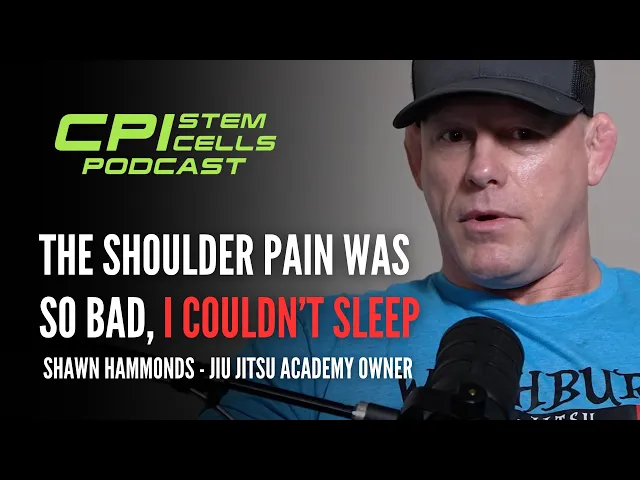
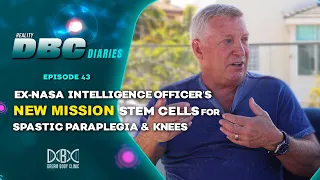
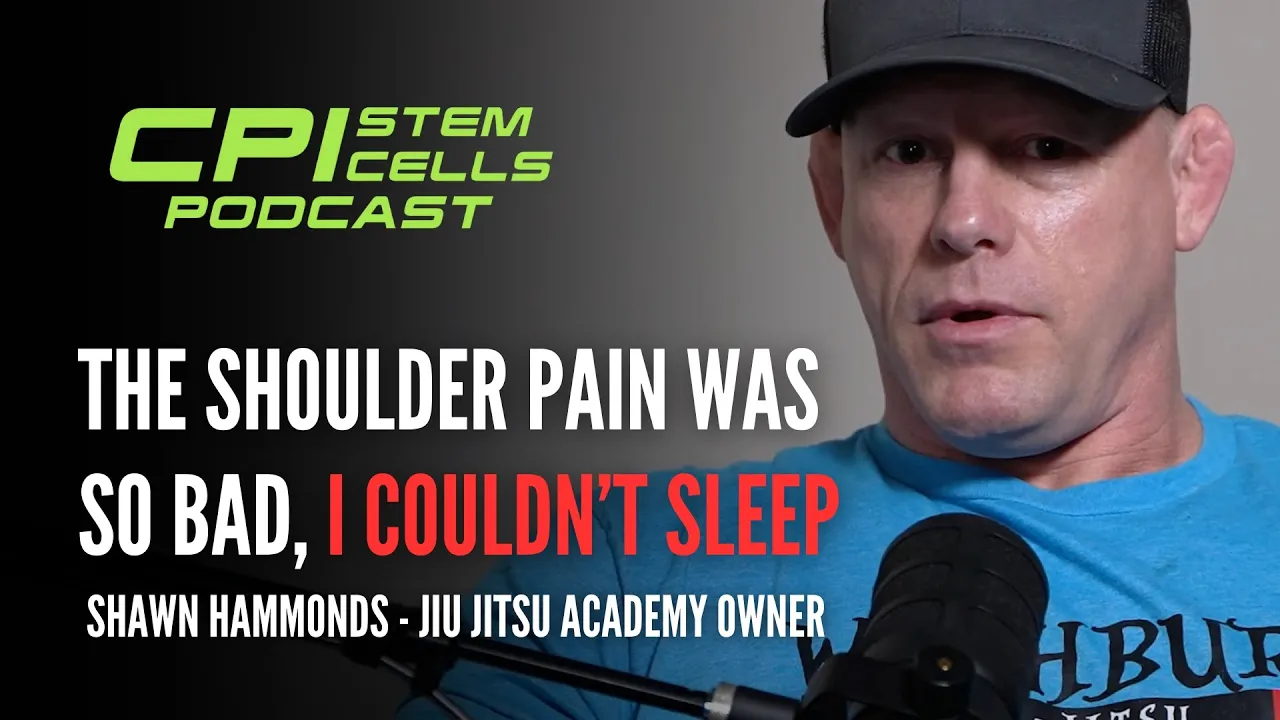
The main injury was a football injury in ' 88. In ' 89, I tore my ACL my senior year in football. I did not get it fixed.
I went to the Marine Corps. 8 weeks into boot camp in Paris Island. My knee swelled up and then they gave me an honorable discharge.
I came in September of 2023. After he did my shoulders, I felt amazing. I could sleep without waking up.
Stem cells, I I trust them. I was like, goodness gracious, they worked really well. Everybody's they're on the ball, man.
Taking care of you, asking, "Do you need this? Can I help you with this? this all vertically integrated.
Walk in one building, get everything you need, get treated like a king, and walk right out. My one buddy's like, "Yeah, in America, you don't get this kind of treatment. " CPI podcast.
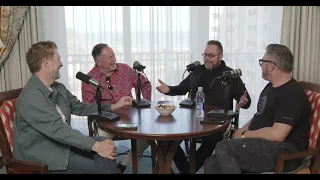
I've got a really good old friend of mine on the podcast, Sean Hammond's Jiu-Jitsu Black Belt. You know, interesting, funny stories. I remember I came out to Nashville, see Ed, everything.
You guys are all training out there and um Ed was telling me how strong you were and how strong your grip strengths were. And I remember the first time I still remember to this day like the first time we trained I was like, "Oh yeah, you cannot get this guy to let go of you. You have your life dependent upon it, man.
" And you weren't even old then but you had that old man strength. Right. Right.
But I mean I started at 28. So in the jiu-jitsu world it's almost kind of old, right? Right.
But uh yeah, 28 years old when I started, but I was powerlifting competitively before that. But like it's way different. Like powerlifting makes you strong but you have no endurance.
So then when I started doing jiu-jitsu, I figured I said I'm going to have to pick one or the other because you can't be you can be good at both. So I started doing jiu-jitsu more and then my weight started dropping and then I kind of I powerlifted but I didn't compete anymore cuz you know when you get lighter you you don't get as strong, right? How big were you when you were powerlifting?
Man, I've never really been over 205 208 but I competed at 198 pound class and back then drug free. I didn't know really what steroids were. Uh-huh.
I wish I would have, but I didn't. Yeah. Well, I I was definitely way smaller than you cuz like I when I was training, I barely got up to like 160 lbs.
Yeah. Yeah. I was lightweight back then.
And the only time I gotten really big was post postback surgery. Put on like almost 30 lbs. Just laying around.
Metabolism shot. Couldn't exercise for two years. Depressed, eat, nothing else to do, you know.
So, stuff like that. Well, that that explains why you're so broke. Is this your second or third time down here now?
This is my second. Yeah, your second time down here. So, all all jiu-jitsu injuries or some of them from Well, the main injury was a football injury in ' 88 ' 89.
I tore my ACL my senior year in football and then uh I did not get it fixed. I went in the Marine Corps right after that and somehow got through the test doing duck walks. I was in a little pain, but I didn't let them see it.
M I went to the Marine Corps and in about 8 weeks into boot camp in Paris Island, my knee swelled up and I could barely do anything and then they gave me an honorable discharge. So I didn't make it through boot camp. Oh wow.
You know, but I got to see a whole lot of it which I think everyone should go to boot camp. Yeah. Pretty pretty bad.
Yeah, man. Pretty awesome though. We we treat a bunch of SEAL guys down here hearing about what they went through and stuff.
One of the guys I was like, "Man, how'd you get through that? " and he goes, "I thought it was fun. " You're the right guy for the job then, right?
For sure, man. Yeah. So, I I got out of that and then uh I moved to Nashville when I was 21.
I went in the Marines at 89 and 1989. I was 18 and then moved to Nashville in '92 and then uh found jiu-jitsu about 97 98 and then met Ed. Ed was at a I was working out powerlifting actually at a gym and uh I was starting to do some jiu-jitsu.
I'd go home to Kentucky. I'm from Northern Kentucky. Grew up in Cincinnati area on the Ohio River.
And there was a guy up there who's a good friend of mine. He was a martial arts guy. And he had a picture of this old man in him with a red belt on.
That was Alio Gracie. Oh, wow. Who was that?
Who was that guy? Um uh what was my buddy's name? He he was a uh he was a barber.
I think of his name in a minute, but I haven't seen him in years. But um he uh he did taekwondo ki a lot of life fighting stuff like that. He didn't do jiu-jitsu.
He just met him out in California somewhere. Oh interesting. And they said you need to check this Gracie stuff out.
And then they said ran a couple UFC. So I went back. Of course it was 98.
I went back to what 92 91 and saw hoist. I was like who this little skinny guy is tying these guys in knots. That's is that really working?
And then uh so he had a buddy that was a per a blue belt under Carlos Mashado out of Texas right there in Northern Kentucky and gave me his number. I called him and said, "Hey man, I want to learn this jiu-jitsu stuff. " So I went down to his little basement and he was 170 lb.
Didn't look like he could fight me. I was jacked up, you know. I was like, "I'm going to kill this man.
" He beat the heck out of me, brother. It was uh it was funny. And the funny thing is that he didn't teach me anything.
He would teach me submissions, but not how to get to the position. Oh, but he, you know, he's a blue belt. And then he found he had a newsletter that was a Hicks and Gracie newsletter.
He said, "Man, you got a guy in Nashville, Tennessee. " And uh at that time before that, I was going back home and I met Ed. Ed saw me in the gym and uh the guy who ran the gym, I was teaching him some stuff in his aerobics room and uh after hours.
He said, "Man, I got this little kid who wants to do jiu-jitsu. He's a wrestler. His name's Ed.
" I said, "Cool. Introduce and Ed Clay started talking to him. So, I started teaching jiu-jitsu and he was a wrestler.
He'd take me down and I'd submit him and then uh we just got into it. And then that's when I found uh that newsletter my buddy said, "You got a school there. " His name was Eric Silver.
Eric was a a blue belt under Hixon. And uh like like the you know how people when I see red, I'm a street fighter. If you can beat me up, right, I wasn't that bad, but I called him.
I said, "Hey, if y'all can beat me up, I'll sign up. " Yeah. And they did.
Soon as I went there, little blue belts about 140 lbs. Just kicking my butt. I said, "Ed, I found us a place to train.
" And then that's how it started. Oh, that's awesome. And then turned into Nashville MMA and everything.
Just got a business mind, man. He was I want to open up a school. I said, "Really?
" He was only 18, so I'm thinking he's full of crap. Then start a magazine. Yeah.
Start a magazine. Submission fighter. Then, you know, then that real estate, you know, he's like in his early 20s making millions in real estate, you know, like I was like, "This kid is amazing.
" Yeah. And he was I I met Ed at the the first uh Hixon tournament. He came out from California and uh I was promoting an event in Las Vegas.
I think at the time I did the first jiu-jitsu tournament ever in Las Vegas and uh we, you know, passing out flyers, talking to everybody, just networking. I met Ed, you know, this guy, let's exchange numbers. You know, it was like the Gringo Network, right?
That back then, you know, we had to stick together cuz there wasn't I, you know, I think I might have even got kicked out of that tournament for promoting another tournament at Hixon's tournament, you know, type of [ __ ] And, you know, God forbid you want to grow jiu-jitsu a little bit. Um, but, you know, I had Gumby and I, we had onthemat. com then, and uh, you know, we're the second second jiu-jitsu website on the internet.
Yep. Still have I still got you in my phone as Scotty on the mat. Yeah, because that's I've had your number.
That's how everybody has it. Yeah. That's so funny.
Yeah. I mean, it was so different back then though, right? It was like, "Hey, if you could beat me up, I'll sign up.
I'll sign up. " Yeah. Cuz I remember back in the days at House, there were always people coming in to see if they could get beat up.
And they all did. Probably. They all did.
Yeah. Someone got beat up really bad, you know. Really bad.
Like I mean Ed like it was so funny. So we opened up Nashville with Maya and he brought in a a black belt for a while named Luis Palaris. But his thing is when all that ended he put me as the head instructor is a purple belt.
I was like you know I was still you know on the Brazilian Kool-Aid to me. I think we might need a a black belt you know. He said I'm going to send you somewhere.
You let me know what you think. He goes I'm going to fly you out to Maryland. There's a guy named Lloyd Irvin.
I I met him during the magazine. and I interviewed him. He's got a kid named Mike Fowler.
He's a young purple belt, 165. And I was about 195 and I was a purple belt. I won the Helson and Gracie Nationals in Columbus, Ohio.
Won the Arnold. I thought I was the stuff. I said, "Man, I want to kill this guy small.
There's no way. " He flew me out there, man. They beat the [ __ ] out of me, bro.
And they were the problem that they were beating me in every transition. And then but Lloyd liked me because I was like one of them just grind. I'd still keep going.
So he liked me a lot. But uh it was the drilling systems that we never really did. And then all of a sudden I'm doing a thousand reps of stuff and then jiu-jitsu started getting a little funner cuz I was able to win.
But uh but yeah, it was that way. Like we we did some drilling at house, but it was mostly just really hard live sparring, you know, pass the guard drill, but that was that wasn't really drilling the moves. That was just smash through the whoever stayed on the bottom had the long had the best best guard for the longest.
And when you had like Dave Camarillo and BJ Penn, they were on the bottom for most of the time. You're not passing that guard, you know. Oh, I passed BJ's guard once.
I won on my tombstone. I passed B. It was probably his worst day of jiu-jitsu.
He would probably let me pass. You know, he could see I was having some bad days. Oh, let me make Scott feel better.
You know, throwing my bone. But, you know, I just think about like how, you know, different it was just back then with the way we train. I mean, every day was like you trained till you wanted to throw up as hard as you could.
Yeah. Lloyd's room was like an was like an Iowa wrestling room, man. Uh, and he that's how I learned.
So then my rooms were got really tough. We had a competition class that you don't talk, you don't get drinks, you don't get water, it's constant, fast drilling and then hard sparring. And uh I still have that class today two times a week.
That's not for your regular per people. You'll lose students like that. Got to have your, you know, you got to have your fundamental classes and, you know, fun classes for people to have fun.
And jiu-jitsu had to evolve like that. We never had that at house. You know, you came in, you got thrown to the lions.
I remember when like a new guy came in, especially if it was from another jiu-jitsu school, right? Yeah. That warm-ups were going to be until that guy threw up, right?
And then if he didn't throw up, everybody hated him even more because the warm-ups were so bad. Make it longer. And you know, and Hal was in the background, you know.
Yeah. You know, murder this dude. And if you didn't, then you know you're going to be in trouble for not uh murdering the guy.
I was a fan of Hal, man. I knew he was he was a dirty one. I knew he was gritty.
Oh, he just loved to fight. Fight to the death, you know. Oh, yeah.
I mean, we would, you know, on Saturdays like the the gym was open until people were done training. And, you know, you might have a 2hour spar with a guy, the same guy, cuz you're not getting separated till one of you guys uh tapped out. We never did anything competition.
I remember I did not know the points until my second tournament. Yeah. Because I had I lost on I lost one on advantage in the finals and then I lost the second I got both in the finals cuz I got stallers.
Yeah. And I couldn't understand like I'm like I tried way more submissions these guys like what how'd I lose, you know? And so it was like Dave Camarillo and and those guys like finally taught me the points.
Dave and Dan came like let me get some points you know like blah blah blah points. House said you tap the guy you win. He taps you, you lose.
You lose. Nobody taps. Who cares?
That was and you know I also remember like it seems like things are different with like efficiency. Like I watch people's YouTube videos and it's like how many different moves can you link up till you get to the sub. Mhm.
where you know ours was like how fast can you tap this guy out? Yeah. How fast can you like remember like Dave Cameillo and his flying arm locks and stuff.
Oh yeah. Start the match and people's arms just get ripped off in 15 seconds. He was I was a big fan of him.
I remember watching him in the early 2000s just watching him just was a monster. And then Dan uh remember Dan he was in my division two or three times in like 2016 17 in the Masters division. We never linked up.
We never He was on this side. I was on this side. And I remember we uh we both lost to this uh Brazilian from GF team in the semifinals.
He he lost him on No, I think No, he knocked uh Dan out. The dude was a um a judo player to a national judo player, but he pulled guard on him and I think he swept Dan and Dan never swept him back. Yeah.
And with me, I almost took him down till he hit me with an inside trip and I was like, I couldn't believe that cuz I my judo was good too in wrestling. And then he just stalled me and I push and tried. He couldn't pass.
I got up, tried to take him down. But that's the couple times me and Dan was in the same division, but we never All right. His throws to arm locks were famous every it was no fair.
Like I remember when he was a blue belt, you know, especially those Santa Cruz tournaments where, you know, here's a guy that fought on like the world's level as a black belt in Judo. Yeah. Going out against blue belts just getting lost.
Kill them. Not even not even close to being uh, you know, fair. But that that's probably a big reason why we're we're all so broken because we train different back then.
Maybe. Yeah. Yeah.
I mean, so I just had the knee injury in football. Everything else came from, you know, not from powerlifting. Just all from jiu-jitsu.
Jiu-Jitsu, you know. Yeah. Yeah.
Well, what do we tune up this time? So, today I like two hours ago, I got both shoulders uh done and my right knee. Um when I came back, I came in September of 2023.
I had all both knees, both shoulders, but my left knee was so bad. Even Ed was looked at Ed was like, "Dude, we'll just put some in there. See what happens.
" bone on bone just it was bad. And then I ended up uh having it replaced. So my whole knee got replaced last January.
But my shoulders, man, after he did my shoulders, I felt amazing. I could sleep without waking up. And it it was amazing.
I was like, goodness gracious, they worked really well. And my right knee's my right knee's pretty pretty good. So this time I just had my right knee done again.
And my left shoulder I kind of tweaked a little bit about 3 months ago. So they found out I think I got a little about a half tear in my um rotator cuff. Yeah.
So but uh stem cells I I trust them man. They work last time pretty well. Yeah.
They work good. Real good. I also tell people like how long does it last?
I go well how long are you going to go from getting injured again? You know like my one buddy that just came back with me and we we were great. We didn't come back for the 6-month follow-up like we should have.
So, it was uh it's about a year and a half since we had him. His shoulders are still amazing. Of course, I kind of hurt my left one.
So, it start all over again, you know, training, too, buddy. Yeah, I know. But he uh he's fine.
Like, he's just got the introvenous in his in his, you know, arm. So, I think that's going to help him a lot. But, he's he's doing great.
That's good. He he says it saved my life. I can do jiu-jitsu again.
Yeah. So, it's pretty I could, but I choose not to. Right.
This is not a part-time thing, man. You just do part time. It's just an injury factory.
Yeah, it is. You know, it's just you got to do it all the time. And like with the with the work schedule we got right there.
Yeah. I mean, you saw what 62 people at dinner on Monday. That was the biggest I I mean, I think the biggest we ever had ever had.
Yeah. That's the biggest we've ever had. I was like, it wasn't as I mean, it wasn't big last year.
Probably had about 35 or 40, but Yeah, it was it was we're do we're seeing like 35 new patients a week and 30 returns. So that's you know 60 65 people a week. Yeah, something's working.
It's a lot of bodies to move around 100%. Yeah, it's a lot of bodies. They got a great staff though.
Damn nurses and stuff are on like Yeah. Like it was my one buddy's like, "Yeah, in America, man, it's not like you don't get this kind of treatment. " Like it's everybody's they're on the ball, man.
Taking care of you, asking, "Do you need this? Can I help you with this this? " So, yeah.
It's Yeah. We got people that have been with us since, you know, we're we're 10 10 years this month here in April. You know, that's when we first came down here.
Mhm. First patient came August 15th of uh 2015. Yeah.
April. Was that the Ibo gain stuff you were doing? But uh we were doing the uh integrative cancer and some I gain too.
Yeah, we were doing the too. Um autoimmune. We were doing autoimmune then.
You know, we hadn't gotten into the regenerative medicine part of it, but that came a little while after. But yes, that's how we got it start. I mean, it all started cuz you know, Ed wanted to take care of his mom.
Yeah. Gina wasn't doing well and to find a find op, you know, another option than, you know, go to hospice. Mhm.
Yeah. Thank God we did. Here we are 10 years later, she's still around.
Man, I remember when she was started walking on the beach like she couldn't walk. Oh, yeah. Her feet and then I'm walking three miles on the beach.
I'm like, that's amazing. Crazy. Yeah.
Crazy. That's a It's a It's a different kind of have to when it's family. You ain't lying.
You know, Regina's family to everybody. She sure is. She's the mama of all of us.
The mama to all of us. That's right. So, it was it was the team effort of everybody coming together and and thank God we did.
And now, you know, I I think if I heard correctly in our meeting the other day, we're up to uh we treated over 4,200 just stem cell patients. Damn, it's awesome. Yeah, that's good stuff.
With some, you know, really good results. And but, you know, it's uh we're all we're all following behind Ed, you know, he's got the vision. He's got the strategy.
Dive in, man. He doesn't He just He's a risk taker, which I love, you know, research machine. And just the way he can I don't I wish I had a memory like his.
I wish I could just he will study recall and study stuff like that when he owned Nashville M. I remember I remember he had a talk with Lloyd, you know, and Ed could have fought in the UFC. Yep.
He was that good. Like he's a very technical fighter. His boxing was good.
because Muay Thai's jiu-jitsu was really scary and he wrestled. So, and then I remember he had a he had a um conversation with Lloyd one time. Lloyd said, "Shorty, are you going to be the best at fighting or you be the best at business?
You can't do both. It's impossible. " And he just jumped right in the business, you know?
Yeah. Still a great jiu-jitsu guy, but he focused more on business. And I watched him just tear it up, man.
Yeah. I mean, he's he's had a lot of special ones and this one. I mean right now we have 16 or 17 PhDs working inhouse with us.
Uh you know we have multiple cellular laboratories, genetics lab, we got our MRIs going in at the uh end of the month, full CT, peptide lab coming, you know, it's just all vertically integrated. Walk in one building, get everything you need one, get treated like a king and walk right out. Yeah.
Fed, get fed. Everything, man. From the food to It's good.
It's crazy. Like, you have a diet for everybody. What do you like?
Are you a vegan? Are you a vegetarian? Are you a carnivore?
And they'll make they prepare the meals however you That was kind of That's impressive. We do that. We do our best on that, but Dan, sometimes you get some picky people.
Oh yeah. You get some picky. Here's a piece of bread.
I can't do anything else for you. This is Well, it's just like, you know, I'm this type of paleo carnivore. Blah blah blah.
It's like, "Oh, let me get chat GPT out and find the difference between this carnivore and that carnivore. " You know, I'm a pescatarian carnivore or whatever the heck it is. And it gets funny when people, you know, sometimes people their their diet almost becomes like their religion.
I know. They're so happy to tell you about it. And that's what what's that joke?
Vegan. You'll find out in the first two two seconds when you meet them. They'll tell you that's I'm a vegan right away.
I didn't even ask. I don't care. right on their bio.
Well, that's all right. That's okay. Whatever makes them happy.
Whatever makes them happy. If they feel good. Whether or not they're healthy is debatable.
As long as you feel good. As long as you feel good, man. That's cool, man.
Well, I'm glad we got you back down in here getting you, you know, all healed up. Make sure you take it easy for a little while. That stuff time to recover.
That's the one thing, man. I did that and I probably I didn't do anything for like two months. I think I did a little rehab like you guys said, "Hey, find a PT guy that and just act like you just had surgery and let them rehab you back and it it works.
" When you get out there and go too fast on it's just going to it's not going to work. But you you tell them this all the time. All the time.
And uh but at the same time, I get it. Yeah. Because you Oh, some people have to the pain goes away and you start feeling good.
You want to get back to life. Yep. takes time.
Sure does. Got to have the healing time. Yeah.
And that's why I I get it, you know, I get it when people are like reinjure themselves or they don't take the time. Y but I do try to hammer it into their head. But you know, also what happens is I get guys, you know, since we do all the UFC guys, you know, sometimes they just have to go right back into training, right?
They're not here to real grow tissue. They're here to get out of pain, get the inflammation down, get back to work. Yeah.
And then you get these other regular people that are comparing themselves. Like, first of all, that guy's a super athlete. You think your body's going to respond like his?
Second of all, he's looking at hundreds of thousands, maybe millions of dollars to get back to work. Are you? Yeah.
Job. Like, are you are you you know, if you if you get your butt back out on the golf course early, are you going to are you going to win $100,000? If so, go for it.
You know what I mean? you make a million bucks, you know, if not then chill out, you know, give it some time. Chill out.
Take some time and uh heal yourself up. So, it's um that's the battle a little bit. But at the same time, I totally understand where they're coming from.
Y, you know, so, but I know you'll take your time. You ain't lying. I don't mess around no more with that stuff.
I just find people that use their body all the time, too, they get it. They they can feel the difference and stuff like that. be in tune.
And most people like guys like us that have trained and done that. We can we know what's going on. We like, okay, and you know when you're pushing it, right?
You're like, I feel this is coming along. You know, I didn't used to listen. When you're young, you don't listen to your body because it heals faster.
Yeah. And you just tear it up again. But as you get older, like us, we're in our 80s now.
Yeah. Yeah. I feel pretty good for 85.
Yeah. I listen, you know what I listen to a lot more now is my brain. Yeah, because you know I got that Siron electric dirt bike and I used to get out there and just do big dumb jumps and then I had a couple close calls and now I'm so scared.
Yeah, I like ride up to the jump and I start slowing down, you know, and you go over, you know, I'm like I just got a little lump over this thing, you know, and uh and flying the plane, man. I keep doing these safety classes. I did one in Palm Springs and man, you hear case study after person that made dumb mistake, dumb mistake and dead, dead.
You only need one dumb mistake for that. And I just get in there sometimes and I'm like, "Oh god, I'm stressing. " You know, I got to triple quadruple check everything.
Yeah. And uh so like, you know, listening to the body is one thing, but listening to the brain is true. You know, yeah.
Pilots, I I don't think I have the brain to ever do that. And you guys are amazing. Yeah.
You'd be surprised. I got a few friends that fly and uh and really the ones that they are so in the safety safety safety like they were on that stuff. I also I used to ride motorcycles I don't ride a motorcycle cuz I know I would just go too fast and do too like I don't know man.
You get going on that thing you look down you see the world's largest belt sander going by you. You might think you're not as brave, you know, as you are. And you know sometimes you know same thing with flying people like oh why don't you blah blah blah.
I'm like, "Oh, yeah. You ever been up there when you know, like, you know, it's I've seen a bunch of videos on your uh Instagram, you up in the air like that. " It's like you might change your mind when you're up there at 10,000 ft by yourself, whether you're going to risk finding out if there's clouds on the other side of that ridge, you know, like it's uh But I love it.
That's good. But it's uh takes a lot of brain power while you're up there, you know. Definitely, at least for me, I'm like triple checking everything.
I'm Yeah. So scared to make a mistake. Yeah.
One of my buddies an unfixable mistake anyways. Yeah. One of my black belts now is he he he fasttracked his way through like all he did was fly fly and then he started teaching and now he's flying commercial for uh Spirit.
Nice. Oh yeah. So, it's uh I got they need a lot of pilots.
We need even more ATC people. Mhm. So, yeah.
Shout out to my ATC people for keeping me safe up there. I love those guys so much. Learning you.
Yeah, man. Well, cool, buddy. Give a little shout out to the gym and what you got going in.
Yeah, man. I'm I'm in Nashville, Tennessee. Uh Sean Hammond's Jiu-Jitsu Academy.
Yeah. Um and we do jiu-jitsu only. We love it.
Um, it's funny like my daytime class at 10:30, our average age is between 45 and 55 years old. We got a bunch of old cats in there. And then my night time is where you want if you want to get beat up, just come to my nighttime class.
Yeah. But man, we're doing good. Um um I have a competition team that I love, of course, but uh you know, probably 10% of my whole team.
I have a big association now. Um, Team Sean Hammonds and we got about 28 29 schools around the United States that that Yeah, you do a lot of seminars. I see.
Do a bunch of seminars and uh it's fun, man. I got a good group. The culture we're trying to, you know, breed that really nice culture.
We don't have we don't have too many um people who think they're a little above the raisin. You know what I'm saying? It's a little we bring them back down if they have an ego.
Um, but yeah, like my guys, like if you come to if you're brand new at my gym and if you broke down up the street, you could call my guys. I guarantee few of my students come and pick you up and take care of you. Yeah, we got that kind of vibe going.
Family. So, yeah, big family oriented. Well, it's good to have you back down in TJ.
Yeah, man. Thanks, buddy. Thank you so much, Scotty.