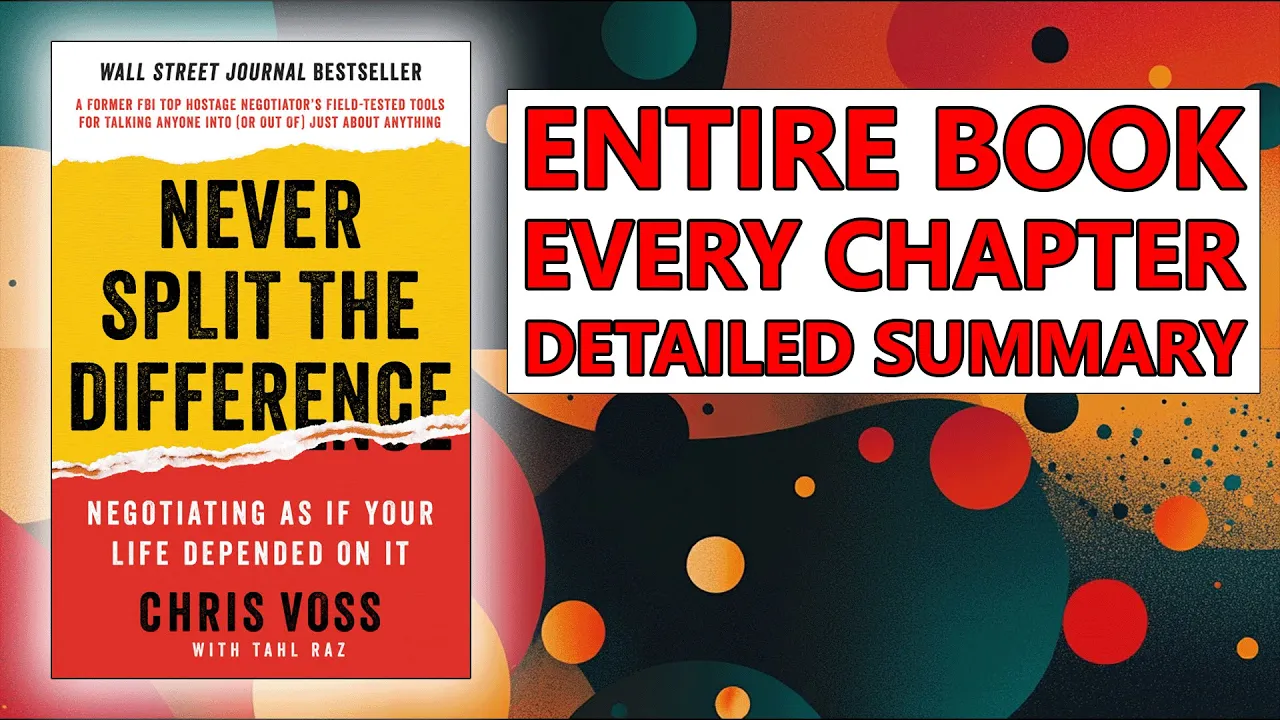
this is a deep dive into never split the difference by Chris Voss in this book Voss a former FBI hostage negotiator reveals powerful negotiation tactics based on his real world experiences these lessons are designed not just for life or death situations but for everyday scenarios whether you're asking for a raise navigating a business deal or simply trying to get your kids to clean their rooms the key idea here is this negotiations are not battles of logic but of emotions and human connection let's explore chapter by chapter how you can Master these principles please don't forget
to like the video and subscribe to the channel thank you so much chapter 1 the new rules in chapter 1 Voss explains how traditional negotiation strategies often fail because they Overlook human nature negotiations aren't about splitting differences or meeting halfway they're about understanding emotions and motivations Voss introduces the concept cep of tactical empathy which means stepping into the other person's shoes to understand their perspective deeply to make this point he shares an example from his own experience at Harvard where he had to negotiate a high-press roleplaying scenario instead of rushing to counter the demands he
calmly asked how am I supposed to do that this simple question shifted the pressure back onto the other party and open the door to collaboration the takeaway here is that empathy isn't about agreeing it's about understanding and remember no deal is better than a bad deal Sometimes the best negotiation strategy is to walk away what can you do today practice active listening next time you're in a conversation repeat back what the other person said to ensure you understand avoid quick compromises and instead dig deeper to uncover their true motivations chapter 2 be a mirror chapter
2 introduces mirroring as a surprisingly effective negotiation tool at its core mirroring involves repeating the last few words or a key phrase of what someone has just said while it may seem too simple to be effective mirroring is incredibly powerful because it encourages the other person to keep talking often revealing valuable insights this technique subtly signals that you're paying close attention which builds trust and fosters openness for instance imagine you're negotiating with a supplier and they say this price reflects the rising cost of materials instead of countering or rushing to agree you might respond rising
cost of materials this small Echo encourages them to elaborate possibly uncovering details about Market changes their constraints or even areas of flexibility mirroring does more than keep the conversation flowing it helps build rapport by reflecting their words back you make the other person feel heard which is a Cornerstone of effective negotiation Voss emphasizes that the goal is collaboration not confrontation and mirroring shifts the dynamic toward working together rather than against each other to practice this use mirroring in your next interaction whether at work or in daily life it's a low pressure way to engage more
deeply in conversations showing interest and attention without the need for immediate agreement or rebuttal as you build this habit you'll notice how naturally people open up when they feel truly understood chapter 3 don't feel their pain label it chapter 3 introduces the concept of labeling emotions as a way to build trust and defuse tension in negotiations everyone wants to feel understood and labeling their emotions achieves this by showing that you're paying attention to what they're feeling for instance if someone seems frustrated during a discussion you might say it sounds like you're feeling overwhelmed this simple
acknowledgement validates their emotions and creates a sense of connection what makes labeling powerful is that it doesn't require agreement Voss stresses that labeling isn't about taking sides or condoning their perspective it's about recognizing their reality for example in a business context labeling frustrations can reduce defensiveness and open the door to a more productive conversation instead of arguing or trying to fix the problem immediately labeling provides space for emotions to be expressed and understood Voss also o highlights the importance of Silence in this process after labeling resist the urge to jump in or fill the Gap
give the other person room to respond as this pause often prompts them to explain further providing deeper insights into their concerns or motivations to start using this technique focus on actively listening to not just the words but the tone body language and underlying emotions in conversations when you sense strong feelings use phrase is like it seems like or it sounds like to label them over time you'll find that this approach helps build rapport and turns tense discussions into opportunities for collaboration and problem solving chapter 4 beware Yes master no in chapter 4 Voss fundamentally changes
how we think about the words yes and no in negotiation we often see yes as the ultimate goal a sign of progress but Voss argues that yes is frequently superficial it's easy for someone to say say yes just to move the conversation along or avoid conflict without real commitment behind it on the other hand a no can be a gateway to honest dialogue and real Clarity because it puts the other person in a position of control consider this instead of asking uh do you agree with this proposal a question that pressures the other person toward
a potentially insincere yes you could ask is there anything about this proposal that you disagree with this reframe invites them to EXP Express their true thoughts creating an opportunity to address concerns headon now when someone says no it often means they feel safer and More in control which paradoxically opens them up to collaboration Voss emphasizes that no is not the end of a conversation it's the beginning of meaningful negotiation it helps reveal where both parties actually stand and what obstacles need to be resolved to practice this approach frame your questions to allow for a no
instead of asking can I call you now try is this a bad time to call this small change takes the pressure off and invites an honest response by embracing no as a tool rather than a barrier you'll open up Pathways to more productive conversations chapter five trigger the two words that transform negotiations in chapter five Voss explains the power of two simple words that's right these words signal a moment of genuine understanding between between you and the other person when someone says that's right they're affirming that you truly understand their position Which is far more
meaningful than a dismissive you're right the difference is subtle but critical that's right reflects alignment while you're right often feels like a polite agreement without real depth to elicit a that's right response Voss advises summarizing the other person's perspective in a way that captures their emotions and concerns for example example if a colleague is frustrated about a delayed project you could say it sounds like you're worried that the team doesn't have enough resources to meet the deadline when they reply that's right you validated their feelings and established trust this moment of connection can transform the
negotiation into a collaborative problem-solving effort this technique isn't about manipulation it's about truly listening and empathizing with the other person's concerns by reflecting their perspective back to them in a clear and respectful way you create a sense of partnership once you've reached a that's right moment you'll find it much easier to move the negotiation forward please don't forget to like the video and subscribe to the channel thank you so much chapter six bend their reality chapter six dives into how to shape the other party's perception of the negotiation Voss introduces two key techniques anchoring and
leveraging loss aversion anchoring involves setting the tone of the conversation with an extreme offer one that makes your actual Target seem reasonable by comparison for example if you're selling a product you might initially highlight its premium value or high-end features before introducing a discounted price the contrast makes the discount feel more compelling loss aversion on the other hand Taps into a fundamental human tendency people are more motivated to avoid losses than to achieve equivalent gains instead of emphasizing what the other party might gain from a deal frame the discussion around what they stand to lose
if the deal falls through for instance you could say if we don't move forward you could miss out on being first to Market Voss also stresses the importance of creating the illusion of control this means letting the other party feel like they're driving the conversation even as you subtly guide them toward your desired outcome ask open-ended questions like how can we make this work or what would it take to solve this problem these questions encourage collaboration while keeping the focus on your goals the key to bending their reality is flexibility while you use anchoring and
loss aversion to shape the discussion you must remain adaptable to their responses and emotions negotiation is as much about guiding perceptions as it is about reaching agreements chapter 7 create the illusion of control building on the techniques from chapter 6 chapter 7 focuses on using calibrated questions to give the other party a sense of control while uncovering critical information calibrated questions are open-ended starting with what or how and they are designed to steer the conversation in a productive Direction importantly why questions are avoided as they often put people on the defensive for instance instead of
asking why are you against this proposal you might ask what concerns do you have about moving forward or how do you see this fitting into your overall plan these types of questions not only make the other person feel heard but also encourage them to share valuable details about their priorities and constraints another essential tool in this chapter is silence after posing a question resist the urge to fill the silence people naturally want to fill gaps in conversation and their responses often reveal key insights for example if you ask what challenges might we face with implementation
and wait the other party is likely to provide more information than they initially intended by Shifting the focus back to the other person and allowing them to feel in control you can uncover their deeper motivations and guide the negotiation toward a mutually beneficial outcome the illusion of control is powerful because it lowers defenses and fosters openness even when you're strategically steering the conversation chapter 8 guarantee execution execution is everything and in chapter 8 Voss highlights that a negotiation doesn't end when both parties agree it ends when the deal is carried out successfully this requires addressing
both visible and hidden obstacles while one person might agree to your terms unseen stakeholders or internal roadblocks can prevent effective execution for example in a corporate negotiation the CEO might be on board but a skeptical Finance team could block the implementation to avoid this Voss suggests asking calibrated questions like like how will this decision impact your team or uh what challenges do you see with making this happen these questions encourage the other person to reveal hidden concerns or unspoken issues that might disrupt follow-through when they voice these concerns you can work collaboratively to address them
before they derail progress additionally Voss emphasizes the importance of non-verbal cues if someone hesitates or their tone changes it's a sign they may not be fully committed address this on by asking clarifying questions like what would make you feel more comfortable moving forward finally prioritize Clarity before closing the negotiation explicitly Define roles responsibilities and timelines this ensures everyone knows who's doing what and when leaving no room for ambiguity execution is the true measure of a successful negotiation so always prepare for the Practical steps ahead chapter N9 bargain hard chapter 9 introduces one of the most
practical tools in the book The acur model this structured approach to bargaining helps you stay in control while making the other party feel like they've won the process involves starting with an ambitious offer something just outside of what's reasonable and then gradually making smaller concessions to appear flexible while staying within your ideal range here's an example let's say you're negotiating a raise your goal is $80,000 but you start by asking for $90,000 ,000 when the other side pushes back you lower your demand incrementally first to $87,000 then to $83,000 before finally relent to $80,000 to
the other person it feels like they've pushed you down significantly even though you've landed exactly where you wanted the genius of this model is how it uses psychology to create a sense of fairness Voss stresses that every concession you make should feel earned by the other party which makes them more satisfied with the final outcome another critical element of hard bargaining is maintaining a friendly even playful demeanor humor and Rapport disarm tension making even tough negotiations feel less confrontational this helps keep the discussion collaborative even as you stick firmly to your strategy hard bargaining doesn't
mean being rigid it means being strategic empathetic and clear about your goals chapter 10 find the Black Swan in the final chapter Voss introduces the idea of black swans unexpected pieces of information that can completely change the course of a negotiation these are the hidden factors that most people Overlook but they can give you an enormous Advantage when uncovered for example imagine you're negotiating a contract with a client who seems unusually resistant instead of pushing harder you dig deeper uh by asking calibrated questions like what's most important to you in this partnership or what concerns
might I not be seeing through this you might discover that the client values Prestige more than price armed with this knowledge you can frame your product as the most exclusive or high status option Shifting the focus away from cost black swans often reveal themselves when you approach negotiations with curiosity and empathy it requires listening deeply and being attuned to the other party's motivations fears and aspirations Voss reminds us to assume that there's always more information to uncover information that could dramatically shift the negotiation in your favor one practical way to identify black swans is to
explore the counterparts religion as Voss puts it this means understanding their deeper world view values and priorities whether they're driven by security recognition or loyalty aligning your proposal with these values can create unexpected breakthroughs finding black swans is both an art and a science it requires patient attention to detail and a willingness to adapt your strategy as new information comes to light but when you uncover these hidden gems they can transform even the toughest negotiations into clear winds before we wrap up please don't forget to like the video and subscribe to the channel thank you
so much Chris voss's never split the difference is more than a negotiation manual it's a guide to understanding human behavior and building meaningful connections from mastering Tactical empathy to uncovering black swans these techniques demonstrate that negotiation isn't about compromise it's about collaboration whether you're negotiating at work at home or in everyday life these lessons are tools to achieve better outcomes while strengthening relationships remember every conversation holds an opportunity if you listen closely and approach it with care start applying these principles today and you'll see the difference they make
![How to Make Conversations Easy - [How to Talk to Anyone Book Summary]](https://img.youtube.com/vi/qoML3hDkv74/maxresdefault.jpg)
![How to Build Confidence, Seduce Anyone, and Become Powerful - [The Art of Seduction Book Summary]](https://img.youtube.com/vi/vT5cIZfo8AI/maxresdefault.jpg)
![Create the Life You Want Through Automated Behavior - [Atomic Habits Book Summary]](https://img.youtube.com/vi/Wb9eueo6YNk/maxresdefault.jpg)
![How to Quickly Master Human Behavior - [The Laws of Human Nature Book Summary]](https://img.youtube.com/vi/ZsCllNT1WEI/maxresdefault.jpg)




![How to Always Accomplish Hard Things - [The Power of Discipline Book Summary]](https://img.youtube.com/vi/PbPkyanPOEc/maxresdefault.jpg)