If there’s one piece of advice that we’ve all heard, it’s to bet bigger on wet boards, and smaller on dry boards. The idea is to charge your opponent’s draws, instead of allowing them to see the turn for a cheap price. But as logical as this might sound, it’s actually bad advice in a lot of spots.
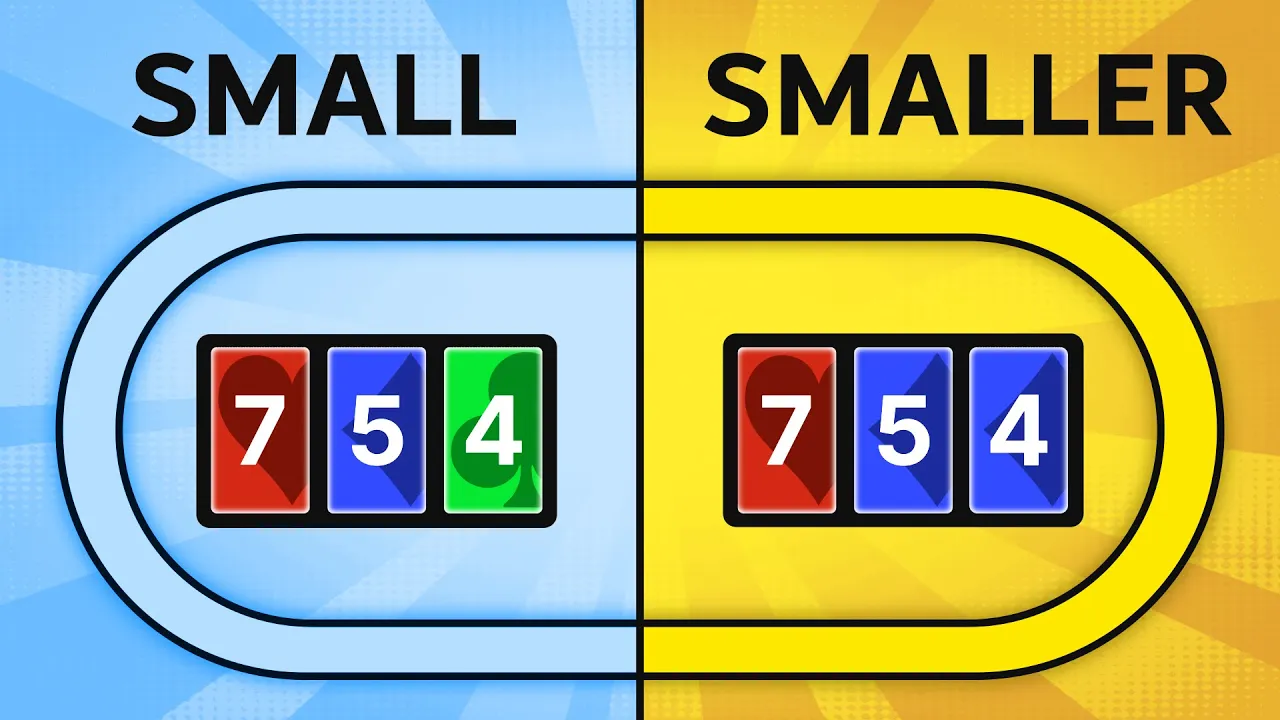
Here’s a simple experiment you can do with GTO Wizard. Line up all the 7-high boards for BTN vs BB, and sort according to betsize. You’ll find that the boards where BTN bets the biggest are actually the driest boards—such as 742r.
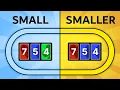
On the other hand, the boards where we bet the smallest are also the wettest boards, like 754 twotone. It’s the complete opposite of what most players would do. But to understand why, we first need to recognize the difference between thin value and thick value.
Thick value refers to when we bet with a hand that has excellent equity when called. Take a set on a rainbow board, for instance. The value we get is thick, because all of our opponent’s bluffcatchers are virtually drawing dead against us.
This allows us to bet as big as we want, and still be way ahead of our opponent’s calling range. On the other hand, thin value refers to hands that only have average equity when called. This can happen when we are losing to some proportion of villain’s range, or when the hands we beat have lots of outs against us.
Either way, we now need to be more careful with our betsize: bet too large and our opponent will fold most of his low equity hands, leaving behind a range that is very strong. This is exactly why the solver tends to size down on coordinated boards. Imagine if we have KK on a board of 754 twotone.
Not only do we run into a stronger hand quite often, many of the hands we beat also have significant equity against us. A big bet isolates ourselves against these hands, and lets our opponent off the hook when he has a bluffcatcher with less equity. Looking at the solver’s response vs a pot sized bet, most of BB’s weakest bluffcatchers–the one pair hands without a straight or flush draw–don’t actually need to call.
BB has plenty of better hands to defend with, such as pair+straight draws, combo draws, and nut flush draws. And because these hands have so many outs against us, the value that we get ends up being extremely thin. If we instead use a smaller size, BB is forced to call with weaker bluffcatchers like T7 and J5.
These hands only have 5 outs against our overpairs, which means that the value we get is much thicker. So even though it *looks* like we’re giving our opponent a cheap price on his draw, mathematically speaking, we actually generate more EV by sizing down. The extra ⅓ pot of thick value that we get from T7 is worth way more than the ⅔ pot of razor thin value that we get from A6hh.
This is why the idea of charging our opponent’s draws is flawed: it only considers one specific part of his range, and fails to account for the value that we lose against other portions of his range. Now let’s see what happens on a dry board like 732r. Here, our overpairs are in a much better position.
They don’t have to worry about two pairs and straights, since the BB shouldn’t be playing hands like 73 and 72. On top of that, most of the hands we beat have way less equity against us. This allows us to use a much bigger betsize, and still get plenty of thick value.
Looking at the solver response vs a big bet, BB needs to call pretty much all of his one pair to the board. Even pocket pairs like 66 and 88 are forced to defend, meaning our overpairs are getting some extra-thick value from hands that are only drawing to 2 outs. These weaker bluffcatchers were folding on 754 because BB had better hands to defend with–but on a dry board like 732, BB isn’t exactly spoilt for choice.
The end result is that we can bet very big with our overpairs, and still have excellent equity when called. Here’s a nice way to visualize the difference between dry and wet boards. Imagine if we line up all of BB’s holdings according to how much equity they have against our overpairs.
On a wet board like 754, the resulting curve is very steep. This is because about a third of BB’s range has significant equity against us–more than 25% equity to be exact. Instead of isolating ourselves against these hands with a big bet, we would much rather size down and target the lower-equity bluffcatchers in his range.
Even though we do lose a bit of value against his draws, this is more than made up for by the thick value we get from hands like Q5. On the other hand, BB’s equity curve is much flatter on 732r. As a result, our overpairs can bet quite big, and still have good equity when called.
Sizing down is unnecessary: even though we do get called by more hands, we lose out on a lot of thick value against hands like 67 and A3. These hands would have called a big bet anyway, so a better approach is simply to bet big and maximize value. But what about a board like A72r?
With a hand like AK, we should be able to get some pretty thick value even if we bet big. The board is dry, and BB’s bluffcatchers only have a maximum of 5 outs. So why does the solver go for a small bet instead?
Well, the difference lies in the types of hands that we are interested in betting. On a low board like 732, we have lots of overpairs that want to bet big, and not that many marginal hands. So our betsizing naturally revolves around our overpairs.
But as the board gets higher, we have less and less overpairs, and more and more marginal hands that potentially want to bet for thin value. And this has the effect of driving our betsizing down. 7x, for example, is a hand that needs protection.
By betting the flop, we protect our hand’s equity, and prevent overcards like QJ and QT from realizing theirs. But because 7x isn’t strong enough to bet big, the only way we can get this protection is by using a small bet. So the solver builds a small bet range around these hands, and throws in some stronger hands like AK to make sure they don’t get raised too often.
And of course, once our marginal hands and strong hands are both betting small, then our bluffs will naturally follow suit. The key is to understand that on A72, the small bet is not the natural size for AK. Instead, our strong hands are only sizing down for the sake of our marginal hands.
The moment we take away these marginal hands, our strong hands start reverting to a larger size. On a board of AK2 for example, we are much less interested in betting marginal hands. Middle pair is not as vulnerable as before, and the pocket pairs below the K are now too weak to bet.
As a result, we start overbetting with our strong hands again. Just like on 732, there is no need to size down with hands like top pair: we get plenty of thick value with a big bet, so the best strategy is just to bet big and maximize value.





![How To STUDY Poker [With Lexy Gavin-Mather]](https://img.youtube.com/vi/iGRz3HAO97o/maxresdefault.jpg)