[Music] how good is your Alpha a metrics based approach I am nitish Manny the chief strategy officer at World Quant I help to Define our firm strategy as well as Drive several cross functional business initiatives including new avenues for growth and innovation in this series we help you develop your skills and capabilities by guiding you in testing out your ideas on world Quant brain our simulation platform before we begin head to World Quant brain and login now and I'll take you through some ideas on the platform so far we have explored the Quant research ecosystem
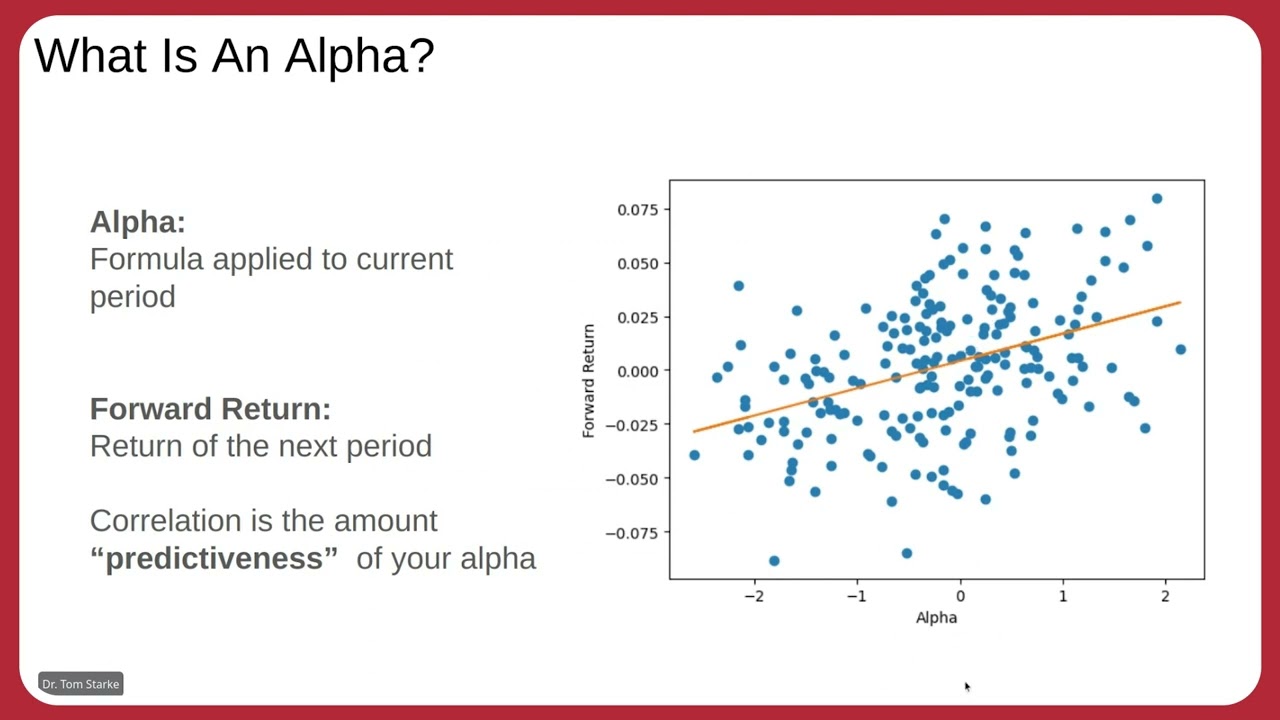
and the process of creating and implementing an alpha which is defined by World Quant as a mathematical model that seeks to predict the future price movement of various financial instruments now let's move on to understanding how to assess the quality of the alpha [Music] itself Quant researchers can seek to provide expectations about future performance by exposing the particular Alpha to a stream of historical financial data to generate its theoretical past performance this back testing process can help us determine whether the the proposed approach might have resulted in gains or losses what would have been the
potential exposures the maximum draw down the alpha could have incurred the returns generated and the costs involved be careful to avoid look ahead bias in back testing a common Pitfall where future information accidentally influences the historical data analysis the buyers can inflate performance predictions skew expectations and potential lead to losses let's turn our attention to the variety of metrics that quants use to gauge the quality of an alpha these metrics should be analyzed so we know what changes to implement and improve the predictability of the signal the metrics can be related to Performance novelty diversity
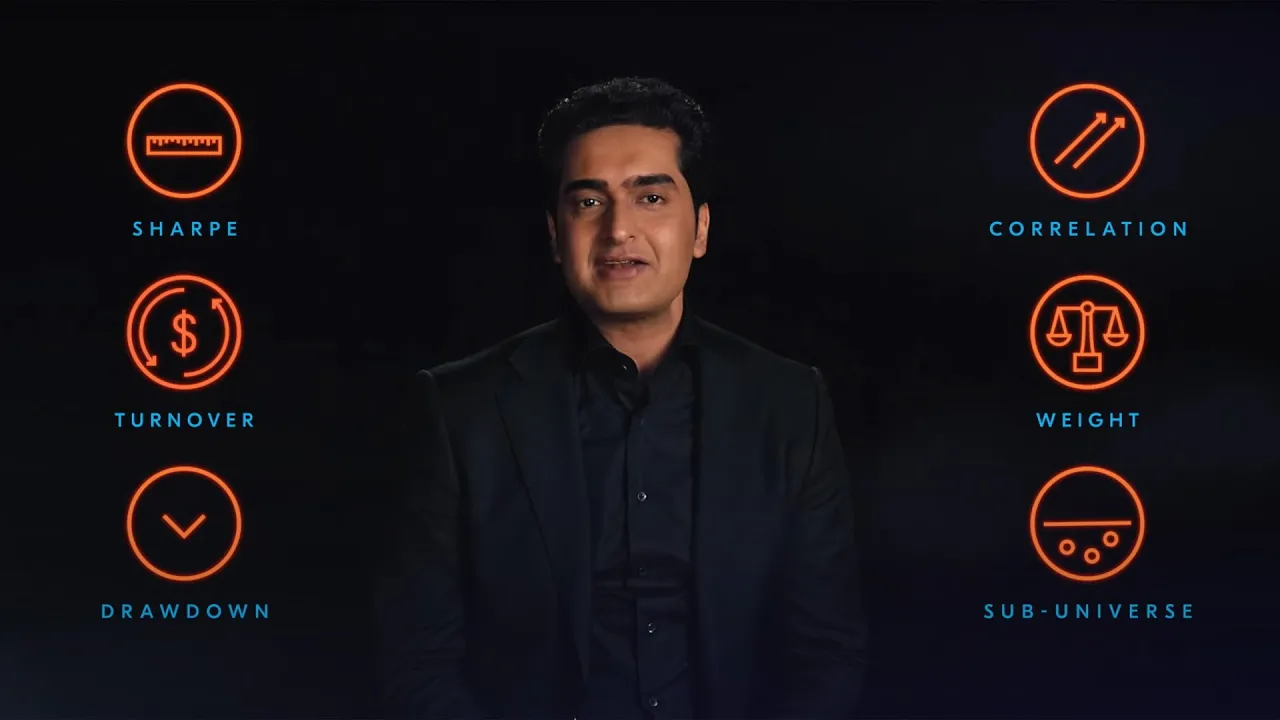
Etc let's look at the six performance related metrics on world Quant brain sharp is the measure of risk adjusted returns earned by the alpha higher values of sharp are better turnover is the percentage of the capital which the alpha trades each day more turnover May mean higher transaction costs during trading draw down represents the percentage of the largest loss incurred during any year in your back testing as a practice you should Target a return to draw down ratio greater than one the higher the ratio of returns to draw down the better it may be for
your Alpha correlation of the alpha to other Alphas in the pool should be low unless we see much higher performance as compared to the correlated Alphas the metrics to check if the performance is contributed by diverse set of stocks include a weight test and a subuniverse test weight test a robustness check to ensure Alpha weight is evenly distributed across stocks not concentrated on on a few a subuniverse test checks if the Alpha's performance in the immediate smaller set of tradable stocks or sub Universe exceeds a required threshold the process of back testing and performance check
should be repeated until you are satisfied with the implementation and the performance of the idea and believe that the signal is good enough to be used in real markets so in this video we have reviewed the significance of back testing the need to avoid look ahead bias and we have also explored how to measure an Alpha's quality using different metrics I hope that you're ready to take your knowledge to the next level in the next videos we will employ the alpha creation process in deeper ways and power up your Quant research skills let's go Quant
and see you in brain [Music] h