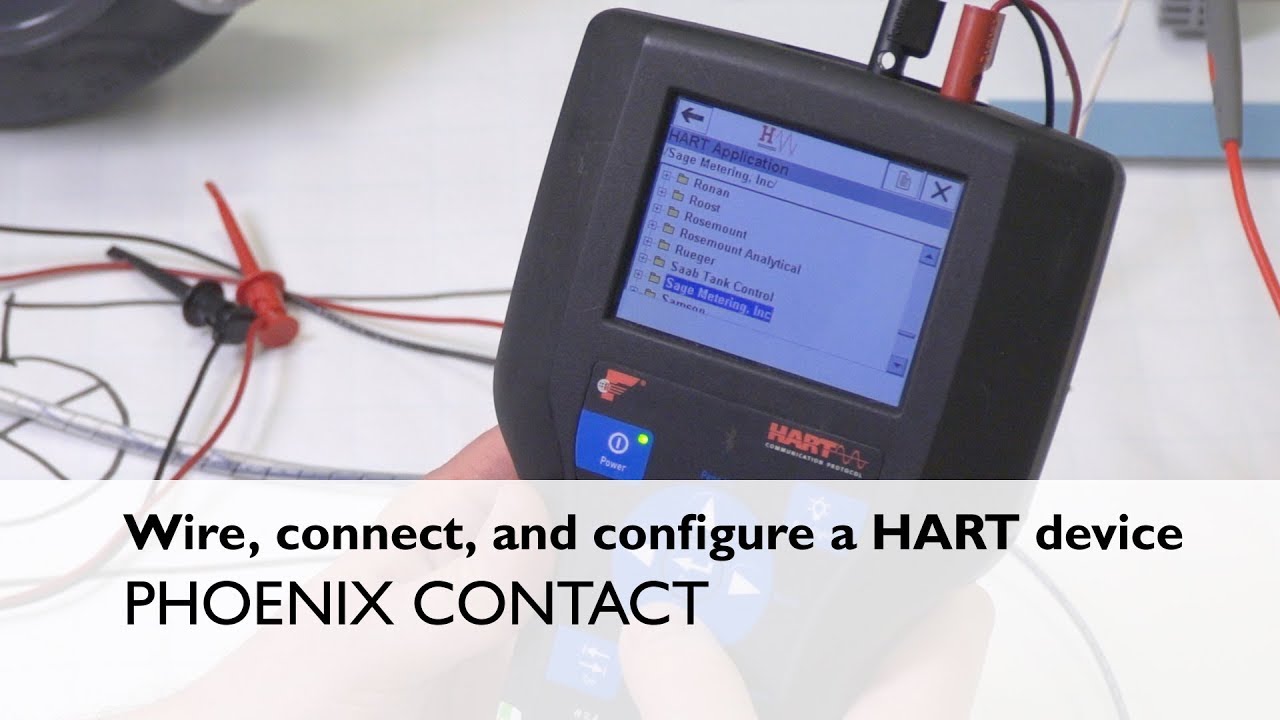
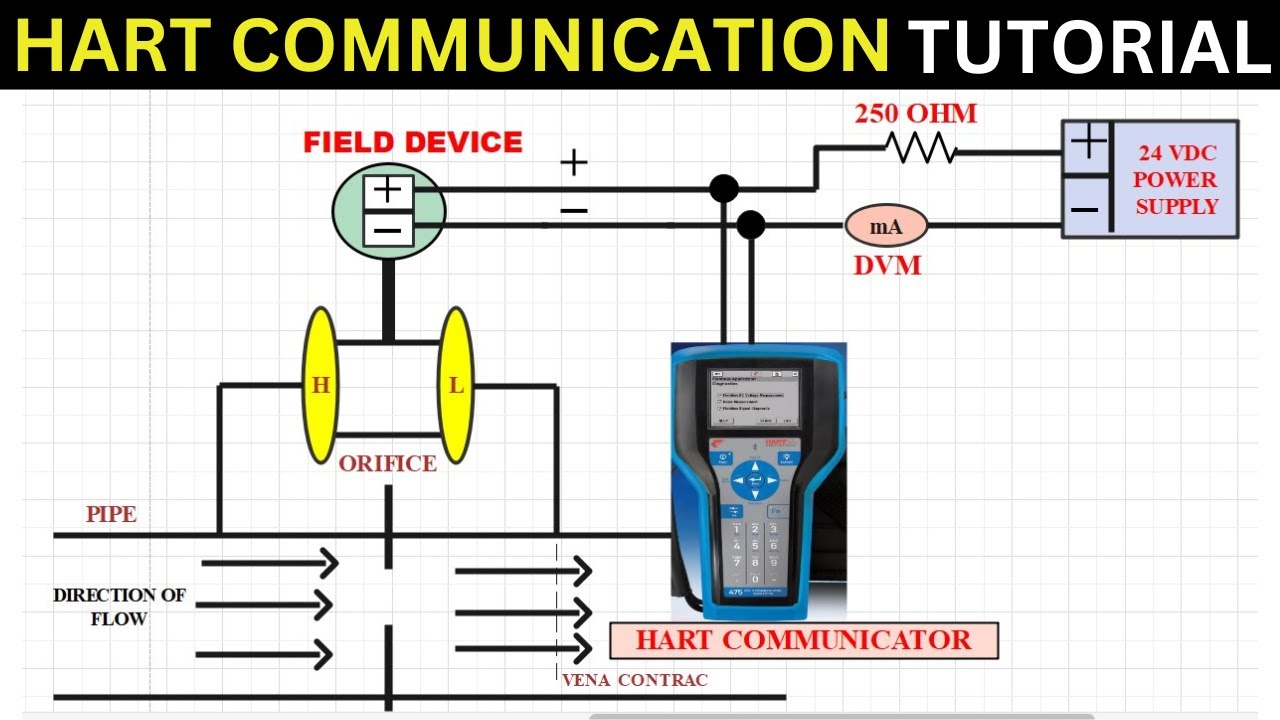
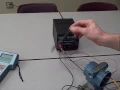
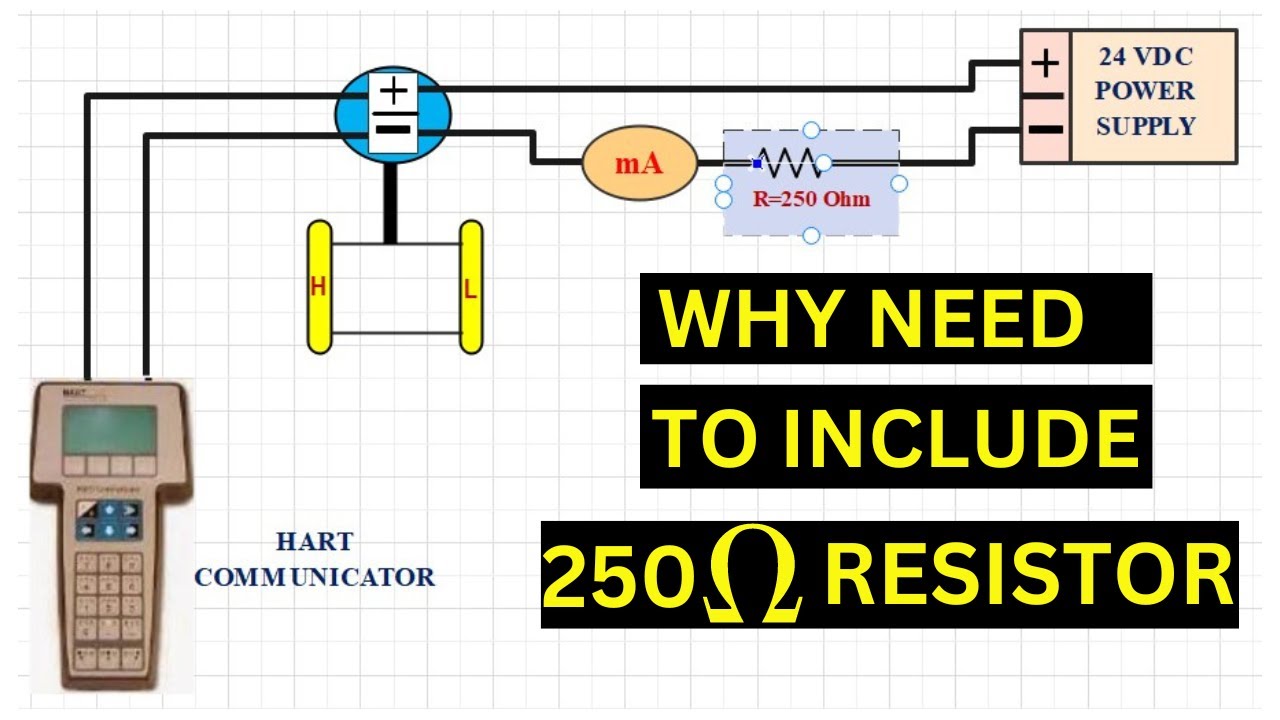
here we have a Rosemount uh heart model 275 Communicator talking digitally to a Rosemount model 3051 differential pressure transmitter it is communicating using the heart protocol which is interjecting ac voltage and current signals along the same two wires that carry the 4 to2 milliamp DC signal we're powering it through a 24volt power supply through a 250 ohm resistor right to the transmitter and currently we have the communicator connected in parallel with with the transmitter this is the most standard method of connecting the communicator is directly in parallel with the transmitter terminals what I want to
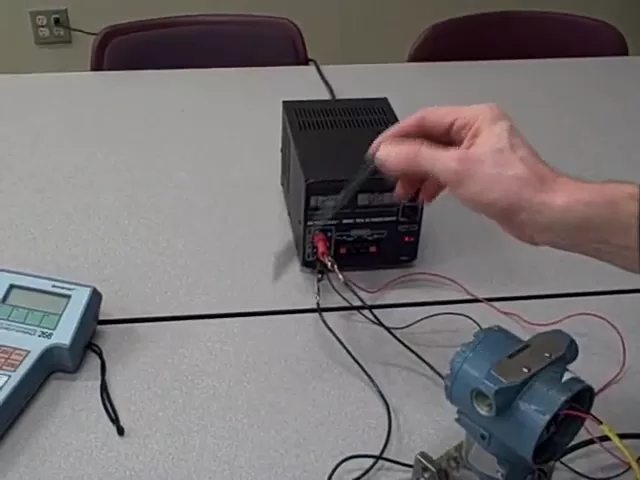
demonstrate here is that you don't always have to connect it right at the transmitter terminals itself there are alternatives we can use so watch what happens when I disconnect first you'll notice we get an alarm it says device disconnected which is rather obvious we've disconnected it it's no longer able to talk to it what I'm going to do is reconnect the communicator as a different point in the circuit notice how we are still in parallel with the terminals on the transmitter if I go back to my communicator and push the retrive button it comes right
back we're able to read all the same information we did before even though our transmitter is hooked up in a different physical location it's electrically the same but physically different so I could even extend this further following these wires back the black wire leading all the way back to the power supply the red wire here going to the white jumper to that side of the resistor if I disconnect my Communicator notice first I get the alarm again now I make my connections one wire to the white jumper on the resistor the other wire over here
to the black lead on the power supply we are still electrically in parallel with the transmitter so it should work I'll push retry and there we go I get all the same data I got before but I'm not connected directly on those two terminals all I need need to be is connected directly I should say electrically in parallel with the transmitter however Watch What Happens here if I disconnect this Communicator lead of course I get the device disconnected alarm and reconnect it over here right across the power supply it will not work if I push
the retry button it tries for a moment and gives me an alarm device disconnected it simply can't do it the reason for this has to do with the fact this is a DC voltage source and as a DC voltage source it has capacitive filtering on the output terminals that capacitive filtering absolutely kills or squelches any attempt at imposing an ac voltage across those two wires therefore it snubs out the heart signals and does not allow them to exist on the wiring to the transmitter that in fact is exactly why we have to have a resistor
in series with a circuit to make the heart system work that resistor places is an impedance between the transmitter and the power supply so now I can have AC signals existing on The Wire that don't get shorted out by the power supply but if I try to talk directly to the power supply it's not going to work because the filter capacitors in there act as a direct short to the AC signals generated by this device and generated by the transmitters that tries to talk now here's another place you can connect the communicator you can go
directly in parallel with the loop resistance it may not make sense at first why this works I'll first demonstrate that it does work I'll push the re retry button and here we are again it's now reading the same variables it's reading the 12 milliamps reading the 500.1 Ines of water column if I change my pressure over here with my hand pump you can see the numbers are updating and changing so we do indeed have a live signal you're probably wondering why in the world is this work connecting this in parallel with the resistor is not
electrically in parallel with the transmitter terminals ah but from the perspective of the AC signals it is because remember what we said about the DC power supply the capacitive filtering on the output terminals looks like a short circuit to the AC signals so if in our minds we replace this power supply with a short circuit now one side of the resistor shorted through the power supply does directly connect to one side of the transmitter the other side of the resistor connects to the other side of the transmitter and from here to here electrically from the
perspective of the AC signal it is directly in parallel to those two terminals to do that we have to look at it through the eyes of the superposition theorem where we consider one power source at a time in a circuit and applying superposition to this as a power source means that the uh current output by this device the AC current finds itself a direct short path through the DC power supply right to the other terminal of the transmitter where it needs to go however we don't have to hook it across the resistor as I said
before the most common connection point is directly across the terminals of the transmitter but it's important to realize that is not the only place you can connect it and have it work

![Pressure Transmitter Workshop Re-range - [HART 475 / Fluke 789 / Druck DPI610 / Foxborough TX]](https://img.youtube.com/vi/L7T92J7wpzE/maxresdefault.jpg)