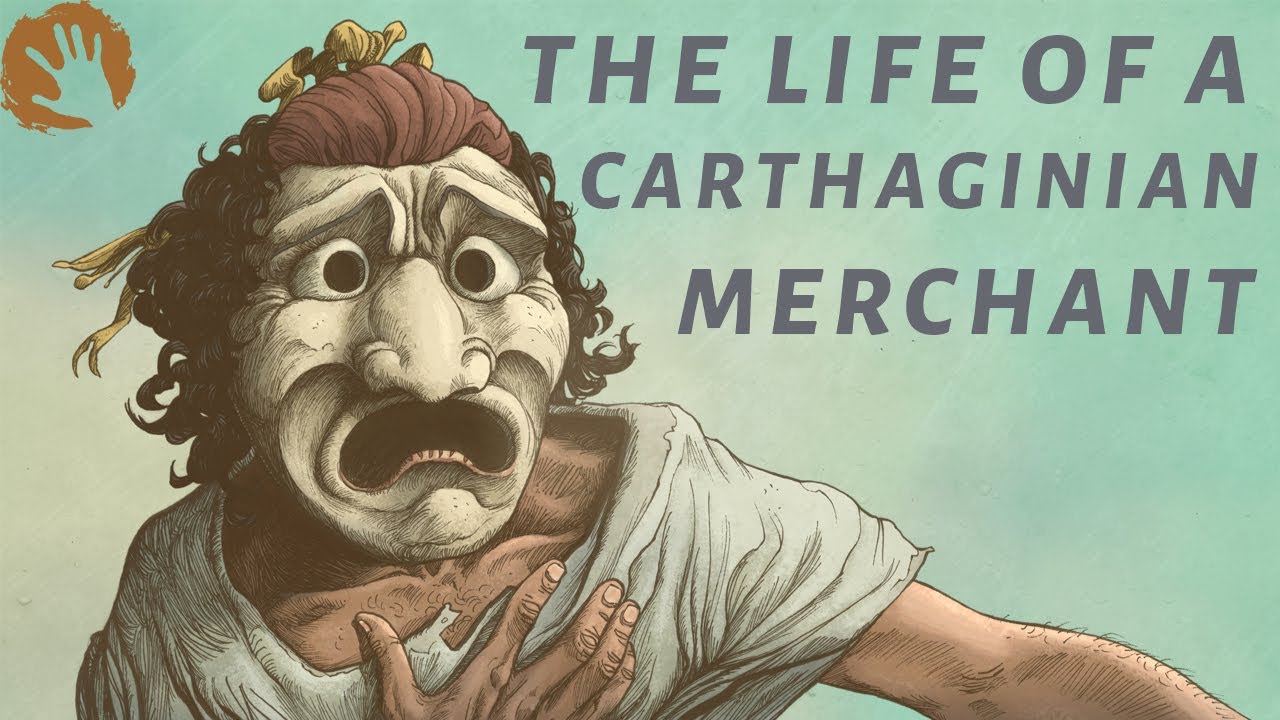
for students of history in the west carthage is largely known for one thing losing to rome thus paving the way for the roman empire's dominance of the mediterranean and western civilization as we know it however if you are someone living in the mediterranean at the time or even centuries later they'd tell you something very different before her ultimate defeat to the romans in the third punic war carthage was a formidable naval power in the region having conquered most of the western mediterranean and established trade networks around the world this was in large part due to
the carthaginian's crowning invention the coson artificial harbor to rival the ports and marinas of the modern day [Music] despite its location on the gulf of tunis and modern-day tunisia in the western mediterranean the citizens of carthage were actually phoenicians from the levant in modern day lebanon hence the demonim punig from the latin punicus the roman's name for them they spoke canaanite her semitic language and followed the punic variety of polytheistic canaanite religion the phoenicians were prolific sea traders and set up some 300 trading posts every 30 to 50 kilometers along the north african coast and
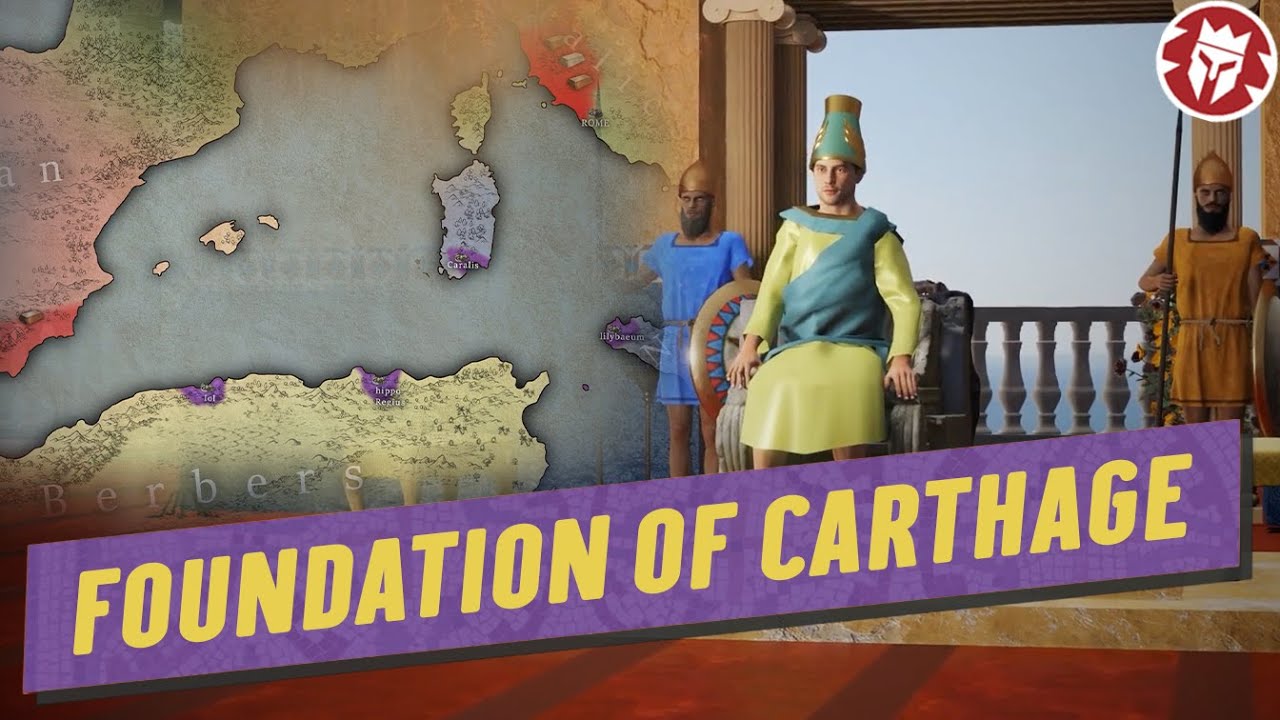
on islands like cyprus sardinia corsica and malorka in around 814 bc decades before rome was even founded mariners from tar the phoenician capital in the levant settled carthage about 30 kilometers down the coast from utica an already established trading post along tyres important route to valuable metals they traded for on the iberian peninsula this is the root of the name carthage which is derived from the canaanite word for new city while utica means to be old legend has it the the queen of tar alyssa called dido or beloved established carthage herself whether it's true or
not the city quickly grew from a small trading post to the dominant venetian settlement more important and powerful than tyre itself which was ultimately subjugated by the neo-babylonian king nebuchadnezzar ii in the 6th century bc the venetian network of settlements was never particularly centralized anyway though and carthage was probably an independent city-state long before that she founded her first colony in 650 bc and and was awaiting her own wars against the greeks by 600 bc when rome was still a small backwater kingdom in central italy the carthaginians inherited an avid seafaring culture from the phoenicians
and instead of conquering lands around them they used their naval prowess to form a large coastal empire across the mediterranean emanating from their innovative harbor [Music] unlike the romans whose imperial economy was based largely on conquering and looting new territory the carthaginians focused on trade and commercial infrastructure nothing was a greater manifestation of this than the grand harbour at carthage an impressive example of a coathon or the phoenician style of artificial fortified harbor cothons whose name comes from the greek word for drinking vessel can be found in the remnants of phoenician settlements around the mediterranean
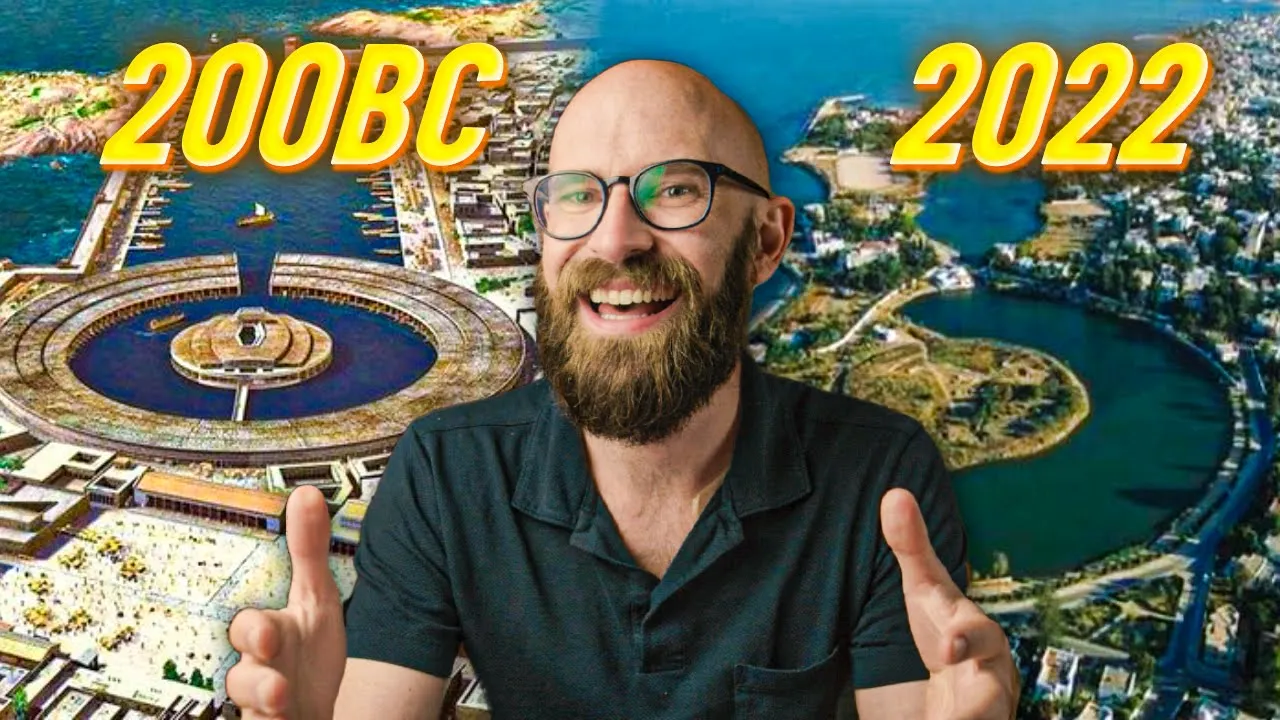
but carthages appears to be one of the most monumental it consisted of a long rectangular harbor 456 by 356 meters that's 1500 by 1200 feet with walls on either side and another circular section at the end the rectangular section was for carthage's many merchant ships and had slips on either side with quick access to the city and its markets though this commercial part of the kothon has been almost entirely destroyed over the last two millennia historians believe it coincided with the city's outer wall which was roughly 13 metres tall that's about 43 feet and 8
meters wide or 26 feet the walls extended into the dock itself to create an entrance way that could be closed off with iron chains with a merchant fleet housed in their coast on carthage ultimately achieved hegemony in the western mediterranean at the most expansive in the 3rd century bc their empire spanned most of the north african coast west of italy modern-day spain and sicily as well as the balearic islands the southern part of sardinia and the entire coast of corsica however their dominance was about to be threatened carthage had serious contact with the growing roman
republic as early as 509 bc when the two signed a treaty but it was clear carthage didn't see them as much of a threat by the third century though carthage apparently saw rome as an equal force because they signed another treaty with them in an attempt to draw them into the carthaginian war against syracuse on sicily then when a group of mercenaries called the mamitans or sons of mars started wreaking havoc on the sicilian countryside syracuse attacked them so the marmitines sent an embassy to carthage to ask for help carthage eagley accepted the chance to
gain a foothold on sicily and sent a full garrison backed by a fleet of warships to the strait of messina between sicily and the italian peninsula uncomfortable with carthaginians at their back door the roman people voted to attack what both nations probably expected to be a minor skirmish over a single town in sicily ultimately escalated into europe's largest war and the most extensive naval conflict up to that point as well as the final crucible for carthage's harbor [Music] the punit wars actually consisted of three separate conflicts between the empire of carthage and the roman republic
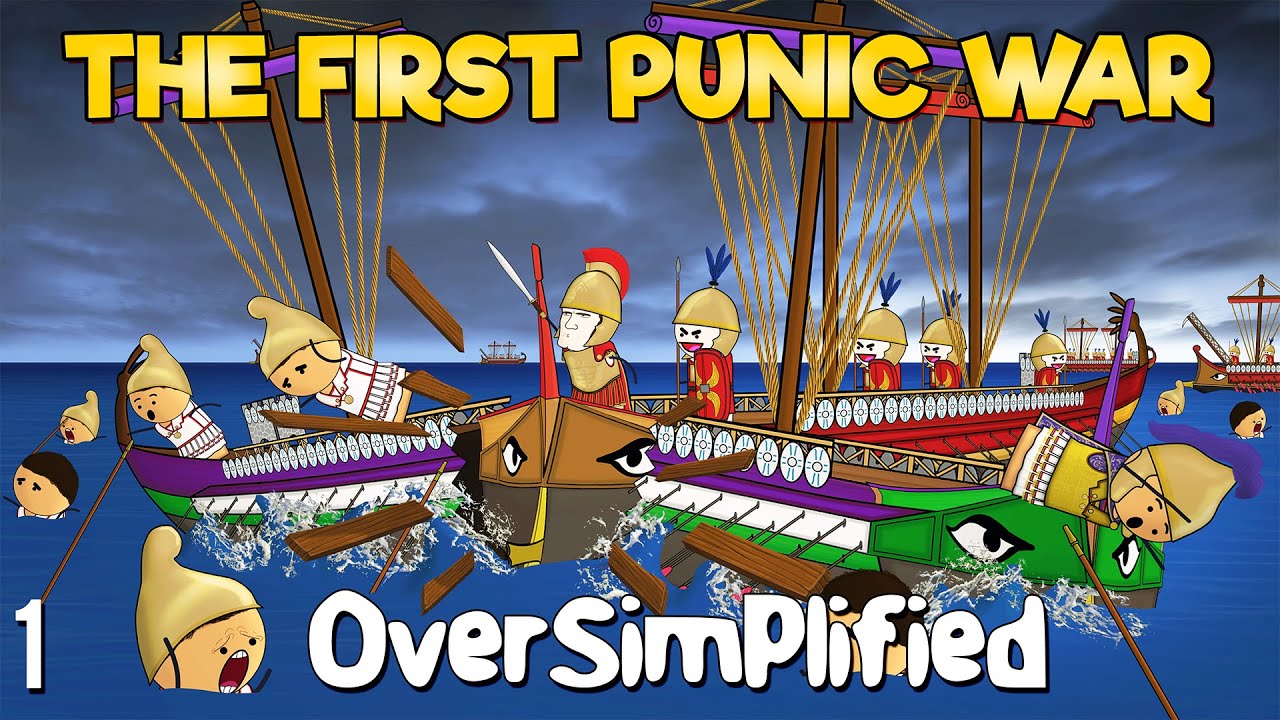
the first punic war was fought for 23 years between 264 and 241 bc almost exclusively on the island of sicily and the surrounding seas rome first attacked and subdued syracuse on the eastern part of the island forcing the nation to provide rome with soldiers after that roman carthage fought for several years with little to show for it carthage had by far the superior navy but rome was more experienced in land warfare which all led to a stalemate finally in 260 rome realized that they'd have to challenge carthage at sea they built 120 warships and sent
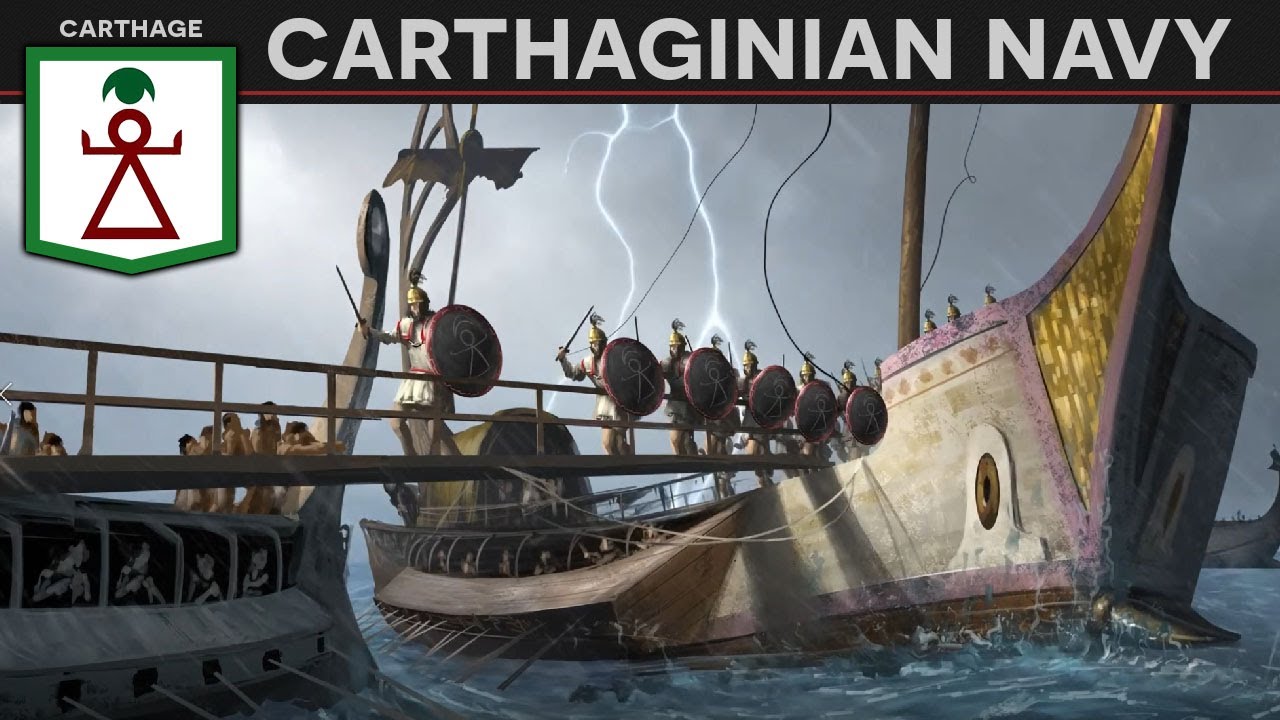
them to sicily while they had little luck at first their naval skills grew to the point that they decided to try invading africa in 256 a fleet of 330 roman warships set sail for the north african coast and they were met by 350 carthaginian warships off the coast of southern sicily this led to the battle of cape economist possibly the largest naval battle in history still to this day not up to that point just ever in all of history this was back in the day the roman ships carried a hundred and forty thousand crew and
marines versus carthage's 150 thousand rowe managed to win the battle sinking 30 of carthage's ships mostly through ramming with bronze rams many of which can still be found on the sea floor this allowed the roman navy to continue onto the cape bond peninsula near carthage though the romans took much of the surrounding countryside the carthaginians were ultimately able to fend them off and the war continued for another 15 years exhausting both nations economic and military resources in fact rome lost 17 of her adult male citizenry nevertheless it was carthage who ran out of steam first
suing for peace in 241 bc the two powers signed the treaty of letatius granting rome control of sicily and requiring carthage to pay reparations of 3200 talents over the following 10 years that's roughly 90 tons of silver which is worth around 57 billion dollars today the second munich war lasting 17 years from 216 to 201 bc is usually the most well known because of the carthaginian general hannibal who famously invaded the italian peninsula by crossing the alps on elephant back indeed the war which started after carthage conquered much of the iberian peninsula coming in direct
conflict with rome's allies went carthage's way for most of its length although the conflict began with some naval skirmishes the primary theater of war was the italian peninsula instead of relying on a naval prowess as before carthage under hannibal's lead assembled a force at new carthage now in southeastern spain of 90 000 infantry and 12 000 cavalry many of which rode elephants with his army assembled hannibal marched on mediterranean coast to turin he then fought his way down the italian peninsula where he gained control of most of the land south of rome and convinced many
of rome's allies to defect in support of carthage many territories and cities in italy and around the mediterranean changed hands multiple times but the tide of the war didn't change until 204 bc when publius scepio who had orchestrated a number of victories against carthage on the iberian peninsula was elected as roman consul scubia collected a large force and sailed to africa in a risky attempt to end the war after raising utica and tunas nick carthage hannibal returned from italy to defend the home turf scepio's campaign came to a head at the battle of samar in
202 where roman infantry were able to resist hannibal's attempts to break their lines with 80 war elephants defeated carthage signed a peace treaty that stripped them of most of their possessions banned them from waging war outside of africa and only allowed them to wage war within africa with rome's permission carthage also had to pay rome 10 000 talents over 50 years by now it was evident that rome was the dominant force in the western mediterranean and carthage was her subordinate nevertheless rome was not satisfied with their subjugation of carthage and many prominent roman politicians like
carto advocated for her complete destruction over the half century following the psychopunic war a roman ally the numidians took advantage of carthage's military impotence to regularly raid carthage's african territories while rome denied carthage permission to retaliate eventually the carthaginians attacked anyway and remused as an excuse to initiate the third punic war this conflict lasted only from 149 to 146 bc and was a decisive victory for rome for three years the romans besieged the city and blockaded the port finally facing the might of the carthaginian cothan taking the carburetted carthage was no small feat for the
roman navy at the head of the long rectangular mercantile section was the circular military harbor an elevated island stood at the center with a tower that allowed the carthaginian admiral to see the entire harbour and the sea beyond so that he could direct naval traffic with raised docking bays leading to warehouses with maintenance supplies it could house a formidable 220 warships even today the largest american naval base in norfolk virginia houses just 75 ships the coastline helped the carthaginians hold off the romans for most of the war but the romans finally attempted to take the
harbor for themselves in the battle of the port of carthage in 147 carthage repelled their advances for a time but the roman navy finally trapped a number of their ships against the high sea wall and sank them the romans then sailed into the coathon itself carthage did not immediately fall after losing the harbor but it was the beginning of the end over several months the romans built a brick structure inside the coast on level with the height of the city walls this allowed them to fire at the carthaginian defenses in the spring of 146 the
romans launched a full-scale assault on the city from the kothon they breached the walls and spent six days working their way through the neighborhoods of the city burning down buildings and slaughtering the inhabitants the last carthaginian holdouts fought from the temple of shimon and finally burned it down around themselves when their defeat was imminent the 50 000 carthaginians who survived the siege were taken by rome as slaves though julius caesar ultimately rebuilt carthage as a roman city punic carthage was gone forever and rome had little standing in its way to complete hegemony of the mediterranean
the direction of western civilization shifted from north africa to southern europe determining much of the law culture and history that we know today carthage and its grand harbor they were just relegated to ruins despite all the violence it's seen over the millennia you can actually still go visit the harbour at carthage almost 2 200 years after the punic wars it's located just a 30 minute drive from the tunis carthage international airport because the romans filled in the merchant parts of the harbor after the third punic war it's mostly gone but you can visit the national
institute of marine science and technology museum located on the land where it was and you can see the small amount of harbor that remains additionally most of the circular military harbors still intact though the structures are mostly gone however you can view the ruins of the inner island and visit a small museum it points out important locations and provides mock-ups so you can imagine what the grand harbour must have looked like and felt like during the spectacular height of the carthaginian empire [Music] [Music] you