I made a pump that defies gravity this video is not in Reverse this is called the tubless siphon effect this tube is sucking up the liquid and this tube is putting it back in after it goes through this peristaltic pump I can lift it way above the surface and it just keeps pumping like normal how is this possible the reason this is happening is because I'm using a special liquid here it's called polyethylene glycol this liquid was made famous for its self siing effect where if you have a Jar full of it and start pouring
it it'll siphon itself out of the jar and empty the whole thing okay watch it just kind of disappear out of the cup so I barely tilt it I leave it at the same angle and it just drains it but there are so many other cool things that this fluid can do so let's dive into what this fluid actually is and see all the gravity defying acts it can perform polyethylene glycol is used in almost every industry maybe the most well-known example is that it's the main ingredient in mirx which is a laxative but it's
also used in moisturizers soap shampoo toothpaste food additives and even vaccines the reason it's so versatile is because it's a polymer so if you have one unit it's just called ethylene glycol this is what antifreeze is made of but these ethylene glycol units can hook together to make chains that can get longer and longer indefinitely in mirx on average the chains have about 54 units of ethylene glycol each the long longer These Chains get the more peculiar the fluid behaves when you mix it with water these long molecules get all tangled up with each other
and they also retain the water molecules in between each other so you get a slippery coating on everything you can imagine why this is a good laxative but these chains are only 54 units long what if we made chains that are much longer like 16,000 units long that's what I have here this is polyethylene glycol with a molecular weight of over 1 million G per mole when the molecule is that large it gets some weird properties it starts to act like a tangled mess of elastic spaghetti and gets all tangled with its neighbors so when
you try to pour it out of a cup it acts like you're pouring a chain out of the cup and it takes the rest of the fluid with it so now we can start to understand how this pump is working it's like it's sucking up long spaghetti noodles so it can rise above the surface of the fluid and it'll still suck it in but these molecules aren't so long that one end is up in the tube and the other is down on the the surface each molecule is very long for a molecule but still only
about four microns or less in length so that means that we aren't just pulling up on a chain but the reason it can get sucked up so high is that all these chains are getting tangled together and they're slightly attracted to each other and the water around them this attraction is really strong for example let's compare this to trying to lift up or suck up tangled spaghetti noodles again me being able to lift the peeg up just 5 cm is like being able to lift Tangled spaghetti over 3,000 M High definitely some very non- neonian
flow Happening Here non- neonian means that the viscosity of the fluid changes depending on the shear Force for this solution of peeg it's sheer thinning meaning that it becomes less thick the more Shear Force you apply this is because when you add a Shear force it straightens out all the molecules so they can flow past each other easier so for our flowing liquid it's almost like it makes its own tube on the inner walls of the tube the shear rate is high so the liquid near the wall has low viscosity but the liquid outside the
tube diameter still has higher viscosity so the thinner fluid slides right up into the tube through the outer shell that has higher viscosity even when you lift it above the surface of the liquid the more viscous outer shell is being carried up and suspended by the faster moving inner shell in fact you can see how the outer shell of liquid can even have fluid flowing down in the opposite direction if it gets too big of a diameter but this isn't even the coolest thing that happens with this liquid this odd response to Shear Force creates
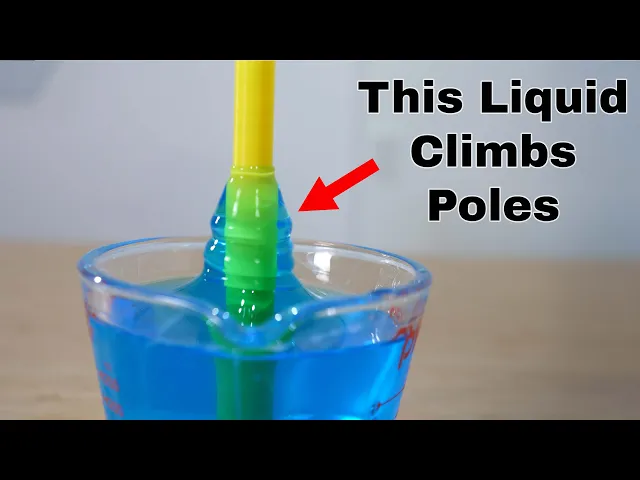
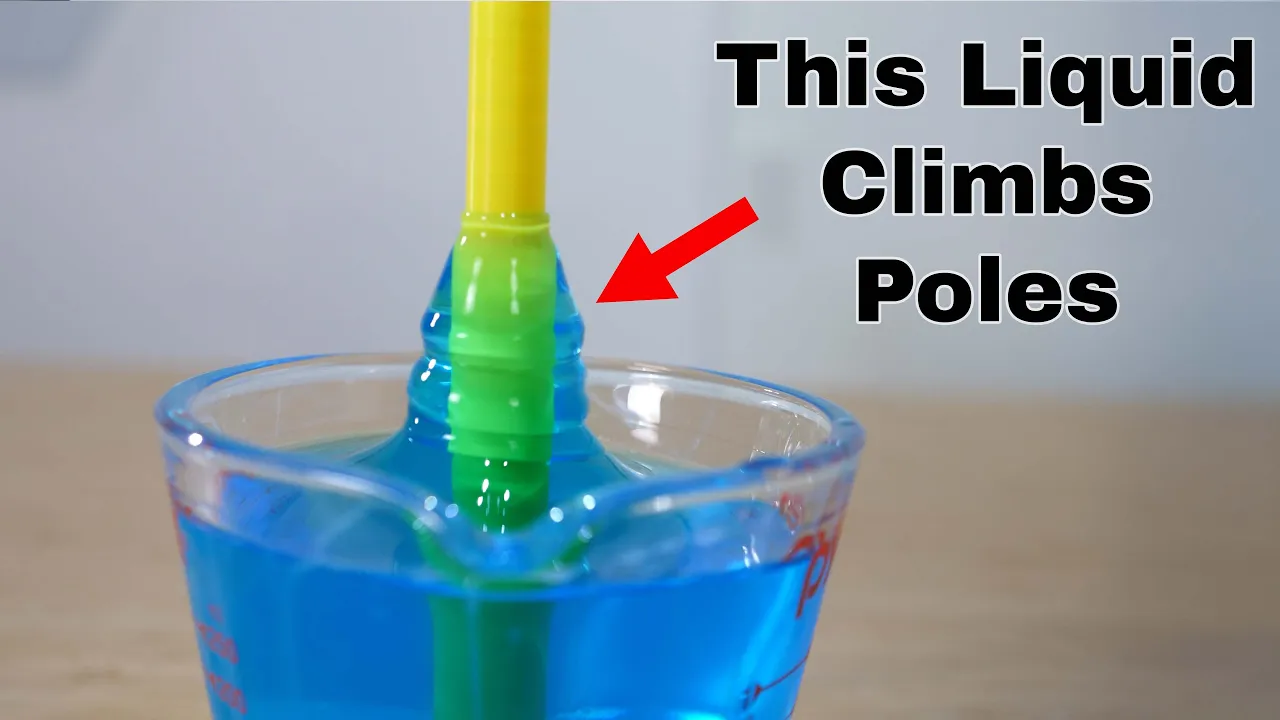
another very neat Effect called the weisenberg effect normally if you spin a rod in a liquid the liquid that sticks to the rod gets thrown off of it due to centrifugal force so this is just regular water watch how it moves away from the stick but not this fluid it actually starts to climb it this is so cool look at that layer of liquid that just stays around the p hole now if you look up why the weissenberg effect happens you're going to get hit with a lot of fluid dynamics equations that are giving the
math behind it but don't really explain the reason behind it so without any math let me try to explain to you the reason why this happens why something could climb a pole like this but before I show you this if you're ever feeling like you're covered in Peg and just slipping through life then let me tell you about our sponsor betterhelp betterhelp is the world's largest therapy service and it's 100% online with better help you can tap into a network of over 30,000 licensed and experienced therapists who can help you with a wide range of
issues to get started you just answer a few questions about your needs and preferences in therapy that way better help can match you with the right therapist from their Network then you can talk to your therapist however you feel comfortable whether it's via messaging phone or video call and you can message your therapist in the app or online anytime and schedule a live session when it's convenient for you if your therapist isn't the right fit for you for any reason you can switch to a new therapist at no additional charge with better help you get
the same professionalism and quality you expect from in-office therapy but with a therapist who's custom picked for you more scheduling flexibility and at a more affordable price so get 10% off your first month at betterhelp.com actionlab or you can click the link in the description and thanks for better help for sponsoring this video now let's get back to our experiment you can think of these molecules like little elastic bands as you spin the stick near them the elastic bands align in the streamlines this means they get stretched in the direction that the stick is moving
but they're Tangled with their neighboring molecules in different layers moving away from the stick so those neighboring molecules get pulled toward the stretched elastic band closer to the stick the closer to the rod the stronger it pulls its neighbor toward the rod you can see the same effect if I spin this stick on a stretch rubber sheet so you can imagine a layer of this fluid like a stretched rubber sheet if I spin this stick on the rubber sheet the rubber sheet gets pulled up the rod the reason it moves up is because it's pulling
Mass toward it and the only way it can go is up so it's like we have a liquid elastic that stretches and pulls on its neighboring fluid layers what's really neat is that you can see this effect even when there's no Rod watch what happens with regular water when I put it on a stir plate the water moves away from it and makes an in Dent but now watch what happens with the polyethylene glycol you can literally see it bulge up and above the surface even with no stick to climb it tries to climb towards
the spinning if I just stir the peg it'll bulge at the center and climb to the spot where the fluid is moving the fastest whereas if we just use water it'll do the opposite and move away from it this is is because for regular Newtonian fluids like water they aren't elastic so there are no forces pulling on each other in the same plane when you move the liquid but with a non- neonian fluid there is they'll keep moving up until the force of gravity overcomes the elastic Force pulling them up the effect is actually really
common it's the same reason why if you've ever made dough in a mixer your dough always climbs the mixing paddle it's due to these unequal normal stresses that are pulling the surrounding layers toward the stretched lay ERS this happens whenever you have big long molecules so if you get a really elastic long polymer then you can even see this effect even stronger for example this is just some regular homemade slime it's tempting to think it's just climbing the pole similar to a cork screw effect but if I just stick a rod in the Slime sideways
and turn it it'll climb both sides of the rod out sideways so many cool things happen when liquids start having solid properties like stretching the lines start to get blurred between something acting like a solid and a liquid in fact there's a specific number used in fluid mechanics to help you quantitatively describe how much something acts like a solid versus a liquid this number is called the Deborah number the Debra number is the ratio of the time it takes for a material to adjust to the applied stresses and the characteristic time scale of an experiment
at high deborra numbers the fluid acts like a solid at low deborra numbers the fluid acts like a liquid what's interesting is that this number was named after the propheus in the Bible named Deborah who said the mountains flowed before the Lord because at the long time scales everything starts to flow like a liquid that's how you have straight Rock layers that look bent over time so in a world where boundaries are often clearcut these materials help remind us that nature operates on a spectrum and blurs the lines between states of matter and thanks for
watching another episode of the action lab and we'll see you next time