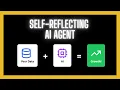
imagine your employees having instant access to every piece of knowledge they need to do their jobs no more endless searches no more guess work I am the AI agent guy and today I'm going to show you how to empower your business with an AI co-pilot that knows your business inside and out let's talk impact first companies implementing AI co-pilots with in comprehensive business knowledge are seeing an average 40% boost of productivity according to this MIT article and a 25% increase an employee satisfaction I've personally guided over 75 organizations in the past 12 months in adopting
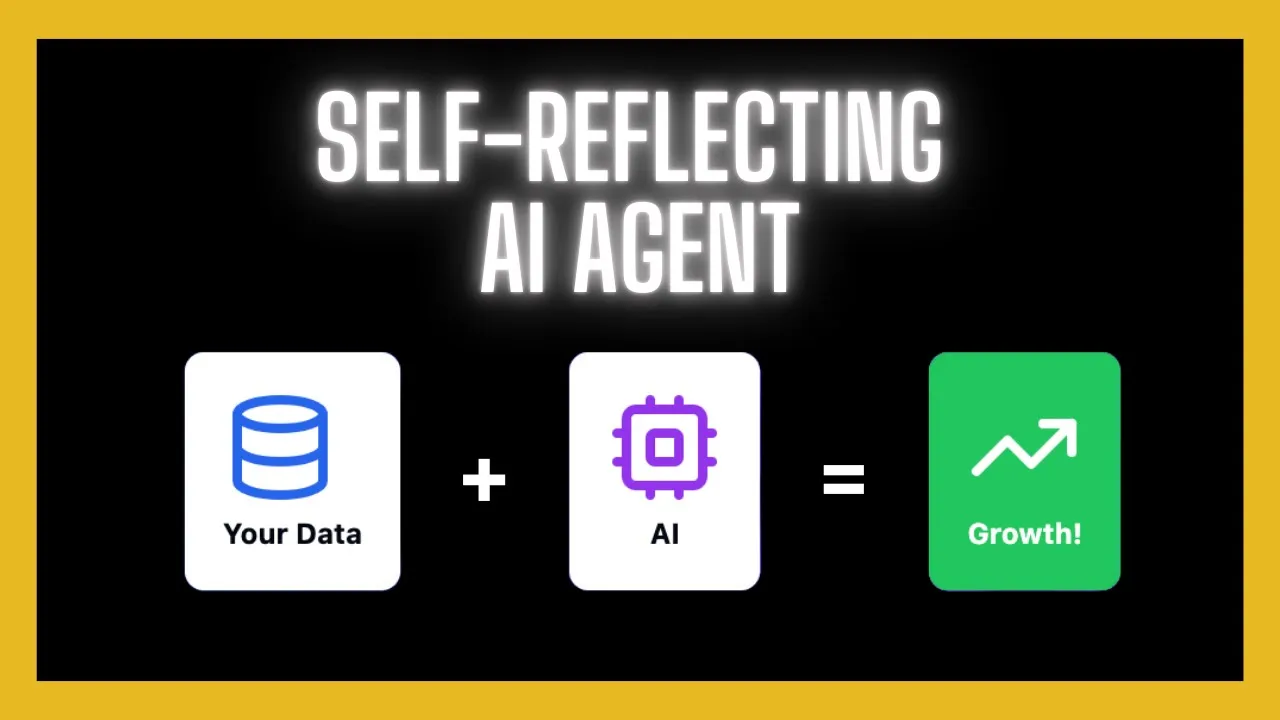
this technology which reduced decision making Time by 60% in Just 2 months these AI powered assistants aren't just luxury they are becoming essential for staying competitive what's most shocking to me is that most smbs owners don't even know how they are missing out in the race of AI implementation in the next 15 minutes you'll discover an AI chat with access to a knowledge base that is self-reflecting on its answers rather than giving you a simple and imperfect answer by the end of this video you should be closer to understanding how to benefit your business with
AI but first let me give you an explanation to understand the concept better before I demonstrate you the actual code you can immediately Implement into your business after this video so first things first what's a rack as you can see in this slide is a special database called Vector database that is added to a chat application like chat GPT this is helpful in a sense that you can give the AI access to whatever knowledge base you want like every detail of your business knowledge or knowhow from Financial reports to customer histories product specs to marketing
strategies and so on one of the biggest challenges for any business is ensuring that every employee has access to the right information at the right time but instead of scattered knowledge bases slow down decision making and hinder col collaboration by implementing a central knowledge base that houses all your critical business information from processes to procedures to best practices and FAQs ensure it's organized and easily accessible through an AI co-pilot and the result is a well structured knowledge base your AI co-pilot can quickly retrieve the exact information your employees need boosting the efficiency and confidence in
decision making did you know employees spend an average of 1.83 hours every day searching for and Gathering information AI co-pilots can cut this time by up to 90% now let me explain to you how a basic retrieval augmented generation rack system works by breaking down the process step by step step one the question the process begins with a question or query like when you would chat with chat gbt but to get answers from your knowledge base this question is essentially what the system will use to find the best possible answer think of it as a
starting point where the system kicks into action step two indexing in the The Next Step the system uses an index special Vector database optimized for quick searching but before this can happen all the documents need to be indexed this involves processing and organizing the information in a way that makes it easy to search through later these documents could be anything from PDFs to entire databases and they are processed to be ready for a quick retrieval step three the retrieval once the question is passed through the index the system retrieves the most relevant documents or pieces
of information these documents are selected based on how closely they match the query the goal here is to gather the most useful bits of information that could potentially answer the question step four the generation now this is where the Magic app the retrieve documents are passed into a large language model like jpt it's a segment of text that model uses to understand the content then the model processes the context and generates an answer essentially it formulates a response based on both the quer and relevant information it retrieved earlier and step five the answer finally the
system delivers the answer to the user this response is generated in a natural language making it easier to understand and directly related to the original question however the reality is far more complex this basic version despite its widespread implementation often falls short in real world applications its primary flaw a tendency to hallucination and retrieving inaccurate data from the knowledge base in a business environment where employees and CEOs rely r on position such inaccuracies are simply unacceptable and here comes the game changer self-reflecting and self-correcting rack disadvan system goes beyond the basic employing a sophisticated mechanism
to scrutinize its own outputs by doing so it achieves a level of reliability crucial for real world deployment unlike the simplified Rec systems often Showcase in YouTube tutorials which serves more as a proof of concept demonstration self-reflecting R is engineered for demands of actual business environment it's not just about functionality it's about trustworthiness and peace of mind for businesses that depend on accurate reliable information retrieval now let's explore this Advanced Rec system as you can see this version includes additional steps to improve the accuracy and relevance of the answers here's how it works step one
the question just like the basic system the process starts with a question question is what the entire system is built to respond to step two the retrieval note the first active step is the retrieval of documents the system searches through vast set of index documents and selects those that appear most relevant to the question this retrieval process is similar to what we saw in the basic R system in a step three the grading note here's where things get more sophisticated after retrieving the documents the system grades them this grading process assesses how relevant and useful
the retrieve documents are in answering the question step four document relevance check at this point the system ask itself are these documents relevant enough if the answer is yes it moves on to the next step if not the system doesn't just give up it rewrites this question this Rewritten question is designed to improve retrieval and the process starts over with this new question in step five generation note once relevant documents are confirmed the system generates an answer this step involves using a language model which creates a response based on the information extracted from the retrieve
documents in Step six the hallucination check a critical enhancement in this Advanced system is the check for hallucinations hallucinations are instances where the model generates information that is not supported by the retrieve documents if hallucinations are detected the system Loops back to the retrieval or grading stages to ensure the information is accurate if no hallucinations are found the system proceeds and step seven the answer validation finally the system evaluates whether the generat the answer truly addresses the original question if it does the process ends and the answer is provided to the user if not the
system May loop back and either generate a new response or refine its previous steps to improve the answer and last but not least the answer assuming the answer passes all these checks the final answer is delivered to the user this multi-layered process ensures response is both accurate and irrelevant minimizing errors and improving the quality of the information provided assuming the answer passes all these checks the final answer is delivered to the user this multi-layered process ensures that the process is both accurate and relevant minimizing errors and improving the quality of the information provided now let's
dive into the actual code I use langra to design the workflow for self-reflecting Rea chatbot my inspiration came from the example provided by the langra team on their GitHub repository which is based on a paper that dwes into this theory behind self reflecting rack building on their example I made several improvements to adapt it for a real world application tail to my client's needs today I'll be walking you to those enhancements in detail rather than covering the entire code I also include the relevant Link in the description below for further reference now let me scroll
down to the vector store function in the original example chroma DB was used but I decided to switch to milver while chroma DB is a capable Vector database it's not yet mature enough for production use in my opinion for a number of reasons milus on the other hand is a more sophisticated Vector database it's fast efficient and most importantly scalable this makes it an ideal choice for real world application that need to handle large volumes of data effectively for the knowledge based data I use this PDF file text guide 2023 from eron Young so here
we are defining the load or create Vector store function that will either load or an existing Vector store or create a new one if it doesn't exist in this function be connecting to a milus here we are trying to connect to our milus collection we are using open AIS edding function to convert text into format our AI can understand specifying The Collection name and providing the connection details next we checking if the collection exists or is empty this line is crucial we are checking if our knowledge base is empty or doesn't exist at all if
either of these is true we need to start creating a vector store the purposes to not embed our PDF files every single time we start chatting with the AI to save API cost and time next a load and process documents if our library is empty we kick into action this is just us saying all right time to build this database from scratch here we are loading all our PDF documents and making them ready to be processed now we are breaking down our documents into smaller manageable chunks this helps our AI process and retrieve information more
efficiently think of it as creating detailed index cards for every few paragraphs in our PDF next we creating the vector store this is where the magic happens we are taking all those document chunks and storing them in our M Vector database we are using open AIS eding function to convert the text into a format that's super efficient for AI to understand and search if the collection already exists and has data in it we simply let ourselves know we are good to go and returning the vectors to our what we created a new knowledge base or
found an existing one we return it so it can be used and putting it all together now outside our function we use it Vector store equals load or create Vector store this line calls our function either loading or creating our Vector store finally we create a retriever from our Vector store this is like giving our AI a library card now it can quickly find and use any information it needs now let me quickly walk you through the core concept of Lang graph what sets Lang graph apart from other Frameworks like crew AI or autogen is
that it operates at a relatively lower level giving you a more control and flexibility lra isn't as opinionated which means doesn't force you into a specific way of structuring your a instead it functions more like a workflow management framework allowing you to freely Define the functions and behavior of your AI system in langra your functions acts as nodes these nodes represent various tasks such as retrieving data or grading documents then we have edges which are connections between those nodes determining the flow of information or actions Additionally you can use conditional edges throughout these connections based
on specific conditions or the outcomes of previous nodes let's take a look at how this works in practice as you can see we start by building a graph by adding noes such as the retriever function the grer not the gr document function and others next we add the edges to connect these nodes and Define the D direction of the workflow for instance the workflow starts at retrieve then flows to grade documents we can also add conditional edges which act as routing mechanism based on certain conditions for example if the side to generate function returns transform
query the workflow moves to the transform query node if it returns generate it shifts to the generate node and finally we compile a graph bringing all the components together into a coherent workflow and down here I've implemented the chat functionality which I'm excited to demonstrate in The Next Step so let's kick off the chat by running the command python main.py as you can see the PDF file has already been embedded so it prints the message using existing embeddings now let's ask question what is the world holding tax rate in the UK watch as it process
the query running through the checkpoints grading documents checking for hallucinations and finally generate the validated answer and there it is an accurate well researched response drwn directly from our knowledge base and better TR through a multi-step validation process let's try another one give me a summary of the CFC rules of the UK again it provides a nicely formatted output rooted in in reliable data from the knowledge base that's all for today folks I hope you enjoyed this demo if you did please subscribe and hit the like button until next time AI agent out



![I Built a Virtual Assistant AI Agent that can do ANYTHING for Me [Step-by-step Walkthrough]](https://img.youtube.com/vi/SjxYuaq3hFU/maxresdefault.jpg)