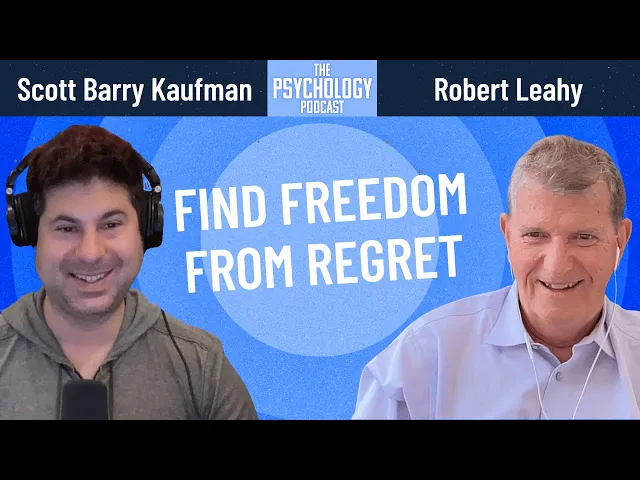
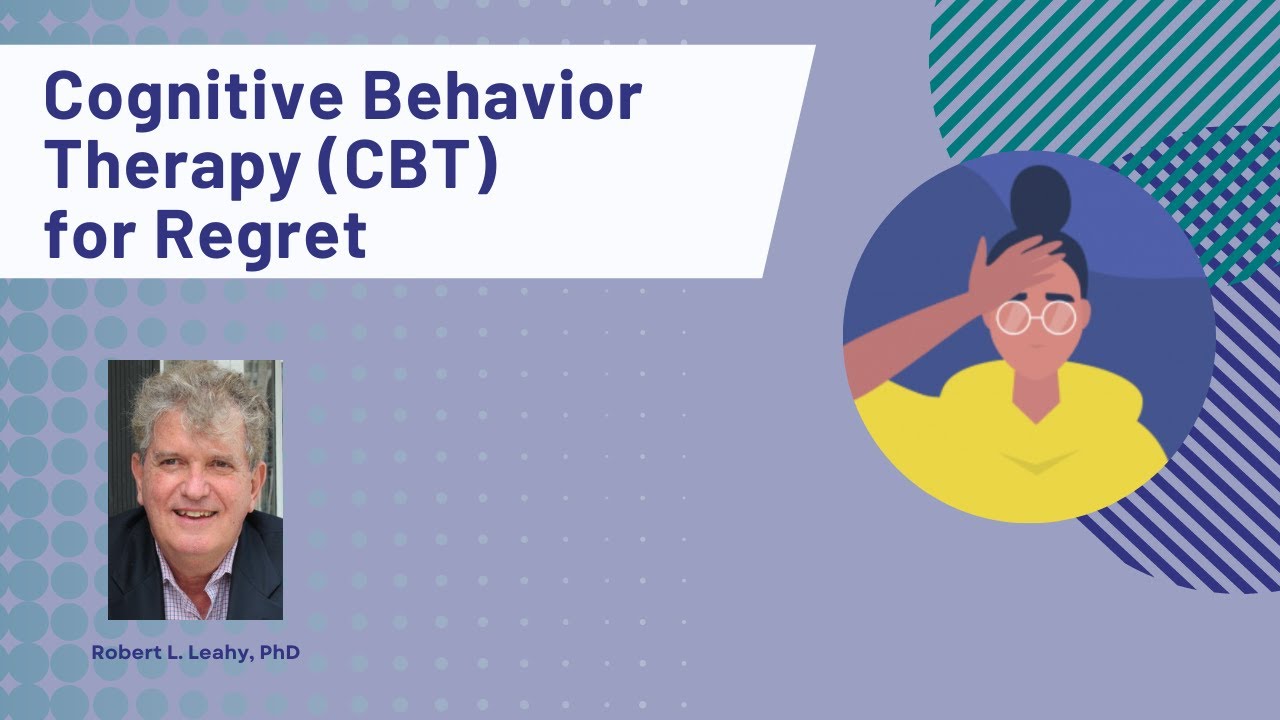
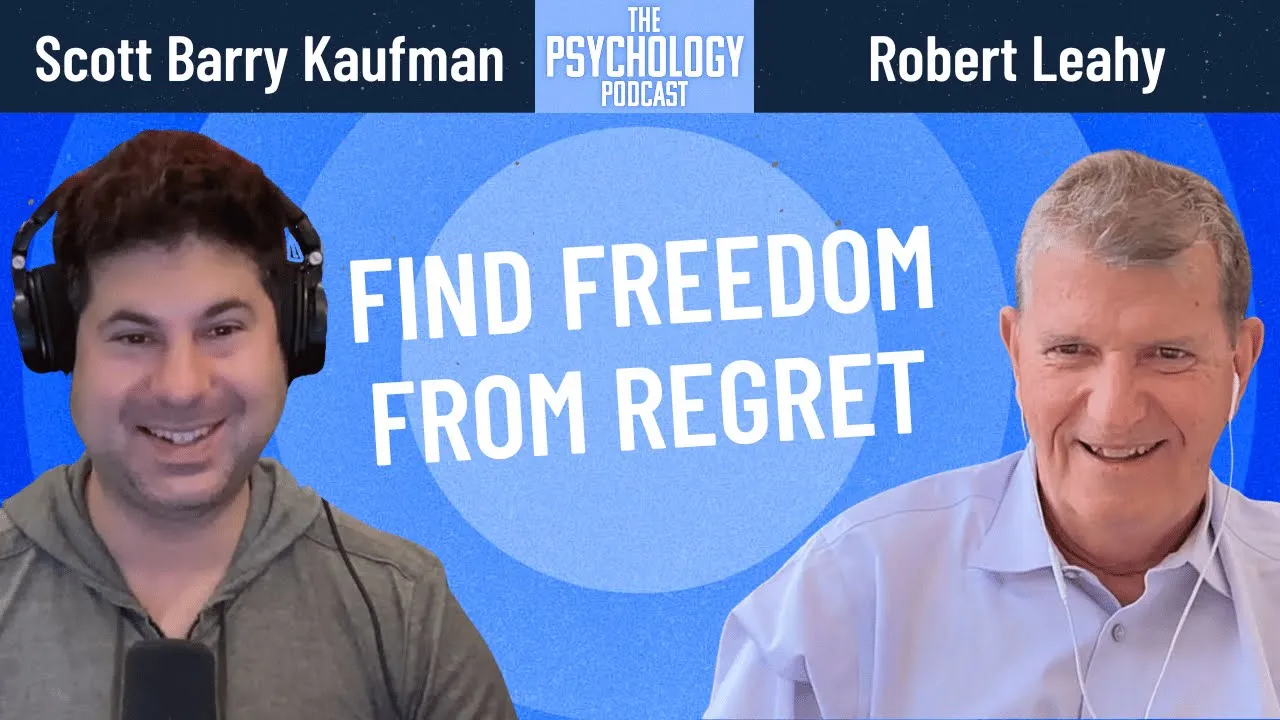
regret is holding onto the past and nobody says at the end of their life what I really am happy I did all my life is hold on to my regrets [Music] welcome to the psychology podcast today we welcome Dr Robert L Leahy to the show Dr Leahy is the director of the American Institute for cognitive therapy NYC and clinical professor of psychology and Psychiatry at Weill Cornell University Medical School Dr Leahy serves on a number of scientific committees for international conferences on cognitive behavioral therapy and is a frequent keynote speaker throughout the world he has
authored 27 books about CBT depression worry anxiety and emotion regulation which have been translated in 20 languages his latest book is called if only finding freedom from regret in this episode I talked to Dr Lehi about finding freedom from regret regret is an unpleasant emotion that can motivate us to learn and grow but there are times when it can keep us Frozen in place according to Dr alihi this is why it's important to make a distinction between productive and unproductive rumination he shares the cognitive biases we have about loss and opportunity as well as strategies
on how to let go of regret when it no longer serves us I really enjoyed chatting with Robert he and I go way back actually and he's been on the podcast before and his work has really influenced me even before I met him and really deeply helped me overcome a lot of anxiety I was experiencing many years ago so I find his work really impactful and I found this discussion which is an extension of his prior work to the realm of regret really quite profound and it had a really deep existential psychology flavor which you
all know I like so I think you'll really enjoy this podcast as well and I hope you find it useful for your own life and finding a life without living it with regret so without further Ado I bring you Dr Robert Lee hey Robert thanks so much for being on the psychology podcast well Scott thanks for having me on again it's great to see you great to see you too wow lots of change in the world since the last time we talked yeah but do you have this new book uh called if only dot dot
dot finding freedom from regret why do you uh decide to write this book like when did the idea come to you well you know it's interesting uh Scott I mean I see patients every week and uh many of the patients I've seen uh over the many years of practice uh Express regret about things they did or did not do or they anticipate if they make a change they're going to have a lot of regrets and so from a cognitive behavioral point of view I uh I was curious that didn't seem to be very much in
the literature so I decided to do a deep dive and I like I like writing books that um that are going to make me learn about things that I think are relevant to everyday life so that that's kind of where I came from on it yeah you you write regret is an emotion that comes with living a full life yeah you brought that right deep into your book you wrote that sentence wow I mean that's a powerful sentence why is that I mean why is that so important from living a full life well because the
full life includes mistakes and regrets are uh are could be mistakes that we made uh or anticipate making uh we're not going to be batting a thousand um things are not going to turn out to be exactly what we want in my view uh no one's going to get exactly what they want in their terms in life and so we have we have regrets because we make decisions to either make a change or not make a change and then we're not always pleased with the outcome and so it's it's you know some some people say
oh I don't have any regrets because uh I I figure I made the decision myself uh that's the very nature of regret you made the decision um if you don't have any regrets how are you going to learn from your experience you know I I view I view regrets as a part of the trial and error learning of everyday life which we all go through well your book is very unique because you bring this clinician perspective to it and you bring you your love you've had a lot of personal experience and practice on this you
also come from a background on helping people with anxiety and as I told you in our last podcast your book on anxiety really helped me a lot in my life a long time ago when I was studying Cambridge University I was seeing a therapist there were working through the book your work on anxiety has has been very important and I see seeds Not seeds of it I see threads of of it in this book you've applied some of those cognitive behavioral therapy ways of thinking into the realm of regret so that's unique yeah a lot
of a lot of the regret literature is you know surveys about what people regret or uh you know do we regret that taking action to make a change or not taking action there's a lot of research in the cognitive literature in the behavioral economics on on regret but in the clinical literature there's very little and um you know I I view regret when you think about regret as part of living a full life you know if you look at from an evolutionary point of view you have to ask why any emotion evolved I mean why
why is jealousy a pretty Universal emotion or Envy uh or um resentment or the desire for revenge and regret is a universal emotion it's like you're not going to find any culture that regret is not part of the experience it's the second most commonly mentioned emotion uh love being the first so you have this ubiquitous emotion that people get hijacked by um and then you know you need to understand what the logic is of regret that there's a reason why people regret they in fact in one survey they actually found that regret of the unpleasant
emotions was rated the most valuable uh because people felt like I can learn from it I can make myself a better person uh it's a way of being responsible so it's kind of like it's you know to say that um I never regret and kind of well don't you learn from experience or don't you ever apologize to people for things that you've said so it's part of I think uh the wide range of sometimes unpleasant emotions that make sense and may be adaptive if used in the right way but then some people get hijacked by
the regret and they just ruminate and become self-critical and become Frozen in their paths and Frozen in their past in their path yeah right yeah yeah I'm saying and yes and Frozen in their past oh well fortunately they're passed yes absolutely they can't seem to stop feeling like a loser for what they did 20 years ago and it's still part of their self schema is loser now I don't know who I'm thinking of there yeah I don't know where that example came from but um yes speaking for a friend this friend of ours really has
a lot of problems you know yeah seriously some of what you're talking about actually dovetails nicely with the emerging field of post-traumatic growth um have you thought about that connection as well well now that you mentioned it I mean you can really see that like like if you take the pandemic you take the pandemic uh last two and a half years and maybe the next year and a half or so uh that a lot of us had to go through incredible incredible adaptation so many people went through losses over a million people in the United
States have died but there's also growth that a lot of us could experience from that you know kind of prioritizing what's important you know is it important to have you know expensive clothes or drive an expensive car or climb the corporate ladder or you know impress people or is it important to stay alive and to appreciate uh kind of simple things in life and be flexible and one of the things that I I find with with with regret that is that regret is often tied to these inflexible expectations about what my life must be if
you were flexible um about the outcome uh of your decisions and you you can look at outcomes in terms of what I call relative preferences like you would you know you would like a hundred percent but you're willing to accept ninety percent eighty percent seventy percent you're going to be able to uh have a lot more satisfaction in life and one of the things that we see with decision making and regret is that some people are what's called maximizers they they want the absolute best they have to have the absolute best uh that's me is
that you just got the absolute oh yeah I always want the best uh clothing and uh fashion no I'm joking I'm joking look at me look at me you gotta do some stand-up comedy Scott I do actually do you know what I do no I've got to see you put it on Tick Tock uh that will never be shown on the other side I do I do I do I do I have to do a shame exercise with you but uh I think it's interesting is that the the these maximizers this is a concept that
Herbert Simon came up about 60 70 years ago got the Nobel prize in economics you know the maximizer is looking for the absolute best and the maximizer thinks if I really try to get all the information and can do all the comparisons and demand the best uh I'm going to be I won't have regrets I'll be Satisfied and what the research shows is that the maximizers take longer to make decisions and they're less satisfying with the outcome and they're even less satisfied with the outcome uh even if the outcome is objectively better than an outcome
that somebody who's a satisfier might might have chosen so it's kind of like you know trying for the best uh leads offense and more dissatisfaction and more regret and more procrastination oh boy I'm so glad you uh mentioned and uh herb Simon gave him credit because a lot of people who talked about that that wonderful framework maximizing for satisficing don't give her Simon that credit um a little Jeopardy trivia I was herb Simon's last research assistant oh my God amazing wow Carnegie Mellon that's incredible what a coincidence she's my first uh one of my first
big mentors in the field of psychology and um yeah just a wonderful person wow and and researcher yeah okay so does anticipating regret lead you to action or inaction you know people often think about regret about decisions I made in the past and the outcomes in the past um but anticipating regret is a big part of of you know regret Theory actually uh it's that um like people often will view making a change in terms of a loss frame like for example somebody thinking about uh breaking up in a relationship getting a divorce or whatever
it would be they may often think about what I'm losing uh which of course is always true it's always they're always trade-offs right between staying and leaving so people anticipating uh regretting their decision um there's kind of an inhibition of making a change because it's often viewed as a loss frame um and what we know from the research and there's a lot of cross-cultural research that people have done on this that people uh anticipate making a change will lead to more regret in the short term um there is more regret than a person experiences making
a change in the short term in the long term as people look back on their lives people are more likely to regret what they did not do um they did not make the change they did not pursue the other job they did not uh you know break off the relationship uh or whatever they they regret what they did not do and this is true in all cultures so that have been studied so it's um it's an interesting asymmetry you know because because we often we like uh we often think that if I make that change
uh I'll get stuck and I think I think this is where a lot of the interesting work and emotional Theory uh that you're familiar with uh the affect of forecasting work that you know people predicting their emotion like if I do this uh like Dan Gilbert's work if I do this I'll I'll have regrets and what they've with Gilbert and Wilson others have found that you know people anticipate far more regressed than they actually have but we also tend to over predict uh how extreme name our emotion will be how happy will be how unhappy
will be so if we get that new house we're going to be really really happy forever like a a durability illusion I'll be happy forever if I move to Santa Monica California you know or I'll be uh I'll be uh unhappy forever uh if I if I lose money in the market or if I go through this breakup and so when people make a decision or they anticipate regret they're often over predicting their emotions and they often uh over predict the impact how serious and how durable uh how extreme that emotion is going to be
and they don't consider the different ways that I can cope so when I'm talking to somebody thinking about you know divorcing um uh you know he talks about missing his children which is understandable and kind of a good value but doesn't give as much value to the idea of having fever conflicts with this partner in having New Opportunities uh moving forward so you know you can imagine that if somebody stays and an unhappy relationship for 10 15 20 years they're beginning to build up a savings account of more regrets so we often have to think
about um you have to think about ways that we can cope with making change and I think this is where the work on resilience comes in we we often underestimate how resilient we are you know the work of George bonano at Columbia oh yeah yeah and George's work indicates remarkably that it's like 80 85 percent of people going through what we might consider a major negative life event uh a year after or back to their pre-event uh psychological well-being so regret event anticipated regret we often underestimate our resilience and you know it's kind of like
a hedonic treadmill we we generally will eventually get used to what we have whether it's good or bad it is like the hedonic treadmill and it's also seems to relate to Daniel Gilbert's work on affective forecasting this is the kind of thing that I think in in the clinical area Scott is so important to incorporate you know how we think about emotions how we how we think about our emotions in the future and that because we often get anchored to an emotion and we we we we look at the future through the lens of our
current emotion so one thing that I've been interested in for years is how depressed people make decisions uh because it's like a depressive Paradox you would think why would you continue criticizing yourself because that's not rewarding or why would you continue avoiding things because you're not getting rewards so it seemed like a paradox I mean like the at the opposite of the law of effect but what what depressive avoidance is about is avoiding further loss and it's kind of like if you've gone from 80 percent positive to 20 positive uh you're going to be hesitant
to take the risk to make a change because if you lose that 20 percent positive that you have left you're going to think that life is not worth living so there's kind of a depressive you know you know depressed people are more prone to regret they criticize themselves part of actually part of the the back depression inventory um they criticize himself to anticipate more regret they don't think that they can handle the difficulties they don't think that they're going to enjoy positives and they think that they're going to suffer their losses more than enjoy their
gains so there's a logic to depressive avoidance and passivity has the research shown the causal Direction there which is the chicken which is the egg oh yeah there's a that's something that's more correlational I've done some research on that over the years and I know derubis and other people have done some research on to put yeah but it's um it's an interesting thing because in therapy we're always trying to get patients to make decisions right uh you kind of wonder why would this person who's depressed not want to make a change um you know people
are anxious are afraid of surprise they're afraid of Delta you know they're afraid of oh don't get my hopes up too much because then things don't work out I'll be really traumatized by the surprise yeah and that's what they would regret it's so interesting that so much of this really does pivot around the maximizing for satisficing distinction like the whole book kind of pivots around that because if you lower if you don't really expect anything good out of your life and everything that happens it's even a little bit good you're like oh that's nice one
of the things that um uh that that I discussed in the book is what I call you know existential perfectionism I'm sure you've seen this uh both in L.A and in New York you know we're kind of like the ground zero for existential perfectionism like my life has to be just great my job has to be fulfilling all the time where I live and my parents and my partner and all that it's kind of existence like the Holy Grail myth you know uh you know chasing after uh uh it's what one of your guests recently
talked about toxic positivity uh which I love that concept and you can see this existential perfectionism as part of regret oh you know my partner is not perfect my job is not perfect I'm not perfect and all that what I would love you to do is go out and Survey people you know well and find out which of them have perfect lives and even if you want to go out and ask Bill Gates this is life perfect you know I don't know going through a divorce and dealing with his kids and you know so we
we kind of idealized celebrities and things on social media you know I had a patient a number of years ago who uh divorced guy about in his late 50s and uh he was uh thinking he was thinking about the woman he was dating you know their pauses and negatives he said what's the key to a good relationship and I said you know I used to do a lot of windsurfing and I was down in St John the Virgin Islands I wanted to learn how to windsurf in heavy waves and heavy uh heavy wind so I
went to the other side of the island Coral Bay and there's this guy Mike who is the wind surf hot dog on the island so I said Mike what's the key to uh windsurfing and strong winds and heavy waves he said Bob it's rock and roll and commit to the action and I thought and I said to this guy I said that's the key to a good relationship rock and roll and commit to an action so he put on a screensaver a picture of a guy windsurfing and heavy winds um but it's kind of like
you know you say when you get married you know happily ever after it should be for ups and downs Ever After there you go yeah so it seems like a lot of people are looking for the free lunch they're looking for the no trade off option are you saying that people should should stop that search if you're looking for the free lunch you're going to starve I'm getting a little sassy over there sassy Robert you know it's all about laughs he's a snap snap you know the free lunch method it's all about trade-offs you know
it's kind of like uh like you know Kierkegaard said if you get married you'll regret it if you don't marry you regret it um I was talking to the patient number of years ago a really good guy had sounded like a good relationship uh with this woman he knew for several years and he said I don't know if I can get married because I you know uh I have some ambivalence and he equated ambivalence with I can't make a decision if I'm ambivalent and of course the word decision in Latin actually means to cut away
from something so if you're making a decision by definition you had ambivalence at the moment you made the decision so decisions are all about decisions are all about trade-offs you know that looking for the perfect partner he could spend the next 30 Years you know uh and if he found somebody who thought was really good he could then say well maybe there's somebody better this kind of receding reference point like these guys you know had earned their fourth or fifth marriages or whatever as opposed to um thinking about the trade-offs the pros and cons and
I said the reason that you're ambivalent is that you know each other we often think about Romeo and Julia as oh that's the kind of way you should feel if you make a lifelong commitment Romeo and Juliet is about a 13 year old and a 15 year old who see each other from the distance at a party with opposing families and fall in love based on absolutely nothing and then within four or five days several people were killed including Romeo and Juliet and some people during Shakespeare time actually thought the point that he was trying
to make was to make fun of this idealized romantic infatuation why not wait six months and get to know each other before you end up killing yourself so it's the idea that there's a free lunch there's no trade-offs the Holy Grail the receding reference point there's always somebody better they're like five or six billion people in the world what's the likelihood that you have found the absolute best person in the world right Zero thanks for all your great Romanticism today Robert um oh yeah I am a romantic what's the chances that your wife is really
the best person for you probably zero you know she is the best person for me but there's the opportunity cost of searching right so if people look for the next best option there's a cost to search it and yeah like yeah you don't have the commitment you spend a lot of time chasing down dead ends um oh yeah yeah oh yeah so that's what my friend tells me yeah it happens in the dating Market yeah yeah um again the friend um but um yeah but there's positives there as well like freedom and no commitment their
trade-offs of being single yeah there could be Trails there um I really like this phrase action inertia is this a psychological principle that the longer you wait the longer you want to wait for something yeah it's sort of the habit of not doing something and it's it's kind of like uh when you practice a bad habit I mean one of the advantages of avoidance uh this is uh the O.J Maurer approach in Old Yale uh professor of psychology about you know two-factor learning that you think about making a change but you don't know that's going
to be unpleasant you avoid what you do your anxiety goes down when you avoid and so you basically reinforce avoidance so uh the inertia becomes the habit uh in the inertia because I mean one of the examples of this is the sunk cost effect which I discussed in the book which is that you you know everybody knows what this is you buy a jacket or a dress or whatever and you take it and pay a lot of money you take it home try it on and say oh no I'm not gonna it's not me right
today that's not for me I'll do it some other time you put it in your closet and you have it in your closet for five years and then your partner says why don't you get rid of that and you haven't worn it five years oh no I can't get rid of it I paid good money for it um uh what you're doing is you're holding on to something because you had a prior investment in it and you see people doing this with careers with uh relationships uh with their you know uh PCS or whatever it
would be uh I can't uh I can't make a change because I put all this time in it and I think part of it is the uh the inaction inertia that you've kind of gotten used to staying uh you have a lost frame you think that change is going to be a loss you have a fear of wasting I mean one example I think of like if I had a hundred dollar bill and I said you know Scott I'd like burning money in front of people and so I'm going to burn this hundred dollar bill
I'll bet you would be you would probably think I'm a little crazy and you'd be correct but you might be a little bit angry with me we don't like the idea of people burning money um you're not going to be worse off and no one else would be worse off but there's this kind of intrinsic fear of wasting that people have and so if I get rid of something if I put five years in a relationship or five years in a job or career or whatever or a course of study and think oh I wasted
it right so it's very hard to walk away from a prior commitment well what is the hindsight bias and how does that relate to this because that's that's different than the sunk cost yeah exactly the hindsight bias is like you know it's like people discussing the uh baseball or football game on that was on Sunday they discuss it on Monday and they knew everything was going to happen the way it was or you know people like uh Bob Schiller at Yale got the Nobel prize in economics looked at the hindsight bias almost everybody was saying
after the market crashed in 2008 oh yeah I knew it was so I got out right everybody got out of the market no they didn't they lost trillions of dollars so hindsight bias is that we reconstruct our knowledge about yesterday from what we know now and of course we're I'm really great at predicting what I had for dinner last night right uh but I'm not going to be good at predicting what what the weather is going to be like next week so hindsight bias is part of regret deciding oh I should have known that my
partner was going to be an alcoholic or I should have known that that investment would fail um when you made the decision in the past you made a decision based under conditions of uncertainty with the information that was available uh right trying to make the best outcome and there were other people making that decision well then we went into the whole Free Will issue the decision had already been made for you going all the way back to the big bang you know I try to link your work to lots of other areas of research as
you've seen today another one is I've wondered if you've thought about linking it to Kristen neff's self-compassion work at all because what advice do you have for people who let's say they did something genuinely terrible when they're younger yeah how can they still see themselves as a positive self-concept in the present yeah um when they keep ruminating over the past can they is there hope for that yeah so uh you know Paul Gilbert who who originated compassion Focus therapy is an old friend of mine and um and you know the the idea of compassion or
bring up compassion in in the book um you know directing it toward ourselves are directing you toward other people but I wouldn't even expand the compassion uh into into the idea of self-forgiveness um and and humility um you know there's a concept that I found very useful with myself and with patients I work with which I would call uh you know adaptive humility adaptive humility is that I'm just a human being I'm no better than other people I'm going to make mistakes I can learn from things I need to forgive others if I'm going to
forgive myself all of this you know some research on humility that shows that people who have this adaptive humility I don't mean people who are have low self-esteem or don't assert themselves and people have this adaptive humility kind of a humanizing universal compassion these people have better marriages better friendships and stay as a reason I mean if you're like okay yeah I'm a fallen angel just like my partner or my friend and I can direct compassion toward myself and compassion doesn't mean I get a free ride forgiveness doesn't mean I get a free ride it
means that okay I real I realized I said something that was was unfair or mean-spirited or just plain wrong but I want to become a better person and this is an opportunity for me to learn from that it's an opportunity for me to correct myself rather than criticize myself the world's not going to be a better place if I hate myself but it could be a better place if I practice compassion toward myself and others thinking about forgiveness as a strength that you have in life you know I'll you know I'll you know I'll give
you an example of my own life we were staying at a hotel recently and the internet was not working it was expensive place and I was kind of irritated and I was talking with the woman downstairs in charge and in my view I was very rude to her I mean not terribly but I was I was rude um and I came back to the room I was talking with my wife and I was justifying myself you know well you know paying a lot of money and then I thought you know uh if I were watching
myself I would have thought that guy's acting like a jerk um and I I said I don't want to be the kind of person that when I'm thinking about my behavior toward somebody who's innocent trying to do her job you know is being treated like in some kind of like some guy you know with a power assertion type thing so I immediately called downstairs and uh I asked to speak with her and I apologized uh and she was actually quite gracious in accepting my apology and I'm grateful for that but the ability to to kind
of recognize it you know it was a really bad thing idea they shouldn't treat anybody that way I would never want to be treated that way uh this is adaptive humility I'm not a saint but it was an opportunity for me to to sort of say yeah that's a regret that I need to do something about that I need to ask her to forgive me I love that um if that's if that's the worst thing you've ever done in your whole life though I have to tell you I'd say you're pretty good okay good pretty
good person well look this also gets into the distinction you make in your book that I love between productive and unproductive uh rumination right yeah I mean you're just being proactive about it well you say adaptive yeah productive adaptive same same let's uh have the audience um learn how to step away from rumination and I'm going to read some of my favorites from your book imagine that your rumination thought is a balloon you can let go I love that one you know what you love it because you're creative that that but I've used that you
can tell you can tell I'm creative no I'm just guessing I'm just guessing I can tell by the books on your shelf back there it's interesting because when they've used that with people who have an artistic uh sentiment they really really resonate to it that's the one thing oh I love the thought balloon you know that rumination or that worry or that regret I'm holding on to that balloon and now I'm letting it go and I'm seeing it float in the sky and it's kind of like this visceral feeling of watching your worries go away
it doesn't necessarily work like that but it gives you this sort of like fluidity and imagery and you I bet you you do a lot of visual imagery like when you oh yeah when you think of recollect something when I listen to music I have visual imagery of things that that occur I love that one yeah um you write letting go is the opposite of regret it so tell us a little bit about the the letting go uh part your regret is being anchored to the past and uh as one comedian said the only reason
to live in the past is the rent was cheaper so but you know it's it's an interesting thing because regret is holding on to the past and nobody says at the end of their life what I really am happy I did all my life is hold on to my regrets you know yeah if you think about things that annoyed you in the past or that upset you in the past uh very likely at the time you had this intense emotion you thought this is going to go on forever but today you hardly ever think of
them and we're asking why do you no longer think about what you were worried about when you were at Cambridge University or living in London or whatever because you moved past it you put it in perspective you pursued other positive goals uh you no longer held on to it one of the goals in life this is a technique that I've used with people is the indifference technique what would be the advantage of being indifferent to your regrets right as opposed to actually caring a lot about them and having to you know having to have a
a dialogue with your regrets and you know having this voice in your head about what an idiot you are for making those mistakes becoming different about the mistakes that I made or things that happened in the past or people treating me unfairly we often think about indifference as like um you know surrendering or being defeated as opposed to Rising above and if you think about the image because you're an imagery person spam when you think about the image it's like one technique uh that I I I've used is thinking about yourself as you know you're
you're up in a uh um in a balloon uh a lighter than air balloon you're up about you know uh 4 000 feet and you're looking down at these events you know we were up in the balcony looking down and you know you're up in space looking down to the Earth um and so you get this sort of this sort of emotional distance this perspective of Letting Go and you've let go of almost everything right you because you've let it go you don't even realize you've let it go okay okay let it go I like
that I really do like that here's another one of my favorite ones flood yourself with the fear of thought uh the the boredom technique that one by the way that was I believe in your anxiety book um and that helped me a lot it's kind of the ultimate indifference isn't it it's kind of like it's an exposure technique it's like you know the boredom technique with regret could be yes I made a stupid decision that I shouldn't have made uh boy I said it just now and all of a sudden I'm feeling pretty bad but
what if you repeated slowly like a zombie two or three hundred times every day you know uh I made a stupid mistake and I shouldn't have made it you eventually become indifferent so it's like it becomes white noise and people are often when I introduce the boredom technique whether it's for worry or jealousy or Envy or regret whatever um or resentment um they initially think oh my God that's going to make everything worse you're asking me to really repeat my negative thoughts but if I ask you to get on the elevator uh 200 times you
might initially be anxious but after the tenth time you say Bob I think I got this I think I know what exposure is I don't need it yes sir 180 exposures yes I love it um uh some comedians say that you know to they would go in elevators and make terrible jokes and uh just get over the fear of rejection get off the fear of uh yeah just what they say if you can get over the fear of rejection you you got it made exactly you know Scott when I was in college I had a
friend and which is surprising that I had a friend but I had a friend on the faculty really I had a friend on the faculty uh this guy Danny Daniels who uh I was a philosopher anyway so I was talking with Danny once um and uh I said you know Danny there's this guy uh who uh in my college who I think he doesn't like me and I don't understand because I have so many different kinds of friends and he said that's kind of my narcissism everybody should like me no matter how likable you are
they're going to be a group of people somewhere in California or New York who are going to hate your guts so uh yeah so Danny said to me something that was really profound in my mind he said no matter what you do they're going to be people who don't like you and so one way of kind of an acceptance piece no matter what you say what you write what lecture you give or Workshop you do they're going to be some people who don't like it it just comes with the territory and the question is do
you need everybody to like it yeah that's a really good point do you need that for your own self-esteem some people do it's like the idea that somehow I need this is kind of the maximizing need for approval on the other hand if you can accept this is kind of like a an ancient Aristotelian approach to Virtue if you act according to your values to what you think is the right thing to do um if you act according to those values that should direct your what you do and what you say not the approval you
get so if you're about if you're among a lot of racists you know you might get a lot of approval by making racist comments you're not acting according to your values I hear you great Point great Point um I want to Circle back to something I I meant to ask you I'm trying to reconcile uh the notion of Let It Go with uh I had Dan pink on this podcast reselling he said the only ones who let go of regret are psychopaths or little children I wanted to get your thoughts about that like it sounds
like on the one hand you're saying like well actually regret can be quite powerful in our lives you know can serve a useful function when it's productive and the other hand you're saying kind of Let It Go like don't even worry about regrets so I this is my little nuanced uh question you know yeah so there's a uh I have a whole chapter on uh guilt oh yes you say guilt is unfinished forgiveness is what you say love that so you know guilt it's an interesting thing because one one of the ways I think we
grow in character is by what I would call productive guilt uh and again you have to think why did guilt evolve I mean why is it every society has guilt and shame I mean guilt and shame are are emotions that maintain social cohesion they maintain the tribe they maintain the group they maintain trust and so absolutely people who are in case like if you were looking for a life partner and somebody said you know gee I really like you Scott but I have to tell you I have no capacity for regret shame or guilt so
can we pursue a lifelong relationship you would want to run the other way no well what if they said I have no come no capacity for shame guilt what was the third one you said regret regret but I have a capacity for love would I run the other way I wouldn't believe them because I think the love might the love my wife is to have capacity for being guilty feeling guilty for something I've said that I think is wrong and I think that that doesn't mean you you feel stuck in the guilt it's kind of
like my experience with the concierge of the hotel um that I felt guilty I felt this is not the kind of person I want to be I want to uh apologize even if she doesn't forgive me I want to do my part to try to make an effort to right the wrong so I think the way of thinking about regret is to have regret about the right things to the right degree in the right way and it's very very much like Aristotle's view of virtue if we think about guilt uh you know what we know
is that people who are good at expressing this sincere apology are more likely to be trusted in the future and people who other people in the work environment know are capable of guilt are viewed as more trustworthy in the in the work environment so productive guilt is looking at your view and saying is this the kind of person I want to be would I feel feel okay if somebody treated me this way and then trying to learn from that experience to make make a change in other words this is the guilt is the first step
and the next step is self-correction and growth and coming to terms with making yourself a better person is possible making amends making apologies if you can and then ultimately forgiving yourself that that's not an example that would not be an example of the balloon that would be an example of bringing the balloon down and talking to the balloon and saying you know something I have to make an apology here wow yeah I really do love that that phrase guilt is unfinished forgiveness yeah guilt is Regret on steroids too it's like you're full of good quotes
you're like let me give you an even better one well let's end here today with the cheekiness um where you talk about the eight Habits of Highly regretful people couple of things you say like well um dwell in all the negatives that you experience and discount all the positives never accept trade-offs um when considering a choice insist you need to know everything for sure before deciding so let's just end on that cheeky note it's so that just people can also just kind of laugh at themselves a little bit because I think that um people just
take you know maybe that's the maximizers that take themselves too seriously maybe this has feisters have a little bit more of a sense of humor about the the sort of inevitable inevitable imperfections of Being Human right of human existence yeah if you take yourself too seriously life is going to have a less laugh on you so oh my God that's a great quote look at you I should have gone into advertising not the psychology thing or Hallmark cards look I I enjoyed so much chatting with you today I really appreciate you coming back on the
show and I'm glad that we get you on here periodically when you get new books oh great thank you Scott yeah I know I'm a big admirer of your work and really appreciate what you've done um why don't we dedicate this episode to the memory um of uh Aaron Beck oh God thank you yeah Tim Beck I think he's a kind of a mutual friend of ours Tim his birthday would have been a few days ago remarkable person and uh so much of what I do you know is is based on you know the the
inspiration in uh in the knowledge and simply the way of inquiring that Tim Beck uh you know um gave me uh over the years yeah let's dedicate this in his memory and um and you're always welcome back in the show can I tell you a funny anecdote before you leave yeah so um I was at a meeting at uh at Beck's apartment about I don't know seven years ago and he uh and he said you know uh you know the Dalai Lama contacted me and uh in because I'm not able to travel because he was
in a wheelchair the Dalai Lama said he would come and visit me in Philadelphia and he sat right in that chair right there um and uh and then and then Tim said well and his people uh said the Delhi lamb has has requests about the what he wants and it was like an extensive list of foods that he wanted you know soup and salad main course dessert and all that and I said well he sounds like a very hungry llama doesn't he did he laughed he did laugh yeah he's a great sense of humor he
does have a great sense of humor yeah this is kind of a gratitude thing about um you know looking back on your life and having access to memories of people who may be gone that we learned from and we loved um and I think that's that's part of that's the kind of part that some people say live in the present moment I think try to live in all the moments in your life try to try to gain from I grew up very poor and I never want to forget growing up poor because it allows me
to appreciate what I have it allows me to understand other people are struggling so it's it's good to be connected to people who gave you a lot who are no longer here want to leave on that note thank you so much for being on the show and the atmospheric extraordinary contribution to the field of psychology thank you so much [Music] thanks for listening to this episode of the psychology podcast if you'd like to react in some way to something you heard I encourage you to join in the discussion at thusacologypodcast.com or on our YouTube page
the psychology podcast we also put up some videos of some episodes on our YouTube page as well so you'll want to check that out thanks for being such a great supporter of the show and tune in next time for more on the mind brain behavior and creativity [Music] foreign