- One of the most common questions, for example, that leaders get is what's your leadership style? And most leaders I know will say, "Well, depends upon the situation. " And there is some wisdom in that.
We may have a dominant leadership approach but our preferred way may not work in some situations and we have to adapt. That's why they call it situational leadership. But as you'll see, situational leadership usually comes down to two key variables that you have to adapt to your followers: their competence level and their motivation level.
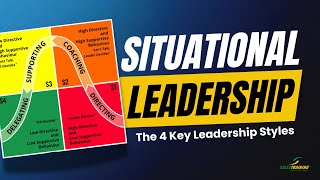
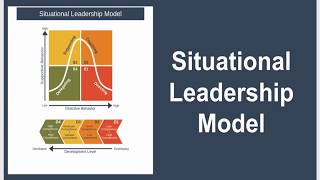
Or some people say, skill and will. Paul Hersey and Ken Blanchard developed one of the most well-known situational leadership models. This video is inspired by their model, but we're just gonna use it as a jumping off place to have a practical conversation about what this looks like in real life, perhaps in your life.
We'll look at skill and will and four scenarios that you may be facing as a leader. Be sure to download the free PDF and the description below the video on the five essential communication skills that all professionals should have. First, what do we mean by skill?
We use this word to refer to the level of competence each individual worker, follower, or team member possesses to do their job. Employees who have lots of experience typically possess lots of skill, but not always. Second, will refers to the follower's level of motivation, confidence, and willingness to work hard.
Some people have a strong internal motivation to work hard. Other people need external motivations like rewards or potential consequences to get motivated. Now, you are probably a situational leader if you adapt and respond differently to each individual follower, depending upon their specific skill level and will level.
Now, it's just two variables, but a lot of managers do not read the situation correctly and their leadership suffers as a result. So let's look at four typical scenarios to make this concrete. And as we talk about this, don't worry so much about memorizing anything.
Just think about how this could apply to your own professional life to get a sense for how situational leadership works and if you fit this description. And the key to this is that if you are a person who successfully adapts your leadership style to fit the situation, you're probably a good situational leader. If, however, you act the same to every single person no matter what challenges they face, then you are probably over relying on your own dominant style of leadership that may not work in all situations.
So let's look at these scenarios. Let's start with scenario one, where the person that you are supervising has lots of skills. If that's the case, then they already know how to do it, assuming they have a good enough motivation level.
That means you don't have to lead with a hands-on approach. Instead, one of the best things that you can do as a leader is give them the space and autonomy to let them do their job. That's scenario number one.
But let's look at how some leaders misread the situation and get this wrong. One unhelpful approach is where a leader is dealing with a highly skilled follower but the leader is still using micromanagement tendencies. I know some leaders who continue to put themselves in the middle of the task, give advice that nobody needs and nobody asked for.
This will usually rub people the wrong way and it can come across like you don't believe in or trust your people. The best approach when you're working with people who are competent is to invest your time in communicating about the big picture and the overall outcome you want. But it's best to stay out of the details about how they get the work done.
Scenario two is when someone you're leading has a low skill level, at least for the moment. So let's say you've just hired a new person or put somebody in new role. Let's also assume they don't mind putting in some hard work.
If that's the situation, one of the best things you can do is teach them, coach them up, provide training to increase their skill level. That's the fastest way that they can make a contribution that adds value to the team effort. Here are two of the most common ways some supervisors go wrong when they're leading people who have low skills.
The first mistake is they don't provide enough training. If you've hired somebody new or you've given them additional responsibilities, you have to equip them to do the job if you want them to succeed. I experienced this challenge firsthand when I was a new employee, fresh out of college.
I took a new job and my supervisor literally told me on the first day that she took a sink or swim approach to managing people. I received no training at all and I just made mistake after mistake. I crashed and burned.
When your people lack skill, you have to coach them up if you want them to succeed. So let's look at how this should have been done. At another job, not long after that, I was a brand new communication analyst, which was a step below a consultant, which is the job I really wanted.
My supervisor provided the best possible process I could imagine to help me ramp up my skills. Every few days, my supervisor would give me a new task that eventually exposed me to every part of the consulting firm. I worked in the mail room, processed 360 reports, I shadowed different consultants every few days.
They asked me to present just five minutes of a piece of a workshop, and soon I built up to present the contents of a workshop for a couple of hours straight. They kept equipping me until I knew how to do every part of that job. That's what coaching somebody up looks like.
If one of your followers lacks skill, focus on coaching them up. The second key mistake some leaders make is that they treat somebody who needs more skill development as if they are lazy or lack motivation. They treat a skill problem as if it's a will problem.
So if a follower's not good at something yet, these supervisors might talk to the follower like they question their work ethic or their attitude. I once saw my son's athletic coach basically yell at some brand new players, kids, for not wanting to win enough. But what they really needed was some basic skill development.
Their motivation level wasn't holding them back, they just didn't know how to play the game yet. They lacked skill. The bottom line is this, as a situational leader, you have to identify each individual follower's skill level.
If they know their stuff, then give them space and autonomy. If they have a lower skill level, they need to be coached up on those skills until they can do it on their own. So the first variable is your followers' skill level.
Now let's talk about the second variable for situational leaders, the followers motivation level or their will. Followers have their own levels of personal motivation and drive to get the job done. In scenario three, just like skill, when followers' will level is high, they don't need much in terms of additional motivation.
You still need to remind them that you value them and appreciate all that they do, especially after big accomplishments. But they don't need you to build their confidence up from a lower level. Scenario four is where they have a low motivation level.
And there's usually two types of struggles in this area. The first issue is easier to deal with if you are the leader. First, sometimes a follower has a low confidence level that looks like, on the service, to be a low motivation level overall because they don't take initiative.
But essentially, they don't believe in themselves and they are passive or hesitant to engage because they're afraid that they'll mess up. As the leader, when you see a lack of self-confidence, that's your cue to help them build up their confidence. The key is to give followers small, short-term goals.
Let them taste those small victories and successes and build on that. Celebrate every victory. Help them find their own motivation.
And you can gradually increase the difficulty level and responsibility and demonstrate that they can succeed every step of the way. One of my new hobbies is sailing. And I signed up for sailing lessons last summer as an adult and I knew nothing.
And I had a really low self-confidence level. So on the first day, I was nervous and hesitant because I thought any mistake I made would somehow sink the boat. The sailing instructor started giving me small tasks that I was able to accomplish, like tie a knot in that rope so it doesn't slip through.
And I was like, "Oh, I can tie a knot. " And then he'd say, "That's a great knot. " That was a small win and it built my confidence.
And throughout the course of that day, the instructor helped me find my mojo, so to speak. And on the second day, I showed up with a lot higher level of will to get engaged right away. So sometimes it's an issue of self-confidence and you can help quite a bit with that.
Now, the other type of motivation or issue of will is harder for the leader to solve, and that's when the follower just doesn't want to work hard. They don't have an internal drive. To me, this is the worst situation, especially when they have a good amount of skill.
You know they know how to do it, they would just rather be somewhere else. So when this happens, the leader will likely need to persuade the other person somehow to get motivated. Persuasion is a whole art unto itself, but this might mean finding ways to engage followers and tasks that they do care about, possibly giving them more challenging work or responsibility or different types of rewards.
The key is you have to figure out what your follower needs and wants and use that to motivate them in the current situation. We've covered most of the ground so far through these four scenarios, but let's look at two additional situations you may sometimes face. What if they lack, for example, both skill and will?
In other words, they don't know what they're doing and they aren't motivated. Well, if you're stuck with them, if you have to keep this person on your team, then you have no choice to start training them and telling them exactly what to do. Sure, you gotta celebrate those small victories as they come, but you have to take a time-intensive approach to supervision.
You have to monitor them the whole time to make sure they're doing what they're supposed to do. So clearly, that's the worst situation, when they lack skill and will. And lastly, the best situation is when a follower has high levels of skill and high levels of will.
When that happens, you've hit the jackpot. You have a winner on your hands. And what you can do there is just help them continue to develop their career, offer to involve them and give them more input.
Look for some potential leadership responsibilities that you can offer them and get them involved in those higher-level conversations. When they have both high will and high skill, these are your emerging leaders. So that's how situational leaders adapt to the needs of their followers, especially around those two key variables of skill and will.
And again, I'm not trying to duplicate what Hersey and Blanchard would say or how they would explain their model. I'm giving you some concrete examples in real life to see how you might personally see situational leadership in your own approach. Now remember to download that free PDF with the five essential communication skills for professionals.
That is available in the expandable description below this video. Until next time, thanks. God bless, and I will see you soon.