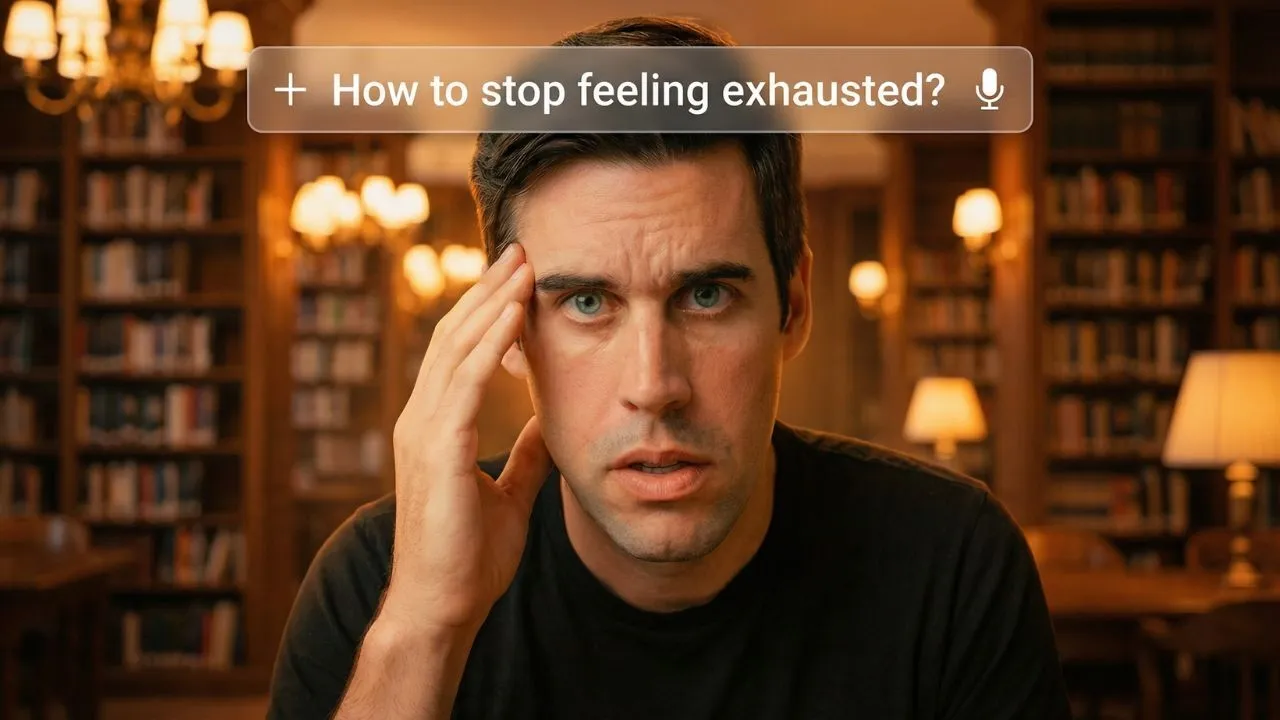
If you want to be [music] better at what you do, you got to put in more hours. If you want to achieve more, you have to push harder. If you want to beat the competition, you have [music] to sacrifice more.
You have to turn yourself into a machine, into a beast, you have [music] to go allin. Isn't this what Marcus really says in that famous passage in meditations that people who love what [music] they do wear themselves down doing it? Isn't that what stoicism is?
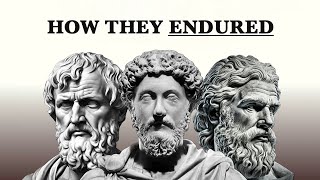
That discipline to push and push. You might think that's [music] what the Stoics want you to do, but it isn't. And in fact, the Stoics would tell you that you're missing the point and you're going to burn yourself out.
And that's what we're talking about in today's [music] episode. Not just Stoic strategies for being successful, but stoic strategies for being successful, sustain for not burning yourself out. You have to know how to push hard, but [music] also to rest and to recover.
Like a lot of people, I have a tendency to overwork, to overdo, to overcommit, to take things too intensely. Mark Curelus warns himself against this in meditations and it's stuck with me always. He says, "In your actions, don't procrastinate.
In your conversations, don't confuse. In your thoughts, don't wander. In your soul, don't be passive or aggressive.
In your life, don't be all about business. Don't be all about business. " There's a book behind you.
I was just thinking about when I think of you, one of my favorite books, Range. Have you read Range? >> I have not.
>> Oh, so it's the subtitle is How Generos Triumph in a Specialized World. What's interesting is like obviously to be great the NBA any professional out there you have to be super specialized years and years 10,000 hours of practice but at the same time you're not one of those guys who as Kobe was Kobe's all basketball you were not all basketball you had a range of interests and you explored those I'm curious how guitar music language reading all the other things that you did how did that make you a better basketball player and how has that sort of informed even now when you think about with your kids >> I always I always had other things you know lang language. Guitar and music came a little later.
I had given up. I gave up on it in my mid20s, early 20s. That's why [music] I, you know, uh went back to it.
I always wanted to get do some things to take my mind off of basketball. >> Sure. >> Right.
It's it's a lot of lot of flights, [music] a lot of bus rides. So, you know, you need some hobbies. I didn't think of it this way, but um I had a friend that told me, you know, hobbies lead to greatness.
I I always thought that fascinating and and just that [music] made me look back on things. And I did these things just to kind of get my mind off of the game. Sure, >> I was all into basketball.
That is all I did. But I also had other interest. And one of the things that I found was like, so for [music] instance, during the playoffs, I would cook.
The day before a game, I would cook dinner because you have to concentrate on the meal or it's going to suck, >> right? >> You know, so I'm looking at the time. I'm checking the meat.
I'm making sure I don't burn boil the water over it. It's a thing that I have to focus on. >> Sure.
you know, because if I don't, my brain is gonna start going and then we're gonna start thinking about tomorrow and I'm gonna be back in that rabbit hole, which is fine, but you don't want to be there all the time. And one of the things I found is that once I start relaxing in my cooking or in me playing the guitar or in me studying for something in language, I see [music] some weird connection to where I think about basketball, but it' be like, "Oh, okay. I could put that to the side.
" It's like it was this crazy [music] thing of no, you know, no no judgment. Wow, I never thought of that before. This is the move I'm going to do tomorrow.
[music] I got it. >> Yeah. Sometimes when you're thinking about something else, you create room for your brain sort of subconsciously solve some problem that we talked about willful will.
You know, if you're I got to solve this, I got to solve this, I got to solve, you're not going to make any progress. >> Yeah. Yeah.
And and I think um I read something somewhere like Einstein [music] played the violin if he if he ran into a problem. He just played violin for days, weeks, hours, whatever it took. So I always thought I thought that pretty fascinating and that's kind of what I started using my hobbies for >> cuz the grind will grind you down if you don't have anything to refresh.
>> We don't overindulge cuz it's a violation of the key virtue of temperance. The right amount moderation in all things, the Stokes would say. Although some things not at all.
Nobody is having less fun than the glutton or the addict. The Stokes would say if the pleasure means you wake up with a hangover, it's not really so pleasurable, is it? So, it's about moderation.
It's about temperance. It's about finding the right amount of things. So, in my office, I have two pictures of my kids.
And in between those pictures, I have this other picture that a sports psychologist once sent me. And it depicts Oliver Saxs in his office, the the great doctor and writer. And Sax just had in his office right behind him a giant sign that said no.
So it's capturing this great writer, this great thinker in his element and a reminder that he needed while he was in there that he has to say no. It's so easy to say yes. But we have to remember that everything we say yes to is a no.
It's saying no to someone or something else. And I try to remind myself that when I get random emails, when I get cool invitations, when I find myself getting distracted or or whatever it is, when I'm saying yes to that cuz I don't want to be rude cuz I don't have enough willpower cuz I think I can squeeze it in. I'm saying [music] no to the two most important people in my life.
Saying no is hard, but it's also essential. And that's why I have that reminder. And it's a very stoic idea in meditations.
Marcus really says, "Ask yourself in every instance, is this essential? " He says cuz most of what we do and say isn't essential. But when we eliminate the inessential, he says we get the double benefit of doing the essential [music] things better.
The secret to productivity, but most of all happiness is to not be so reachable. We have our phones, we have emails, we have watches, we have 50 different social inboxes and then we wonder why we never get anything done. Senica says, "If you want to improve, be content to be seen as ignorant about some matters.
You can't always know what's going on. You can't always be reachable. Napoleon famously would wait 3 weeks until he opened his mail because he knew that most issues would resolve themselves.
If you are always reachable, if you can be gotten a hold of a moment's notice, you will not be [music] focused on the big important things. You will not be doing your work and you will not be philosophical. The secret to sanity and success is sleep.
So, I was a director of marketing at American Apparel for a long time. And there's a lot of reasons why that company failed, but I'll tell you one that I don't think enough outsiders understood. So, Doug Charney, the founder of American Apparel, had this open door policy.
[music] And when he said he had an open door, that he was an accessible CEO, he meant it. Any employee at any level could call him or get in touch with him and if you had a problem, he would listen to you. He was involved in all facets of the business.
And and this was positive in the sense that there was never a problem that he didn't know about. when there was an opportunity or a spark of something, he could really turn it into something that he didn't accept laziness. He had eyes and ears everywhere.
He could he could jump on anything [music] that needed to be jumped on and he could put out any fire. Now, the downside of this was actually the same as the upside. So, you can imagine when the company was small, this worked.
But as it grew, suddenly it had a few stores, then it had more stores. Now, it has 250 stores in 20 countries. What did that mean?
It meant that no matter what time it was, someone somewhere [music] had a problem. It meant that in some time zone there was someone up who needed something. And I would say that slowly Dove's quality of sleep eroded to the point where by 2014 he was basically not sleeping at all.
I remember he would call me sometimes and fall asleep on the phone. Like sleep was something he was actively avoiding until the very last second that it grabbed him. I remember there was this transition from one shipping facility to another that was sort of [music] impulsively and poorly planned out.
It could have been done slower. He rushed into it and at some point he moves into the factories. It's kind of like with Elon Musk where everyone's sort of celebrating that the hands-on CEO is sleeping on a cot in the factory.
But actually this was a result of poor decision-m I think from sleep deprivation. And he exacerbated it and it got worse and worse and worse. There was a famous scene where Dove is called in front of the the board sort of the lowest moment the stock price is in the toilet and he's mainlining Nes Cafe like he's pouring [music] Nes Cafe powder in cold water and drinking it to stay awake in front of the board.
They were horrified and ultimately they fired him and his shares [music] went to nothing. So there you have it. One of the fastest growing fashion brands in [music] the world, a company that was doing hundreds of millions of dollars in sales.
It's not destroyed from the outside. It's not a competitor that came and destroyed it. Dove destroyed it.
[music] And Dove really destroyed himself in the process. He made a lot of mistakes. He did a lot of things he shouldn't be doing.
But I think at the root of it was like he was out of his mind with sleep deprivation. He just wore himself to the bone and he became someone very different than than the person that was responsible for the success that had done the good things that were part [music] of the company. This is a obviously an extreme version of a story that happens all the time.
But what I'm trying to say is that working incredibly long hours, working yourself to the bone, not taking care of yourself, neglecting sleep, it seems glamorous and cool, but it's actually destructive. It's actually a result of poor discipline. John Steinbeck talks about, he says, the undisipline of overwork.
He says it's the [music] poorest of economies. You're trading sleep for working hours, but you're actually getting worse [music] work out of it. I try to remind myself whenever I'm working late at the office, whenever I have some deadline I'm having to crush myself to hit, whenever I'm not taking care of myself because I've committed to too much, that I'm I'm cheating myself.
I'm cheating the work, I'm cheating my health, and I'm cheating my [music] family. And that this isn't discipline. This is the result of a lack of discipline.
There's this line in Twilight Tharp's book that I was thinking about when I was thinking about motivation. She's basically saying all she has to do in the morning is get downstairs into the cab where she talks about this in the creative habit. If she gets downstairs into the cab, the rest takes care of itself cuz then she gets in the studio, she gets inside and just the sort of rhythm or the routine of it takes over.
Which I think anyone who has a routine, who has built a habit or a practice can sort of understand. Senica's line was that life without design is erratic. And the point is when you build structures or systems, it just takes over for you.
There's a great line about writing. It says, "Inspiration is for amateurs. Professionals just get down to work.
" Like, you just sit down and you know that you're supposed to sit there for a certain amount of time each day. So, obviously motivation is important, but routine is something that kind of sits above and below motivation and it just takes care of it. Like I know what I'm supposed to do every day and so I just do that.
I don't wake up and decide to be motivated that day necessarily. I don't decide to like really get after it. I just do what I do every day and the rhythm of that getting lost in it.
The the Stokes talk about how you sort of build these habits when you do the action over and over and over again. It takes a certain power and momentum unto itself. And the opposite is true also if you give into the resistance too much.
If you don't have a routine, if you're winging it, then there's room for that to sort of intervene and to not do the thing. So routine is this thing that allows you not to have to get by on inspiration or motivation alone. That's what Twilight is saying.
She's this great choreographer. She's saying, "Look, if I just get in the car, it'll take me where I'm supposed to go. " And that sort of takes over.
Nothing makes me happier, for instance, than going to see my two donkeys. I have Buddy and Sugar. That's them right there.
So, Buddy I bought on Craigslist for $100. Maybe the single best purchase and investment I've ever made. And then Sugar, we got her for I think $300 on Craigslist.
I think one thing I realized one time I I walked over and I I was just sort of watching Buddy, he's just standing [music] there for like hours and hours. I realized he's not comparing himself to anyone, not wondering if he's adequate or not. He's just alive, right?
He's just still, right? You know that expression human being, not human doing, but he doesn't wrestle with that at all. He's just present.
Look at him. Oh, when I go out and I see the animals, when I spend time with them, calms me down, makes me happier, makes me more grateful, makes me more present. And then I can bring that energy back [music] towards my regular life, toward my job, towards the world that is not calm and chill like they are.
And that, you know, there's something about animal energy. This is why they do ecquin therapy, for instance. You know, it's just being around the animals, feeling them, having to adjust your mood, having to read their mood.
There's something very special and powerful about that. If you want more tranquility in your life, you have to do less. Marcus really says, "And the magical thing when you do less, when you eliminate the inessential, when you stop saying yes to things that don't matter, when you stop getting caught up in busy work and nonsense, he says you get the double benefit of doing the essential things better.
being with your kids, your creative work, getting outside, gratitude, all the things that matter in life, you do better when you do less stuff. So much of what we do, it's because we think we have to cuz other people are doing it cuz we're afraid to say no. No, you have to do less.
Cuz when you do less, you do more better. In meditations, Mark really says ambition is tying your success to what other people do or say, right? if they select you, if they approve of you, if they cheer for you.
He says, "Sanity is tying it to your own actions. " Right? That's the problem.
So much of what we want, what we're aspiring to, what our goals are are not in our control, as Epictitus would say. In fact, they're the opposite. They're handing over that control, that judgment or evaluation to other [music] people.
And so when your ambition shifts more internally towards what you control, towards [music] what you do, to who you were while you did it, you're empowered, right? And you're more self-sufficient. John Wooden said something like, "Success is peace of mind, which is the direct result of knowing that you made the best effort to do your best to become the best you're capable of becoming.
" And and obviously John Wooden cares a lot about winning and he wins a lot. But you have this bigger, more encompassing definition of what your success is and who you're trying to be, how you judge yourself. So you can have a team that wins that you're disappointed in.
You could have a team that loses that you couldn't be more proud of, right? And and I try to get to a place and I think I am at this place with my books where some of the books I'm most proud of have sold the fewest copies and the books that I'm while proud of I'm not changed by or puffed up by their success, right? because I've done better [music] since, right?
I'm I'm more focused on other things. I I'm prder of other things in other projects. So, you do your work, you focus on what you can focus on, and you know, you leave the rest to God, the gods, uh luck, the market, the whims of the universe, whatever you want to call it, you leave it there.
It was an ordinary regular season game against a team that he'd played dozens of times over the course of his career. Chris Bosch didn't know in the locker room as he was lacing up his shoes that it would not just be the last time he played the Spurs, but be the last time he played professionally as an athlete. An imbleism in in his leg would would end his playing career suddenly, anticlimactically, tragically.
When the Stoics talk about momento my life is short, it's not just the idea that we could go at any moment, which we can. It's that the things we care about, the things we love, the things we're doing, we are not in control of them. We don't control when they begin or end.
And so the the reason the Stoics talk about being present, about not taking things for granted, about not deferring things into the future, it's for that reason because you don't know when your career is going to end. You don't know when your knee is going to blow out. You don't know how long you get to do things.
And so to take them for granted, to assume they'll always be there, to not give your best is arrogant. It's reckless. It's selfish.
It's shortsighted. And you can't do it. Momento my life is short.
You could leave life right now. Mark says, "Let that determine what you do and say and think.