Are you living in a computer simulation? This was the title of the philosopher Nick Bostrom's now iconic paper. Published in 2003, Bostrom's ideas sent shockwaves through the academic world, through popular culture, and even religion.
His paper suggested that more than a remote and whimsical prospect there is a serious possibility that we and our entire reality are the simulation of an advanced civilization. Bostrom's paper proved so compelling that in 2016 a New Yorker article reported that many in Silicon Valley had become obsessed with the idea, and that two unnamed billionaires had secretly employed teams of scientists to attempt to break out of the simulation technology magnate Elon Musk has also been public about his personal fascination with this idea, including his conviction that the probability that we are living in base reality is one in billions. So why have prominent individuals scientists and philosophers taken seriously the seemingly bizarre possibility?
Is it true? And what might it mean? With the use of ever more powerful and sophisticated computers, over the last 50 years humans have created ever more realistic virtual worlds.
As far as anyone can presently tell there is nothing which stands in the way of these simulated realities continuing to improve forever. Many now foresee a time when these virtual worlds will become so realistic that unless we had direct knowledge, it may be impossible for us to tell the difference between virtual worlds and base reality. This raises the unsettling question - How do we know that we don't already live in a simulation?
Could this have already happened? Could we be living in what Bostrom calls an "ancestor simulation" a creation of an advanced civilization designed for the purposes of studying its own past? In truth, advanced civilizations may have countless reasons to run such simulations and would likely create astronomical numbers of them.
It would therefore seem to follow that of all of the beings in existence, an overwhelming majority of them would be inhabiting simulations. The likelihood then, that we occupy base reality, would therefore appear very small indeed. The simulation argument.
In his paper Bostrom lays out three propositions of which he argues at least one must be true. Proposition 1 is that all technological civilizations collapse or go extinct prior to reaching technological maturity. Proposition 2 is that civilizations can reach technological maturity but for some reason they never create the kind of simulations which could resemble our world.
If we reject either of these two propositions, Bostrom argues that we must accept his third, final proposition - that we are almost certainly living in a simulation. We will explore this striking possibility as well as its far-reaching implications, but to get a better sense of its likelihood we'll first take a closer look at the other two propositions. Proposition 1 - the Great Filter.
The first proposition is that civilizations can never require technological maturity and so never get a chance to create ancestor simulations. Initially this suggestion seems unlikely. After all we live in a universe of hundreds of billions of galaxies and countless trillions of star systems - any one of which could be home to a burgeoning technological civilization.
What then could prevent any and all civilizations from advancing to this level of technological maturity? At the outset the idea that any and all civilizations fail to achieve technological maturity seems grossly pessimistic so why entertain this possibility? One proposed answer is that there simply are no other intelligent civilizations in the universe.
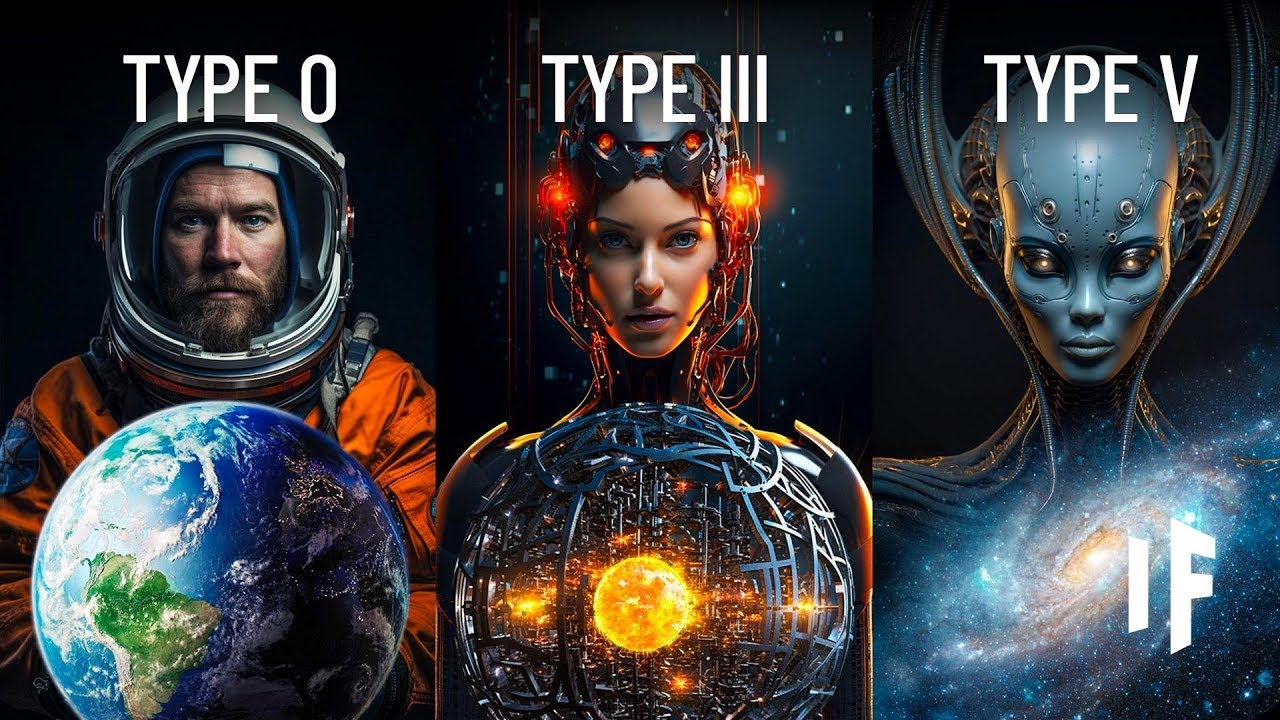
Proponents of this view draw from the mysterious observation known as the Fermi Paradox - that the universe around us seems oddly silent. Our universe has been habitable for life long before our solar system even formed it would seem that more than enough time has elapsed in the universe for advanced intelligent civilizations to become an obvious presence in our galaxy. And yet we see no signs of burgeoning type III civilizations or their galactic megastructures, the evidence of which presumably would be blazoned across our skies.
So what explains this eerie silence? One proposed answer is that there are evolutionary stages between inert matter and advanced intelligent life that are so astronomically rare that they prevent all or nearly all life from ascending beyond it. Such stages have been called "great filters" perhaps in our path of discovery there awaits a great filter in the form of an advanced technology - so destructive and uncontainable that it annihilates any civilization that discovers it.
Some even argue that such a technology has already arrived in the form of nuclear weapons. Perhaps all technological civilizations, in their pursuits of an ever greater understanding of physical reality, invariably discover the tremendous energy released by the splitting of the atom. In their subsequent development of this seductive power they introduce a permanent existential danger that invariably leads to their eventual annihilation.
If it is true that this or some other technology poses an assured existential catastrophe, then ancestor simulations might never come into existence. If all intelligent civilizations are doomed to destroy themselves then the good news is that we probably do live in base reality - the real world. The bad news however, is that we're probably not far off from destroying ourselves.
But a great filter could also exist behind us. Perhaps in the very genesis of life itself one candidate is the initial forming of reproductive molecules the RNA which serves as the basis of all biological life on Earth. It has been suggested that as a result of random molecular collisions, the formation of RNA could be astronomically unlikely.
In which case intelligent technological civilizations could be so rare that we could conceivably be the only one in existence. To many including myself, this is an astonishing claim and we are right to be skeptical. After all the great filter hypothesis was informed by the Fermi paradox and yet many believe that the Fermi paradox is ultimately misleading.
Evidence of other civilizations could be far subtler than we first imagine. Consider that if intelligent life evolves just once in every 10 million galaxies, there would still be thousands of advanced civilizations - utterly undetectable by us, yet any number of which could be creating countless simulations. Maybe our descendants will build a Matryoshka Brain - a stellar megastructure that surrounds the sun and uses its energy to create immense computational power.
Such structures could conceivably run astronomical numbers of simulations and yet a Matryoshka brain could be all but invisible to its galactic neighbors. The universe, while very ancient from our perspective, is in fact at an extremely early stage in its overall habitability for life. At some 14 billion years old the universe will remain habitable for much much longer.
Some stars will live for trillions of years - many times the current age of the universe. There will also be many generations of such long-lived stars. Given that intelligent life has emerged at least once at this very early moment in the universe's existence, there would therefore seem a good chance of other civilizations emerging in its vast future.
And as this relates to the simulation argument, it matters not that from our perspective those civilizations could exist in the future, because we could very well be simulations of their ancient past. For our present purposes all that matters is the possibility of their eventual existence. Proposition 2 - No Simulations.
We'll now move on to Bostrom's second proposition, that civilizations can reach technological maturity and yet in spite of this they never author simulations which could resemble our world. As with the first proposition, at first glance this appears very unlikely indeed. Presumably simulations would allow their creators to explore a vast range of questions, scientific, sociological, cosmological, even philosophical.
Such simulations would serve as advanced laboratories probing questions that could well be inconceivable to minds like ours. In many respects simulations would be the ultimate theory testers, because the architects would have total control over all of the conditions within. Given the vast utility of such simulations, we are left wondering what plausible reasons could prevent civilizations from creating them.
One possibility is that simulations of a kind which could resemble our world are impossible. Given the advancing realism of our own simulated worlds, this proposition too seems unlikely. So why take it seriously?
There are at least two reasons why true ancestor simulations could be impossible. The first reason is that simulating a universe like ours would be computationally impossible because simulating every fine-grained detail, from the level of probabilistic subatomic particles to massive galaxies, would be so computationally expensive that it would be unobtainable for even the most advanced technological civilization. The physicist Michio Kaku dismisses the simulation hypothesis for this very reason, pointing out that the only information processor which is up to the task of simulating a universe is the universe itself.
This objection may or may not be true, but it also overlooks that a convincing simulation would not need to render every detail of the universe - rather only those which are being observed. Distant visible galaxies for example, could be compressed to just a few bits of information depending on whether observers are paying attention. Much like in video games which render objects and scenes only when interacted with by a virtual avatar a simulation could dramatically cut computational costs by rendering only those parts of the simulation which are of direct relevance.
Neither would they need to render the long past of the universe or the timelines of the entities inhabiting it. Memories could be implanted to give the impression of continuity when in fact the present simulation could be just moments old. If the architects wish to create a simulation that appears identical to our world they would need only to manipulate the conscious experiences of its inhabitants.
This takes us to the second possible reason why such simulations might be impossible. Bostrom's argument entails more than the creation of hyper-realistic worlds - it invokes conscious inhabitants originating from within the simulation. In the matrix films the human inhabitants of the matrix remain connected to physical bodies that persist in base reality.
In Bostrom's argument however, the conscious inhabitants are instantiated within the simulation itself. Yet there are reasons to consider that simulating a conscious mind in this way is impossible. But why might this be the case?
It first needs to be said that we presently do not understand consciousness, how it exists, or why we have it. In fact, consciousness is one of the greatest mysteries we know of. How biological organisms aggregate an inner subjective experience is a millennia old question, that even our most advanced neuroscience has made no less mysterious.
What the philosopher David Chalmers has called the hard problem of consciousness is yet to be solved, with no clear sign what a solution to this mystery would even look like. In recent years growing numbers of scientists and philosophers have argued that in consciousness we have encountered an impasse which highlights the limits of our current materialist science, and that to truly understand consciousness we may need to go beyond our present materialist assumptions. In fact, Chalmers and several other academics argue that we should take seriously the possibility that consciousness is in fact a kind of fundamental property, which science must eventually expand to include.
"If you can't explain consciousness in terms of the existing fundamentals - space, time, mass, charge, then as a matter of logic you need to expand the list. The natural thing to do is to postulate consciousness itself as something fundamental - a fundamental building block of nature. " While this may or may not be true, it could also be the case that digital simulations are simply the wrong kind of substrate on which to instantiate consciousness.
For example, that the digital language of computation is at its basis purely syntactic. The interior semantic qualities unique to consciousness may lie forever beyond what can be realized by digital computation. Digital simulations might be able to create a behaviorally identical representation of a mind, but whether or not these simulations could acquire the interior quality of consciousness remains an open question.
Recall that Bostrom's argument centers on our being in a computer simulation, but if as the neuroscientist Christof Koch has put it, "consciousness cannot be computed" then as unmistakably conscious beings, we could not be living in a computer simulation. But what about some other kind of simulation? It is worth keeping in mind that one way or another our brains are conscious.
Furthermore our brains are, in a certain sense, reality simulators of a human experience. How a brain achieves this feat remains a mystery to us and yet a much more advanced civilization would presumably have a much more advanced science of consciousness - perhaps one that goes far beyond our present materialist assumptions. Should consciousness turn out to be a fundamental property of reality, advanced civilizations may nonetheless develop technologies for vectoring this conscious interiority in any way they desire.
Similarly if consciousness is non-computational, we nonetheless cannot rule out the larger idea that we are in some kind of simulated reality - albeit one beyond our current scientific paradigm. If we proceed under the speculative assumption that consciousness supporting simulations are possible, then we must now consider what reasons an advanced civilization could have in choosing not to create them. Ethical Impasse.
In broad terms their objections may lie on ethical grounds. A more advanced civilization may operate under a comparatively more advanced ethics. After all, there seem to be many aspects of ethics that can be rationally derived.
Bostrom himself considers that intelligent civilizations may universally converge on specific ethical precepts relating to the treatment of conscious beings. To limit avoidable suffering as an obvious example. Perhaps a convergence among advanced intelligences will deter the creation of fabricated realities in which conscious beings can suffer.
Perhaps at the stage when simulations become possible, advanced societies have already in place a strong law preventing their creation. If this notion of ethical convergence is plausible, then in our finding ourselves inhabiting a reality of much apparently needless suffering, this might count against our being in a simulation. We'll return to this possibility but again, this view depends on the idea that future civilizations will invariably converge in their moral principles.
While this has some plausibility, for it to be a decisive factor in the simulation argument requires the strong claim that it be true of every civilization without exception. Because if just one civilization chooses to pursue this technology the likelihood that we are inhabiting one of their simulations grows dramatically. Recall that Bostrom's second proposition is that civilizations can reach technological maturity and yet don't create simulations which could resemble our world.
As with the first proposition, this turns out to be much more complicated than it first appears. At first glance Bostrom's argument would seem to suggest that we almost certainly do live in a simulated reality, and yet on closer inspection, the other two propositions are highly ambiguous. Does the Fermi paradox suggest that advanced civilizations are astronomically rare?
Do great filters constrain the ascension of life from inert matter? Could consciousness resist any and all simulation? And might ethical convergence deter the creation of simulations with conscious beings?
Bostrom himself makes light of these ambiguities and so assigns a roughly even probability between his three propositions. As he puts it. Quote.
"In the dark forest of our current ignorance, it seems sensible to apportion one's credence roughly evenly between one two and three. " End quote. It would seem that Elon Musk's startling claim that the chances we live in base reality are one in billions, can be replaced by a much more conservative one in three.
- A real possibility that we should nonetheless take very seriously. So let us then take seriously this possibility that we do live in a simulation. What would be the broader implications?
What might it mean for us? A simulated reality. It is sometimes implied that if we do live in a simulation then we inhabit a fake world - a meaningless existence trapped in a counterfeit reality.
But if the simulation hypothesis is correct, we might equally view this as a further discovery that reality is far stranger, subtler, and deeper than we previously imagined. That intelligence gives rise to nested realities. As opposed to living in a fake world of fake experiences we could see ourselves as inhabiting the inward fractal growth of reality itself.
If we are simulated minds we are nonetheless unmistakably conscious. After all consciousness, as the philosopher Rene Descartes famously observed, is the one thing in reality that can never be doubted. A conscious simulated mind, if such a thing is possible, would nevertheless be a real mind with real experiences.
And would therefore be an unmistakably real vector of moral and ethical significance. Our experiences would matter as much as any experience in base reality. The simulation hypothesis also offers a thought-provoking naturalistic way in which certain traditionally religious ideas might be true including that we live in an intelligently designed universe presided over by an omniscient, omnipotent creator or creators.
Furthermore, depending on the kind of simulation, other religious comparisons can be drawn. For example, if it should turn out that consciousness cannot be simulated, there would still be all sorts of reasons for advanced beings to create realistic simulated worlds and project their own consciousness into them. Such minds could have unimaginable new experiences, inhabit new identities, and otherwise freely explore the vast uncharted regions of the state space of consciousness.
And in all likelihood they would have all sorts of reasons to deliberately forget that they are having an experience which perhaps, on some level, they are choosing to have. In which case, death may not be the end of our individual experience, but akin to waking up inside a higher dimensional reality, perhaps at this point recalling ourselves as willing participants. It is conceivable that in a populous future of advanced civilizations there may be trillions of such simulated lives, perhaps even outnumbering those in base reality.
If we are such beings, we would be the denizens of another plane of reality, more real than this one, in which we are visitors to this world after which we return home and evaluate our experiences. A form of reincarnation would therefore be conceivable, in which a collection of simulated lives becomes the experience of a single entity - perhaps gleaning new knowledge via the perspective of oneself through another. Conceivably all minds within a simulation could become the meta-experience of a single conscious being.
Indeed, a simulation capable of supporting conscious minds could also conceivably be conscious itself. In which individual minds are aspects of a much greater unitive experience Bostrom's simulation argument has captured the imagination of a generation of thinkers. It has found its way into popular culture and even theology and religion.
It is an argument that in some ways came out of nowhere and yet forced us to re-examine everything from its new perspective. At the height of the digital age, the simulation argument emerges as the apex metaphysical question of our computational paradigm, in which we as generations before us viewed the world through the highest technology of our time. For what is worth i think Bostrom's argument is sound - insofar that at least one of his three propositions must be true.
And yet for every argument defending one of the propositions, there seems to be an equally cogent argument against it. When I set out to make this video, I expected to arrive at a much clearer view than i have. As a skeptic about digital consciousness i expected to come down against our living in a simulation.
But i find it difficult to rule out a broader definition of a simulation that goes beyond computation, and perhaps also beyond our current materialist paradigm. All i can say is i think we should take the possibility that we live in a simulation very seriously that the simulation argument is another reminder of how mysterious reality is, and that we should continue to keep an open mind about our situation within it. One perspective is that we have always been building simulations, that from our earliest manipulations of the physical world with primitive tools we have been externalizing our intentions and constructing our own realities.
The creation of convincing virtual worlds might be viewed as a stage in the maturation of this process - that if we survive to do so, we are destined to become the architects of our inner reality and to freely explore the vast state space of consciousness. There is one final consideration that impacts my personal intuitions about the simulation argument. It is that we live in a profoundly unique moment in the history of our civilization, in which for the first time we have acquired the technological power sufficient to destroy ourselves and yet without the wisdom to ensure that we don't.
One way or another this period will be comparatively short - a few centuries at most. The philosopher Toby Ord calls this moment of vulnerability the precipice and argues that should we survive this time, it will forever be remembered as one of if not the most significant moment in history, when a civilization either grasps the mantle of its vast cosmic future or succumbs to existential catastrophe. And yet for exactly this reason any simulation architects would also presumably consider this time of extremely high interest, for all sorts of reasons - including understanding their own origins.
Of all of the historical moments we could find ourselves living through, I can think of none more likely than ours to be simulated.