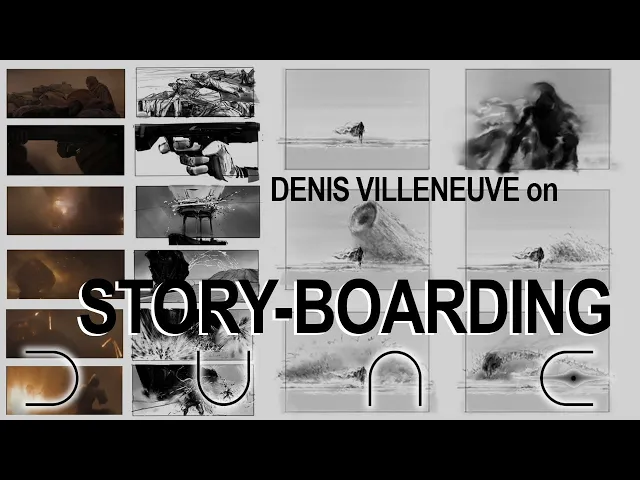
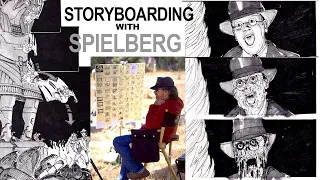
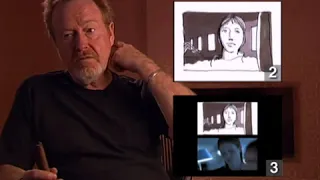
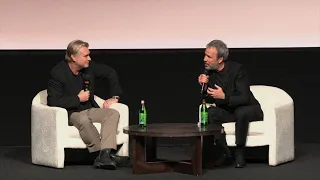
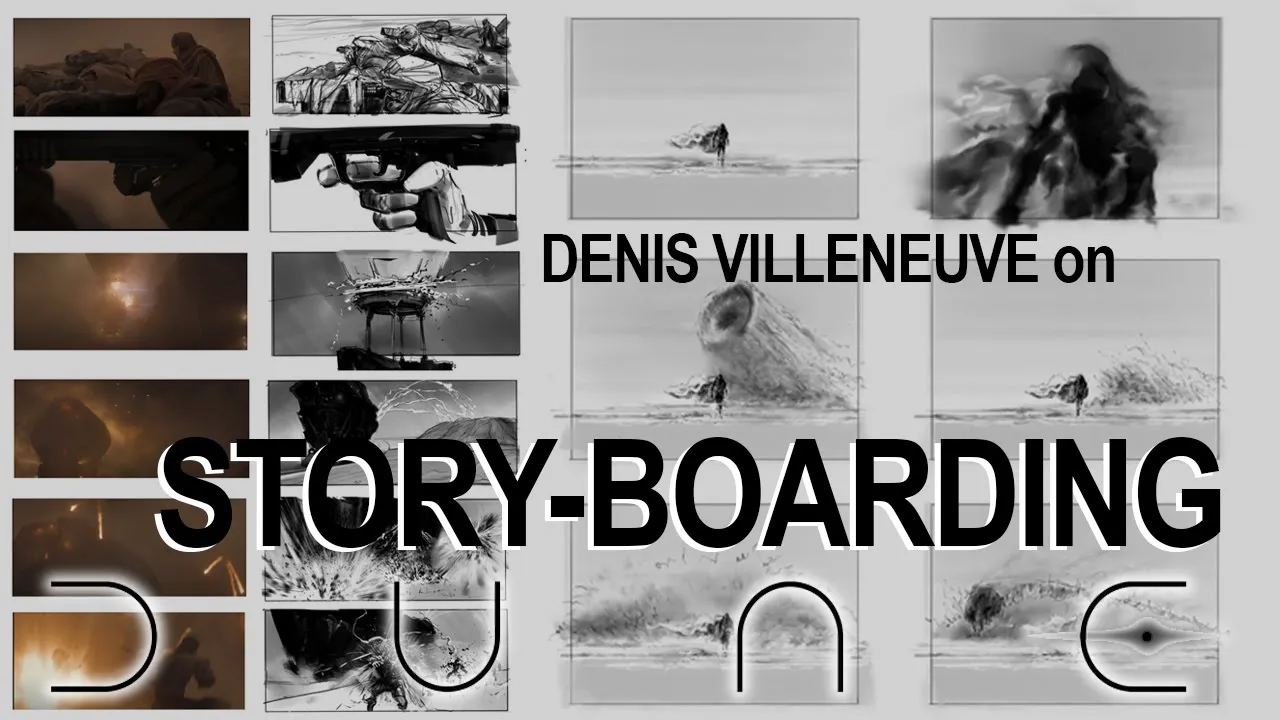
what is your storyboarding process for this it's it's fundamental it's super important it's like a a one of the fundamental moment of the the film process for me because it's like it's a new way of writing i i i co-wrote the screenplay with John Spate John and I came with the words and then I take the the the screenplay and and I it's like a way to reapo uh the reality of the screenplay and to create the the most of the costumes a lot of props are created in in that process and and of course
the all the Cinematic language of the movie and it's a way to dream without any time pressure to just to it's like the the it's just the perfect moment where it's the last step of where the dreams can still exist and and there's something I work with a very specific artist uh that has uh is like an extension of my brain Sam and I are working for many many years and uh it touched me because I came to cinema through drawing when I was a uh a teenager we didn't have any camera and me and
my best friend were were drawing story boards together about the movie we would like to make and uh not having cameras was more drawings so the idea of of trying to express yourself that to to develop the Cinematic language really came from being with a friend and and sharing ideas and seeing them coming to life on the paper and accepting that I'm very bad at drawing so I need someone else and and and and uh um it's part of a my very fundamental moment in the process yeah storyboarding the design and the dress is is
is quite extraordinary yeah jacn did fantastic word I remember when I was doing storyboards I asked my storyboard artist for the Reverend mother it was just a Sharpie of black Sharpie line that was a reverend mother every time in the story boards and and uh that was by reference for for jacn when you work on a film what are the first thing that comes to your process uh because you you write uh you you write also you adapt but do you think more about sounds and the design of the sound or more about uh the
script or more about the visual aspect what how do you construct your Universe when you first have an idea about a film that's a tough one we're going to be here for six hours no no no no but uh it's it's um first of all I uh I absolutely I I came to movies through the words I love writing I don't consider myself necessarily a good screenwriter but I love writing I love I love and and it's like and I love also to I developed through the years more the idea of collaborating to to work
with other screenwriters and uh uh I love sharing creativity and uh uh so the let's say that to adapt the these movies the the screenwriting process is quite long because it the books are pretty dense and um but once the the screenplay is is uh done the I will say what is maybe more specific to my Approach is the storyboards where I will uh draw alone with my storyboard artist the old movie where uh that helped me toly to um um dig into to to to um sculpt the movie to to find the VOC the
Cinematic vocabulary that uh to apply that vocabul to the old structure and to um create props costumes uh uh vehicles uh uh not thinking that I will necessarily come with the final idea but at least that I will find ideas to feed my crew later and and uh there's a lot of uh things that are the ideas that are coming out of this and more importantly idea of Misan where I will very often find uh the proper way to shoot and uh going through the words to the image there were um there's always a a
certain amount of serious transformation that goes into that process where I will go from the storyboards and rewrite the screenplay after from the story boards um that's because I feel because the Sharie is not good enough exactly but but it really uh helped me and for me to um that's where I feel the really the movie is born and as I say to my crew um the the storyboard supersedes the the screenplay and then nature supered the storyboard meaning that when we go on set if something happen with the actors or with the light or
with the natural event that feels absolutely inspiring I will just throw the story boards above my shoulder and and uh improvising a lot of things are coming out of the storyboard process as well where I have to Translate scene and to find the most economic and and the most expressive exessive way to to to bring ideas to the screen where it's almost like an extension of my brain where I can uh uh uh in the very intimate moment dream uh that's where a lot of ideas are coming from visual ideas are coming FR are you
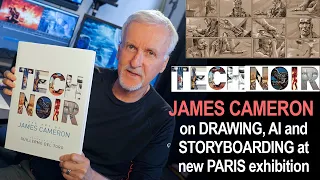
a good dryer are you no not particularly and I I don't actually storyboard that much I've done certain sequences I mean it's fascinating to hear that you so creatively you started with storyboarding before you ever got a camera yeah yeah and the thing is that I feel still today once the the the screenplay is done I will storyboard most the of the movie of if not the entire movie and it's a new way to rewrite and to approach bring the words closer to the to the camera and I then once the storyboard I finished I
rewrite the screenplay again again from the story boards because there's a lot of changes that will be found through the story boards and it's a way also to for me to find the alphabet and the vocabulary that would be used the Cinematic alphabet of the film The Rhythm everything is in the boards and is that before you have the whole team on or absolutely absolutely I do it by myself and it's a way to dream about the movie in the most intimate way it's one of my favorite moment of the film process now there's a
a rule and on my set is that uh uh the the storyboard precedes the the the screenplay and nature precede the story board so which means that most of the time I throw the story board out and we we improvise with the camera but but it it secures me to find the movie with the boards I think it's almost a a a different way to write to go deeper into the screenwriting process more specifically for the Cinematic sequences yeah yeah yeah that