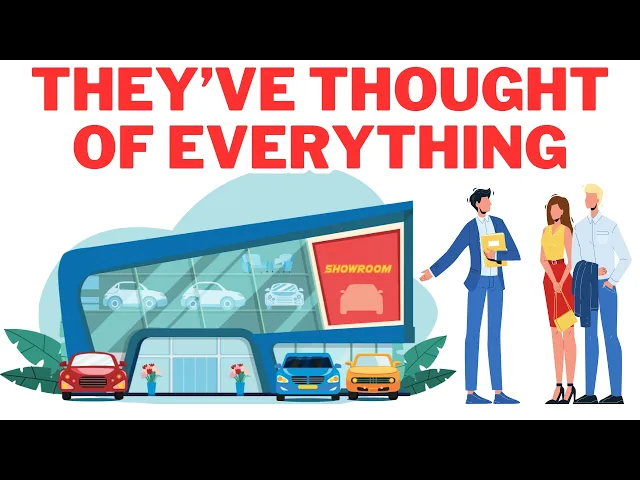
Car dealerships might seem like a simple business at first glance. They buy cars from manufacturers and sell them to customers. However, there's actually a much more intricate network of revenue streams involved that allows car dealerships to profit well beyond just the vehicle sale.
We'll dive into the various ways car dealers make money, uncovering the complexities of the car sales industry, and helping you become a more informed and savvy consumer. A common misconception about car dealerships is that they rake in big profits on every new car they sell. But that's usually not the case.
In fact, the profit margin on new cars is surprisingly slim. Dealerships buy new vehicles from manufacturers at wholesale prices, which are lower than the retail price you pay, but the markup isn't as high as most people think. The profit on new car sales typically ranges from a few hundred to a couple thousand per vehicle, depending on things like the model and the location of the dealership.
This might seem small, especially considering that the price of the car could easily be over $50,000. That's why most dealerships focus on selling a higher volume of vehicles rather than making big profits off each one. They'll often sell a car for what they paid for it or even less.
They know that by initiating the transaction with you, even if at the beginning it's going to cause them to break even or lose a little bit of money, it opens the door for many opportunities to profit. Car dealerships benefit from incentives provided by manufacturers, which are meant to encourage them to sell more vehicles and focus on specific models. Manufacturers offer bonuses to dealerships based on how many cars they sell within a given period, often with bigger rewards for selling particular models.
Since manufacturers typically have larger profit margins, they can afford to pass some of that profit onto the dealers as an incentive. This is why you might notice car dealerships pushing certain vehicles more aggressively. They could be getting financial bonuses or extra perks from the manufacturer for selling those particular cars.
Incentives come in various forms, like rebates per unit, cash bonuses, or even vacation trips for hitting sales targets. For example, a dealership might earn $1,000 for each unit of a single model sold, with the amount increasing to $2,000 if they sell 30 or more. These bonuses add up quickly, especially for high volume dealerships.
The more cars they sell, the larger the reward from the manufacturer, making it a strong motivator to drive sales. This system benefits not just the manufacturer and the dealership, but also you as the consumer. The manufacturer moves more cars.
The dealership boosts its profitability without raising the vehicle's price. And you get the chance to score a great deal. In a competitive market, these bonuses and incentives can help dealerships stay competitive and potentially pass on savings to you.
So, in the right situation, everyone wins. Leasing is another significant revenue stream for car dealerships. Leasing allows consumers to drive a new car for a set period, usually 2 to 3 years, while making monthly payments.
At the end of the lease, the customer typically returns the car to the dealership and can either lease another vehicle or purchase the car they've been driving. This creates a somewhat guaranteed cycle of return customers for dealerships, giving them an ongoing source of revenue. Leasing also allows dealerships to get customers in a vehicle at a lower initial cost.
While the dealership may still make a profit when selling a car through a lease, the monthly payments are often structured to reflect the depreciation of the vehicle during the lease term in addition to the cost of money. After the lease ends, the dealership can resell the vehicle is a highquality used car, which they probably will CPO for an even higher profit. Leasing also introduces complexity into the pricing process, which can confuse consumers.
Dealerships have flexibility when it comes to structuring lease deals. In the terms of the lease, such as the residual value, the expected worth of the car at the end of the lease can vary significantly. The dealership and manufacturer set the residual value at a point that ensures the car will still be worth something when the lease ends.
Simply put, they're probably charging you more in depreciation than the car will actually depreciate. They also have the ability to mark up the money factor, which is essentially the lease version of an interest rate. And most people don't fully grasp how it works or how much it impacts the total cost.
It's not as straightforward or familiar as a typical car loan interest rate, so it often flies under the radar. Another major revenue source for car dealerships comes from trade-ins. When a customer brings in a car as part of their purchase for a new or used vehicle, the dealership appraises the car and offers a trade-in value.
The dealership then resells the car at a much higher price or ships at wholesale auctions to make a profit. The real profit for dealerships when it comes to trade-ins comes from the gap between what they give you for your vehicle and what they end up selling it for. For instance, they might offer you $5,000 for your tradein.
But after a little bit of cleaning, touch-ups, and maybe some minor repairs, they could turn around and sell it for $10,000 or more. That difference can be a big money maker, often bringing in more profit than the actual sale of the new car you bought. On top of that, the trade-in gives them another vehicle to put on the lot, which means another chance to repeat the whole process.
Dealerships also use trade-ins as a bargaining tool during negotiations. If a customer feels like they're getting a solid deal on their trade in, they might be more open to paying a bit more for the car they're buying. It also provides more leverage for the dealership because they know trading in your car with them is super convenient for you, and you'll likely get a tax break for doing it that way.
All of this helps the dealership boost their profit on the deal. When dealerships arrange financing for customers, they often make money through the spread between the interest rate the bank or lender is offering and the rate the customer ends up paying. The dealership might not provide the loan itself, but works as an intermediary, connecting customers and lenders.
However, they often mark up the interest rate, especially for customers with lower credit scores. A bank might offer the dealership a loan at a 4% interest rate, but the dealership might offer the customer a loan at 6%. The dealership keeps the difference, the 2% markup as a profit.
This process is known as marking up the rate. Banks also pay dealers a commission for arranging the loan. The more they can get you to borrow, the more they earn from the bank.
So, if a customer finances $50,000, the dealership gets a small bonus or kickback based on that loan amount. Extended warranties are one of the most profitable offerings for car dealerships. An extended warranty provides coverage for vehicle repairs and maintenance after the manufacturer's warranty expires.
Dealerships sell these warranties at a high markup, as they typically cost much less to the dealer than the price paid by the customer. Dealerships often present extended warranties during the vehicle purchase process or offer them as a part of the financing agreement. Since the warranties often package with the vehicle, many consumers are willing to purchase it as an add-on.
The pitch goes something like, "You can cover all of this for only $100 per month. " The high markup on these warranties along with the relatively low risk for the dealership since the warranty provider is usually a third party company makes them a lucrative revenue stream. Car dealerships often receive a commission for referring customers to third party services.
For instance, dealerships may refer buyers to an insurance provider, earning a referral fee each time someone signs up for a policy. These commissions might seem small per individual customer, but they can add up over time, especially in high volume dealerships. In addition to insurance, dealerships might refer customers to companies that provide things like aftermarket accessories, paint protection, or car detailing services.
Another big way that dealerships increase their profitability is through the sale of add-ons. These are often optional products or services that customers can purchase in addition to their car. Common add-ons include window tinting, nitrogen filled tires, rust proofing, paint protection, and security systems.
While many of these add-ons might seem unnecessary to the average consumer, they're often highly profitable for the dealership. The markup on these products can be substantial. They often bundle these add-ons into the sales price and payment of the vehicle, making them seem like an integral part of the purchase.
Once a customer purchases a vehicle, the dealership service department becomes an important source of ongoing revenue. Dealerships typically have dedicated service teams that perform routine maintenance such as oil changes, tire rotations, and brake repairs. They also perform more extensive repairs such as engine diagnostics, transmission work, and body repairs.
The service department provides a steady revenue stream because customers have to return to the dealership for warranty work. Dealerships often become the preferable place to have a newer car service. So, there's no question as to what maintenance has been completed when it comes to a warranty repair.
Moreover, dealerships typically charge higher labor rates and use higher priced OEM parts. On top of all that, getting customers back into the dealership opens the door for even more profit. They might run into the salesperson they worked with last time, get tempted to check out the latest models that are sitting in the showroom while they wait for their car, or receive a tempting offer for their current vehicle, and just like that, the whole cycle starts again.
It's a chance to spark another sale without even trying too hard. As you can see, car dealerships operate on a complex business model with wide-ranging revenue streams that goes far beyond just selling cars. They make money in all kinds of ways.
By understanding how dealerships really make their profit, you can go into the process better prepared. You'll be able to recognize where they might be trying to pad the deal in their favor, avoid unnecessary extras, and make informed decisions overall. Plus, when you know how the system works, you'll realize that it is possible to negotiate a great deal on a new car.
You just have to know where the dealership is flexible and where they're making their money.










![Businesses that Always Fail? 7 Businesses with Shockingly High Failure Rates [Backed by Data]](https://img.youtube.com/vi/WTDYuRVZDbo/maxresdefault.jpg)