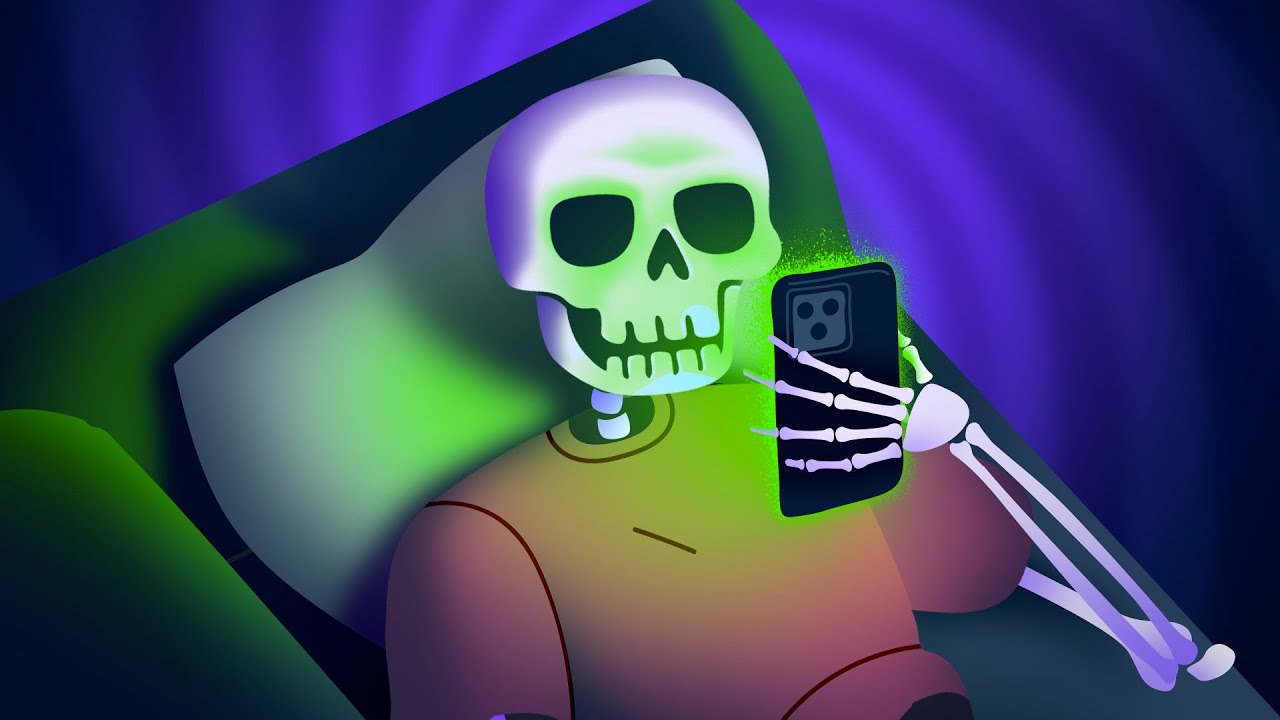
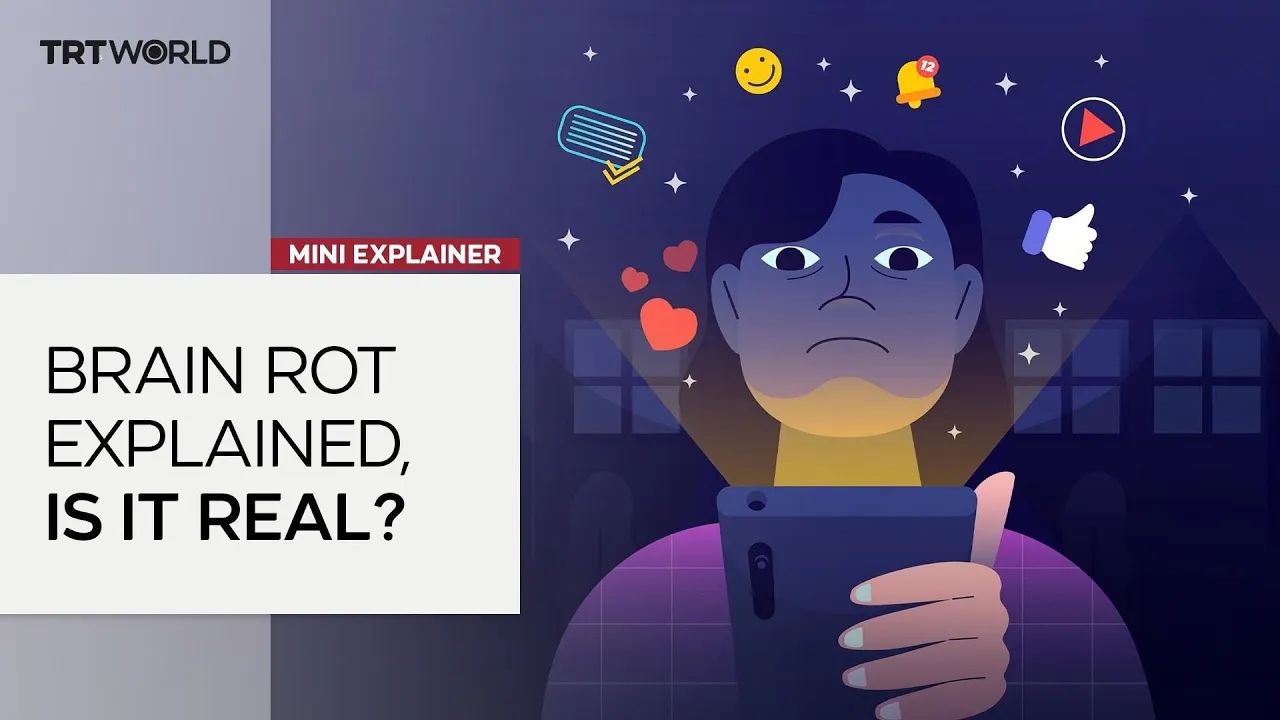
are used to crawling too much on social media feeling your mind is numbed with meaningless content the dictionary has a word for that brain rot Oxford University press announced brain rot as his third of the year for 2024 it defines the phrase as supposed deterioration of a person's mental or intellectual state is especially viewed as a result of overc consumption of material now particularly online content considered to be trivial or unchallenging actually the term was first used in 1854 by Henry David throw in his book Walden throw criticizes society's tendency to devalue complex ideas and
uses the term brain Rod to describe a general decline in mental and intellectual effort today brain R speaks to similar concerns caused by virtual life aiming to reflect the moods and trends of the year in its annual award Oxford says the term of an increase of 230% in usage from 2023 to 2024 it was chosen among six shortlisted popular words with over 37,000 public votes other trendy expressions like manifest deu and brat were chosen as the word of the Year by known dictionaries such as Collins Cambridge and dictionary.com yet among others rain rot stands out
and seems to resonate deeply with many people here is why there definitely is some truth in the expression with the growing sophistication of of AI and the growing number of hours that we spend each day engaging with tech and disengaging from The Real World um it's a real concern and this habitual screen time detracts us from other forms of mental engagement um like reading exercising face Toof face interaction or just even daydreaming what does deterioration really mean well it's mental fogginess there's lethargy reduced attention span due to short fastpaced content that can overwhelm the brain
and there's also like a social impact because every time we get these likes and comments and notifications we get quick bursts of dopamine and this means that we're therefore less motivated to engage in more substantial mental activities and these more substantial mental activities you have to work harder to get those rewards to get those dopamine hits but actually they're far more rewarding in the long term and what happens is over time these frequent dopamine spikes um can actually lead to dopamine disregulation and what that means is that the brain basically becomes less sensitive to Natural
Rewards and more reliant on digital stimuli and this can then in the long term contribute to mood disorders such as um anxiety and depression other Recent research there's a whole raft of it from the lacks of Harvard Medical School the University of Oxford and also King's College they found evidence that the intellect can actually change the structure of the brain um and using brain scanning techniques they can see that it's shrinking our gray matter now gray matter is a part of the brain that has high density of neurons and this allows us to process information
and by losing gray matter it can impair memory language um attention reasoning judgment and even our fine motor newon skills so the key thing that I will say to my clients is you need to set time limits what you first got to start doing is track how much time you spend on your phone and most people are fairly horrified at that number so it's essentially it's about creating healthy boundaries and I said it's so measurable we talked about the reward system that in itself becomes its own reward system you can get the dopamine hits by
seeing the Improvement in your mental health