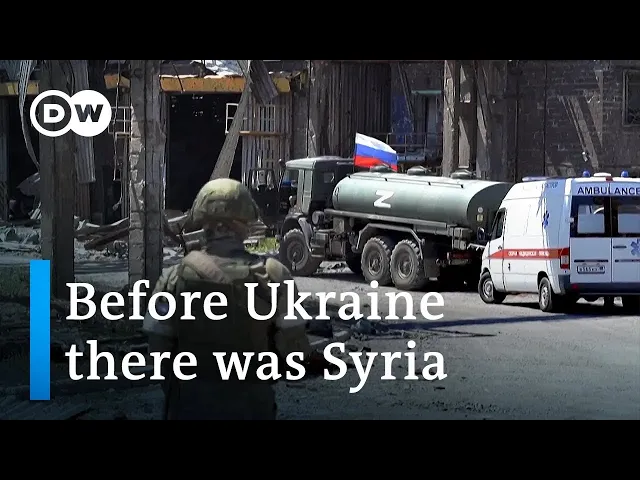
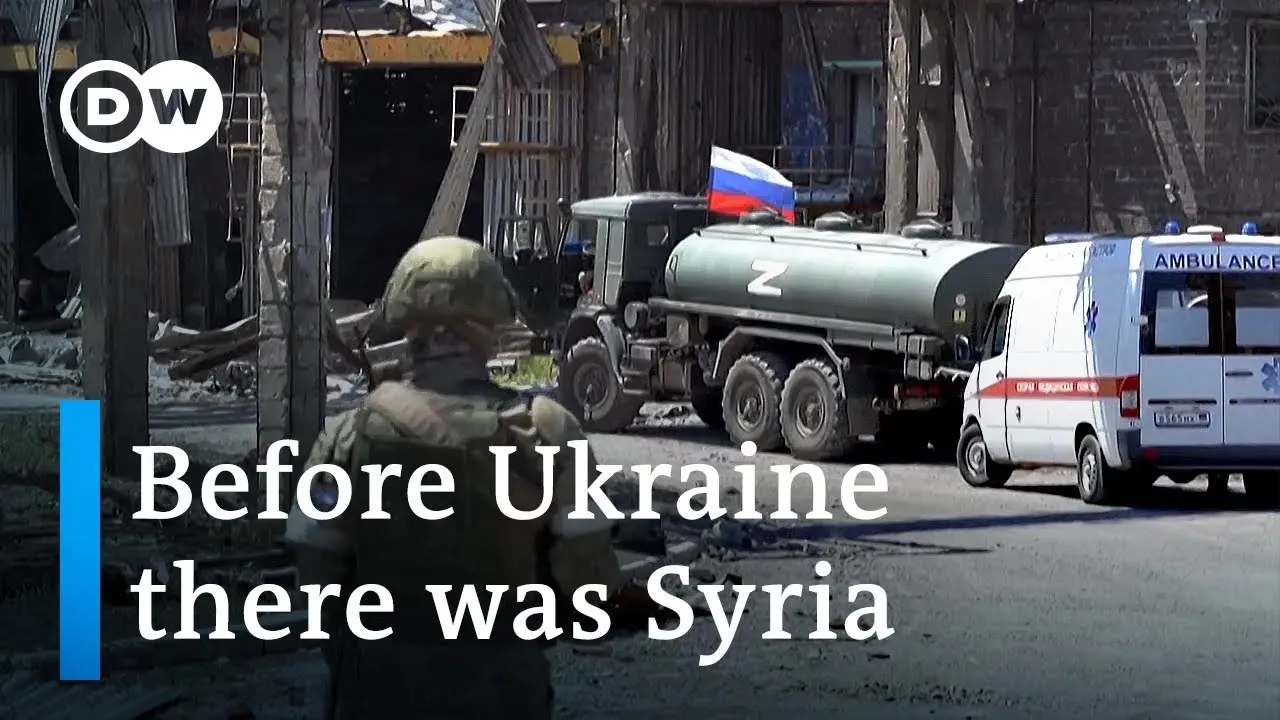
of the news agency AFP says Russia has carried out airstrikes on a Syrian rebel base in Italy Province the uk-based Syrian Observatory for human rights said at least eight fighters from the jihadist militant group hayat takuria al-sham were killed in the attack the group controlled swathes of idlib Province one of the last areas still holding out against President Bashar al-assad the strikes of Russia's latest intervention Moscow has spent in nearly a decade helping the Assad regime fight a civil war that has killed more than 350 000 people in July the Kremlin blocked humanitarian Aid to rebel-held idlib province in this in Syria's Northwest has home to hundreds of thousands of internally displaced syrians anger at Russia in idlib Syria's last Rebel held on cliff age used to get here across the border from Turkey but Moscow recently used its un veto to block the route moscow's La the Assad regime has long considered the route a violation of its sovereignty it wants any Aid going to Rebel Health territories to go through the regime in Damascus for people living in idlib the Aid had been a Lifeline one they don't want under the control of their enemy we've been displaced to the camps because of Russia's Injustice and Exile imposed by it and the Assad regime we fled rest and came here moscow's military support for Assad is still clear Ed out airstrikes in idlib just a few days before this protest Damascus and Moscow have claimed that their strikes only target Insurgent groups but locals say three civilians died here we're working very hard and calling for an end to these attacks to prevent the loss of lives injury and the spread of Terror and panic among civilians in the Northwestern region of Syria Russia began airstrikes like this in 2015 to support Assad when he was losing control of large areas of Syria to Rebels since then Putin's air power has been credited for Assad's survival Russia has also boosted the Syrian Armed Forces by sending Wagner mercenaries to fight alongside them analysts have also observed parallels between military tactics used in Syria and Ukraine for example the brutal bombing and Siege of Aleppo a scenario that then later played out in mariu poll in return Russia has gained a strong strategic foothold in the Middle East and a vocal supporter of its narrative about Ukraine El Assad has called Putin's Invasion a correction of History the situation for civilians and rebel controlled idlib is similar to that for people in Ukraine and yet the Western response is significantly different Ukrainian forces resisting Russia continue to receive support in idlib many feel forgotten abandoned if Aid isn't allowed in four million displaced people are threatened by a new war of hunger and danger for now they feel they have no recourse but to continue protesting in hope that one day their voices will be heard we can pick this up with Oma al-shaw gray who is a Syrian public speaker and human rights activist he's currently director for detainee Affairs of the Syrian emergency task force that's a us-based organization supporting the Syrian opposition welcome to DW has the world forgotten about the conflict in your country the world has been ignoring it for a while but we will never let the world forget about it we speak about it we tell the stories as much as we can and we are present on your Channel right now you say ignoring it rather than forgetting about it which sounds conscious about why would we why would the rest of the world ignore what's going on in Syria firstly it seems that the world likes to blame Russia for a lot of things which Russia is guilty of such as you know opposing legislation or or resolutions in the security Council and we always say we can't do anything to help Syria it's too complicated and that's not the case you know we can't help Syria in many many ways we saw that through when we had the earthquake we actively see that the United States has the power to change things on the ground that they do something enough to help the same people they didn't but also other countries have the possibilities of doing that so it has been active ignorance of the situation on the ground the delivery of Aid should have not been limited to to the U. N could have been eight could be brought to Syria in multiple ways we as small organizations the smaller the the emergency task force we are managing of smuggling getting Aid into Syria and the International Community is failing in doing that when Russia blocks an access to something we should be able to find another mechanism it's we talk about an International Community it's a collection of a big number of countries that are not taking their responsibilities but also um when I when I think about it like I talk to you as as a human who suffered in Syria I didn't talk not talking to you from in any political terms or any legal terms I'm talking to someone um who is the son of a father who being killed by the sin regime and the Russian Air Forces and they're the brother of two brothers who were killed by the sun regime and the Russian forces in Syria when the world wants to react it can react look in Ukraine you can see that the International Community get together to help Ukraine and what is different there is small differences but when there is will we can always intervene in a way where we can help people protect people on the ground and you see Russia has committed the same crimes in Syria they killed people they bomb people you see maribola in Aleppo the similarities are uncanny and yet the International Community refused to engage in Syria the way they engaged in Ukraine and why do you think that is I think that is well the first thing is Syria the Syrian opposition lacked the leadership that Ukraine has because Ukraine is a independent country while in Syria you have with a conf it's we have your own president killing you that gives that that makes the process easier but I think uh whether whether it's uh it's the complete reason or not I think there is uh there is the European people feeling more uh the Ukrainian people are more like them but also the one is closer to them so they are afraid themselves of uh of having a a difficult circumstances on themselves on their own ground uh and the most important point is that regardless if the ukrainians are like us or not of the ukrainians are near us or not when we talk about the story from the perspective of a human rights we should not be discriminating but between whether you are from the Middle East or from Europe whether you are white or not whether you uh you oppose you know a threat on our neighboring countries or Not Human Rights should be independent when you care you have to care about about it without any consideration to political economy or to uh to Danger on your own ground and that's what is disappointing for us you know we support Ukraine because we in Syria we believe that defeating Russia helps us we is when in Syria so for us it's a comment it's a common cause and that's how we want the world to understand we want the International Community including you know the countries that supporting Ukraine fight against Russia which we which which we love to see we want them to also understand that hurting Russia in Syria is important for Ukraine to win in Ukraine right and we want to make that understanding go ahead we'll leave it there uh good talking to you thank you so much for joining us uh Omar al-shogri from the Syrian emergency task force thank you and for more I'm joined now in the studio by Kristen Helberg a journalist who's written extensively on Syria thanks so much for taking the time to speak with us um let's fill out the geopolitics of this verse can you help us understand a little bit more why Syria is so important to Russia well Syria is geostrategically very important place in the Middle East because it lies between turkey and the Arab world it lies between Iran and Israel and the Mediterranean so Bashar Assad 12 years ago she was the last Ally of Russia inside the Middle East and Russia has used the 12 years of war to build two military bases within Syria and so Syria makes marks the only access of Russia to the Middle East and to the Mediterranean sorry to the Eastern Mediterranean which means he can control the southern flank of the NATO from its naval base in tatus at the coast of Syria so this is strategically the big picture here yeah absolutely you see the geographic importance of it in that sense um what about this humanitarian situation that we've just seen a little bit about in that report do you have a sense of who this is going to benefit is there a political winner as bad as it sounds to say that from seeing this there there definitely is the winner of this game over the summer that we've just seen because Putin what he did is he saved Assad militarily to help him regain control of the the big areas within Syria that had fallen under opposition control afterwards now he's interested in working on his Rehabilitation internationally so what we saw over the summer Falls exactly into this strategy Putin himself blocking the humanitarian cross-border Aid in the security Council while afterwards giving Bashar Assad to the momentum to say okay guys you cannot do this for the U. N security Council I will allow cross-border eight now from my side making him look like somebody who cares for his people although we have a long track record on how he's using the humanitarian aid for his own grip and power yeah I mean do you think that's been effective is he being rehabilitated is he successful with this kind of messaging in any quarters it already is working out regionally he has been readmitted to the oblique in spring so it is working out we have seen turkey Turkish president erdogan saying that he wants to meet with Bashar Assad Assad feels very reinsured he asked a Turkish president to withdraw all its troops from Syria which is something that turkey at the moment cannot accept because he wants to resettle Syrian refugees in the Turkish control territories in Northern Syria so it's complicated but Assad definitely feels reassured and is on a as an on a good path from his point of view yeah now one of the reasons I'm so glad you could join us to speak with us today is obviously the war in Ukraine has largely pushed Syria out of global news headlines um has it also affected the resources that Russia is able to devote uh to its interests in Syria right at the beginning of the war in Ukraine Russia had to withdraw some attack aircrafts from Syria very practically because this was the main support for the Assad regime was the area of support from the Russian Air Force but and what we see now is obviously that 9 Russia nor Iran who are the bull the two big supporters of fashion Assad are able to stabilize the country because what Bashar Assad needs most is money he needs financial aid he needs economic support for his ruined country and both of them are embattled themselves they fall under the Western sanctions so they cannot help in this so in the end everybody's waiting for money from the Gulf countries from Saudi Arabia from the United Arab Emirates which is not materializing so far now I just want to ask you about a report that's just come out this month from the institute for the study of War they're saying that Russia is coordinating with both the Assad regime and also with Iran to expel U.
S forces from Syria do you agree with these uh with this report's findings there are some interesting signs here and we need to understand why the U. S is in Syria in the first place they are having 900 troops in Northeast Syria to help the SDF the Syrian Democratic forces to fight Isis this is cementing one of the very few foreign policy successes of the US during the last few years which was the defeat of Isis so they are there not to fight Assad not to fight Iran in the first place but to fight Isis now this line of contact between the U. S and the SDF on one side and the Iranians Russians and the sun regime on the other side was never like a hot line of conflict both sides always tried to not attack or do not being driven into some direct confrontation now what we are seeing now is that the Iranians and the Russians and the Syrian regime are trying to create an atmosphere and a hostile atmosphere to the U.
S troops in their Resort in the eastern part of the countries so you might see attacks by local communities against U. S troops because they are spreading rumors that the U. S are trying to invade regime territories they are spreading rumors that there might be a chemical attack by U.
S forces so these are all rumors to try to create this hostile environment against U. S troops and to make them withdraw in the end from Syria why because this would be the end Kurdish autonomy in Northeast Syria Northeast Syria is very important it has the few uh the few natural resources the the gas the oil there so the Assad regime needs to control this area he wants to take back this area gradually and the U. S forces are the only life-saving people there yes of the self-administration so this would be the final aim to end Kurdish autonomy and to regain control over the whole of Northeast Syria well thank you so much for joining us in the studio to share your expertise that is Kristen Helberg we really appreciate your time thanks to you and for more on this I'm joined by Simon mabin professor of international politics who studies sectarian Conflict at Lancaster university in the United Kingdom it's good to have you on the program Simon Russia's invasion of Ukraine has largely pushed its activities in Syria out of the headlines have Western countries also diverted their attention from the Syria conflict well first of all thank you for having me and thank you for covering the story I think it's incredibly important and over the past 13 years or so since we saw the initial outbreak of protests across the Arab world people have been struggling people have been struggling to assert their their needs their demands to have their voices heard none more so than in Syria where there's been a bloody conflict that's cost hundreds of thousands of lives millions of people have been displaced and of course it's difficult to keep covering that on a daily basis especially with all the other Dynamics all the other currents going on in the world and we saw of course the Russian invasion of Ukraine kind of takes prominence over that because it's more more urgent it's it's more prescient it's more now it's it's more current but that doesn't mean to say that what Russia has been doing in Syria what the Syrian people have been struggling against fighting against a really tyrannical authoritarian repressive ruler in Bashar al-assad none of that has gone away so I think it's really important that we keep covering this we keep talking about it keep remembering that although there is an incredibly incredibly vitriolic struggle going on in Ukraine there is an intractable conflict continuing in Syria right and Simon just how has the war in Ukraine affected the the resources that Russia has been able to commit to aiding the Assad regime has it was put it put a strain on everything it's put a strain on everyone all states that have got a vested interest in the Ukraine conflict have sought to divert what they can to Ukraine either in support of the Ukrainian troops or in support of Russia and Russia is no different it has a finite military capacity it has a finite economic resources and it was stretched relatively thin because of the the engagement in Syria so what it's had to do is shift its focus not shift its strategic priorities necessarily because Syria remains of Paramount importance for the Kremlin but it's shifted a lot of its resources out of Syria back to uh to fighting in Ukraine and it started to get involved in Syria in a different way through the provision of intelligence and continuing to back Assad internationally cultivate diplomatic relations Provide support on the world stage for Assad and for um and for its relationships with with Iran and others we're talking about that moscow's backing um the Assad regime has still not regained full control of the country um is the idlib region likely to remain in in Rebel hands well we've heard over the past few years that Bashar al-assad the president had been fighting this brutal campaign has said repeatedly he will not stop until he has every inch of Syria back under his control and it is it is a devastating thing to hear because it means that there is no diplomatic resolution that would be palatable for him if he continues with that rhetoric and we've seen him take town by town city by city province by province from Rebel groups crushing them on the way and I fear that this is just the next in line and the use of Aid as you were talking about in your package controlling Aid controlling what goes in will be a key part of that take a moment to to remind us about what Russia's strategic aims are in Syria and and in The Wider region so Russia has had a a long engagement with the region but in in different ways it's tried to counter U.
S interests we've seen that dating back to the Soviet Union in a broader struggle between the US and the USSR that played out in a lot of different ways in a lot of different places but more recently it's cultivated relations with Syria it's got a military base in Syria which is a really important strategic base for the Kremlin and when uh when Bashar al-assad's regime seemed to be um seemed to be crumbling and there are a couple of points in the conflict where it looked possible that he might fall Russia doubled down on Assad because it wanted to retain its military base it wanted to retain its naval base in Syria because it views it so strategically important to keep that base and more recently it's been about countering the us about offsetting U.