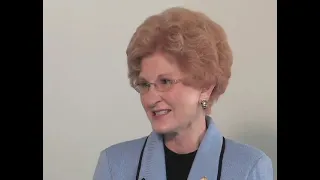
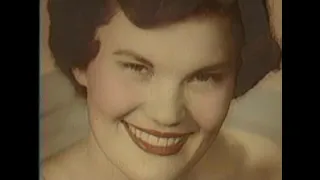
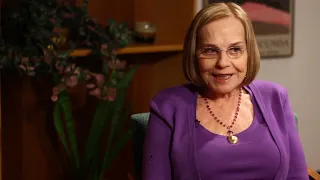
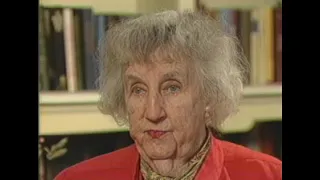
the nurse theorists portraits of excellence in this Edition we feature Dr Rosemary Rizzo [Music] parsey [Music] this home is uh where my roots are and I feel you know very um strongly that I gained a lot in this this environment the house is very special because my father and grandfather built the foundation and so forth for that house it has been built onto and modernized since uh my grandparents came uh to the United States but it is very important because all of the important occasions in my life took place there my uh grandparents on my
father's side were um born in Italy and they um came to the United States in um I guess it was 1906 they set up um the homestead the Rizzo Homestead in Castle Shannon and my uh grandfather was um worked in with shoes he was a shoe repair person and um when he they moved into into the community then he began to um be The Lamplighter in in the community I didn't know my grandfather um because he had died before my parents were married but I did know my grandmother I knew her very well because she
they lived right next door she helped to raise my sister and uh myself and my brother and she was a very a very loving warm woman my mother's parents were born in the United States and they they lived in generally uh around the Pittsburgh area and um eventually moved to Castle Shannon they were both very um strong very hardworking people my grandfather was a coal miner and my grandmother was a homemaker and a good bread maker too she could make bread the community was a small community as I was growing up in Castle Shannon I
um was surrounded by um important people and those people were my parents and my and my family my father is the oldest of seven living brothers and sisters he then as a young child picked up the uh worked with his father to light the lamps in our small community my father was U very important uh in the community he was known as an institution in Castle Shan and he was a burough manager and he um initiated the volunteer fire department my mother was very active in the U Catholic Church uh St an's church was the
first church in that particular area it was originally a coal mining town and she was oh very active in the PTA and in fundraising so that both my parents were um forces in the um Community my father in the political aspect in in the fire department and so forth and my mother in the church um my mother wasn't Italian she was of German Heritage and um it was U strange at that time for an Italian fellow to marry a German girl but they um struggled through that process with their parents and uh made a wonderful
home and and were wonderful parents I had really a wonderful childhood right it was very diverse in the home I of course uh learned to cook and and clean and um I also also had the privilege of uh learning to dance I took dancing lessons for many years and I took piano lessons and um I was exposed to the Arts I have a um older sister and a younger brother my sister's name is uh Nancy Nancy Jean Ferell and my brother's name is Frank rzo junor he's vice president of compact medals for Crucible steel my
older sister is is a nurse and she's in a family practice we were raised in a a u relatively strict a Catholic Family so the important days like communion and Confirmation were very important to us and I as um I went to a Catholic school Catholic Grade School St an's school and then I moved on to for High School St Francis Academy and then to Duane University for college yes I was a very good student in all the way through that U that process I enjoyed school I I actually liked to study and like to
learn and um that was um important in in the family my my parents were um stressed a great deal the academic aspect of Our Lives I went to Duan University for my bachelor's degree in nursing and I was very happy in my undergraduate program I uh I learned a great deal I had some fine teachers and um carried that spirit that I learned early in my life with of uh learning and wanting to learn more and wanting to uh create more and and move on so that when I did graduate from Duan I moved on
for my Master's Degree immediately um I worked some in between but I did move to to a master's program at the University of Pittsburgh I met John parsey before I entered College actually it just seemed as though we were right for each other I uh loved him early when I knew him and um then uh we we separated for a time while I was you know in college and and we dated each other and other people as well and and then he surfaced again in my life and um he's um a very good person he's
very um considerate and dependable and bright and articulate and has a wide variety of interests and um and he compliments me um greatly uh my wife is a very bright person and they know that from her work uh they probably know she's energetic also I think what they don't know is that she uh works extremely hard uh probably harder than than anybody I've ever known and that she's a very giving person you can't tell that by reading the book or by reading her uh the magazine that she publishes or her other books only I know
uh a number of things about her especially uh concerning what she has done and as as far as leadership is concerned in her profession and when I say her profession I mean not only the nursing profession specifically but education generally you must keep in mind that 25 or so years ago the numbers of people graduating from balarat schools of nursing were not great here in Pittsburgh the the the major schools that exist today existed then but they're graduating 10 or 15 students as opposed to um 60 70 or 80 each now so she was unusual
in that respect and out front in that respect even then when she graduated she was offered a fellowship at the University of Pittsburgh the dean and the major faculty advisers at Duan University where she went to school advised her to not take it was unheard of for young women to go into a master's program when they were just out of college she took it anyhow graduated in two years and was the youngest woman in the United States at that time to have master's degree in nursing went off for the PHD against everyone's advice why do
you need a PhD uh she was then teaching back at her almond water du University went on for the PHD and finished that in seven years uh going to night school without missing any work or any school and she was the first faculty member at Duan University to have a PhD she was the first graduate of Duan University's baloria program to get a PhD she became dean of Duane and she was the first Dean to have a PhD in the in the larger Arena of Academia she was elected president of the faculty Senate at duaine
uh before she became Dean and was reelected twice she was the first woman to have to be president of the faculty Senate and the first woman first person ever to be reelected twice three terms total the gist of her being out front and being a leader uh through all the years she'd been uh practicing in her profession is that she's created a role model a very important role model for a lot of young people uh there are women uh today uh young women in their 30s with phds and nursing who would not have dreamed of
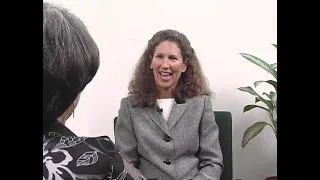
going that far with their with their educations and with their careers had not been for her some of them don't even know it they don't even know they don't know all the things I've just told you they don't know that that that she was a role model that inspired them to do it but like in every in every uh uh movement that that requires leadership uh she has been [Music] there Dr parsey discussed her theory of man living Health with Dr jacel and faucet at her home in Pittsburgh Pennsylvania Rosemary I'd like to thank you
so very much for agreeing to do this interview I'm really looking forward to what you have to tell us today well I appreciate being asked to talk with with you I'd like to start by asking you what was your motivation for developing the theory of man living health I think the ideas underpinning the theory really grew in me over time I think they began long ago when when I was a child I had uh wonderful parents and a good strong family and um my values for the human being and the Dignity of Being Human Grew
From that that time um so I think all through my educational process I I developed those values but I can remember as an undergraduate uh student having this gnawing awareness that the uh medical model was limited as a guide for nursing practice and I raised questions like uh why do people not follow Health teaching and like why do some people who do um not get well so these ideas and questions uh perplexed me as I U practiced and and as I guided students and uh so I was searching for a framework from which to practice
nursing that um connected with my values of the human- to Human Relationships I'd like to ask what influenced you what led you to the assumptions that underly your theory i u read um widely and I um found that Martha Rogers work was very consistent with my own views particularly the area where she talked about the human environment Mutual process and at the same time I was reading in um the literary works of Camu and Kafka and FL philosophers like um Hil and kirkyard and heiger and Merlo Ponte and sart and I began to um put
these ideas together to develop a unique perspective uh of Nursing and um while my my work is neither existential phenomenology nor Rogers it's it's a new product that came out of the assumptions that I developed um I um The Roots were in those particular areas Rosemary would you trace for us the development of your theory well I um developed the assumptions from as I mentioned from the um roarian framework and from the uh existential phenomenological thought of heiger um sart and merap Ponte I looked at Concepts within those Frameworks and um and I joined them
in a unique way to develop the the assumptions that underpin the theory and um I think this all happened like over um through the the 70s that's when I was really getting into this um to thinking in this way and into U I just had a a force and an idea that that I wanted to see nursing um carved out the the uniqueness of it in a particular way that would demonstrate the value for uh the meaning of lived experiences and so um I moved in that direction the writing of a theory is different I
think than the growing of it you know it grows in you in many different ways and and comes out and in in the writings my writings before me and living Health there were pieces and and parts of it that sort of um um showed themselves in various things that I spoke about and wrote and I um and in sitting down to put it together to write it um so that someone else can appreciate it then you put those um ideas together in a slightly different way often people will critique my work and say it's deductively
it has to be deductively uh uh derived because if you look at the the way the schemas are put together you can see that and I say no for me induction and deduction uh it's it's a process that you go through it isn't like this is deductive this is inductive it's a it's a process that one goes through in the development of ideas so um it comes through an inductive deductive process and the writing is is merely it's it's putting it down so that someone else can see it and and learn it and understand it
but it's different growing that that comes from from lots of different ways it's it's co-constituted by the world that the nurse lives in it's actually the world that the theorist lives in in developing and inventing and creating the theory how has your work influenced other people for example how does the theory help nurses to think about nursing well it's a whole different perspective than the traditional view of nursing um it's um basic view uh about human beings is different it it's built on the assumption that uh human beings co-au their health it's built on the
assumption that um the human environment relationship is a mutual process not cause effect so it's a whole different perspective a whole different way of thinking about being human this particular view calls out a different kind of practice and a different kind of research if you believe the person is co-author of Health then the nurse is um not the um authority figure in relation to the changing of Health the person is so it's say it's a view of nursing that puts the the focus on the person's own way of being and becoming could you tell us
more about the research methodology how would the methodology allow you to look at the efficacy of an intervention that was congruent with the theory it's my belief that um each matour discipline has its own research methodologies and if it's a a discipline that also has a practice connection or an art form with it then the practice and the research methodologies must be congruent with the ontological base of the theory so I developed a practice methodology and a research methodology that are consistent with the ontological base of man living Health the um research methodology focuses on
U uncovering the meaning of lived experiences it's uh qualitative in nature and it is um like other qualitative research methods in that it moves from the descriptions of participants up the levels of abstraction to the language of science it's different in that um the process of um data Gathering occurs through dialogical engagement and this dialogical engagement happens as the researcher and the participant come together centered And discussing a lived experience of Health these um dialogical engagements are then transcribed and the researcher um listens to and reads and studies the descriptions that were given by the
participants and move those through the processes of uh extraction synthesis and that moves through several levels of um abstraction up to the to the theory so are you testing the Theory with this research expanding I would call it expanding the theory how would you determine the efficacy of an intervention we have several um evaluation studies in process now in um the United States and Canada where um we're evaluating the theory and practice and um what what my colleagues and I do is there's a pre- descriptive evaluative process uh where the evaluator describes the the situation
as it is before there is any education about the uh parsey Theory and then the uh and then there's an A U an expert in parsey theory practice that works with the nurses and the um persons in the agency the um families and clients and then we um gather processed data so that we can see what's happening in terms of the changes in the nurses and the changes in the clients and then um at the end of a a designated period some have been uh 12 weeks some 30 weeks and some six months then we
the independent evaluator then gathers data again related to certain questions and and then we begin to look at what is different we look at differences in uh beliefs in nurse nurses beliefs um the practice of nursing what's that like um we look at um invite clients to actually talk about the um way that the nurse is with them and examine how that is different so I would say we use an evaluation research process to um evaluate the U the theory do you foresee any refinements or modifications in your theory as a result of all these
data that are being collected I think there may be some but um I'm not ready yet to to uh make those revisions or changes uh until there is more evidence that uh demonstrates that there needs to be you know any change the um I think we'll have findings from three or four different evaluation studies soon and the um man living health research methodology now has been used and published by several nurse Scholars and there are a number of other studies being carried out so once these are completed then I think I would like to take
a look at all of the findings from these and then make some judgments about changes in the U in the theory but I would wouldn't want to do that until I was certain that uh that there needed to be a change would you tell us what you're doing now what is the focus of your current work I'm engaged in the the um a research study on laughter and health using the new the uh emerging man living health research method and um and utilizing videotape with that at the present time because this this is the first
study with the videotape so I'm in the process of the extraction synthesis of that material that data and um as you know I'm professor and coordinator of the nursing research center at Hunter College and I direct the um doctoral task force there so I'm involved in preparing and and planning um doctoral curriculum and um I'm preparing a uh a book on uh nursing practice with the practice methodology and I edit nursing science quarterly so I'm very involved in um developing nursing science not only with my own work but also with the various Frameworks in nursing
I spend u a lot of time in um considering Ing and working as as a editor of nursing science quarterly what do you think is your most significant contribution to nursing well I think the value of my contributions will be decided by the generations of nurses who whose practice is Guided by parsy's Theory and the people who experience that practice I think think the value will be decided by them I think my work is an invitation I see it as an invitation to nurses to think about nursing in a different way to look at um
human beings and and value them as co-author of Health um I think the concern for um the meaning of lived experiences is um very important in the um evolution of nursing science and um the invitation goes beyond that to to think and to take the ideas and to to move them on to another generation of thought and another generation of nursing science how does the theory influence curriculum for those to accept the invitation how can it help them in their teaching I believe that um the curriculum would focus on uh a teacher student relationship that
would also reflect a concern for uh the person of the student and the administrator nurse inter relationship would Al also demonstrate that particular um value I think in order to develop this as a practice of nursing the uh educational program would have to be quite different than it is for traditional nursing uh it might even be at a graduate level the first professional degree u i I believe that a nurse practicing the man living Health Theory must have a very strong liberal arts and science base in order to be in the inter relationship that is
described in the practice methodology where the nurse is truly present to the person that true presence requires a level of maturity in the individual and uh calls them to be with the other in a very special way and that special way is to is to Value the other and set aside uh my particular values or the nurse's particular values about health and to work with the person as they move through changing Health patterns so I think an educational program for that kind of nurse it would be very different it would not follow the uh traditional
medical model that's in operation today in most of our nursing programs earlier we talked about what you think your contributions to nursing are now could you tell us what has given you the most satisfaction in your nursing career well I love all that I do but I think something that gives me a great deal of satisfaction is the opportunity to be with others to um co-constitute the stretching of potentials among Scholars and um it's not not just the potentials of others but it's also my own and I just that opportunity to uh to be with
others to Foster and forward ideas to change and stretch the discipline of nursing science that's what I do and that's what I like to do if you had a crystal ball what would you see for the the future what are your long range plans crystal ball um what I see there is uh myself and others growing and changing and and creating and moving nursing science to a place where it is not yet um I would like to have a hand in continuing to um expand the theory through practice and research and to help to guide
others in that process and most important I want to keep growing myself I want to move from this Horizon to a next one to a next one um I think I'll always be looking on to the next Horizon Rosemary I'd like to thank you again very very much for agreeing to do this interview has been just delightful to talk to you today I appreciate being invited to share my thoughts and my ideas thank you Rosemary was my first teacher in foundations of Nursing and um since that time I've known her as a mentor and also
as a friend Rosemary talked about nursing um as as um taking care of people so uh Nur nures weren't there to to um take care of diseases or to identify problems that people had and to take care of those problems or focus on the problems nurses were there to know about the people and to go to the the person and understand their experience at that time and uh she taught very you know even from the very beginning she didn't teach the disease processes you know at that time we uh learned nursing based on the diseases
and the the clinical problems and and the signs and symptoms and and the at the very end there was this little piece called nursing implications well Rosemary started from the very beginning looking at the person she is a Visionary she's a a person that uh is out there on the edge of Nursing and pushing the front tiers forward and I think that's um an uncomfortable position sometimes to be but living on that edge and pushing the frontiers of the science forward is something that is um that we need in nursing we need we need for
our scientific growth and our development I think that I'm more involved in um the philosophical and um the idea of uh communicating with the universe and being grounded and thinking in terms of that taii is yes it's an oriental martial art actually um that focuses on centering and grounding and calmness and Oneness with the universe and um I write about that in my work and uh I try to uh live that way as well it's a it's a philosophical perspective my husband and I John and I don't have any children but we do really have
eight children because they have four four nieces and four nephews and uh my H sister has a is married to Joseph Ferell and they have five wonderful children between the ages of um 33 and 17 and my uh brother is married to Gloria Stinson Rizzo and they have three wonderful Sons they'll carry on the Rizzo name I don't have a lot of time to do it uh with my present lifestyle but that's where you'll find me with family and and certainly the U Chief cook