Wow. [Music] Heat. The crack of a rifle rings out.
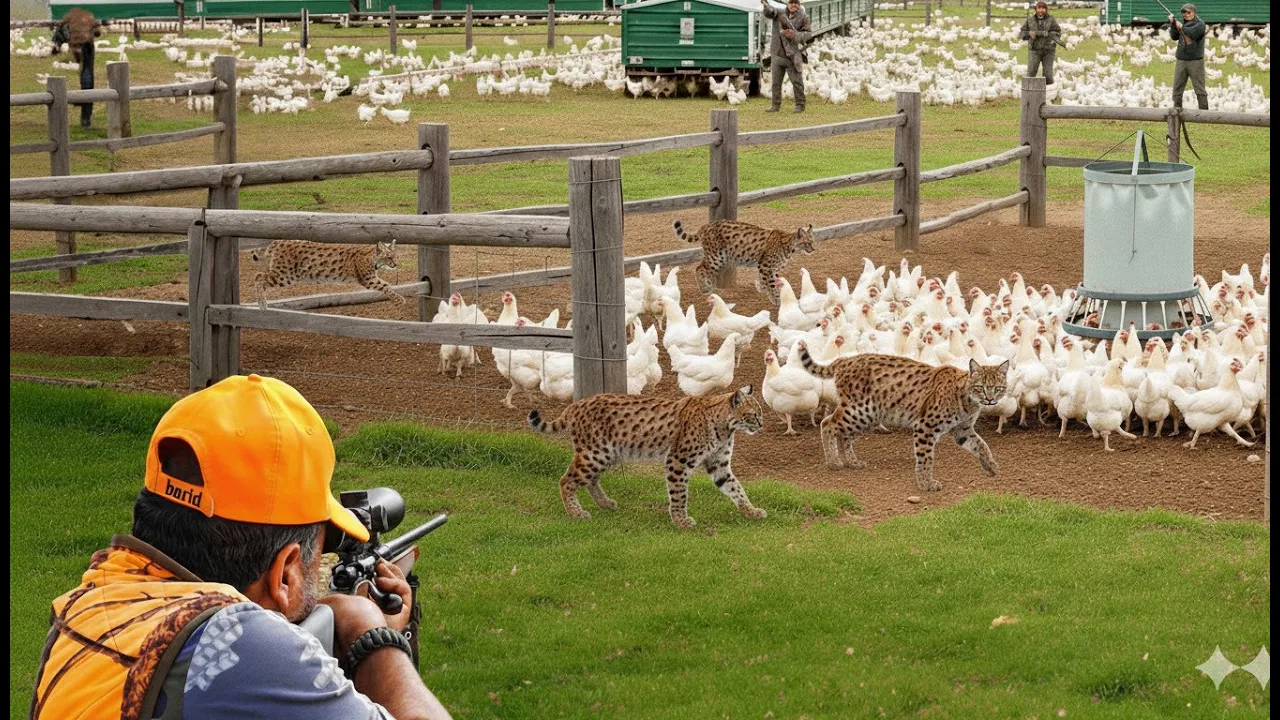
A bobcat drops to the ground. Yes, this is far from an uncommon sight across the United States. In rural communities, these predators pose a serious threat to farmers.
They prowl around barns and fields, raiding enclosures, hunting poultry and livestock. The financial toll is heavy with damages estimated in the millions of dollars each year. To safeguard their livelihoods, many farmers and hunters are left with little choice but to take up arms and hunt them.
All It is estimated that more than 1 million bobcats now America. So the question remains, is hunting truly an effective way to control their numbers or merely a temporary fix for a deeper long-term problem? Subscribe to our channel and follow along as we uncover the story.
[Applause] [Music] Ow. Ow. Yes, you do.
[Music] The bobcat, a notable member of the feline family, traces its ancestry back to Europe and Asia. A medium-sized carnivore, it is recognized for its spotted coat, tufted ears, and stealthy movements. [Music] In the United States, bobcat numbers have exploded beyond control, bringing them into direct contact, inflicting severe damage on farms.
One striking example occurred in Texas, where in a single night a bobcat killed 230 chickens. For families dependent on livestock, such losses represent not only financial ruin, but also an emotional blow and a threat to their very way of life. Farmers estimate bobcats cause as much as $60 million US in damages annually.
To address the challenge, many states have authorized regulated hunting programs. The aim is not to wipe out the species but to manage their numbers responsibly. Striking a balance between ecological preservation.
Bobcats are highly adaptable, thriving in a wide variety iety of environments, dense forests, rocky mountains, highlands, and vast grasslands. They leave distinctive signs of their presence, rounded tracks larger than those of a domestic cat, droppings often buried, and claw marks left on trees. For seasoned hunters, these traces serve as clues to their movements and behavior.
Hunting bobcats requires a demanding skill set, the ability to track in challenging terrain, a sound knowledge of bobcat habits and patterns, proficiency with firearms to deliver clean, humane, and accurate shots. [Music] Yes. Got him that time.
[Music] [Music] [Applause] A big challenge for hunters. When a bobcat climbs into the trees, the difficulty increases. Hunters must be extremely precise.
Hunters usually aim for the better neck to finish off quickly and preserve the value of the fur. [Music] [Music] Hey, don't [Music] There you go. [Applause] Ready?
[Applause] [Music] Yep. [Music] Boom. In the wide open plains, hunting calls for different methods.
Hunters use binoculars to scan the landscape, searching for the smallest movement that might betray a bobcat's presence. When the wildat comes into sight, the hunter must quickly estimate the distance and take them down. Get ready.
Experienced hunters rarely rush. Instead, they wait for the bobcat to pause or turn broadside, providing the best shot angle. The preferred target is the shoulder or just behind it, ensuring both a fast and humane kill.
[Music] Yes. [Music] Hunting wild cats is considered an exciting and dramatic job for many young hunters and experienced hunters. [Applause] With the intelligence of this cat, it creates thrilling chases, requires hunters to be patient, and have their own strategy to be effective.
Please go please. John on the grasslands. Success relies not only on marksmanship but also on calmness and sharp decisionmaking.
A single mistake and the bobcat will vanish in an instant. Dang. That's what I was afraid.
[Music] Tell me when you got a good trees right there. It's a bobcat. [Music] Yes, there's a big cat right there, guys.
In the US, bobcat hunting is strictly regulated. Prospective hunters must complete courses in firearm safety and hunting ethics before receiving a license. The minimum age is usually 18, though in some states, young people as young as 12 may take part under close supervision.
[Music] during the hunting season. An experienced hunter can hunt an average of one to two cats per day. [Applause] However, achieving this number depends on terrain, weather, and links density, and numbers can vary.
[Music] [Music] Get [Music] you. Beautiful. Harvested bobcats are fully utilized.
The meat prepared into delicacies, the pelts used in the fashion trade. According to the American Hunting and Wildlife Conservation Association, between 40,000 and 55,000 bobcats are taken annually. [Music] Killing killing.
Whoa. Yes. Get him.
[Music] Get him. [Music] In 2024, Texas recorded a peak of 3,900 bobcats, while California, home to the largest population, permitted only around 400 to be hunted for conservation reasons. [Music] Hey, meow.
[Music] [Music] [Music] Data shows hunting reduced poultry losses by about 15% compared to the year before. Though controversial, many still regard bobcat hunting as a necessary measure to preserve ecological balance and protect farmers economic interests. He ain't coming closer.
[Music] In addition to hunting wild cats with guns, hunting wild cats with traps is also very effective. [Music] Hunters often use medium-sized steel traps with enough clamping force to hold tightly without damaging the skin. [Music] To set traps effectively, hunters must choose a place where there are traces of cats moving frequently.
When setting a trap, you need to prepare rubber gloves to avoid leaving human scent. Net or dry leaves, dry branches to cover the trap. Bait, usually fresh meat, bird, rabbit, fish, or prey fur mixed with scent.
Lynx bait with a strong fishy smell attracting from afar. [Music] Check the trap every 8 to 12 hours, preferably early in the morning. Regular checks will help.
Release the animal quickly if caught. Replenish the bait if it is lost or rotten. Keep the natural scent around the trap, avoiding leaving traces of new people.
Whether the purpose of hunting is for pelting, research, or population control, it is important to ensure do not set traps near residential areas or routes with people. Do not leave the animal injured for too long. If the trap is not suitable, replace it with a trap with a softer spring.
Respect the breeding season. Avoid trapping during the time the female is nursing, usually April to July. [Music] Although hunting is considered an effective means of control, many experts caution it is not a permanent solution.
They warn that over reliance on hunting could create unforeseen ecological consequences. Calls continue for research into more humane and sustainable alternatives alongside assessments of hunting's broader impacts on the environment. For now, however, the US government continues to include regulated hunting as a central element of its wildlife policy, allowing hunters to play an active role in managing invasive species.
So, what about you? Comment one if you support hunting as a necessary measure. Comment zero if you believe we should seek out more humane solutions.
And don't forget to subscribe to the channel for more stories and explorations into the fascinating world of wildlife and nature.