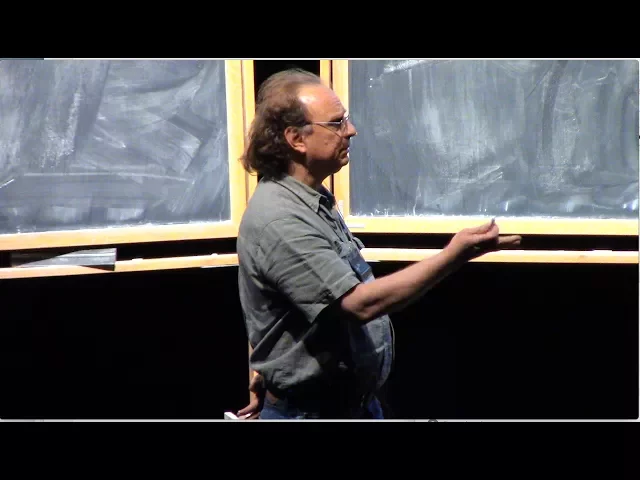
okay in any case as I say we've come a long road these three weeks and I'm really pleased to introduce our final speaker for the cross program events and so because it's a special occasion I wanted to invite a Tom Garrity so tom is hopefully most of you who've seen him around these weeks all right been talking to him so tom is a longtime member of the steering committee the undergraduate steering committee he's lectured in the undergraduate a summer program three years ago four years ago something like that a longtime professor at Williams College works
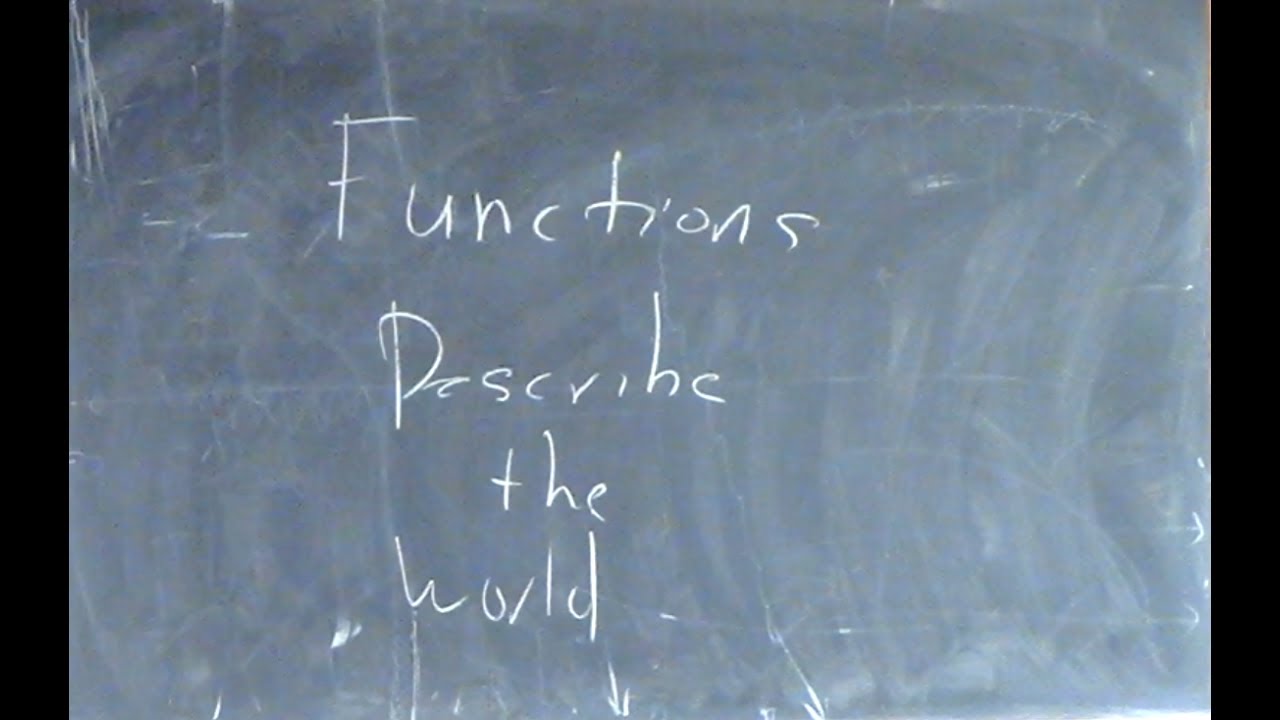
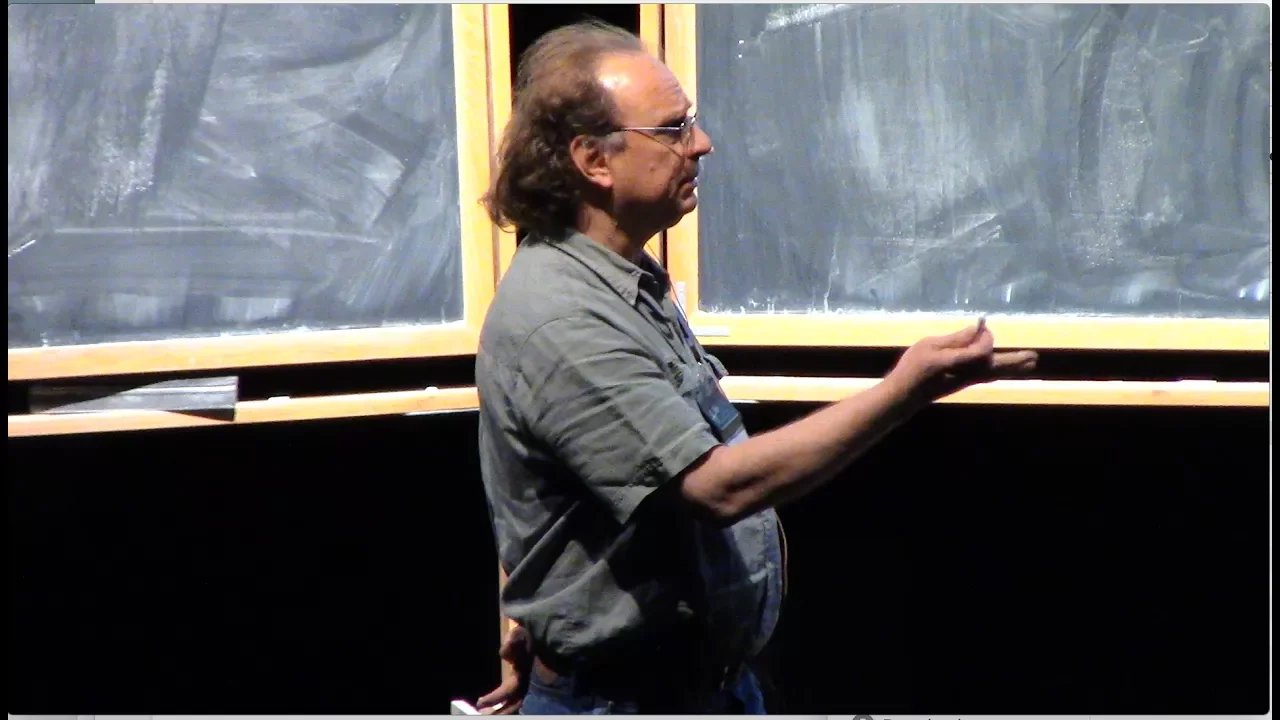
in number theory and you know just one of the great additions to PCA my family and I'm really pleased to introduce Tom Garrity who will speak on mathematical maturity thank you most of us learned at the feet of our parents the following truth functions describe the world everything is described by functions the sound of my voice on your eardrum function the life that kind of hitting your eyeballs right now function the entries you put in your random matrices function it's all function different classes in mathematics different areas of mathematics studies different kinds of function high
school maths that is second degree one to variable polynomials calculus studies smooth one variable functions and it goes on and on functions describe the world I start most of my courses that way and the question is why for the classes it's because I really believe it and of course the purpose of academia is a search for truth and I believe that's true even though if you push me I'm not quite sure how to define all those words I don't know how to find any of those words but I believe it and it conveys to students
that mathematics is really important not just important to get a job but if you want to get a good job you should know how the world works but a fundamental level I also say because it's kind of funny but why did I do it here when almost everyone in this room except for possibly the photographer at the side is a true believer two reasons one is kind of being entering into the notion of mathematical maturity a word that many college and university professors use but not all and which I've learned in the last couple of
weeks is not commonly used by educators in k-12 and we're we talking about the nature of mathematical maturity and you can interpret mathematical maturity almost as how sophisticated you think about functions so that's not how we're going to be doing it the real reason I did it is I am uncharacteristically nervous right now I'm not give a fair number talks and I don't really get nervous I don't really think about that much but because most talks that I give its the mathematics that's driving it you know if it's a research talk I might be a
little nervous that someone stands up instance on my own region says that's trivial but it's a different cutting nervousness I'm going to be talking today about about mathematics about the teaching of math myths and that makes me uncomfortable so it just also you know I am definitely more nervous normal um now about the rest of you I did not go into mathematics to teach when I went to graduate school I was wanted to learn how to do research in mathematics now to be clear I was not a naive 22 year old I understood full well
that the day job of a mathematician in the United States involved teaching and I felt as whoever forced me to teach I would try to bring the best of my abilities to it I would try the I recognize the people in that room were human beings who deserve my care and attention I just had no interest in doing that I mean honest I'm going to step down here but white smiley I can't no interest in that it's also the case and I didn't have to teach for quite a while probably two men mid-20s when they
eventually dragged me into a room the teacher it was also in my late 20s I certainly had the belief that I certainly have very strongly now is that I kind of bought the pop psychologist who think that all of us think we're better than we are you know the studies that we all think we're better drivers than we all we all think we're better at this than we really are so I've since my mid-twenties probably early 20s unless I have strong evidence to the contrary I believe I am average sort of what average means if
I think of the things that are most important to me in my personal life let's say how amazed about soar as a parent I hope as I say a spouse that I'm wonderfully warm and encouraging providing a framework of of support for our entire lives it's conceivable unfortunately that I'm actually a spouse that constantly passive-aggressive putting my wife down every step of the way I hope not probably on average the way it works I assume that if I had to teach I would be average I saw many of my fellow grad student teach quite a
bit while I did not I they all thought they were great teachers I thought they were all average they'll sound pretty good some not and any average is fine I'm inside back so it was one of the great surprises of my life when I eventually had to teach I was going to take it seriously there were human beings in that room but I was shocked at how enjoyable it was of how and which is one difficulty in this room is like trying to look in people's eyes to see who was understanding it was not understanding
you know trying to forgot how to touch that person way in the back that I can't see right now but I'm just pretending I mean it is it was just it was exhilarating I mean it's just when I take it's all I'm thinking about but number times the crap a lot of this high school students I apologize the number of times when bad things happen in personal life intrude on my teaching I think is like four or five times in 35 years and even this I think I covered it teaching is exhilarating and I learned
a tremendous amount about human beings before I started teaching I walked in that first class and I made a quick guess of who I thought you'd do well and who's gonna do poorly of course I thought the people who are like me and still school would do well so the people who are sitting in the back room looking bored and disaffected they were the really talented ones they were to do well the people who are sitting in the front row the people who I thought of as shameless toadies of course they're not really creative or
they might get good grades they just suck up and I was deeply super surprised at how it was all over the map I can't tell it all by looking at people how good how well they're doing tests how well they write an entire perspective on humanity for me but still I don't really think of myself as a teacher I identify myself as a mathematician so is somewhat surprising to my department back in 2004 2005 when I was put in charge of the Williams College project for effective teaching I was suddenly the teaching guy at a
school that prides itself on good teaching and what I kind of do was help mentor all new faculty in all disciplines people in my department thought that was hilarious yeah they said the time you just can't walk and make a bunch of jokes not everyone does that but I thought it was great but you can imagine we've caught in a serious school you know it's people care about the teaching they care about their research you know I was talking to a bunch of people probably mug roughly in their late twenties maybe early 30s they were
young they were ambitious they were full of ideas mac and learn all kinds of things it was really exciting I don't think I helped them that much but they really helped me to learn about all kinds of things but one thing I did learn is that they have absolutely no notion of mathematical maturity I would sometimes say well the historical analog of mathematical but don't worry I'll talk more about what mathematical maturity is it's in some crude sense the ability to pick up these quickly but it's deeper than that I said well there must be
the analogues historical maturity I'm thinking that you can imagine historian who studies France in the 1730's and surely they could teach China in 1,000 more quickly and better than me so I mentioned this to the young faculty and they just said we do not have such a concept and I took looking at an historian and saying well you must have the analog things have that word anyway it does not exist well let me explain more we understand what you're saying it does not exist I talked to a chemist an alum who's that Harvey Mudd actually
and I tried to explain to him anyway really now we don't have maybe we have it if you're looking at certain kinds of the shapes of molecules who have certain kind of geometric maturity we're going to close the map but surely the only group that I see found that had the close to it and this took me years of asking faculty was a Japanese professor who talked about language readiness and I think in K to 12 you all talk about readiness and that might be close and I think it's because in a foreign language I
certainly tried to learn foreign language but I've never thought in another language but there's a point people tell me where suddenly you go from translating everything to where you understand the conversations and I'm guessing there's a point with the sudden change is that true and they talk about that they're they they talk about that as language readiness so let us talk about what mathematic what surety is there's no well-defined meaning to it for a lot of college and university professors a lot of the maturity comes down to do you know what is a proof are
you capable of cleanly and easily ruddy down proofs and you recognize that for many students that first serious proof course is really hard at williams that's traditionally either abstract algebra or real analysis whoever's teaching that recognizes you have people are going to hit a wall and they're going to be frustrated there will be tears in your office now this boom boom now maybe a lot of people here did not find that kind of class hard I remember that well it was I was a first-year student at University of Texas Austin me and 45,000 of my
closest friends there's a young mathematician at the time who want who's ambitious in a very good teacher Bruce Palka who many of the Masters is no because in recent years he's been handing out money from the National Science Foundation he was an inspiration to us he decided to start an honours program in mathematics this is honours program in university of texas doesn't mean that much it means people who are okay at math and we were all from Texas but really it was calculus it was behind it before the days of the AP exams though I
think most of us had taken some calculus in high school it was really a real analysis course we use vivax calculus book how many inland apertures no spit ax calculus book it's an absolutely beautiful it's still one of my favorite books of all time so I walked in there and I'm gonna do well and the first day he assigned eighteen problems it was a Monday they were due that Friday I was not going to blow it off like I did high school because I would live in mortal fear of having to return to the small
town in Texas that I grew up in it was a real fear and I said I'm not going to wait the last minute so that Monday night I walked across the street from my dorm from people Texas it was gesture into the brand-new Perry Continental library still had a new library smell I was ready to start working the problems is a teen problem how long could it take me I'm good at math I'm in an Honors Program three hours later I had at best work three problems and I dragged myself out to horrible I'm I
felt really bad somehow because I did not want to return to my hometown well Liv is my parents is okay by me I so how I got through that first assignment I don't know how did not do that relevant now Palka was a great professor he understood that working in isolation is not good he was encouraging us constantly to talk to each other talk to each other and so a group a couple of us met for the second assignment there were three of us one whose name I do not remember the other far more mathematically
mature than me at the time some of you might know Michael Lacey he's a pretty big-time mathematician now at Georgia Tech celeb Prize winner he's still more mathematically mature than me and we were doing the problems and not but they saying we were doing the problems is not really true he was doing the problems and I was copying them down it wasn't a violation of any kind of honor code but I knew where the information was flowing you know I almost at the level as Michael would say we do problem 30 but can I don't
get you a soda you know I mean it was packed that level so I got to the second problem set but I felt bad you know I I felt that I was just I identify my so much when they do math actually it's all I could do I was a failure at everything else and here I'm a failure and the second week of college third week came along a group of the cemented to the homework problem Michael did not bother to show up I understood for well why and then happened it was a Thursday night
my roommate had a lot of David Bowie records music was hard to get at the times you had to use actual physical records and the song rebel rebel was in my mind my replica and I was looking at I'm struggling I've been thinking about this course all the time I was dry I could just didn't know what was going on I was like I was in the undergraduate library which is this big overall appeal science errand and it suddenly it happened I saw what was going on I could work the problems suddenly trouble I didn't
us seeing what they're talking about way too smooth that's interesting I think we just learned excellent evil to learn but Delta the absorbing it was to grade it one of the greatest nights of my life I mean I was just so I was mathematical mature and thank goodness the first test was four days later and I did well on it that was one that's an example of mathematical maturity after that moment when I made mistakes in mathematics they were sort of honest mistakes I just got some fat mixed up it wasn't because I couldn't express
it I just thought I didn't understand what was going on I could see the moves they took you out of people had that experience I'm just a teacher nice but there's other types of maps Malkovich and the point is now frequently among college professors we when we talk about mathematics we frequently mean that sort right I'm talking to some of them Harvey money like look not true absolutely there's other types one big type of mathematical maturity is being comfortable with high school algebra being able to do algebraic manipulations so this is now another of how
I became high school algebraically mature there was no moment of Epiphany there was no moment when I was so frustrated no what's going on suddenly I saw absolutely not it was seventh grade we had an ambitious seventh grade teacher who in November December that year decided to teach us high school algebra I had no clue what was going on it was probably one equation one unknown and we probably just had isolate the X I don't remember all I remember there was equations and he kept saying the equals friends propellant emits balancing and every time it
kept changing he tried man I go buddy question keeps changing but develops me mr. valence because I did not know what's going on and I remember actually going to talk to him which was frustrating for me because I did not like teachers and I still feel uncomfortable around you all and I ask if I don't know what's happening and he talked nearly every day we left it we went back to the stuff we normally do the standard seventh-grade math back in the early 1970s which was set theory and I was comforted on Sirius they talk
to older people like it was sex theory anyway I understood it he was good but then we came back to it in May of that year and it was perfectly obvious to me I had no idea I didn't remember what it's not like I thought about it I was 7th grader I didn't think about school that much and so somehow in that in assuming time I became algebraically or high-school algebraically mature and that happens to us all so also you struggle or something you go away you come back go I don't know what the prom
was no moment of Epiphany no great experience of light bulbs going off I mean it happens throughout our careers I don't think about math now the same way as I did let's say 20 years ago and 20 years ago I was a tenured professor I certainly don't think of it the same way they did 30 years ago when I was a postdoc it already had a PhD was already proving real results certainly 40 years ago when I started college of explaining why you're the halogen epicness of meaning compared not just knowledge it's not just facts
it's just an awareness of how it all kind of fits together it's so I suspect if I'm teaching beginning calculus the words I say now are probably the same as I would have said 30 years ago but the underlying nuance behind it it is a richness to it so let's try to sketch out the stages of our lives we're all trying to become better people better understanding of the world and so to understand the world we have to understand functions which means we really have to understand that now none of what I'm talking about should
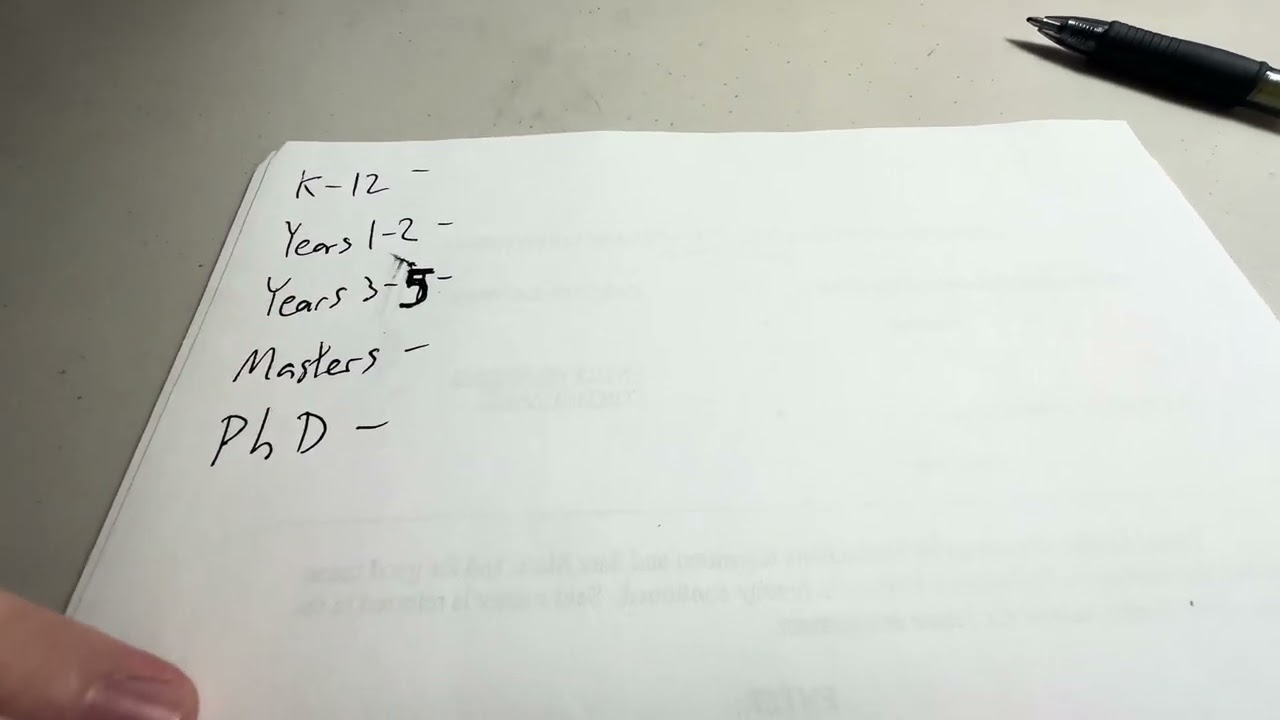
be viewed as my curriculum if you I mean then you'd have to worry about real details they're just a sketch so let's go through clearly I don't know much about primary school I have no clue how to teach 3rd graders you know I do not know even begin to what to do but I would think that by the end of you know by the time they're 12 basic arithmetic and fractions you know graphs and charts Fermi type problems but really the recognition that is starting their patterns and the patterns have reasonings I talk to a
lot of people partly mentoring new faculty may them say they've never made sense out of math I can remember learning multiplication tables and being enchanted by them in that primary school there's so many patterns factor trees all kind of love Santa trees sitting a boring church looking up and seeing the hymnal number how fast can i factor it I still do that now that I think about it with airplane tickets when we're landing I'm thinking I'm probably going to die I've had a good life huh I think 7 goes into it I still miss other
people here to do that also but the regular there's patterns at the person mere technique Secondary School of course high school algebra trig more controversial Euclidean geometry basically counting but again the idea that these hold together they're not just random things one person I know was teaching a course at a college community college and took off some points from a student student came in and said he said I'm wondering why you said X was equal to 37 he said well that's the right answer I thought you told us last week X was 17 I missed
a true story and the cursor was oh my god this person's level of mathematical maturity it is the wrong place one has probably mildly controversial Euclidean geometry that's been really gone you eliminated from the secondary schools released in the u.s. starting in the 60s there probably people my age were still doing it did you do a rigorous did you do in Slovenia rigorous rigorous a little bit now they don't do it that much I think that's actually hurt our humanities colleagues are humanity's colleagues make fun of axiomatic methods and they never experienced its power they
don't really know what they're even arguing against they were good intellectual reasons in 1930 to argue against it now they don't even know what they're arguing against and it creates problems in the humanities but that's just moving into a crank view moving into the world that I know College certainly in the first two years calculus and linear especially linear algebra and pretty much what I'm saying so the second no one fits in all this you know as I said I was taking analysis my first year not my third year but that's the real thing in
the last two years a full understanding what rigor means in graduate school you make huge leaps I actually tell students that if you adheres people learning multiplication here's where you are with high school algebra here's where you are when you get through an undergraduate math major here's where your end of your first or second year a graduate school is the scale is mathematical charity here is you're finishing your PhD up there is when you're going to finish your postdoc and you keep climbing higher and higher not proving better results but you can excitement life and
so the last two years is when you really start working on your PhD theses as I mentioned earlier your first two years you're learning an amazing ability to learn mathematics quickly I'm putting this on very explicitly because I know for K to 12 million view not gone to graduate school and and it's all inspiring at the end those first two years you just rolled oh cool you know you can make connections very fast you can pick up a bear cattle film right through it suddenly you have to do original mathematics and you crash because you're
used to learning amazing amounts of mathematics really fast and efficiently and you're feeling powerful you remember where you were when you're 18 and now you're 23 and you adjust and then you come across a real problem and you go you try something it doesn't work you try something it doesn't work you do that for a year two years and if you're lucky you get someplace but it's a real also helps with Mathematica chura T so then you become a poet first years after a PhD is more of a depends what kind of job you get
if you're a certainly you should be starting to move away from your thesis area or at least make it richer and that's when you start talking about having your own research program and that's what you probably certainly Williams if we start looking at when we hire people and continue do they have a vision of where they want their research to go do are they are they just solving little problems that's not as good as no no I'm really in the broad spectrum of what's going on mid-career though actually I'm not really living it probably retirement
of course and then nursing home and I don't know about those yet but with nursing home who here's how I think probably most of us want to die I want to be a hundred and three in a hospital surrounded by loved ones I want my spouse my children grandchildren maybe even a great grandchildren I'm 103 and then a great-great grandchild nikasha a baby in arms and I want to be lying there feeling the love and then at that moment having my last mathematical insight and then machines don't I mean that's the way to live and
die and that's the aim for at the nursing home but how can we use this I mean to help us to help our careers help our teaching well teach and it's pretty clear one thing is to recognize among needing to recognize is that when you teach a course you have to figure out what level of mathematical maturity your students are at it's very common especially at colleges and universities for everyone to complain because they're not teaching the students they have theirs teaching the students they want and that's bad you have to recognize where they are
and consciously think about it if I'm teaching be getting real analysis I'm thinking about it that these are people who are probably pretty good at math in terms of algorithmically but they're going to make a leap if I was teaching high school I think I probably feeling the same things so that's one way to use it it's more than that mathematicians regularly in academic politics get rolled over by administrations it's a fact is because we have a tendency to listen to Authority if we have a tendency to like rules and say it's a rule the
Dean said it must be were you and so part of that meant that the math world was far behind other sciences in terms of lobbying the government and the math world hired its first lobbyist in the mid 1980s long after every other discipline the guy they hired was Ken Hoffman who had been a long time chair of the MIT math department and a very serious person in several complex variables he was speaking once when I was in grad school I think it was 1985 and he was talking about his experience it's going to connected mathematical
treatment he was talking about his experiences in Washington and one thing he said is that everyone in Washington thought that mathematics was important he did not have to convince anybody that math was important what he had to convince them is that math is still going on they all thought it was over now when he said that I was a young arrogant graduate student but I felt the entire auditorium getting very smug they put politicians ignorant Philistines not understand that mathematics is still going on and they turned to us and said and whose fault is it
and he said it's ours is that people are in math classes every day throughout the country how would I know math is people going on if we don't tell them and we don't tell them I took that to heart and it's also exciting to mathematical maturity is we want to get through to students that math is an ongoing process that is never-ending in its richness and part of that I say there are still people who are very serious and very interesting who are struggling with new mathematics I use that at the college level to try
to drag in research whenever possible in the following way it's not like I'm giving a 30-minute lecture on my research absolutely not but let's say I was teaching first semester calculus we're doing the second derivative test in the 80s early 90s I was extremely concerned with curvature conditions I was act technically I was concerned about ample vector bundles but it actually came down to algebra teachers project I was concerned about curvature so if I was teaching the second derivative I'd say oh no we're doing the second derivative test it goes like this with 100 second
derivative other time second by the way when you go to higher variables becomes much trickier and I say it's actually tied into curvature which is not a single thing it's very very very tricky now my research is really concerned about it and then I back go back to the subject I left in late 80s I was Astro very I was actually working in computer algebra I was concerned about factoring polynomials at the time the fastest algorithm in fact our multi variable polynomials over the complex numbers I was proud of that work whenever I came across
any kind of factoring problem shows up every place I'd say by the way factoring is a touchstone problem in mathematics you always want to take a given area math and break it up into its primitive parts and then ask how you put it back together again this permeates mathematics and it does much of high school algebra is doing the quadratic equation right is that true factoring high or low it you're factoring all the time mention it quickly if you I would say for those who K to 12 I would mention PCM I I would say
oh yeah people are still doing math all the time I spent the summer research institutes it was great they are kind of wacky but you know and do that so create the image of it and that's part of the mathematical maturity any questions there's other things you can do and this is now to help departments especially now this is trying to mentor young faculty it's good if a department has for example a lunch crowd