as Kelly said my name is Missy Mitchell McBeth and among a couple of other roles I am currently the director of sports performance at Fieldhouse volleyball club but I have six years of experience as a head high school strength coach um and in the interest of full disclosure and to kind of start this off with something a little bit funny on Monday night I found myself crouched down on our turf because the SE the session that I was running turned into an absolute disaster and I looked at my team and I said you know the
irony here is that on Thursday night I'm going to be presenting to other coaches on how to make sessions flow better and they all of course got a good laugh out of that but my point is that very rarely um if ever is a session going to be perfect at the high school level you are working with low attention spans you are working with a variety of learning levels in there so really what we have to do is simplify so if I could give you one piece of advice if you hear nothing else that I
have to say tonight it's that just that you have to throw away your textbook you have to throw away the idea that things are going to be perfect and you have to find what works in your context so to do that the first thing that I do is I simplify things just as I told you that if you take one thing away from tonight I want to simplify down to if we can only get one thing done during this session or during this training block what do I want it to be so having very clearly
defined goals for each training session is going to help optimize the flow when we try to do too much we don't get a lot out of it in that session Monday night my overarching goal was we need to get two fly TS done tonight that's it if we get nothing else done and 16 of 21 of my athletes PR that night so despite the fact that the session didn't go off perfectly we accomplished what we needed to accomplish all right something else that I do to simplify is I use a series of progressions for every
one of our basic movement patterns okay that allows me to do a number of things it allows me to address a variety of learning levels in the room very simply it also allows me when I move from program to program or training block to training block I'm not having to spend an overabundance of time teaching and reteaching movements I'm just layering on something slightly different so for example in our squat progression we're going to go from a counter movement squat where the athlete is pressing a plate out in front of them as a counterbalance to
their hips the next training block we're going to move to a goblet squat okay so I don't have to retach every squat queue I'm just very simply changing the position of the Implement and that's going to make my sessions flow more smoothly because it's going to allow me to get more done later in the session um that also kind of ties into a question that I get asked a lot about the high school level is how do you individualize training in large in large group settings or how do you make it specific to the sport
first of all um from the sport specificity standpoint or the individualization standpoint the lower the training age of an athlete the more basic motor abilities of speed power strength those types of things are going to transfer to their sport we don't necessarily need really specialized means but you will have groups that for example I have a kid that's been training with me for three years in the same training group of an athletes that's walking through the weight room door for the very first time so having those progressions in place allows me instead of trying to
run three different programs in the room I take one program and run it three different ways on the standpoint of a sports of the sports specificity I may have a multitude of sports within the same training session it's just as simple as making a subtle modification like if I have overhead athletes in the session they're doing something for scapular stability where my Collision contact sport athletes may be doing something for neck for a concussion mitigation situation okay so very very small changes in the training program allow me to individualize or specialize for sport without disrupting
the flow of the session um finally from a simplification standpoint um we've all done the Excel spreadsheets we've all done the trying to create these like fancy dashboards on our own to try to do it cheaply we don't have time with 300 to 500 athletes to try to do those things and actually like disaggregate that data so getting a software platform getting technology in your weight room has been a huge addition to my strength and conditioning because now like I get in the output Hub and very quickly I can scan 200 athletes and see how
many like just visually percentage wise how many increase decrease in what training interventions that I may need um to make as a result of how our testing was next piece is systems um what happened Monday night is I had made a small change in the overall structure of the training session I Comm communicated that with all of my other groups the previous week I assumed that I had done so with the group in question but I hadn't so because I chose to change the structure I created a little bit of chaos so the best bet
is to keep the same daily and weekly structure my kids are going to go to the same rack they're going to go to the same line they're going to rotate in the same order they're going to have the same coach at that same station the more we can create continuity and consistency the better it's going to flow week to week if we do have a need like I did to train to change the structure of the training session that needs to be overcommunication because they went the wrong way initially um another system that I have
in place that I've used a ton with great success is peer-led coaching I can't possibly in a room of even 10 athletes I can't coach every single rep I can't even coach 10% of the Reps but I can scale my coaching through my student athletes so to do that I give very specific criteria where do they stand what are they looking at give them one to two coaching cues to focus on with their partner now every rep in the wait room is and can uh can get coached over the weeks I'm going to layer in
additional cues okay in addition to scaling coaching this also solves a major time suck in the waight room which is discipline issues and a lot of times discipline issues rise from athletes being Idol they don't have anything to do so they're disruptive to other teammates this eliminates them it lets them rest physically but while still being cognitively engaged and then the last thing that I've found to optimize flow um over the years has been just having syst systems in place for various statuses so something that when I first took over my position at Byron Nelson
High School the first training session I walked into I was just flocked with like it was a triage facility basically I had 10 athletes running up with various injury statuses and I'm trying to run a group but also attend to these individual needs so what I learned to do is I'm just going to have a set protocol for these acute injuries of here's your workout program for upper body only here's for lower body here's for single limb here's for a back injury having those things in advance that way I can just hand it to the
athlete and then guide them as needed during the session alleviates me having to handle that while the room is not being managed um the next thing is a competitive calendar very often what I get in training groups because I work in the volleyball space in the springtime is I have one group of athletes who just had a tournament this past weekend I have a second group of athletes who has a tournament upcoming this we the following weekend and then I have a third group that does not have a tournament booking ending the week so those
three different statuses present three different Lev levels of Readiness and again I can't have three completely separate programs but what I can have is a system in place to address these needs very quickly so on the next slide we'll have a chart to show uh this is a a gross oversimplification of what I do but effectively I look at the Timeline game day plus or minus one day or if you're lifting on a game day okay that I assign a stake temperature how long am I going to cook that steak these athletes are going to
be a rare steak temperature their volume and intensity is going to be reduced because of the proximity to the game okay and I won't walk through each of these you'll get it in the slides um but that's kind of how I how I adjust training I very simply have athletes do a show of hands who has a tournament coming up or who just came off of a tournament here your training modification and so again I'm taking the same program and I'm able to run it three different ways in the same room without disrupting the overall
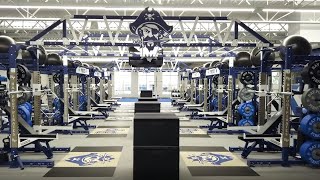
flow of the session yep so my name is Kyle jaxi I'm the director of athletic performance here at Charlotte Christian School in North Carolina uh before then I was at Ardrey Kell High School which is one of the largest high schools in the United States at just over 3,700 students with with those being about 850 student athletes um with that room we had a room of 2300 square feet that sometimes we would have 80 to 100 to even over a 100 Athletes Training at the same time so a lot of that is how can we
create spaces within our high school program because nothing is ever perfect most of us probably do not have enough space or have enough time with our kids so what can we do in order to create better workflow for us so I think the first thing is what other space do you have access to is it a hallway is it outdoor having an outdoor access door could could Bode you really really well what wall space do you have access to because sometimes you may be throwing a med medicine ball against the wall maybe a gym or
a multi-purpose space like a wrestling room or just a auxiliary gym that's nearby maybe you can flow in and out of or split the program in half and have another coach be running another space but with that with things to consider what distractions may come up what's the foot traffic kind of look like I know for us at rrey Kell one of the main hallways of the school was right by the wait room so it was teachers at the end of the day trying to leave when I had 80 football guys lifting at the same
time that foot traffic can one be distracting and two can be a safety issue as as a whole as well so what's the worst case scenario that could happen and then equipment flexibility is crucial at the high school level we we have to think that a weight sometimes has to be a weight you may find teaching things with different equipment may increase your workflow for us I know that I learned that I wanted to teach a RDL with a kettle bell before I taught it with dumbbells being able to put a kettle bell in between
the feet voted as well if you have access to those kind of things being able to have a free flowing system that the kids have some level of choice with the weight that they're using to be able to adapt their exercises can one find space for you find some time and then keep kids busy at the same time and then organization so where does blank go where do the kettle bells go where do the dumbbells go where do the bands go what kind of Freedom does that have so what's the ground space that a specific
movement is going to take up I'm like anyone if you follow me on social media I love medicine balls we we throw them we we slam them but how much ground space am I going to take up if I'm going a shuffle to a medicine ball slam and I can only slam three medicine balls because that's taking up half of my room that may not be something that happens for my program I may have to adapt that into a hallway or an outside space so being able to adapt your program off of that and then
how long does it take to get there things that you may not think of especially if you're using outside spaces me meaning created spaces is something like door width hallway width space in the room as it as itself if you're throwing a med medicine ball against the wall but there's no freedom for people to be moving behind them one that's creating a safety issue and then probably negatively impacting the move quality as well and then if door width isn't very very wide if you got 80s to 100 high school football players that are trying to
move in and outside the door and the 310 pound offense alinan is moving through it may not be as may not be flowing as well as well and then equipment and Technology freedom of use within the spaces so do you need to see and Coach everything sure you would like to but that's probably not always evident so maybe being able to put something as simple as a band pull apart whether you think that a band pull apart is simple for a high school kid or not trust me we've all seen ones that can mess it
up but maybe you don't need to see those certain things at all times so being able to put that into a hallway space an outdoor space a back of a weit room being able to create your spaces within that then maybe you may have found a new home for it and then stuff like output obviously if it's connected to an iPad being able to have freedom to that iPad as well something like a 105 test if you're timing laser Sprints in a hallway that's a lot of freedom that you're able to be able to utilize
jumps on a jump mat that stuff can go anywhere so why don't you use it as such being able to have freedom within your program is going to have let your program spread out while keeping the nitty-gritty maybe inside the wait room while good performing things are still happening outside that may not have to be coached and finally your responsibility is as a coach this may be a wakeup call for some of you but these are the main things that we look at when we're assessing our programs here at Charlotte Christian and especially when I
was at Ardrey Kell approachability of the coach if you spend more time yelling move because it's just not working then you're missing the point of coaching just being able to yell at kids constantly just trying to motivate them you probably need to assess your program peer pressure can also be a beautiful thing if you're creating an environment that is peer-led coaching like Missy brought up then you're probably going to be better off you're going to be less stress as coach your program's going to have more Buy in across the board and then hopefully you're going
to raise the bottom floor of your athletes have those seniors coaching those freshmen etc etc in order to make yourself better and then in turn you being more approachable as a coach maybe being a little less stressed maybe a little bit more like yourself is going to create better buyin as a whole autonomy in the program equipment selection at different spaces last week we had three different sports teams three different female sports teams lifting at the same time at one point mile across girls last week took a kettle bell outside in order to do their
split squats they said hey coach it's two- packed in there I feel better out here great I know that I trust those girls in order to be able to get their autonomy in their program being able to have that choice as well as I have some level of equipment that allows us to do that so being able to find a home for an exercise and then being able to coach that too like hey maybe we shouldn't be glute bridging right next to where we are doing our Olympic on a platform whether you think the Olympic
lifts are good or not opinion exercise order does not matter to the high school level sure we all like the French contrast phases and everything else but if there's a workflow issue and you're trying to optimize your flow maybe the exercise order will not be perfect there will be kids that will start with a band pull apart before they would necessarily get their back squat sets in so what does that look like for our program for us here at Charlotte Christian we're usually a four exercise super set because that's what helps us with our workflow
it keeps kids busy keeps kids active rest that way we're getting a lot of kids in and out of the room in a very efficient way walk alongside it's one of the standards of our program here be what you expect your program to be if you want your program to work work well flow well flow in and out of the room then you also need to do that as a coach if I sit in a corner all all the time guess what kids are going to gravitate to you kids are going to always try to
get knocked off kilter so you have to be able to work with that flow as well being able to see a lot of things and then finally when the going gets tough are you assessing yourself or are you assessing your kids first your student athletes will match what you are conveying as a coach no matter if it's an energy I'm not a raw raw person no one will ever say that I'm a raw raw person and a lot of my female athletes make fun of me because they always want me to break it down at
the end of the day with them that's not not me as a coach but they also understand that but I always always always look Within Myself first if something is not working if my student athletes see that I'm stressed because hey the workflow or this exercise looks like looks like crap hey we're running around if I'm running around with my head cut off the kids are just going to get more stress and that's how you're going to lose building trust takes a long long time but you can lose that trust really really fast if you're
not acting like yourself and being levelheaded no matter what's going on in the in the session that's it for me Kell super so let me see here guys do we have any questions so guys if there is any questions please do pop them into the question box I can see one straight away for you guys um from Kendall um so um for complex movements I.E barbell would oncommand reps whistle vocal Q Etc be an effective strategy for moving through training sessions more smoothly so do either one of you guys want to take that I will
take it um Kyle may have a different answer which is fine um I hate command lifts um I hate them hate them hate them because I'm a huge uh quality person it is a way to move people through efficiently um but what I have found and it may be my implementation of said command lifting what I have found over time and most cases is the kid the the reason that we're putting them on command is because we have a couple people that are not moving at the speed that we want and then we put them
on command and they still don't move at the speed that we want but now the entire group is like standing there holding a bar waiting on it has been my experience with it I will say that we have a coach here in Texas named Joey Heron that does an outstanding job with command weights he's very open and vocal about how he does it how he implements it um again he's very success successful it is just not necessarily part of my training philosophy um so that's kind of my thought again it can work it's just not
something that I personally want to use because I feel like at the end of the day um and this will be written about in my book that's going to publish here in the next I don't know six to eight weeks but um at the end of the day if in the early teaching phases of something if I'm only getting through exercise 1A on day one but we got through 1A and like we really learned it and it looked good I'm okay with with sacrificing 1B through 3D for that right and then the next time we
come in we don't have to spend as much time teaching that we layer in and like increase that criteria over time super yeah and I've been at school that was on a whistle and what I thought that created was just a lot of standing around so if especially where I'm at a private school where there's people that are in and out of our building constantly looking to go to school here and they see a LW standing around not a whole lot of flow going on that may not be what it what I want it to
per P show what my program is um so because sometimes you may be on a whistle that an exercise is going to take a full 30 seconds but maybe one exercise is only going to take a couple seconds so then you're just creating a lot of standing around then in turn we see a lot of focus drop for maybe some middle schoolers that may be some time that hey we got to go step by step that we're all doing the same exercise at the same time but say if you are in a room that's got
30 barbells and you got 30 kids that's probably something that you're able to do for us here we have eight racks eight barbells that's that's what we have a lot of our groups are usually 30 to 40 kids at a time if I'm going on a whistle there's going to be some level of drop off as a whole if I want to keep high school kids focused and then hopefully keep that buy in as well in that program as a whole then we're going to be lacking if we're kind of on the whistle but I
have seen it be successful I think Missy brings up really good good point Joey Heron down in Texas does a phenomenal job with it just not really my style at the end of the day and I want to tag in on something that Kyle just mentioned which is Middle School completely different Beast um in that setting yes um my athletes were in a number of scenarios on command largely because of what Kyle talked to which is alternative spaces and Equipment flexibility so our athletes were training there's a group of 120 to 200 middle schools and
middle school athletes you have a th000 foot weight room that math doesn't math so they're all training in the gym out on the gym floor well it just makes a lot of sense for everyone to be squatting and then we transition into let's say a plank then transition into a glute Bridge so in that regard we absolutely are on command it's just not necessarily command weights what we think of like what what we both said Joey does super thanks guys another question here from coach null um do you find that assigning a certain number of
athletes per racker station helps with workflow for me um my dream in life is to always always always have three athletes per station because then I can have one primary lift one auxiliary lift and one athlete coaching slash in their recovery interval um if I don't have that happen like Kyle said he had 4 to Iraq I've had a number of circumstances over the years where I've had to go 42 Iraq in that case I'm going to make a decision based on the maturity level of my team if I want to assign something else as
a superet or if I actually want to have one station resting or it may be a spotter situation yeah and then for me like I think having stations assigned is very dependent on what your total number is and how many stations can you create so I know for us at rre Kell like if I look at our female sports group that may have three offseason groups at the same time about 60 girls with 10 racks we would match that with about six exercises that were going on at the same time we would warm up as
like one large group move on to the lift as one large group and then in turn it was up to them to find that workflow space there's plenty of times that like hey we have 80 to 100 football kids lifting at the same time with 10 racks not a huge barbell lover but if you got 10 racks and you got 10 barbells you're probably going to be utilizing that if you got a group of 80 802 100 so maybe having some level of stations sure that's a perfect world but what are those exercises matching so
is it a perfect half number like if you got six to AQ and we're doing three exercises how many sets are you creating how long are those exercises taking as well some exercises especially if you're a Tempo training coach that have like Hey we're going through a heavy e Centric with five reps 6 seconds on the way down that's going to take us a long long time or if it's an alternating movement or a single arm movement those are always going to take a lot longer than something like three sets of 10 band pull parts
I I keep going back to Band pull parts that just whatever just pops in my head at the same time but sure there's probably some level of structure that right off the bat you're saying that like hey you should be in a group of four a lot of the times those older kids can usually do a lot better of a job flowing as long as they've been in your program for longer but maybe some of those younger people that you need to be a little bit more Hands-On should probably be at a smaller Rack or
smaller rack group that way they're always finding it I think it's very dependent on what equipment you have how much space you have how many exercises and what your program looks like sure there's always a perfect world perfect world for us is that I would have four people to a station but then four people to a station for us would bring 32 kids into the wait room there's sometimes that we have over 32 kids so what kind of spaces am I using what equipment am I using in order better my program as a whole perfect
um another question in from Kendall um what logistical issues have you faced with speed development training sessions in large groups for example 50 plus and how did you or do you plan to address them uh for me my group size is 24 at Max but given the constraints I think my turf is about 12 yards wide and we're 36 yards long so right there 24 athletes are going to fill that up during a speed development session um so that's number one is the space constraint when we're what I've started doing is splitting them like for
our speed technique work like our a series work instead of you know we're four lines six athlete steep I send three of those lines down to the opposite end and we're just moving back and forth towards each other other okay then when we get into actually I use free laap for that so when we get into our Freel laap testing obviously the logistical issue becomes I don't have enough width to get two lanes necessarily going we've not been able to figure that out if somebody has that answer let me know because for now the chips
have been interfering with one another so um there if we're really in a pinch I'm going to send half the group inside speed test the one group while the other group's inside doing output testing or whatever so again just when you have those larger groups instead of everybody standing in line for you know infinite amounts of time trying to split them and find something else for them to do Kyle raised a really good point we all want to feed the cats we all want to do our speed first but logistically speaking sometimes we can't do
our speed first sometimes it has to occur after a lift um and the way that I navigate that specifically is my kids with an older training age are going to go in the tech textbook correct session order lower training age we can flip the script on them and not have any uh decrements in our progress yep and and I'll second that with with Missy as well like there's always a perfect order that we can go in um at rre Kell like for our football group for example we would have 80 guys running through a speed
session at the same time with I have one two gate Dasher for that we would create some level of stations like okay we got Med ball throw for us we would have a goat drill and then they would run one rep with a Dasher with the Dasher we were full on like free run quick run setting that way we're not setting the system constantly doing a fly and Sprint being able to adapt it off of that but then as part of the warmup as well what is your coaching voice what is your coaching style for
us I can split on half the people on the goal line half the people on the 10 kind of coach from The Middle and then in turn be able to build it but that's part of the speed program that you may be able to run or program that you're running for us like we run an Altis system so it's a little bit more technical heavy do I see everything no but if we're talking about speed a lot of the time it's a stimulus that we're chasing what are we exposing to that and then we may
even get to a point where all right we got to go station station station what's the perfect order having those older training age maybe like if you're looking at a football group you may not need lineman to be perfect for their Max velocity sprinting so then in turn I'm probably going to take hey give me the running backs and wide receivers or they're doing their laser Sprints first while the other two stations are kind of building off of that if it's one big group what are you assessing that's that kpi that kind of Missy brought
up earlier if I'm spending all this time trying to collect data and doing a lot less time coaching then I'm probably going to be missing it so how can you automate those systems in order to get that better for us especially with our laser are timers I'm yelling at our times our kids are remembering their fastest time or they're partnering up and saying hey your fastest time was this if they're if they're teenagers that forget everything in turn then we're writing it down at the end of session or hey you're going to go tell this
coach or this player who may be injured who may not be running that day they're going to tell them what your fastest time is so they're the one writing it down so you're either running the laser system you're doing some level of coaching on the side being able to be handson in that end being able to take it off of your plate put it on someone else's is going to increase your flow and now output has the custom Fe the custom exercise feature so I think what I'm going to do moving I'm not going to
do it now with my current training groups because we're too close to the end of the season and I don't want to make a major structural change right but next year I'm going to have them do the data from my Freel laap entered into the output um custom exercise feature that way I've got all of my testing metrics in the same Hub super thanks so much guys we have um another question here from Ashlin um what are the key measurements that you're using that you're using with output and how are you using those to adjust
your programming um so we use 105 RSI and then we also use a counter movement jump as well as a medball slam so for reference um I am again I'm in the private sector Club I train 19 teams each team gets two 30 minute sessions a week 90% of my athletes are also participating in offseason workouts at school um from the game of telephone that we play it sounds like their off seasons are lots of running and lots of things that I don't know that volleyball players necessarily need to do so my kids are pretty
modo over so effectively what my sessions look like are primer sessions for practice so we get a little a little of this a little of that um but do I think we make enough of a discernable difference in those sessions for me to use the metrics to adjust training I'm not sure for right now I'm kind of trying to collect some like normative data on what these metrics look like for high school kids at various levels because I train as young as 10 and as old as 18 um in the summer I'm going to do
I'm going to use them as actual vbt devices so we can do estimated one rep Maxes and establish our percentages off of velocity targets um and then I'll have an actual four day a week training program where I can make progress um and adjust the training based on what I'm seeing with those metrics yep and we're not vastly different 105 test was one of the main things that really brought me into output because of the simplicity of stuff we kind of some level of do that with a Readiness score so when we go into the
output system like when we're seeing those red flags our athletic trainers are in our output system our coaches are in our output system so hey this is a red flag this person's dropping below their standard differentiation then in turn I probably just need to have a conversation do I need to overhaul the training as a whole probably not maybe sometimes you do if it's a super specific kid but like Missy said like the vast majority of those or the vastness of the high school kids that you're coaching whether you got as young as 10 years
old to maybe you have the number one recruit in the country in a certain sport being able to adapt it off of that so I think the 10 five test was really really good for us velocity Based training we're able to periodize off of that we're we're training within certain loads depending on the season that they're in um so sometimes like our off season for the most part is going to be much more in a heavy your strength phase so their speeds are going to be lower but then being able to have that um Auto
regulation system in place letting the kids kind of learn that when they see red that's bad when they see green then hey we're still going there's a lot of coaching that has to come with that being able to utilize it for that as well but for the most part especially kpi's output or not it's just test retest am I developing these kids in the right way are what we doing on a consistent basis helping for us like I'm a speed person I'm a speed lover all in all my RSI is going up my speed numbers
are are getting faster hey we're we're doing some really really good things in order to put our athletes in a really really good system for our our SI numbers are relatively stagnant or dropping our speed numbers don't look too great I probably need to have a conversation with myself with my staff my interns what are they seeing and then in turn maybe checking a school schedule we just got over a really heavy testing week here at Charlotte Christian so our volume and speed looked not so great those kind of things are stressing the high school
kids they're under more and more stress right now because of that testing week because of hey school or CD Hawkins was last week as well my girls may not be as great during that week because their their minds are elsewhere so being able to adapt the program of like hey this is what we're going to focus on this is what I expect our numbers to see and then in turn you're going to learn your athletes really really well hey you're in the red or hey I saw that your numbers are kind of dropping like what's
been going on maybe you can find out that their home life is tough or coach like I've haven't been sleeping well or like hey college applications are really stressing me out and then in turn you're breaking down the walls and being a real person too and not just this overarching coach that's that walkal side concept that I put on that last slide that we went over fantastic some really good points there guys um another question from Kendall um space aside is there another variable that you would ideally change to potentially improve the function of your
groups or team sessions um I would change the attention span of my clientele um no but that like all jokes aside that is a variable that we have to be cognizant of um I'm actually part of the reason for the format of this webinar is short attention spans of people like yes we wanted it to be organic of you get to come in and ask questions but very often like I can't focus to the end of a 50-minute presentation so the variable that we can control is how we kind of Chunk information for athletes and
give them like I said one to two cues to focus on right and then once they Master those layer in a few more because I think too often as coaches we want the session to go perfectly from day one and we get angry with our athletes when it does doesn't go perfectly from day one by the end of the night like I coach six back-to-back sessions that are relatively the Same by the end of the night it's my lowest attention span group but I have figured out what works what doesn't and I'm very effective at
delivering it because I'm very very concise with my directions so I think just pairing down again simplifying pairing it down to only what they need to hear and not our like coaching monologues of and then we need to be in like you know no cervical extension and like whatever like sciency terms we like to use like bring it down to their level and that includes their attention span length I think on my end like the freedom of equipment I think is super important uh at rre Kell I had a good amount of equipment that allowed
me some Freedom I.E something like bands and medicine balls when I came to Charlotte Christian I did not have those things so finding finding ways that I'm adapting my programming style to to have our flow still happen that maybe hey we're going to be relatively calisthenic heavy or hey like I'm going to have to adapt this equipment in order to be able to do a lot of different things so I think equipment flexibility is huge and that that was part of the reasons why I went with the output system as as a coach was that
the freedom that allows me to give and the freedom that I can take it to a whole lot of places as long as I have a Wi-Fi signal was really important but then what spaces do I have that I can put equipment in that may not be Dam in like a band the same thing for us like here like our racks do not bode well for utilizing a whole lot of Barb work because I basically have squat stands here I can't do anything inside the rack I got to make sure that the benches are here
and then oh that's that's going to clog up my session so sure like you want to have all the bells and whistles but having one of something probably isn't great like we have one ghd here that will be stowed in the closet for that that's where it belongs I have one set of boxes that's 24 in 18 inch 12 inch one set my smallest group is 30 kids those boxes aren't really going to serve me very much purpose so finding the equipment needs in your program whenever I have coaches that reach out like hey I
got blah blah blah on my budget what should I get with it well what can expand your program because if if you don't have dumbbells but you got enough money to get some set of power blocks for example that may expand program that may expand the tools in your toolbox sure like we would love to have all these fancy Technologies I would love to have every single laser timer in the world or whatever like a shredmill or an oem system like etc etc but if I have one of something with a group of 30 high
school kids it's not going to have me flow well and then in turn it's going to clog up my system the flexibility of the equipment I think is super crucial that I always run into no matter what room I'm in luckily Co taught a lot of us being the flexible with our equipment when I was at Davidson College for example we were training on plywood platforms with kettlebells and bands you want to challenge yourself as a coach try to limit the equipment that you're using and you'll be surprised of how good of a program you
can run without those bells and whistles at the end of the day too and I think one thing from a testing standpoint that I think I meant to put in my presentation that I didn't say is something from that front that can expedite your testing like with output specifically is the sensors obviously like are the more expensive of the items but you can get the foot straps for like I think they're like six or seven doar a piece so instead of trying to go buy like a sensor for every kid I bought a foot strap
for at least half of my groups and that way all they're doing is passing instead of having to take the strap on and off their shoe they're just passing it from person to person so finding those like little 5-second Time Savers that cost very little and your program that Stacks up over the course of a session like we're getting through two 105 rsis and three counter movement jumps with 24 athletes on five iPads in about seven or eight minutes and like I know like the work to rust ratio police are going to come for me
on that but again throw your textbooks away for this level perfect um another question here from um coach n um what were your biggest logistical roadblock at your respective locations how have you adjusted programming to fix them uh I think for me and this probably applies to Kyle as well is just starting at a new place like I don't care like I've been coaching for 20 years and every single time I start at a new place I go in with a plan of how I think it's going to flow and then things as small as
how long does it take me to get there how many athletes can I fit through this store how many volleyballs are flying into the middle of my session that have to be avoided and picked up and all that kind of stuff so just learning the best flow for your situation and then also seeing where your athletes are at like that's a huge logistical thing if I can go in with an idea for a program and it doesn't work because it's either not simple enough for my athletes from a you know technical standpoint or from a
flow standpoint um so just kind of trial and error honestly like that's not the answer that people want to hear they want to have like an exact tactical strategy for every single context and every single constraint but sometimes like you just got to like wear it on the chin in a session like I did on Monday night and then make the adjustment for the next session yeah I think being a chameleon to the room that you're in I think is super important and certainly takes time as a skill with coaching so this is my third
different high school that I'm at I'm just finished week seven this is the first week that we're changing the workouts that we're doing because finally like I have a sense of hey like this is this is what we're going to do in turn my programming has changed at each spot that I've been at because the space constraints the time constraints etc etc I spent probably a little bit more time watching stuff than I actually did really coaching and being able to assess the program as a whole for these first seven weeks for us like right
now I got away from a barbell a lot at Ardrey Kell probably only saw it in probably about 15 to 20% of my program here at Charlotte Christian it's now becoming about 40% of my program because that's what I have access to so being able to be a chameleon to the room being able to adapt that as you go and knowing that nothing is ever going to be perfect and you're going probably going to fail more times than you'll be successful in your sessions as a whole we have this funny this so much that we
put on the back of a t-shirt the notion of fail fast being able to run a session run it with full effort and then know that you're just screaming on the inside but not letting your kids see that you're screaming on the inside is probably really really important but just knowing that nothing is going to work but as long as the high school kids see that this stuff is going to work and that you're working and adapting it and sometimes admitting that stuff like didn't work like you'll have some sessions that you will have to
look kids down in the face and be like that's on me that's my fault maybe I didn't explain it right maybe I didn't convey it right or hey we did this in the wrong place or like oh we ran out of Med balls here run through your programs by yourself too and try to picture yourself as a kid in a room of 40 to 50 or however big your sessions are no matter what space it is spend some time in your room and take it step by step because if you're just sitting in front of
a computer programming you're going to probably mess up at some point if you're programming dumbbell RDL and dumbbell bent over rows in the same super set and you only have a certain amount of dumbbells trust me coming from experience you're going to realize that that doesn't work come that I like teaching a kettlebell RDL over a dumbbell RDL because I can then use my dumbbells for other stuff while I have a kettlebell RDL going on at the same time so you'll find that skill within your own room not necessarily a roadblock all in all it's
something to learn from perfect um guys feel free to just pop on your mics or even like ask the question it's no problem or poping into the chat we have another one here um from Colin so how do you intro new groups of athletes to using the output system does it present a flow problem initially uh I mean it's just like the first day I teach a squat of course it presents a um flow issue initially but it's the system is so intuitive literally stand with the iPad in front of the group and I just
look down and tap into the session have an athlete demonstrate whatever it is so they can see the bars uh the bar graph come up show them how to close it out at the end so we're we're basically just doing a demo and walkth through and then by the next time they use it again like kids and screens like I'll walk over and the start workout thing is the button that I always forget to click and I'll be trying to like tap up above um Kyle you know what I'm talking about like I'll be trying
to tap up above and my kid is like Missy just tap this button and I'm like oh okay so they they learn it immediately yeah I think the kids as a whole saw that output would have updates in the app a lot faster than me as a coach did because I really gave the kids the iPad and then took them step by step like hey everyone grab an iPad or give me like kind of like circle around and then like you take them step by step of like click onto the output app make make sure
your sensor is on then in turn like hey put in the sleeve and then hey we're going to go to the barbell on the bottom then we're going to go to here if you do that enough kids are technology Savvy enough as a whole right now that they're going to get it and they're probably going to remember it because they probably actually enjoy doing the technology stuff rather than all the lifting etc etc that you may be doing um but you will absolutely have some selfies on the iPad as well so just having some level
of of flow and understanding of that that like this is this is a tool but trust me like the kids will learn the output system because it is so simple it's not like completely overhauled constantly the lack of calibration of the monitors I think is a really really good Plus for us because that's something that really stopped workflow at my previous places like if I got to spend more time with a technology less time on the floor than hey this this isn't going to work for me kids kids learn that output system they get pretty
Savvy with it so much that like coach like what's our barbell velocity cut off for the day boom they know how to set it or oh we're squatting today and hey I'm five minutes early to the session I'm G to get my output already set up on the bar and then if coach is being able to or coach is going to make sure that we go over everything then it's going to be a plus in the long run but if kids kids will learn it kids will remember it because they're already so good technology as
a whole that it's going to become second nature to them and just for reference like mine are used over the course of a two and a half to three hour block and I pair up all the sensors and i' I slap the iPads up on the mob armor and I just hang the sensor on whatever strap we're using with the extra straps with it and it stays paired like I'll occasionally if our like our Wi-Fi at Club is a little dicey at times so I have one iPad that's a little bit testy but for the
most part the sensor stay paired the entire session so we're not having to even worry about that yeah and then labeling your iPads and sensors is something that like probably all of us do but will save you in the long run as a whole that way it just boom automatic like as soon as you open output app soon as that sensor turns on they're already paired um we'll save you a lot of time in the long run