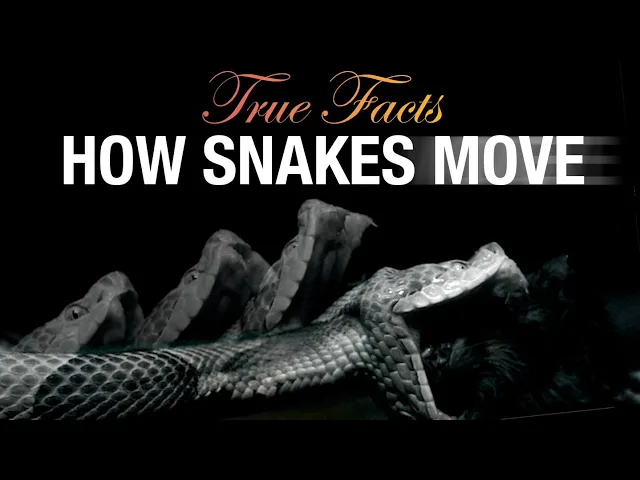
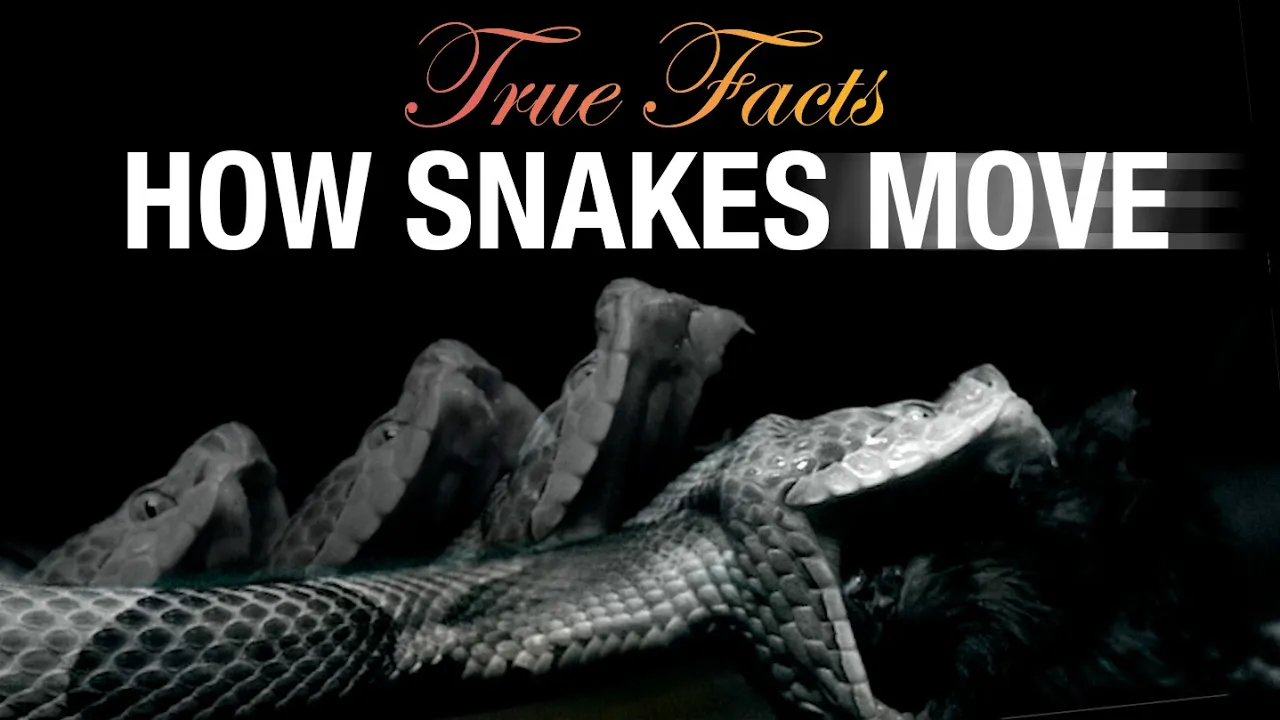
when it comes to the ways that a snake can move it's the strike that perhaps gets the most attention and I get it it's striking sorry whether it's on the hunt or in defense it happens incredibly quickly a snake has between 10 and 15,000 muscles and it uses them to essentially hurl its head forward sometimes reaching its Target in less than 70 milliseconds that's onethird of the time it takes to Blink for snakes right it's too early and it's not just the venomous snakes like the Vipers either the humble rat snake has a defensive strike
that's just as fast with acceleration on that noggin that would make a human pass out if you happen to be prey and you get caught in an ambush the strike generally happens faster than your nervous system can react which scientifically speaking means you're F however there are some animals that do have the reflexes to match the kangaroo rat for example is a legitimate badass rattlesnake strikes are just part of the commute old needs a split second Edge and maybe to get right like a goalie because once a rattlesnake starts its strike it's fully committed to
that line there's no changing direction Midway and you can see they miss quite often boom right in the Noggin It's like an insult but of all the ways that snakes move this might be the easiest to understand it's like punching someone with your face what's more incredible is that they can move about Without Limbs so efficiently that they can live and Hunt up in trees Sprint across sand dunes hunt for fraking fish fish and some of them even fly sort of the lizard-like ancestors of snakes benefited from getting longer for some reason one idea is
that they started to hunt down holes but whatever that reason was they held on to their limbs for quite some time you know this one took a long pause in that song Head Shoulders Knees and Toes now eventually those limbs disappeared altogether but if there was some disadvantage to that no one told the snakes cuz they'd already figured out how to get around so this right here might be the most straightforward way a snake could move kill me come on it's very cute it almost looks like it has arms but they're inside of a sleeping
bag it's called rectilinear Locomotion and let me tell you they put the reyin no now you might expect that all those ribs inside the snake move like a slinky but in fact the ribs and vertebrae are sort of pulled Along by muscles attached to the skin here you can see the skin closer to the belly sort of stretch out and reach forward then a section of the belly makes contact with the ground and tightens up a bit and only after that are the ribs and vertebrae pulled forward here's A View From The Bottom for all
you perves it's sort of like if you were lying on your belly and then you flexed your neck muscles in a way that brought your nipples closer to your chin and then you used your pecs to kind of drag yourself forward by your nipples should put that in your textbooks but the snake lacks firm erect nipples to gain purchase on the surface but these belly scales here the long ones have some tricks first off the way they overlap means that when they interact with a surface they can have some teeth to them and those scales
might seem smooth but if you look real close they look like a cheese grater the shape and direction of these ridges means moving forward is smooth going but if you push back or off to the side there's some friction and this becomes very important in the most recognizable way that snakes move lateral undulation and let me tell you snakes put the rectal in lateral Jerry you can't reuse that joke with different words anyways it's the one where they go curvy curvy lateral undulation can almost look like m magic the snake's body moves continuously along a
fixed path almost like it's on one of those model train tracks you had as a kid which your dad played with more than you did to try and understand what's happening let's take a closer look now this is a snake in the wild that's quite malnourished but its movements are exemplary first pay attention to how the front of the snake interacts with those Pebbles it comes across essentially what it's doing is setting anchor points and these anchor points help Define the shape of the curved path the curves are formed by Contracting muscles on one side
of the snake and relaxing them on the other then switching sides when the curve changes Direction you can see these waves pass backwards through the snake's body if you put it on a frictionless Surface as the snake pushes against things it generates all sorts of forces some cancel each other out leaving the ones in the direction of the movement the fact that those belly scales have less friction moving forward than when they press backwards is crucial here if you put a snake in a onesie adorable it can still create friction with the surface but now
it's equal in all directions and you can see it can't move forward on a fabric surface a snake can still use lateral undulation to move but with nothing sticking up to push against it has to rely on the friction from its belly and you can see it slips around a bit so what some snakes seem to do is lift up parts of their bodies redistributing their weight so they can have more thrust at the points of contact and this lifting idea is the basis for a way that snakes can move on Sand if you use
straightforward lateral undulation like this one's doing it's a pain in the ass it's like climbing a sand dune you go back half a step for everyone you take but if you just change it up a bit I mean look at this go those s-shaped waves in side winding look very similar to what we've seen before but how it creates movement is actually quite different in lateral undulation every part of the snake is in motion relative to the ground so even the parts that are pushing against things are moving it's sort of like ice skating ins
side winding the snake creates a wave of stationary contact points that it pushes off from while lifting the rest of its body off the surface so at any moment there are usually two points on the snake that are motionless relative to the ground and because of this side winding often leaves very clear treadmarks where you can even see individual scales this movement is quite versatile you can reverse that wave and move the other way or even go around in a circle and you leave your Footprints to boot now because their movement isn't in the direction
of that head to tail line of their body bodies their belly skines have quite different micr structures instead of those toothed ridges they have a smooth porous surface which minimizes belly friction as they push off with the side of their bodies so by this point you probably have an appreciation for the incredible amount of control that snakes have over their muscles but also the intimate relationship they have with how their bodies can create friction and this means that snakes can change up their strategies depending on what they're up against these corn snakes here are moving
up a significant incline but you notice how differently they move depending on how far apart the walls are in little hallways that they're moving through in these top ones here you can see a sort of stop and go technique which is called concertina movement and let me tell you if you're a snake that likes to live in trees it's good to have a whole bag of tricks up your sleeve singular they only need one sleeve and if they're wearing one quite frankly everything's up it but before that learning about snakes is one thing but protecting
them in their habitats is even better stick around to the end of this episode to see how you can make a real impact by joining Planet wild now if the tree they want to get up in has a fairly rough surface like this bark a snake might find enough Crags and crevices to slither right of it and along the way if you need a rest stop those belly scales can grab onto an edge maybe while you pee on someone those scales themselves seem to be under active control if it starts to slide backwards a corn
snake will change its body posture and potentially Flex individual scales to create a kind of emergency break it's like if you were sliding on your belly and could stop yourself with an erection that will get pointed down whatever many tree snakes look a bit more flat bottomed and that's because they can bend their skin and these specialized scales so that they have an edge when they climb get it an edge I can't stop you can't make me a brown tree snake can use that edge to Glide right over a pole studded with only 2 mm
nubbins while the boa has to scooch it's the technical term tickle tickle I like to think that they're going stop they can use that edge to climb on the underside of branches or Glide straight up and those nubbins are only 1 mm but if you take all the nubbins away well a snake got to do what a snake got to do you got the reticulated python in the middle doing the ringy dingy good solid grippage like a firm handshake Amazon triboa on the left does the loopy loopy leaves a nice space in case you want
to avoid a branch or a spider and then the brown tree snake on the right just showing off again you so good to climbing sorry I know what you're thinking what about a pole that has some girth to it come on brown tree snake how you going to climb yourself a fat pole well like this starts out simple enough but look what it's doing around back it uses its tail to create a sort of lasso sometimes with a simple crossover and sometimes with a knot once that's done it starts to shimmy now it's not exactly
the express train the snake moves up just a tiny bit at a time while the rest of its bits hold on I mean it works if you speed it up five times you can see it's it's making progress but you might be wondering why go through all the trouble well here's a wild snake climbing a stove pipe which was intended to protect a starling Nest but brown tree snake don't care and I don't know if you can see that little lizard there but he's watching the whole thing he's like oh sh oh sh oh hey
there's eggs in there but not all your food's going to be in a little box on top of pole sometimes you got to reach for it if this scrub python here wants to go straight up it can Bridge a distance that's over 70% of its snout to vent length vent in this case meaning butthole which is pretty far back as you can see guess who can do it even farther yeah that's right the brown tree snake brags about it can look at me I'm a full body erection all right it's impressive it starts to get
a bit more challenging as that Gap becomes more horizontal because the farther it goes out sideways the more torque that body experiences it looks like and at some point it's too much and you just got to go for it takes it right on the chin now snakes can go across completely horizontal gaps but not nearly the same distance as the vertical ones this is more like the Iron Cross in the Rings competition but like always there's some snakes that take this to another level the brown tree snake just kidding snakes in the genus copelia W
do that and you know once you figure out you can do something like this you're going to have fun with it these snakes are sometimes called flying snakes because falling snakes doesn't sound as good actually gliding might be the best way to describe it the initial jump gives them some horizontal speed now as they fall they actively flatten their bodies by spreading out their ribs now the cross-section of their body starts to look a little like the cross-section of a wing after a brief dive their body takes on an S shape and it starts to
undulate the movements help stabilize the snake in the air as it becomes a kind of floppy Wing air passes over the body Crossways which is kept at an angle that generates lift and shallows out its angle of descent now they haven't evolved landing gear yet so the touchdown can be a bit abrupt but they're a light snake so they can take it I know what you're going to say you didn't cover how they move in water well those badasses get their own episode but listen there's nothing I like more than showing you what a snake
or quite frankly any animal is capable of but I do need animals to exist in order to do that that's why I joined Planet wild and why I think you should join too it's a community financed rewilding organization it does so by by protecting biodiversity worldwide by funding Frontline ecosystem restoration projects each month Planet wild picks a project to help fund that either protects endangered species supports Aquatic Life or helps Rew Landscapes and those funds come from the memberships of the planet wild community and the best part Planet wild documents their missions with video reports
so you can immediately see the impact of your contribution and understand where your contribution is going the most recent project is about a new way of reintroducing f families of Little Owls not just individuals into areas where they're critically endangered and that's the sort of project you'll be funding choose a membership tier that fits your budget every dollar counts in protecting nature even better the first 150 people to sign up will get their first month free as a special welcome gift and you'll see your impact at the latest 30 days later if you don't feel
like supporting Planet wild anymore you can cancel any time scan this QR code here go to the link in the description or add my code zrank 8 later if you'd like to learn more about planet wild check out their latest Mission here take a look and join today [Music] [Applause]