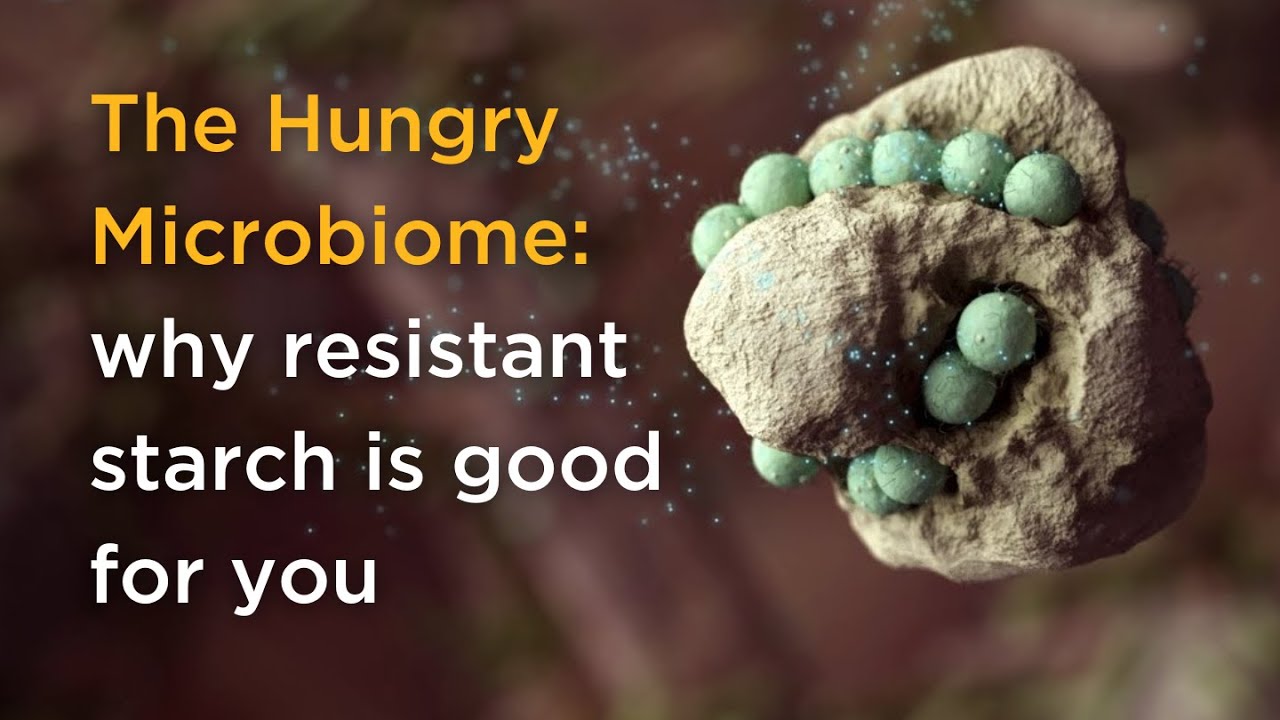
in this video we will explore the carbohydrate starch starch is the major source of carbohydrate in the human diet we have it every day examples of starchy food include potatoes bread pasta and beans starch is stored in plants and seeds and is used as an energy source in this video we will look at where and how starch is stored then we will learn about the structure of starch and how it is digested in the human body finally we will focus on resistance starch so let's begin this journey by looking at a regular plant here we
have a regular plant with roots and it's receiving some sunlight so that the plant can participate in what's called photosynthesis if we zoom into the leaf of this plant we can find our plant cells so here is a cell with a cell wall the cell wall of the plant cell is made up of the carbohydrate known as cellulose within the plant cell we can also find the nucleus the rough endoplasmic reticulum the smooth endoplasmic reticulum Golgi apparatus ribosomes vacuole and here is what's known as a chloroplast the organelle that carries out photosynthesis and actually within
the chloroplast we can find starch granules where starch is stored so let's have a closer look at the chloroplast so here we are looking at one chloroplast a chloroplast is a pigmented organelle because it participates in photosynthesis and therefore is pigmented and contains color chloroplasts are about 5 micrometers in diameter but the size can vary again depending on the plant coroplast contain cycloids and all these structures related to photosynthesis but within the chloroplast you can find starch granules the starch granules are where starch is located however starch is not only stored within chloroplasts it is
also stored within another organelle known as amyloplasts so let's have a look at where amyloplasts come from a good example is by looking at wheat now wheat contains grains if we look inside a wheat grain there is a region in it called an endosperm endosperm the region endosperm are also found within seeds anyways endosperm is the region that contains starch granules stored in amyloplasts so essentially amyloplasts are found within endosperm so if we were to look into this endosperm area of the grain and the seed we can find amyloplasts amyloplasts are non pigmented organelles it
is non pigmented because it contains no color as you can see amyloplasts are made up mostly of these starch granules now seeds contain many amyloplasts because they need all this stored stored energy as they grow and therefore it's no surprise that roots of plants also contain many amyloplasts for energy reserves so if we were to differentiate chloroplast to amyloplasts it would be that chloroplasts contain transitory starch granules and amyloplasts have reserved starch granules let us zoom at a cross-section of a starch granule and focus more on it the starch granule can vary in size from
one micrometer to a hundred micrometers depending on the plant starch granules contain granule rings now running through these granule rings we find glucose polymers starch is made up of two specific glucose polymers let's zoom into the section of the granule to learn a bit more about them now the granule as I mentioned have granule rings the granule actually have alternating crystalline and amorphous regions here are the alternating amorphous and crystalline regions now running through these regions we have the two glucose polymers as you can see the crystalline region they have the defined branched glucose polymer
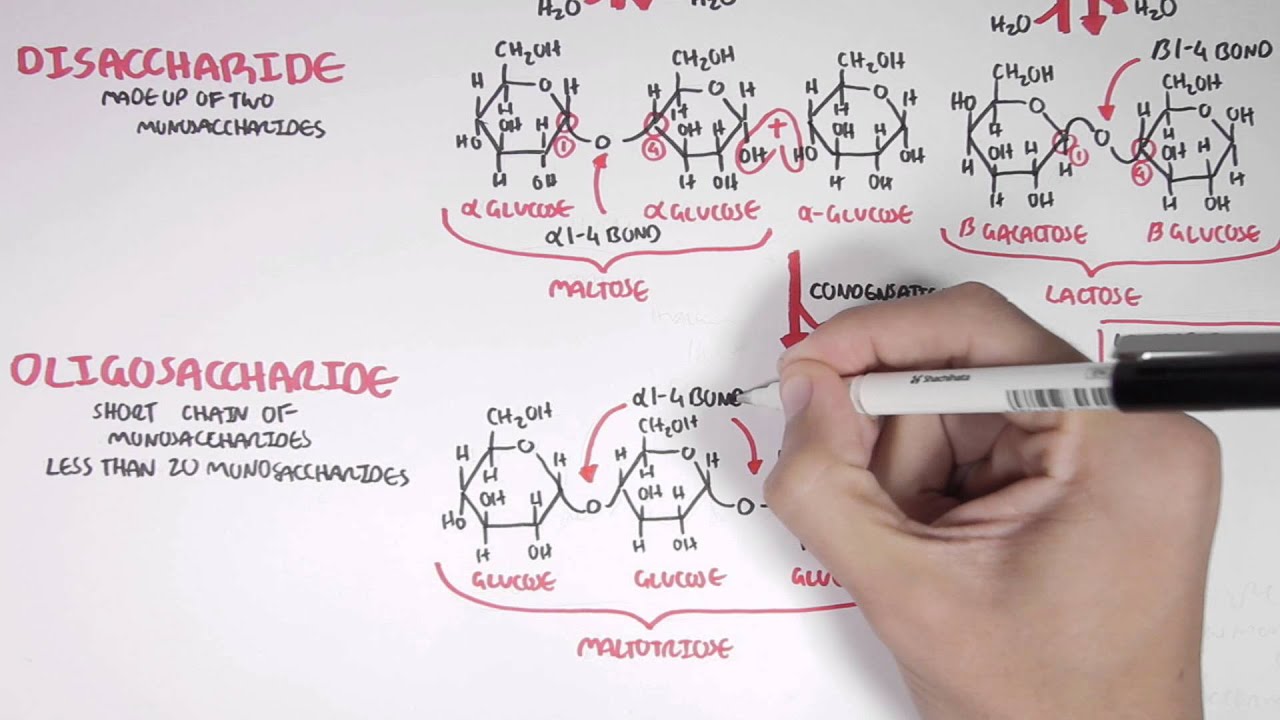
running through them within the amorphous region we can actually find an unbranched glucose polymer the unbranched and branch glucose polymers are the two glucose polymers that make up starch these two glucose polymers are known as amylopectin and amylose so the unbranched glucose polymer is amylose and here the branched the branched glucose polymer is known as amylopectin so amylose is a chain linear chain of glucose molecules connected by alpha 1 to 4 glycosidic bonds amylopectin on the other hand are made up of many linear chains of glucose molecules but with branch points the linear glucose are
connected by alpha 1 2 4 bonds and the branch points are connected by alpha 1 2 6 bonds interestingly amylopectin the branched glucose polymer make up 70 to 80 percent of the starch granule so typically there would be a great there'll be a greater amylopectin to amylose ratio in reality the amylose and amylopectin are not flat rather they form coils like so here is an amylopectin in a coiled form humans eat starch and the amylose and amylopectin coils can be digested by humans to glucose which will then be subsequently used for energy now that we
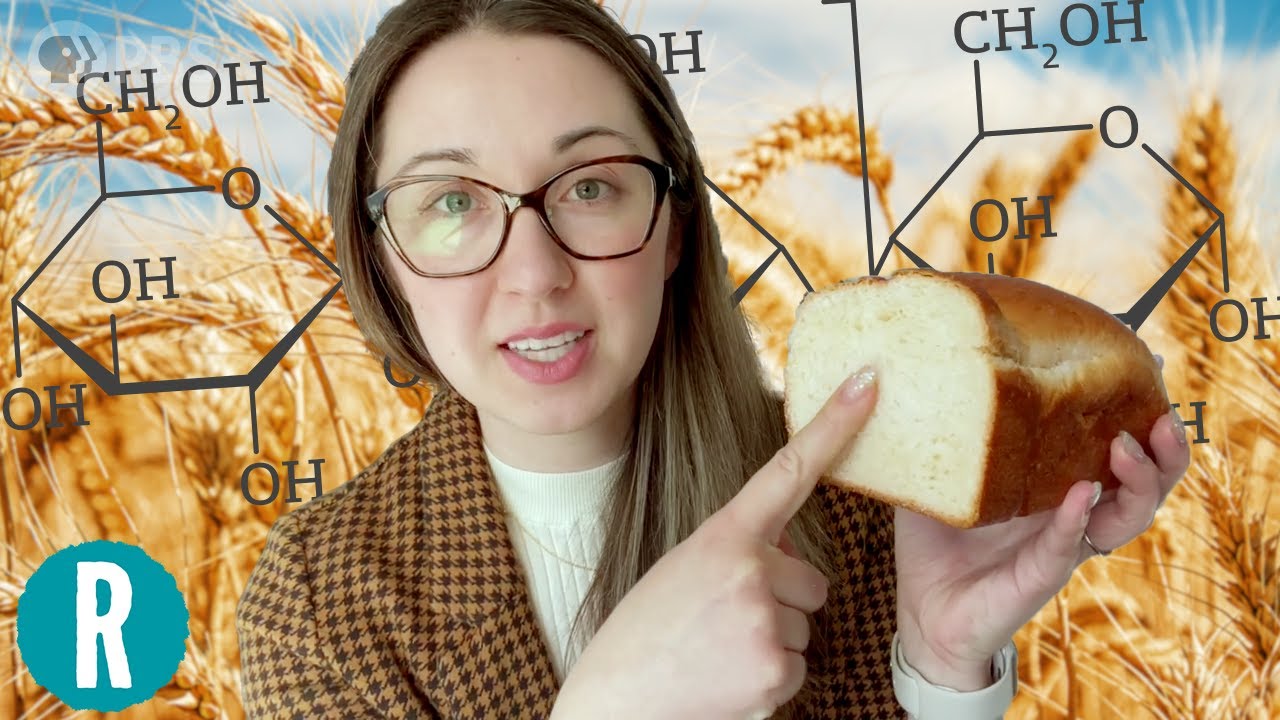
know how starch is stored within the starch granules let us see what happens when we humans eat it so here we have bread which contains starch it contains amylose and amylopectin and here we have a hungry human and his digestive system the amylose and amylopectin the starch is digested and absorbed predominantly by the small intestine so within the small intestine here the starch will encounter digestive enzymes which will break it down into glucose molecules however in reality starch is digested at different rates a portion of starch can be digested quickly another portion slowly and another
one can resist digestion in the small intestine altogether so for example here we have starch represented as amylopectin starch can be divided into three types depending on the rate it is digested in the human body starch can be rapidly digested which is the portion of starch digested within 20 minutes of ingestion starch can be slowly digested which is the portion digested between 20 minutes to 120 minutes and finally a portion of starch can be resistant to digestion all together with the remaining portion after 120 minutes let us now focus on resistant starch a better way
to define resistant starch is the fraction of starch that is not digested in a small intestine but reached the colon is called resistant starch examples of foods that are high in raises and starch include unripe bananas cooked and cooled potatoes beans and legumes the extent to which starch resist digestion can influence the development or progression of certain diseases such as diabetes and colon cancer this quality of resistant starch have many health benefits to the human body one of the main reasons why this is so is because resistant starch undergo fermentation by bacteria in the colon
to produce substances such as short chain fatty acids therefore it is important that we see and understand how resistant starch actually resist digestion in the human body there are actually four types of resistant starches the types are the physically inaccessible starch resistant granules retrograded starch and chemically modified starch now let's look at each one and see how they differ remember that each one is the type of resistant starch and that arises in starch is starch which has resisted digestion in a small intestine so type 1 resistant starch is the physically inaccessible starch because it is
physically inaccessible a good example of this is because of the presence of the cell wall that protects the starch granules so here is a plant cell with its tough cell wall here are the starch granules within the Plast and so with the cell wall the digestive enzymes secreted by the humans cannot access the starch foods that are high in type 1 resistant starch are legumes and partially milled grains resistant starch type 2 called resistant granules is resistant to digestion because of the characteristic of the starch granules itself each plant contains starch granules with amylose and
amylopectin the starch granules differ in size shape amylose and amylopectin ratio amongst other things it is thought that a combination of these factors make some granules have a more compact structure and so are more resistant to attack by digestive enzymes good examples of food containing resistant starch type 2 are real potatoes and unripe bananas resistant starch type 3 also known as retrograded starch is the most abundant of the resistant starches this is what we eat most of the time such as bread and cereals now resistant starch type 3 is formed through food processing it is
formed by first cooking starch and then cooling it down so let me draw it out and explain resistant starch type three is formed when the starchy granules containing amylose and amylopectin are cooked in water they are hydrolyzed this causes the starch granules to become completely hydrated and gelatinized the starch granules will swell up and the amylose will start to leak out the starch is in a gelatinous form then when the food is pulled down the amylose and amylopectin will recrystallize to a completely new compact structure this process is known as retrogradation or recrystallization and here
we see a rearrangement of amylose and amylopectin to a more crystalline structure we also see amylose cross-linking occurring through hydrogen bonds this new structure formed by cooking and cooling decreases access to digestive enzymes and so this type of starch will resist digestion examples of food containing resistant starch type 3 are cooked and cooled potatoes now finally some authors have proposed a type 4 resistant starch which is the chemically modified starch this type of starch is said to be possibly attributed to the different bonds formed through chemical modification and so with these new bonds this type
of starch will resist digestion by digestive enzymes examples of food with chemically modified starches are certain cakes and breads and so that concludes the video on starch and resistant starch hope you enjoyed it thank you for watching [Music]