[Music] this update on the scout drilling at senken comes to you from the the core shack just outside the town of marcus where our field office is in southeastern ecuador and what i wanted to do is just summarize what our target concept was first and then show to you what we actually hit in the in the core and why we think we're dealing with an iron oxide copper gold system just starting off with the target concept senken is a bunch of magnetic targets derived from our geophysics that we flew in 2017. there's a massive magnetic
high in the south that's about five kilometers in diameter and then north of that there's senkan 2 3 4 which are discrete magnetic features and over each one of those we had a concentration of copper that we picked up in the in the soil sampling so we left the big senken target alone the five kilometer diameter one because it was just too much to to get our heads around at that stage so we focused on the smaller magnetic features to simplify our scout drilling we started off at senkan n2 and we drilled three holes there
and then we moved about one and 1.7 kilometers to the north onto senkem iii and we've drilled two more holes in in that area and what we were expecting is that the magnetic features were deep parts of porphyries which tend to be magnetic they have a lot of magnetite in them but above that they have caught serocyte pyrite alteration and that's pretty conspicuous this is an example of outcrop from our a watcher target which is a porphyry target and what's key about this is that there is a lot of pyrite in it the iron sulfide
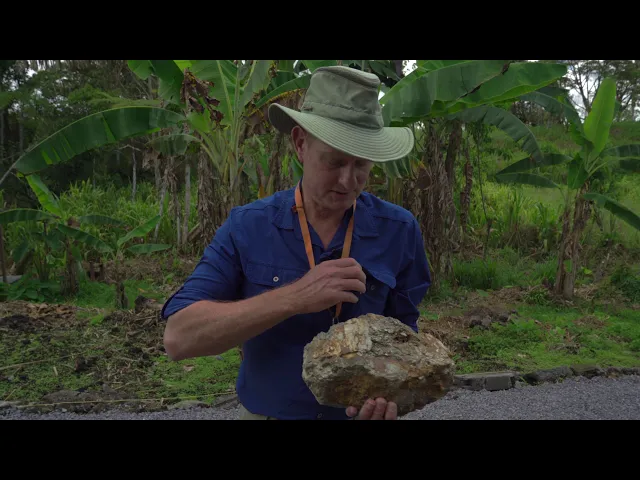
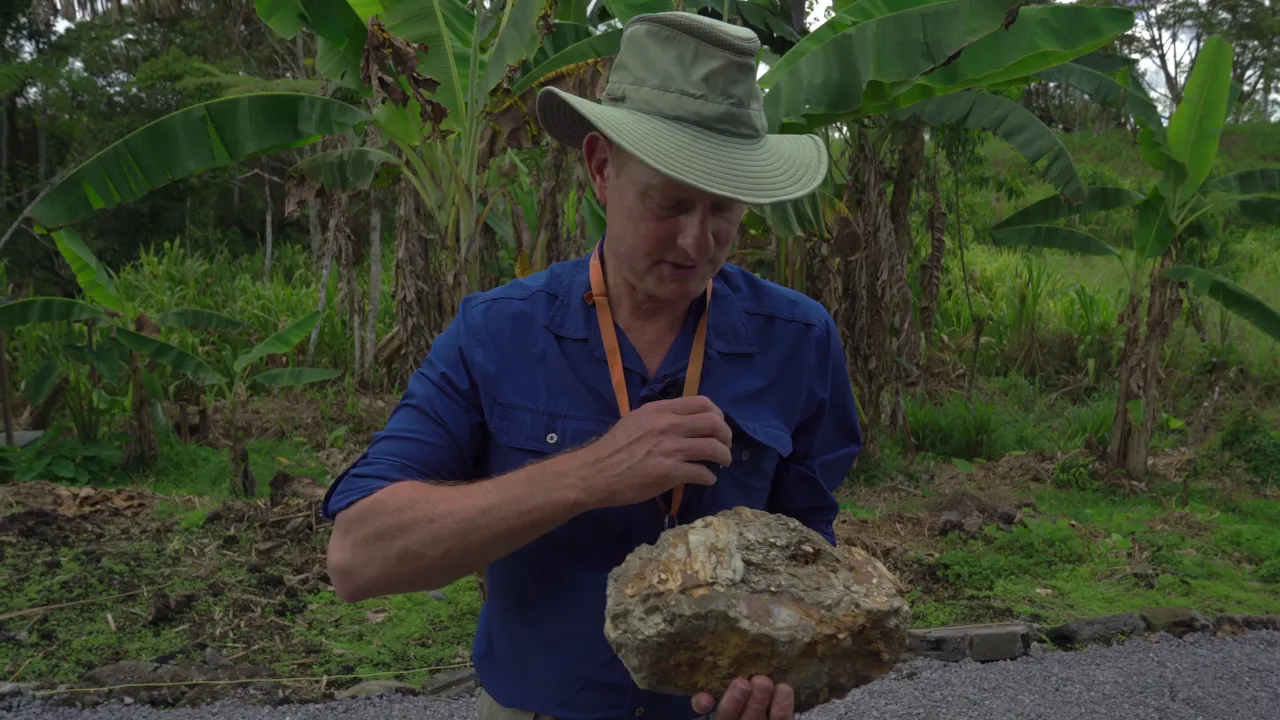
mineral and the quartz serosite alteration the serosite is this white clay that that scratches white and it's it's soft it's easy to scratch so what we expected to get in the sink and end n2 and n3 targets is to drill through a couple of sediments and then get into a rock that looks similar to this which would be the top part of a porphyry we didn't get that at all in fact what we got was material like this the red mineral is hematite this is a volcanic rock it floods into it and then it replaces
very specific minerals indicated in these in these red spots here so this rock contains more or less the same amount of iron in it than this rock but this is just in a sulfide mineral where as this is the iron is in an oxide mineral and in fact this rock contains another iron mineral called magnetite and i'll just put a little magnetic pencil against this just to to show you um the the little pencil gets drawn against the rockets drawn in by the the magnetic mineral magnet this flooding of these two iron minerals into the
rock in this case a volcanic is one of the characteristic features of iron oxide copper gold deposits and in fact this piece of rock could be put against a sample from ernest henry deposit in south australia and you wouldn't be able to distinguish the the difference so why do we care if this is an iron oxide copper gold system well the first thing is that these systems can be absolutely huge the best example of an iron oxide copper gold is olympic dam in south australia an enormous deposit 1.4 billion tons at a grade of 1
copper and 0.34 grams per tonne gold the second thing is that as the name implies these systems have gold with the copper in the majority of cases and that's one of the differences with a porphyry a porphyry typically is a copper deposit that and some of them have gold maybe 20 percent have gold with them and iron oxide copper gold the norm is to have gold with the copper and then the third thing is that these systems tend to be clustered whether they're in brazil or the chilean andes or in australia they're in districts so
if we've got one here at cenken n1 and n2 we've got to be wide awake to the fact that there could be others in a relatively close proximity [Music]