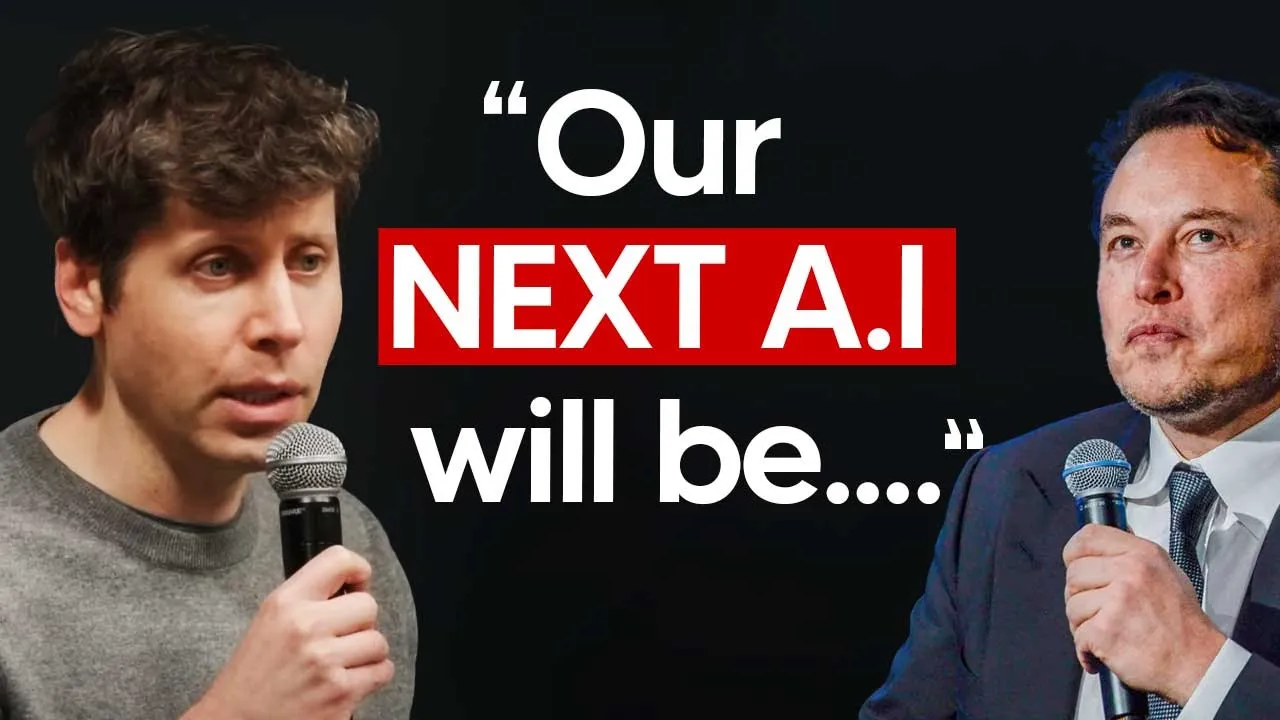
The two of the most influential voices in tech just revealed their plans for their next future models. Elon Musk actually spoke at length to Sachi Nadella about Groc 3. 5 and what it's going to be based on.
And Sam Oman actually spoke about the upcoming model road map for future AI models that are going to be released. So in this video I'll do a deep dive on exactly what those are and why you probably should be excited. So first let's actually take a look at what is going on with Grock 3.
5. One of the things that Elon Musk says here is that this is going to be a model designed to reason from the ground up using first principles thinking. So it's going to be really interesting to see a model that is designed in such a way.
Sure. So yeah, with with Grock, especially with Grock 3. 5 that is about to be released, um it's it's trying to reason from first principles.
So apply kind of the uh the tools of physics to uh to thinking. Um so um if you're trying to get to fundamental truths, you you try you you boil things down to the the aimatic elements that are most likely to be correct. Uh and then you reason up from there and then you can test your conclusions against those aimatic elements.
And you know in physics if if you violate conservation of energy or momentum then you're you're either going to get a Nobel Prize or you're you're wrong. And and you're all certainly wrong. uh basically so um so so the the that's really the focus of of graph 3.
5 is um uh sort of I find the fundamentals of physics um and and applying physics tools across uh all lines of reasoning um and to aspire to truth with uh minimal error like there's always going to be some mistakes that are made uh but we aim to to uh get to truth with acknowledged error uh but minimize that error over time and um I think that's actually extremely important for uh AI safety. Um so I've thought a lot for a long time about AI safety and my book conclusion is the the old maxim that honesty is the best policy. Uh it it really really is for for safety.
Um but I do want to emphasize you know we we have and will make mistakes but we aspire to correct them very quickly. Um and we we are very much looking forward to feedback from the developer community to say like what do you need, where are we wrong, how can we make it better. Um and to to have Grock be something that the developer community community uh is very excited to use and where they can feel that their feedback is being uh heard and uh and Grock is is improving and uh serving their need.
Yeah, I know it's in some sense, you know, cracking the physics of intelligence is perhaps the real goal uh for us to be able to use AI uh at scale. And so it's so good to you know take that first principles approach that you and your team. Yeah, it's it's incredibly important uh for an AI model to be grounded in reality.
um reality you know um I was saying which is like like physics is the law and everything else is a recommendation which is I'm not suggesting people break the the the laws made by you know humans uh you know we we should generally obey the laws of humans but but I've seen many people break uh humanmade laws but I have not seen anyone break the laws of physics um so for for any given AI grounding it against reality um and reality for example as you mentioned with with The car needs to drive safely and correctly. Uh the uh humanoid robot optimus needs to you know perform the task that that that it's being asked to perform. Um the these uh these are things that are very very helpful for uh ensuring that the model is uh truthful and accurate um because it has to adhere to the laws of physics.
So, so I think that's actually maybe uh some somewhat overlooked or at least not talked about enough is that to really be intelligent, it's it's got to make predictions that are in line with reality. In other words, physics. Uh that's that's it's a really fundamental thing.
Um and um and being able to ground that with cars and robots is is very important. Um we we are seeing uh Gro be very helpful in things like customer service. Um and um you know the AI is infinitely patient and friendly and you can yell at it and it's still going to be very nice.
Uh so that's good. Um yeah and so um so I I think in terms of improving the quality of customer service and sort of issue resolution um AI is already uh Grock is already doing quite a good job of that at SpaceX and Tesla and um and we look forward to like offering that to to other companies. Next let's actually take a look at what Sam Alman says.
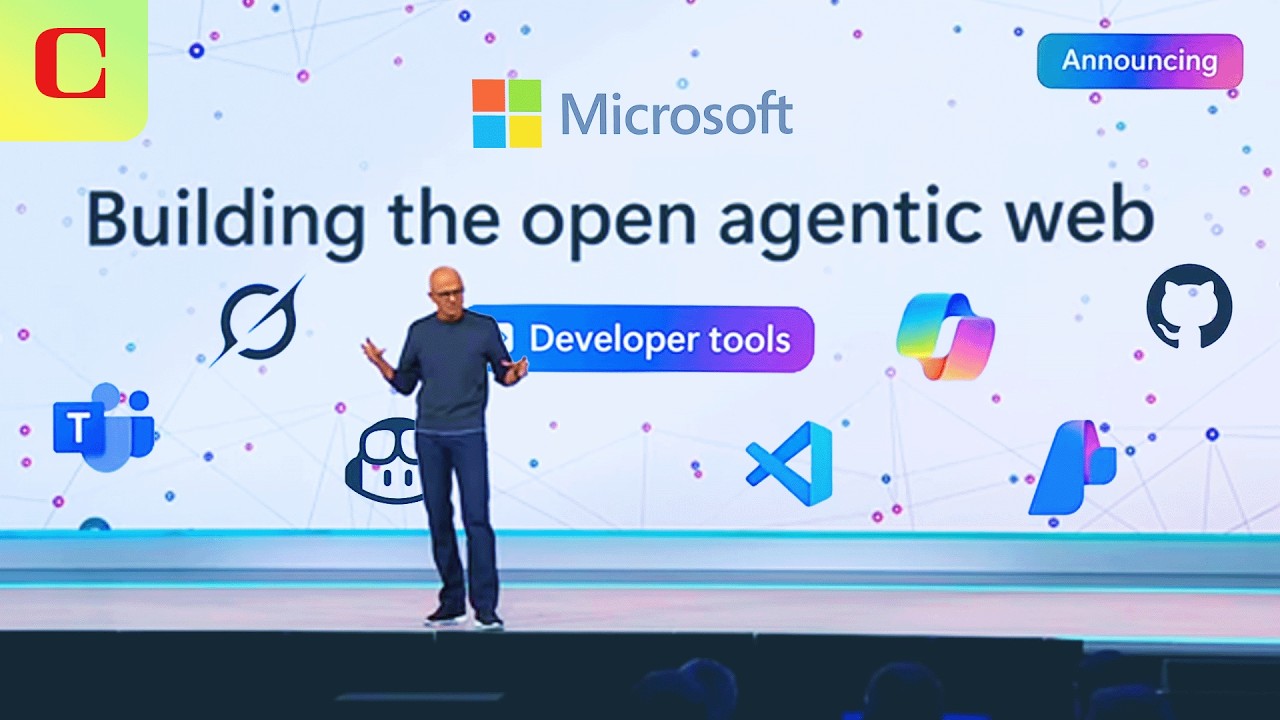
Now before we actually take a look at the model road map let's actually take a look at what he says about the future of software engineering. as we recently knew they have just released codeex which is an incredible tool for software developers and I think it's crazy just how fast all of this tech is developing one of the things I know you've thought a lot about u you know all these various form factors the developers use for software engineering of course you did the CLI and now yes you know last week you did uh the coding agent you want to talk a little bit Sam as sort of the vision you have for how software engineering evolves and actually how developers will use all these various form factors this together. Yeah.
So, Sati, you and I have been talking about this for a long time. In fact, the very first version of Codeex, I think it was all the way back to 2021, one of the very first things we we did together uh in GitHub. And we've been talking about how someday we'd get to like uh a real agent coding experience.
And it's it's kind of wild to me that it's it's finally here. I think this is one of the biggest changes to programming that I've ever seen. But this idea that you now have a a real virtual teammate that you can assign work to that you can say hey go off and do some of the stuff you were just doing and increasingly more advanced things.
You know at some point say like I got a big idea go off and work for a couple of days and do it and that you can issue many requests in parallel that you can be fixing bugs implementing new features answering questions about the code. Um this is like true software engineering task delegation. Uh and I think it'll only get better from here but but this is just a tremendously exciting moment.
and it integrates very deeply with GitHub. You can give it access to a repo in an environment and you can get some pretty amazing stuff done. Now, that's pretty cool because of course, as you know, the future is changing quite a lot.
But let's actually take a look at what Sam Alman says when it comes to the future of the models. And interestingly, he even says it's actually pretty hard to keep up with the amount of change that is occurring. Obviously, you also are working on a lot of models and are very sort of fantastic.
In fact, we've had a chance to sort of sim ship a lot of the models you guys have built. uh just talk tell us a little bit about what's sort of coming as far as the model road map itself. The the models are already very smart.
They will continue to get smarter too. But I think one of the most exciting things is the models will get simpler to use. You won't have so many to pick from.
It'll just sort of automatically do the right thing. They'll get much more reliable. You'll be able to trust them for much more.
They'll be a lot more features like multimodality and great tool use and integration. Um it'll be closer to the it just works. You know, it can I can talk to it.
I can do a complicated coding agentic thing. Um I can rely on it and uh I think people are going to be surprised at how much how fast we're going to make progress in those directions. Now yeah I know we're very excited about your model road map and obviously you know when you look at chat GPT it's the most at scale stateful agentic app today that you guys built.
Um and of course Codex is another sort of agent app that you build and this conference is all about unpacking so that every developer can in some sense build these new agentic apps you know that use the model use do their own model scaffolding go on to even do multi- aent orchestration and so on you know any advice you have as people build out these highscale production stateful agentic apps Sam based on obviously what you guys have been doing and leading I I I think one of the hardest most difficult things to manage about this is just the the rate of change. You know, if you think about what was possible two years ago or one year ago or now and uh what will be possible another year or two years sort of planning for this incredible increase in model power and how how people are going to build products and software and companies in in the kind of near future and really leaning into the new tools and the the sort of new workflows that are possible. Um again we haven't seen many technological shifts like this in history but every time one has come like leaning in early and hard has been very rewarded.
No it's yeah and that's absolutely well said because at some level one of the things we want to really unpack at this conference is what's that app server that allows you to take the latest new sample that comes uh and keep moving at that pace because I think that's the challenge we have uh as developers building these applications but it's fantastic again go ahead. Yeah, I was just going to say it was amazing to watch over the last few months as we were working on codecs internally. You know, there always a few people that are the early adopters and how quickly the people who were just using codecs all day change their workflow and just the incredible amount they were able to do relative to someone else was was quite interesting.
And so, yeah, if you guys enjoyed this video, don't forget to leave a comment down below letting me know what you're excited for the most when it comes to AI models.