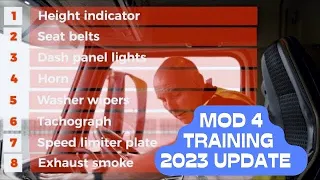
foreign my name is Rick from wttl We're based in devises today I'm going to take you through the mod 4 course this is your initial CPC course that you'll be asked to do there are five sections on this course and you'll be asked one question on each section so we're going to go through all the sections today and all the possible questions that you may be asked this is very much a demonstration on your behalf so whenever you answer the questions as much as possible we need you to demonstrate to us so the first section
is on loading the vehicle and there is five possible questions you'll get asked one of each one of these questions the first question is worded your fully laden vehicle is ready for you to do a delivery so can you show me the checks that you would carry out to make sure your vehicle isn't overloaded if you're still in doubt what else could you do one of the first things that you would need to do is check your paperwork because that should tell you the loads the weight of the load that's been put onto your vehicle
second thing that you need to do is cross-reference that with your weight plate I'll show you where that is on the vehicle what the examiner would want you to do is show him that you know exactly where your weight plate is on your vehicle so on this particular vehicle the weight plate is situated just here you'll find that on literally every single vehicle it is situated on the passenger side so it's easy to check if you get pulled over on the roadside okay the information that this gives you is the maximum amount of weight that
you're allowed to carry your maximum amount of weight you're allowed to put over each axle the length and the width of the vehicle so so far we've got we've checked our paperwork and then we've checked our weight plate to make sure that we're not overloaded the next thing that we need to do is we can have a check of our tires so we'll be checking our tires to make sure that there is no significant bulging especially at the bottom and with Twin Tires like this with twin Wheels we would also be looking in between the
tires to make sure that they're not kissing if the two tires are making contact then that is a good possibility that you are potentially overloaded final thing that we could do if we were still unsure as to whether we were overloaded or not would we take the vehicle toward the local way bridge when I think about my answers for this question because the question relates to the weight and that's been put onto the vehicle what I try to get in my head is keywords so for me the keywords in my answer to the question is
paperwork weight plate tires weighbridge from those keywords I can then elaborate on my answers so like I said before paperwork I would check my paperwork to see how much has been put on my vehicle weight plate I would cross reference what it says on the paperwork to my weight plate to ensure I'm not overloaded tires I'm looking at my tires to make sure that they're not bulging and then finally if I'm not too sure I'll take my vehicle to the way Bridge there is another question in this section that although it's worded slightly differently funny
enough the answers are exactly the same and the way that this question is worded is how would you check the maximum authorized mass of this vehicle what are the checks would you carry out to make sure that the vehicle is not overloaded if you're still in doubt what else would you do so again the answers would be check your paperwork relating to the load check the vehicle design plate the weight plate check your tires to ensure that they're not bulging too much and if you're not if you're in doubt take it to the weighbridge another
question that you may get asked on this section is you're about to make a very long journey beyond the fuel range of this vehicle can you show me what checks you would make to this vehicle's fuel system and explain what precautions you would take to make sure you don't run out of fuel first thing we would like you to do is take us into the cab and show us that you're checking the fuel gauge so what I'm doing is I'm demonstrating to The Examiner I know exactly where the fuel gauge is on my instrument panel
so all I need to do is make sure that the handbrake is on make sure that the vehicle is in neutral put the ignition on this particular vehicle fuel gauge is located on the left screen at the bottom so currently this is telling me I have just under half a tank of fuel two parts of my answer actually bringing me around to the fuel tank first one is I'm checking the actual condition of the fuel tank to make sure that the mountings are in good condition the fuel tank isn't damaged in any way and very
importantly I'm making sure there is no signs that there's been any fuel leaks while the vehicle has been sat second takes me to actually the fuel cap what the examiner would like you to do is just explain that you would remove the fuel cap and just do a visual check so if the fuel gauge told you you had a full tank of fuel you're just doing a visual check to make sure that what is in the tank corresponds with what the gauge tells you the last ants last part of the answer for this question is
covering the part that says explain what precautions you would take to make sure that you don't run out of fuel so literally every company should give you a fuel card but as a professional driver you would also make sure that you have some form of backups that you don't get stranded so personally I would carry my own credit card with me and possibly some cash as well another question that you may get asked in this section is you've delivered part of your load and are left with half a load of empty roller cages inside your
box fan can you show me by pointing to the correct distribution area on this vehicle now this question is in three parts Part A is where is the load should be placed Part B which restraining device you should use to secure the load part C how would you secure the load with the restraining device so in answer to part A where this load should be placed although it should be placed at the front of the vehicle up against the headboard Part B of this question is which restraining device you would use to secure the load
so what we do is we take you over to what we refer to as the shark cage and ask you to select the restraining device you would use to secure the roller cages I have two options in this instance I can use either the load restraining bar or I can use the ratchet strap so I'm now going to select one at a time and demonstrate to you how to put this piece of equipment on firstly I'm going to use the load restraining bar nice easy piece of equipment to use place it into the cage what
you need to do is leave about a fingers distance a little bit of a gap there and then when you pull this lever over it should expand and lock in if it doesn't lock in that means you haven't left enough Gap so open it up again leave a little bit more room this time bring that lever over lock it down in and it locks in on this clip here that shouldn't go anywhere nice so that's demonstrated I've put it on properly and it's secure then I need to demonstrate how to take it off a little
bit of downward pressure on this lever remove the retaining clip bring the bar back up take it off place it back on the floor the second restraining and device that I could use for the roller cages if I wish to is the ratchet straps so I'm going to select the ratchet straps and show you how to place them on on the side of these roller cages there are hooks for us to use to put the ratchet straps onto ratchet straps are rolled and the hook should always be on the outside not on the inside throw
the strap over attach it to one of the hooks make sure that the hook is upwards grab your ratchet strap feed it through the gap into this restraining hook I've got all of this up the top here so it's making it a lot easier for me to use this strap now to tighten it up lock that back into position tidy up the loose end so that's just a demonstration on how to use the ratchet strap then you need to demonstrate how to take the ratchet strap off pull the lever Down release it all the way
up to the top until you hear it click that's open the strap close that back up and then finally roll the strap up remember the hook stays on the outside don't put the hook in the middle reason for that is if you throw it over a load the hook may hit somebody on the other side of the vehicle and you don't want that and that's it on that section there for roller cages final question that you may get asked in this section you've been asked to collect half a load of steel plate on an empty
vehicle can you show me by pointing to the correct distribution area on this vehicle again this question is in three parts so a where the load should be placed B which restraining device you would use to restrain the load see how would you secure the load with the restraining device using the load securing trolley so in answer to a where the load should be placed correct distribution area so the load must be evenly distributed or centrally located on the headboard now we're going to go to the restraining trolley section B on this question relates to
which restraining device you would use to restrain the load so in this occasion I'm going to be selecting the chains because it's steel section three on this is how would you secure the load with the restraining device using the load securing trolley so now again I need a demonstration on how to put it on and then how to take it off yep so for the steel plate we're going to select the chains to secure the load now we're going to demonstrate how we would secure the load using the chains so we have our chain here
and we have our ratchet here so firstly we're going to put the chain across the cage again using the same hooks that we used on the ratchets opening the clip Up putting the chain in bringing the chain across bring in the rest of the chain down into the middle of the cage foreign to make sure that your chain is not twisted and that the hook is in the upwards position on both sides okay then select the ratchet make sure that this ratchet is fully open it's no good to you if it's closed you want to
place this on the chains as high as possible linking them together once that's on we're going to ratchet it tight on this as you move the ratchet away from you the bar should slide through your hand and then hold it tight while you bring the ratchet back towards you as we've tightened that it's pulled these two in chain is nice and tight that's demonstrating how to put it on now to take it off there is a little clip on this ratchet strap that you need to push in and then you ratchet in the opposite direction
to loosen it once you've got it fully open take your ratchet off the chains remove your chains from the cage so just to recap section one relates to the loading of the vehicle two of the questions are weight related so it's the weight that you're carrying one of the questions is fuel related so it's ensuring you have sufficient Fuel and means of payment should you run out of fuel during a long journey one is related to carrying empty roller cages selecting the correct restraining device and demonstrating how to use that device and then one is
related to a load of steel plate where to position it on the vehicle selecting the correct restraining device demonstrating how to use that device and how to take it off okay we're going to go on to section two now which relates to the security of the vehicle and its contents so one of the questions that you may get asked is you need to leave your vehicle where might you consider parking it and explain what safety checks and security precautions you would take so initially where might I park the vehicle I'm only going to try and
park my vehicle in a secure well-lit vehicle park where possible I would park with the rear doors up against the wall or up against another vehicle just to try and prevent people from being able to access my load secondly I would remove my keys and obviously lock the doors once I've done that if they were fitted I would activate any alarms or immobilizers and then finally I would do a walk range security check and what I'd be looking for is to make sure that all the doors all the windows including the sunroof are shut and
if there are any Security Seals on the vehicle that they were intact some Security Seals have a specific number on them so I would make a note of that number and then when I came back to the vehicle I would check it just to make sure that it hasn't been tampered with another question that you may get asked in this section is you are about to drive a high-sided vehicle on an unfamiliar route can you show me the visual checks you would make before starting your journey if there is any doubt of the vehicle's height
what else could you do if you are involved in a Railway Bridge strike what action should you take so to answer the first part the visual checks I would make before starting my journey is I would check my height marker which will be inside of the cab on this particular vehicle the height marker is in the center there just by the light and it's telling me that we're traveling at 13 foot six if I was any date in my mind as to the height being correct in relation to what the vehicle sign tells me I
would look to measure my vehicle at the highest point but ensuring that I am on level grind when it comes to planning a suitable route I'd be looking to make sure that there were no height restrictions such as low bridges if I was involved in a Railway Bridge strike I would need to call the railway Authority and give them the information that was on the bridge ID plate and then also called the police another question that you may get asked in this section is you've been given a different vehicle to drive for the day so
can you please show me all the Practical and visual safety shakes you would make before driving this vehicle so this answer to this question is ever so much a demonstration on your behalf so the first thing we'd like you to do is get into the truck and do a cockpit drill main reason for that is when you start work in the morning you need to put your taco card in to record your duties so as I said earlier on you need to get your taco card in first so on this particular Taco machine is up
here so I'll be putting my Tacker card in slot one with the face down and the chip up and then I'll be following any instructions on the screen that I need to usually that's asking you if you need to do a manual entry once I've done that then I'm going to carry on with all my vehicle checks so make sure my handbrake is on make sure that the vehicle is in neutral turning my ignition on I'm looking to make sure that all the warning lights come on and then all the warning lights go out and
looking to see if there are any warning messages in the right hand side looking to make sure that my gauges give me a reading so I'm checking my ad blue checking my fill checking my air tanks and then also I'm going to scroll through the menu and check the oil to make sure I have sufficient oil and it's telling me that my engine oil level is good different Vehicles you'll have different instrument panels different layouts so you need to familiarize yourself with your particular vehicle now I've done that I can go through any other vehicle
checks now so I'll be checking my windscreen washers and wipers to make sure that they activate and clean the windscreen properly checking my horn make sure that it actually works checking my mirrors making sure that they're clean clear there's no damage and that they are firmly fixed to the vehicle checking my height marker make sure I know exactly how high I'm traveling to check the width and the length of the vehicle when I get out and do my walk around check I'll be having a look at my weight plate and that'll tell me that information
so just checking also my windscreen and windows making sure that they're clean clear there's no obvious signs of any damage any defects but also that there's no mascots or stickers that are obscuring my view uh checking my seat to make sure that it is in good condition and that I can adjust it properly uh just before I get out of the vehicle now I'm going to turn on as many lights as I can so that when I'm doing my external wall grind check I can be checking my lights at the same time so on this
particular vehicle turning all my lights on my fog lights my side lights my headlights and my hazard lights so they're all active and now when I get out I can do my light check as well as all my external checks such as tires wheel nuts body okay now I've done my internal checks I'm just going to do a full wall crown check to make sure that everything on the vehicle is safe road worthy and legal so just making sure that door panels secure side compartments are secure tires looking to make sure there's a minimum of
one mil tread depths across 75 percent of the breadth of the tire in a continuous band around the whole tire when it comes to the side walls looking to make sure there's no bulges no cuts no exposed cord no protruding objects also looking to make sure that it's not bulging at the bottom too much as well could be a sign that it's got a slow puncture or partially deflated wheel nuts doing a physical check anti-clockwise turn obviously just to make sure that they are all secure using my handy torch having a look inside checking the
suspension as best I can making sure that there are no obvious signs of damage or deterioration mud guards spray suppression making sure they're all in good condition my indicator is working which is good side markers working Happy Days add blue cap is on so that's all good markers are working indicator lights side lights mud guards good condition no signs of damage each wheel again checking to make sure sufficient tread depth wheel nuts are secure marker lights working because we're on an Arctic ensuring but the fifth wheel is secured in and that the dog clip is
secure so that all looks good we're carrying on around the vehicle also whilst I'm walking around I'm continually listening out for any air leaks or anything Airlines running down the entire length of the vehicle we've got the main air tanks at the back of the tractor unit here as well making sure that the lights are clean no signs of damage and that they're all working at the moment marker lights working all panels are secured to the vehicle there's nothing loose that could fall off and endanger other Road users marker lights working panels are secure at
the back here I'm also going to be looking through at the inner tires on the other side to make sure there's no signs of damage but also I'm looking out to see if there's any bulges the same time I'm looking to see if the airbags are in good condition again looking to see if there's any bulges or signs of damage foreign suppression is in good condition making sure it's not hanging off this marker light is out so this will be reported as a defect and then that'll go in for maintenance and they'll get that replaced
this panel is on a hinge so I want to be particularly sure that this is secured and when I'm at the back of the vehicle I'm just having a good look down the entire length of the vehicle again looking to make sure that it's Road worthy no obvious signs are damaged nothing that could fall off and endanger other Road users I'm happy that this side of the vehicle is in good condition I've just got one full uh one defective report now I'm going to go around to the back of the vehicle at the back of
the vehicle I tend to start at the top work my way down so checking that my marker lights are working I've got the reflective tape on the back working down to the the light clusters making sure that they're in good condition there's no obvious signs of damage they're not cracked not broken they're not hanging off and all the lights that I have put on are actually working ensuring that my number plate is visible it's in a proper number plate holder and that it is got a light attached to it and then from the back here
I will also have a good look underneath again I got a good view of the tires the inner tires I can see the airbags on the back I can see the spray suppression I can see the tire tread so it's a real good view from the back on the underside once I've done that I will then check my load need to make sure that the load corresponds with what I'm supposed to be delivering but also that it's loaded properly and that it's secure so I'm happy that that load is loaded properly and it's secure so
I'm going to shut the door back up making sure that that is secured happy the back of the vehicle is okay so I'm now going to carry on down to this side of the vehicle this side of the vehicle I'm pretty much going to replicate what I've done on the other side of the vehicle with a few exceptions so we're going to work our way down and the additional pieces of equipment I need to check I'll explain to you so carrying on checking all my panels checking all my marker lights checking the condition of the
body Mark lights reflectors mud guards tires wheel nuts spray suppression checking in on the suspension also looking across on the inner tires on the other side carrying on down marker lights good panel's secure this side we have our winding handle for the trailer so making sure that once it's there and two that it is secured carrying on down I've also got the ministry plate on the trailer on this side so making sure that it's present it's underneath the flap there you'll show me lights are all in good condition mud guards tires wheel nuts spray suppression
checking my fuel cap making sure that it's on and it's secure checking the condition of the fuel tank making sure that there's no signs of damage that all the mountings are in good condition having a look underneath making sure that there's no obvious signs that there may be a fuel leak checking that the parking brake for the trailer is off and then I'm going to climb up onto the Gantry and check my Airlines checking to make sure that all my electrical lines and my airlines are secured and on properly yeah both at the trailer and
the tractor unit again listening out for any air leaks happy that they're all secure all right locking that back into position having a look down the body again looking to make sure that there's no obvious signs of damage checking that there's nothing that looks like it's loose that it could fall off and endanger other Road users marker lights at the front of the trailer making sure that they're working fully functional fast charge Tire Trek mirror is okay mirror is secure doors are shut panels are secure checking to make sure the windscreen is in good condition
because this is an Arctic I would need a ladder but I would climb up just pull the wiper blades out run my fingers down them to make sure that the blades are in good condition I did an internal check so they seem to be working fine seem to clear the screen okay all the lights are working that I've turned on everything seems to be in good condition this vehicle's good to go section three covers the preventing of criminality and the trafficking in illegal immigrants there are three ways that they could word the question but luckily
the answer is exactly the same so the way that they could word the question is you've parked at a border crossing and left the vehicle unattended show me what checks you would make before driving the vehicle through customs or you've had a comfort break before boarding a cross-channel ferry show me what checks you'd make to this vehicle before driving through customs well finally they could word it you've parked at the Docks and following a rest break you suspect your vehicle may have been tampered with show me what checks you'd make around and inside your vehicle
before continuing your journey so like I said the answer to any of those questions is exactly the same what we need you to do and what you need to do is demonstrate thoroughly all the areas that you would check to show that you're looking to make sure that nobody's placed any drugs or anything like that on your truck or also that there are no illegal immigrants present okay so what I tend to do is go straight inside the truck to make sure that nothing's been put inside the truck first from grain level just looking to
make sure that none of my door panels have been Disturbed they could easily pull those door panels off and hide packets of drugs behind them check in make sure that my firstly it's not loose but then also opening it to make sure nothing's been placed in there making sure that none of my belongings have been Disturbed you've usually got tools cleaning kit Etc in there so make sure that nothing has actually been placed in there to cure that back up and then going into the vehicle okay and then once we're inside the vehicle looking to
see if anything has been Disturbed but I'm also going to do a thorough check of all my lockers so looking inside all my lockers to make sure that nothing has been Disturbed and there is nothing in there that should not be in there nothing that isn't mine also in all the trucks this seat won't be here this is here purely for training purposes but the bed would be down so I will be checking to make sure that nothing has been Disturbed on the bed but then I would also lift the bed up to make sure
nothing has been placed underneath the bed we also have areas like this where things could be hidden make sure none of the panels have been Disturbed a good thorough internal check to make sure that there is nothing here that shouldn't be here once I'm happy with that I will get out and do an external check walking around the truck making sure that the mirror backs haven't been displaced making sure that there's because they could easily pop those off and hide drugs behind them as you're walking around for me if there's anywhere that you could possibly
fit a tennis ball or a child's hand there is the potential that something could have been put in there so checking all the little holes in the tires having a good thorough check underneath the wheel arches moving down blue on this vehicle here so I'd be taking the cap off having a look down in to make sure there's no little packets of drugs making sure that none of these panels have been Disturbed they could take the panels off hide drugs again put the panels back on and then basically systematically work your way down the vehicle
when it comes to the body of the vehicle try and remember check on top check in the middle check underneath so as you're working your way down be thorough so working our way down at the moment mostly my checks will be on the underside here I'm looking to make sure there are no packets of drugs but I'm also looking to make sure there's nobody hanging off the underside then step back and have a really good look on top to make sure that there's nobody actually LED flat on top of the vehicle another place that they'll
be hanging on for dear life when you're satisfied there's nobody on top come around to the back of the vehicle if there was a security seal on it obviously I wouldn't be able to open it if there was no security seal on it then I would absolutely definitely open it foreign I would then explain that I would physically get up there and check to make sure that nothing has been hidden up there but also looking to make sure that there's actually nobody in the vehicle itself okay also on some trailers the roof is actually just
fiberglass so you'd be looking to make sure that there are no Cuts or no holes where somebody could have gone down into the truck and then also a good thorough look underneath have a look underneath again you're looking to make sure that nothing has been hidden on the underside but also that there is nobody hanging on the underside Karen Karen this side of the vehicle are going to do exactly the same as I did on the other side stand back have a look make sure that there's nobody on top because I got a good view
on this side come back to the vehicle and then start checking all the way down on the underside it's really important to remember when you're doing your trailer check when you're checking the body of the vehicle try and remember top middle and bottom demonstrate you're looking on top check the inside if there's no Security Seals make sure you have a thorough look on the underside when you get rain here again same as we did with the add blue but this time with the fuel cap we want to take the fuel cap off and explain that
we'd be looking to make sure there were no packets of drugs hidden on the underside and then just carry on around to the front of the vehicle make sure our side lockers again checking to see if there's anything in there nothing untoward door panel again from the grain level on these panels all look in good condition that's not been tampered with mirror back again making sure that that's not been tampered with at the front of the vehicle you would open up the bonnet open the Bonnet and have a look to make sure that no packets
of drugs or anything have been hidden especially behind places like the air filters Etc okay and then that is basically a nice thorough wall crown check looking for anything that's illegal whether it be drugs or illegal immigrants but just to recap on section three for you preventing criminality and trafficking in illegal immigrants three different ways that they could word the question but the answer is basically the same what you need to do is demonstrate a good thorough check of the whole vehicle demonstrating you're looking for illegal substances or people hanging on the underside or on
top of the vehicle so do a thorough check of your cab and then when it comes to the body of the vehicle try and remember top middle and bottom check on top check inside if there's no Security Seals thoroughly check underneath to make sure no one's hanging underneath or anything has been hidden going on to section four now assessing emergency situations and there's only a couple of questions that I could ask you on this so the first one is if you're driving on a Motorway and Flames appear from the engine compartment how would you deal
with this small electrical wiring fire which is the appropriate extinguisher to use on this fire the most obvious and first answer should be if I'm driving down the motorway and Flames appear I'm going to pull it over onto the hard shoulder as quickly and safely as I possibly can I'm going to remove my keys because that should isolate the electrical system because it's an electrical fire if I was to fight it I would use a CO2 or a powder fire extinguisher other than that I would call the emergency services especially the fire brigade nice and
simple one that one pull over quickly safely remove keys to isolate the electrics using a CO2 or a powder should you fight the fire yourself other than that get the Emergency Services as soon as possible obviously it's the fire brigade the other question that they could ask you on assessing emergency situation is very much a demonstration so the question is you suspect a break fault on this vehicle can you show me what checks you can carry out to make sure the compressor is working properly and any checks you can make to identify the air leaks
so for this one we need you to demonstrate dumping the air out of the system building the air back up making sure the compressor is working and then checking for air leaks so initially this is going to lead us into the truck so that we can check our air gauges and by pumping the brake pedal dumping all the air in okay so when you get up into the vehicle what we want you to do make sure the handbrake is on make sure it's in neutral turn the ignition on so that your gauges that show you
how much air is in the tanks give you a reading and basically by pumping the uh the brake pedal dump the air out of the system now the air has been dumped out of the system to show that we know how to make sure the compressor is working we can turn the engine on and allow the air to build back up so now that I can see that the air pressure has built back up because it's gone from Red into green the very very important thing you need to do is turn your engine off then
press your brake pedal and just listen out for any leaks just hold it for a couple of seconds to make sure you can't hear anything once you've done that we need to get out of the vehicle and do a full walk around check just listening out for any air leaks what you need to do now is do a thorough walk around the vehicle pointing out the areas where you may hear air leaks so especially on an Arctic you've got your Airlines you've got your main tanks on the back of the tractor unit and then you've
got Airlines running all the way down the body of the trailer and then you've also got your airbags so point out those areas to The Examiner where you think you may hear an air Elite from walk all the way around the vehicle finishing at the front because at the front you also may hear some air leaks at the bottom of the brake pedal so just to recap on section four assessing emergency situation if it's the one to do with fire how would you deal with it pull over safely isolate the electrics when we're removing your
keys use a CO2 or a powder extinguisher should you fight it other than that contact the Emergency Services as quickly as possible obviously the fire brigade and the other question would be if you suspect a break fault dump the air out of the tanks build the air back up that shows the compressor is working most importantly turn that engine off once the air is built back up press the brake pedal listen out for any air leaks and then take a thorough full walk around the vehicle pointing out the areas that you may hear air leaking
from finally section five is on the ability to prevent physical risk the question is can you show me and explain the daily safety checks that you would make to this vehicle before driving on the road at the back of the booklet that you are given there is a daily defect sheet report that is there for you to use to answer this question and we strongly advise you use this because all the answers are actually there working from this checklist please remember the questions that we ask you the answers are very much a demonstration so when
you're using this checklist don't stand there and read it also show us what you're doing it's very very much a demonstration on your behalf and that's with every single question if you can demonstrate it demonstrate it okay so just to round up what we've covered mod 4 there are five topics you're going to get asked five questions please remember treat each question as if it was your first question because some of the answers on each question do tend to overlap especially when it comes to checking the fuel tank and the fuel cap so even though
on the one question you may have answered and fuel cap and the next question that will also come into that answer so treat each question as an individual question if you have anything that you need to ask your instructor while you're with us for training ask away if while you've been watching this video questions have come to mind write them down bring them with you and then when you meet your instructor go through them with him