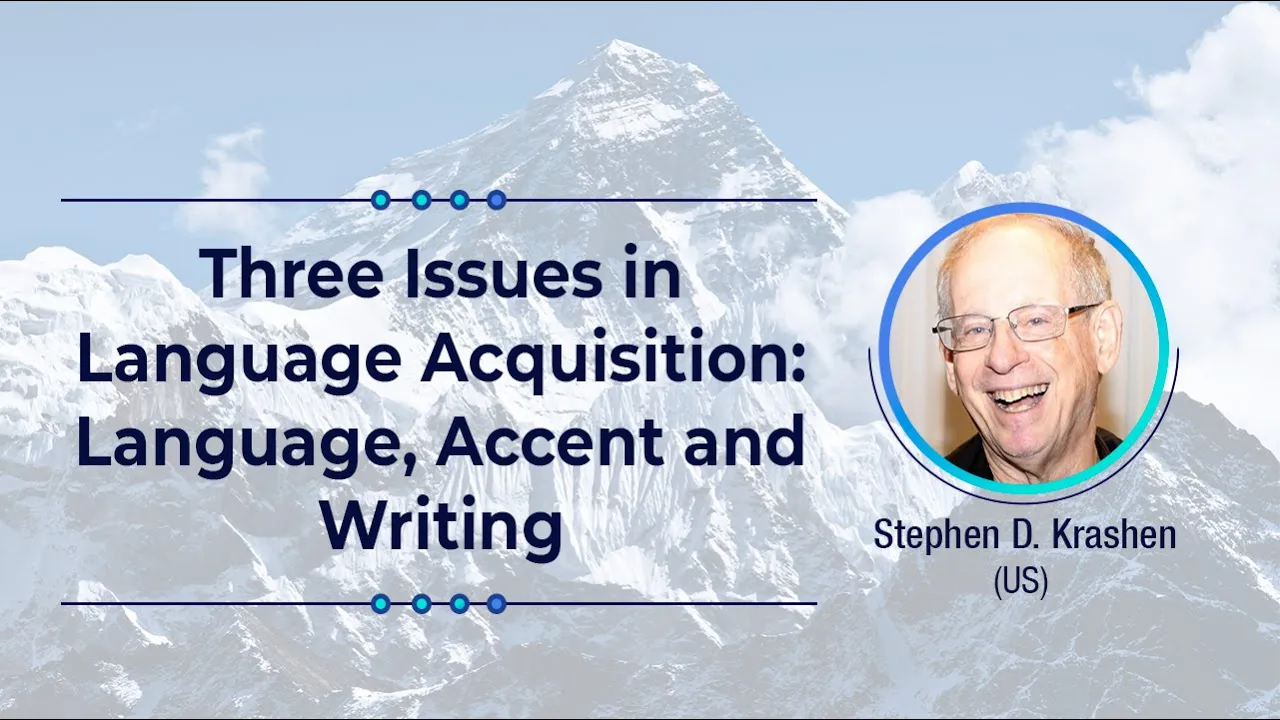
thank you um i'd like to begin by answering a question uh so we won't have to waste time with it later the question that comes up is where can we buy your books how can we find your articles and there's a new policy now you cannot find my books because i'm no longer writing any and the reason i'm not writing any is that they're too expensive nobody can afford them in fact nobody can afford anything now and i want to save you some money all my papers everything i write is now available for free as
laxman mentioned it's all available on website sdcrashin.com it most of it is available on researchgate and the reason i'm doing that is i have declared war against the publishers because the publishers are making a lot of money and we have nothing to read the articles are much too expensive i can't afford them the only people who can afford journals and books are people who are right now at a high level university where they can use the library and they can download them so there's a new point of view everything is free this is now the
common good and i think all research should be freely available so go to my website you can download anything and you can share it with anybody except of course do not share with donald trump well he won't read it anyway okay so that's the new point of view don't ask for my permission simply do it and the articles are short and i hope easy to read they're generally they're too long i can't read them they're too complicated so that's that's my sermon for today let me get to the three um different topics i got interested
in this idea of whether people are gifted about 20 years ago when i was in hungary and i was there to do some lectures at the university in paige and one of my students said while you're here you should really meet somebody named lom kato l-o-m-b k-a-t-o the world's greatest polyglot like 17 18 languages and i did go to see her is absolutely wonderful i learned so much and i took advantage of my relationship with dr lom by bragging about it i would tell people i met linguists and colleagues i've just been with lom kato
do you know about her they had all heard of her and they all said the same thing she's different she's acquired all these languages because she has a different brain she's an exception i talked to dr lohm about this and she said no i just know how to do it and i think she's right there is no gift for language when we all this is like my mention this when we all get the right input we call this optimal input everybody's gifted let me tell you what optimal input is and i've been influenced by my
colleague beniko mason in japan who's really made these theories and ideas very comprehensible and has added to them optimal input has four characteristics first of all it's comprehensible comprehensible isn't enough though necessary but not sufficient number two there's a lot of it you need a lot of input to acquire number three it's interesting it's not just interesting in fact it's extremely interesting best is when it the input is so interesting you forget that you're listening to or reading another language very similar to a concept called flow f-l-o-w chinsek mahali is the author i can spell
flo but i can't spell his name you just have to struggle with that also the input is rich there's a lot of language that helps you acquire as long as there's comprehensible input and there's a lot of it and it's interesting you are going to get what you need for language acquisition in fact the idea i like now and this is a conjecture but i give a hunch that it's true comes from the true master noam chomsky who says we all have a language acquisition device in our minds it's there we can't stop it it
works without our awareness and it always is working you can't turn it off just like you can't turn off your visual system unless you close your eyes you can't turn off your kidneys you can't turn off your liver just by thinking about it um we have some evidence that i think is typical of the kind of evidence we need and this evidence comes from benico mason i just mentioned who uh until she just retired taught english as a foreign language in japan and she did a study with her students she gave a course at the
university elective open to people from the community so very interesting you get all kinds of people her students were in their 20s some were in their 70s in class they heard stories she told stories to them made them comprehensible very good example of optimal input and for homework they did reading for pleasure mostly from graphic novels but also from young people's literature uh the favorite of course harry potter which caused a big positive revolution i think in literacy in general here's what we found we took careful uh we took careful records she only asked the
students who did the reading to make a note of what they read that's all what books no long book report etc from those notes we were able to estimate how much time they read now these people read a lot anywhere from 22 to 162 weeks we calculated their gains on the toeic test actually 2i test is a pretty good test of reading and listening comprehension those are the ones we used and we correlated them with how much time they read very clear answer but much more exciting than we ever thought the more you read of
course the higher you did on the toeic in fact we estimated that for every hour you did self selected pleasure reading on the toeic you gained about one half of a point on the toeic that's remarkable if you le if you read an hour a day uh for 100 days you're going to gain 50 points which means you can go all the way from the bottom to the top on the toeic in a year if you read for two three hours a day you can make extraordinary progress and let me emphasize you get better while
you're enjoying yourself it's self-selected reading if it's self-selected reading she had a library of five thousand books for these kids self-selected reading that guarantees that it's going to be interesting that guarantees that it's going to be compelling all the research i'm going to share with you today when i talk about reading is self-selected if you don't like the book you put it down you pick up another one if it's incomprehensible boring you put it down you pick up another one i think this is the magic breakthrough self-selected reading also is nearly always fiction fiction is
the winner over and over again on these studies now here's my main point there was very little individual variation very little individual variation everybody gained about the same rate nobody was gifted nobody was slow nobody was super fast from this the hypothesis emerges i haven't given you proof i'm giving you suggestive evidence which is all science can do for us when you give people interesting data interesting input they all acquire at more or less the same rate little bit of variation probably depends on what they read but not very much this is my first talk
today ladies and gentlemen colleagues that when you give people when they have access to comprehensible reading and there's a lot of it they will grow they will get better now i have to tell you i've been experimenting on myself with this this stuff really works i've been following beniko mason's advice i get a lot of good advice from our colleagues on how to get better she's one of the people whose research has helped me i'm here at home during the coronavirus and i'm spending a lot of time at home having a very good time okay
i feel guilty all the people getting sick but i've been experimenting on myself every day i've been working on language as most of you know it is extremely exciting to work on languages some of some of my other languages i'm very good at others i'm just okay others i'm terrible and when you have that you discover new things i decided to work on spanish and i have lots of easy books in spanish and i've been reading them every day just for fun half an hour an hour and it's really working i give myself a test
once a week every friday morning i'm missing it today i go to the local supermarket at the supermarket there's one hour where old people can shop you have to be at least 60 years old to shop so i go there and i always go to the same checkout counter because i always know i'm going to get the same person the guy's name there is fidel he's from mexico mexican-american he speaks english very well but the first time i saw him in line i saw his name that he was from mexico i spoke to him in
english he answered me in i'm sorry i spoke to him in spanish he answered me in english i then answered in spanish i had a little speech already and i said in spanish my goal is to speak spanish as well as you do me espanol status you can help me he was very moved by that how nice of you to take an interest in spanish since that day every friday morning i have been having a short conversation with fidel nice man he's in his 60s probably i have noticed this is the only spanish i speak
all the rest is reading books reading these easy books and i found some very good ones every friday he talks a little faster he's a little more casual with me because he feels i'm getting better which i am and this is my evidence this is powerful evidence for input i'm not practicing speaking i'm only reading these books but i'm getting better and if you try it you'll get better at the same rate that i do because we all have the same language acquisition device so this is my first presentation i'm going to take the liberty
of having another sip of this potion that i made from magic beans this morning do you know where coffee was discovered ethiopia some shepherds were watching their sheep and they noticed that when the sheep ate the coffee beans on the ground they got a little more excited a little more energetic and my first cup of coffee was in ethiopia when i was 25 years old changed my life for the better let me tell you okay second i want to talk a little bit about accent and my uh again i have a uh conjectures here as
well and here is my idea about accent we are gathering more evidence on this and i'm again beginning to suspect this is really true important footnote all we can do in science is present hypotheses that's all we can do and look for supporting evidence and counter evidence we can never prove that because we can never look at all instances but we can get more and more hypotheses and eliminate alternative hypotheses so this is this is what we're stuck with here is my conjecture an accent oh another little note i learned the word conjecture from my
son who's a professor of mathematics and researcher in algebra and he says if you uh if you have a hypothesis and you're not really sure that it's true call it a conjecture then if it's wrong you can say well it was only a conjecture so this is only a conjecture but i think this is right here's my conjecture the perfect accent is inside you i have inside me a perfect accent in mexican spanish i have a perfect accent in french i have a perfect accent in german these are the languages i know best i don't
use them because i feel silly there is a block preventing me from actually using it because i'm not a member a full member of the club of people who speak that language now i think that adults get very good in accent extremely good they simply don't get perfect 99 of the accent is not good enough so you have an accent my favorite example is arnold schwarzenegger um arnold speaks english extremely well i i have actually met him spoken to him casually on venice beach lifting weights i tell everybody i lifted weights with arnold actually we've
had a few conversations very nice guy if you listen to him speak press conferences when he was governor his english is marvelous there's a tiny tiny german accent but we want perfection in reality he's done very very well and it's that little bit of a block that keeps him from the last small part well the block we call the output filter the output filter is prevents us from actually making our best apps accent because we're not a member of the club of people who speak that language let me give you why the evidence why i
think this is true and i'm going to give you um a cases a case history first uh this comes from my time in ethiopia when i taught there in the uh 1960s oh my um i met a man there who turned out to become a member a respected member of our uh profession uh gerald mossbach who worked with the british embassy and he told me this fascinating story when he was in secondary school in the uk in london he took french and he and his friends hated french they hated the class it wasn't taught very
well as traditional methodology forcing you to talk before you're ready all this stuff learning the grammar anyway he and his friends despised french for that reason and at the end of the class the students had to take an oral examination i think that's torture for anybody and torture especially for teenagers at that age to have to take an oral examination and he decided to try to make fun of the examiners to humiliate the examiners insult them and show them how terrible they were and their whole culture everything he came in dressed as if he were
french he had a little beret on and had french exaggerated french mannerisms and exaggerated the accent and guess what the examiners thought he was wonderful he got the highest grades possible oh now you've got it and he would feel very self-conscious talking like that so the accent is there it's inside of us we don't produce it because we feel it's not us there's a story about the british actor peter ustan alistardoff that comes to the same conclusion if you've seen him in movies my favorite was top copy he was just marvelous he's been in french
movies and i have watched those movies now i'm not a judge of who's perfectly french but he sounded really good to me and i am told that his accent in french in cinema in movies is perfect he sounds exactly like a french speaker but in interviews ustinev has remarked that i can do this in movies but if i'm speaking to a french person yeah i speak french perfectly well but i can't do that perfect accent because it's not me we have the perfect accent inside us and this is heavily influenced by our affective state i'll
tell you a story about me because you have had the exact same experience a while a long time ago when my daughter was a little girl oh my my daughter's now 15. wow anyway i went to paris for some talks and my daughter came with me she was a young teenager at the time and she was in a french school in los angeles and her friends was pretty good and i had a i made an appointment to meet a scholar from the sorbonne from the university who was a scholar in sociology of language i was
very eager to meet her because her work was slightly outside of language acquisition and i had read some of her papers i thought they were very interesting so we met at a coffee shop which is where you meet people in paris the the uh expression is that if you go to a coffee shop enough times you'll eventually meet everybody you know who lives in france anyway so we had this nice conversation we spoke french and my daughter and i i it was very easy and interesting for me because i was talking about my favorite subject
which is my own theory of language acquisition and she was telling me about this unbelievable research that they've been doing there that i was really interested in so it was a very easy meeting and my daughter was over playing with the video games and every so often she came back to just hear how we're doing and my daughter said afterwards dad your french was so good i can't i didn't know you spoke it that well that was amazing and i figured well i was very relaxing and i was with this very interesting scholar who was
telling me about this wonderful work and she wanted to know about my research so my output filter was way down because i was only focused on our interaction there are other times when i'm told i speak french without any french accent at all i'll give you the issue it was in the 1980s i had friend spent a sabbatical semester at the university of ottawa which is a bilingual university and one of the things i did there was work on a project in teaching subject matter through second language what we now call sheltered subject matter teaching
and i had we did research and we wrote papers we had two research teams one in english one in french we published one article in french one in english and i was meeting with the french team team now let me tell you about the french team these are all people that i was very relaxed with that again like this lady i had coffee with that i had a good relationship with where we were interested in what each other was saying not critical my friend uber was one of them we spent saturdays together his children and
my children and his children were under orders to speak only french because they were very interested in the quebec french movement and so i was very relaxed with him my french teacher a young scholar young teacher that i went to her class all the time just to see what was going on and it's comfortable with her so i was holding this meeting in a classroom a pretty big room me and about five other people the door opened and a stranger walked in another faculty member somebody i didn't know and i thought this must be a
local scholar here a professor i felt suddenly very self-conscious i must be making every mistake in the world immediately without my being able to do anything about it my accent got worse i'm sure my grammar got worse the filter went up the output filter went up and it was not under my conscious control probably wasn't as bad as i thought but this is the power of these affective forces they're beyond our control let me make an analogy with other parts of life to me language is a little bit like clothing clothing has two functions one
function is to protect you from the weather the other function is to mark you as a member of a social class if we were in an auditorium now not a virtual one you would look around you'd see everybody there was pretty much appropriately dressed at home some of you are in your pajamas or whatever i'm not i'm okay but we're all appropriate when you're slightly underdressed or overdressed it's quite embarrassing you have to be dressed exactly right for the group you're with i've thought about this we have acquired these rules they're complicated when i speak
in public who knows if i'll ever do that again with the virus going around um i always wear comfortable shoes i always wear black shoes solid black but they're like walking shoes or gym shoes athletic shoes they're solid black they have to be solid black if i got walking shoes or athletic shoes that had a red stripe on them that wouldn't work that's a mistake so we know these subtle rules that mark us as a member of a class we know these rules they're complicated and we're uncomfortable if we get the rules wrong okay so
my feeling here is that this is a marker just like just like close has the function of protection and marker as a social class language has the function of communication but also is to tell people who you are uh where you're from and i think most important what your club membership is who you are what group you belong to it can also say what kind of a person you're you are what your attitudes are a brilliant study one of the very first studies to come out in sociolinguistics a man named fisher did this in the
east coast with teenage boys english has the first language one group he recorded them studied their speech in casual situations one group was known as proper boys good students when they pronounced words with ing going coming singing playing they always pronounced the final ing the other boys who were the more relaxed boys didn't say coming going they said come in go they changed the ing to this other uh final velar sound okay it marked them as who they were these were the boys who considered themselves to be a little bit tough to be tough guys
who were a little bit non-conformist and it was quite consistent to me this marked them as who they are this is what accent does uh again excellent accent i think is acquired very quickly and we get it right away we just don't perform it what if we teach people another accent that's never been done in my oppression permanently give people another accent through instruction i've looked at the research um it's not you it could make you quite uncomfortable my final topic is writing and here i'm presenting the research of people who have done work on
what is called the composing process and i i love presenting this research i'm repaying my debt to these wonderful scholars i didn't do this research this is not mine i've read it and reported on it and it has made my life much better much more productive so i'm repaying a debt to people like especially um peter elbow who's done research on this i met him once and i was able to you know thank him for his help the composing process is all boils down it's how we write to solve problems and make ourselves smarter and
how we avoid writer's block more let me give you the research in a nutshell writing more will not make you a better writer it will not help you acquire english faster we acquire by input not by output just like more speaking does not make you a better speaker it's more listening it's more input that does this and again i'm summarizing the research the same in writing if you have your students write more their english writing whatever language you're doing will not improve their spelling won't improve their grammar won't improve their style won't improve writing though
does something else different here is peter elbow writing helps us solve problems meaning is what you end up with not what you start out with writing makes you smarter isn't that wonderful you have a problem you write it down gradually it gets clear i have listed on the sheet that i hope some of you have and it's in my articles the elements of the what we call the composing process there are four elements and i'm going to add a couple this is the classic composing process ways of using writing to make yourself smarter and solve
problems revision that's the core that's the big one as you revise as you go over what you've done you see problems you change them and your ideas become clearer neil simon one of the great american playwrights mediocre rights writers write good writers rewrite that is very powerful uh kurt vonnegut writing allows even a stupid person to seem halfway intelligent if only that person will write the same thought over and over again improving it just a little bit each time a lot like inflating a blimp big balloon with a bicycle pump anybody can do it all
it takes is time and now the quote that has helped me the most in writing this is from ernest hemingway this is not my language i'm quoting the language of ernest hemingway but he makes the point clearly the first draft of anything is isn't that wonderful don't be afraid to do that first draft it's not going to be any good and what counts is what you do you keep revising you keep revising when you see something i have written and it looks you know reasonably good like i know what i'm doing you'd be amazed to
see the first draft i've gone through not just five drafts sometimes 15 20 sometimes a hundred drafts i don't mind it because each draft i see new things so i'm never afraid to get that first draft down on paper by the way i think that this work on composing process applies to all instances of writing not just professional i also have another career i'm i've become extremely famous in show business i live in southern california southern california everybody does show business there must be a law like you have to be uh writing a script and
i've been doing that too i've been in show business for the last 10 years it's been lots of fun i have written 10 musicals can you imagine and people have come to them because they're a captive audience i do them for the synagogue in the jewish religion there's the old testament some christians call it the bible we call it the old testament um in the old testament and some of you are familiar with this there's the book of esther and in jewish religion you celebrate the book of esther every year in a holiday called purim
and the book of esther is about this really bad king who has this wife who's beautiful and he makes her dance naked in front of his friends i change the script a little there and she uh she is banished from the kingdom and there's a new queen the king doesn't know it but she's jewish and she changes everything uh the king's assistant uh wants to wants to get rid of all the jews and she says no you can't because i'm jewish so that's it that's typical jewish holiday they tried to kill us we resisted we
overcame it now everybody's happy let's all eat which is the plot of all the holidays so i write this play every year it's kind of humorous and when i start i don't know what i'm writing even though the plot is set i don't know what to say i remember vonnegut i remember neil simon i remember above all hemingway the first draft is not going to be good i start writing and eventually it's done and i don't know what i'm doing the first draft each time it gets a little bit better a little bit better i
also have a plan when i work i start with an outline and i change it all the time uh here's the idea good writers plan but they're willing to change their plans you have to because as you write you get new ideas i've had instances one time i was on a flight from los angeles to hong kong i had my paper all done for the conference i decided to review it and do a new outline which um peter elbow says he should do just try to rewrite it from the beginning even though you think you've
done a good job i did the outline again i found new things i decided my paper wasn't done and i rewrote the whole thing when i have to revise this is what i've learned from these experts when i have to revise i'm happy because it means i'm learning new things so plan but be prepared to change it another part of the composing process reread hemingway says i rise at first light i start by re-reading and editing everything i've written to the point i left off the reason for this during the time since the last time
you wrote your subconscious mind has been working on this you've new ideas so when i start in the morning i'm going to as soon as i'm done here if i'm still awake i'm going to work on a paper and i'm going to re-read what i did yesterday and i'll be pleasantly surprised that all the new ideas that have come to my mind will emerge as i re-read the final draft yesterday the last piece of advice the official advice is universal everybody says it and they're all correct delay editing when you're writing don't make superficial changes
don't worry about spelling don't worry about punctuation peter elbow says pretend you've hired an editor and the editor is going to come and make changes going to correct the spelling gonna correct the grammar and of course hire yourself if you worry about spelling and grammar while you're writing uh your ideas will suffer so leave that till the end don't disturb the flow as you know in the morning you have your shower then you put on your makeup don't put on your makeup ladies before you take your shower it's the same idea well this is the
composing process and of course i want to add a few points to it that i've come up with um incubation how to do it this comes from a mathematician poincare who was a colleague of albert einstein's and came up with non-non-euclidean geometry worked on it and einstein gives him a lot of credit for the development of the theory of relativity poincare did an article that is in all collections that i have of creativity here's what he says and this is written uh over 100 years ago he says when i'm working on my math and i
get stuck which is all the time i get up i do something simple i put some wood on the fire two minutes later i come back to my manuscript and it's a little bit clearer the writer's block begins to dissolve i have learned from poincare take breaks frequent breaks short breaks i think of juan carrera when i do what we call inauthentic labor household chores that we all have to do they're there to help us incubate when when we're done with dinner especially if we've had company this is great i go go sit down have
some coffee i'll do the dishes and they're all okay go ahead i close the door of the kitchen no one comes in i bring in my computer i start to work my goal on my mind is to work on my papers in the middle in the breaks i wash the dishes i start work and i'm i'm telling you this because i'm sure this happens to you i start work writing within three minutes a writer's block i'm stuck i get up wash a couple of dishes one or two put them out to dry maybe dry one
that i put out before within 30 minutes the dishes are done and my work is done i've managed to get things done i do the same thing in hotel rooms when i get come into a hotel room this you have to unpack how boring i put my suitcase on the bed leave it there start writing within two minutes my first writer's block always i then open the suitcase take out one shirt hang it up go back to the writing this is how you get things done within 30 minutes the room is absolutely clear and i've
made good progress on whatever i'm writing you must have us an interval free from conscious thought during your breaks this is from uh graham wallace a book called the art of thought uh published in the 1920s it's during that time when your problems will be solved so frequent short breaks is part of the process daily regular writing is my final point uh the this is irving wallace who wrote the prize he also did an article on writing he said that good writing as a rule all of them keep regular hours it's a job they work
from uh maya angelou rented a hotel room near her house just to write she worked from early morning till about noon and then went on with the rest of her day pretend it's a job do regular hours and sit there for a few minutes then take a break then do some more some people are do it by the clock some people do it by the number of pages i do it by words and i'm going to tell you what i do with some hesitation i don't want you to do what i do you have to
determine what will work for you if i do 602 i feel stale it's too many but in all cases it's regular regular writing i'm now going to come to a little bit of research and the best evidence the best statements of this i know i'm going to quote first stephen king he says in writing writing is your source of inspiration don't wait for the muse don't wait for the creative spirit instead make sure the muse knows where you're going to be every day from nine till noon or seven till three whenever you're writing is have
a specific time start work and the creative spirit will visit you susan suntoc you can't wait for inspiration finally the best one madeleine l'engle in this one has helped me more than any other inspiration usually comes during work not before it not after it it comes while you're writing not while you're having a walk or you know doing your exercises rarely it comes while you're sitting there at the desk or at the computer etc the evidence for this fabulous evidence i think comes from a man named robert boyce robert boyce was a professor at one
of the new york state universities and he was on the counseling faculty and he counseled young professors those of you who are university professors know how frightening this job is and in the united states after five or six years you're evaluated to see if you get permanent employment at the university you're evaluated for tenure isn't that frightening this is your your hand in your portfolio your publication record and they let you know if you're going to live or die boys looked at scholars junior scholars and found they divided themselves into two groups one group did
what he called daily regular writing just what i think works what the research says works these are people who set aside a certain amount of time for writing 30 minutes a day an hour a day it didn't matter how much time as long as it was regular all of them got permanent employment they all passed the examination they all got tenure because they did permanent writing they all published because they did regular writing the other group is what we're called uh uh i'm sorry binge writers that's from dieting you're on a good diet for five
days a week and then on sunday you go out and you have ice cream and your diet goes down the drain well there were binge writers they didn't write until everything was correct until they had a quiet spot they knew they wouldn't be bothered they said i need five hours of uninterrupted time where there's no noise airplanes have to change their route uh the phone can't ring none of those people ever got tenure they all failed they waited for the perfect moment when they had lots of time that is suicide with writing first of all
five hours is never going to come second when they sat this few times they sat to write they forgot where they were if you don't write for a few days you don't know what you're doing anymore charles dickens said if i miss a day of writing i need a week of hard slog to get back into the flow you have to do a little each time then the incubation will take over the next time you sit down you'll you'll have some more to say etc final comment should we test writing no we won't get better
writing if we test writing we'll just drive people drive students crazy if you test writing first of all it's the hardest thing to test it's the most expensive it requires students practice writing you know at least they think they should and testing it is very it's very hard to get into related or integrated reliability raters don't agree with each other what's a good essay and it is highly stressful on our students it's highly difficult to do i say get rid of it don't do it all test scores on reading and writing are always very highly
correlated just look at the reading scores and you'll have a pretty good idea of how well students write so i'm trying to save a little bit of time and money today i'm trying to save torture let's not test writing let's not worry about it we'll save millions of dollars worldwide billions by not worrying about it our lives will be easier and we and our students will get smarter i'm such a professional i'm so proud of myself it's exactly six o'clock here in los angeles i've spent an hour uh let me take a few moments and
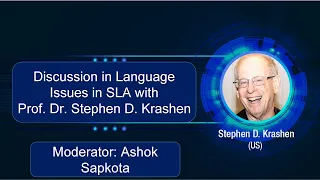
ask either yes yes stephen thank you so much i i actually didn't uh disturb you in the middle i was supposed to tell you five minutes left but i didn't do that because you were so much you know going with the flow thank you so much um so uh the optimal input i think your presentation was itself optimal input and this accent and our internal accent all these things are so so so interesting for us to listen from you writing next as a smarter writer's block incubation all good ideas and everybody here in the audience
is excited and they they are boring with you know compliments but there are also questions that they would like to ask you and here i have my colleague asakusa who has collected lots of questions there so he'll be asking you questions i think orally many and some others from the chat box as well so also please come over uh thank you uh thank you and a wonderful uh presentation by the crash and thank you so much and uh people more than 300 plus uh in the facebook live and five hundred plus five around five hundred
uh completely on june 800 plus people are waiting watching you under both the media and and personal uh facebook live as well pt let's have a question for you you said no one is gifted why are some students good and some student some very weak in our classes even though we prepare we provide same input and have same activities over to you question i think that's a wonderful experiment let's do it let's make sure it's identical that all the input is optimal if do have we ever done that have we ever done a class in
english where there's lots of reading material around the material is fascinating and students have total free choice i don't think there has ever been a class like that i'm very indebted to professor mason because she has stated these principles so clearly let's first make sure our classes are filled with optimal input the hardest thing access to interesting reading we have to number one look at our libraries make sure there's lots of books uh the problem with that of course is expense money and we're gradually solving this because more and more good books and interesting stories
are online they're there electronically from this is the big problem for me it's finding the books right when we solve that everyone i have talked to i've i've i know a lot of polyglots three years ago i went to a conference about polyglots and the participants were all polyglots i was the weakest polyglot in the group because i could only have conversations in maybe five or six languages and these are people of 10 and 15. i noticed number one they were all nice people which is interesting they were all fun to talk to they were
all supportive of each other they had the affective part uh really down they liked having conversations and they were readers isn't that fascinating everyone i talked to okay they all had access to optimal input so first let's look at our classes let's look this way the situation that dr mason uh beniko mason set up was optimal a collection let me repeat this 5 000 graded readers available for students this is wonderful we look at uh even if we're doing native language or we're doing english official language of india for example do we have books available
that are affordable the highest level of inc of low literacy of course is high poverty they're the ones who can't get access to books it is our job to do that so my answer is if we first make sure we have optimal input then we can ask the question so thank you just right question thank you there is one more question which is particularly concerned with the remote learning how do we use or how do we engage the students of remote areas in learning can you deal with ideas with input hypothesis yes i think we
can do it um it's a good area for experimentation of course what really counts in language acquisition input we can supply that for example the initial stage of language teaching and dr mason's method is stories listening to very compelling stories and being knowing the students stories going to great efforts to make them interesting and comprehensible in dr mason's classes drawing pictures she can explain words that she knows are going to be hard in advance and we have lots of that now in remote learning the students can't talk doesn't matter we don't need them to talk
because that's not how you acquire language how do you like that they can't interrupt and say i don't understand i don't understand well if the story is too hard we do what we do when we watch television we change the station i would like language classes to focus on good stories stories that are of universal interest and allow options like if you're listening to a good story in in an english class or a french class you have the option of 20 different stories at 20 different levels on 20 different topics you don't have to stay
with that one you're not tested on the content of the story you can listen for pleasure the same way we change the station watching television in fact uh remote learning might be just made to demonstrate the power of stories that's the beginning stage and we introduce students to where they can find good books and we have the power we have the essence of the proper method dr mason's method combines listening to stories and reading for pleasure self-selected we can do that no problem the stuff that we can't do never did us any good anyway so
i think that's the answer stories and pleasure reading okay i've got a question here um can i ask a question here interesting it's about writing uh you know our tradition of you know evaluating writing is only from the final product and and then the process is uh hardly uh you know given uh due due importance so what's your suggestion on this this authentic evaluation of uh of writing when final product you know has the grades don't evaluate writing at all okay i just saved you hundreds of billions of hours of torture number one it's the
hardest thing to do we have very poor inter-rater reliability it tortures the students they hate it it tortures the graders nobody likes to do that oh god i gotta create this writing thing etc it encourages more writing and that doesn't help you so forget it problem solved oh i see then same question linked with just what you said in this situation how can we encourage our students in academic writing then we encourage them like here's what someone once said i forgot who i'd like to quote them read what you like write what you must we
should never require writing of anybody unless it's something that burns inside of you now the people listening today the 500 people most of you love to write because you're academics teachers you get ideas you like to write them down it's not for everybody if you fall in love with writing an idea and you find that when you write it down you get a clearer idea keep diaries oh my everybody knows this this is so powerful you have a problem a personal problem you write it down immediately 10 of the problem disappears immediately maybe even more
that's why people keep diaries it's helped me it's helped you when we introduce students to the composing process i think we should tell them about the composing process they will be drawn to writing and their writing quality will get better as they read more simple solutions we want to make the world a more pleasant place thank you can i answer one more question please please no extra charge go ahead with reverence you said that something is learned with good input you said that something is learned with good input if input is not changed into intake
we not we normally write and practice for intake in our case we believe this and what's your thought over this well the optimal input is intake that's what it is uh and it helps our helps us to acquire language not to learn it to acquire it subconsciously intake is optimal input our goal is input that's fascinating so interesting that you don't even know it's in another language that's why i like to allow lots of choice in stories we can't do that perfectly but we can come close if in beginning language teaching there's variety in the
stories and the student can select the kind of story the student wants to listen to not everybody likes fairy tales okay not everybody wants to know grim stories etc but you can select what you like and then when you start reading you read narrowly and you select what you want what i do with my done with myself and you've done it too i use reading i use reading 95 percent to keep up on my languages and improve i do a lot of rather learn this from lom kato which all her reading is in other languages
not all her pleasure reading which is why she can keep them up and i find the authors that are perfect for me by the way i don't like it when people recommend books to me to me when someone says or they give me a book as a gift oh my gosh someone gives you a book as a gift then they ask you a week later how did you like the book i gave you i never read them i have to select the book i never give people books as gifts i let them select their own
book same with my children well there's one exception there's one person when he recommends a book i always read it immediately because he knows me he knows me better than i know myself and he's always right and that's my son the math professor he says dad read this one he's always right and we have people in our lives who can do that but in general assigned reading is the problem now this means some change in how we teach i can't help that i'm not here to make the current teaching program work i'm here to try
to provide what try to tell you what the research says about the optimal way and i think we can gradually move in that direction the more self-selected reading the more bigger our libraries the more choice the better off we're going to be okay thank you