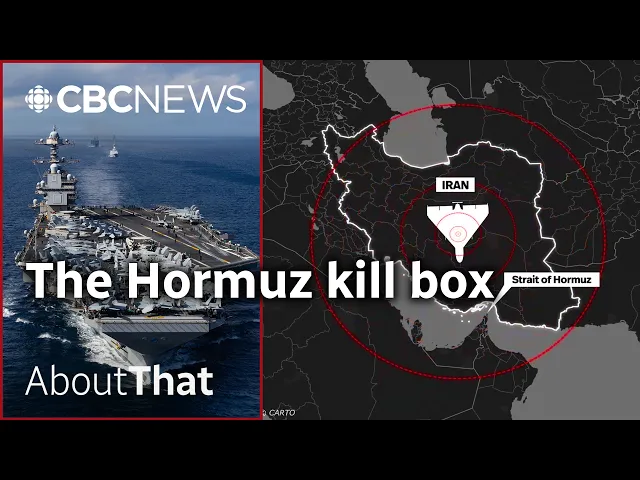
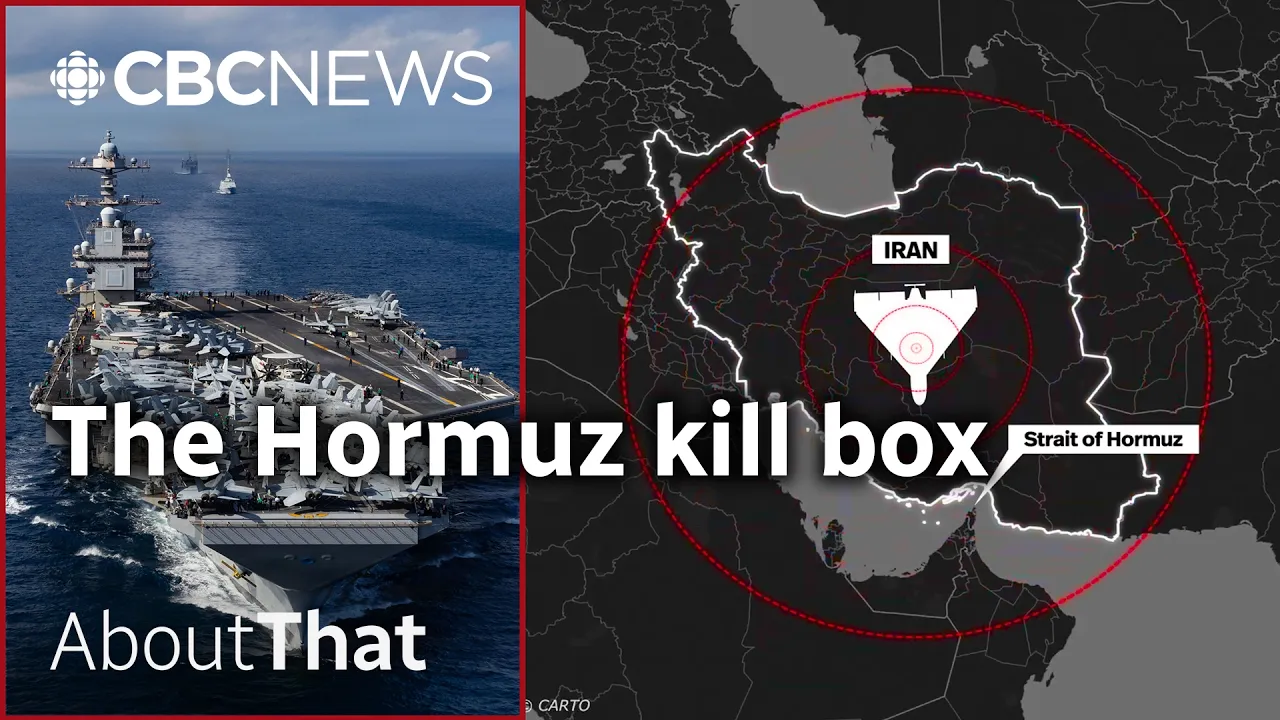
Taking the straight of Hormuz should be easy for the US, right? On the one hand, you have the world's most powerful navy. 11 aircraft carrier strike groups backed by hundreds of ships, thousands of planes, tens of thousands of missiles and bombs.
And on the other hand, you have this tiny waterway only tens of kilometers across at its narrowest point, obstructed only by a regime that has been pummeled now by air strikes for nearly two straight weeks with no sign of letting up. Fighting for a passage, the US desperately wants to reopen because it may just be the most economically important maritime choke point on Earth with 20% of the world's oil transiting through and they can't take it. I mean, they sound like they can take it.
We have capabilities that no other nation on Earth has. The moolas are desperate and scrambling. If Iran does anything to stop the flow of oil within the Straight of Hormuz, they will be hit by the United States of America 20 times harder.
But the flow of oil has largely stopped and the US hasn't been able to get it going again. And actually, a quick scan of headlines maybe even suggests the opposite is happening. Iran laying mines, international cargo ships in the vicinity being hit, dark smoke pouring into the sky.
Why can't the US just take over the straight of Hormuz and get oil tanker traffic moving again? Well, because it's a lot harder than it sounds. Almost every problem with the US defending the Straight of Hormuz stems from its size and geography.
The fact that it's so narrow means there are just two designated shipping lanes deep enough to accommodate the world's biggest oil tankers. That's one lane in, one lane out, just 3 km wide each and 3 km apart. Now, if you're Iran and you've just threatened to set ablaze any tanker that tries to go through, attention all ships, attention all ships, from now on, all navigating through the straight of hormones is forbidden.
Then you have a very predictable, very tightly confined killbox to work with. They can hone in very easily on some of those ships trying to navigate those difficult waters. You can't pass a lot of ships through.
can't get ships through there with at high velocity. Oil tankers are big, slow, clunky targets through the straight itself. They travel at most at around 20, 30 kilometers an hour.
Huge targets on well-known paths would make for a very appealing, very easy ambush. They provide for like a target-rich environment for the Iranians trying to fire a fire drone. Almost all attacks benefit for being very close to land from an Iranian point of view.
Uh so uh Iran can use a lot of weapon systems that are short range. So rockets, short-range missiles, coastal artillery for literally direct fire that's close to inside of Iran and inside of um areas where they've hidden artillery. The rounds that could hit from a from a local distance, but then also from a greater distance further away.
An attack or multiple attacks at once from so close would leave American warships very little time to defend. Typically, when we think about the kinds of munitions Iran has used to attack its Persian Gulf neighbors, we're talking about a transit time of several minutes or even hours for the slowest moving cruise missiles and drones. That's the kind of lead time you'd like to have to reliably shoot them down.
But against an attack from so close, the defender in the straight of Hormuz might have just seconds to react. You have to detect, track, identify, track, and then intercept a a a missile. And it goes very, very fast.
And when you think about how many tankers there would be to defend, typical traffic is 3,000 a month. That's a hundred a day. That's a challenge.
These are not military ships. These are transport ships. They do not have any defenses and that's to say nothing of the threat from Iranian airspace.
Iran is launching waves of drones and missiles while the United States and Israel are scrambling to shoot them down. Just this morning, three ships in the Persian Gulf reported being struck by suspected Iranian drones. What makes the straight of Hormuz so risky to transit is that it is within striking distance of one of Iran's most efficient weapons of war.
Shahed drones, depending on the model, have a theoretical max range of up to 2500 kilometers. That's long enough to strike the straight from literally any part of the country, which is devastating when you consider the impact of a 100 lb warhead costing in the tens of thousands of dollars to manufacture, slamming into these hulking, lumbering targets worth potentially hundreds of millions. Just the oil they carry alone, a big chunk of that.
This is a big problem. Then there's the threat from the water. Iran could use a number of small boats that could perhaps evade detection at least briefly.
Use them in combination to overwhelm a ship's defenses. Swarms of drones, um, mines that are laid, jet skis, small boats that wreak havoc. Um, think a terrorist attack that would take place on land someplace.
Do the same thing. Get close enough to a tanker uh with a bomb and explode it there. Blow a hole in the side of it.
think it that's really what their capability is right now. Now, the US Secretary of War, Pete Hegsth, has continuously minimized whatever is left of Iran's navy. The uh Iranian Navy is largely no more.
So, their ability to project any power in that area in a naval sense is diminishing, diminishing, and will be increasingly diminishing. But the experts we spoke to told us it doesn't take much to cause damage for Iran to disrupt that. they just have to put three minds in there and once an area is mined you never it's never technically unmined.
So once you introduce that uncertainty which is extremely cheap and it introduces unconfidence in insurance markets and commerce and uh so so there's a huge cost asymmetry here and this begins to touch on another problem for the US which is that it doesn't take many Iranian successes to equal an American loss. One political problem with Trump's war in Iran is that it is unpopular, especially among Democrats, but even among Republicans. NBC News polling shows a majority of voters disapprove of the president's handling of the situation in Iran.
I mean, I don't know about you, but I have found that explanations lacking. This happened because Israel wanted it to happen. Six American families must now laid to rest their sons and daughters.
And for what? So the tolerance for loss, any loss of American military strength, military lives is extremely low, especially compared to what Iran's leaders can tolerate while still maintaining control of the country. For the Iranian regime, they see this as existential.
And this regime has shown previously that it's willing to kill thousands, perhaps even tens of thousands of its own people to stay in power. On the other hand, in the United States, uh, President Trump hasn't made the case for war to the American people. And of course, if there are casualties, especially heavy casualties on the US side, that's going to decrease popular support as well.
Iran may suffer far more damage, but it is certainly willing to suffer more damage than uh is the United States. It should go without saying in conventional open naval combat the US Navy would absolutely crush Iran's but that's not what a battle for the Strait of Hormuz would be. And even if the US were to eventually win that fight, whatever winning in this case means, it would only take a few successful strikes from Iran to cost the global economy billions of dollars in damage and to completely shut down commercial shipping if ever it did resume.
Because the key thing to remember is that all of those oil tankers sitting around, they're not stuck because they can't go through the straight. They're stuck because they don't want to. The main obstacle that's keeping ships from traversing the the straight of Hormuz is not weapons or threats or mines or anything else.
It's insurance. insurance companies have been really quickly scaling down the level of insurance they have, the kinds of insurance they have, and in some cases the insurance policy entirely and just said it will not apply if you traverse through the straight of Hormuz. So for the US to take over the strait in such a way that gives the corporations that use it enough confidence to actually do so, it would have to all but destroy Iran's ability to strike from land.
It would have to suppress its drone capability, neutralize its naval bases, disarm its mines. Not to mention, the US would have to put its own military assets at risk in the direct line of enemy fire. So, the United States has got to create an environment that uh those ships feel safe.
Perhaps there'll be some American flag ones that'll get escorted through, but it's going to take probably weeks more of military operations. The first phase was decapitation strike, take out the leadership. The next phase is to deplete the ballistic, cruise missile, and drone capability, hitting the launchers, the stock piles, the facilities, and whatnot.
Uh, this takes time. So, that's not just a run-of-the-mill naval escort mission. That's large-scale war requiring quite possibly the comprehensive destruction of Iran's armed forces.
Meanwhile, if any ship were to sink in the Straight of Hormuz, how do you get it out? How do you free up enough of the lane to make it useful again? What good is a passageway once it's turned into a war zone?
This is a situation where the world is going to learn that this is just too important of a choke point that can never be risked again. And opening it up um should it go down will will take will take time and time is money when it comes to moving of natural gas and and oil. The bottom line being one of the most important waterways in the world is also apparently one of the easiest to disrupt because Iran to make good on its threat never actually needed to control the strait.
It only needed to make it too dangerous to use. Taking the straight of Hormuz should be easy for the US, right? On the one hand, you have the world's most powerful navy.
11 aircraft carrier strike groups backed by hundreds of ships, thousands of planes, tens of thousands of missiles and bombs. And on the other hand, you have this tiny waterway only tens of kilometers across at its narrowest point, obstructed only by a regime that has been pummeled now by air strikes for nearly two straight weeks with no sign of letting up. Fighting for a passage, the US desperately wants to reopen because it may just be the most economically important maritime choke point on Earth with 20% of the world's oil transiting through and they can't take it.
I mean, they sound like they can take it. We have capabilities that no other nation on Earth has. The moolas are desperate and scrambling.
If Iran does anything to stop the flow of oil within the Straight of Hormuz, they will be hit by the United States of America 20 times harder. But the flow of oil has largely stopped and the US hasn't been able to get it going again. And actually, a quick scan of headlines maybe even suggests the opposite is happening.
Iran laying mines, international cargo ships in the vicinity being hit, dark smoke pouring into the sky. Why can't the US just take over the straight of Hormuz and get oil tanker traffic moving again? Well, because it's a lot harder than it sounds.
Almost every problem with the US defending the Straight of Hormuz stems from its size and geography. The fact that it's so narrow means there are just two designated shipping lanes deep enough to accommodate the world's biggest oil tankers. That's one lane in, one lane out, just 3 km wide each and 3 km apart.
Now, if you're Iran and you've just threatened to set ablaze any tanker that tries to go through, attention all ships, attention all ships, from now on, all navigating through the straight of hormones is forbidden. Then you have a very predictable, very tightly confined killbox to work with. They can hone in very easily on some of those ships trying to navigate those difficult waters.
You can't pass a lot of ships through. can't get ships through there with at high velocity. Oil tankers are big, slow, clunky targets through the straight itself.
They travel at most at around 20, 30 kilometers an hour. Huge targets on well-known paths would make for a very appealing, very easy ambush. They provide for like a target-rich environment for the Iranians trying to fire a fire drone.
Almost all attacks benefit for being very close to land from an Iranian point of view. Uh so uh Iran can use a lot of weapon systems that are short range. So rockets, short-range missiles, coastal artillery for literally direct fire that's close to inside of Iran and inside of um areas where they've hidden artillery.
The rounds that could hit from a from a local distance, but then also from a greater distance further away. An attack or multiple attacks at once from so close would leave American warships very little time to defend. Typically, when we think about the kinds of munitions Iran has used to attack its Persian Gulf neighbors, we're talking about a transit time of several minutes or even hours for the slowest moving cruise missiles and drones.
That's the kind of lead time you'd like to have to reliably shoot them down. But against an attack from so close, the defender in the straight of Hormuz might have just seconds to react. You have to detect, track, identify, track, and then intercept a a a missile.
And it goes very, very fast. And when you think about how many tankers there would be to defend, typical traffic is 3,000 a month. That's a hundred a day.
That's a challenge. These are not military ships. These are transport ships.
They do not have any defenses and that's to say nothing of the threat from Iranian airspace. Iran is launching waves of drones and missiles while the United States and Israel are scrambling to shoot them down. Just this morning, three ships in the Persian Gulf reported being struck by suspected Iranian drones.
What makes the straight of Hormuz so risky to transit is that it is within striking distance of one of Iran's most efficient weapons of war. Shahed drones, depending on the model, have a theoretical max range of up to 2500 kilometers. That's long enough to strike the straight from literally any part of the country, which is devastating when you consider the impact of a 100 lb warhead costing in the tens of thousands of dollars to manufacture, slamming into these hulking, lumbering targets worth potentially hundreds of millions.
Just the oil they carry alone, a big chunk of that. This is a big problem. Then there's the threat from the water.
Iran could use a number of small boats that could perhaps evade detection at least briefly. Use them in combination to overwhelm a ship's defenses. Swarms of drones, um, mines that are laid, jet skis, small boats that wreak havoc.
Um, think a terrorist attack that would take place on land someplace. Do the same thing. Get close enough to a tanker uh with a bomb and explode it there.
Blow a hole in the side of it. think it that's really what their capability is right now. Now, the US Secretary of War, Pete Hegsth, has continuously minimized whatever is left of Iran's navy.
The uh Iranian Navy is largely no more. So, their ability to project any power in that area in a naval sense is diminishing, diminishing, and will be increasingly diminishing. But the experts we spoke to told us it doesn't take much to cause damage for Iran to disrupt that.
they just have to put three minds in there and once an area is mined you never it's never technically unmined. So once you introduce that uncertainty which is extremely cheap and it introduces unconfidence in insurance markets and commerce and uh so so there's a huge cost asymmetry here and this begins to touch on another problem for the US which is that it doesn't take many Iranian successes to equal an American loss. One political problem with Trump's war in Iran is that it is unpopular, especially among Democrats, but even among Republicans.
NBC News polling shows a majority of voters disapprove of the president's handling of the situation in Iran. I mean, I don't know about you, but I have found that explanations lacking. This happened because Israel wanted it to happen.
Six American families must now laid to rest their sons and daughters. And for what? So the tolerance for loss, any loss of American military strength, military lives is extremely low, especially compared to what Iran's leaders can tolerate while still maintaining control of the country.
For the Iranian regime, they see this as existential. And this regime has shown previously that it's willing to kill thousands, perhaps even tens of thousands of its own people to stay in power. On the other hand, in the United States, uh, President Trump hasn't made the case for war to the American people.
And of course, if there are casualties, especially heavy casualties on the US side, that's going to decrease popular support as well. Iran may suffer far more damage, but it is certainly willing to suffer more damage than uh is the United States. It should go without saying in conventional open naval combat the US Navy would absolutely crush Iran's but that's not what a battle for the Strait of Hormuz would be.
And even if the US were to eventually win that fight, whatever winning in this case means, it would only take a few successful strikes from Iran to cost the global economy billions of dollars in damage and to completely shut down commercial shipping if ever it did resume. Because the key thing to remember is that all of those oil tankers sitting around, they're not stuck because they can't go through the straight. They're stuck because they don't want to.
The main obstacle that's keeping ships from traversing the the straight of Hormuz is not weapons or threats or mines or anything else. It's insurance. insurance companies have been really quickly scaling down the level of insurance they have, the kinds of insurance they have, and in some cases the insurance policy entirely and just said it will not apply if you traverse through the straight of Hormuz.
So for the US to take over the strait in such a way that gives the corporations that use it enough confidence to actually do so, it would have to all but destroy Iran's ability to strike from land. It would have to suppress its drone capability, neutralize its naval bases, disarm its mines. Not to mention, the US would have to put its own military assets at risk in the direct line of enemy fire.
So, the United States has got to create an environment that uh those ships feel safe. Perhaps there'll be some American flag ones that'll get escorted through, but it's going to take probably weeks more of military operations. The first phase was decapitation strike, take out the leadership.
The next phase is to deplete the ballistic, cruise missile, and drone capability, hitting the launchers, the stock piles, the facilities, and whatnot. Uh, this takes time. So, that's not just a run-of-the-mill naval escort mission.
That's large-scale war requiring quite possibly the comprehensive destruction of Iran's armed forces. Meanwhile, if any ship were to sink in the Straight of Hormuz, how do you get it out? How do you free up enough of the lane to make it useful again?
What good is a passageway once it's turned into a war zone? This is a situation where the world is going to learn that this is just too important of a choke point that can never be risked again. And opening it up um should it go down will will take will take time and time is money when it comes to moving of natural gas and and oil.
The bottom line being one of the most important waterways in the world is also apparently one of the easiest to disrupt because Iran to make good on its threat never actually needed to control the strait. It only needed to make it too dangerous to use.