The 2nd of February 1943, Stalingrad, the Soviet Union. The German 6th Army, after 5 months of fierce fighting and heavy casualties, having exhausted their ammunition and food, finally capitulates, making it the first of Hitler's field armies to surrender during World War II. The battle for the city proves a decisive psychological turning point, ending a string of German victories in the summer of 1942 and beginning the long retreat westward.
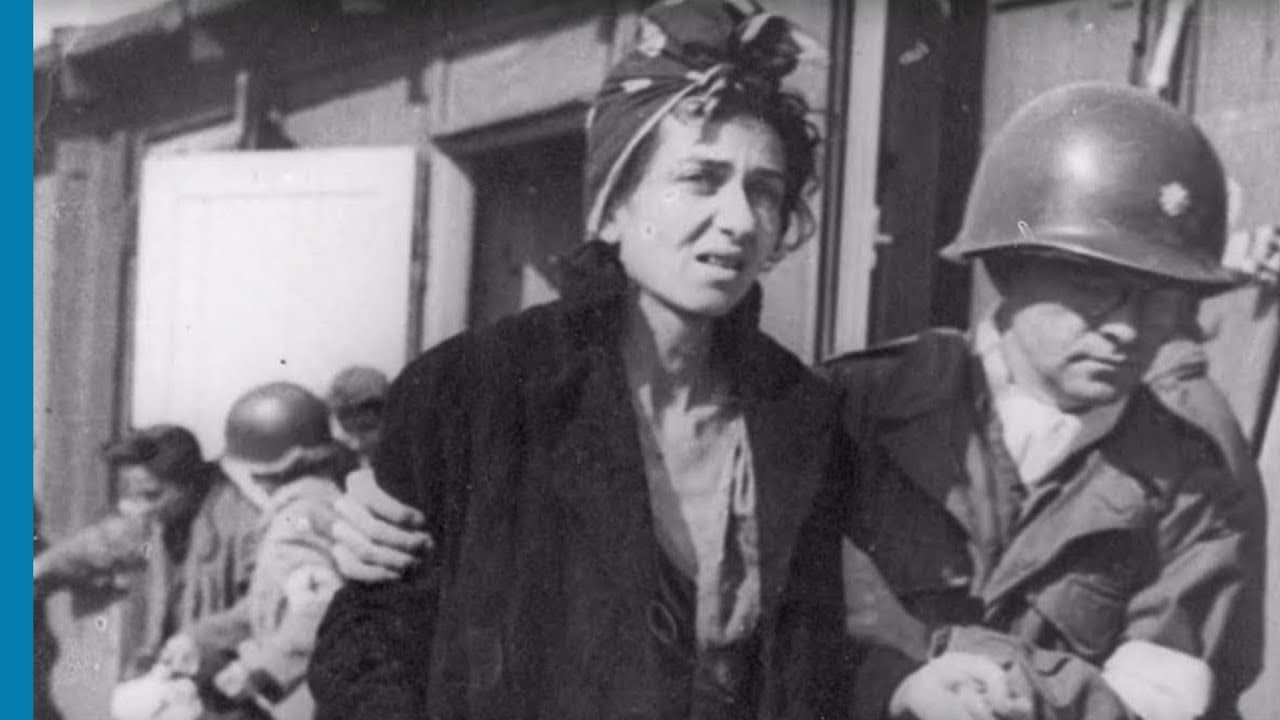
The Soviet Army remains on the offensive, and on the 27th of January 1945, enters Auschwitz, the largest of the extermination centers. It is estimated that at least 1. 3 million people were deported to Auschwitz between 1940 and 1945, and of these, at least 1.
1 million were murdered. During the camp’s existence, officially 928 prisoners are documented to have escaped from Auschwitz, but many of them are recaptured or killed during the attempt or shortly afterward. One of them is Mala Zimetbaum.
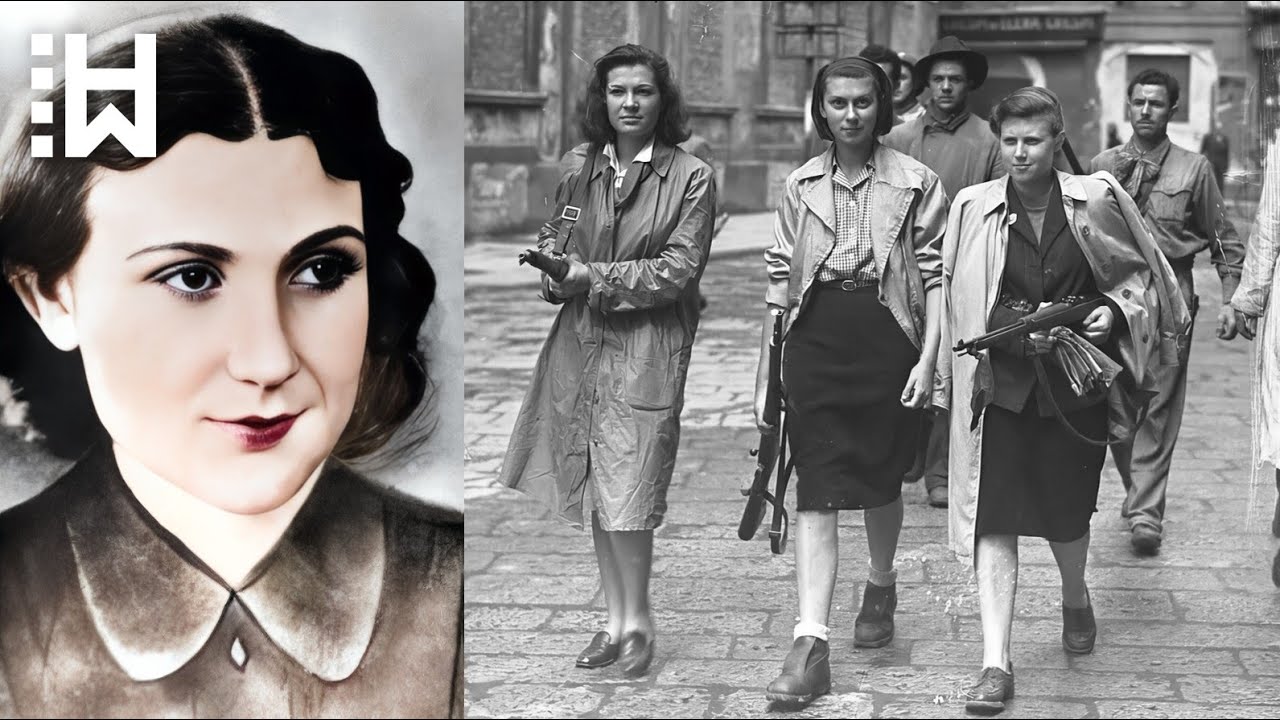
Malka Zimetbaum, also known as "Mala" Zimetbaum, was born on the 26th of January 1918 in Brzesko, today’s Poland, then part of Austria-Hungary. She was the youngest of five children of Pinhas and Chaya Zimetbaum, both of whom were Jewish. Mala’s family had lived in Germany for several years before her birth, which is why German was the main language spoken in her parents' home at the time.
In 1928, when Mala was 10 years old, she moved with her family to Antwerp in Belgium. She achieved excellent results in school, especially in math and foreign languages, and she spoke Flemish, French, German, English, Yiddish, and Polish. As her father was blind, the family lived under difficult financial circumstances.
In order to contribute to the family income, Mala dropped out of school and initially worked as a dressmaker in a large Antwerp fashion house. She became interested in Zionism, a political and nationalist movement advocating for the establishment of a Jewish state in the historical land of Israel, and joined the Jewish youth organization Hanoar Hatzioni. Mala Zimetbaum was 15 years old when, on the 30th of January 1933, Adolf Hitler was appointed Chancellor of Germany by President Paul von Hindenburg.
In 1933, approximately 9. 5 million Jews lived in Europe, comprising 1. 7% of the total European population.
This number represented more than 60 percent of the world's Jewish population at that time, estimated at 15. 3 million. The Jewish population of Belgium was comparatively small.
Out of a population of around 8 million, there were only 10,000 Jews in the country before World War I. The interwar period, however, saw substantial Jewish immigration to Belgium. By 1930, the population rose to 50,000, and by 1940, it was estimated to be between 70,000 and 75,000.
Most of the new Jewish immigrants came from Eastern Europe and Nazi Germany, escaping anti-Semitism and poverty in their native countries. Few of the Jewish immigrants claimed Belgian citizenship, and many did not speak French or Flemish. Jewish communities developed in Charleroi, Liège, Brussels, and, above all, Antwerp, where more than half of the Jews in Belgium lived.
The Second World War started on the 1st of September 1939 with the German invasion of Poland. The German invasion of France, the Netherlands, Luxembourg, and Belgium began on the 10th of May 1940, and these countries were conquered within 6 weeks. Little more than two weeks after the German invasion of Belgium, King Leopold III ordered the surrender of the Belgian army.
The Belgian government fled to Great Britain and formed a government-in-exile in London, while King Leopold III remained in Belgium under house arrest. Immediately after the occupation of Belgium, the Germans instituted anti-Jewish laws and ordinances. They restricted the civil rights of Jews, confiscated their property and businesses, banned them from certain professions, and in 1942 required Jews to wear a yellow Star of David.
Belgian Jews were also rounded up for forced labor. They worked primarily in the construction of military fortifications in northern France and in construction projects, clothing and armaments factories, and stone quarries in Belgium. During the German occupation, a German military administration coexisted with the Belgian civil service.
German authorities carried out deportations between 1942 and 1944 and deported nearly 25,000 Jews from Belgium to Auschwitz. Most were murdered there. The Breendonk and Mechelen camps served as collection centers for the deportations.
Fewer than 2,000 deportees survived the Holocaust. Mala Zimetbaum's knowledge of foreign languages enabled her to get a job as a language assistant in the administration of an American-run company. When the company was forced to close down at the request of the Nazis, she was offered the opportunity to emigrate to the USA.
She refused, however, because of her parents. In October 1940, the German occupation forces in Belgium issued a decree mandating the registration of all Jews residing in Belgium. Jewish individuals were required to register themselves and provide detailed personal information to the authorities, including their names, addresses, family members, and other identifying information.
The information collected through these registers was later used to facilitate the deportation and extermination of Jews during the Holocaust. On the 14th of April 1941, a Jewish pogrom occurred in Antwerp when 200 followers of the Flemish National Union, a Nazi collaborationist movement, burned two synagogues in the city, smashed the windows of Jewish-owned shops, damaged religious symbols, and harassed the Jewish population. In early 1942, Mala’s brother was conscripted into forced labor, but because he was mistrustful of official appeals, he fled, and together with one of their sisters went into hiding.
Since Antwerp was no longer a safe place, Mala convinced her parents she would find a hiding place in Brussels and together they would wait out the war there. However, on the 22nd of July 1942, she was arrested during a raid at Antwerp Central Station as she was on her way back from Brussels, where she had attempted to find a hideout for the family. She was first taken to Fort Breendonk, a Nazi detention and transit camp, and five days later to the SS collection camp in Mechelen.
There, she was assigned a job registering incoming Jews, which she used for her secret resistance. She smuggled messages and jewelry to the outside world and sent them to the families of the prisoners. She also managed to remove children from the deportation lists, thus saving them from being sent to a concentration camp.
On the 15th of September 1942, Mala Zimetbaum was deported to Auschwitz. When a train stopped at the platform of Auschwitz-Birkenau, the arrivals were lined up into two columns. The men and older boys were in one column, and the women and children of both sexes in the other.
The SS physicians, such as Josef Mengele, performed a selection. The only criterion was the appearance of the prisoners, whose fate, for labor or for death, was determined at will. The veteran prisoners gathered the belongings of new arrivals in an area known as “Kanada,” which consisted of several barracks that were used to store the stolen belongings of the prisoners.
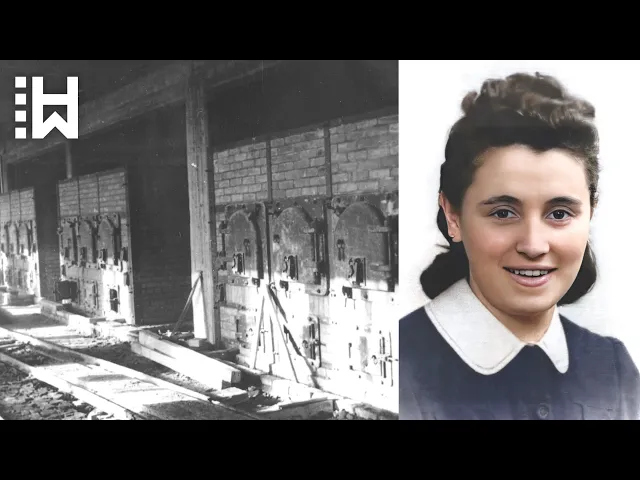
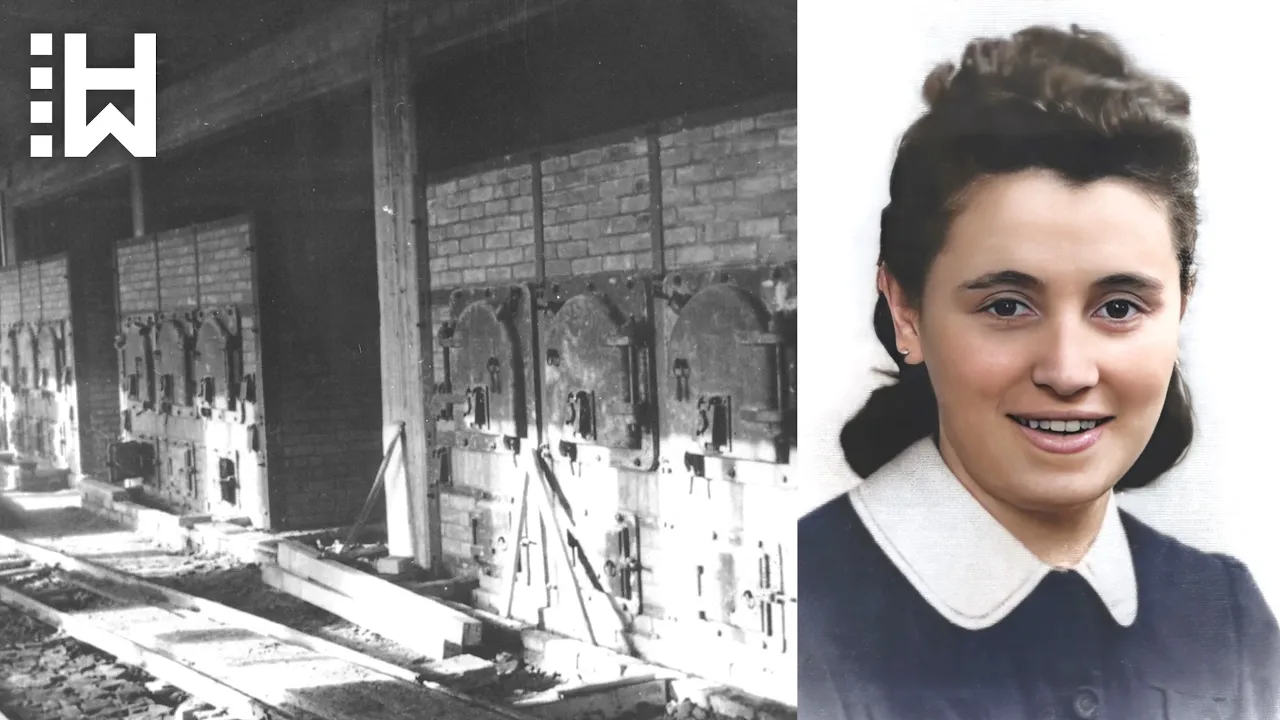
Trucks carried those too infirm to walk, and the rest marched. Before entering the gas chambers, people were ordered to disrobe. In crematorium I, they undressed either in the yard, surrounded by a wall, or in the antechamber.
Wooden barracks were erected for this purpose at bunkers 1 and 2. At crematoria II-V, there were special undressing rooms. The SS men kept the people fated to die unaware of what awaited them and made the new arrivals believe that they were being sent to the camp where work was waiting for them, but first they had to undergo disinfection and bathe.
Jews were told politely to hang their clothes on the hooks, take a shower, and were even promised that they would be provided with soup and tea or coffee. However, they were taken into the gas chambers, and after the doors were shut, SS men dropped Zyklon B pellets through vents in the roof or holes in the side of the chamber. The victims were dead within 20 minutes.
Johann Kremer, an SS doctor who oversaw the gassings, testified that the shouting and screaming of the victims could be heard through the opening, and it was clear that they fought for their lives. After the victims had been murdered, the Sonderkommando unit, made up of the camp’s prisoners, was tasked with the removal of the bodies and grouping them by size and fatty tissue to facilitate their disposal in the crematoria. Those who refused to do the terrible work of the Sonderkommando were often thrown alive into burning furnaces.
When jewelry or other valuables were found in the possession of one of the members of the Jewish Sonderkommando, the SS would pour gasoline over him and set him on fire. When the prisoners from the Sonderkommando were not working properly, they would be immediately executed. Of the 1,048 Jews who arrived with Mala Zimetbaum at Auschwitz, only 230 men and 101 women survived the selection.
Mala was sent to the Birkenau women's camp, and thanks to her extensive language skills, she was given a job as a ‘runner’ and translator, which came with certain privileges. She did not have to wear a striped uniform, shave her hair, and in the camp hierarchy, she was positioned above the kapos. Instead of living in the barracks with other inmates, she lived in the section of the camp where doctors and other ‘privileged’ inmates lived.
She could move relatively freely between different camp blocks, which gave her not only detailed knowledge of the extermination system but also the hierarchy within the camp. Although Mala had a relatively privileged position, camp life did not corrupt her character. Unlike some other privileged prisoners, Mala did all in her power to help other prisoners and saved many of their lives.
Many Auschwitz survivors testified that she was generous, risking her life for other inmates and standing proudly against the Germans. She supplied food, clothing, and medicine for those in need, encouraged desperate people to be resilient, disseminated information about world affairs, and organized encounters between family members who were separated and imprisoned in different blocks of the camp. One of her tasks was to assign prisoners who had been released from the infirmary to labor commandos.
She would arrange easier work for weak people so that they did not die from hard labor. Her insight into the infirmary also enabled her to find out about upcoming selections, so she could warn sick prisoners in advance to report as healthy. She also placed the dead inmates on selection lists to save the living ones.
She sneaked photographs that inmates' relatives had sent out of the files and to the inmates, as they were not allowed to have them in the camp. The Nazi leadership tried to stop rumors about the extermination process in the concentration camp by allowing prisoners to write to their relatives. Mala used this opportunity to warn their families in coded form about the murder of people who were deported.
Mala herself sent some postcards to Johka—her sister in Antwerp. She wrote in it that she was fine and all the family members were with Etuš. Etuš was Mala’s sister-in-law who had died in 1940.
Johka understood the message. In late 1943, Mala met Edward "Edek" Galiński, a Polish Catholic five years her junior. In the spring of 1940, Edward and his high school friends were arrested as part of the German action AB, directed against the Polish intelligentsia.
As a 17-year-old, he was sent to Auschwitz in the first transport of Polish prisoners on 14 June 1940 from Tarnów in Poland. They were given serial numbers 31 to 758. He worked in a locksmith's shop, the head of which was SS man Edward Lubusch, who behaved favorably towards prisoners and treated them with respect.
Mala and Edek quickly developed a thread of sympathy, and soon great affection, strictly forbidden in the camp. Taking advantage of the freedom to move around the complex, they tried to spend as much time as possible with each other. In early 1944, Edek started seriously thinking about escaping from Auschwitz.
Initially, Edek was supposed to escape from the camp with Wiesław Kielar, with whom he started planning. They decided that the best way was to leave the camp disguised as SS men. Consequently, they started looking for uniforms.
Edward Lubusch, an SS officer for whom Edek worked, came to the rescue, supplying uniforms and a pistol. When the plans became more and more specific, Edek began to insist that Mala also run away with them. Mala wanted to escape with proper documents so that she could inform the Allies of what was going on at Auschwitz and thus save lives.
Mala’s cousin, Giza Weisblum, and the three ‘runners’—Sela, Herta, and Leah—with whom she shared a room, were informed of the escape plan. They helped her obtain a map and civilian clothes. And a blank SS exit pass taken from the SS guard room.
Mala also stole deportee lists to inform the world of what was happening at Auschwitz. After long discussions, it was agreed that the lovers would run away first and Wiesław Kielar would join them later. They decided that Edek would pretend to be an SS man leading a prisoner out of the camp, which was a common sight and would not raise any suspicions, and Mala would take on Kielar's role as a prisoner.
Mala Zimetbaum and Edek Galiński managed to escape on 24 June 1944. To avoid being recognized as a woman, Mala wore a male prisoner's uniform over the stolen civilian clothes and carried a porcelain washbasin on her shoulders, under which she hid her face. Proceeding past the guards, they left the camp, changed their clothes, and moved in the direction of Slovakia.
Apparently, Mala hoped to find refuge with her uncle Chananya Hartman in Bardejov, Slovakia. However, she did not know that the entire family was deported in 1942. The escape was noticed during the evening roll call, and a telegram to track down the couple was sent the next morning by the camp's commandant, Josef Kramer.
Two weeks later, on 6 July 1944, they were caught in the Beskids mountains at the Slovakian border. Edek had hidden nearby as Mala went into a store to try to buy some bread with gold that she and Edek had stolen from the camp. Someone in the store, however, became suspicious and called the authorities, who arrived and arrested Mala.
Edek, watching from a distance as Mala was arrested, turned himself in to the German patrol since they had promised not to separate. Soon they were identified as Auschwitz-Birkenau prisoners and deported to the camp, immediately sent to block 11, a punishment barracks known as "the Bunker. " The camp Gestapo subjected Edek to torture to reveal who gave him the uniform and the gun.
He did not, however, reveal the secret. Bolesław Staroń, who was imprisoned in the same cell as Edek, recalled that every evening after the roll call, Edek sang an Italian song, giving Mala a sign that he was still alive. On 15 September 1944, the 26-year-old Mala and 20-year-old Edek were transferred to Birkenau.
They were taken out to be hanged in a public execution at the same time, in the men’s and women’s camps respectively. Edek jumped into the noose before the verdict was read, but the guards put him back on the platform. Edek then shouted something to the effect of, “Long Live Poland!
” One person told all the other prisoners to take their hats off out of respect to Edek, and they all did. Meanwhile, Auschwitz survivors Primo Levi, as well as Raya Kagan and others, after the war, reported that Mala had gotten hold of a razor blade and, at the foot of the gallows, cut the artery on one of her wrists. Then an SS guard tried to snatch the razor blade from her, but Mala slapped the guard’s face with her bloody hand.
Mala then shouted at the guard, “You all shall dearly pay for your deeds! ” Then she turned to the assembled prisoners trying to encourage them: “I was outside; the end of the war is nearing. Be strong and firm.
” Other guards immediately jumped on her, knocking her to the ground, and taped her mouth shut. Following the orders from Berlin, Maria Mandl, nicknamed “The Beast of Auschwitz,” ordered Mala to be burned alive in the crematorium. Mala was then put on a wheelbarrow and taken to the camp infirmary to stop the bleeding.
The exact circumstances of her death have never fully been clarified, as the surviving eyewitness accounts differ significantly. Some witnesses said that she died while on the handcart, while others reported that a guard took pity on her and shot her at the crematorium entrance. There is also a report that she had poison on her and took it before she could be burned alive, while the other report says she was thrown alive into the Auschwitz crematoria oven.
The prisoners forced to cremate the corpses had been informed that Mala was arriving, and they made special preparations. They prayed and cried as they burned her remains. However, Mala’s legacy remains alive.
Even today, 79 years after her death, this good and brave woman, who did everything in her power to help others and saved dozens of fellow prisoners from certain death, is not forgotten. Many survivors, including 39 Belgian inmates from the women’s camp, claimed after the war that Mala had saved their lives. One of them, Sarah Gutfrajnd, named her daughter, born in 1946, Mala.
Mala Meyer lives today in Tel Aviv. The survivors devoted a Holocaust research grant in her name in Yad Vashem - The World Holocaust Remembrance Center in Jerusalem. In 2017, Mala Zimetbaum was awarded the JRJ title - "Jew Rescuing Jew during the Holocaust period.
" This award is given by the "B'nai B'rith World Center - Jerusalem" and "The Committee to Recognize Jews Who Rescued Their Fellow Jews during the Holocaust Period. " Her nomination to the judging committee was submitted by Dr Abraham Huli, then the Vice President of B'nai B'rith International, representing Israel. Until their last day, those who knew Mala spoke about her with great respect and recognition, affirming that they owed their lives to her.
Some of their descendants are still named after Mala. On the Antwerp building where Mala lived, a memory placard with her relief is placed. Having no grave, a monument was erected for her in September 2023, in the Jewish cemetery in Brzesko, her native town in Poland.
Mala was a hero who dedicated her life to those who needed it most, and in the end, she died fighting for them until her very last breath. There were many tears shed for Mala Zimetbaum. Thanks for watching the World History Channel.
Be sure to like and subscribe and click the bell notification icon so you don't miss our next episodes. We thank you, and we'll see you next time on the channel.