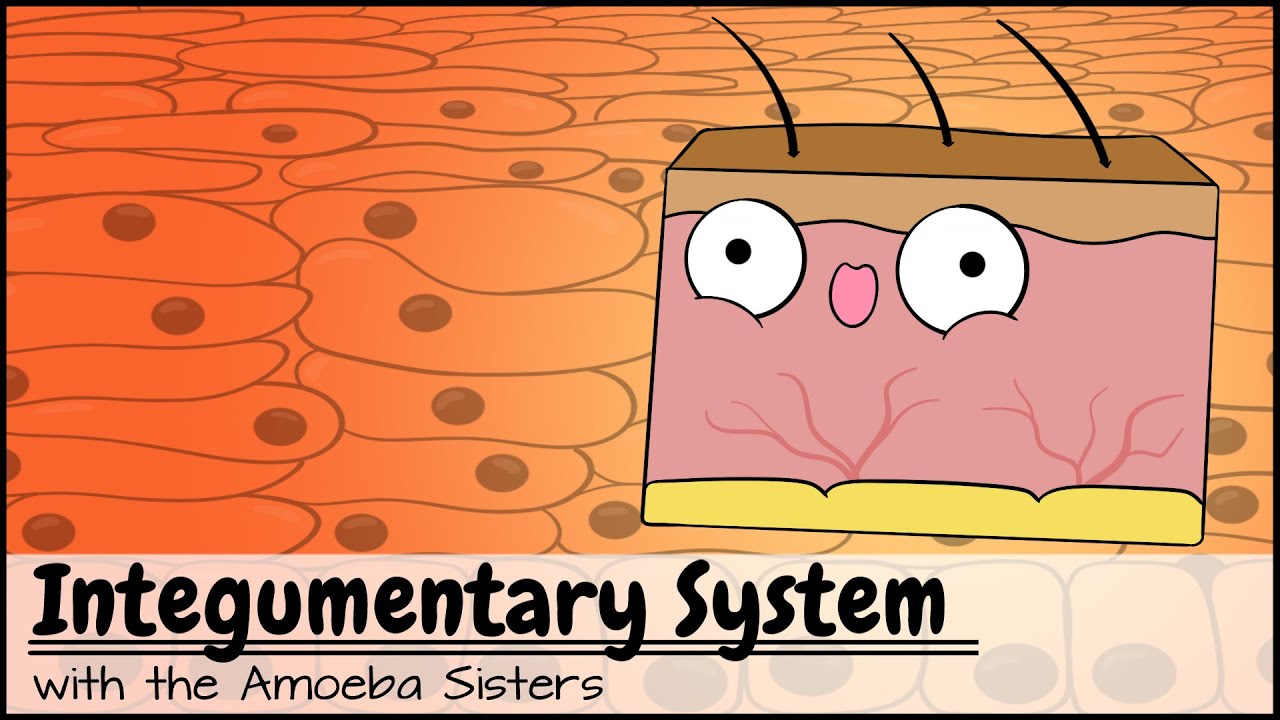
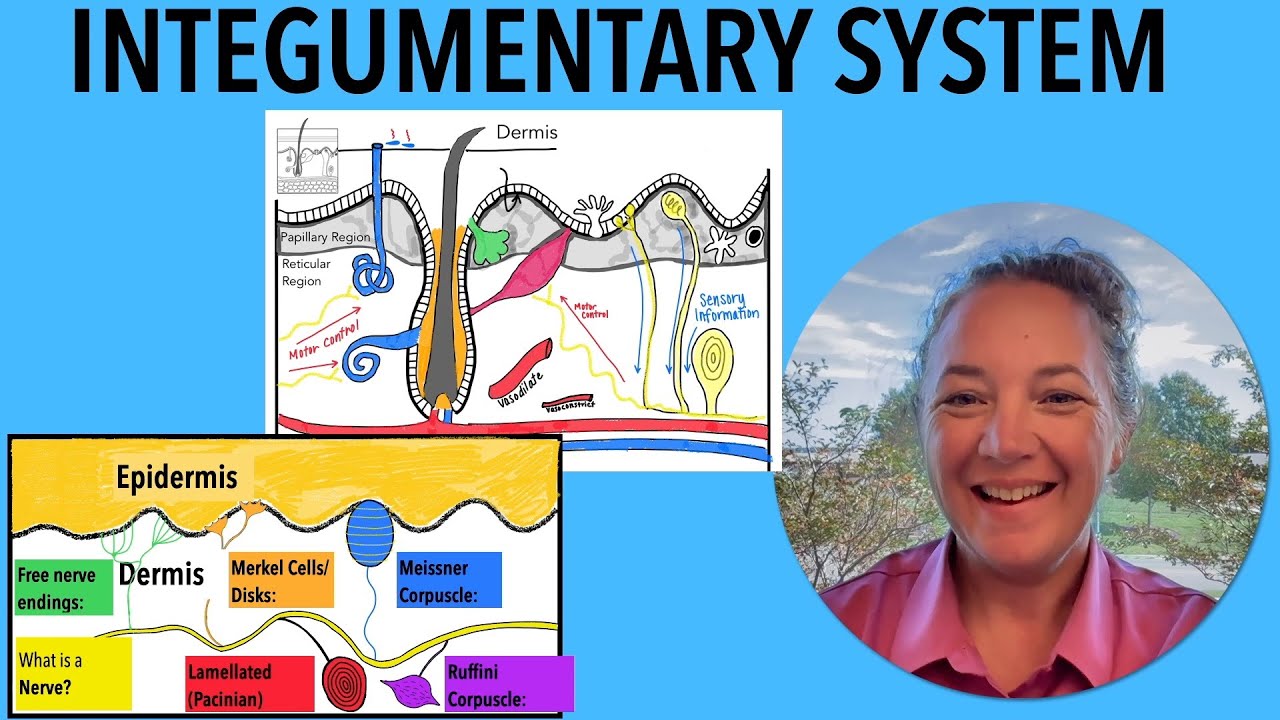
hi it's mr. Andersen and in this video I'm going to talk about the integumentary system which is skin but it's also hair and nails and what that does is offer us protection in other animals that would be made up of scales or in birds its feathers but it has not only protection as one of its functions and that's important it keeps bacteria out foreign objects outside our body it also allows us sensations so we have tactile receptors deep in the skin that allow us to sense touch and pain it also allows us to thermoregulate and
so not only goosebumps but we can vasodilate move blood near the surface and that carries heat away we could also have sweat glands that pumps sweat out and so that as it evaporates carries heat away and so it's important in thermo regulation and it's also important in allowing sunlight in and so we need sunlight to synthesize vitamin D if we don't get vitamin D then we can't bring phosphorus and calcium into the bones and so we develop a disease called rickets and so those four things are super important in the integumentary system but the whole
thing revolves around the largest organ in your body which is going to be the skin the top layer of skin is called the epidermis and if you get a tattoo we have to make sure that we're putting that ink underneath the epidermis if we didn't it would just simply be lost over time now the epidermis itself is made up of four individual stratum which are going to be layers of cells and if we start at the bottom we have the stratum basale that stratum basale is going to be kind of convoluted over time and so
if you look or over space and so if you look along the bottom it forms what are called the dermal papilla and the function of that as it holds the epidermis on the dermis which is below it another important role of the stratum basale is that it's where mitosis occurs and so we're creating new cells on the bottom and then those new cells are migrating up and eventually we have dead cells up on the top and so that's where those new cells are being created over time on top of that we have the stratum spinosum
and it gets its name from spiny appearance it has when you were to dye it with specific dyes what's the function of that well we need to dig down a little bit deeper and so for you to look at the cells down in that basal layer then in the spinosum lair up above it well there's a couple of things that are going on number one we have these melanocytes down at the bottom and so what's that giving us well it's giving giving us Melania Soames which are organelles which give off melanin and so that's going
to give us different colors in skin and so dark-colored skin is going to have more of these Melania zomes and more the melanin than light-colored skin and so that's that balance remember if your ancestors grew up around the equator it was important that more melanin because we could start to develop cancer and a decreased folic acid and so birth rates went way down but as you move to the north the reason I'm so light in color is that my ancestors needed to have low amounts of melanin so I could synthesize vitamin D so as we
keep moving your way up we eventually get to the granulosa stratum granulosa minutes and it's granular in appearance because everything's kind of getting compressed now how are nutrients getting up here since there's no capillaries up in this upper layer of the epidermis basically it's diffusion and so these cells are essentially dying as we move up next layer is not going to be found in all skin that's called the stratum lucidum and so in certain skin we call that thin skin you only have four layers on button thick skin you'll have this additional stratum lucidum so
what's the skin that's so thick that's going to be in our palms and also on the soles of our feet it offers us more protection and then we finally go up to the top we have stratum corneum and that's going to be these dead cells and eventually those leave us but they replace from cells right below it now that's a lot of stratum how do you remember it here's a quick mnemonic come let's get sunburned is a quick way that you could write those letters down if you're taking a test and then you could go
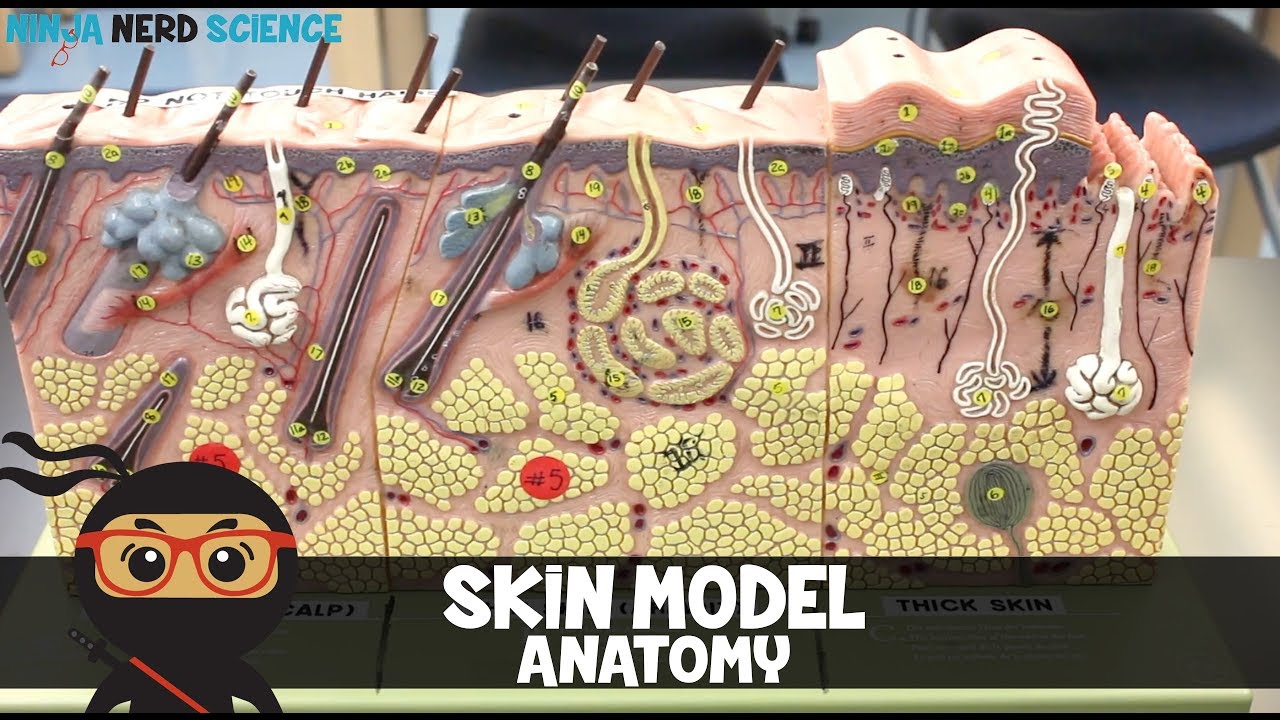
through all the different parts so the B stands for the basal spinosum granule Oh some loose it um and then finally the corneum up on the top now that's just the epidermis what's below that we have the dermis and the first thing that's going to jump out is the vascular tissue so we're going to have capillaries that reach into the dermis and so blood is making its way inside their nourishment is making its way into the dermis um what are some other things that jump out right away we're going to have big glands here so
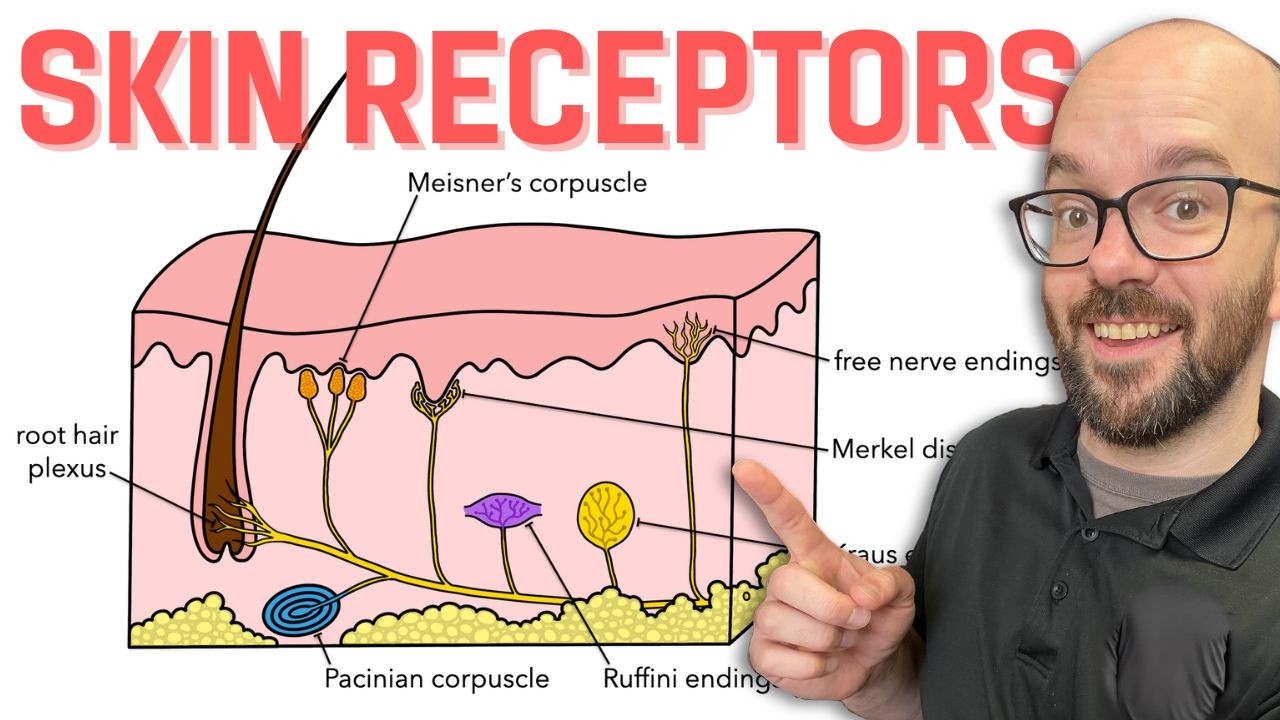
this would be a sweat gland this would be a sebaceous gland that's going to essentially release oil which is going to keep our hair waterproof and it's also going to keep our skin waterproof over time as we look deeper we find these receptors and there's lots of different receptors so this yellow right here would be nerves but we have all these receptors that are sensing our environment ones near the top are censoring light touch and the ones farther down are sensing deep touch we also have pain receptors in the skin at this point keeps us
from damaging our skin as we move farther down we have the hypodermis which is sometimes referred to as the subcutaneous and as we move down in here there's going to be a lot of connective tissue in here and so we're going to have these fat cells we're also going to have some stem cells that are creating other cells we're gonna have macrophages that are cruising around we're going to have lots of fibers like reticular strong fibers and then this elastic fiber so when you pull up your skin it just bounces back to where it was
below before and so that's the hypodermis and then we have these accessory structures the big ones are going to be hair and then nails and so if we look at a hair follicle right here way down at the bottom we start to have capillaries coming in so this is going to be vascular tissue down here on the papilla above that we have what's called the matrix that's going to be one layer of cells that constantly are making new cells the cells as they're pushed up are forming the hair and so the hair is basically made
of dead cells and there's tons of keratin in there keratin is what's our fingernails are made up of and it really makes that durable hair but as we move up here now the cells are dead and it's eventually going to move up past a sebaceous gland remember that's secreting oil which is delivered onto the skin and it's also delivered onto hair making it somewhat waterproof and then we could look at the nail so the nail is going to be made essentially in the same way we have a matrix down at the bottom and so this
pink right here would be the epidermis but then it dives down into the dermis and so thus the nail itself is being created by cells that are quickly dying they're filled with keratin then we have the eponym up on top of that that essentially makes the cuticle you could kind of see it right here and then we're going to have a lot of vascular tissue up here but not so much right down at the bottom so that's going to be the in nails where did they come from they were claws in a lot of organisms
and they allow us to kind of deal with tools and so if we were to go through the view can you remember the three different layers of skin remember at the top that's going to be the epidermis followed by the dermis and then the hypodermis do you remember the four layers of the epidermis so come let's get sunburned allows us to remember that at the bottom the B stands for basal the S stands for spinosum the G stands for granulosa m-- then we've got the lucidum remember that's only going to be found in the thick
skin and then on the top we have that stratum corneum which is going to be the upper layer of our skin and we've also got the hair and the nails but that's the integumentary system it's got fourfold importance and I hope that was helpful