it was what a sports darkest episodes a much bigger scandal with Russian athletes than we knew following the Sochi Winter Olympics of 2014 Russia was proved to have carried out a vast state-sponsored doping operation conspiracy to conceal positive tests widespread doping by Russian athletes at the Sochi Olympics I don't think anyone was expecting the gravity in terms of the findings in terms of the cheating the scandal didn't just expose an epidemic of foul play he called into question the credibility of a system that's supposed to guard against doping and protect honest athletes it still smells
of bias towards the interests of sports governing bodies to the detriment of the athletes doping is definitely bad for business and it's used as an illegitimate excuse to russia under the log or ignore that completely so is there a lack of will to catch the cheats doping isn't just a Russian thing it's a global problem in 2011 an anonymous survey asked more than 1,200 athletes whether they'd used performance-enhancing drugs the results which was kept quiet for six years was astonishing 44% admitted to doping but typically only one to two percent of samples test positive our
career our livelihood are our name is based on making sure that we stay clean and we compete fairly Callum Skinner is a retired track cyclist a gold and silver medalist at the 2016 Rio Olympics now he campaigns to keep doping out of sports what we have to do is to send a clear message that if you do dope it comes with negative consequences just like the Olympic motto athletes want to be faster higher stronger performance-enhancing drugs promise just that but all drugs come with health risks and crucially they tip the balance in competition the sports
governing bodies especially the International Olympic Committee or the IOC say they want to stop the cheats but antoine de val a leading sports lawyer believes they are part of the problem they have an incentive of being seen as doing a lot but they don't have an incentive to catch a lot of cheats because that would damage the image of their sport back in 1999 the IOC declared war on doping it created the world anti-doping agency or a wada well that would be very useful for the fight in the future against doping wada was set up
to be the anti-doping watchdog and to write the rulebook that would dictate best practice globally but wadis independence is questionable Rob Keeler has unparalleled insight as the former deputy director at wada he knows the pressures facing the agency as water became stronger there was resistance from the Olympic movement where there was a desire to have more control when you lose control you lose the ability to dictate the outcomes 50% of wadis funding comes from 190 governments and the other half comes from the IOC and wadis average annual budget of 27 million dollars is less than
2% of the IOC s revenue in an average year we need to understand that wada as an institution is weak is basically a naked legislature it produces rules that it has absolutely no power and capacity to enforce wada has around 120 employees only seven of them are tasked with conducting investigations into doping schemes worldwide so it's extremely dependent on goodwill with no power to enforce water relies on the National anti-doping agencies in sports federations to do drug testing but different countries have different means ability and yes political will to catch dopers and that's why the
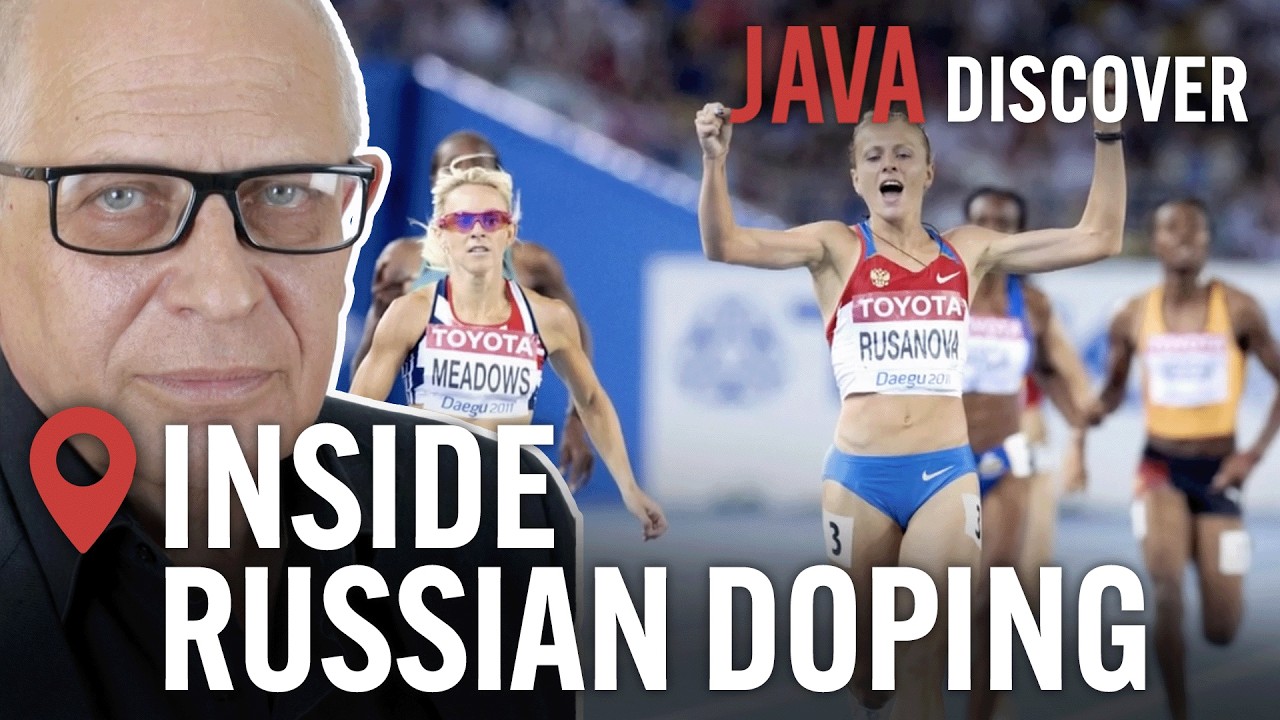
Russian could run a very neat front organization that was apparently in compliance with those rules while systematically bypassing them the 2014 Sochi Winter Olympics were a huge success for the Russian team two years later in just weeks before the opening ceremony at Rio 2016 something happened that no one had anticipated grigory were chenkov the head of Russia's anti-doping laboratory turned whistleblower his admissions captured in the oscar-winning Netflix documentary Icarus thrust Russia's actions into the public consciousness like never before I was hoping to facilitate one of the most elaborate doping boys in sports history wada had
been investigating allegations of Russian doping since 2014 but it wasn't until July 2016 that it published a report conducted by independent lawyer Richard McLaren the Moscow laboratory operated within a state directed failsafe system Russia tampered with urine samples of athletes in a thriller like cover-up operation Russia was found to have mouse holes to slip samples through in the middle of the night and switch urine samples they even mixed in salt and coffee to contaminate doped samples more than 1000 Russian athletes were accused of doping Russia was categorical in its denial you go to the nebula
nyan you know you can cook we his team of flesh conducting wada was determined that Russia should pay the full price the water executive committee made strong recommendations that the Russian Olympic Committee be banned from the Rio Olympic Games I recall being so proud of the organization I work for but the IOC rejected what is recommendations the basic and the difficult question we had to answer was can you hold any athlete responsible for the wrongdoing of the government of his or her country the IOC allowed individual athletes to appeal against the decision at the Court
of Arbitration for sport or Cass the result over two-thirds of the russian team were allowed to participate two years later the IOC cleared 169 Russian athletes to take part in the Winter Olympics but were those outcomes entirely due to concern about the rights of individual athletes the answer may lie in a complex web of politics and power in sports Russia is a powerhouse in sport and they provide a lot of money into sport they host a lot of events in the sport and there's this Russian politics in sports I'm very often omission Alexander Zhukov Russia's
Deputy Prime Minister doubled up as president of the Russian Olympic Committee Pavel calleb qov was deputy minister of sports and part of wada and then there's Vitaly Mutko he was sports minister during the Sochi scandal but he wasn't sacked for this embarrassing episode in fact he was promoted to Deputy Prime Minister but placing influential people in positions of power isn't just a Russian affair the IOC has two bodies that are predominantly dedicated to fighting doping wada and the Court of Arbitration for sport casts like wada Cass was also established by the IOC these two bodies
are meant to be independent but an intricate network of rules and people has raised questions well I think it is a very small community in terms of sport there's a lot of conflicts of interest where people are feeling different roles three senior IOC members Thomas Bach Craig Reedy and John Coates have held key positions at the Cass and Atwater often at the same time and the list doesn't end there should the president of wada also be an IOC member where there's a divergence of loyalties you don't see the president of the u.s. sitting in at
the same time in the sprinklin this is not the way to win this inner circle mentality means that the IOC maintains a tight grip on the bodies it had set up as independent IOC is an elitist Club of the highest kind all those executives of sports raise at least a suspicion then there might be something for you despite its 5.7 billion dollar revenue per Olympic cycle the IOC is registered as a nonprofit organization and benefits from Switzerland's lenient Association laws which means it has a lot of leeway and how it runs itself and raises the
question is anyone governing the governing bodies we have private associations that exist sizing government governance and they are proud of it but they claim it without the strings that traditional public authorities in demócrata countries at least are subjected to which are transparency accountability etc so can anyone hold the IOC to account I put some of the blame on on sponsors and broadcasters 73% of the IOC s revenue comes through TV rights they're the ones supporting and promoting the Olympic Games surely there should be an a responsibility from the broadcasters that are sponsoring from the sponsors
demand change the IOC insists there's no inherent conflict of interest in its relationship with wada and has stated its desire to make testing more independent from sports organizations and governments it claims that a 20 million dollar investment into anti-doping research and the protection of clean athletes is now bearing fruit but some athletes believe this should just be the start as soon as athletes start to lose confidence in the system they start to think Pocono win if it's not a level playing field people will always find ways of trying to cheat but what we need to
do is get better at catching them and I think one of the key ways that we can do that is if sports governance officials wake up to the responsibility to athletes the responsibility to protect fair and clean sport their responsibility to protect the welfare of the athletes and the responsibility for athletes to have faith in the anti-doping system if you want more information on doping in sports click the link opposite where you can find further economists coverage and also all the research data and studies that we used to make the film if you enjoyed what
you saw and I hope you did then click that subscribe button and also click that little bell next to it and you'll get a notification next time we publish a film thanks for watching you