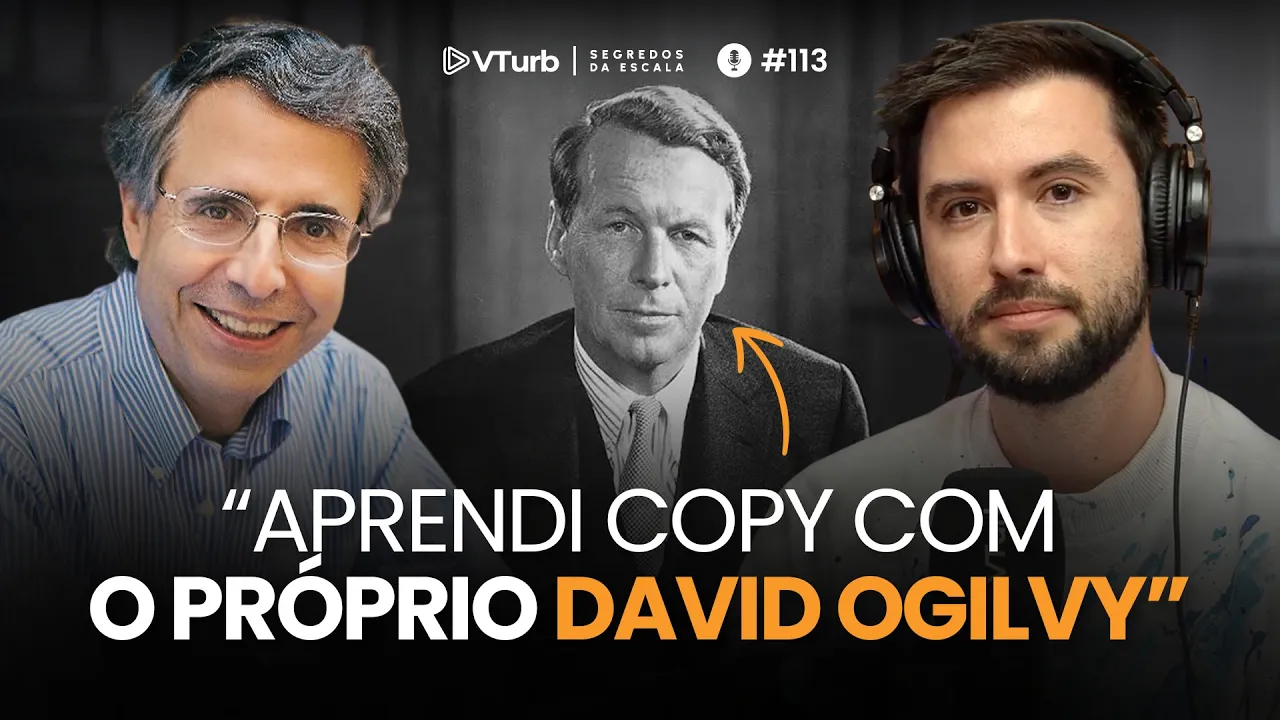
That I'm a direct response copywriter. I started out in regular advertising. Uh I was worked for David Oggovy's ad agency. If you look at it from an evolutionary point of view, people are interested or they're attracted to things that are change, right? They're different. Howard Gosage said, "People read what they're interested in and sometimes it's an advertisement. They just don't want to hear about the benefits of my product. There's a million products out there. Why do they want to hear about the benefits of my product?" People like that. They want to be entertained. We all
want to be copyright. >> I assume that in your copy process, the very first thing that you do is research, right? >> Well, the very first thing I do is try to come up with some ideas. Sometimes knowing too much can bog you down a Little bit, right? >> That's that's really interesting. I I never thought of it that way. quickest way to be a better copywriter is to learn screenwriting >> because that's how you learn how to show and not tell. So much of what we do today is screenwriting. We're writing for the screen.
We're writing for the SLS. We're doing videos. >> So, it's like double the efficiency of the copy. >> I think it's multiplied. Do you think that in your sales message you have like other places that you can add things to create like another level of exponential or or >> Oh yeah, always. for the longest. David, thank you so much for being here. It's really amazing to be talking to you, interviewing you in my podcast because you were one of the first Copyriters that I saw that were like famous in the direct response space. I saw
Brian Curts talking about you, John Ko talking about you, and I I learned cop this guy. So, I just wanted to say thank you for being here. It's it's really an honor to have you here. And I'm I'm actually trying to bring Gary Benga here, too. But it's pretty hard to bring him. So yeah, maybe I'll do it. But for the few people that don't know you like I do, could you please just Tell you uh tell us a little bit about yourself, what you have done in the past and what you're doing right now
>> so these people can, you know, get get to know you a little bit better. >> I was hoping you were going to tell me about me so I could your good stuff. Um, you know, like you said, I'm a direct response copywriter. I started out in regular advertising. Uh, I was worked for David Oggovy's ad agency. >> That's amazing. >> Back in the days when when he Yeah. when he was still there on Madison Avenue >> and uh, you know, you really learn about how to dramatize things, right? How to get people excited, how
to use humor, how to use drama, how to use slice of life, um, how to be witty in copy, right? It was very >> um, it was very first class advertising. Um and David Oggoy was also a great believer in direct response. He called direct mail his you know his first love And his secret weapon. >> Yeah. >> So at a very young age I was kind of brought up in that you know he told people to read Hopkins and read and read capable. >> Um so I went from advertising world I worked for some
ad agencies. Then I discovered J. Abraham and I discovered the world of direct response and started writing for some of the big direct response mailers like Boardroom and Rodale and you know the big supplement companies and publishers. >> Yeah. >> Um and uh now I still do some writing. I do mainly mainly coaching. I work with writers. I work with companies to help them get the most out of their writers. I work a lot with owners, company owners, uh, and marketing people that want to write their own copy. >> Yeah. People that need improvement copy,
that that kind of stuff. >> Yeah. Well, I always think that people that run companies are the best people to write their own copy because they have the passion and they have the knowledge and when it comes from them, it's so authoritative >> and it's relatively easy to learn how to write, >> you know, if you just have the right mindsets. Yeah, >> it's not, you know, I always like to say it's not a matter of memorizing a lot of Things. It's a matter of just thinking about writing differently. >> Why why do you think
that these things that you learn at OG for example, how to do drama, how to add humor and also this last thing that you say that a founder has like this passion. Why do you think that these elements are important when it comes to writing copy? Why it can't just be like formulaic where you just put like some benefits, some proof over there and just in, you know, to try to h Avoid the objections and handle the objections so you can get to the sale. >> Well, I think the problem is that people aren't interested
in that, right? Howard Gosage said, "People read what they're interested in, and sometimes it's an advertisement, right? They just don't want to hear about the benefits of my product. There's a million products out there. Why do they want to hear about the benefits of my product, right? >> Why do they want to hear about my Overcoming their objections? Um, I think you have to look at what people are interested in, right? They're interested in what's on Netflix. They're interested in movies and books and Harry Potter and things that have story and drama. Uh, they're they're
interested in people who have wit and are funny. Not funny funny, but, you know, they're interesting and they're play. You know, the writing is playful. >> Yes. >> Um, people like that. They they they want to be entertained. We all want to be enter I mean I'm not saying people like oh those people they just want entertainment. Like I want entertainment. >> Yeah. Me too. >> I I don't listen to boring things when when I have free time, right? I I listen I watch Netflix and I I watch you know The Sopranos or Breaking Bad
or you know the movies interesting movies. Do you Think there is some sort of of balance between like keeping keeping it in interesting and also keeping it like focus it on the sale or do you think that >> Yeah, sure. Your >> Sure. You can't just be entertaining, right? >> Um so you've you've got to be able to tie I think ultimately there is where it comes into tying into what people really want and really desire. And sometimes It's not easy to know that. We think we know that. Like, oh, the people just want a
lot of money, right? Well, maybe they don't. Maybe they're Why do they want money? Money is just piles of green stuff. Money's just numbers, right, in the computer, in a bank account. You know, what they really want is to prove themselves. They really want to be seen as good providers. They want obviously they want the things money can buy, but they also want the security and the, you Know, the being looked up to and being loved. And you know I that's why sometimes you have to just dig a little deeper than oh people want more
money or people want you know people want to cure whatever arthritis or whatever they have wrong with them. You know, people I mean, they do want their pain to go away, but they want their pain to go away because not just because of the pain, but also because they're embarrassed by not being Able to do things and it reminds them of their own mortality and because they, you know, they they're worried about being uh incapacitated or, you know, lose their independence, >> right? They're kind of being put in a nursing home kind of thing. David,
this is this is like more of a psychological uh thing that you're you're saying right now. It makes total sense because before we actually write the copy, we need to know all the all this uh all this kind Of stuffs. What do they want? Why why do they want it? So we can express that in our sales message. So I assume that in your copy process, the very first thing that you do is re research, right? Well, the very first thing I do is try to come up with some ideas because I kind of like
coming up with ideas before anything else just to see because sometimes before you know too much, you can come up with better ideas. >> And then when you find things out, you Can kind of move the ideas a little bit or tweak them or whatever. But sometimes knowing too much can bog you down a little bit. Right. >> That's that's really interesting. I I never thought of it that way. But but what kind of ideas? I mean like headlines or off >> headlines or >> yeah ways of framing the product, ways of positioning the product,
ways of talking about the product. >> I think ultimately we're always just talking about ways of talking about things, right? How do you >> how do you brooach something to someone? How do you get someone interested in something? Right? >> Yes. Um, if I want to get you interested in um, let's say there's something that can save you a new software, right? That can or your software, right? Like, you know, That that helps people um, get their VSSLs better, right? How do I get someone interested in that, right? I have to think about, you know,
it's not just, oh, it works better when you do it like this, right? I have to think about well what's their pain right not getting enough views not getting enough customers doing a VSSL and seeing it not get as much engagement as they would like it to get you know the frustration of that and so I might start out by Talking to them and saying look you know does that frustrate you when you get a do a VSSL do you ever wonder why it's not getting that much engagement and I might talk to them first
about some of the things that are preventing them from getting that engagement that they want to get and then say, "Hey, did you know there's a product that can help with those things?" >> Yes. So, so ju just so I so I I I can see that I understand it clearly. So, uh You actually try to to come up with some ideas just by looking at the product. So, you think, hey, this product I could create a headline like this. I could for example talk talk about this product in this specific way which will make
it more interesting >> and after that you you go also talk to the actual customers the actual prospects. So you get their feedback, their feedback on what is going on, if the ideas are are okay on what do they Think about the problem, how how do they see what do they they believe about the problem. So that's what you do, right? >> Yeah. Yeah. Um I think the most important thing is to get to a deeper level, >> right? I think that the best copywriters have a deeper un like if you ever talked to Dan
Kennedy or John Carlton, right? They've got sort of I wouldn't call it a jaded attitude about people, but they kind of have the same attitude about People that policemen do that have seen things, right? You know what I mean? Like policemen have seen how people really are. They see things we don't see. And people like John Carlton and Dan Kennedy are kind of like that, right? They see how people really are. And I think you want to get to what people feel below the level of the surface that most people find out about, right? Like
say, "Oh, why do you want this? Oh, I want it Because blah blah blah blah blah." Oh, okay. They want it because blah blah blah blah blah. But you, you know, it's not enough. You got to dig beneath that. Well, why do you want a blah blah blah blah blah? Right. >> Yes. >> What's behind that? Right. >> What do you think is the best way to to find these like emotional reasons that people want something? Because uh sometimes the truth is that they are Embarrassed by it most of the times. So they will not
tell you face to face. Uh do you have some sort of resource that you go to find these very like deep elements? >> Well, there's a lot of ways, right? One is um you know one is just to eavesdrop on conversations on you know forums on Reddit on Quora you know in groups like what do people talk about uh Amazon reviews? People can be very frank on these things, right? Another research technique is to anonymize things, right? Make it anonymous so people can respond anonymously. >> They don't, you know, there's no way of knowing who
they are that's saying this embarrassing thing about themselves, right? >> Yes. >> So that's another way to do it. And another way is just to probe people you Know like a good psychiatrist or a good psychologist you know and just you know just why why do you what's what's behind that right >> um people will tell you things if you talk and listen empathetically >> to them >> but it takes time sometimes it means like taking them out for a drink you know what I mean can't just be like a 15inute phone interview >> sometimes
you got like spend a day with People >> the advantage that I have here at Verb is that I was actually my own uh customer. I I was actually an advertiser for seven years. So that's like a a really good advantage for me. But when I was a direct response copyriter when I was like writing almost every day the the my favorite research tool was actually just go to Amazon and then search books that my prospect wrote about the problem. And it's crazy that That that they actually do it. >> There's a book called Face
It: What Women Really Feel has their looks changed. That's on Amazon. And it's amazing because it's actually a woman that got older and she wanted to become young again. And she was just telling how how it feels to to become uh old and see your skin sagging and all that kind of. H she talked both about like the actual problems and the emotional problems too. So so that's a really good Tip that I would like to give the audience since research. >> Yeah. I mean today >> I was just going to say today it's so
amazing. You can Google what are the things the people with arthritis wish other people knew that they don't. Right. >> Yeah. >> What do people with diabetes wish other people knew about diabet? What do people who are overweight wish other people Knew about being overweight? Yeah, I wish they knew it wasn't my fault. I wish I knew they knew it's not that easy. I wish they knew how embarrassing it is to be overweight and people always feel people are judging you, right? Those are the kinds of things you want to, you know, you want to
get to. >> Yes. Yes. Uh after you have these ideas, David, let's say that you you can actually create like a perfect research that tells you what do they want, why do They want it, the real deep emotional reasons, what have they tried in the past. You have all all these infos that you know. What is the next step that you take when you're going to create like a sales message? Well, I think then you start I mean I like to just talk to people, right? Something I learned from Gary Halbert. Gary Halbert would spend
threearters of the time working on a project talking to people about whatever he was working on, Right? Go out on his boat and he'd talk to people. He'd go to bars and talk to people. And because when you talk to people, you can see whether your presumptions, your assumptions, your hypotheses are true or not, right? Well, I think this is going to be interesting to people. So then you start talking to people about it and you see either their eyes glaze over, they're not interested, or you see, oh, they are interested, they're leaning in, they're,
you know, They want to know more. Um, and you know, you can do that with friends, you can do that with people that you meet casually, you can try to sell them on the product, you can try to sell them on here, you know, like, hey, I'm working on this interesting thing, right? It's the software that enables you to, you know, um, >> if you, it's a platform and you run your VSSL on it and you, you know, you do that. And if people say, "Oh, yeah, I've Heard about a million of those things." Well,
that's a pretty valuable thing to find out. Now, we have to differentiate you from all those other ones they've heard of. >> Yeah. >> Or if they say, "Oh, that's just like um putting it. What's that platform that you can put it on that hosts?" like YouTube, Vimeo, Wistia. >> Yeah, like a Vimeo or or the the one that does a lot of metrics. >> I think it's maybe with the lytics or >> Yeah. Yeah. One of those things where it hosts it, you get Oh, you know, so Oh, I have to be careful that
people will confuse it >> with that. >> Yeah, of course. >> You know, um >> but but this is still part of research, right? >> This is just part of Well, it's part of research. It's part of writing actually. >> Okay. You're kind of writing in your head except you're talking it like what's the difference, >> right? It's words. >> Yeah. Exactly. >> Then you do the word then you go home, you write the words. >> Yeah. >> The words that worked, >> right? >> Or at least >> but but but that's something uh that
That you actually do when you're like in every project that that you do, you first research, then you go talk to people just like Gary Hbert told you. Then you get all this information in your head and then you start to create your ex actual sales pitch in your head. So then you you do just like to make this and type it all out >> from one. >> I don't know that I create the sales letter in my head is I've got I know That it works to talk about it in this way. >> Got
it? >> Right. I've got to kind of frame it in this way. You know how like you talk to people, right? If you talk to your wife, you talk to partner, you talk to whoever you talk to, you know, like, okay, if I'm going to talk to this person, I got to kind of frame it like this, right? If I talk to this person, I frame it a little differently, right? Yes. >> So, it's the same thing. It's like you learn how to frame it. You learn, okay, I don't want to I shouldn't say what
it is too quickly or I should say it's like this, right? This is like having, you know, a little guy with a pencil like looking at everything and writing down the statistics and then testing as you go along, right? It's kind of like a test as you go. Maybe that's a good analogy, right? >> Yes. >> Um, but you know, you try it out in talking to people and you see they understand that. I don't understand what that means. What do you mean? Is there a little guy in the computer? I say, "Oh, okay. I
guess that's confusing." >> Got it. Um, but David, do do you do do you like do when you're thinking about your sales message, you think like you have like you try to build the whole sales letter in your head like this is How I'm going to get this is how I'm going to >> No, I just I've got the pitch. >> You know what I mean by pitch? >> You mean the offer? >> Yeah. kind of like if you had >> like the elevator pitch >> to sell something. Yeah. What would you say? Like that's
what I want to get. >> Okay. >> I want to get how do I get their attention? How do I tell them about it? >> How do I make them want it? >> Okay. So, and then from this speech, which could be maybe, I don't know, three sentences or something, it includes all the main ideas that you're going to use to sell people. And then all you do later, >> not necessarily. I the ideas spin themselves out. But if I can't sell it to you in person in five minutes or 10 minutes, right? How can
I write about how can I sell it by writing about it, Right? The only way people can do that is they use copywriting tricks and little you know formulas and templates and you know it sounds like that sort of thing. But if you can't sell it, if you don't have the understanding and the passion, and a lot of it is just understanding, right? >> I mean, I couldn't sell your product until I really understood much better what it does, right? >> Um, >> and when you've got that, and so many times I work with people
and they're trying to sell something that lowers your blood pressure and they have no they they have a vague idea of how blood pressure works, but they really don't know. And they don't know how blood pressure drugs work and they don't know the side effect of blood pressure drugs, right? And they don't know exactly how the supplement they're trying to sell Works. >> Got it. >> The copy sounds vague and it sounds like someone wrote it just from, you know, copyrightiting brief. >> Yeah. Yeah. Yeah. Of course. Fore assistance can David, let me ask you
something. Do you know I don't know if you're going to know it. It's a new book and it's by a Brazilian. The name of the book is The 16 World's Sales Letter. It's by Evaldo Al. >> I know Evaldo. Sure. >> Have you heard of it? Okay, cool. >> I' I've heard of it. Yeah, sure. I've read it. I know Avaldo actually. Avaldo studied with me for a little while. >> Ah, that's awesome. >> Yeah, I love I love Avaldo. He's a great guy. What a worker. >> Yeah, I think he's the best of us
when it comes to copyrightiting. >> Amazing writer and he works so hard. >> Yeah. Awesome. I'm I'm trying to get him on the podcast, but he he really doesn't want to do it. And Yeah. But but I'm trying. I'm giving my best. >> He's too busy making money, you know. >> Yeah. Exactly. So, in his book, the 16 world sales letter, he talks about something that he calls the one belief. It's like a phrase >> and then this phrase It's it's like a template that goes like this. This new opportunity is the key to achieving
this desire and it is only possible through this unique mechanism. This is like the one belief template. And then he says that the first thing that that he does when he's going to create a sales message is to think about this phrase this one belief because he wants people to believe in this because if they believe they are ready to be sold the the product which contains the Unique mechanism. So when you said I I have the pitch I think about the pitch when I'm writing I really think about this this like this one belief.
Hey, you need to do this. You need to, for example, uh make your metabolism go go go faster to lose weight. And the only the only way to do this is through this unique mechanism like uh green coffee or something, I don't know. Uh so when I'm doing my research, I'm I'm always trying to find this one belief that that my Prospect will actually believe. So it needs to be like a believable one belief. >> Yeah. And do do you think that this thing is the same thing as the pitch that you're talking about or
do you think that these are different things? >> Yeah. No, I think it's all the same thing in a way, right? It's like >> what what is that person, you know, Avaldo looks at it through belief, which is great. That's a great lens to look at It through. What does this person have to believe? I sort of look at it as what do I have to say to this person that's going to get them interested, get their attention, keep them interested, and get them to want the product, right? And when I can talk to them
about about it in a way that does that without them rolling their eyes, without them laughing, without them saying, "Oh, don't be a copywriter trying to sell me things." Right? But they're they're Sincere. They sincerely want it, right? like, "Oh, can you get me that?" I mean, that's always the best thing, right? It's what Gary Halbert always used to say. I don't want them to say, "Oh, that's great writing. That's great, you know, that's a great pitch." I want them to say, "Can you get me that? Can you do you have access to that?" >>
Yeah, that that that's awesome. Of course. Do you do you have some sort of way to organize this speech that that You're creating in your head? Like for example, >> you're s you're such an engineer and I'm such a non-engineer. road like you have a five-step process that you >> No, I just go talk to people. >> I go talk to people and when I can talk to people and convince them to want what I'm selling, I go home and write the you know what I mean? >> Got it. Got it. >> A lot of
it's over the phone, but it's You know that that's kind of the thing, right? When I've got that in my head, you know, then I go write it and and it's easy to write when you can do that >> because it's just like talking to someone for an hour. But go ahead. I'm sorry. I interrupted you about doing the >> No, David, please. Your job here is to interrupt me. Interrupt and give me content. That's your job. >> Okay. >> Yeah, but you're completely right. I'm I'm I really like systems and do you know Stefan
Georgie? >> You probably Yeah. So, he has that copyrightiting method, the RNBC, >> and I really like that because it's very step by step. So, to me that I'm not like a very good copyriter. It's easy to follow. It gets results. So that that's why I do it. >> But I think that the highest level in copy is to actually do that that you actually saying is to to to go talk to People, learn how they think, how you should frame your message, try to sell them after you have the formula. You just multiply it
to media, right? >> And then that's it. >> Yeah. >> Yes. I mean, it's a great formula. It's a great skeleton to write a letter around, right? But how do you put the flesh on that skeleton? >> Right. I I think too many people just sort of use the skeleton, use the Framework and don't have a way of really don't know really how to put the most powerful copy on top of that. >> Yeah. >> So, it tends to sound formulaic. It tends to sound like the sort of thing you read all the time. It
doesn't have that power behind it. >> Yeah. Of course. Yeah. One thing that I recommend people when they are just starting out writing copy h I teach that that there are like two Things that you need to know when you're going to create some sort of marketing message. The first one is the psychology which is the ideas that are going to convert someone. >> And the second thing is the communication which is how to present these ideas in a way that will look valuable so they will get to see it in a way that is
not boring which is like the actual communication the actual copy. >> Yeah. Yeah. >> So what what I recommend is that people really do their research and find the psychology like they need to know what the prospect has heard before, what do they want and all that kind of of stuff. And after they have this psychology, a really good psychology, then they don't need to actually write the copy. They can just grab copy from your swipe file because it's already good copy. And then you can just h use this to to create like your your
to add your psychology to It. So you can create like some sort of of a good sales letter without like being a master of writing. Do you think that's a good idea, David, or do you think that that's like some some bad thing, some lazy copy stuff? I don't know. >> A little bit. I'm not sure I understand exactly what you mean. I mean you you say swipe it word for word or swipe kind of the general format of it and the general idea. >> The general format. Yeah. Not the idea. The idea we will
we will actually do our research and get it. >> Yeah. Oh okay. >> So for example there >> there was a a a advertorial written a long time ago and the headline was Atlanta housewife investigated and almost arrested for losing 63 pounds. That that was a really good advertisement. I really like it. >> Do you remember it? >> I it it sounds from It sounds like a Gary Halbert headline, but I'm sure it's more modern than that, but >> Yeah. Yeah. >> No, I haven't heard of that before. It's a great headline. >> Yeah, it's
really cool. And then I got this idea and then I used this to create a advertorial um on the internet >> like some years ago. And so so that that's what I'm talking about like Getting combining these old ideas. Yeah. >> to use today in newer formats. I think that's a very good thing that people can do to get results. >> No, I agree. Especially if you can really see what's behind it, like what's behind that, right? This idea that Atlanta housewife almost arrested for losing 63 pounds, right? >> Yes. >> It's a very subtle
way of saying that someone lost 63 pounds without saying, "Oh, look, this person lost 63 pounds." Right? kind of hiding it a little behind. She's almost arrested. So now we've got someone's interest. >> Yes. >> I want to know why she almost got arrested and I also kind of know want to know how she lost 63 pounds and why did she get arrested doing it. >> Yeah. The way I see it is that you you have like two reasons to read it. The first one is why did she lost weight and The second okay why
did she got arrested almost arrested. If you just go to some some like benefit copy, how to lose weight, you only have one reason to eat to read. So it's like double the the efficiency of the copy. Let's say I don't know if you add like this say this in in congruent sales elements. >> Yes. I think it's not just double. I think it's multiplied, >> right? Because when you've got those two things together, it becomes something New and different. >> Yeah. You know, like they don't just add, they they kind of multiply together to
make like an explosion. >> If that makes you know, like a nuclear explosion when you put the >> plutonium together and it, you know. >> Yeah. No, makes completely sense. Yeah. If you add like a third dimension to it, the results can be really exponential. Do you think that >> do you think that in your sales message You have like other places that you can add things to create like another level of exponential or or >> Oh yeah, always that's I think that's all we do to some extent >> is how do we make this
not be ordinary? How do we make this extraordinary? How do we make this interesting? Right? Um, you know, every sentence can be more interesting, right? Sometimes sentences are so predictable, right? This happened and this happened and this happened and This happened and this and this and you know how do you make it you ever I don't know if you know who Dave Barry is. >> David Barry >> Barry Derry is a like a humorist. >> No, I only know Kevin Hart. H well e even yeah yeah even Kevin Hart or any comedian right I think
I mean standup comedy is a great thing to study if you're a copywriter because they will say things right and they will say you know blah blah blah blah blah blah blah And then the third thing makes it explode right so how do you do that in your copy how do you say things where the the the person reading it okay the next thing and they expect it to be something and then But you totally flip >> that expectation, right? And so they get a little hit of dopamine. They get a little bit of excitement
like, "Oh, this is fun. This is interesting." Right? Just like you do with a comedian, right? You go along with Kevin Hart for the ride because you don't know what he's going to say next. You think, you know, and then he pulls the rug out from under you. >> Yeah. Do do you do you have some resource that people can learn how how to actually do this kind of like high level writing? I believe that my my writing is very boring like I just go straight out of it. Just say what what I'm going to
say. I try to make it Interesting but it's definitely definitely not like a comedian uh level. So yeah. Do do you have some resource that people can can see and can read or study to to to learn how or at least to begin their learning journey to to to do this to write like this? I think you want to study writing that interests you, right? Study, you know, study any kind of writing that interests you, right? Um study what what why is Harry Potter interesting, right? Why are Classic novels interesting? Why is the opening of
I don't know if you know the book um uh Tale of Two Cities by Dickens. >> No, never. >> Oh, it's got a very famous opening. Um it was the best of times. It was the worst of times. It was a time of peace. It was a time of violence. It was a time of plenty. It was a time of want. You know, it was a time of beauty. It was a time of ugliness. And that opening is so Hypnotic. And what he does is if you study it, you see he uses contrast, right? You
know, it was the best of times, it was the worst of times. Oh, that's it was the time of beauty. It was a time of ugliness. And he does it and it just hypnotizes you. Um, but those sorts of things people are interested in, if you look at it from an evolutionary point of view, people are interested in things or they're attracted to things that are Change, right? They're different because when we were on the savannah in Africa or wherever it was and there were lions and tigers and saber-tooth tigers, if something was different, it
might be because there was a tiger there and he was going to kill us. >> Yeah. >> Or might be because the other tribe was planning an attack, right? Or it might be someone was sneaking up behind me to kill me, right? So, we're very attuned To things that are different. So what's interesting to people is things that are different. Harry Potter is a different world, right? Um there whenever there's change, right? The direct response is dead. This is what's happening now. Oh, I better read this, right? Yes. >> Internet is dead. This is the
internet 3.0. Um this is the new thing, right? Um David, >> yes. >> Just just a question about this. From from what I from what I understood, you need to study writing that interests you because this writing you actually know why it it interests you and then you'll be able to write stuff that are going that is going to interest other people too. For example, Harry Potter that that kind of stuff, right? But when someone is reading the copy, each person will think that something is interesting because they just like some Some certain type of
writing. So do you think that a copyriter has to have like his own his own unique style that he writes that is like some like interesting for most kinds of people? >> I don't Do you think that they should like adapt and have like a a different style for each niche that he's going to to write to? >> Don't know if you understood the question. >> I think most copywriters have a style That they're comfortable with. You know, like Dan Kennedy is kind of a grouchy, you know, stern parent, right? Um and at the same
time makes you feel good about being an entrepreneur like, hey, you're nobody understands us, right? where like that and he makes the writing fun, right? He always doing something like wild west conference. We're going to shoot up profits and you know lasso you know sales or whatever it is, right? Or you know Like he's always kind of doing that making it fun. Um, you know, John Carlton's got that, you know, kind of ballsy, uh, tough guy kind of copy that he does for golf and for, you know, uh, self-defense. >> Yeah. >> Gary Benzang's got
very likable copy, right? It's very gentle. It's very, you like the person, right? Um, and Gary Halbert has very likable simple, right? He just sounds like a guy you want to have a beer with >> because you know it's and he used to talk when I first talked to Gary he sounded just like his copy. It was very you know it was interesting. >> So I think you want to find what works for you. >> You know I don't think you have to be different for every niche. I mean you know I think you know
like I'm a little funny in my copy. I'm pretty Clever you know in terms of plays on words and things. So, I use that a lot. Um, other people, Dan Kennedy, you know, is more pushes your buttons, you know. >> Yeah. >> Makes you feel guilty. Makes you want something. Makes you feel like if you don't buy this thing, you're not going to be successful. Um, gets you a little angry at the forces that are lined up against you. It's very emotional. Yeah. >> Uh, he's very interesting in his own way. He brings in current
events. Um, >> can we >> go ahead c can we say then that the the copy that you write it's actually is ultimately an expression of your own personality? Not necessarily. Because I think John Colton said to me once, he said, you know, Dave, you don't have to write in Your own voice. You don't have to sound like you sound like. I mean, Dan Kennedy, he is a little bit gruff, but he he's his voice in his copy is almost an exaggerated version of that, right? Almost a cartoon kind of, you know, same thing with
other people. They're almost kind of cartoon versions of themselves till you get something like uh remember the rich jerk? You familiar with that? >> Yeah. It was like a a content creator, Right? >> Yeah. He was like a He had a course on how to get rich. >> Okay. I got >> Instead of being like Yeah. Instead of being like, "Oh, I know you're I'm just like you. I was poor once and now I'm a humble guy that wants to show you." He was like, "Look, you know, I'm rich. You're not. I can help you
get rich. You know, maybe you think I'm being a jerk. Too bad. You know, >> I'll tell you what." you know, and he was so obnoxious that it became very interesting and it was a very interesting persona. But I don't know. I mean, I learned to be interesting in writing largely by having Jim Rutz kind of slap me around and say, "Stop it. Stop being so boring." You know what I mean? That's kind of what people need. They just need like, "Stop it. Just, you know, try it again." You're right. Um, that's how John Carlton
talks about the First time he wrote a copy for Gary Halbert. Gary Halbert threw it up, rolled it into a ball, and threw it away like 15 times, >> right? Said, "No, that's not it. Stop. Be more empathetic, you know, be more interesting, whatever." >> And it's the same sort of thing. You just kind of need someone to say, >> "No, not like that. You're putting me to sleep, right? Try again." And then you find it in yourself because we're all Interesting, right? We all have that spot, but we're so used to writing boring copy
for school and for, you know, all our lives. We don't know how to do that. >> Yeah, of course. >> But we do know, you know, because we're interesting in person, right? Like you're an interesting guy to talk to. >> Thank you. >> So, you just have to kind of get in touch with that in your copy. >> Yeah. Do do you think there's a way to do that without having like some Jin Ruts to slap you or some Gary Harbert or John Carlton because >> well Gary H would never slap you but you know
John Carlton might >> well because what the truth is that most people they don't have like access to a mentor what they do is like this thing that that we are doing here we are creating content they will read it for free >> do you think there's a way to bypass methods. >> We've all got Well, first let me say that we've all got contact connections with friends, family, other writers, people that we can show our copy to that can tell us if it's boring if we give them permission. But you have to really give
them permission, right? Tell me what's wrong with this. Right? Don't just say, "Do you like this?" Of course, they're going to say, "Yes, I love this. You're a great writer. You're a great person. I love you." >> Right? But say, "Look, I really want your help. I want you to tell me tell me where this is boring. Tell me where you don't believe it. Tell me where, you know, point out those spots so they know there are spots, right? They don't have to feel guilty if they, you know, tell me where you stopped reading, right?
Um, does the opening, you know, suck you in, right? You got to really give people Permission to be frank with you. >> Yeah, but that's true. I think to answer your question, you know, just take your copy, right, and put it side by side with some copy that is interesting. What is it doing that yours isn't? Right? I mean, just from a feeling point of view, what are the feelings that it evokes? From a syntax point of view, does it use more verbs than you do? Do you use the passive tense more? Right? Whereas the
good copy uses active verbs, right? he Sm you know how to smash through profits and you know plunk you know customers up from their boots you know um what is it that it's doing right and and and is mine not doing that right like everything that it's doing look and see if yours is doing it because it probably isn't like oh it's using colorful words oh it's bringing in current events does mine do that no you know yeah >> it does you know run it through Hemingway app Um, and then and see, oh, This is
on a fifth grade level. Mine's on a 12th grade level. Maybe that's a hint, >> of course. >> You know, if you're going to do it on your own, you got to be a real detective with your stuff. You got to really be Columbbo. You got to really be, you know, CSI, you know, and and and investigate >> like, you know, you look with a, you know, like Sherlock Holmes with the Micro with the magnifying glass. >> Yeah. Yeah. >> Look for fingerprints. You got to look for clues. >> One thing that I would also
recommend is that people just get the copy and read it out loud because if you do it, then you you'll start to find some mistakes. And do do you think that's a good thing to do, too? >> Oh, that's a great thing to do. You read it out loud, have someone read it out Loud to you, >> right? Or read it out, have the computer read it out loud to you because now the computer can do that. >> Yeah. or if someone reads it out loud to you and see where you get bored. See, I
think the biggest thing is people don't read their own copy or listen to their own copy as if they're not the writer, right? As if they're the prospect. Because if you become the prospect, if you detach from that, you've written it, Right? You can see where it's boring. You know what's boring, right? >> Yeah. Of course. >> Just like you know your copy can be boring, right? You can tell >> sometimes. At least in my experience, sometimes it's a little bit difficult, especially if you're like writing for a few days. But if you just leave
the copy there for maybe one or two days, go do something else and then you have a new look at it, You will always find stuff that is boring. But David, besides boring, do you do some sort of uh some other review with your copy that you think that people should also do? Yeah, I mean you know um I think it's uh AWAI or you know Agora from Mark Ford and all those people have got that cub thing right you know is it is the copy confusing unclear boring oh confusing unbelievable >> confusing unbelievable and
boring exactly >> boring the book is copy logic >> yeah copy logic yeah I mean those are b those are the basic things that you look for um to me a big thing is proof, right? Um I think copy just has to not be believable. It's got to be believable beyond a shadow of a doubt, >> right? It's got to be stand up in court, you know, proven, believable, because that's, you know, where trust comes From. That's, you know, if some if the if a study is from Harvard, you know, if if all your statements
are backed up by proof, um >> yeah, >> it just it you know, you can make big claims, but if you make big claims and there's no proof behind it, why why should I believe you? Why should I believe that you can make me a million dollars or yeah, >> that your software is going to help my VSSLs do better? I'm not going to believe that except I know you now and like you, so I'll believe you. But, you know, until you show me, okay, these customers, look what they say. Right? Look at this graph.
Look, this is before they put it on my platform. This is after they put it on my platform. Right? Now, I go, oh, that's, you know, a lot more believable. Now, >> this look this thing that you're saying right now in my 10 years of Copyrightiting, I think that that's the biggest lesson that that that I learned. And I I first heard this thing from Gary Benga. He said that proof proof is the alpha and omega of your sales message is the most important thing. And one one really good tip that he he said is
that when you're going to create an offer, don't try to create an don't try to find like a a random offer. Try to find one that already has a proof element built in. >> Yeah. >> Of it. because then it it's just way easier to prove to to people that this offer works. So, for example, you're selling a skincare uh like supplement. It's easier to sell collagen than to sell vitamin C because collagen just has way more proof that you can use in your sales message. And when I learned that, that was crazy. My my
my game changed. That's how I got like to 50 million sold. That's how I built a company to 70 People >> because I I I got to to to figure out all this like hidden persuasion in in the proof elements. >> So every time that I'm going that I'm writing a copy, I just think is this believable? Can I add proof? And then I go line by line just adding proof after proof after proof after proof >> and and Gary Gary Mena, he even recommended a book. H the book it's called Win Your Case. I
think that it's By I think maybe Gary Spence. I don't remember it. >> Y >> it's from it's from a lawyer. >> Yeah. In the book he says that he never lost a case. >> And then I said, "Okay, if Gary Ba is recommending it, then I I'll I'll read it." Of course. >> Yeah. >> And yeah, so everyone that is reading, Just add more proof to your your your videos, your copy. At least it worked for me. So yeah. >> Yeah. And that's a great way to do it, right? just go through it. Can
I add proof here? Can I add proof? Even if you say something that's not even related to your product, but you know is related to like if you say, okay, your your skin needs vitamin C, right, in order to be healthy, right? Well, Prove that, right? >> Of course. Yeah. That's not saying anything about your product directly, but it's still they need to believe that in order to believe your product's going to work because your product has vitamin C. >> Yeah, of course. H David, I have one last question and this question actually I have
two last questions. So, yeah, >> they can't both be last questions. >> I have one question and then I have the Last question. Okay. >> So, >> you know a word I learned from Jim Rutz, which is such a great word, penultimate. >> Ah, penultimate. Exactly. >> First comes the penultimate question, then comes the ultimate last question. >> Yeah, we actually we use this quite often here in Brazil. We call it penultima, which is so that's a very common thing that people say it here. >> Yeah. So, that's we we already know that Like almost
anyone in Brazil, they use these words very common here. That's funny. It's not that common here. >> Yeah. Yeah. Yeah. It's nice. Yeah. This cultural differences. It's nice. I like it. >> But yeah, so the the penultim penultim Oh, I don't know how to say it. >> Right. Penultimate >> penultimate. The the penultimate question >> is what do you think is like the the Perfect like books book stack or books that people should study when it comes to learning copy? If you could if you could name like hey study this three or four or maybe
five books I don't know and then this this is like the the A20 the the the important things that you really need to master when it comes to copyrightiting >> you know I I'll answer that in two ways one is the copywriting books right and the copyrightiting books are starting With Hopkins Claude Hopkins books >> um David Olggovy's books uh John Capable's books and uh Victor Schwab Bob's book, How to Write a Good Advertisement. >> Yeah. >> Um and uh Jean Schwarz, Breakthrough Advertising and Brilliance Breakthrough. But I think you want to also read books
that aren't about copyrightiting. I think you also want to read, like you said, Gary Spence, How to Argue and Win Every Time, uh or whatever the title of that is. Um you want to read books about story. You want to read books about screenwriting. Those good good sc screenwriting. Quickest way to be a better copywriter is to learn screenwriting >> because that's how you learn how to show and not tell. That's how you learn how to tell stories. That's how you learn how to keep people on the edge of their seats. >> Yeah. Do you
recommend any book about this? >> Sid Fields Syds has a good book called The Screenplay or something like that. John McKe's books >> are kind of story a story. One of them is called story. >> Um and then of course uh the cat one. >> Yeah. I I only know the this one the the one about the cat or or there's a a cat in the in the cover of the book. I don't remember. >> Yeah. Yeah. Yeah. >> There is a cat over there. >> What to do with a dead cat or something like
that. Yeah. Yeah. >> Yeah. Yeah, >> but just Google cat and screenwriting and you'll you'll find >> um >> but yeah, I mean that's so huge especially today because so much so much of what we do today is screenwriting. We're writing for the Screen. We're writing for you know the SLS. We're doing videos. >> Um so >> you know learn those learn those techniques. You want to read a Chadini's book on influence which really great book >> teaches you you know how to influence people and then uh Eric Haer uh true believers or something like
that the true believer which is about mass psychology >> this one I don't know is it good I mean it is right you >> great it's a great it you'll just understand so much about people >> uh from reading that book. Let me know if you have trouble finding it. I can >> Oh, don't worry. Yeah, I'll find it. Do you know the book? I mean, I I don't know if it's a book or it's an actual curse, but the name of it is Quick Start Copyrightiting System is by Tony Flores and Clayton Makepiece. Have
you heard of It? >> Uh it's right up there. Yeah, >> you have it. >> Yeah. Ah, that's awesome because to me that's like the very best book when it comes to just teaching like copy in a step-by-step process. >> Yeah. >> Yeah. >> If you read for example uh Gin Schwarz, it's amazing. You get to know the awareness of the market, the Sophistication level of the market and and all that kind of stuff. >> But it's like you learn all these concepts, but it's hard to translate that to an actual writing. So to me,
I really like the quick start copyrightiting system because it's like step by step and you know as an engineer I just like it, you know, checklist and that kind of stuff. >> Yeah. Do do you like it too or do you think that there are like >> No, I like it. I like I love Clayton and and Tony. I know Tony too. I know Tony now. >> Uh Clayton's no longer with us unfortunately. But >> yes, >> um yeah, that's a great uh a great course. I'm so grateful that Clayton passed on his wisdom about
copywriting. >> Yeah, me too. Me too. Really, really grateful for that. >> Yeah. I mean, he's got a wonderful, we Talk about style and voice, you know, the emotionality in Clayton's copy. You know, you really want to be able to look at copy and say who wrote it, >> right? >> You want to be able to see the fingerprints of someone, right? Jim Rutz has certain fingerprints in his copy. He uses big words. He talks to a very high level of intelligence. Gary Halbert uses simple words. Talks to, you know, simple. Anyone can understand it.
And It's very, you know, so compelling. >> Yeah. >> You know, Clayton's copy is full of emotion. Those fat cats are out to get us the drug companies and you need this and it's great, right? It's but it's very smart at the same time. >> Yeah. I think I can see the the the identification of the copyriter. The how do you say it? The blueprint. No, the >> Oh, the fingerprints. >> The fingerprint. Yeah, sorry. Yeah, >> I think I can I can see the fingerprint of Gary Halbert and Gary Benga because Bena has like
all this lots of proofs and like some some really strong ideas >> and Gary Halbert always has like all this very simple copy and always some twist some like some some interesting elements that he uses it that some emotional elements. >> Yeah. like the the the skare secret that Models don't want you to know about like that. That's >> right. Right. Right. >> I really swear under oath that there's no You know what? Great. >> Exactly. Yeah. Yeah. Uh David, so as the last question I would like to ask you, where do you think that
people can go to learn from you more to get to know your stuff? I know that you offer coaching to some of the best uh direct Response companies today and actually my my biggest clients on in uh on Verb they told me that their cop chief they sometimes do some some mentorings uh with you or or with other high level copyriters. So I think it's really important for people right now to study with the masters like you. So where do you think that people can go to to to do that and to improve their copy,
improve their businesses? >> Well, they can go they can certainly go To my website which is speakingofwriting.com. >> Yeah, it will appear here on the screen guys. Speaking of writing.com, >> put it on the screen. Put it big. >> Yeah, it will be there and it will also be on the first uh comment. There will be a post there with the link. So you can go there to the first post too and click on it >> and go ahead David >> and they can get some free stuff. There's two free reports one on copyrightiting and
one on creativity coming up with ideas which I think is huge and um also find out about the coaching that I do for client for uh companies as well as for you know individual copywriters that want to like really leap to that next level as quickly as possible. Um, and then I've got a course on copywriting and a course on creativity and coming up with ideas. So, >> awesome. And what do you think that Sorry, go ahead. Yeah, I was just going to say I really think the best deal is the, you know, is the
group coaching because it's like $97 a month and, you know, you get to submit copy that I go over on the calls and, you know, like we were talking about before, there's nothing like that in terms of well, there is something like that, which is one-on-one coaching, but you know, to be able to get your Copy looked at like that by a high level copywriter um is just, you know a kind of a can be a life-changing experience really. I mean I know it was for me whenever John Carl would look at my copy or
you know someone would look at my copy or Jim Ruts you know it's it's because it's kind of like you don't see things about your own copy. We're kind of blind to to what we do. We get in rut >> and you really need someone to kind of Kick you out of that out of that rut. So >> yeah, if you can just change sometimes even a word in your headline for example, you can increase your conversion by 30 40%. So the ROI it's pretty clear. Oh yeah, >> you pay just 97 per month and
if you have like any VSSL that is doing at least I don't know maybe 10K a month, it's already worth for you. And I have clients on V that that are doing like millions per month. So, if you are one Of my clients here in Brazil, you're someone that's running VSSLs and you want to, you know, get your copy to the next level, maybe you can join this group coaching or even better, the one-on-one coaching. And that's it, David. Thank you so much for giving me a little bit of your time. Also, now really the
last question. Are you active on social media? Maybe, I don't know, Instagram, LinkedIn, YouTube. >> Yeah, I'm I'm very active on Twitter because I like I don't I like the immediate feedback of Twitter, >> but so I'm I'm on Twitter. I'm also on LinkedIn >> and to some extent I'm on Facebook. >> Do you remember Instagram? >> Do you remember uh the the I mean you you don't have to do that. It will appear on the screen guys all the the the handles that you could can follow. David, it will also be in the comments.
And David, I would like to give you now um a a little time just to so you could just say some last words to the audience. maybe just give some advice or just say goodbye or you know just whatever you want you can you can say it now. >> Yeah. I mean I think the main thing is that it's not all about formulas. It's not all about copy hacks. Uh it's not all about templates. It's about getting in touch with your own inner abil inner ability to persuade. Right? because we're all very persuasive when we
want to convince our partner to go to a certain restaurant, see a certain movie, whatever it is, like we know how to persuade people, but somehow when we sit down to write copy, we have all these thoughts in our head about, oh, I've got to do this and I got to do this and and oh, it's not your fault and you know, This is a killer, whatever. And we lose touch with our own ability to be persuasive. And when you read Gary Halbert's copy and Gary Benzena's copy and Clayton Mate piece's copy, it's not like
they knew all these copy hacks and tricks and things like that, right? You can't look at it and go, "Oh, yeah, I see he's using this trick and he's using this trick." They were just they just were in touch with how persuasive they could be, right? And they are they're All very naturally persuasive people. So, it's great to learn copy tricks and templates and techniques and stuff because they come in handy, especially when you're editing, when you don't know what to write, like, "Oh, I I need to make them feel it's not their fault or
whatever it is." But I think you also need to be able to kind of go beyond that. >> Yeah. >> If you want to get to that next level of copyrightiting and persuasiveness, >> and that's that's what I try to show people how to do. Yeah, that that really is the next level because it's harder to do. It's easy to just follow like templates and you use this copy hacks. That's why most people they do it. It's harder to actually, you know, be persuasive, be yourself, get in touch with the customer. >> But yeah, >>
it's hard it's hard in a way, but it's also easier in a way >> because it's a lot to remember a million copywriting formulas and templates and what do I do now and how do I open and should I do this and then what do I do here? You know what I mean? But if you're just naturally persuasive, the copy just kind of writes itself in a certain way. >> Just like you don't have to when you want to convince, you know, a group of People to go to this restaurant or that restaurant, you don't
have to like agonize about, oh, what should I say? Should I say, oh, it's great food or it's great ambiance or it's this or, you know what I mean? You just say it. >> And copy needs to be like that, too. It shouldn't sound labored over. It should sound like you're just saying it. >> Yeah. Yeah. And when you I think when you read Gary Halbert's copy and Gary Benzingga's copy, it does, you know, Have that naturalness to it. >> Of course, I I agree 100%. Yeah, that's awesome. Well, David, thank you so much. And
guys, this was another podcast, another V podcast. I hope you like it and see you. Fore episode.
![Billion-Dollar Copywriter David L. Deutsch [interview]](https://img.youtube.com/vi/e2bb86rkeno/mqdefault.jpg)