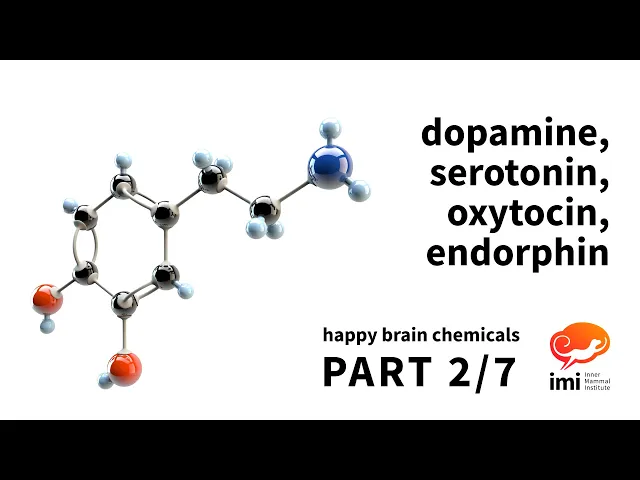
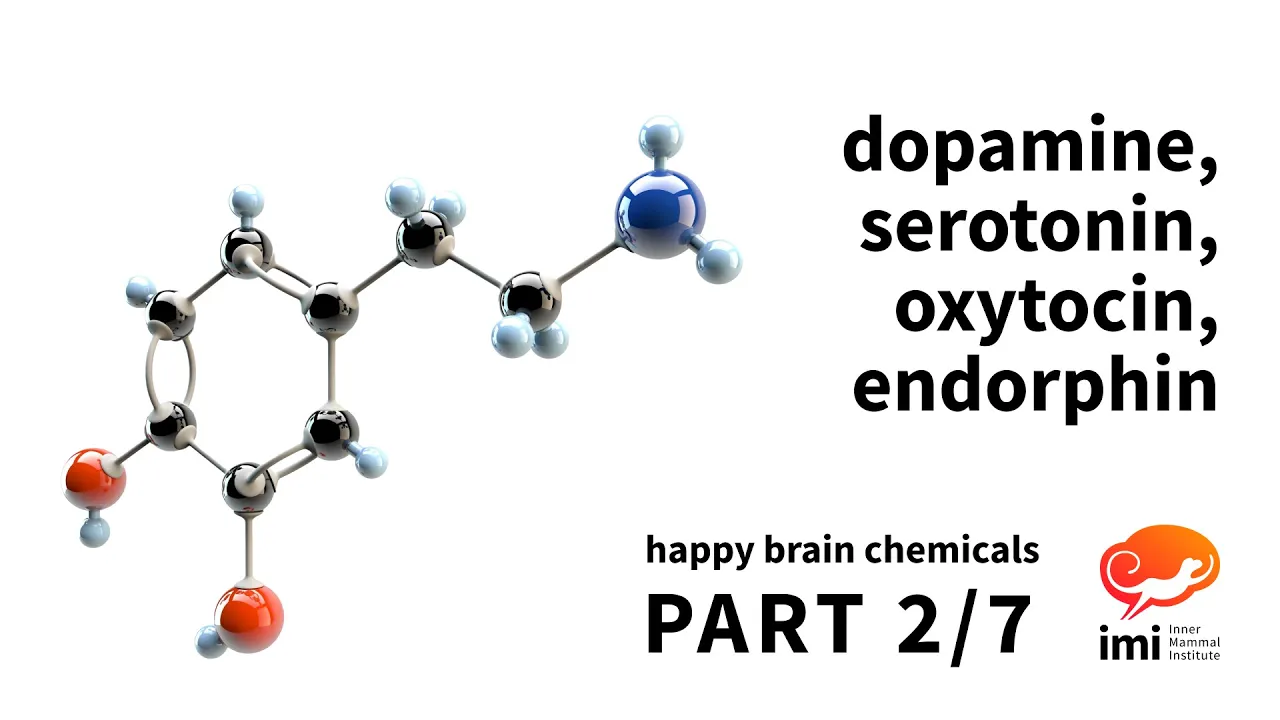
when you feel good your brain is releasing dopamine serotonin oxytocin or endorphin it's easy to see what turns them on when you know how they work in animals you may think animals enjoy a constant flow of happy chemicals as they bask in the Sun but in fact animals struggle constantly to survive they're happy chemicals turn on when they see a way to meet its survival need social needs are essential to survival so they're central to the story of our happy chemicals each happy chemical has a special job to do dopamine creates a great feeling that
a reward is at hand when a monkey sees a juicy mango at the top of a tree dopamine triggers the good feeling that a need is about to be met that motivates the monkey to climb the tree and more dopamine is triggered each time the month the monkey sees the mango get closer when the luscious treat is all eaten dopamine stops because it's already done its job now the monkey scans the world for another dopamine stimulator which will need another need dopamine surges in a lion when it sees a gazelle it can catch that releases
the Lions reserve tank of energy a lion who ran after everything would starve to death because it wouldn't have enough energy when a good opportunity came along dopamine is the brain signal that now is the time to go for it you may wish you had that excitement every minute but a mammal survives by making careful decisions about when to invest its energy neurons connect when dopamine flows which helped our foraging ancestors find food in places they found it before once they got the reward they were seeking their dopamine drooped back to neutral and they looked
for another way to meet a need we mammals survive by evaluating steps toward our needs and dopamine makes it feel good oxytocin creates the good feeling of trust reptiles release this chemical while mating but the rest of the time they don't trust their fellow reptile mammals live in groups so we need to keep stimulating oxytocin in order to tolerate each other mammals surge with oxytocin during childbirth but that oxytocin has gone in a short time and more must be stimulated with touch that's why mammals lick or cuddle their babies it would be nice to enjoy
oxytocin all the time but anyone close enough to touch you is close enough to bite you so the mammal brain makes careful decisions about when to release the oxytocin each spurt of oxytocin paves neural pathways that tell a mammal when to trust in the future early experience builds pathways that prepare a young mammal to attach to a herd or pack or troop a gazelle enjoys oxytocin when surrounded by its herd but it pays a price for this good feeling you end up competing for the same dried up grass as everyone else when you stick with
the herd a gazelle longs for the greener pasture it sees in the distance but when it strays from the herd to get it its oxytocin Falls that feels bad which motivates the gazelle to return to safety in numbers oxytocin promotes survival in a world full of predators but you can end up on grass trampled by many hooves dopamine motivates you to walk toward greener pasture oxytocin droop motivates you to go back we mammals face a frustrating choice between dopamine and oxytocin but our brain is designed to weigh those trade-offs serotonin creates the good feeling of
social importance no one likes to admit they enjoy social importance so it helps to know that animals work hard to raise their status in a group because serotonin makes it feel good this animal research is widely ignored because we like to think nature is warm and fuzzy but understanding your animal urge for social importance helps you make peace with your serotonin in the state of nature a mammal who reaches for a banana or a mating opportunity can easily get bitten by a group mate avoiding pain is the brains top priority but if you've never reached
for a reward you would starve and your genes would get wiped out we could not be descended from animals who never asserted themselves natural selection built a brain that constantly compares itself to others and rewards you with serotonin when you see yourself in a stronger position when a mammal sees that it's in the weaker position cortisol is released and it withdraws to avoid pain fear of conflict is part of being a social animal and serotonin promotes survival by making you feel good when you take the chances necessary to meet your needs but serotonin is soon
metabolized and you have to find a one-up position again to trigger more you may hate this in others but when you seek the one-up position you feel like you're just trying to survive instead of hating our urge for social importance you can feel good about how hard we work to restrain this impulse while still trying to get some serotonin you don't have to be king of the world to stimulate it in fact if you were king of the world you'd face the same dilemma as everyone else your serotonin would be quickly metabolized and you'd have
to do more to get more but every time he tried you'd risk getting bitten by rivals who want your banana and you lose oxytocin by undermining trust bonds no one has a free pass to serotonin because the brain doesn't work that way it only releases the good feeling when you gain an advantage this is why people are so fond of moral superiority it stimulates serotonin without open conflict notice how often people stimulate their serotonin by calling attention to their moral superiority I mean your people as well as other people it's not easy being mammal endorphin
is the brain chemical you've heard about in the context of runner's high endorphin creates a euphoria that masks pain real physical pain is what triggers it endorphin didn't evolve for us to inflict pain on ourselves to enjoy it it evolved to promote survival for example a gazelle can run for its life even with a lion's teeth in its flesh endorphin masks pain for about 20 minutes in that time the gazelle either retreats to heal its wounds or dies in a state of oblivion masking pain all the time would not promote survival pain is the valuable
signal that an injury needs protection endorphin is there for emergencies not for partying fortunately you get a trickle when you get up and move and also from a belly laugh we can be grateful that we have this regular trickle and also that we have an emergency backup system instead of expecting to search with endorphin all the time now that you understand these chemicals you can see why we're so eager to stimulate them and also why it's hard to do that to make things worse a dip in your happy chemicals makes your cortisol more noticeable let's
see why in episode 3