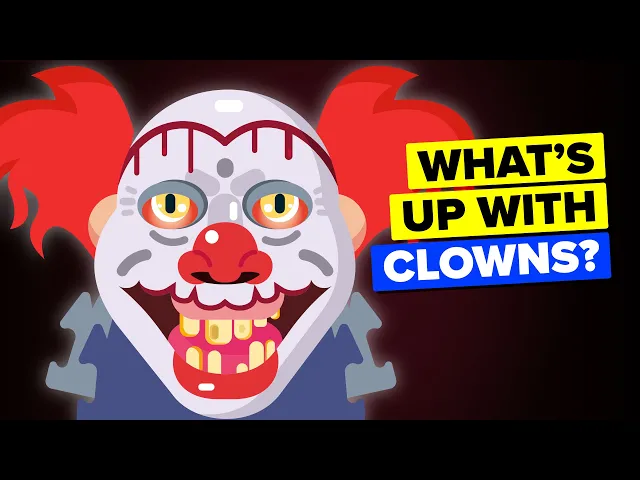
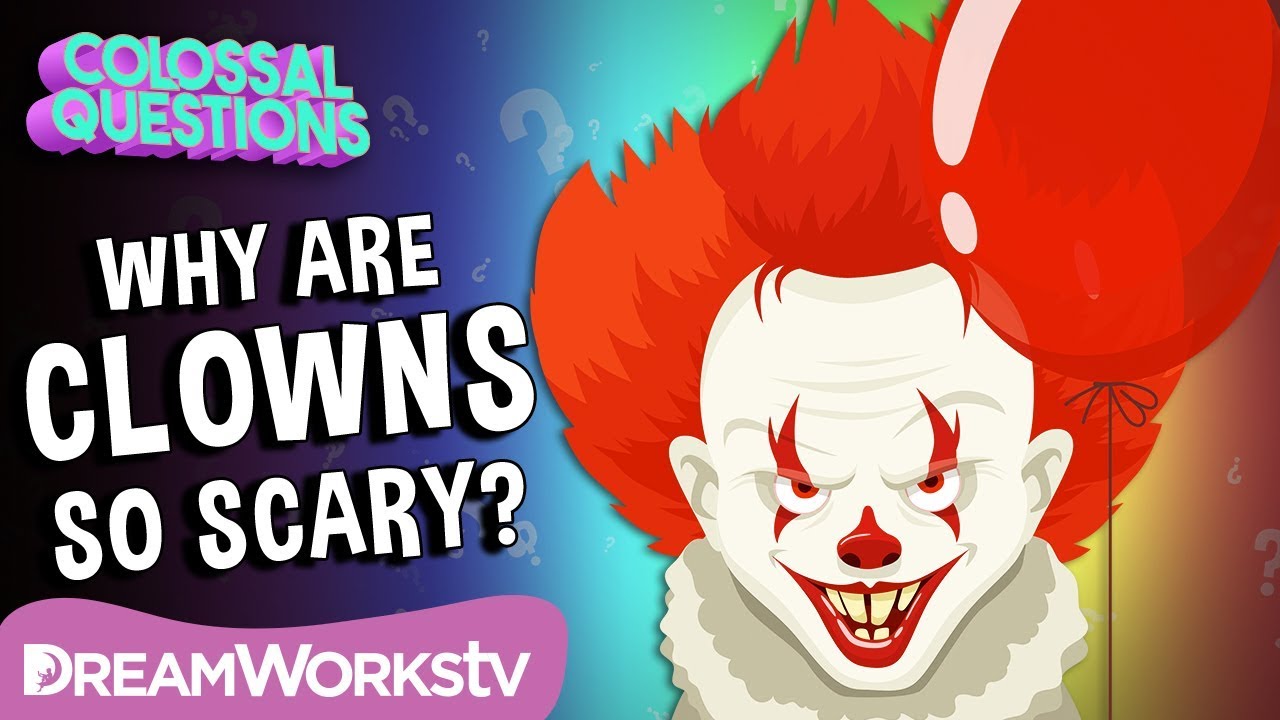
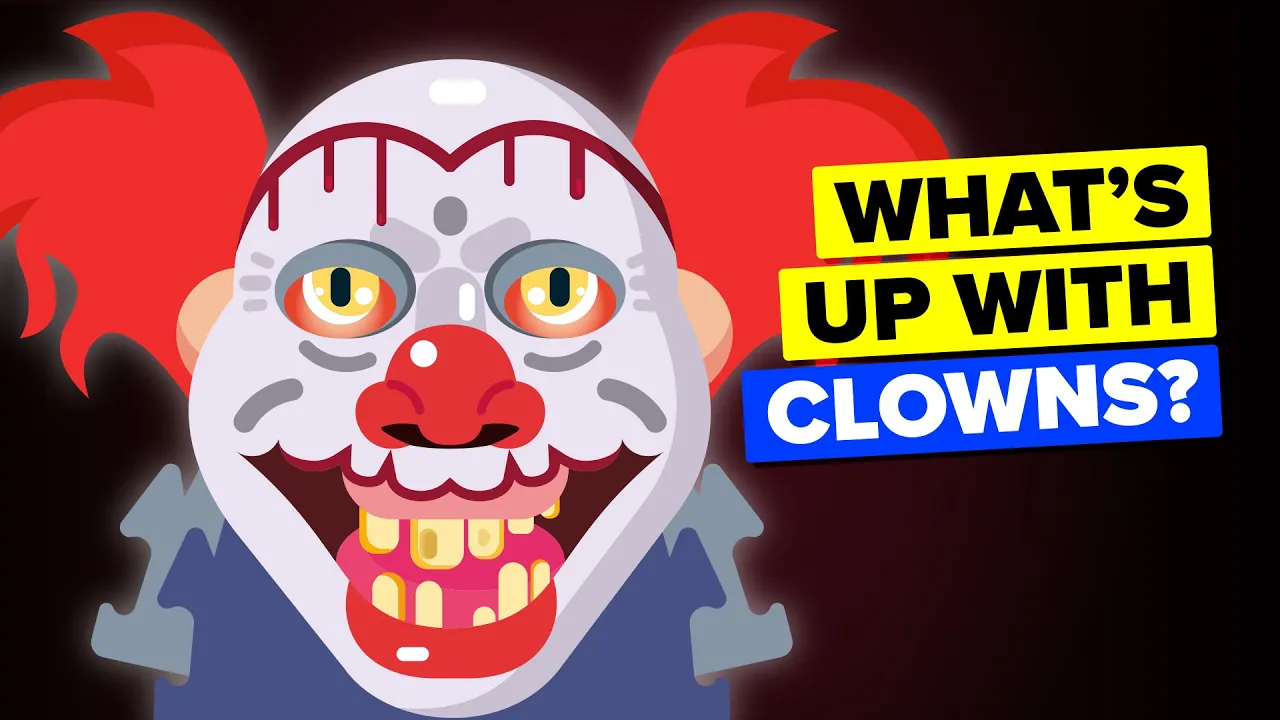
This episode is brought to you by Skillshare. Get 2 months of Skillshare free and learn new skills by using the link in the description. When we think of what clown scared us the most, the creepiest creation could well be Pennywise, something we saw in the 1990 movie, “It.
” In terms of appearance there is no doubt that American Horror Story’s Twisty the Clown was a character you wouldn’t want to meet on a dark night. Then we have clowns that might not have been too scary, but they certainly left the circus and entered the dark side of life. The Simpson’s Krusty was one of those, as was Batman’s nemesis, The Joker.
In real life the indisputable bad clown was Pogo, a creation of serial killer John Wayne Gacy. But why do clowns give us the shivers so much? That’s what we’ll find out today, in this episode of the Infographics Show, Why Are We Afraid of Clowns?
So, where did clowns come from? We can trace back the modern-day clown to Greek and Roman theater, which would often have a rather unintelligent character that played what was called a “rustic fool. ” But that wasn’t someone with a big red nose and outrageous hair.
It was more like a village idiot. In the 16th century the words “clowne” or “cloyne” entered into the English dictionary and that too meant something along the lines of rustic fool. These characters often told rude jokes that mocked the wealthy people in the audience.
You also had the Harlequin, who was a brightly-dressed trickster that could perform acrobatic feats. He might carry what was called a “slapstick”, which was two long pieces of wood fastened together that acted like a clapper when it smacked someone on the backside. That’s where we get slapstick comedy from.
Humor has evolved, but back then hitting someone on the posterior cheeks with a slapstick was hilarious for most people. Such comical fools became a mainstay in British theater and soon we would see the modern clown take shape. The 19th century saw the introduction of the circus clown, again, a clumsy idiot.
The character was introduced to amuse audiences in between other acts. A clown called Pickelherring delighted audiences in Europe. This character looked like the clowns we know today.
He wore oversized shoes, a funny hat, a waistcoat and had a ruffled collar. There were lots of different clowns, such as the sad, pathetic clown, which was first seen in 19th century French pantomime. In the USA the most famous clown was a kind of homeless guy, a sad tramp played by the famous Emmett Kelly.
We might even say Krusty the clown is an iteration of that; a down-and-out nihilistic boozer and loser with a predilection for making kids cry, not laugh. But none of these clowns were really scary. So, where does the scary clown come from?
Welcome to what’s called, “The Evil Clown. ” It’s not known exactly when an evil clown first appeared on the scene, but we know that American writer Edgar Allan Poe's short story “Hop-Frog” contains a kind of evil jester. That was published in 1849.
The 19th century opera “Pagliacci” also has a murderous clown in the story. Still, the world back then wasn’t familiar with bad clowns, they were for the most part comedic fellows that didn’t have the best hand-eye coordination at times. They could often juggle, but the tricks often ended in tears.
It wasn’t until the 1970s that the modern evil clown really took off. That was partly because in the 1970s the humor magazine National Lampoon created some comic books with the title “Evil Clown. ” Soon after in 1978, John Wayne Gacy was arrested for despicable acts, and people around the world were shocked to find out Gacy had performed for children as Pogo the clown.
He made the evil clown a real thing, a clown of nightmares. So, when in 1986 Stephen King introduced the world to the monstrous child-eating creature that could take the form of Pennywise the Dancing Clown, it wasn’t hard to believe something like that could exist. To King’s credit, to some extent he fictionalized what Gacy had done in real life.
But it goes further than that, in that some people, especially children, have a natural fear of clowns. Clowns don’t have to have sharp teeth and it doesn’t matter if you’ve heard the gruesome story of Mr Gacy. Clowns are scary to some people all the time.
This kind of in-built fear of clowns is called coulrophobia. There are lots of reasons put forward as to why we have a fear of clowns. One English professor told The Telegraph newspaper that clowns have always lived on the fringes of society, going back to the first clowns in theater.
“The medieval fool was continually reminding us of our mortality, our animal nature, of how unreasonable and ridiculous and petty we can be,” he said. So, while the clown made us laugh, it was also something that gave us existential jitters. They remind us that we might not be so clever in the face of things.
Another thing is these hopeless clowns remind us that under the make-up something sadder is going on. They wear a mask, as many of us do. But, they continually fight their sadness, doing their daft performance, while maintaining a somewhat fake smile.
This also gets into our heads because many of us know we also often wear fake smiles and carry the weight of the world on our shoulders at times. One Harvard Medical School psychiatrist went a step further, telling Vulture that anything in the horror world that is distorted can be scary. He compared a clown’s distorted face to the decomposing face of someone, or something, in a horror movie.
He also added this gruesome detail, a kind of real-life Joker scenario in the movie The Dark Knight. “Clowns in the Middle Ages, if they didn’t make the king laugh, they paid a pretty steep price. A lot of the jesters were mutilated to make them smile all the time.
They would have the muscles cut that enabled the mouth to frown. ” That fake smile is no longer funny at all. Also, in the old days clowns often showed unpredictability by being about the only people that could mock royalty.
This showed just how crazy they were. There are many more reasons why we might be scared of clowns. One of the major reasons is the fact they are so unpredictable.
They might laugh and smile, but you’re not always sure what’s going on behind that painted smile. It’s a nervy situation, which you could compare to the strained madcap laughter that can happen to people suffering from mental distress. It’s a scene we see in many movies when suddenly laughter turns into something far more ominous.
A switch gets flipped. Clowns to some extent play the unhinged psychopath very well. If we think of children, they want to be assured and they don’t always have the ability to work out what’s going on in someone’s mind.
Clowns provide them with a frightening intuitive glance into the unpredictable. And it’s true, kids for the most part really don’t like being around these unhinged, unpredictable characters. A Dr Penny Curtis from the University of Sheffield put this to the test.
She showed 250 kids aged 4 to 16 pictures of clowns and the vast majority were significantly creeped out. The younger kids of course hadn’t seen “It” or any other evil clown movies. To them there was something inherently disturbing about clowns.
She was interviewed by the BBC and she said, “We found that clowns are universally disliked by children. Some found them quite frightening and unknowable. ” It’s not just kids, though.
One study published in New Ideas in Psychology wanted to know exactly what people found creepy, what actually constituted the word creepiness. In that study people were asked what occupations were the creepiest, and no, it wasn’t funeral director or grave digger. It was clown.
Some adults just by looking at a clown will experience panic, sweating, nausea, irregular heartbeat, and difficulty breathing. Again, this is mostly related to unpredictability. “We rely a lot on facial expressions to understand people and see their motivations.
And with clowns, you don’t have facial expressions,” a clinical psychologist said in an interview with Business Insider. “It’s all under makeup, and it’s fixed. And so, there’s a kind of a question of, ‘what’s going on under there?
'” She said clowns are a sheer oddity. They look like us, but are not quite like us. It’s the fact they are almost human.
That’s where the creepiness comes in. We might be scared of someone dressed as a monster that doesn’t look anywhere near human, but we won’t be as creeped out. This is a well-known phenomenon called the “uncanny valley effect.
” Something almost appears to be human, but we know something is wrong. You’ve probably heard this term talked about in discussions related to artificial intelligence. Sigmund Freud talked about this in his 1919 paper titled, “The Uncanny.
” Nowadays we have a more rational fear of clowns perhaps because we already relate clowns to bad deeds. It’s something we have seen in movies for many years, but we might also remember that for a while a few years ago creepy clowns seemed to wander around our streets, not only in the U. S.
but also in parts of Europe and Asia, Canada and Australia. If clowns weren’t creepy enough already, they started to inhabit our streets and parks. At night of course.
In 2017 for instance, the U. S. media writes that a man dressed as a clown was arrested after being found walking around the streets of Maine at night holding a machete.
But 2016 was the year of the itinerant creepy clown. Believe it or not, that year the Russian Embassy in London issued news about a “clown scare. ” In Australia, it was reported that a clown tried to steal a girl from the streets while she was buying ice-cream.
In Finland, a group of clowns chased school kids. One of those was holding a chainsaw. All over the world people were being chased by clowns, harassed by clowns, attacked by clowns, and sometimes the clowns themselves ended up with blood running from their red nose.
Vox writes that “The Great Clown Panic of 2016” was overblown, but it’s undeniable that the year did see a lot of clowns. One writer interviewed by the Irish Times went as far as to say this clown craze in the U. S.
at least was related to unpredictability in American politics. He said, “It all peaked during the election period. I think if you look at the heightened absurdity in contemporary American political discourse and public discourse, the clues are there.
” A little fear can be a good thing, but too much can disrupt your life. Luckily, Skillshare has your back with classes such as Lose Your Fear of Public Speaking and Speaking Anxiety and How To Start A Conversation. But maybe the psychology of fear is more your thing?
Then why not check out a class like Learn Psychology: How our mind works in six Lectures? With over 20,000 classes available online, you could be learning right now! And if you use our promo code: infographics35, or you click the link in the description, you can get a Premium Membership and take unlimited classes for free for 2 months.
Join Skillshare and improve your skills today! Now we can only hand this over to you. Are you scared of clowns?
What exactly scares you about them? Tell us in the comments. Also, be sure to check out our other video Why Are We Afraid of Friday The 13th.
Thanks for watching, and as always, please don’t forget to like, share and subscribe. See you next time.