let's pray together Lord these are amazingly sobering words you despise the Church of God some of you are weak and ill and some have died so that they might not be condemned with the world so I pray Lord that there would be a seriousness now in this room and the North Campus a seriousness Lord that comports with this table of the Lord would you help me open its meaning in Jesus name Amen so before we move into Roman's again Lord willing next week I want to take a week that is this message and talk about
what we're doing and why we're doing it when we eat the Lord's table together the Lord's Supper so I'm going to preach first and then we'll move into the Lord's Supper after the Bible which is the infallible foundation for our life and church here one of the most important documents in the life of Bethlehem is the Bethlehem Baptist Church elder affirmation of faith and paragraph number twelve point four is the paragraph that states the summary of the doctrine concerning the Lord's Supper and I want to read you that paragraph so that you can hear what
the elders are committed to believing and teaching and then spend some time giving it biblical foundation here's what's written there we believe that the Lord's Supper is an ordinance of the Lord in which gathered believe eat bread signifying Christ's body given for his people and drink the cup of the Lord signifying the New Covenant in Christ's blood we do this in remembrance of the Lord and thus proclaim his death until he comes those who eat and drink in a worthy manner partake of Christ's body and blood not physically but spiritually in that by faith they
are nourished with the benefits he obtained through his death and thus grow in grace now what I want to do is try to put biblical foundation under that paragraph in six headings 1 the historical origin of the Lord's Supper to the believing participants 3 the physical action for the mental action 5 the spiritual action and 6 the sacred seriousness of the Lord's Supper so number 1 the historical origin of the Lord's Supper in all three of the first Gospels Matthew Mark and Luke they all report the Last Supper they all say that Jesus gathered that
night before he was crucified with his disciples they all report that he gave thanks for the bread and the cup they all report that he blessed and that he gave them to his disciples saying this bread is my body and this cup is the New Covenant in my blood or the cup of blessing Luke 22 19 says do this Jesus said do this in remembrance of me John's Gospel doesn't report the eating and the drinking of the elements but describes the action like the feet washing and the teaching that surrounded that event and filled that
evening as far as we know from the earliest records and Paul is the earliest record the early church did what Jesus said to do they reenacted that supper over and over again Paul here in chapter 11 verse 20 of first corinthians calls it verse 20 notice it the lord's supper so we're not making that phrase up that's a biblical phrase the earliest phrase that the church used to describe it when you come together it's not the lord's supper that you're eating they were really making a mess of this which we'll come back to in a
few minutes ninh Paul records what he received from the Lord he said verse 23 I received from the Lord what I also delivered to you that the Lord Jesus on the night in which he would took on the night in which he was betrayed he took bread and when he had given thanks he broke it and said this is my body which is for you do this in remembrance of me so Paul restates that statement from Luke 22 19 and obeys it do this in remembrance of me so the historical origin of the Lord's Supper
is the Last Supper that Jesus ate with his disciples the night before he was crucified and the meaning of it and what we're doing in it is all rooted there in what he did and what he said about this bread being my body and this cup being the New Covenant in my blood he is the focus it originates historically with Jesus on that last night from his words that's why we do it number two the believing participants of the Lord's Supper the Lord's Supper is eaten is celebrated properly by the gathered family of those who
believe in Jesus as their Lord and Savior it's called the church here it's not an act for unbelievers unbelievers should not eat and should not drink at the Lord's Supper however we welcome any who do not believe to come in among us I think there's biblical warrant for that welcome the supper the Lord's Supper is not a secretive cultic ritual with magical powers done in dark looms with blood and bread eating a person it got that reputation in the early church it's not that way it is a public act of worship with a public meaning
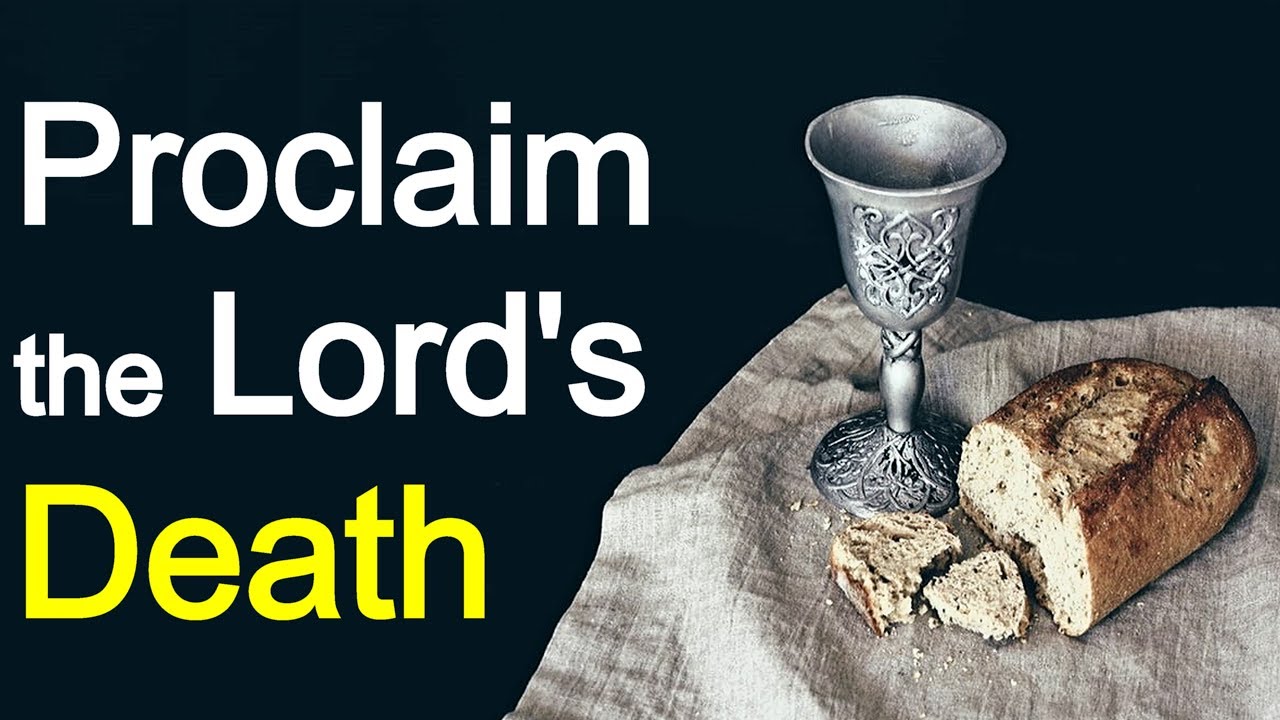
of which there is nothing to be ashamed and Paul puts it like this and there's 26 as often as you eat this bread and drink this cup you proclaim you proclaim the Lord's death until he comes so there's proclamation in this supper and the note to be struck is not privacy but Proclamation so if you're a seeker an unbeliever somebody who know they're doing this thing here tonight I didn't know they were gonna do that I wouldn't have come you are really welcome here and you don't have to be afraid that we're gonna somehow embarrass
you we like it when people watch us do this I think that is a biblical thing to happen I'm stressing that we do it properly in the gathering of believers however we do not forbid at Bethlehem that the pastor's take the Lord's Supper to the nursing home for one of our members we do not forbid that a terminally ill patient in a hospice could not have a pastor come and eat and drink we don't take the normative way of celebrating the Lord's Supper so far that it forbids that kind of celebration but I am underlining
that normally the Lord's Supper is not to be celebrated in little isolated one-on-one or to onto its it's the gathering of God's people now here's the reason for that in Chapter eleven five times it says in this chapter that this was happening when they came together let me point them out to you verse seventeen into the verse when you come together it's not for better but for worse he's talking about the mess they're making of this gathering verse eighteen for in the first place when you come together as a church I hear that there are
divisions among you verse 20 when you come together it's not the Lord's Supper that you eat there so messing it up that he doesn't want to call it that verse 33 when you come together to eat wait for one another verse 34 if anyone is hungry let him eat at home so that when you come together it will not be for judgment in other words they were so debasing the Lord's Supper by the way they were mixing it up with their regular supper that some had lots to eat and some had nothing to eat the
rich were bringing their big picnic baskets evidently and the poor brought nothing and I think we're going before each other it didn't look like love at all and here in this context they're gonna do Lord's Supper Paul's really upset about this and he says don't you have houses eat at home then come and do this that's the gist of the chapter come come together as church so that's why we do it the way we do it I would not encourage you to regularly do this in small groups if I heard that it happened on some
special occasion I wouldn't do Church discipline I would just say hmmm keep we need you have a normative way of gathering there are all kinds of blurry lines here and so I'm not going to get bent out of shape by periodic exceptions just let's make this the norm since it seems like that was the stress in chapter 11 number three the physical action of the Lord's Supper the physical action of the Lord's Supper is not a seven-course meal it's the two course meal and it's really simple you may wonder why do you call this a
meal there's a little chip of bread and a tiny tiny little cup and you you call it a supper it's because Paul wanted us to split off our big meal by which we eat enough to satisfy ourselves physically and do serious spiritual business with some emblems by which we satisfy ourselves spiritually that was physical this is spiritual verse 23 he took bread and when he had given thanks he broke it and said this is my body which is for you do this in remembrance of me in the same way he took the cup after supper
saying this cup is the New Covenant in my blood do this as often as you drink as you drink it so we have eating and drinking those are the physical actions of the Lord's Supper eating some bread and drinking from this cup I don't find anything in the Bible that specifies what kind of bread how big the piece of bread should be whether it should be a loaf of bread I don't think there's any command that you use one kind of bread over another kind or that it look a certain way or I just think
there's lots of freedom about that with regard to what's in the cup there is one hint and only one it's in every one of the three first Gospels Matthew 26 29 would be what's in all three of them I tell you I will not drink again of this fruit of the vine until that day when I drink it new in my father's Kingdom that's all we have that's all we have it's not called grape juice and it's not called wine it's called fruit of the vine and it's not commanded that it be wine or that
it made grape juice and so again I want us and other churches to feel freedom here I don't find anything in the Bible that either commands or forbids wine or grape juice and so you just make a judgment call as to what would be appropriate for your situation and I just don't think we should spend a lot of time thinking or worrying about that I do think we should spend a little bit of time thinking and worrying about cavalier playful experimentation with the Lord's Supper like bagels and coke around a campfire I think the Lord's
Supper is not a plaything and that there should be a kind of weightiness about it and seriousness about it that I'll get to in a moment so I wouldn't encourage that kind of silly playful experimentation one other little practical thing how frequently should a church do the Lord's Supper I don't see anything in the New Testament that mandates quarterly monthly weekly or every time you get together it says as often as you eat this bread and drink this cup do it in remembrance of me I wonder if the Lord didn't arrange for that and God
in inspiring the Bible didn't arrange for that precisely so that there could be some flexibility it seems to me that I grew up in a church where they celebrated the Lord's Supper quarterly and I know that many churches do it weekly and there's some who mix it up and it seems to me the questions would be something like this that you'd ask to send that question 1 what frequency or in frequency we do it monthly by the way you choose it on the first Sunday or Saturday of the month this time because of last week's
service it was moved and then we have Monday night Monday Thursday and things like that thrown in but I think the questions would go something like this what frequency and infrequent he corresponds to the proper importance in relationship to the Ministry of the word or second question what frequency are in frequency helps us feel its value rather than becoming callous to it now those are not easy judgments and I do not condemn churches for doing it differently from us I don't claim to have the perfect way it's just the way we do it for now
and if we were to change it would be fine to change for me I wouldn't want to do it any less frequently I think that would probably go the wrong direction I'm very happy with the way we do it if there would be moved to do it otherwise I would be listening and praying with you those are the kinds of judgment calls that I think are left to a church's wisdom number four the mental action we're moving closer and closer to the center of what this is about the mental action of the Lord's Supper the
mental action is foundationally remembering physically it's eating mentally it's remembering verse 24 and 25 in chapter 11 of first Corinthians says do this in remembrance of me I take that to mean that as you eat your mind should not go into neutral you should not be dreaming channeling listening coasting you should be directing your mind back in history to Jesus Christ incarnate crucified on a cross rising trampled in other words the events surrounding Good Friday and Easter is where your minds are going during communion do this remember remember this is not a passive activity waiting
for something to fill your brain you are consciously moving your brain towards reality namely historical reality in Jesus Christ it's amazing isn't it the stark reminder this is why the one of the reasons the Lord did this the stark reminder time after time as we gathered this table this is history blood skin that bleeds body that gets nails run through it and sword and spear run into it this is history this is not spirituality this is not new ageism we're not kind of a massaging each other's religiosity here to see if we can get in
touch with some reality inside has nothing to do with what grips America in terms of spirituality and religion this is an outrageous claim that God became a Jewish man condemned under Pontius Pilate rip to shreds on a cross three days later rose as the Lord of the universe watches us do here do this here tonight fills us with his spirit these are realities they're not if you didn't believe them may be true as ever and so there's a mental action and it's mainly I'm going back to what happened for me because my life hangs on
that moment in history when Jesus died for me fifth the spiritual action and here we're at the all-important act the spiritual action of the Lord's Supper the reason we need to go here is of course that the Bible goes here but we need to go here because unbelievers can do the first two the devil could do the first two if he put on a body he can eat he can drink he can remember and admit that the facts are true all that an unbeliever can do and the devil can do so that's not a very
good way to celebrate the Lord's Supper to only do what the devil can do so if all you do here is eat drink and remember you just acting like the devil it's not amazing you thought well I thought that was the essence of it I thought remembering was the key it's not the key it's essential is he central this is history it's not the key let me read that last sentence from the affirmation of faith again here's the key sentence it was an effort of the elders to put in a sentence what I'm about to
show you from the Scriptures those who eat and drink in a worthy manner partake of Christ's body and blood not physically and thus were distancing ourselves from the Catholic doctrine of transubstantiation not physically but spiritually in that by faith they are nourished with the benefits he obtained through his death and thus grow in grace now here's the biblical question where does this idea of partaking of Christ's body and blood spiritually come from were you getting that sounds I don't know that that's just new to me and the answer is chapter 10 so if you have
your Bible still open turn the page if it's not on your page to first Corinthians 10 16 to 18 and I'll show you where we got that let's read first Corinthians 10:16 18 the cup of blessing that we bless is it not a participant in the blood of Christ so there's where we get it that's the language we're trying to understand and use properly is it not a participation in the blood of Christ all of you know this Greek word by the way it's Koinonia is it not a Koinonia in the blood of Christ next
phrase the bread that we break is it not a participation in the body of Christ because there is one bread we who are many are one body for we all partake of the one bread and then an important verse 18 consider the people of Israel are not those he's using an analogy here are not those who eat the sacrifices participants in the altar that word participants there is this is a form of the same word participation in the blood participation in the body and so there's an analogy when the sacrifices were killed and then the
worshipers ate the sacrifices he says they are participating in the altar just like when we eat this we're participating in the body the blood of Jesus so a key question would be then that's an analogy what does participating in the altar mean you're not eating the altar the sacrifice the blood and I mean that the meat didn't turn into an altar I think it means that when you eat of this you bi-phase appropriate receive and joy are nourished by what happens on that altar namely forgiveness of sins restored fellowship with God and that's what I
think it's me I think basically Paul is saying when you eat this bread and when you drink this cup your faith should be reaching out and embracing all that Christ accomplished for you when he died on the cross when he shed that blood and when his body was pierced now by faith eat embrace that draw that into your life so we speak of a spiritual eating underneath a physical eating come to me all you who labor know come to me I'm the bread of life eat eat that these passages in John 6 about eating the
body and drinking the blood the words that I speak to you are spirit and life the flesh profits nothing I'm talking about eating all that I bought for you accomplished for you this is why month after month at this table we who lead give the table various focuses because when Christ died he bought for us every spiritual blessing in the heavenly places like I just wrote down a few here peace with God joy in Christ hope for the future freedom from fear security and adversity guidance in perplexity healing from sicknesses victory and temptations and on
and on and on the list goes Paul said in second Corinthians chapter 1 verse 20 all the promises of God are yes in Christ Jesus and there yes because he shed his blood to remove every obstacle between us and the promises of God sinners who are outside Christ cannot count on any of the promises come do for them but when by faith you are in Christ then his purchase and his perfection provide everything you need every obstacle is out of the way all the promises of God are flowing like a tidal wave to you only
mercy is your portion no wrath anymore and therefore amazingly what we celebrate at the Lord's table is the foundation of every good thing in our lives which is why we can give it a different focus every month because everything is bought by what this table represents when Christ died for us he purchased all the blessings that we ever ever experience so the spiritual actions we have physical action eating got a mental action remembering history and we have a spiritual action by which through faith we reach out and we embrace and draw into ourselves you can
use different kinds of images here you can see eating and drinking and embracing and receiving and believing you can use these and draw them in to strengthen your heart as you as you eat and chew it just there's the things going on here bigger than we know probably God means for there be a correlation between as we eat at the physical level we feast at the spiritual level on what he bought when physically he put himself on the cross I hope you grow in your ability to do that now lastly the sacred seriousness number six
the sacred seriousness of the Lord's Supper I'm going to close with this because Paul does and I I'm basically just going to read slowly these absolutely staggering words because to believe them would be to tremble preface my reading of these closing verses in this chapter with just saying don't don't come to the Lord's table in a Cavalier way careless callous discern discern what's going on here okay let's read verse 27 to 32 slowly and with with hair that God would help us to come to terms with this and feel appropriately whoever therefore eats the bread
or drinks the cup of the Lord in an unworthy manner no I don't think that means you got to be perfect the table exists because we're not perfect wide exist that means make sure that you're trusting treasuring Christ as the most precious gift in your life whoever therefore eats the bread or drinks the cup of the Lord in an unworthy manner will be guilty of profaning the body in the blood of the Lord let a person examine himself and I'm going to be quiet in in in about two minutes and let you do that and
I that testing there when we're quiet you're not checking out whether you're good enough nobody good enough alright that's not what you're checking out as you do introspection checking out whether you're good enough hopefully in your introspection you find yourself way worse than you are thinking you are way worse and then you're checking whether you trust him trust him with this we all would find ourselves worse than we think we are if we if we had the mirror of Christ in front of us and so I mean verse 28 at the end and so eat
of the bread and drink of the cup for anyone who eats and drinks without discerning the body I think it means this is not a fish sandwich it's not fish sandwich don't make light of this this represents the body of the Lord and spiritually becomes the occasion when you commune with what that body bought for anyone who eats or drinks without discerning the body eats and drinks judgment on himself now what does that mean I thought God loved us and were his children and he's our Father and now we're talking I God judging us yes
but now he's very careful to say what he means that is why many of you you you born-again Christians that is why many of you are weak and ill and some have died not to be sent to hell which he makes plain in the next verse verse 31 but if we judge ourselves truly judged ourselves truly we would not be judged but when we are judged by the Lord we are and though he interprets what he means by this judgment we are disciplined that is summer week summer ill some have died we are disciplined so
that we may not be condemned that is go to hell with the world that's stagger you the father our loving father takes some of us home because we misused the Lord's Supper so it says that's serious I don't know anything that would make it more serious except to say that you're going to go to hell if you come to the Lord's table but lord's table so this is sacred seriousness and I invite you now to be quiet for one minute and prepare your heart to eat you