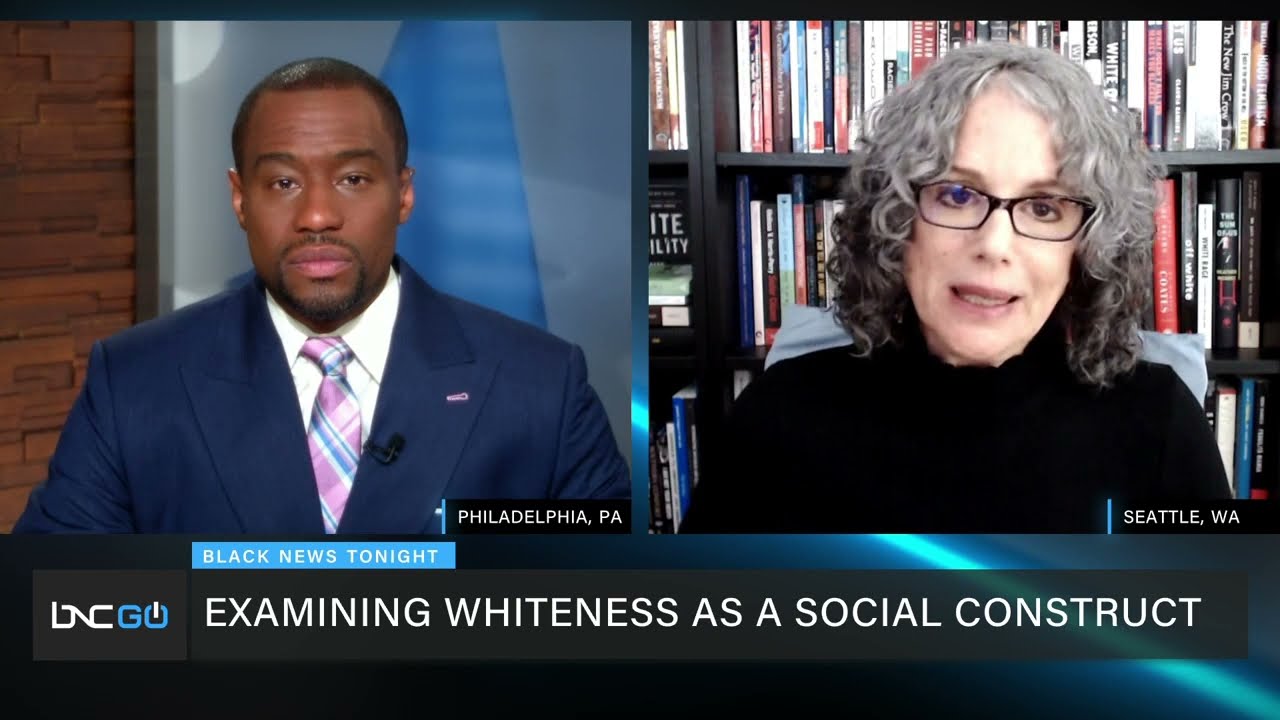
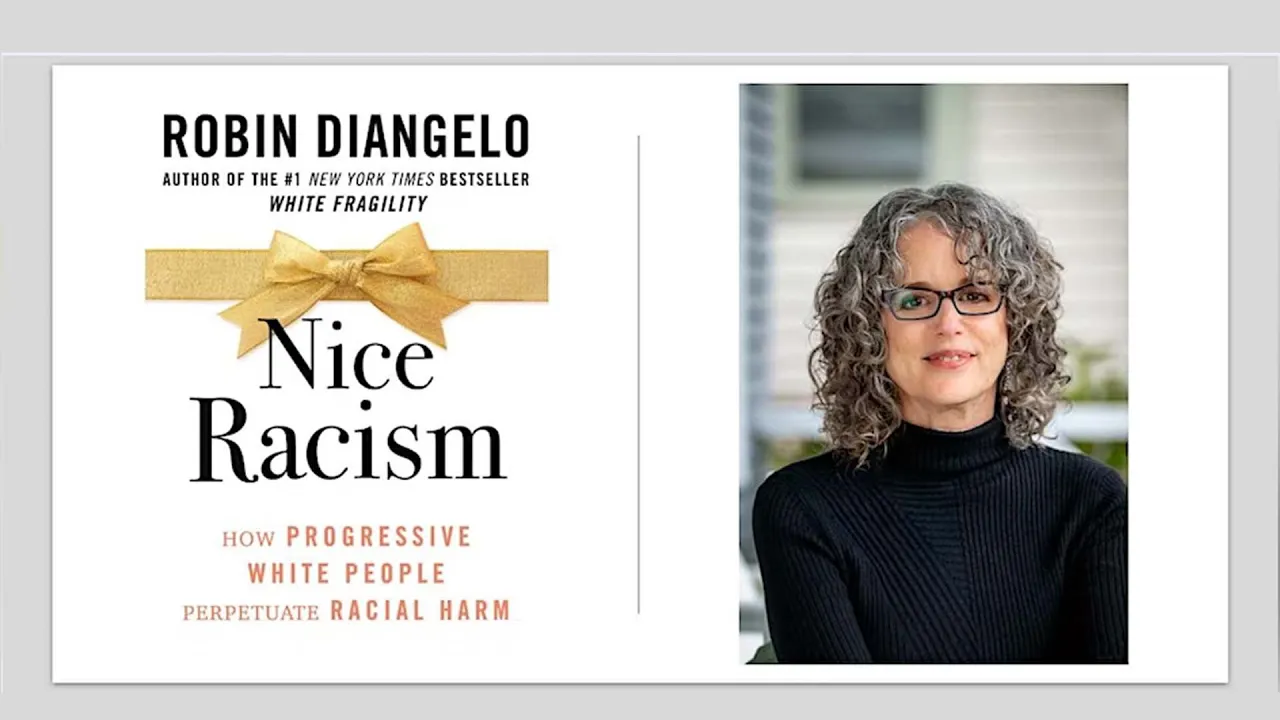
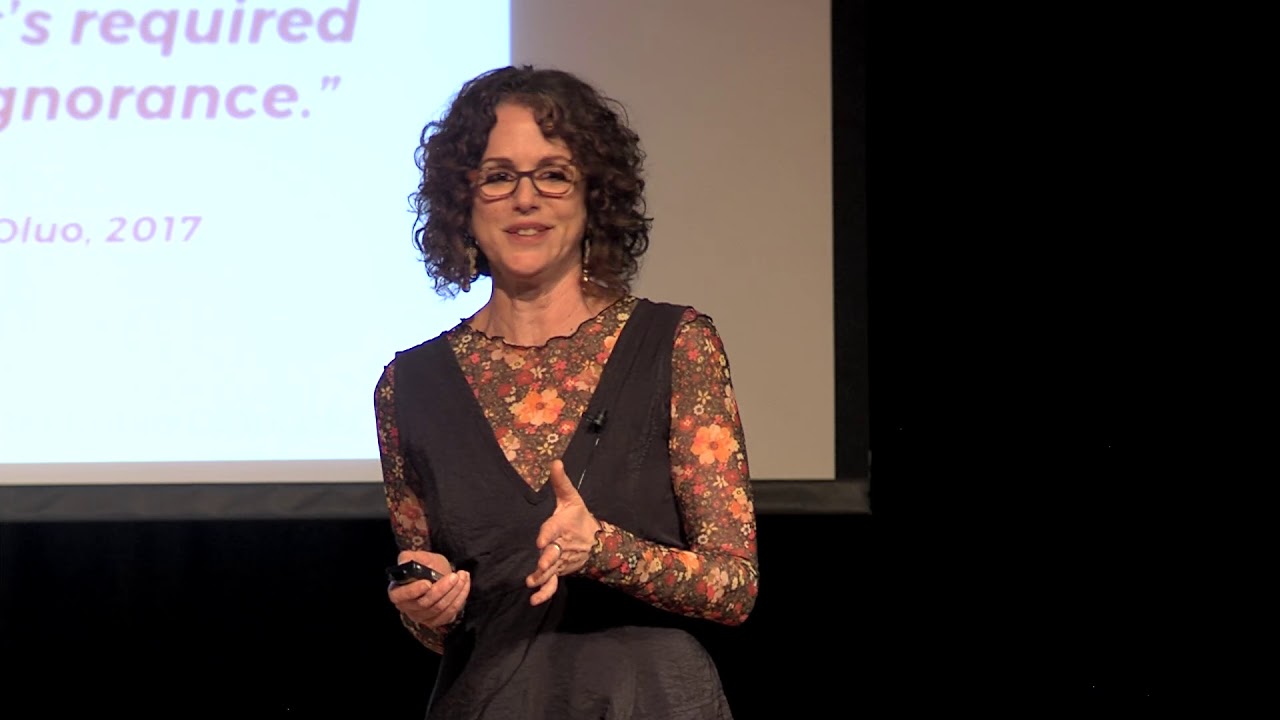
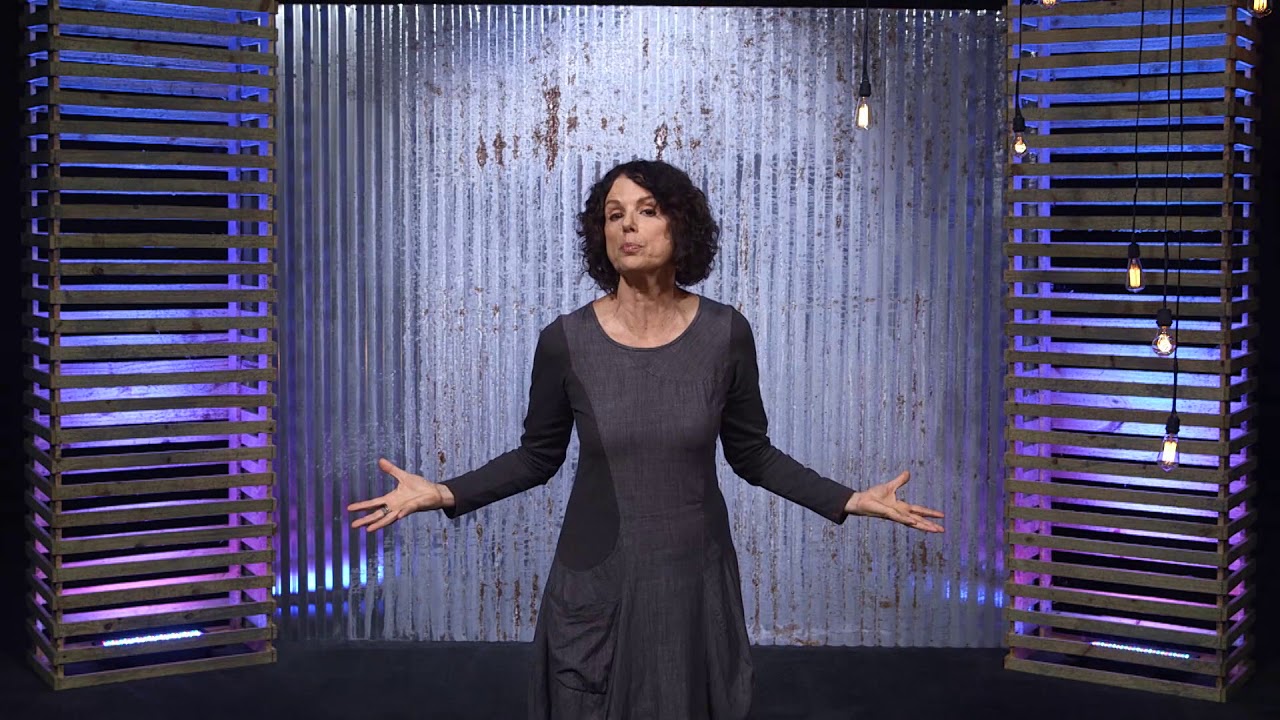
I try to be less white now I don't mean being white white people are bad and it's bad to be white that's certainly how people have used that to undermine uh the work but what I mean by that is I try to be less white in the ways in which being white is oppressive in the ways that I have been socialized as a white person to be oblivious to be racially ignorant but also arrogant to be apathetic to be silent to Um to privilege another white person's feelings over racism right um to feel Superior [Music]
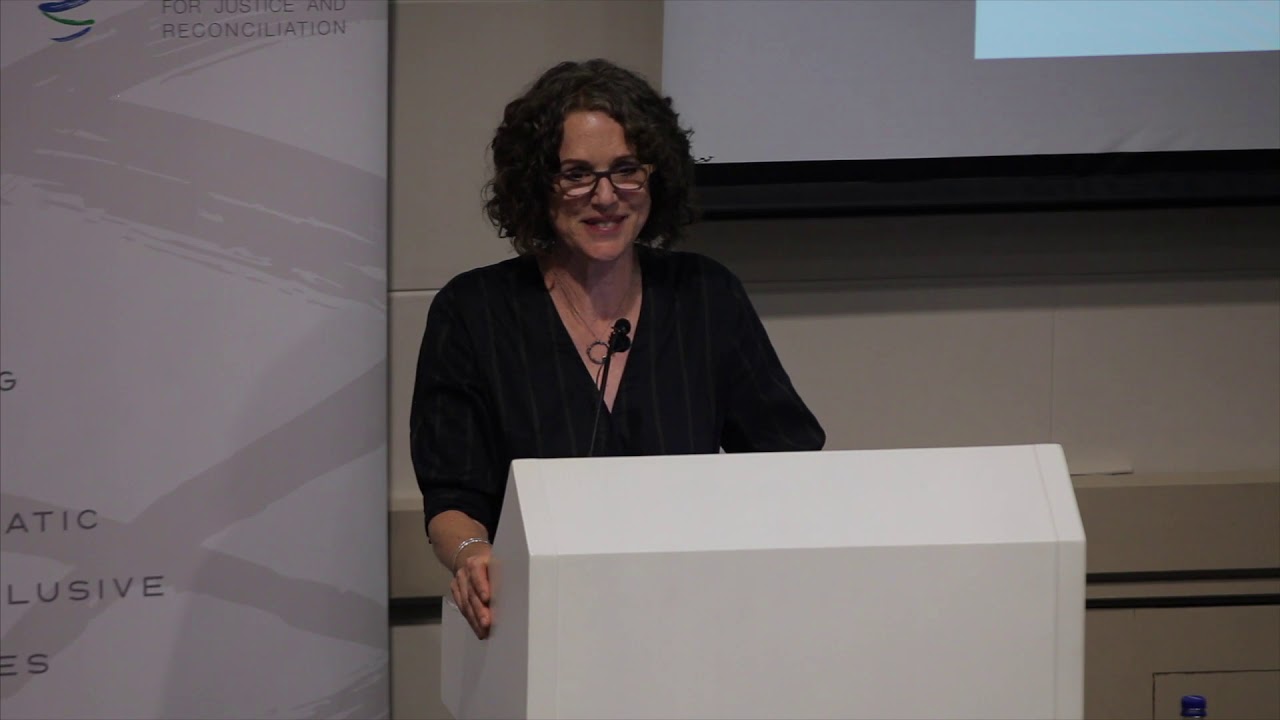
[Music] good evening and welcome to your library I Am David Leonard president of the Boston Public Library and an occasional moderator of some of our great programs here at the library tonight is one of our fall signature programs in our Occasional public conversation series now I first encountered our guests work as I was doing some research on the state of racial equity in public libraries and the library profession rid large and we certainly know that parts of the library profession in certain parts of the world in certain parts of the country tend to skew particularly
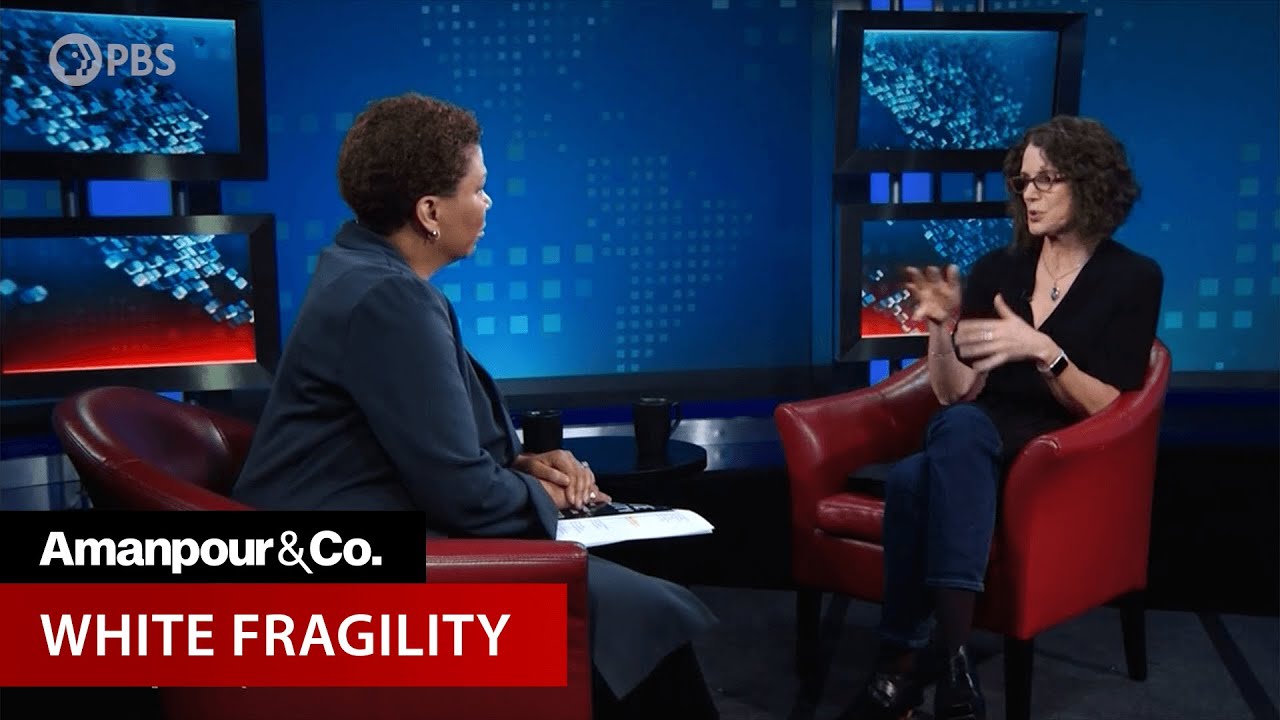
white the very alive and interesting conversation in that context Dr D'Angelo is an affiliate Associate professor of education at the University of Washington in addition she holds two honorary doctorates she is a two-time winner of the student's Choice Award for educator of the year at the University of Washington's School of Social Work she has numerous Publications and books in 2011 she coined the term white fragility in an academic article which has influenced the international Dialogue on Race since Her work in interviews have been featured on CBS MSNBC New York Times the guardian BBC NPR PBS
and uh among many other forums both in print and online and in addition to her academic work Dr D'Angelo has been a consultant and educator for over 20 years on issues of racial and social justice please join me in welcoming Dr Robert now to get us started uh here we are to white people having a conversation about racism in the state of racial equity in Our society um I think it's important to acknowledge in any conversation who is in the conversation and who is not in the conversation and so with our audience perhaps we can
um we can broaden that and secondly um isn't this a conversation that white people should be having more of anyway uh yes um I want to be really clear that I don't believe I or any other white Person can understand what we need to understand about racism if we are not listening to black people indigenous people and other peoples of color and so much of what I've been saying they've been saying for far far longer but we shouldn't only be listening to people of color racism is our problem right we we are the obstacle and
the barrier in large part and while people of color haven't have an understanding and experience that I can never have I do Have a piece of it that they don't have right as an Insider to whiteness as insiders there's just an understanding that is invaluable there's a way that we can expose that it's harder to deny when you know you share that experience there's a little bit of that nudge nudge wink wink come on you know we know um and I'd like to think that it helps soften the soil if you will so that uh
white folks can receive Um and bear witness to the experiences of people of color so absolutely we need to be having this conversation um I'm a big believer in that our personal biography leads us in part to the work in our area of study so would you mind sharing with us what led you to this work in particular I don't mind at all I'll just try to be brief um nothing in the trajectory of my life would have me speaking publicly about race would have me standing on stages And saying I am white like most
white people I lived a segregated life like most white people I was racially illiterate um I've never met a white person who doesn't have an opinion on racism have you um and usually pretty emotional uh but that doesn't make it informed and if in this country if you have not devoted years of sustained study struggle and focus on this topic you just simply Cannot have an informed opinion on racism as a white person so we we have to start with the humility around that and an example is that you can get a graduate degree in
this country uh be be certified as highly educated and have never discussed the foundation of this society which is systemic racism um so yes nothing prepared me for that but there were a couple of endpoints that I had first of all I grew a poor and working class and so from a very Early age I understood a particular experience of Oppression um and I was very late to college I didn't go to college until I was in my 30s I was a non-traditional student I graduated with a degree had no idea what I could do
with that degree and then one day uh somebody brought to my attention this position that had opened because the state of Washington where I lived had been sued for racial discrimination and contrary to popular white mythology It's very difficult to win a racial discrimination lawsuit because you have to prove intent I'm not sure you could come up with a more effective way to protect racial discrimination than having to prove intent which is very difficult to do but uh the State lost that the welfare department DSHS Department of Social and Health Services was sued um and
as part of the settlement the federal government mandated that every Employee in the state of Washington had to receive 16 hours I'm going to emphasize these words mandated diversity training and they needed trainers to do this and so somebody tapped me on the shoulder and I thought oh what a great job that just sounds so fun I love that kind of thing um I'm totally qualified I'm vegetarian so I couldn't be racist um I'm nice I was just a classic you know Seattle liberal and so I would Search the word background yeah yeah so I
was in for the most profound learning of my entire life on every possible level so because the first thing that happened is they sent us out in iteration teams so I'm working side by side with people of color who are challenging me in the way that I see the world and the way I see myself in the world and I do want to share this this story it was the we had to go through a five-day train to Trainer there were 40 of us that were hired pretty much in interracial group and we had to
learn the curriculum and the afternoon of the second of the first day the white people basically looked at the people of color and said okay this is the part where you teach us about racism and they looked back and said basically oh hell no uh that's not our job and I remember just being really put out like well how are we supposed to know if you don't teach us right because They have that classic Consciousness race is what they have I'm racially innocent and if you don't tell me about it how would I know um
and I'll never forget in the middle of all this tension this white woman calls out into the room all the white racists raise your hand and all these white people raised their hand and I just sat there like oh my god well I mean I'm fairly astute so I I knew it was the party line but I wasn't Gonna raise my hand but I'm not racist and I drove home thinking I showed them I was the good one what I showed them is that I had no idea what what racism was that I was not
self-aware that I was likely to be very defensive about any feedback to the contrary and I I look back now and I think what a brilliant move in one second she just called that out and revealed where the room was at in their understanding now today I would raise my hand because I Understand that to mean something very different than I did at that time so then we went out in the field and it was almost 100 white and it was uh I'm trying to think of what what words I can use it was really
hard and the hostility was off the charts um we were often in a hundred percent uh White rooms with white people complaining bitterly about not being able to get job anymore because of affirmative action and you're looking Around going uh where are they you know that are taking your jobs so it wasn't rational but it was very real in the emotions and I watched them Express so much hostility when the only person of color in the room was whoever was standing by my side I drove home with that person I bore witness to to the
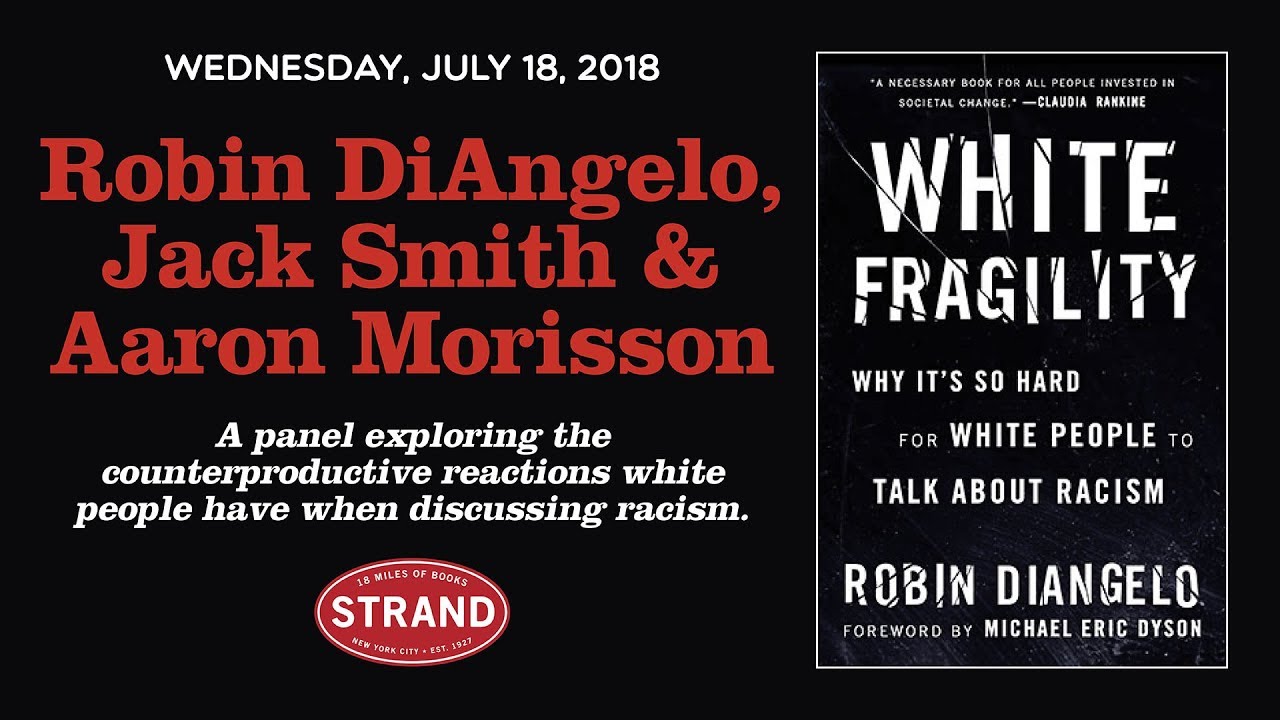
pain of it and just over the years it became so predictable it was almost like a script and I just got better and better at at Articulating how we pull that off how we live such segregated lives and yet insist that race has no meaning so I went on to get a PhD which which then ultimately leads to White fragility in 20 uh 18 18 um and you know New York Times bestseller one of the most borrowed books from the Boston Public Library from our Equity reading list um post the George Floyd killing yeah um
so what you just described that this Early um understanding that whiteness and the fragility that goes with this uh even from those early days of training shows up in the book so I think there's a if you there's a through line completely that um that that almost comes full circle yeah you know and I actually wrote the original article in 2011 so and pretty much all I've ever written from my dissertation on has been trying to make systemic racism and whiteness Visible and I wrote White fragility in 2011 and I figured it was buried in
some academic Journal somewhere that nobody ever saw and one day somebody quoted extensively from it in um like a weekly paper and it just exploded virally and I began to get emails literally from around the world from people who said you've you've named an experience I have that I didn't have language for either as the recipient or the perpetrator of that and so I I wanted to Make it more accessible um and turn it into a book I went to uh Beacon press which is a local Boston uh non-profit social justice press right here uh
and it did debut on the New York Times bestseller list and it was still on that list in the summer of 2020. and that's important to me because sometimes people say that you know I just came out of nowhere in 2020 and took advantage of that moment and I've been doing this for a very long time yeah I was I was taken By the the 2018 publication date and yes the original 2011 article uh date that it's based on um because this this is not a this is not a new new topic I wonder could
we spend a little time on the title sure uh because it it is it does capture what what your uh what your work is about um you know I think we're chatting before about you know defining whiteness as a concept that emerges in our struggles to deal with what racism is so You know was that something that you um had from day one or did it did it emerge as the work starting with those training programs I mean the the phrase white fragility just came out of my mouth at a moment of frustration like oh
this white fragility right just like here's somebody else falling apart just because you you mentioned that you know being white has meaning I mean that that's how fragile we can be that to just say white can upset Um Can upset somebody but it's not fragile in its impact and I think that's really important sometimes people who don't read it see white fragility and say oh you think white people are weak I think um our stamina is very low um but it's a bit like uh broken glass and somebody recently said it's like a fragile like
a bomb is fragile right because because behind it is leverage the weight of institutional power and Control um and so it's dangerous you know when we have that meltdown or we get upset and defensive um often who ever caused that defensiveness things get worse for them not better so I I find it to be a really effective uh form of everyday white social control I'm going to make it so punitive and miserable for you to call me in on this for you to try to share your experience with me that you more Often than not
will just choose not to go there and so you stay in your place I get to stay in mine so it's not a benign fragility well because I think you know um most individuals I will you know generalizations only go so far right but most injury no one wants to admit that they are themselves racist as an individual I said we can come back to that in a second right notes I remember Um but you talked a moment ago about our society uh being based more on systemic racism and I think this distinction between individual
acts of racism systemic racism but systemic racism shouldn't be letting individuals off the hook for their role in it or their responsibility to do something about it and so this is a set of nuances that I think for people starting out with this challenge is a little difficult to to Grapple with yeah so individuals aren't institutions our systems but systems are made up of individuals and in systems are not going to change if the individuals within those systems are not transformed right um and this is so all foundational and it goes back to that story
I told what I heard when the woman called out all the white racists raised her hand was very different than I would hear today so like most white people I was taught to Think of racism as individual only individual which means you you probably have it but I don't right that one over there not this one over here I'd call someone a bad name or did something that shouldn't have done right and then suddenly and even then you probably wouldn't say you were but yes all right so um individual conscious has to be conscious it
doesn't count and intentional meanness across race and Those three things are very important to the def the mainstream definition and um it beautifully protects the system of racism because it pretty much exempts everybody I'm really clear that I have perpetrated racism across my life and I'm also really clear that never once was it conscious or intentional it caused harm nonetheless and when you when you change your understanding of what it means you have such a different response and you actually don't mind Being called racist in the sense that it helps you identify all right what
am I doing that's not conscious it's not intentional but it's causing harm so white nationalism is on the rise and I don't want to minimize that it's growing the recruitment among young white men in particular is accelerated they do get in through sexism and then they grab you know and and pull the young men over to to White nationalism and white supremacy Um and so we we have to take that seriously but I'm not a white nationalist so my racism my forms of collusion with the system don't look like that but they look like something
as no one's exempt so it's on me this is where I get to be an individual so what does it look like in my life in in all those unique interactions and intersections you know what does it look like for me and that's actually a really Empowering question it's not awful and do you think it's more about becoming more individuals becoming more conscious of what we do as individuals in our lives that may have racist and you know consequences it starts there you have to become conscious but if it ends there it's functionally meaningless my
awareness without action to follow it up is functionally meaningless so um I also have to do different and I Really do think when you see it differently you will be different uh in situations you will attend and notice to different things so in your opening you said it's always important to think about who's in the conversation and who's not and and that's a great example when you're around the table where decisions are being made that affect the lives of those who typically are not at the table you need to notice that wait a minute who's
this going to affect and How do we know and so there's the awareness but now the action is we're not going to make that decision until this table looks different yeah I mean Abram Kennedy and his work um starts to paint an arc that is a little different than the language you use but ends up saying you know I'm going to do a very poor uh do an injustice to to his work but um it really it's not enough to change your own life but we have a Responsibility to change the systems and being an
active anti-racist is really what's called for at least in one of his Works um so to me I think uh looking at your work and being aware of this concept of white fragility or whiteness um as defined over and against or as part of the the dyad with Blackness and what it means to be black or green person of color combine end with an obligation to become anti-racist gives Us a narrative whereby we do need to do more than just our own our own work at home um what in your um work with your training
work um illustrates when this when does the light bulb go on what does uh uh what is it that allows people to start to change your own responsibility for this yeah and I think it's a little bit like water dripping on a rock so it's Not just one moment and then you've got it right it's um I think about it as every moment that I push against my conditioning into white superiority the society is pushing it right back at me and so I can never consider myself finished or having arrived and the forces are seductive
and they're strong and so uh you have to constantly and you do you get the inside and then it kind of Fades Away and then maybe it comes back um so I can't really think of it a moment I think it was just the consistency of it and for people that you work with do do the does it does the light bulb go off you know in in terms of that question of all the white races please raise your hand um what is it about the conversion moment that would have someone say no I I
don't need to raise my hands too yeah no I really should raise my hand Yeah Question one thing I am grateful for Within Myself and that has enabled me to stay in the work is is I have messed up many times that would be an example of you know we could say that I really just showed the whole room that I was oblivious um but rather than give up you know white fragility would have me go well then forget it I'm not saying anything if I can't say anything right and I think we've all heard
that Um and I'm not going to do this anymore it's too hard right instead I each of those moments I'm like okay what you know what did I miss how can I do better next time you can't use your mistakes to give up you use your mistakes to keep going you you're not going to grow without them be thoughtful it doesn't mean you just kind of tromp all over and see what happens be thoughtful but you will you also need to be real and authentic and be willing to Make a mistake and to receive feedback
and to change and so I think in any room there are people who say to me oh my God I just I just saw something I'd never seen before there's other people where it has to sit for a while um and then maybe it it gets picked up at a later date by something somebody else said there was a foundation there so I don't know that there's any one answer to but I know that if it isn't sustained it's likely not going to work And a lot of organizations will do the one-time thing and there's
no loss consistency it doesn't keep going and odds are that's not going to do it um could we talk a little bit about what the roots of racism might be in in U.S society in particular um you know we were talking a little bit about uh you know the 400 years of History uh upstairs and yeah well your work is around recognizing the role white people have to play in this whole Dialogue there are roots of racism itself that go back earlier do you have a narrative or a sense of how you put that together
well I'd like to quote tonnehisi coats around this because it's been really useful for me there is this narrative that it's just about difference and it's natural to be afraid of difference and and I'm not really sure that's true I would uh it reminds me of well somebody has to be on top right you ever heard That one you know that's just human nature somebody's gonna Dominate and my reaction is well who's most likely to say somebody has to be on top the people on the top are the people on the bottom people in the
bottom aren't usually going on somebody has to stand on me you know might as well be you um so for me it's less important is it true as it falls as a righteous is wrong which is so hard to sort out but the question that's never failed me is how Does it function what does that narrative do or not do does it open or close the conversation so the difference is just natural kind of naturalizes racism where racism is a relatively new construct and it it certainly appears across all human history that we have uh
people have dominated one another so we could say that's natural and across human history people have um worked for justice so that's just as natural and that's the side I want to be On so the quotes kind of used to quote's quote that works for me is racism is the parent races the child okay so say more about it yeah you have to kind of sit with that so I always thought well you start with race difference people see difference and then racism comes because they're afraid of difference and he's saying no you start with
racism and you get race so you have a group of people who have resources that you want and you have the Means to exploit those resources and then you make up a story to justify your exploitation and so race is the story we made up to justify what we were doing which which I think uh get given an author I interviewed last week who is looking at the history of um slavery in particular um suggests that the Turning Point really is where Europeans Portuguese initially and then others later um started going From enslaving other conquered
individuals to uh formalizing chattel slavery the actual ownership of uh initially black people as an economic uh unit of power and that that other ring that that race follows that as a way it becomes racialized and then we have 400 years of terrible history that we're trying to unpack yes um so so that framing that your you're borrowing from coats matches what uh what Howard French's work was doing back In uh back in the 1471 as well and again in important counter to the narrative that well we've always had slavery they also practice slavery no
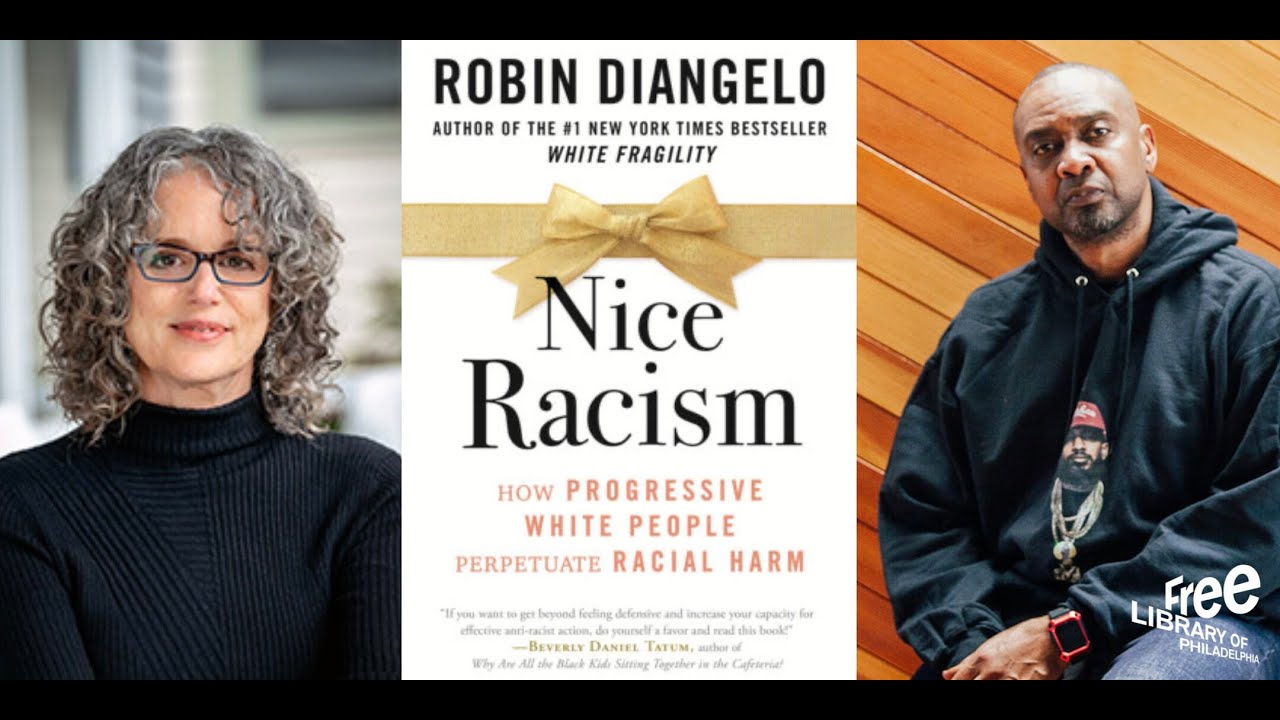
we've never had the kind of industry the kind of generation after generation after generation or the systemic nature of chattel slavery um so to move to the more recent book um nice racism how Progressive white people perpetuate racial harm So we have this historical narrative we spend a little time on um this uh seems to take the point a little further uh nice racism to tell us what you're what you're after here yeah well I'm writing to to me to to folks like me who folks who would not see themselves on the white nationalist side
or anywhere near it um and I make a claim in white fragility that I get asked about a lot it's a very Provocative claim and nice racism is meant to answer it so I say in white fragility that I think Progressive white people actually cause the most daily harm okay um uh and why do I say that I have had so many uh people of color black people in particular say to me give me the in your face racist the the white nationalist Um I know where they're coming from I know how to protect myself
but the kind of racism that gets perpetuated by folks like me is so much more Insidious it leads to gaslighting it's hard to put your hands on and people of color aren't typically hanging out with white nationalists they're hanging out working side by side with folks like me and we are the ones that send them home exhausted day after day why um oh there's so many um parts to that One uh we're racially ignorant but we're arrogant in our ignorance and it would appear that we would want to protect it's kind of a willful ignorance
a refusal to know or see in order to protect our identities as good moral people um so we can be very defensive there's a study that I I cite in there by Paul gorsky and I've forgive me for other co-author's name I forget um they talked to Um people of color who were anti-racist activists and they they cited the major source of their burnout were white anti-racist activists does that surprise anybody because we can be so sure it's not us and so it's everybody else it's not us um we're going to be very defensive uh
about protecting that identity that we have and that we want you to have we spend a lot of time doing what I call Credentialing which is all the ways that we try to establish that we're not racist none of which is convincing if you understand racism so classic one I'm not racist I had a black roommate in college okay I'd say well was he invited to your wedding um and the reason I come up I think of weddings and I talk about weddings is that Big or small that's your circle and and I would ask
the audience how often have you been to a wedding that if it wasn't all white it was pretty close right and how often have you been to a funeral that if it wasn't all white it was pretty close because most white people go cradle to grave in racial segregation with no sense at all that anything or anyone of value has been lost in fact we measure the value of our Space by the absence of black people in particular that's a very deep message that I've internalized that you've internalized um can you say a little more
about that last point because I think that's a pretty strong statement to um put out there that we measure the success of a space by the absence of black people yeah Um so when I say good school when I say bad school when I say good neighborhood when I say bad sketchy neighborhood when I say that neighborhood's coming up that's racial discourse we we know we know what we're talking about um the the less black people that go to that school or that live in that neighborhood the higher the status of The neighborhood's going to
be and the more black people that are there the lower the status the neighborhood is going to be it's just it's so internalized when we when we talk to each other that way we're reinforcing that and that doesn't have to be conscious and we don't have to go all the way to historical redlining in the financial industry or mortgage or insurance or Banking to understand that this is a practice that unintentional unconscious perhaps sometimes I do Wonder um well maybe not yeah um another really important understanding that we need to have about systemic racism is
it's highly adaptive it just it just adapts to challenges and changes we can see that across history but we can definitely see it during the Obama presidency those of us who do this Kind of work it was harder during those years because people would say we're pulse racial we have arrived we have a black president and I don't think anyone is in denial today that we are so not post-racial that explicit white nationalism has just exploded there's more permission it's like what Carol Anderson argues every inch of black progress is met with a backlash of
white rage so it's an Adaptive system now that that's a strong example but Neighborhoods we steer each other away right uh so we don't need those redlining cover evidence we do it in a more naturalized and to your point about you know progress and backlash progress and backlash you know you can do that narrative from the 13th and 14th amendments through the Civil Rights Act Voting Rights Acts in the 60s um through to your example of the Obama presidency and what has followed Um so yeah I actually do want to take up one of the
questions that we got at registration which relates to this very point is um has anything changed for the better between the two books or between 2011 and uh um where we are now something is for the better um in terms of society yeah so what you're seeing you saw the summer of 2020 when I mean I it breaks my heart That it took the videotaping of the murder of George Floyd that was so brutal and so egregious that it couldn't be denied right that you really up until then a lot of white people said well
he must have done something but that video was so ah um explicit and Vivid and so you saw this huge um revitalization of interest in Anti-racism right it was everywhere and those of us who do this work you know we couldn't we were getting hundreds of calls every day you've got to come you've got to come now and you've got to talk about this and now it's not in front of us on the news um and a lot of that apathy has come back in so it didn't sustain that appetite for change I don't think
no I don't think that it did now I do see a few things I I see much more Representation in ads in in movies sometimes with movies it's like okay they put one black person in that role and that's better than nothing but it's it it's fairly token but but you see it um I've seen more people of color being asked to speak and do the work um that that's a change so you know it's a it's a push and pull um the the other part of the title here is how Progressive white people so
that's the progressive part I'd like to Spend a little time on because if you're not bringing about real change then how Progressive are you really good point um and so what is it about this armchair progressiveness that is contributing to the problem rather than even moving the needle a little bit yeah I mean in some ways progressives white progressives are my people right I live in Seattle okay we're three Boston where's three hours from Portland Oregon right so um and it's just so much of What I learned about how racism manifests on a daily way
came from the community that I live in from the people I'm around um it it's I don't know that I mean it literally like true if they were truly Progressive it would be it would be different but I didn't want to use the word liberal it's just white people who see themselves on this side of the struggle um but anyone who Exempts themselves is is not Progressive and doesn't understand systemic racism none of us are exempt it's not going to end in our lifetimes um unfortunately um there's another part of this that I want to
draw attention to um and by the way get the book read the book it's it's a it's an incredible um analysis of some of the challenges to where people think progress is but in Fact maybe is not and this is the spiritual versus religious Dimension because I think um religion is very much a part of our Lives spirituality is very much part of your lives whatever whatever whatever particular thing you you believe and it's not necessarily always additive to um to progress Christianity is a religion based on love we'll just let let that sit and
please fill in the rest of this sentence Because it's much more complex um the title of the chapters uh spiritual not religious because that's the classic kind of white liberal that I'm trying to to call in or talk to where you know they're going to issue um you know organized religion but they see themselves as spiritual um and the ways that it can manifest around protecting racism is they can tell people of color that they just need to Um think positive why are you bringing this energy onto yourself it can be really gaslighting to use
spirituality um as the answer you know that if you just caught closer to whatever that means to you you would do better and I have I don't know if I have the cartoon in there but there's a New Yorker cartoon that I love that just Nails this so it's got two ducks floating and one of them looks really miserable and the other one says maybe you should ask Yourself why you're inviting all this duck hunting into your life right now and then it just like that that's what I wanted to get at and going down
to South America and taking Ayahuasca you know with no understanding of the impact you have there with no relationship to indigenous peoples here there are certain aspects um uh putting Buddhism on a pedestal right Buddhism is actually a really patriarchal religion you know but but it's very sacred um to a lot of white liberals well I mean I I think the history is littered with examples of religion being used to justify uh various forms of Oppression and uh and structure um so that that that I'm glad to see that unpacked already as well um you
you um did mention that you often Get asked about a particular quote in um the first book and I'd like to give you an opportunity to talk a little bit about that it's like I trying to be less White yes could you tell us what you mean by that yeah so and let me just say I try to be less white now I don't mean um being white white people are bad and it's bad to be white that's certainly how people have used that um to undermine uh the work but what I Mean by that
is I try to be less white in the ways in which being white is oppressive in the ways that I have been socialized as a white person to be oblivious to be racially ignorant but also arrogant to be apathetic to be silent to um to privilege another white person's feelings over racism right um to feel Superior and I'm just going to say this I I nobody grows up in this Country not knowing it's better to be white not that white people are better but it's better to be white and research shows that as early as
three to four children all children get that message they understand watch Frozen with a racial lens right look at the images watch the little girls of color with the backpacks with the with the Frozen images right I could go on look at the Sistine Chapel God creating man right And now the impact of that message is very different depending on whether you are or not white but I just I don't think anyone could miss the message the way you respond to it will vary um you can resist it or not resist it but you you
can't be exempt from it um and that's what I'm trying to get white people to Grapple with that that's a piece of it too internalized Superiority is a piece of this work and you mentioned um sex and gender earlier in the in the brief conversation there about um white the rise of white nationalism so other areas of difference um or othering become parallel I think to to this work so not only is there a narrative about racism that works here there's a Narrative about gender differences and um other identities too yes so um white women
I'm I'm a cisgender woman my pronouns are she her um we have a really um powerful way into this through sexism and patriarchy and our experiences of it but all too often unfortunately white women use that as a way out as a kind of we're all women and we're all oppressed and I couldn't have privilege because I experienced sexism Um and you can certainly experience sexism and also perpetrate somebody else's oppression and so we can't uh we can't use it in that way and for me also I mentioned earlier that I grew up poor and
from a very early age I had a very deep sense of shame I can I can share many experiences in which I felt humiliated around being dirty having my hand held up in a classroom as an example of poor hygiene to the whole class people whispering they're poor Um so you know very acute awareness of it and they also always knew I was white in that and I knew that it was better to be white right so I got that lesson too and I tell this story in in the book where you know I would
see food left out somewhere and we were pretty chronically hungry we had periods of homelessness in my childhood and I would reach for this food and I'd be admonished don't touch that you don't know who touched it could have Been a colored person which was the language at that time which meant a black person and it was really clear to me that if a colored person touched it it would be dirty and yet we were literally dirty but in those moments when we projected our shame onto black people which is what we were doing right
um I wasn't poor anymore I was white that those moments realigned me with the dominant white culture that my poverty separated me from and so I think white People need black people there is no Superior without inferior and by the way anyone who any white person who tries to say I don't have racial privilege because I grew up poor send them to me it was I don't know how you can look look anyone in the eye and say to be poor and black and poor and white is the same thing I wasn't also struggling with
racism can that be a source of empathy then I mean ideally yes empathy not not that It's the same but that I have a way to connect and actually the the moment when I realized so I'm late to Academia and uh I have imposter syndrome you know we sat there feeling a day late and a dollar short and I was just sure they were all smarter than I was and of course I used to think that that's how it worked that smart people went to college then I got there you know it's like oh okay
that's not what That's how this works this is not the cream of the crop that wrote no and then I started began to teach college and I'm like this is definitely not how this works um but I would be in a meeting right a faculty meeting and you know these people probably went to boarding school and they went to Ivy League and they've been they've been groomed their brains have been groomed their whole life and I often wonder if only my brain had been Groomed my whole life well you know access and privilege going on
yeah so I'd be in these meetings you know this is what I do I did I did anti-racist work before I ever went to college so I I would see Dynamics happening in these discussions maybe it was a hiring situation and I would want to say something like hey I'm seeing racism in the way we're talking about these candidates but I would feel um inferior I feel like what if they What if they cite some research I haven't read right I don't think I'm smart enough to challenge it and so it was it wasn't superiority
that was keeping me quiet it was truly inferiority but then when I stepped out of myself and I said so how's that functioning how is your silence functioning in this room regardless of what's driving it you are upholding racism and you know what you're going to get ahead for doing that And you're going to be seen as a team player and that's just not okay and you know what it's a lie that I'm not as smart as these people just because of my background and so when I speak up I'm simultaneously using my position but
I'm also challenging my internalized inferiority and the LIE of that so for me to Center race is actually the most powerful way to address everything a lot of white people who experience oppression want to Center their Oppression and I would say okay you can do that but you have to address how has been white shaped how you experience that oppression because it's different and then to complete the narrative one would hope that because you have that power or privilege that we have a greater response those of us who are white have a greater I know
we're in positions of power have a greater responsibility to make change it's not without risk but The risks are not the same yeah definitely um I think we'd like to take some questions um and we have a number of questions that were submitted at registration um so I'm sure we have a couple of people either online or in the audience who submitted these so I will I will pose them to you Robin okay see where we go um and there's a couple of looking Forward to this discussion thank you uh loved the first book gave
several away to friends who are also Changed by it so thank you um this question is how do I get white leadership presumably at their organization how do I get white leadership to attend my race and the workplace monthly forums so I I don't this person didn't identify themselves so I don't know what their own personal Story or narrative or identity is I can guess um but but basically how do we engage with other white people to participate in this yeah I mean these are challenging questions and I think it does speak to to the
apathy um I don't if you are not at the leadership is not attending that then whatever you have on your mission statement whatever your anti-racism statement is you better take it off Because you you can't have a statement like that and not actually be doing the work is showing up so a couple different strategies they could use you know uh the leadership needs to see that it's valuable to them if there's something in it for them um and whatever way you can approach that I mean I often say in 2022 if you cannot engage in
these issues with some nuance and some complexity one you're really not qualified to lead and And uh it's going to come in a moment where that's going to show and you don't want that right so I mean if you have to go that way you know take that approach another one is to find maybe that one person in the leadership team that is open and ask them to kind of and I think it's also you know you don't have to have the language perfect you you don't have to have the plan perfect but you've got
to be moving forward and as we all make mistakes so I know I've Made mistakes you you pick yourself up you apologize if you need to apologize and you you keep going um this next question um my school has a new group called the racial Equity team as a white person how can I serve on this team in an anti-racist way I'm going to assume that it's a mixed team uh and so the first thing comes to me is to ask the folks of color how they can serve what what do they need what do
They want um the more you do your own work the more you're aware of your own whiteness and how it informs what you see what you don't see how you respond the more sensitive you'll be to the Dynamics at play you always want to be paying attention and asking yourself what is the most strategic way for me to engage in this moment and it's really hard to get that right by everybody but that is the question you should be Asking so is this is this a time where I should hold back and just listen is
this a time where I should come forward and show myself that's what you want to be grappling with any default engagement in other words I'm an introvert I never speak in groups so I don't speak in this group either that's not a strategic engagement that's default you are defaulting to your most comfortable way and I can tell you that if it's around race your most Comfortable way will be problematic right and I think it's also about knowing some groups are defined as Affinity groups for people of color only yes others are defined for people of
color and allies and then there are some other conversations perhaps like we're doing tonight where there's a piece of this work that has to be done by white people yes and asking and knowing and identifying is a crucial step one you know this it's it's uh I I forget where The section is in here where it talks about you know assuming um you know exactly what uh what that your that your opinion as a white person is welcome in every single circumstance and it may or may not be right don't ask yeah um this next
question what can I do as a black woman in expressing my pain it feels like I'm making people feel uncomfortable and that's one of those questions I find heartbreaking because it's really on on us as white people to get ourselves into a condition in which she doesn't have to worry about how she's making us feel um in order to express her pain I mean unfortunately this this the society we live in is set up in a way that she does have to do that in order to be safe um and so I would ask those
of us who are white to get get to work to transform ourselves so that we can bear Witness to her pain that where we can hear we can affirm and validate we can ask her what she needs and she doesn't have to attend to our feelings right and that our feelings are actually um Grace and and openness and compassion rather than defensiveness or apathy um but a lot more in this context I would assume that we we don't know from the the question Um but asking you know asking is always a good place to start
I mean as a white person to ask yeah what do you need yes or what can I do um what can I do can be a hard one um just just I just want to say that that doesn't mean don't ask it it's just that sometimes the the person who's in pain doesn't know what they want or what they need so you want to ask that In a kind of an open way as opposed to I need you to give me the answer in your pain right now give me the answer okay um another version
of the same um question I think um but it stands alone what can people of African descent do to better educate white alley allies specifically about living while black well there are many many ways and forums in which people black people people of African descent have shared their experiences they write they speak they do poetry they do performances they share in relationships I often think that if we have a truly integrated life if we have authentic cross-racial relationships if we have built trust they don't have to tell us just being in relationship we will see
if we're paying attention right it doesn't have to be this like I'm Going to sit you down this lesson um but I also think it's an empowering choice for people of African descent in this case to choose not to share their tender hurts or experiences with us and that that isn't that doesn't mean they've uh somehow given up or sold out but that just like um you know the expression throwing your pearls you know it's okay to say I don't want to throw my pearls they got crushed the last time I did it I don't
want them to Get crushed and I'm not giving you that that's a gift right and for it depends on the space and he's there and what support is needed um uh agreed um I want to go back to the um poverty analysis that you you gave us from your own personal life as well as in in the work here because there is also a narrative that one of the ways out of the racial Injustice is well we just need more economic equality and all of The programs to bring that about which I fully support I
think ultimately one of the tests of being successful will be you know where earnings are more Equitable where wealth is more Equitable but I'm not sure that alone like solving poverty alone is not a solution for racism per se what I worry about whenever when class comes up basically capitalism right when capitalism depends on poverty I mean you can't uh have a capitalist system Without having an incredible hierarchy um and race is a really key piece and they are deeply connected but they're also separate if that makes sense and so what happens sometimes is and
and this is what I want to speak to here it didn't just happen but I want to speak to what what I call Channel changing right where we're trying to talk about racism and then it moves over to the real oppressionist classism and then that takes race off the table so if we Can talk about how classism um intersects with racism then but we've got to keep race on the table and there's such a strong pull for for those of us who are white to get racism off the table so it isn't that that we
shouldn't be or don't need to be talking about economic inequality but um if if we're not centering race in that conversation we're probably conveniently taking it off the table it's it's less comfortable it's the I Would say it's the least comfortable classism's so vague and capitalism so big you're like yeah let's just do that which is another form of being nice about it and not actually addressing the challenge um there's a third book um that I have here you have more than three but um uh I I wanted to spend a moment um before we
close this part of our our evening together Um talking about why why did you write this book and who is it for in and kind of Distinction the other two this is called the facilitator's guide for white Affinity groups strategies for leading white people in an anti-racist practice um I'm not going to assume it's self-explanatory um thank you please um please tell us about This book like to talk about it um the ultimate goal of course is to bridge racial divides but we though I mean as a white person white people generally are not in
good shape to do that and so what often happens is we throw workplaces do this all the time Community groups throw everyone in the room and say talk about race and then white people are stepping all over the feet metaphorically of people of color it's often literally the words people of Color have used with me is those are traumatic experiences you're putting me in a room with white people who don't even know what it means to be white who've never thought deeply about their own position and then you know you're asking us to have a
conversation that has any kind of meaning um uh or Earth constructive in any way so some of this we really need to do separately uh it's sensitive work Talking about internalized superiority that's something we probably don't need to be doing in front of people of color right um struggling with defensiveness and and heard and I just don't get this right I I think people of color want us to be struggling with that they just don't want to have to bear witness to it and it also frees us up it's like I'm not having to worry
about the impact of what I say so I can be more open and more Relaxed and people of color have a really sensitive conversations to have that they don't want to be having in front of white people anti-blackness cuts across all groups and that's a very sensitive conversation for all people of color to be having what does anti-blackness look like in our group right how is the darker one skin the more compounded the oppression what does that look like Among Us right what about the messages of inferiority How have I coped with those messages those
are conversations that one aren't my business and really shouldn't be done in front of me so we really do have to have a process just it's just one tool of many where we separate and do our own work and a lot of it's a very common practice in anti-racist circles sometimes called caucusing Affinity groups white awareness groups but there's very little on how to do Them um you're going to come up against all the white patterns you can even imagine in a group like that um and so I've been facilitating them for many many years
another another person who also facilitates me just wrote this handbook it's kind of got the theory the practice how do you set it up what are the basic skills you need uh when should you not do it and then what are the patterns you're Going to encounter what do they look like how do they function and what are some strategies you can interrupt them and it's got links to curriculum so I'm excited about it because there's nothing like that out there and then organizations can build capacity within house right they can train their own facilitators
and actually I'm going to be doing a train the trainer on this book so just go to my website um well I think uh you know given that Uh you've introduced this concept of whiteness as a contribution to helping understand how we deal with our own racism and systemic racism having also now a guidebook for how to do some of this work in in practice is an amazing addition to the to the field so we are right at the one hour mark so um we were able to take some questions that we got in advance
and um I just like our audience here in person and maybe if our online audience wants to Join us as well just join me in thanking Dr D'Angelo for her time to go thank you [Music] [Applause] [Music] [Music]



![The history of white people [5/24/2010]](https://img.youtube.com/vi/3CFTzE3gXvQ/maxresdefault.jpg)