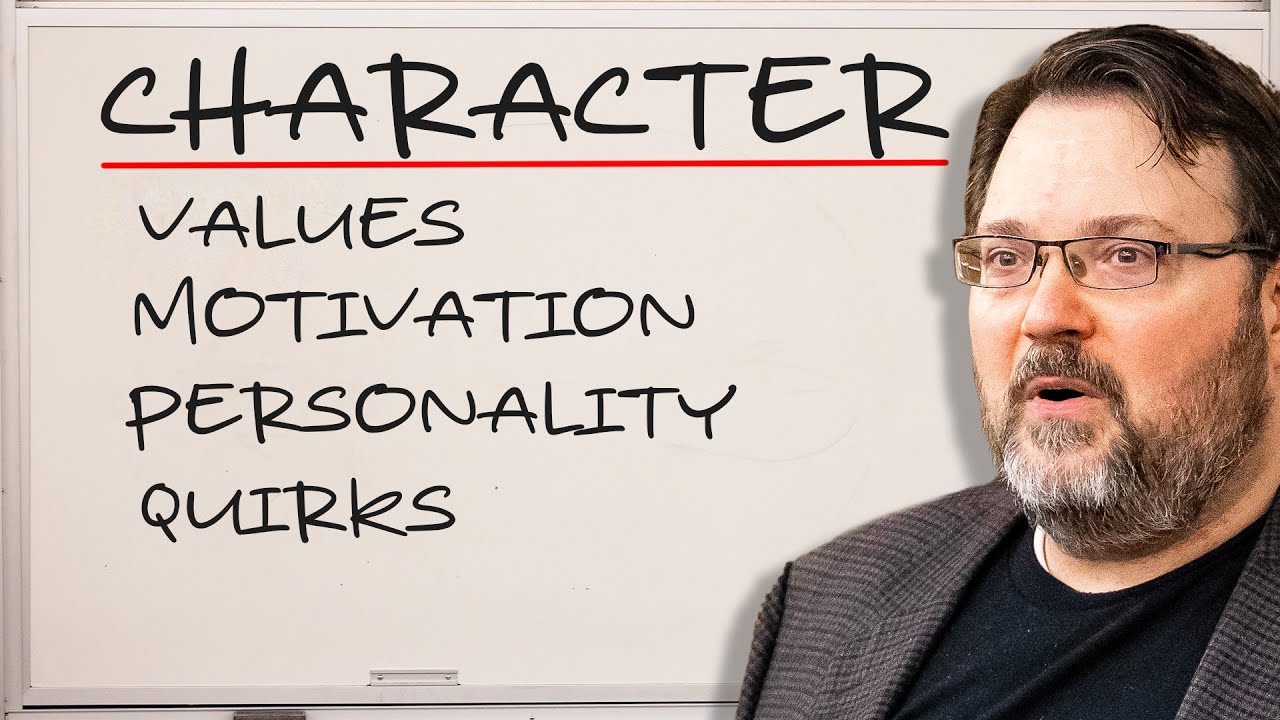
People often ask me, "Where does a book begin for you? " It's really different for every book, and sometimes, in many ways, it's kind of a chicken or an egg sort of thing. I often say that stories are made up of these three things.
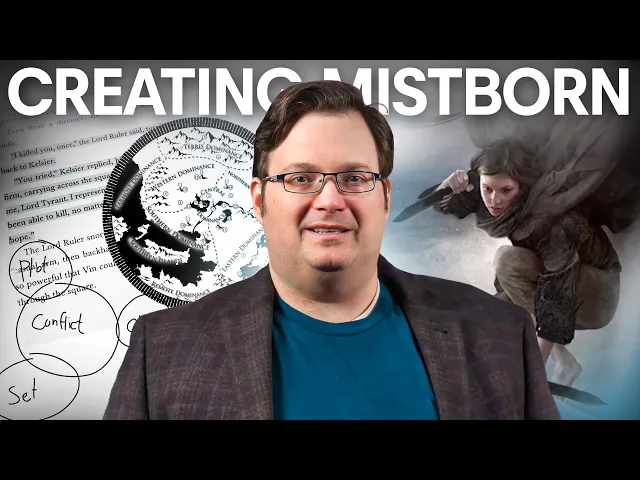
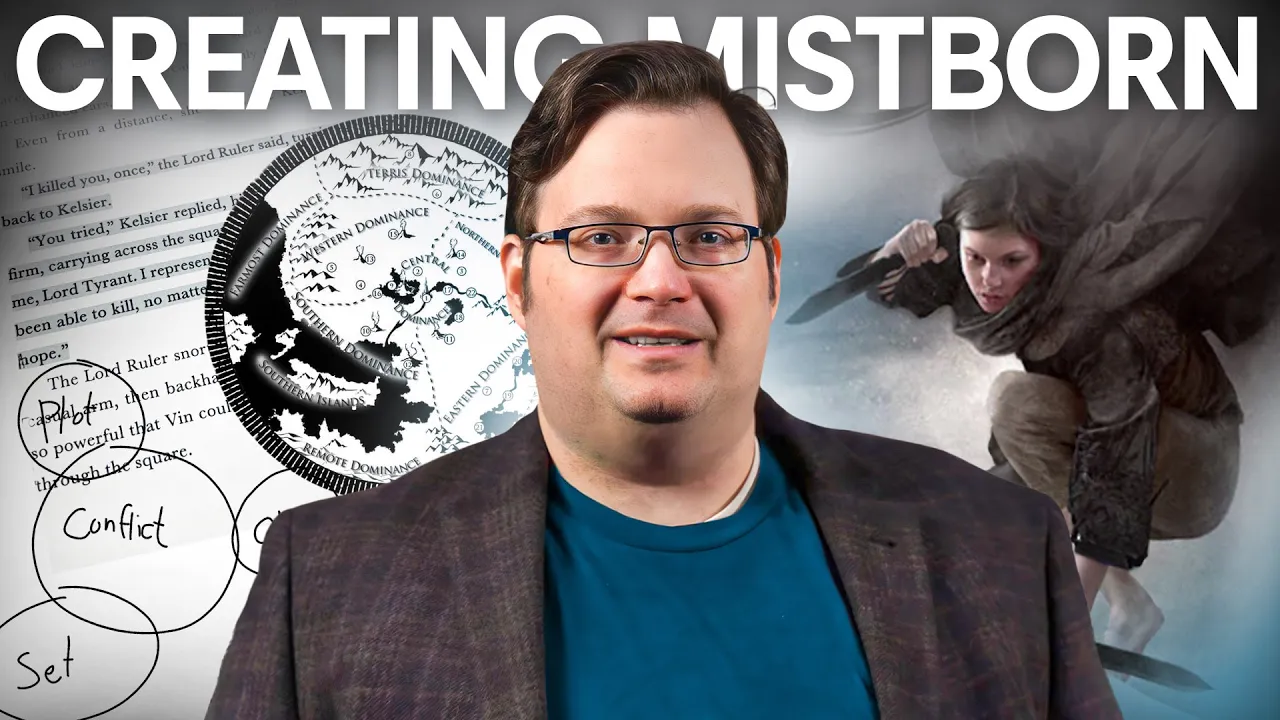
Plot, character, and setting. But they're glued together by conflict, and that glue of conflict is the thing that oftentimes, I'll have a plot idea, or a character idea, or a setting idea separately from one another. I often use Mistborn as an example of this.
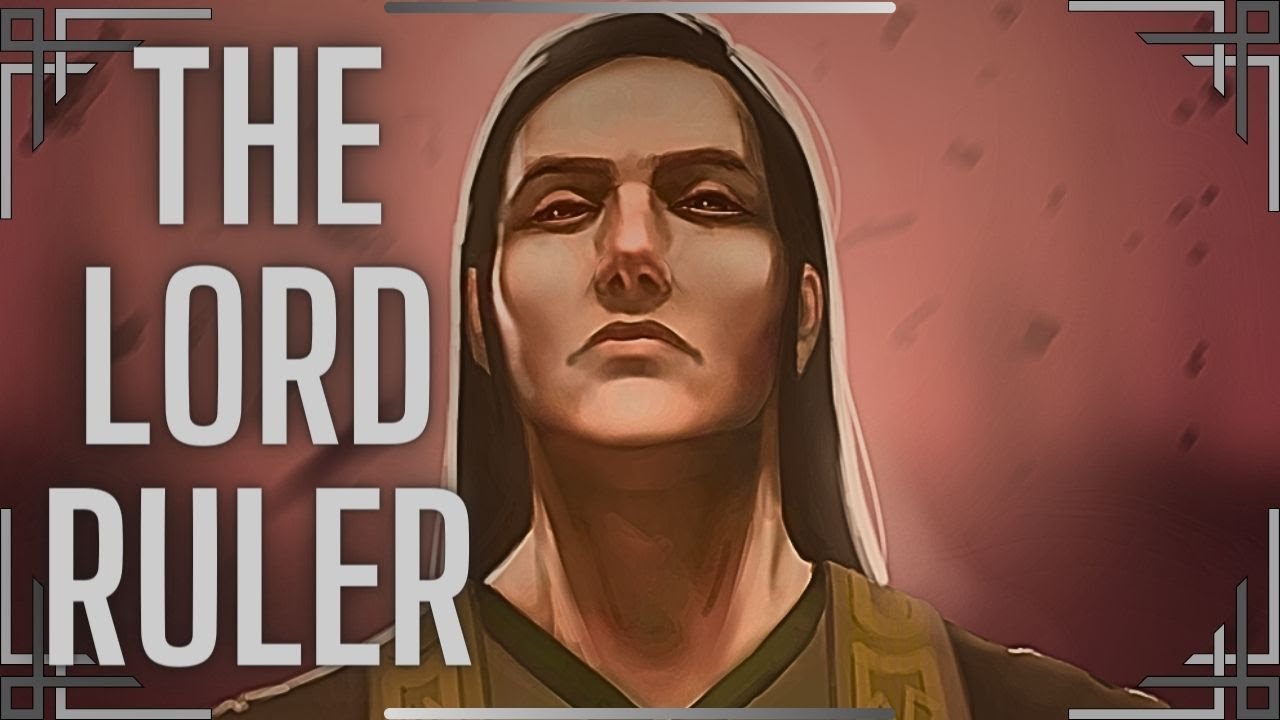
Where did Mistborn come from? Well, Mistborn came from, I was reading Harry Potter, and I thought, "Man, these Dark Lords never get a break. " It's always some dumb kid comes along and ruins the plan they've been setting up for a lifetime.
Same with Lord of the Rings. So I'm like, what if Frodo got to the end of Lord of the Rings and Sauron said, "Hey, my ring! I've been looking for that.
Thanks. That must have been a really hard journey. Thanks for coming all this way.
" And then killed him and took over the world. I thought that was a bit of a downer of a book to write. But I filed the idea away in the back of my head as an idea.
That would be a plot idea. A plot or maybe a setting. It's kind of like, what comes first.
Is this a setting idea? Is this a plot idea? The idea of the prophesied hero failing is kind of a plot idea, but the idea that it turned into, a world where the prophesied hero failed, was a setting idea.
These things all mix together. Separately, another time I was watching one of the Oceans movies, and I was reminded how much I love the heist genre. One of my favorite movies of all time is Sneakers, a fantastic little film.
I've loved it all the way going back, things like The Sting, Michael Crichton's The Great Train Robbery, any sort of heist story. Inception is just a fantastic one. You can always grab me with a heist story.
I thought, "I don't think I've ever read a fantasy heist. " I thought, wow, that would be really cool. You could give every member of the heist team, the leverage team or whatever, a different magical power.
So they could each be magical. You could do this whole thing. I was thinking of that separately.
And that was another plot idea. The idea for the mist came as I was driving to visit my parents in Idaho and I passed through a fog bank at 75 miles an hour, or whatever the legal speed limit is, which I was obviously going, because we're being recorded. I passed through and I'm like, "This visually looks really interesting, hitting a fog bank and going into it.
" I equated that in my head with a visit to the National Cathedral in D. C. , which I had seen at night.
Normally, I'd been inside of cathedrals and seen the stained-glass windows from inside with the light coming in from outside, but this time they had them lit from the inside at night, shining out, and I loved that visual image. Those became two setting details. This idea of the mist, of the fog, of this kind of almost living mist, and this visualization of cathedrals in the mist shining out light.
Those ideas kind of combined together with this character I was developing of Kelsior, all separate. Feruchemy was designed separately from allomancy. If you haven't read the books, there are three magic systems.
Two of them were designed for separate stories, and when I combined them I liked them better. And then I designed a third one in my plotting and world-building sessions. For me, I write down all these ideas.
They just go in my notebook, or in my file in my computer that's called Working Ideas right now. It's just big lists of ideas. A book grows out of multiples of these ideas combining together.
When I have something that feels like the seed of a novel that's working, I'll often go back to my book and say, are there any other ideas in here that mesh really well with these ideas. I often describe, ideas are like these little atoms bouncing around. When they mash into each other, they create some core reaction, become something new.
It's not how actual science works, but, you know, it'll work for the fantasy author. Suddenly you've got this thing growing of all these different atoms coming together and making some cool new thing that is somehow more than the sum of its parts, more exciting at least. That's the story for me.
Then I go and I kind of plug in things. I'm like, what else have I been thinking about that might work for this story, and I plug those in. Then I build those all in an outline that I'll talk about during our second plotting session, kind of how I build my outlines.
At that point, I'll find holes, and I'll just start plugging things in. I'll start brainstorming. I'll start saying, I know I need another idea here.
Let's put it together. Most of the time, a book is not one idea. This is where newer authors sometimes have problems.
They pick one really good idea and they try to write a book on it. You can write a short story on one idea pretty well. A book generally needs a mashing together of multiple ideas.
It doesn't mean you have to have been struck magically by the idea fairy and have this brilliant idea that couldn't ever be reproduced. That's not how ideas work. You just need different hooks and things to make you excited and to get the audience excited.
Ideas are actually cheap. My favorite story about ideas being cheap comes from Jim Butcher. I've confirmed this with him, so I know it actually happened, but I heard it thirdhand originally.
The story goes that during his days unpublished, Jim Butcher, who is now famous for writing The Drsden Files, among many other wonderful novels, Jim was on a forum of aspiring writers, and he got in an argument with someone who said, "Some ideas are just so grand and so great, that's what makes a writer. " Jim was making the argument, the same one that I often make, which is ideas do not make the author. Authors make the ideas work.
If you give bad ideas to a good writer, you will generally get a really great book. If you give good ideas to someone unpracticed, it's still going to fall apart. Jim and this other person got in an argument online.
Finally, Jim said, "Give me your two worst, or at least most incongruous ideas, and I'm going to write a really good book using them. " They said, "All right, I want you to take the lost Roman legion and mash it together with Pokémon. " Jim wrote an entire epic series called Codex Alera, which is basically the lost Roman legion gets Pokémon in a fantasy world.
It's a great series. I recommend it. It's an epic fantasy, it's really cool, and it's actually very distinctive because some of those ideas are very distinct ideas.
But the skill of a writer is what readers and editors are looking for.