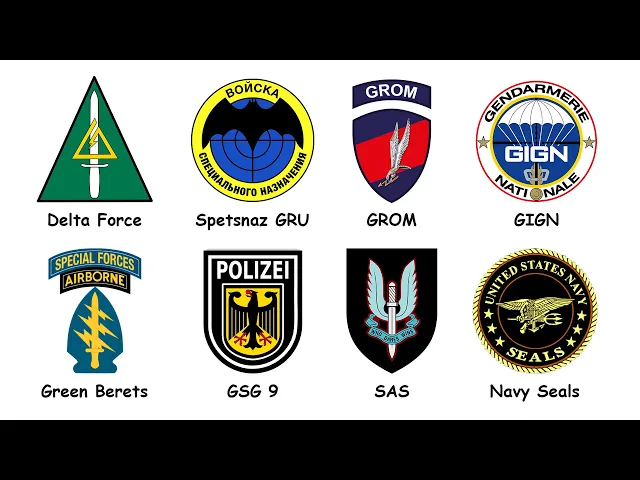
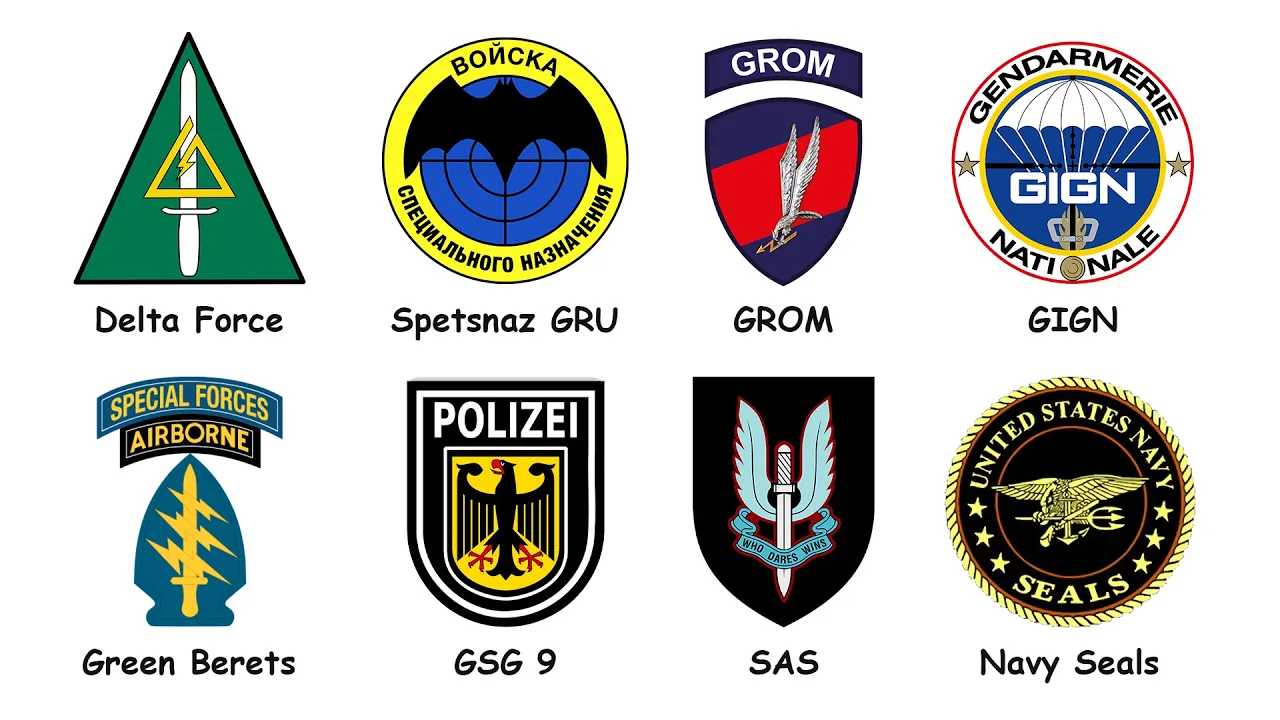
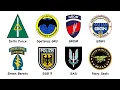
This video is sponsored by War Thunder Delta Force. The Delta Force is the US Army's most elite unit for counterterrorism and special missions, and it was created in 1977 by Colonel Charles Beckwith after he saw how effective Britain's SAS was and realized the US had no equivalent. It's known for their insanely difficult selection process.
One of the hardest parts of it is called the long walk, a 40-mile march through rough terrain. Candidates are not told the time limit, and only the instructors know the cutoff. Out of about 120 candidates, often fewer than 15 pass, one of their craziest missions happened in 1993 during Operation Gothic Serpent in Somalia, also known as the Black Hawkdown mission.
Delta fought through the night to protect downed helicopter crews, and two operators, Master Sergeant Gary Gordon and Sergeant Firstclass Randy Shugart, volunteered to defend a crash site and held off tens of fighters until they were killed. They were awarded the Medal of Honor. They were also the ones who found Saddam Hussein hiding in an underground spider hole.
The operator who found him struck him with his rifle, took away his pistol, and pulled him out alive. In 2006, Delta tracked al-Qaeda in Iraq, leader Abu Musab al- Zarqawi, to a farmhouse and called in an air strike that killed him. More recently, in 2019, Delta carried out the raid that trapped ISIS leader Abu Bakr al-Bagghdadi in his compound in Syria, who then ran into a tunnel and detonated a suicide vest.
Many of Delta's missions, however, are still classified. Spettznaz GRU. The Spettznaz GRU were created in 1949 during the Cold War to sabotage supply routes and kill key leaders before a war even began.
Their origins, however, go way back to World War II when the Soviets sent small, highly trained teams into enemy territory for sabotage and spying. In 1968, during the Soviet invasion of Czechoslovakia, they took control of Prague's main airport without firing a shot. They disguised a transport plane as having an emergency landing and once on the ground stormed air traffic control and took over.
One of their most insane missions happened in the Cold War though when just nine GRU operatives entered a US air base in Cambodia. Their goal was to capture a new AH1 Super Cobra attack helicopter. They stole it, sent it to the Soviet Union for study, and destroyed the rest of the helicopters on the base before leaving.
After the Soviet Union collapsed, Spettzna's GRU remained active. They created two Chetchin battalions, Vastto and Zapad. And they were also part of the little green men, the Russian soldiers who were masked and wore unmarked uniforms, who took control of Crimea in the war against Ukraine in 2014.
During the current Russian invasion of Ukraine, they were sent on dangerous missions to kill Ukrainian leaders, including President Vladimir Zalinski. These missions failed and heavy fighting caused major losses. By late summer 2022, some brigades had lost up to 75% of their troops.
Grom. Grom, short for this incredibly complex name, is Poland's top special mission unit and one of the most respected in NATO. Officially called military unit 2305, it was formed on July 13th, 1990 after Lieutenant Colonel Suamir Pediliki returned from a dangerous mission in Lebanon to protect Polish diplomats and civilians.
Inspired by Poland's famous World War II silent unseen paratroopers, Pedelliki built a force that could rescue citizens, fight terrorism, and take on high-risisk missions abroad. The first members came from Poland's best military and police units and were trained by the US Army's Delta Force and Britain's SAS. All operators must speak at least two languages, and almost all of them are trained as combat medics, earning them the nickname the surgeons.
They became known internationally during the 2003 invasion of Iraq, working with US Navy Seals. In Baghdad, they carried out direct action raids against insurgents, gaining a reputation among CIA and JSOK units for their speed and aggression. In Afghanistan, Grom joined Task Force 49 with no restrictions except crossing into Pakistan.
As of now, they have about 250 elite members, and it's one of the hardest military units to join. On a side note, if you're watching this, you're probably interested in military related topics, so I might have something that interests you. Today's video is sponsored by War Thunder, the most comprehensive vehicle combat game ever made.
I'm saying this because you can pick from over 2,500 machines, tanks, aircraft, helicopters, and even warships from 10 major world powers. There's basically everything from 1920s classics to the high-tech modern vehicles used on today's battlefields. One of the strengths of War Thunder is its immersion.
Thanks to incredibly realistic graphics, detailed vehicles, and authentic sound effects, you'll basically feel like you're there. The coolest aspect, in my opinion, is how the hitboxes work. In most games, you just get a generic health bar, while in War Thunder, you can actually shoot the enemy's weapon and disable it, for example.
Every individual component of the vehicles is damageable, and depending on how well it's shielded, it requires different types of shells and missiles, just like in real life. If all of this sounds interesting, you can check the game out for free and join PvP battles with over 70 million people. Just click the links in the description.
You can play not only on PC and consoles, but also on mobile devices. If you're on PC or console and you've either never played before or you haven't played for at least 6 months, then when you sign up using my links, you'll get a huge bonus pack with multiple premium vehicles, an exclusive vehicle decorator called the Eagle of Valor, 100,000 silver lions, and 7 days of premium account. Thanks to War Thunder for sponsoring this video.
GIGN, the National Jean Darm Intervention Group, is France's top counterterrorism and hostage rescue unit, and it was created in 1973 after the Munich Olympics massacre showed that most countries were unprepared for modern terrorist threats. It began with only 15 members under the command of Christian Prout, but grew into a force of nearly 1,000. Most of their missions are secret and operators faces are rarely shown, but some of their operations were so incredible that they became wellknown.
For example, they became really famous in December 1994 during the Air France flight 8,969 hijacking in Marseilles. Four armed members of the armed Islamic group of Algeria took control of the airplane and planned to crash it into the Eiffel Tower. After 3 days of tense talks, GIGN stormed the plane in front of live TV cameras.
In just minutes, they killed all four hijackers, rescued all 173 passengers and crew, and had nine operators wounded. This is one of the rare examples of a high-risk rescue where every hostage survived. It's also known to be one of the most difficult units to get into.
Only about 7 to 8% of candidates pass the 14-month training. They are also trained in negotiation and crisis diplomacy because GIGN heavily prioritizes precision and restraint rather than just firepower. As a symbol for this, each new member is given a sixshot revolver as a symbol of discipline and the principle of using only the force necessary, green berets.
The Green Beret's official name is United States Army Special Forces, and they were created by Colonel Aaron Bank, a veteran of World War II in 1952. Their main specialty is fighting deep behind the enemy lines in unconventional warfare. So, each of them has to learn a foreign language and understand the politics, culture, and economy of the regions where they work.
They are divided into five active duty groups and two national guard groups, each focused on a different region, the Pacific, Middle East, Latin America, Europe, and Africa. They have fought in almost every major US operation since Vietnam. But one of their most famous missions happened in late 2001, right after 9/11.
In the early stage of Operation Enduring Freedom in Afghanistan, a small Green Beret team joined anti-Taliban fighters. With no modern vehicles available, they fought on horseback across rough mountains using laser designators to guide US air strikes. This helped overthrow the Taliban in just weeks and became legendary, inspiring the horse soldier statue in New York City.
The Green Beret itself was officially authorized in 1961 by President John F. Kennedy, who had a close connection to the unit. So much so that at his funeral, a Green Beret was placed on his coffin as a final tribute.
GSG9 GSG9 Derbundis Polyai is Germany's unit for counterterrorism and special operations and it was also created after the 1972 Munich Olympics massacre just like the French GIGN. At that time because of what happened during World War II, the German military could not operate inside the country. So the government decided to form a highly trained police unit for dangerous situations.
Their first mission in 1977, Operation Fert made them famous worldwide. Four Palestinian militants hijacked Lufansza flight 181 demanding the release of Red Army faction prisoners. After days of flying between airports in the Middle East, the plane landed in Moadishu, Somalia.
But that night, Somali forces created a diversion outside while about 60 GSG9 operators stormed the aircraft. In just 7 minutes, they killed three hijackers, wounded the fourth, and freed all 86 hostages and four crew members. Only a flight attendant and one operator were slightly injured.
The operation earned international praise for its speed and precision since it's well known that aircraft rescues are among the hardest missions in counterterrorism. Since then, GSG9 has carried out over 1,500 missions, many still secret. For example, in 2007, they captured three men preparing attacks in Germany that would have been deadlier than the Madrid or London bombings.
GSG9 also trains elite units worldwide. Most importantly, they helped in the creation of the US Army's Delta Force, worked with India's National Security Guard, and regularly trained with Israel's Yamam, France's GIGN, and the FBI hostage rescue team. The unit has about 400 members split into four operational groups, one for sniping, one for maritime missions like ship and oil platform rescues, one for airborne operations, and one for urban counterterrorism in Berlin.
GSG9 is known for its restraint, kind of like the GIGN. They have used live gunfire in only a few public missions despite decades of operations, SAS. The Special Air Service is the most elite special force unit of the British Army, known for taking on some of the most dangerous missions in the world.
It was founded in 1941 during World War II by David Sterling. And their first mission, a parachute drop, ended badly because of bad weather and strong German defenses. So much so that only a third of the men made it back.
Their second mission, however, was a major success. They attacked three enemy airfields in Libya, destroyed 60 aircraft, and suffered no losses. From then on, they became incredibly skilled.
During the war, they were so feared by Germany that they faced the deadly risk of Hitler's commando order, which meant they would be executed if captured. Then after the war, the unit was disbanded, but later reformed, eventually becoming the 22 SAS regiment, the main regular army component today. They became world famous in 1980 during the Iranian embassy siege in London when they rescued all but two hostages.
The raid was broadcast live on television and showed the world their insane skill in close quarters combat. They were also heavily involved in Afghanistan and Iraq. In Iraq, they were part of a special task force that reportedly removed over 3,500 terrorists from Baghdad.
Joining the SAS is extremely hard. You have to go through a four-week endurance test in the Welsh mountains, ending with a 40-mile march carrying full gear, which must be completed in under 20 hours. Successful candidates then move to jungle training in places like Bleise or Brunet, learning survival and navigation.
The final phase is escape and evasion training, ending with a 36-hour resistance to interrogation exercise. Because of this crazy selection process, only around 10% of the candidates actually pass. Navy Seals.
The US Navy Seals are trained to carry out small unit missions anywhere in the world from oceans and rivers to jungles, deserts, and even Arctic terrain. Their jobs often include capturing or killing important enemies, gathering intelligence, and carrying out sabotage, demolition, and direct action raids. Their history goes back to World War II when the US military needed troops to secretly scout beaches before amphibious landings.
This led to the creation of the amphibious scouts and raiders in 1942. Another early group, however, was the naval combat demolition units, specialists in clearing obstacles. Their training included a brutal filter stage that became known as hell week, a tradition still used in SEAL training today.
And the name isn't an exaggeration. The training is incredibly hard. The naval combat demolition units are mostly known for their incredible performance during the D-Day landings in Normandy, blowing eight complete gaps in German defenses on Omaha Beach under heavy fire.
Later on, the underwater demolition teams were formed. They were known as the naked warriors for doing daylight reconnaissance in just swim trunks. And they later took on more offensive missions in the Korean War, such as night raids to destroy enemy tunnels and bridges.
In 1962, President John F. Kennedy's focus on unconventional warfare led to the creation of the first SEAL teams, drawing their members from the UDTS. One of their most famous modern operations came in 2009 during the Marque, Alabama hijacking.
Three SEAL team six snipers aboard the USS Banebridge killed three Somali pirates holding the ship's captain hostage in a lifeboat. Each hitting their target with a single simultaneous shot from 100 yards. They're also the ones who killed Osama bin Laden in Operation Neptune Spear.
Once again, thanks to War Thunder for sponsoring this video. And remember that you can play it for free on PC, PlayStation, Xbox, or mobile now by using my links in the pinned comment or video description. New and returning players that haven't played in 6 months will receive a massive bonus pack across PC and consoles, including multiple premium vehicles and other goodies.