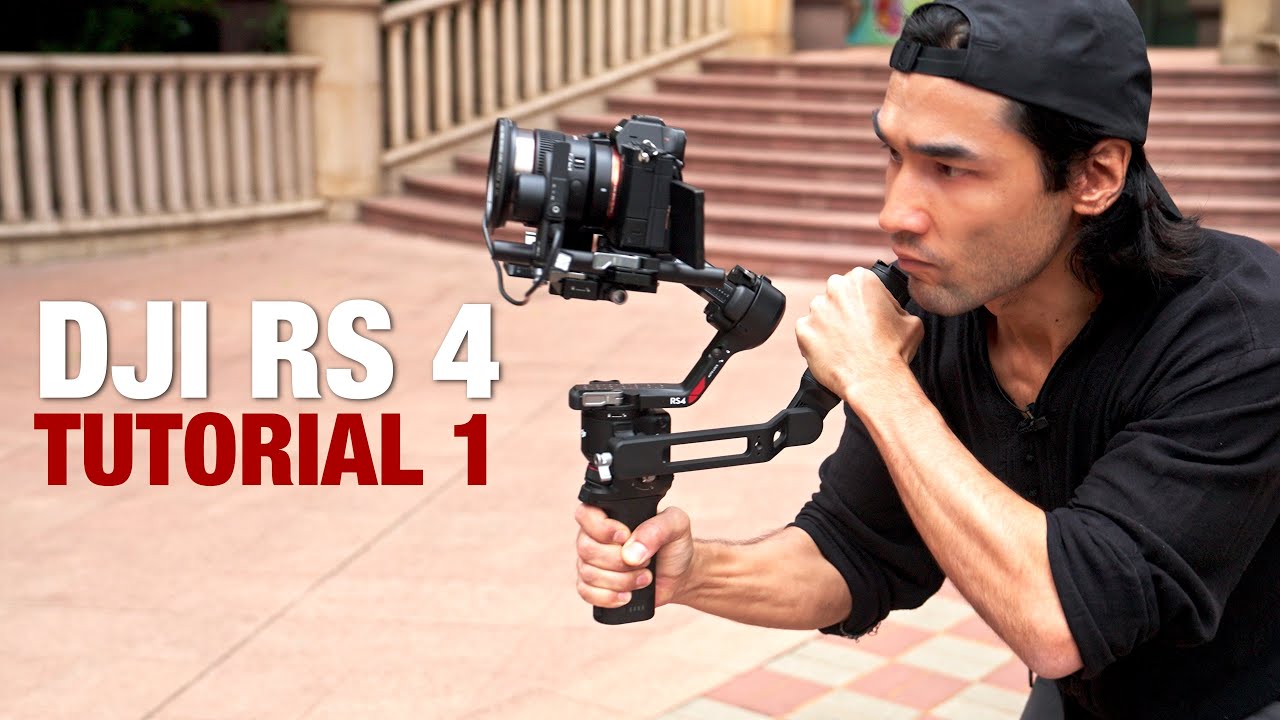
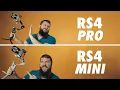
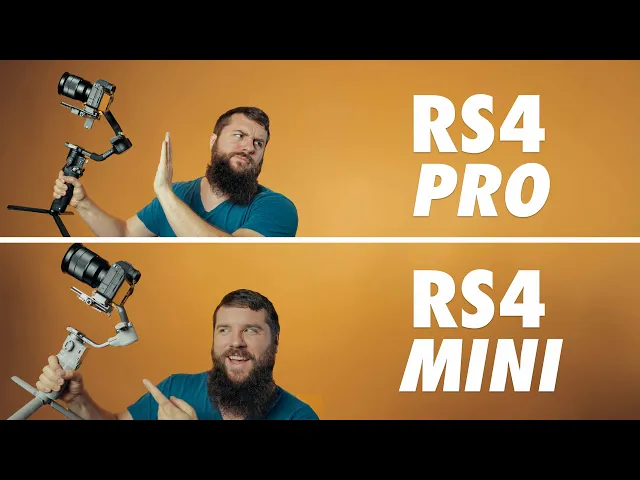
The DJI Rs four mini builds upon everything that I loved about the Rs three mini with some key improvements. And if you're a filmmaker that wants to use a gimbal but does not want to have to carry around a really heavy set up all day, I think you're going to absolutely love this gimbal. A bit of a spoiler for how I feel about this gimbal out of the way.
In this review, I'm going to be reviewing the Rs for mini from the perspective of a wedding slash commercial slash documentary filmmaker. So if you want to use this gimbal for wedding videography or corporate or commercial videos or documentaries, basically anything where you're making money with filmmaking and you need a super lightweight filmmaking setup, this review is for you. Also, for the sake of ethics, I want you to know this video is not paid or sponsored by DJI, but they did send me this gimbal early so I could make this review.
And because I want to help you out even more, I want you to know that I've linked in the description to my Wedding Filmmaker Gear guide that's going to show you all of the equipment that I recommend you purchase to film a wedding, not just a gimbal like this. Getting right into the review. Then, as I said at the start, I absolutely love the DJI RS3 gimbal, and it's been my go to for wedding filmmaking because it's just so compact and lightweight, meaning that even if you're filming with it for eight, ten, 12 plus hours on a wedding day, your arms are not going to be tired.
And in addition, even though it's small, the motors are still strong enough to hold a mirrorless camera and lens. Heck, I filmed an entire wedding with the RS3 mini, a Sony A7 S3 with a 24 to 105 millimeter lens on it, which is definitely not a small or light lens. And while that was definitely pushing the payload capacity of the gimbal to its limits, it still worked great.
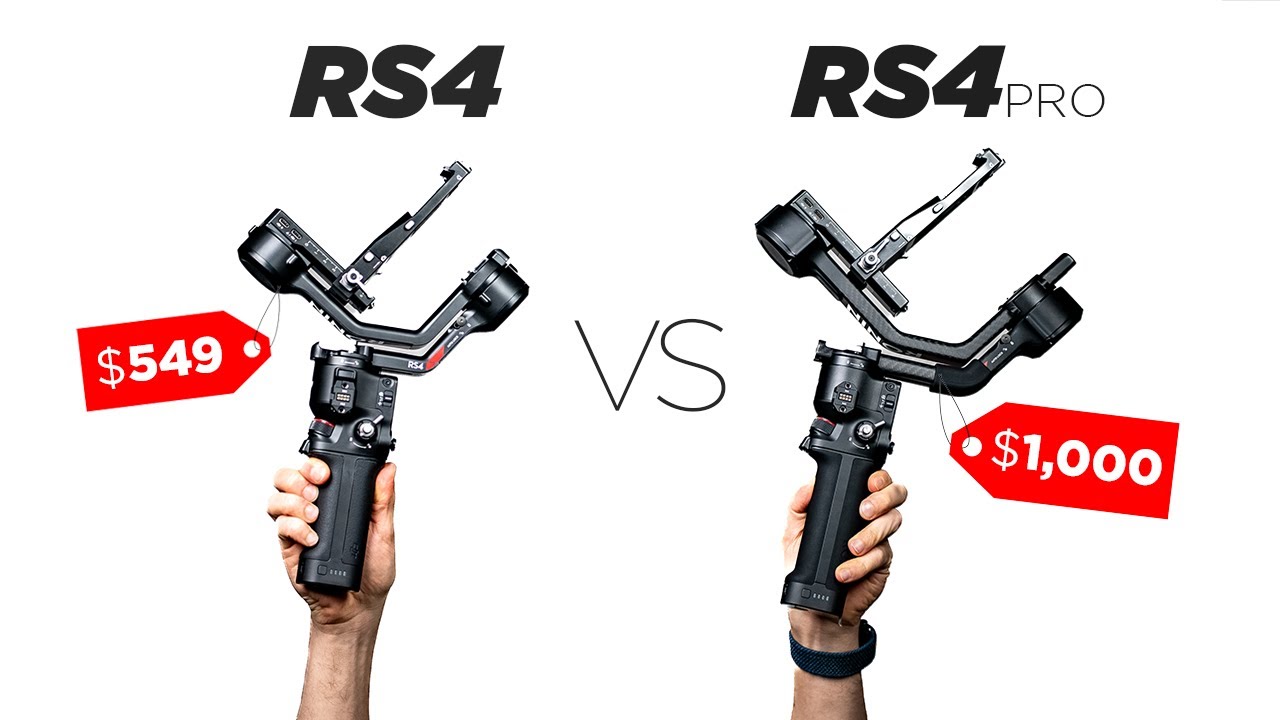
That brings us to the Rs four mini because, well, I still love the RS3. There were certain updates that I would love to see DJI take from their flagship gimbal, the Rs four Pro, which I happen to have right here, and I really wanted to take these features and put them into a smaller gimbal. Features like the much loved auto locking and unlocking arms of the Rs four Pro, for example.
But to be honest, I wasn't sure if that was going to be possible considering how much smaller the Rs four mini is. Would you be able to cram a new feature like this in? And I have good news.
The answer is yes. They did squeeze in this auto locking arms feature, meaning that any time you want to use the gimbal, you can turn it on and it will be active. Press the lock button now and the arms are very locked and it just works.
Just like the big gimbal. It's so awesome. I know that gimbals have had this capability for years now, but I've never seen it in this small of a package.
And this gimbal is so cute and magical more so than ever before. The Rs for many really feels like JW has taken most of the features, buttons, and interface from the Rs four Pro and shrunken them down to fit on the Rs four mini. Take another example here.
The RS3 mini supported vertical filmmaking, but it was a bit clunky and not super intuitive to set up. Thankfully, when DJI released the Rs four Pro, they designed a super simple horizontal to vertical swap system where you simply use one knob and press one button, and you can switch from horizontal to vertical. Filmmaking.
And again, keeping on this miniaturization trend from the Rs four Pro to the Rs for many of the Rs. For many use the exact same system where you loosen one knob, press one button, and you detach the entire base of the arm that connects to your camera. And then you can simply reconnect it vertically, tighten it in, and your camera is now ready to film vertically.
It's really quick and easy to use and swap between horizontal and vertical filmmaking, and I'm so glad to see the DJI has added this capability to the Rs four mini. Of course, by the way, you do need to also stabilize it and rebalance it. Okay, so make sure you do that.
Now let's talk payload capacity because I feel like gimbal manufacturers for years were touting just how much weight their gimbal motors could handle. But a few years ago they started to brag significantly less about this. You don't really see it nearly as much.
And in the case of the RS3 and the Rs for mini, DJI does not publicly give an exact payload capacity. Thankfully, I did some testing and I have some results for you. First, I want you to know that I've filmed multiple weddings and other events with the RS3 mini for over two years now, and that gimbal has proven itself time and time again that even though it is small, it is still mighty with a capability of handling smaller prime lenses like 24 and 50 millimeter with ease.
And if you push it a bit, it will even handle larger lenses like a 24 to 105. That said, if you were using larger and heavier lenses like a 24 to 70 or possibly something like Sony's new 28 to 70, which is even larger and heavier, that is where the Rs three mini could handle it, but you would be pushing up against the payload capacity of that gimbal. That wasn't a huge issue for me, but I know a lot of filmmakers that love their 24 to 70 lenses and a smaller gimbal like the RS3 mini pushed to its limits would have made them nervous.
Thankfully, with the Rs four mini, DJI made some subtle but noticeable changes to the size of the gimbal. And even though they're not publicly stating the payload capacity of it in my testing, it does look like it's now built to handle larger cameras and lens setups like a 24 to 70 f 2. 8, or even a 28 to 70 F2.
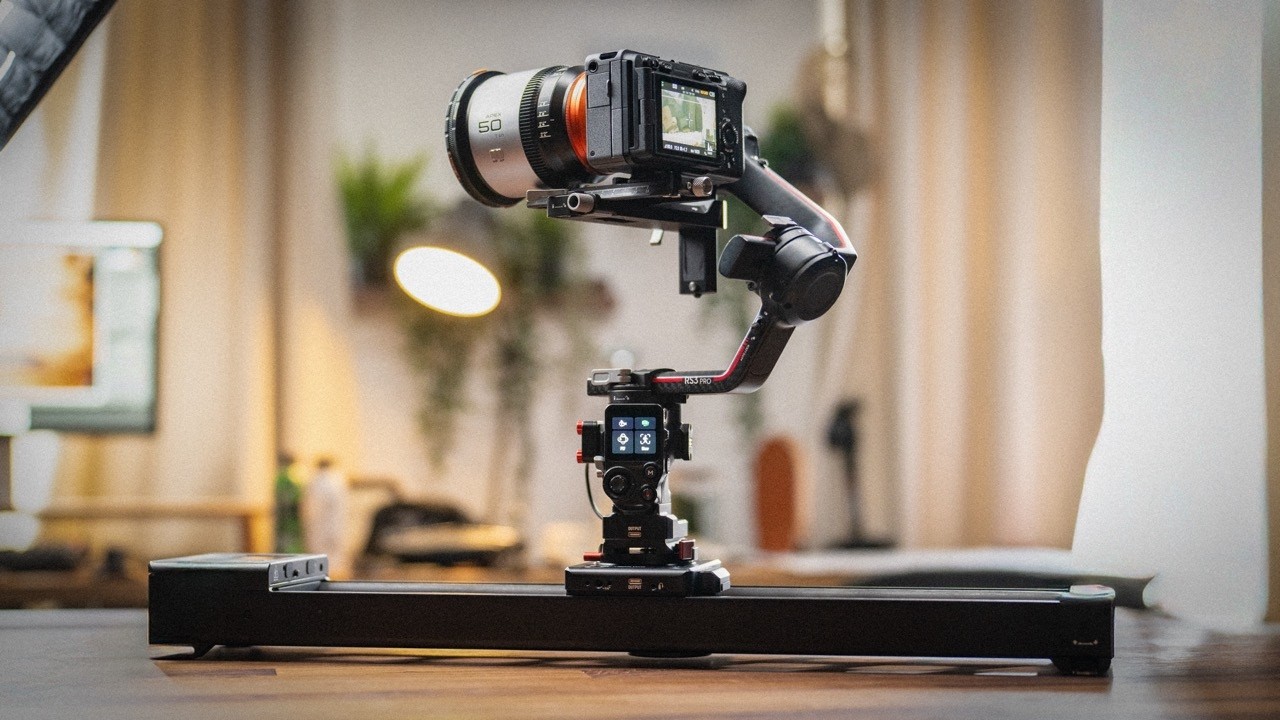
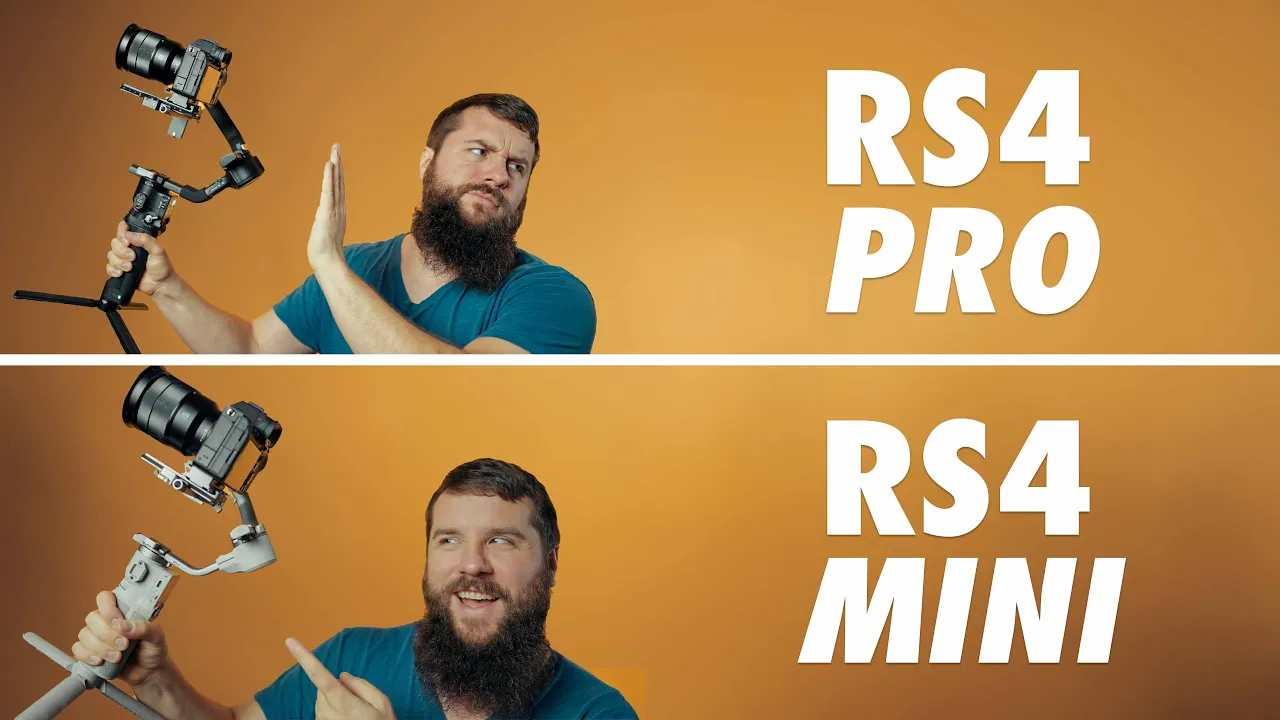
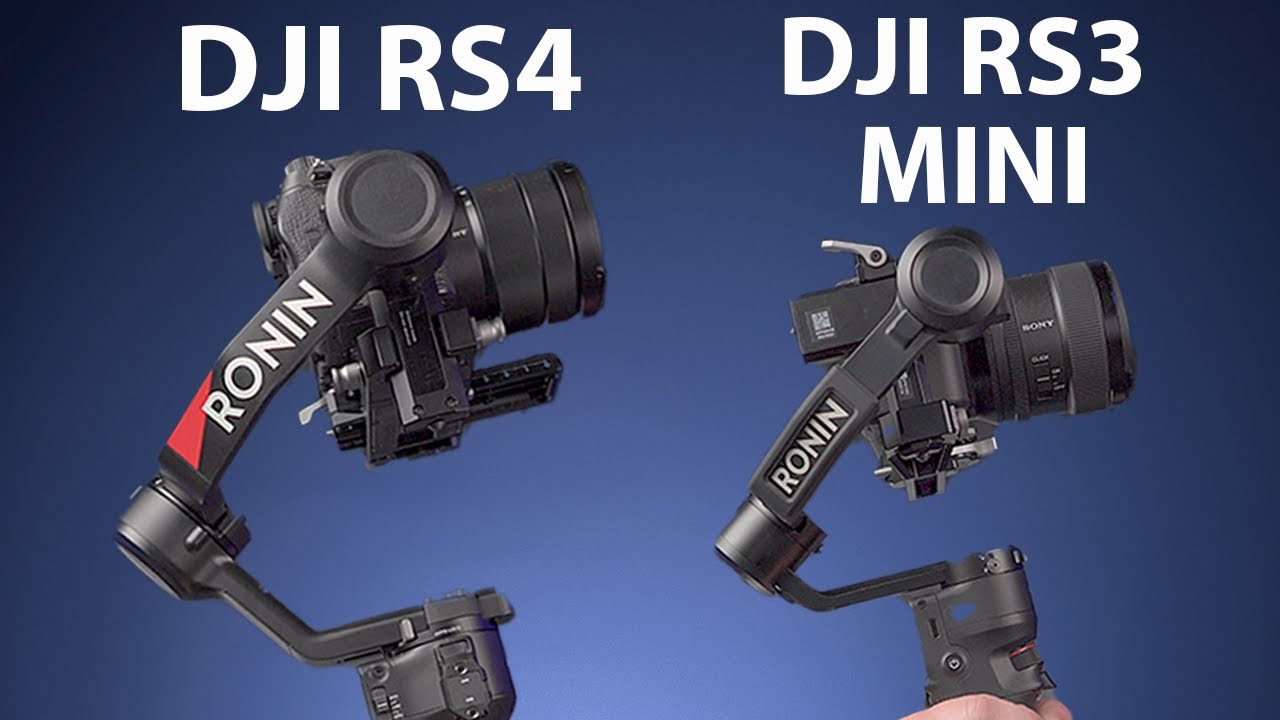
Here's what I mean by subtle changes. Look at these two gimbals side by side, and you'll notice that the Rs for many is slightly taller and has larger tripod feet, which makes it more stable even if you have a larger camera and lens set up on it. In addition, the motors are now larger in diameter than the Rs three mini.
But also keep in mind they have to have the hardware support to auto lock and unlock. So while I'm not sure that the motors themselves are actually strong or not, what I can tell you is that the overall size of the arms is larger. For example, if I put a rather large and heavy Sony one 35 millimeter lens on an A7 S3 and put that on the RS3 mini, I have to move the camera all the way back on the arms of the gimbal to make sure it will stabilize, and while it works, you can definitely hear the motors grumbling a little bit as you use it.
Alternative. They'll put that same camera and lens set up on the Rs four mini, and it handles this setup easily, with room to adjust the camera even further back if needed. Telling me that the Rs four many can easily handle a larger llin set up like a 24 to 70 or 28 to 70 if needed.
In addition, if you're wondering the total weight of this camera and Linn setup, it's about 1650g or 3. 6 pounds, which, considering the size of the gimbal, that's impressive. And remember why I would consider that to be the maximum weight that the RS3 mini could handle.
The RS4 mini does look like it can handle even more. In addition, while we are talking about weight, I want you to know that even with this added size and payload capacity, the overall weight of the RS3 mini gimbal has barely increased. And whenever I weighed the RS3 mini, it came in at 988g, while the RS4 mini came out at only 1054g, so it only weighs 66g more, which is a pretty negligible amount.
And after holding both these gimbals a lot, they feel basically identical, which is nice. Of course, if we're talking about future wishes for an RS5 mini, for example, I would naturally love if the gimbal had carbon fiber arms like the RS4 Pro, which would make it even lighter. And heck, while we are dreaming, I would also love a swappable grip like the Rs four Pro has for extra battery life.
That said, though, in regards to battery life, after testing the battery of the RS4 Pro versus the Rs three Pro, remember that I filmed an entire wedding day with the RS3 Pro, something like 14 hours, and I was still at 50% battery and in my testing of the RS4 Pro, it appears to be pretty darn competitive in terms of battery life with the RS3 Pro, so I would not stress about battery life with either of these gimbals. They should get you through even a rather long day of filming, plus their staying power delivery so you can plug a usb-C battery, pack in and charge the gimbal if you need to, and it works really well. Now, going back to talking about the other changes that I made to the Rs four mini and keeping on the trend of the RS4 mini being a miniaturized Rs four Pro.
If you look at the side of the Rs four Pro, I took the same pan, tilt and follow switch from the larger gimbal and put it on the small one, as well as another switch on the other side of the handle for zooming and panning and tilting the gimbal as well. So these are all welcome changes that makes these gimbals feel really cohesive overall. In addition, while the Rs three mini was capable of stabilizing a smartphone if you brought your own smartphone holder, DJI now makes a dedicated smartphone holder built for the Rs four mini that you can purchase separately.
This adapter is pretty cool because it combines a phone mount and a base plate all in one in the adapter, and in my testing, it works really well with the Rs four mini. So if you are some of the films with a bigger camera but likes to film with your phone on occasion, it's nice the DJ is turning the ISO for many into a gimbal. It has the versatility to be used with a phone as well.
With an official accessory now sticking on this accessories trend more than just a smartphone mount and also taking a page from any of their other products that they make, DJI chose to offer two flavors of the Rs for many of you can purchase. One of them is a more basic option that just includes the gimbal and feet. While it does not sell a version called the DJI Rs four Mini Combo, which includes not only the gimbal and feet, but also to accessories, one of which is very interesting.
The first and less interesting accessory is a very lightweight stabilizer arm that you can mount to the side of the gimbal to add extra stability, just slot it in, tighten it up, and then you have two hand grips for your gimbal. And this is something I've seen from a lot of gimbal manufacturers, but I know some filmmakers love having an extra arm. For me personally, though, if I'm filming with a gimbal as small as the Rs four mini, I'm filming with it because I wanted to have such a small footprint and be a small.
And it's lightweight as possible, and whenever you add an extra arm, that just adds to the size and weight of the gimbal, which I'm not necessarily a fan of. But hey, if you love an extra arm, feel free to get the combo. This is a very lightweight arm too, which I really appreciate, but I don't really find this arm to be a compelling reason to purchase the combo.
In my opinion. That said, though, the second accessory that DJI includes is far more compelling, and I think a lot of filmmakers are going to be intrigued by it. The second accessory DJI includes in the combo is called the Rs Intelligent Tracking Module.
And if you've ever used any of DJI drones or their mobile gimbals, you have an RS4 Pro and you've purchased their LiDAR rangefinder. Then you can probably guess where I'm going with this. This intelligent tracking module accessory allows you to track people in the frame and keep them in the shot.
To be clear, this module is not going to be able to add autofocus capabilities to manual lenses like the LiDAR module does. Sorry, that module on its own costs more than this entire gimbal setup. And in addition, that also requires a follow focus, and I'd probably too heavy of a setup for a gimbal of this size anyways.
Regardless, this intelligent tracking module is still very cool because it's very easy to use. It's integrated so well into the gimbal while still being an optional accessory, so you don't have to use it if you don't want to. You can take it off the gimbal and have your setup be as light as possible.
Whenever you look at how small this tracking module is, and you see how the gimbal was built to accept it, you don't need any extra wires to make this work. No, instead, it mounts magnetically to your gimbal and clicks in firmly and receives power from these pogo pins directly from your gimbal. Just like that.
Boom. It's connected and powered. Pop it off, pop it back on whenever you need to, and then whenever you want to track someone.
Let's say that you're filming yourself and you do not have an extra person available to film you, for example. Well, all we have to do here is simply unlock the arms and then it's facing me and you're going to see that you have this tracking ring light that lights up in red whenever the tracking is disabled. And if you want to activate it, simply point the gimbal at you.
Hold up your hand to indicate that you want it to focus on you, and the camera will recognize you. The light will turn green and it will vacate this following you. And now suddenly, I'm in the frame.
Whoa! This is so cool. So then you can start to walk around and the gimbal will follow you, tracking you wherever you go, up and down, side to side.
And what's cool is in the settings, you have the ability to control the responsiveness on the gimbal. What's doing this? So you can turn up higher to make sure the gimbal can keep up with you, even if you're moving very quickly.
I feel like Justin Porter right now doing a light test. You remember that thing? Have you seen that video?
Oh. Oh yeah, I'm like him, but I don't know if I'm as fast as he is. So should we have a running contest?
Medium should have a sprint off. That'd be a lot of fun. Wow, that'd be great.
Anyways, I hear you now telling me, Matt, I don't want a giant green light shining on my gimbal or red, especially if I'm using it to track a client as they're moving. Well, don't sweat it. You can go into your settings and disable this lights completely if you want to, and the tracking module will still work.
So as you can see, I think this is a super cool accessory. And if you were someone that films yourself and you want the added control and benefit of being able to track yourself rather accurately, then purchasing the combo version of the RS4 mini is a no brainer in my opinion. So here's what it all comes down to.
If you are a filmmaker who likes the features and capabilities of the Rs four Pro gimbal, but you don't commonly find yourself using a heavier camera setup like a cinema camera or something rigged out with a lot of accessories, and instead, you are commonly using a mirrorless camera with some sort of lens, and maybe even a monitor, which you can mount to the side of any gimbal on the mounting point. In that case, if you want a gimbal that takes many of the features of the class leading Rs. Four Pro gimbal and shrinks them down into an even smaller and more lightweight size, it's going to be much easier to use on your arms and back all day.
Features like auto locking arms, a very similar control interface with nearly identical switches and buttons, the same system to swap between horizontal and vertical filmmaking, and then you throw in eye tracking with a module that's very well integrated into the camera. And this is where the Rs four mini starts to make a lot of sense. This gimbal has a lot less compromises than the Rs mini had.
And personally, as someone who loved filming with the Rs three mini, let me just say that I'm going to love filming with Rs four mini as well, and I'm planning out being my go to gimbal going forward. I think you're going to find this gimbal really compelling as well, especially whenever you consider the price for context, I bought my Rs three mini new for 369 bucks with my own money because I like this gimbal. So stinking cool, I love it.
Back in January 2023, I made that purchase, so I was pleasantly surprised to see the DJ. I was targeting a similar price for the Rs. Four mini as well, and probably around 450 bucks for the combo with the intelligent tracking.
Don't quote me on the exact numbers. DJI hasn't told me exactly, but I will link to the gimbal down below so you can see the current pricing. Regardless, this price feels really aggressive in a good way, and whenever you consider that in Rs.
Four Pro is still 800 plus dollars, this Rs four mini gimbal is basically half the price for many of the same capabilities, which is super cool. Speaking of super cool, if you want help booking your next wedding, which keeping in mind, I reviewed this gimbal from the perspective of a wedding slash commercial slash documentary filmmaker or anybody that's making money with their camera. Right?
I would love to help you book your next wedding and have a free workshop that I've put together. It's going to show you how to book your next wedding in 30 days or less, guaranteed. So if that is intriguing to you, I highly recommend watching this free workshop.
It's linked down in the video description. Please subscribe if you'd like to see more videos about filmmaking and making money with your camera. Thanks so much for watching!
Have a great day! Be. Be.
Don't.




![Overrated: Camera features that don't matter [ft Gerald Undone]](https://img.youtube.com/vi/SlLbkeNH9to/maxresdefault.jpg)