[Music] hello I'm Ted sides and this is capital allocators this show is an open exploration of the people and process behind Capital allocation through conversations with leaders in the money game we learn how these holders of the keys to the kingdom allocate their time and their Capital you can join our mailing list and access premium content at Capital allocators All opinions expressed by Ted and podcast guests are solely their own opinions and do not reflect the opinion of capital allocators or their firms this podcast is for informational purposes only and should not be relied upon
as a basis for investment decisions clients of capital allocators or podcast guests May maintain positions and securities discussed on this podcast 3G capitals buyout of Burger King may be the most successful private Equity deal you've never heard about over the last 14 years or the length of a typical private Equity Fund 3G turned a$1 billion investment into 28 billion do in value the annual dividends from the investment acre to 3G today are around 70% of its invested Capital the deal is one of the highest earning buyouts ever 3G is an organization with a storied history
founded by Jorge Paulo Lon Carlos Alberto sopir and Marcel Harmon telis the group created an owner operated model of investing they Rose to prominence through building the largest beer company in the world initially buying local Brewer Brahma in 1989 expanding it and merging with a competitor to become anev in 1999 merging with interbrew to become inbev in 2004 and taking over anheiser bush in 2008 to become AB in beev 20 years ago Alex bearing a young star on their team moved to the US to form 3G capital and Take the approach abroad Burger King was
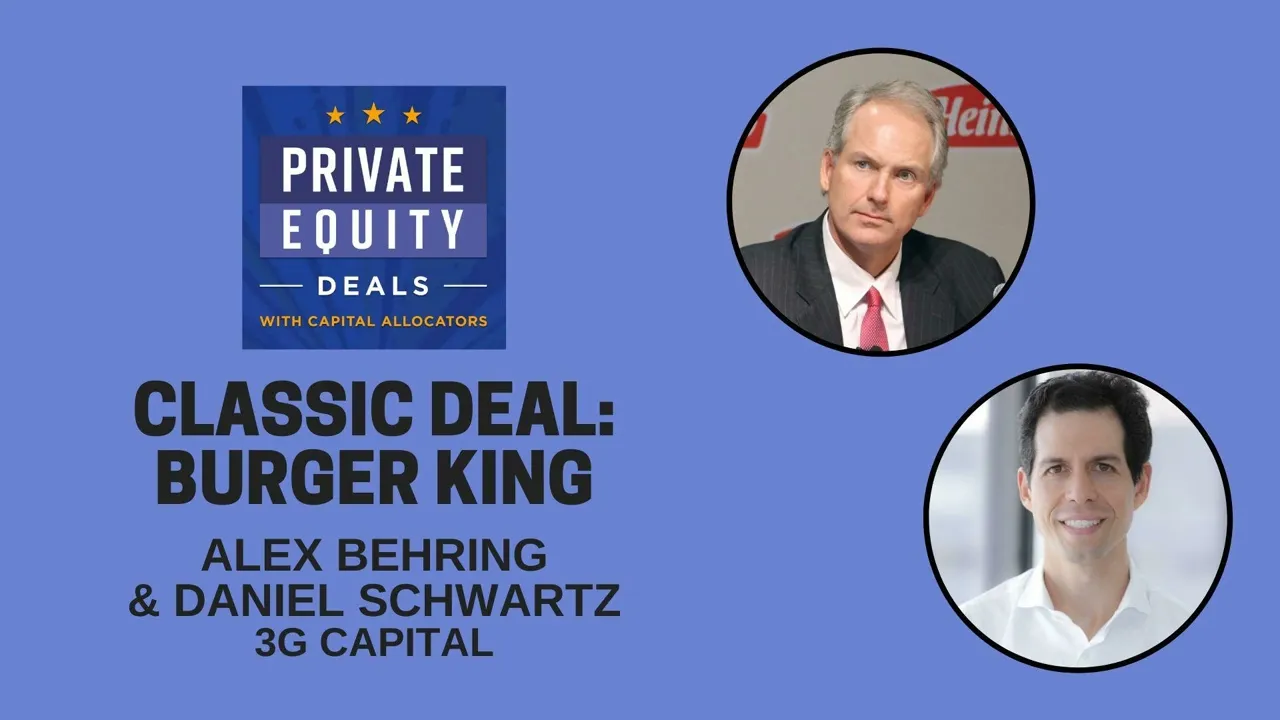
the second largest hamburger fast food chain after McDonald's in 2010 when 3G took it private what it accomplished since then has been extraordinary my guests on today's show to discuss 3G and the deal are Alex bearing and Daniel Schwarz co-managing partners of 3G capital our conversation covers the history of 3G Alex's journey to form 3G capital and The 3G Playbook we then dive into the deal covering the sourcing and deal Dynamics improving operations growing the business taking the company public unexpectedly and reloading to buy Tim Hortons Popeyes and Firehouse Subs today's Burger King is part
of Restaurant Brands International a public company with the ticker qsr with a $32 billion market cap and $50 billion Enterprise Value this classic deal will widen your apperture on what's possible With a long-term compounding holding period and operational excellence before we get going it's early May time for April Showers to turn to May flowers for the NBA and NHL playoffs to kick into high gear for colleges to head for summer vacation and for Gatherings of investment professionals at the burshire Hathaway annual meeting in Omaha followed by the milk and Global Institute conference in California if
you made it to Omaha this Year you're likely buzzing with excitement from the conversations friendships and Warren's continued wit and wisdom if you're headed to Los Angeles for milin you're likely buzzing with anticipation for the discussions you'll hear people you'll see and festivities you'll attend so whether you're on your way to Hollywood or like most experiencing a touch of longing what better way to taste greatness than listening to this week's show maybe it's A coincidence just maybe that this week's guest 3G Capital discusses a birkshire Affiliated investment in a leveraged buyout not a bad way
to bridge the gap between the two icons that draw many across the United States from around the world and if you tell your friends colleagues and peers about it you can bond without the fomo that might otherwise come thanks so much for spreading the word please enjoy my conversation with Alex bearing and Daniel Schwarz Alex Daniel thanks so much for joining me it's a pleasure Alex why don't we start with a full background of 3G so Tad we started 20 years ago originally as a family office of my co-founders so just house capital and what
we intended to do originally was to replicate this approach of being long-term operating owners of good businesses a model that was originally developed in Brazil and it was Subsequently companies took it all over the world and then we wanted to attempt to do that outside of Brazil and that was sort of the inspiration to set up 3G capital in New York City at the time and how did you come to join the organization so I had joined the organization approximately a little less than 8 years or nine years before out of the Harvard Business School
I joined out of school in the predecessor private Equity Firm they were starting in Brazil and initially I started as an analyst I evolved to become a partner and most of my time there I spent running one of the portfolio companies this company that was a result of multiple Railroad privatizations in Brazil and that was a continuation of the model that had worked so far to the extent that the partners were able to acquire good business one of the partners would take a CEO role in that business so I was a continuation of that Approach
and I ran the company all the way to taking you public in early 2004 transition to a board rle and moved my young family to New York City to start 3G Capital this owner operator Playbook what does that mean It ultimately means that we get very very handson in the business that we attempt to chart a path of value Creation in the business that essentially typically has three phases to it it does have an initial Phase where we try to put together a team that combines some people that understand our ways of doing things usually
frankly on back and Leadership like CEO and then backhand positions CFO purchasing and things like that and we try to combine that with people from the business on the sales marketing front of the house jobs and we try try to initially make this first phase the business more efficient that frees up cash flow it Frees up Focus to enhance or resume however the case may be organic growth and hopefully by the time we've established the basis of a culture and the business is clicking we are able to Source inorganic m&a growth opportunities so that is
the process we typically go through when you think about our way of doing business and driving efficiencies 3g's been well known for a long time for this concept of zerob based budgeting would love to Hear how that actually works when you first step into a company yeah I mean Ted I probably should perace this by saying we had this big returns in companies like RBI and where I think we made 28 times the original billion plus Capital we put in and we had a 30% irr in 14 years all and things like that and in
spite of all the publicity the zero based budget gets the portion of that value creation that is directly associated with the efficiencies and Therefore with the zerob based budget is small I mean frankly the majority of that growth came from again the organic and the inorganic growth but having said that as a means of introduction to your question the Zer based budgeting process essentially attempts to look at the expans and the capital expansion base without for a moment abstracting yourself from the existing numbers and from the peers as if you were starting the business at
that moment what would You need and then of course you're going to have to compare there with what you have what the peers have to make sense of it and derive actions and so on but it's an approach where you take an intellectually honest Grassroots view of cost it brings ownership and accountability to cost it's about looking at cost as if you are the owners of the business as opposed to just the employees who are fine spending whatever budget is set for them if you Look at the history of the deals you've done you're buying
what you think is a good business to begin with and then you're applying this lens of efficiency what are some examples of things that you found that you were able to let's just say take some cost out or drive efficiency that you might think from the outside well it's a good business it's already run well I differently characterize it by saying we're trying to bring an owner operator approach to All facets of the business be it cost or growth you look at Burger King this is a business that was operating at the time we bought
it in 80 plus countries that had a 50ish year history of successfully expanding into the second largest fast food hamburger chain in the world yet when we looked at it it it wasn't operating as profitably as its peers and it wasn't grow growing is fast and so coming in having a new refresh team with goals around cost management goals Around Capital Management goals around growth in terms of the number of restaurants that this business should be opening each year and setting these bold ambitious goals and hiring the right people and empowering the right people at
the company to achieve them kind of allowed us to catapult the business to that next level before we dive into Burger King I'd love to hear the broader history of the Investments youve made at 3G Capital quite a different model when People think about private Equity organization if you were to compare and contrast the Approach at 3G Capital with a more traditional private Equity approach I think the three main points I would make is one we are the largest investors we the partners and Affiliated entities are the largest investors in this vehicles that do the
deals number one number two each vehicle is deployed entirely in one situation so it's 100% concentration and thirdly the intent With this business is always to be there for the long long term my co-founders have been investors of ABN Bev now coming on 35 years we investors in RBI for 14 years now and Counting and in terms of your question on the sequencing we had an investment in CSX which was a railroad which was our first way of getting our say tolls in the Water by virtue of not being involved in management just at the
board was quite a successful investment for us multiple Times our money on a declining Market in the mid 2000s and so there was a crisis which by the way favored people to focus on efficiencies and things that we could have provide ideas and so that was a good investment but also it reinforced it to us the the end game was to control something and be involved in management and that in fact happened at Burger King in 2010 and its subsequent Acquisitions of another three brands in the course of the last many years then we had
an Acquisition of Hein the Hein investment was successful we made several times more money on the big private ofin then we had the craft investment which was merged with the hin investment but was a totally separate vehicle that investment we just basically got our money back wasn't a successful investment but EV validated a fundamental premise of ours which is I me we're not a venture capital fir the downside case must be Capital return or Capital preservation Like return of sorts and of course that's one of the key things that drives business selection and business quality
it drives capital structure decisions for example the next fund was the fund that bought Hunter Douglas in which we only leveraged the business four times so that's part of the approach again that we have and then we have of course the ability to do another deal so that's sort of the sequence in this model where you're putting all your resources into a Deal at a time what does your team look like to execute this leadership that comes from someone that's a partner here typically meaning CEO sometimes CFO some backend functions with people that have experience
in our system that worked in different deals with us people from the business that have experience and knowledge and by the way people that will take advantage of a great opportunity to invest themselves or to roll their Equity or to get more equity In the deal into the front of the house roles and then over time we bring a lot of young talent in so that the company breeds its culture and breeds its Talent over time and you can see the result of that in the company like RBI where today 80% of the leadership team
is people that are grown into the company how do you think about the type of culture you'd like your portfolio companies to breed not to sound repetitive but it's culture that if there's one word I could Use it would really be ownership people who genuinely care and act like owners of the business that they're running and so there's this line that sometimes there's delineation in our organizations we don't like to think of that being delineation between ownership and management and like the people who are running the company are the people who own the company and
I think it results in them being more entrepreneurial it results in them bringing this owner's Lens to the business thinking about what's in the best interest of the company which is also what's in the best interest of the shareholders as opposed to think oh what's in the best interest of the management in our world we like those to be Blended together and I think the reason it's compelling you if you look at the history with restaurant brand and Burger King I'd say we're willing to give people a shot maybe a little bit earlier than they
get a shot Elsewhere and I think that allowed us over the history of the company to attract very talented very ambitious people who as Alex mentioned are frankly the folks who are running the business today well there's probably no better way of getting a feel for this than diving into one of these companies so let's do that with Burger King and Daniel maybe the place to start is when you're bringing this approach to really taking over a company and running it how Do you go about finding a business like Burger King to buy we were
looking at businesses to buy this was back in 2009 we're looking at all sorts of different companies and we found Burger King one of the regular screening exercises that we do of consumer businesses that are trading below a certain multiple below a certain total Enterprise Value and we saw it we did a whole bunch of outside in research on the business and we developed a thesis Basically around the company that looked something like the following great business great business model I think we were probably early to have an appreciation of the fully franchised business model
and the value of the franchise business model we felt that it was an iconic brand that had been around 50 plus years actually we spent a lot of time studying the history of the business from the start from the 1950s and if you went back in time you'd Learn that the business after being founded by mmore and ederton was subsequently sold several times between the 1950s and early 2000s and that resulted in a series of management changes over the years and what we found interesting was that not withstanding this frequent changing in ownership and management
the company flourished into the second largest fast food hamburger restaurant chain globally at the time around 12,000 restaurants 80 Plus countries and to replicate something like that it just felt like it would be really really hard to do and so it felt like it was very good business operating on a really good business model and when we compared its organizational structure cost structure growth profile relative to its peers and to other companies that we were familiar with we felt like there would be an opportunity if we were to take this business over to run it
better and I Remember we did some initial work and Alex we shared it with you and you grew up in Brazil and you told me no you understand I'm very very familiar with Burger King which I was surprised at the time yeah I mean I first came to the US in the early '70s to Miami I had family living there and I used to eat a Burger King every day there was the store on 41st Street in Miami which was still owned it's a company store and I used to go there every day and then
of course After the deal became successful there were some degree of Suspicion even amongst my dear Partners whether that story was true or not and ultimately several years later my mom passed she had a habit of keeping everything so I found this letter at her home for me in January 16th of 1975 basically describing I went to Burger King and ate Whoppers every single day I never liked to go to McDonald's I was a hardcore Burger King Fan and was interesting to see because as one of the outputs of the analysis was ultimately that the
business of Burger King was significantly smaller than the brand I mean it turned out that I wasn't alone so the brand was a much bigger thing than the business which is a great opportunity meaning of course there's growth of the brand but growing the business to become the size of the brand is a better proposition and while it didn't make the investment memo the Enterprise value of the deal was around 4 billion it was just over a billion and change of equity to buy the company I had asked my then fiance and who was a
physician and my mom who an attorney so look McDonald's is around $80 billion or so yum I think at the time is 30 billion what do you think Burger King is worth and so for us it was that billion of equity you know the typical answer was I don't know half McDonald's is worth 80 baby buring is worth 40 or 20 20 it met The smell test not one not one not one in change of equity Capital required to do a take private so before you try to take the business private how do you go
about the depth of work required that get you comfortable that this is something that you should spend your time going after many months of intense indepth research studying the industry studying the history of the company studying the company studying its peers spending a lot of time visiting Restaurants both of the company and the peers I remember Alex and I developed relationships with several franchisees we tour the country developing relationships with people and just learning and asking questions about how the business is being run and how it could be run better detailed benchmarking around the number
of restaurants that the brand had in certain countries compared to what the peers had understanding those underlying Unity economics of how profitable the Burger King restaurants were compared to the peers in certain countries ultimately getting comfortable that I know it sounds cliche but with any investment making sure that there is a large enough margin of safety if you will the profor entry multiple was low enough that even folks like us probably wouldn't mess it up so you're doing all this work before you even try to buy it and I'm curious in your research process How
many different types of projects or different companies are you studying with that intensity to decide okay that's the one you're going to go knowing from the beginning you may or may not be able to buy any one in the public markets that you like probably the best way to explain it is we'll only buy one business every few years but we study a lot of them mutual friend of ours asked didn't Daniel bring you the Burger King Idea and he said yeah but you should have seen the hundred other he brought me we look at
a lot of different businesses we go pretty deep in many of them I'd say we definitely went deeper in Burger King than anything else at the time because of how excited we were also there we had a sense of actionability at Burger King which sometimes you can see something that's very interesting but you don't see a path to completion and in Burger King we saw that path because It was a company that had been taken private years before was a successful lbo had been taken back to the public markets and the sponsors were in the
process of sequentially exiting the business through blocks we could really see in a strategic buyer for the business so we figured that they might be amable to an approach for someone that wanted to pay a premium in the market and take the company private again it's probably worth also adding a Couple things one it was a very good deal for the prior owners they had made several times their money and two at the time the business was struggling objectively it wasn't growing all that much I think the trailing growth rate for restaurants was around one
and change percent it wasn't opening debt I mean restaurants are all almost 100 restaurants or so there was a big issue with the franchisees and the franchisor the parent company in the us at the time There were multiple ongoing lawsuits were centered around a dollar double cheeseburger sandwich that was a money loser for franchises which is one of the key things in this business is it's a great business to have a fully franchised brand but it needs to be very good for everyone to be sustainable meaning your franchisees making money is Left Right and center
of this business so this was a real problem people were very Disgruntled as a function of that they were suing the company I think what we were able to do is we're able to separate the short-term issues and the short-term noise associated with those issues from the fundamental promising long-term tenants of the business I think that's one of the key things on investment analysis usually things are the valuation of things is depressed for a reason and again that reason may or may not be structural and sometimes it's Hard to differentiate that and I think we're
lucky that in this case our analysis helped us and Dan did great work on this and the team that was working on this deal to really give us Comfort around the nature of the structural advantages of the business and the short-term nature of the issues yeah I said earlier today we were talking about in hindsight things look quite obvious they always do but at the time it was a really complicated Situation no one else showed up to buy it and I'd say the headlines were generally that we either overpaid or we didn't know what we
bought one of the very reasonable push backs that we got as we discussed this in committee was the owners of this businesses were some really respectable private Equity firms Ultra successful ones which had made a lot of money by the way so what was it that we saw that we wanted to pay a I think at the time and nor a 40% premium The market to take this thing private what was it that were thinking that we could accomplish that would justify that as you go to get ready to make a bid and a lot
of times companies you've got embedded constituents so you do have the private Equity owners who may want to be exiting but you also have a management team who has their jobs how did you decide how to go about the approach to make the bid for the company I had a good Relationship with one of the three private Equity owners I called the managing partner there and then he was a bit surprised but amable to a conversation introduced me to the chairman and CEO at the time I traveled to Miami had lunch with him I think
he was properly incentivized he had been in position for many years had done a good job because I mean their payback for everybody was happy and of course that meant he was Also a meaningful Equity holder at the business so they were amable on both sides both management and the anchor shareholders were interested in the conversation what was the process from that initial Overture to getting the deal done six months of conversations back and forth I think it's worth just maybe giving some context this is 2010 this was just post Global financial crisis there weren't
all that many deals let alone large deals it's interesting One of the conversations you would have at that time after the great financial crisis was basically convincing the sellers in that case that you would have financing because it's hard even to conceive of that today but a $4 billion lbo in 2010 was by far the largest deal after the crisis I needed the Long Road Show that was a long process and also after the financial crisis there was still significant volatility to markets and to Stock prices which further complicated matters there were periods from when
we started the negotiation to when we signed the transaction where I'd say the lever debt Capital markets were soft if you will temporarily closed so how did the bidding for the company play out so we ended up in a very similar point to where we started we started at 24 but then the markets became very different then the leverage markets became very different in the equity Markets corrected a lot we went down our offer which is not the usual intuitive paff we're bidding against ourselves still and then we went back up but the stock was
down so anyway so it was a long convoluted volatile process that ended up in a similar place and what was Burger King when you bought it in terms of num stores on the footprint it was around 12,000 stores operating in around 80 plus countries but I think what was Interesting about the time is that it wasn't growing all that much it was I don't know one and a half two growing a couple hundred units on a base of 12,000 and our competitors were growing a whole lot more we paid around 4 billion and it was
doing around 450 million or so of iida maybe 150 175 million of trailing capex at the time so high 200s 300ish of unlevered free cash flow and that's what the business looked like at the time so once you have control over it you now Are going to start operating this company what are those first steps that you took over the first say six months or year to bring in your people and start to make changes happen the first two steps we took was the composition of the team and subsequently addressing the efficiencies we had a
new leadership team which was a combination of folks from 3G I joined as CFO one of our partners joined as CEO we elevated a couple really good people within the Company brought in someone from the beer business that Alex mentioned earlier to help out in terms of people and reorganization we set a cold ambitious goal for the business of trying to be the best and the fastest growing growing restaurant company globally we tried to create a more entrepreneurial atmosphere right we took down all of the offices we took down the walls and we created an
open floor plan so everyone could have a more Collaborative environment as part of setting this bold ambitious goal we copied a lot of what Alex did so successfully at the railroad company in terms of the management style to achieve a long-term bold ambitious goal it happens one year at a time so we set goals for the organization around the number of units that we'd want to open the sales growth that we'd have the capital returns that we'd have and we posted those goals all around the Organization to give everyone visibility on how we were doing
so behind people's desks you'd see their goals for the year red yellow and green metrics to create a lot of transparency and visibility within the organization of where it is that we were taking the business and how we were progressing and then as Alex said we felt that there was an opportunity to run the business more efficiently and so as part of the zerob based budgeting effort we kind of Compartmentalized costs around the organization and made groups accountable for what it is that they were going to spend we gave people budgets and we tried to
Benchmark inside and outside and so if one group was spending X dollar a year on travel per person then the other group should try to match that little things like this it wasn't overly complicated but as a result of that we probably as result of that first phase we ended up owning the business of a Price to earnings ratio of five four yeah it's like a 25% free cash flow yield within the first year or so on our equity which gave a lot of margin of safety to the investment what was so great about this
business is that it was a mature business in a sense that it had a 50-year history but there was so much opportunity to make it way way bigger and so after making the business more efficient we really set our sights on how do we make this the fastest growing Restaurant company globally and we noticed in certain countries the brand was stronger than in other countries depending on how we'd go to market and we as a team and board developed a view that we should have large well- capitalized Master franchise partners with great local operating expertise
in some of the bigger Market so then we set our sights on creating these Partnerships around the world and in the first couple years we created Partnerships in Brazil in China in France as a anecdote I mean when we bought the business in France there were no Burger King restaurants in France it's one of our competitors's more profitable markets globally but I think we cross two billion in France biggest market for the Burger King brand other than in the United States yeah the seeds that were planted led to a decade plus of growth and it's
still compounding as we talked about earlier That's really what allowed this to become such a large company when you break down those two aspects of that initial goal setting so the first is efficiencies and the second is growth as you describe it it sounds really simple put a bunch of goals in place that are tied to these Financial metrics and then it happens what are the aspects of driving what seems like a very simple way of improving efficiencies and actually making that Happen at the company Daniel's being humble about the zerob based budget that was
done there I mean there were some real opportunities in the near term to increase a but uh there was a lot of money being spent away from the business meaning on more bureaucratic corporate layers and things that really had little impact on sales and little impact on opening the restaurants there were some meaningful dollars there nearly 50% growth in iida yeah what are Some examples of those types of expenses that have been in place one example any multi-million dollar FedEx budget that 90% of it converted to email instead coming in with a fresh set of
eyes making those hard decisions is easier said than done on the growth side I think one interesting thing I think is this investment Horizon difference that we have because do I think we are any smarter than Any of the prior owners for example of this business there's no way I mean there's some of the smartest people that exist in this industry that's not the case I think we did have a very different time Horizon and then for example some of the expansion opportunities that Dan alluded to we're talking about France France has became a big
deal but that's now 14 years to the making but you had to spend a lot of money and attention and focus and Actions first to Source the right Master franchisee then to make sure organize the capitalization of that franchisee and help them with that then local sourcing of ingredients customization of menu then slowly real estate if you want to get quality locations that can be done overnight so a lot of actions that do create a lot of value but on a longer Horizon same thing that I said about France I could have said about China
or Brazil so I think the Horizon was an Important enabler of was to make some of the decisions that we made the other way we got the organization excited about the direction we were taking the company in is frankly through the equity ownership that we brought to the company just like you did the railroad we had this philosophy that for people who acted like owners and really held themselves accountable and cared we wanted to make them owners in the business and so we granted sizable stock Options to top 150 people in the organization to become
owners of the business we also let folks who you know right received proceeds as part of the Burger King take private transaction we let them reinvest those proceeds into the company and we levered them we gave them a multiple times matching and the other piece that we did each year we allowed the top couple few hundred people in the business to take a portion of their bonus and if they wanted to They could buy stock in what was then private Burger King and we would match them as well we'd essentially give them leverage and so
we really created this cultural alignment within the organization that we were all on the same team we were all shareholders we were all owners of this business that yeah we'll have to make some tough decisions and we're going to have to do certain things differently if we want the next 5 years or 10 years years to Look a little bit different than the last five but I think everyone was aligned everyone was in the same boat with respect to where we needed to take the company as you're working through that and buying the existing company
and really starting a more rapid expansion it's hard to get all those people decisions right love to hear how you thought about assessing people along the way I think this goal system that we have is a great facilitator of that Evaluating people will never be 100% objective but we had at least an objective basis to start from in terms of the goals for the year and how did that person St up against those goals and not only if they achieved them or not but what is it exactly that they did or didn't do so we
had the system to do this quarterly and at the end of the year became apparent in I would say in 80% of the cases it was pretty easy to differentiate who was doing more and Deserved more responsib ability and deserved more Equity versus who didn't and we're fortunate there were a lot of great people at the business in 2010 we' meet with these people and we'd ask them like what do you think we could do better and there was no shortage of great ideas and there were a lot of people who were promoted who really
bought into what we were trying to do and and they had both the knowledge and experience in the business and the Ambition I'd say we also spent a lot of time recruiting folks out of business school I would make regular trips to Business Schools get the resume books in advance and cold email folks who I thought had impressive resumés and if you get an email from say cold email CEO or CFO of this company I'm on campus and do you want to meet I got a nice response rate and for people who seemed really ambitious
and wanted to do something big something maybe different We would make offers on the spot and we hired a lot of great people as a result of that you look today our CEO is 37 our CFO is hired out of HBS old the Samy now mid-30s president of international was also hired out of NBA program these people have all been with us decade plus but goes back to what Alex is saying I think that speaks to the long-term ownership Horizon the folks we hired it's 2024 lot of these folks we hired we hired 2012 2013
2014 they grew up Throughout in the organization and we knew that a decade in they add an incredible amount of value but you have to make a long-term bet on these folks how far along in the trajectory of changing the business did you start thinking about Acquisitions that's a great question the first thing that needed to change for us to do that was our balance sheet we lever what Pai 7 times 6 and a half times off the gates and we were a few years into this Process back to two and change or three or
not even three so balance sheet first so that was the first enabler the second is we felt the first green shoots of what we were doing in terms of international restaurant growth expansion in terms of turning the corner on the same store sales into the domestic system so we saw the green shoots on the organic side coming up and we had the balance sheet and we had the people so we started to have some Bandwidth in terms of people to do more that got us again back on the hunt and kind of comfortable with the
business because we hadn't owned a restaurant company few years into the business we liked it a lot more even than we did at the start so where did you turn at that point in time we ended up going public in 2012 year and a half into this mid 12 and this was a late 2010 closing and between the dividend there was paid and The proceeds of selling quarter the business or whatever that was we returned 130% of capital give or take everybody was made whole and we owned 70% of the business which was at the
time I think our IPO valuation implied 4 or 5x multiple the original notional investment which wasn't in of itself returned why did you decide to turn around and go public so quickly after turning it around we didn't we were approached by a spack and That was basically run by people that we respected and knew and they wanted to do a deal with us by virtue of which we would have become a public company and of course that was a process in terms of discussing valuation And discussing how to deal with some of the incentives and
things that are typically associated with specs for which there was a limited space here given the size of the deal but that negotiation went well the value ation was compelling enough we respected The people that had the spec we thought they would be good shareholders and good partners and then we decided to proceed so we weren't thinking about it so now you're accidentally a public company we were a year or two away from it and then Daniel said so that plays out first and then you start looking at expansion yeah that helped the balance sheet
we were in A5 billion market cap company and then we continued to grow quite nicely we continued to grow our systemwide sales That are attractive rates we continue to grow our ebit da our cash flow I think we probably reached around a 10 billion or so market cap company and as Alex said we like the industry we like the franchise business model even more than we did prior to becoming owners and operators of the company and we looked around the world around different franchised restaurant Concepts and I think at some point we came across Tim
Horton and felt that it was one of the Most special businesses and brands in any Market in any category we've seen anywhere and Josh kbsa now CEO led the work on that together with me and Alex and the team here at 3G and we pursued the acquisition or combination together of Burger King and Tim Hortons this would have been 2014 2015 time frame the more we we learned about the Tim Horton Business the more excited we were me Tim Horton was a franchisor of Excellence credible Franchisee Community it had most of the real estate in
this deals it manufactured and distributed the products was incredible business has an unparalleled brand and I was able through a common friend to schedule a dinner with the CEO with the business in Toronto we really HD it off and and he was amable a proposal from us then as we looked through the numbers we needed financing not just that financing but to make the numbers work properly in the Right risk adjusted basis we needed a few billion of preferred Equity at that point we had developed a good relationship with Warren Buffett he was good friends
with one of my co-founders George LMA for many years had teamed up with us on the highest deal that happened in 2013 and and we were able to approach Warren show him the deal he liked the brand he liked the team Horton's brand he was very enthusiastic to participate Financing so we had all the financing lined up and then the challenge really became one of reaching agreement with Team Horton process that took several months and back and forths of proposals I think the first proposal that we sent them took six weeks to get a response
with absolute radio silence respon one had half a paragraph where it politely wished us luck future endeavors and then in each case we presented a second proposal Which was responded in three hours with the exact same half paragraph letter we later learned of the boardroom Dynamics there where there were people in favor people against But ultimately we're able to navigate that successfully to an announcement I think we started in March and I think by late August we were announcing a deal it was quite an interesting thing because Tim Hortons in Canada is a gigantic thing
I don't know that there Is a consumer brand in this country that has the same amount of equity and weight so this something they had to talk to the Prime Minister about it had to undergo a Government Review process and make a variety of commitments it was quite the process for context this was at the time for us already a home run of a deal we had returned I 130% of the Capital it was paying a nice dividend I think it was 10ish billion dollar companies it was a Home run in all respects and again
I think it comes back to the long-term nature of how we operate and even we said to ourselves at the time most rational private Equity firms would have sold versus reling and betting everything Rel Levering and re betting re-upping everything I remember this is sumary I called you I was the CEO at the time and I said to Alex I really feel strong that we should bet the firm we should bet the business on this to Alex's credit I mean he believed in it he was willing to make the bet on the team running the
combined business at that point which in hindsight it's like oh it was really obvious the Tim Horton zeah is now 80% higher or whatever it is and the cash flow doubled we've expanded it globally we were such a good business that even us and our team we couldn't mess it up when the company twice has said uh no thanks and they tell you next to nothing in a small paragraph how do You take it from there to a few month later getting a deal done so we found that we spoke to a lot try to
find channels into the board and then of course through those channels gain insight into what was going on to understand was this a unanimous basically no where no and we never would do a deal and everybody agrees or is it something where there is some level of discussion and different views and it turned out to be the Matter and we felt that the business was good enough and that we had enough financial wherewithal to make a better offer that potentially would enable that side of the argument to Prevail and then we felt that there were
concerns about us and about basically the Tim Hortons in the past had been sold by the Founders to Wendy's and from Tim Horton's perspective they didn't feel that this had been a great development for them and they were able Over time to be spun off of Wendy's and they were independent again the resistance to the deal was a thought process of do we need to be owned by a us Burger chain again and this burger chains sometimes could be maybe short term maybe they won't focus on team Hortons would be an after thought and we
felt all the opposite of we thought it was a great business we wanted to own it and develop longterm we wanted to take it to the world and we felt that we Could help take Tims Global and so we felt that if we're granted the light of day in terms of going and talking to people at the board they they would understand that and hopefully that's what happened and that helped the board then evolve from a little bit of a situation where this is diverging Points of View to a more consensual position it didn't help
that in the summer of of 2014 right in the middle of right in the Middle of this I'll never forget I was traveling in India touring restaurants that Bloomberg Business Week had been trying to write a story about us about our management team at Burger King it Spar the details the title of the story was Burger King is run by children and deep dived into all of our ages and backgrounds I was a CEO at the time for Josh kbza our now CEO was our CFO he was 27 our head of North America was 39
so it didn't help our cause but I think as Alex said eventually when we all met and we talked to them about the plans that we had for the business and our Global growth trajectory not just for Burger King but for Tim Horton it all worked out once you bought that brand you have these two levers of driving efficiency and growth how did you think about Tim Horton as is in the case with Burger King there was initial opportunity to run the business more efficiently also the combination of two distinct public Entities always create synergies
there were real synergies there but ultimately what's Driven and what's driving the value is the global growth of Tim Hortons and so now is throughout Europe Latin America Asia you can go to a lot of countries that at the time of the acquisition you couldn't have and have a cup of Tims today and speaking to the long-term nature of our plans and our ownership here that'll continue to pay dividends and grow for decades also There was a big opportunity under Tim's business on a consumer cpg level Tims went from being at retail other than the
stores where we have a 75% share of coffee out of home in Canada but we were not the leading brand on home consumption and so that was a big opportunity of course it required agreement with the franchisees on how to go about that but today I mean that business quadrupled in ter of it bit or something over the years and we are the Number one brand in Canada as you look at the real estate footprint as you're growing you've got Burger King internationally you now have Tim Hortons you're bringing out just thinking of the Yum
brands where they've put the Pizza Hut alongside their other brands how did you think about the real estate footprint of these two while there would be back of the house synergies in terms of Finance procurement supply chain legal we actually felt it's very Important for the brands to maintain their own distinct brand identity and brand management part of that is real estate development and marketing I think it's very important that each of these brands has their separate management separate goto Market it be seen differently in the eyes of the consumers so once you have these
two and you've got them humming the way you want your continue growth how do you think about continuing to expand from there so Couple years years later I'd say like second half of 2016 we began studying B Sho the leopard some we were delivering and we began studying some of the other categories and at that point we were in coffee in Burgers one of the fastest growing categories both in the US and globally is chicken and we felt that we ought to have a presence in chicken we identified Popeyes as a natural potential addition to
the Portfolio and we did quite a bit of work on that business understanding it understanding its growth potential it would be a very different transaction than Burger King and Tim's because it was much smaller at that point we you know north of a 2530 billion company this was going to be a sub2 billion acquisition and I think we felt that there would be a lot of growth potential both in terms of expanding the unit base domestically and globally look at it Backwards now seven years of ownership and it's a great caseing point to illustrate that
the system in play so you initially had a significant gain in IA by virtue of the backhand synergies poay was if you would a subscale public company so there were a lot of cost that could come out by virtual of being part of Resturant brand International maybe just to double click on that that's 18 times acquisition buys down to about 12 times rough math just By virtual doing that then you fast forward to today own a company three times as big in sales than what we bought and again a function of fast International and domestic
expansion or restaurant count and basically launching a boneless product which is a chicken Salvage the restaurant counts up 70% auv is up 30% you mentioned that the franchise business at the original Burger King you learned was even better than you thought After you're doing this now the third time what is it that makes it such a special business the franchise business basically is a business where you partner with people that put their own capital and they're entrepreneurs preneurs they're excellent operators in their parts of the world they have the ability to identify real estate they
have the ability to attract and train good managers and then you bring a brand that has great awareness great Preference to the table and that really enables them to win in such a way that from your standpoint your p&l is mostly comprised of royalties and franchise fees so it's very very Capital efficient and has a lot of room for it to naturally grow as long as you don't lose the focus that your business is to make sure that this franchises make money that is your business and that they have great Returns on Capital you have
to always keep line of sight that that's The goal of the business so the other aspect of that is now doing this the third time it sounds like it works beautifully but there's always bumps in the road so what were some of the things you learned from going through it either at Burger King or then at Tim Hortons and now a Pap eyes that you got more efficient that over time one of the most important Avenues for us is making sure that when we buy one of these businesses or when when we own one of
these Businesses that we have great Partners developing the brand in their home markets that they're well capitalized great local partners with incredibly strong unit economics and naturally you're not going to have 100% success or you're going to have bumps along the road and I think with us it's always learning from the mistakes that you make along the way with certain Partners making sure you have the right local partner that's well capitalized with the Right operating capabilities maybe in the early days with certain brands maybe we went to a country too soon or too quickly or
we picked a partner who had a lot on his or her plate with other businesses or other brands and I think in any one of those factors can play in that's when you don't grow as quickly as you can it sounds pretty simple but just making sure that we are delivering a great brand with great unit economics to a partner that is ready to be successful In that market that's when the magic happens in the case of India for instance we didn't rush in we jointly developed a localized menu with our partner I think over
the course of a year before we open our first restaurant and so making sure you take all the steps necessary both on the company side and the franchisees side to ensure success is probably one of the most important things we can do and once you have popyes coming this Playbook now is so obvious to just rinse and repeat so where did you step in after that the latest acquisition that we did was a company called Firehouse Subs this is in the end of 2021 and so that's the fourth leg we think about that it's a
large category the subs category and there are several smaller Brands Firehouse being one of them that that are growing at really really attractive rates of return we have an incredible product the brand Stands for something that is incredibly important in the communities in which it operates in terms of giving back and we see room to grow this business domestically and globally for decades I think we opened up the first International Restaurant it was under our ownership in Switzerland and we have Ambitions to bring that all around the world and there's an example of a large
sub company that has quite a big Global presence and we think that there's Plenty of room to have many many more Firehouse Subs so as you look at all of this today what are the quantitative metrics of the number of stores or franchises across the brands that are part of RBI we have 30,000 restaurant north of 40 billion in sales 50 billion plus or minus total Enterprise Value the company recently had put out that it hopes to go to 60 billion in the next five or so years we became a real big business you're 14
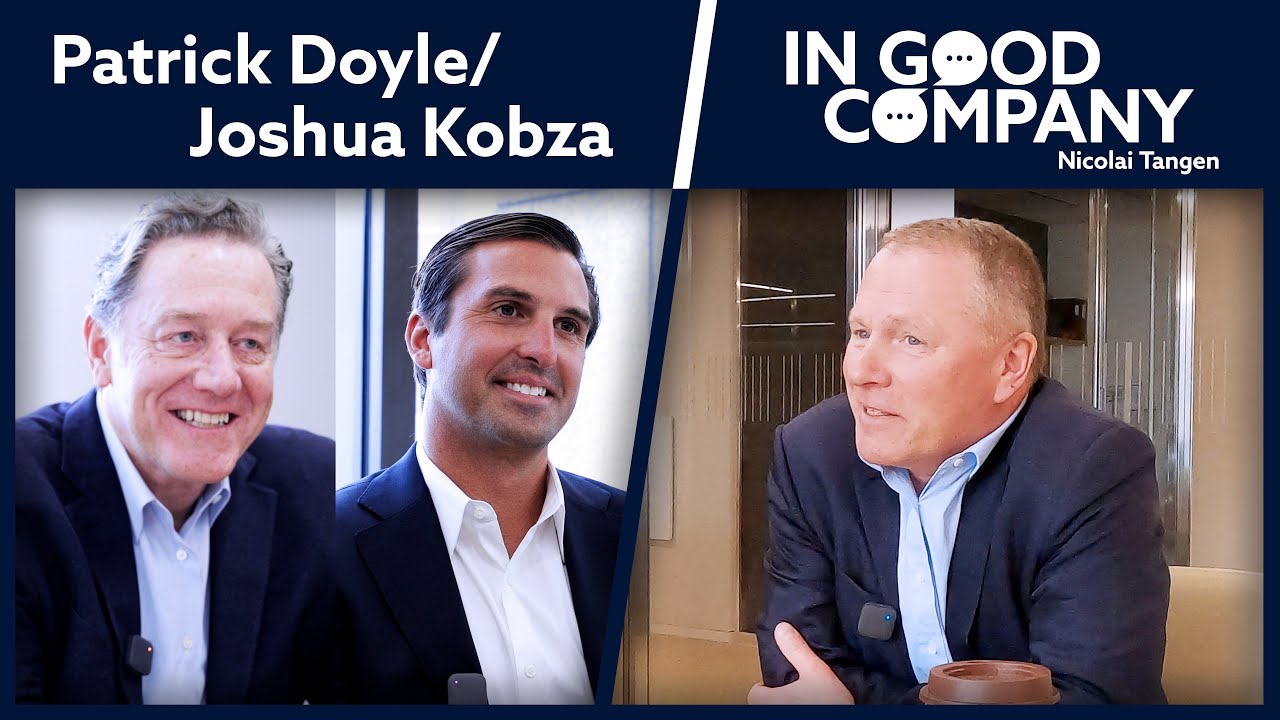
years in do you start To think about an exit or is this something you're planning to own for another 21 years we love the business we I think at the moment are so excited first of all with the team that we have in place and we have this combination of talent that grew up in the business we have had the fortune of finally cuz we had conversations with our common friend Patrick Doyle for quite some time Patrick really HD it out of the park in his tenure at dominoes it's a landmark In this industry and
we're so fortunate to have him as our partner and the combination of Patrick and the young team that we have there that came up through the business I think we feel very very good about people first we feel very very good about the continuation of the opportunity to open restaurants around the world and to grow same store sales in the all four brands still so as a combination of those two Things I think this is as the company has publicly guided they can grow High single digigit same systemwide sales for a long time and the
cash conversion of that given the nature of the fully franchise business is one in which the company pays a lot of dividends today by the way we receive two-thirds of our notional Equity check a year so it's very GH flowing and it has a great compounding line of sight ahead of us great team so we super excited to own it For many years how do you think about the competition for your own Capital between keeping it in a business that doing nicely and you see a lot of visibility compared to the kind of inflection you've
been able to create in a new business we think that between the liquidity that we have from the different Investments over the years we do have the capital every several years to try to start a new one of these we very excited about Hunter Douglas that We started two years ago in partnership with the sonenberg family we think we can do both as long as we don't get out of the discipline that of only starting a new thing every several years when we have people and when we have time to focus and so on yeah
how often do you get to be a part of a great business led by a great team of people who you've worked with for a long time and have developed trust and respect for over their successful tenure in the business We had Patrick and Josh and the folks involved there and so we're excited about the long-term outlook for the business Alex you mentioned just a tiny bit at the beginning that you do have another vehicle that you're looking at buying another business where are you in that process I don't know that we at the moment
have anything where we are really really ready to pull the trigger on I mean we do have some pretty interesting Proprietary situations in which we have been able to get close and get engaged and do work on although there's nothing that's really mature to I'm trying to find the next Burger King Ted how do you think about what industries you'd be interested in looking at maybe a way to answer that is what industries Would we not want to look at we want to own a fundamentally good but somewhat reasonably easy to understand business and so
you could Think about what that knocks out and ideally a business that has a good moat a long operating history that's not likely to be disrupted or disintermediated anytime remotely soon and ideally businesses that aren overly cyclical so it's not like we're working so hard to run the business better we just get the cycle wrong in place for too long and some of the criteria that we look at and maybe that's why we ended up owning some of these consumer Businesses in the past because they fall into that bucket of somewhat easy to understand been
around for a long time most likely not going to get dis intermediated or disrupted try not to over complicate things on our end incidentally that's what one of the things that's so great about this fully franchised quick service restaurant businesses which is they're really not cyclical at all meaning on downturns people trade down look at what happened To the Ia of McDonald's or Burger King or dominoes or all this brands in the great financial crisis and the answer is not much in most cases it grow so they're very resilient in that way which is a
very positive trait of this kind of business what have been your biggest lessons learned from this deal over this 14-year run for me it was my first deal it was my first time running a company and I'll apologize in advance for my lesson not seeming overly Insightful but frankly it was just the importance of having a great team which again as the 29-year-old who was doing the analysis on the deal after we bought the business and Alex came to me and said we need to the team just understanding the overall importance on having A++ people
involved in the organization who are fully committed to making it a worldclass success until you're part of it I didn't fully appreciate how important it was to Have an incredibly talented team running the business everything that has happened that has enabled us 28 times return on our notional capital in this time frame and how much more we expect to achieve with this business so much of it has to do also with having entered a high quality great business there is no substitute for that particularly if you're going to hold it for a long long multi-
deade period it needs to be a good business I don't know that we are One of these people like as Steve Jobs or someone that's really really smart and the genius that will be able to convert are so so or a bad business into a great business so we need to find great businesses and sometimes the greatness will be OB fiscated by everything that's going on short term and the noise associated with the things going on short term the fact that the business is a great business is no small part of what happened here what's
both Your favorite aspect of doing deals and investing we're not a conventional investment firm my favorite aspect really centers around the people I had this opportunity to go initially a CFO and then became CEO and ran the company both from the finan side and CEO side for nearly a decade my favorite part of the whole process was getting to recruit develop train some incredibly talented special people who are now today running the organization it's Extremely fulfilling the people cycle from high to train to grow to lead to be able to be part of this and
part of someone else's success it's extremely fulfilling and so for me that's been Far and Away no close second the most fun part of the job for me really is creating 3G compal was probably the most important thing I've been able to get involved in in my career and I would love this to perpetuate the firm and I think that my co-founders have been a Great inspiration that way their whole lives and careers and giving people opportunity allowing them to chart their own path allowing them to have the results and benefits and the wealth creation
associated with creating their own path and I would love that to continue here at 3G Capital well I'd love to ask you both a couple of fun closing questions what is your favorite hobby or activity outside of work and family Alex why don't you go first I Love spear fishing which is some combination of fishing and free and probably contrary to what we do here it's probably the most inefficient way of fishing but it's a lot of fun you go to nice places so I spend a lot of time doing that outside of work and
family exercise and probably in order of most frequent but least enjoy I say I run play tennis and play basketball in that frequency and my enjoyment is probably The inverse Daniel what's one fact that you find interesting that most people don't know about you I'd say I'm definitely more introvert than extrovert which probably isn't so common for former public company CEOs Alex I recently got quite involved with philanthropy it's recent very few people know about it our foundation has only 3 years my wife's very involved with me we were lucky to recruit dis man that
was an NBA at Stanford went down to Brazil It's basically education for young people and mostly digital education meaning programming Computer Engineering all the way from basic programming to college to Masters to PHD programs have about 100 Scholars now it's small but we have Big Dreams for it and it's a lot of fun hopefully in time you'll become better known what's your biggest pet peeve I'd say one of the things that probably bothers me is if people aren't working at 110% or giving something They're all we never really cared if we're the smartest people but
always at least wanted people who are working at 100% and giving the project their everything being short of that that always bothered me Dan know which two people have had the biggest impact on your professional life well number one Alex he gave me a shot at something way way earlier than I probably deserved certainly at a time maybe when others wouldn't give me a shot and then our Three co-founders as well Alex look my Tre co-founders I mean had a huge impact in my life as well they found me in this NBA program our Alma
moer and took big bats on me this one of them particularly this guy took huge bats on me on a railroad and really believed in me and became a close personal friend and Marcel Georgia the really took huge bets here when it came to build through g capital and I'm forever grateful for that Alex what's the best advice you Ever received when you get into a new situation or a new business try to find good Common Sense things to do and don't make huge business decisions about strategic things before you take the time to understand
the business well I think to an extent we appli that at Burger King and I think it's something that really prevents big mistakes and usually by Focusing on the common sense things there are opportunities to be harvested while you're learning about the business someone once told me work really hard to put yourself in a position to get lucky there's a little bit of luck involved in everything but you up your odds you up your chances through your controllable lever of hard work right guys last one what life lesson have you learned that you wish you
knew a lot earlier in life Daniel why don't You go ahead don't be afraid to make a big bet on someone if you really believe in that person even if maybe that person isn't 100% ready at the time don't be afraid make the BET Alex yeah something that I've come to appreciate as in the stage of my career I'm at now is to focus your time on the things that make the most difference because the amount of noise in your day-to-day be it on your personal life At times be it at your work is high
Alex Daniel thanks so much for sharing this incredible story about 3G and Burger King thank you for having us thanks for having us Dad thanks for listening to the show to learn more hop on our website at Capital allocators tocom where you can join our mailing list access past shows learn about our Gatherings and sign up for premium content including podcast transcripts my Investment Portfolio and A lot more have a good one and see you next time