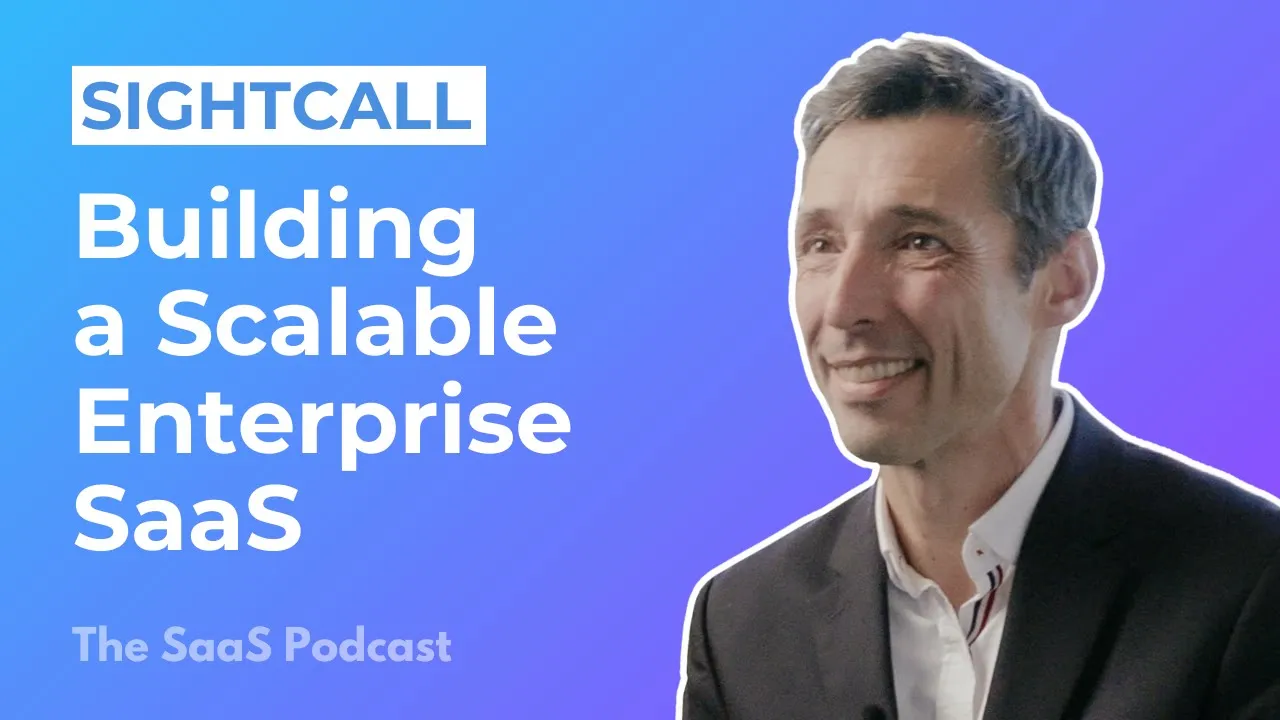
Thomas welcome to the show hi your May so do you have a favorite quote something that inspires or motivates you that you can share with us uh yes absolutely uh the one that I really like is uh one image is worth a thousand World why why is that important to you because that's kind of the fundamental uh sentence that I use to build cycle right so we are in the world word today there's there's too many uh what I call called Blind Communications where you try to explain you know what's going on what is in
front of you what's your problem what where it should be so much easier if you could show this one picture right and collaborate with vision rather than uh again just text or words so really like this sentence and I think it's it's absolutely true try to describe you know any type of image it will really require over a thousand word so tell us about site call what does the product do who's it for and what's the main problem you're helping to solve yeah we are a a cloud software so what we deliver is uh an
Enterprise solution to help see analyze on guide remotely so what does it mean it means that in a lot of different service circumstances which can be customer service or fied service service you have some tasks to be done remotely and rather than having just again this text or voice communication we bring Vision into uh the process so typically for example you have a problem with your coffee machine or your washing machine you contact the vendor and they will send you a link to your smartphone you click on the link it starts the back camera of
your phone and you can show you know what the problem is and the remote customer service agent has some augmentation augmented reality to explain you what to do on which part to remove what to zoom in and really guide you to the reparation process or even if you cannot repair it for example identify which part needs to be replaced and kind of lead you to the right troubleshooting through this visual component that uh is is provided by csyon so so if I understood this correctly like if I was using a company that was providing support
through cite call let's say maybe the ice maker in my freezer has broken and this person I'm showing them with my camera my my phone the the the ice maker and with the AR that would actually let me see as well like specific you know like if they're talking about a specific part of that mechanism the AR kind of highlights that and I can see that too as a customer in terms of oh that's the thing he's talking about exactly so think about it as a two-way collaboration on one side there's this customer service agent
who you know usually would sit in a contact center and cycle is integrated with all of these Cloud contact center Solutions on the CRM solution that it would use so just by one click they would see the you know the streaming of your camera directly into their contact center solution and they have some Advanced command that they can use through cycle yes to guide you on your phone so directly over your phone that's where you're going to see this augmentation so for example if they ask you to remove this part of the ice maker then
they can you know put a screwdriver and show you that the screwdriver should go there and that's the the one uh thing that you need to remove there to uh get out so it's really all of this you know visual guidance that they can provide to you as you know the End customer there directly on on your phone yeah love it uh who are your customers who are some of the companies that are using site call today so we have uh around 200 Enterprise customers uh usually it's you know Global organization very big uh Brands
uh like uh you know from Manufacturing in field service we have companies like G Healthcare right that would use sayal every day when they have a problem to for the maintenance or installation on this MRI machine in the hospital it can be also more uh consumer uh service Brands like uh your you mention your fridge with this I maker if you have a wall poool uh they use CLE every day uh to help customers fix prod remotely there and can you give us a sense of the size of the business where are you in terms
of uh Revenue uh size of team and so on so uh think about it this way uh 200 Global Enterprise customers 100 people in the team uh we don't disclose our Revenue but we are in the eight uh digit numbers and uh it's really a global organization that's one of our uh characteristic as as well so I'm based uh here in the San Francisco Bay area where headquarter is but I started the company in France we have uh teams on offices you know from Boston to uh London to uh uh Germany uh up to Singapore
so we really uh you know delivered this service at scale for a large uh organization and also uh what's very important in the way we build this platform is the fact that that it can deliver a high quality service for people all over the globe so typically you know the contact center that you are reaching out to even if you're here in the US can be in the Philippines so it's very important that the connectivity and the optimization that we've built here across this Global platform can provide this high quality of service between the Philippines
and where you are right now cool okay so let's go back to 200 and8 you're in Paris when you you founded this this business and for the first three years you didn't raise any money you bootstrapped the business so firstly where did the idea for this come from so where the idea came from uh I'm a telecommunication engineer on you know studed uh telecommunication and um studied my career at uh uunet so uunet uh was at this time at the end of the 90s uh the biggest internet service provider in the world we were literally
building the infrastructure of the internet and carrying over 40% of the world internet traffic globally so we were really the internet uh Pioneers had the chance to even work with some of the founders of the internet very uh you know technical team building all of the infrastructure I was leading uh southern Europe uh Engineering Group there and we were working with all of the European team as well as the US team on continuing all of this expansion at a time where the uh the bond width requirements was so high that we had to literally double
the size of the network every 3 months so it was really a race of building changing of the technology finding the new uh solutions to be able to continue to deliver the service that everybody was discovering uh so that was really a kind of very intense time up to the the.com and I was you know at T during the Dooms and the Very excite exciting time as well we saw the internet traffic traffic literally exploding um and then uh coule FS uh in a row we were acquired by MCI watom so if you remember MCI
wcom was very large uh Telco uh and they acquired uh unet uh to make unate their new internet home and it was a a cultural shock when we were aced uh because we were the the internet guys and you know our life was internet we're going at lightning speed and we're you know walking night and days and building out of this cool technology where uh MC watcom was a very uh typical Telco where everything was siloed segmented uh that was kind of a new world where they say all right uh now you're goingon to have
to walk this way you're going have to get big project I remember even one of the first big project that my new boss asked to work on was to merge the data network of MCI WorldCom with unet uh know walked on here and say okay it's it's going to be a two-year project so take your team work on that get it done uh and uh uh you know show me the progress came back less than six months later it was done and you know when I showed the the result said no that's not possible said
well it's done it's here uh and I still remember this feedback that was oh you guys have to slow down which was yeah was really you know at this time for me say oh oh I think there's a problem there right there's a serious cultural shock I think that's the other way that you gu have to understand that internet is going to go way faster and we will not slow down but you guys have to speed up uh uh and then you know I I took other project that was interesting was at the beginning of
Voiceover IP out of the communication going through the internet uh I worked a lot on the you know launching two project new project there uh until the time where uh we went chapter 11 so uh MC watcom was one of the uh I think still today one of the three biggest uh uh fraud in uh history and uh or went to jail and everything froze right when you in chapter 11 I didn't even know what chapter 11 was I was in Paris I saw that in the news okay what is then you Google it what
is chapter 11 uh and then you know get getting through all of this uh we we we thought with uh some of my uh teammates that uh it was time to to change the the the dynamic there uh to kind of build a new type of infrastructure that could deliver realtime communication services to the world without being kind of Trapped in a t Telco type of uh behavior and at this time I was still missing some experience right right because I was really uh in Tech on the Deep uh engineering I I never grew up
you know a business so I joined the CEO of U an an interesting company that was based in France who was uh providing software development and Consulting for Telos and uh Enterprise small company at this time you know around 40 people and I knew the CEO and uh he told me you know I told him my story and said well I want I want to learn I want to learn business right because my goal is to start my own company and I miss this part and it was great he say all right uh take your
first sales guy and go for it so we had a you know good five years there that I spent with them um and literally We Grew From 40 people to 450 people uh company was uh cash positive great success uh learned a lot uh and then came the time where I thought okay I've learned enough now and uh I can go back to this uh initial idea that uh we've had to uh transform the communication world uh with technology and I started to work with one of my friend from school who worked with me at
unet on MC Whatcom uh and um we started to design you know the platform on what it should be and how it should walk literally in his basement every night uh until you know we had the the true uh pillars that were designed one of them was the fact that uh we absolutely wanted to be fully virtualized where on think about it you know in 2007 right where you could not do any uh Enterprise communication without deploying a lot of Hardware right so we didn't want any hardware dependency so we thought it it will be
a software play we're going to virtualize out of the realtime communication work second one was more about uh the fact that now that we were virtualized on the internet we did not have any more silos or or or barriers between the the the the media where you know with a Telco you have a voice channel that is connected on it's only voice you have then a text it's only text or there was a revolution when they introduced MMS on top of SMS where you can maybe send a picture in your text message wonderful thank you
took them five years I remember when that was a big deal the MMS communication but that was done you know the the Telco way again five years massive uh you know hundreds of millions of dollar investment Etc to to to do it where on the internet we could do it immediately so I'm curious that as you as you were thinking about uh designing this business did you did you know were you already clear about the the product in terms of what site call was going to become or was this more about we want to build
a business we know it's in the in this space this is the kind of problem we want to solve like how much Clarity do you have about exactly what that idea was going to be at that point it was not 100% clear right on the exact problem that we would solve in the future what was clear is that we were uh bridging a big technology gap between telecommunication and software and how to use it and how to what or go to market would be that was actually the third pillar uh that we've designed where we
thought that our go to market should start by uh API so it's very uh you know uh engineering style where we thought hey let's provide a platform that can connect with all of the other entreprise software solution to deliver these capabilities to the Enterprise through them with them so that's why or go to market was we've got all of these features all of these capabilities now that we we we broke all of the the you know the the barriers between all of this media all of the things we can aggregate on that was the beginning
where we say hey why not adding you know video on top of voice with screen sharing but any type of data and that's where we started to play with augmented reality with a lot of things that we can also use through the same channel because we did not have any con constraint anymore so that was more of a discovery of everything we could do not that we unleash all of these capabilities but to be honest with you I was not 100% clear on the exact problem that we would solve uh for the Enterprise Market at
the end yeah I mean as I hear you talking about it it definitely sounds like a very techy approach that we have this great technology we can make this technology better and let's let's find a problem that this technology will solve as opposed to you know what we hear about these days and The Lean Startup stuff about talk to customers find a problem and then build a solution you guys were very solution driven looking for the problem right yes we were very solution driven um in term of the problem we knew a lot of problem
because all of these Enterprise on on again we're focused on Enterprise since day one and that's that's that's kind of my word i' never done any solution for Consumer so we knew that everybody was struggling with you know getting uh Enterprise product that can uh make all of these collaboration features with all of the visual uh component spot of it uh available through their software ecosystem in their infrastructure without having to you know deploy massive equipments in there Etc so that was a true problem that everybody was facing but the value of it the exact
you know model uh on use case you know on the dayto day that when I get you the example with your ice maker no it was not clear back in the day yeah okay so you what what I want to try to figure out is like you're you're bootstrapping the business so you don't have you know unlimited funds or millions of dollars to go and invest in this business your targeting Enterprise which means it's not you know a weekend minimum viable product that you're going to go and sell to somebody on Monday how how did
you get started what was that first version of the product how long did it take you to build but more importantly like how long did it take for you to find that exact problem that you were going to go and solve it took us literally four months to get a prototype that worked where we could you know demo or Vision through [Music] software the hard part of it was to build the true platform that would scale globally under this Enterprise ready and that took us five years so and I did not anticipate five years right
uh which is a big gap between four months and five years as you can imagine of your life it's not the same story uh so why did it take so much time is because there were so many you know uh challenges that we had to overcome to make the right solution for the Enterprise market and we were really uh combining these two words the T communication on the software that did not communicate together that did not work together in the past and so we hired some uh telecommunication Engineers some software Developers get them on the
same you know deck uh on working on the you know in the same uh office every day and even after several years they were still not speaking the same language so just to highlight the the the the big you know gap between these two industries that we were bridging uh that was that was yeah painful was long so in after three years of building the platform we had you know first uh poc's here and there on trying to test the market to see how to uh how to deliver uh a product and that's where we
raised the seed uh fund of uh round of funding and when you got to that seed stage had you did clearly defined the problem now like in terms of this is you know the the site call product that you you told us about earlier we had some good ideas as you do in uh in you know you have a good PowerPoint and you explain all of the problem that you could solve uh on the few PCS that are ongoing um and uh we started you know to uh we use the bunker to find you know
some investors back in Paris and you know after a couple of months the the Bonker told us that there was no response and it was uh not ready and uh didn't find any investors uh so I was a bit upset with that uh so I asked the the Bonker to uh uh let us do it by ourselves and uh We've uh D it which to uh first investor there directly uh there's a fun story there uh I I hope uh this this investor would uh not be mad if I if I share it with you
but uh it you know reached out to this guy identified uh at kind of one of the biggest Fund in in France the one guy that I saw had the perfect profile investing in uh in software in Tech and also having some understanding of the telecommunication uh background so he was the you know hey that's the one guy I want to speak to this one and uh even went through the same uh engineering school as we've been through uh before working in New York in the stock exchange of this stuff so I dropped him an
email no answer two email no answer three email no answer so maybe after the number four or five I I I I I sent the last one and said all right I was not and it was not an nice email I I I literally was very pissed I say you kind of a prick right you could even answer my email that that sucks uh we you know we've shared the same background you could you could even you know even if if you're not interested in investing we could go grab a a beer uh and that
would just be a you know the right thing to do as a human right so literally five minutes after he responded say oh no I'm sorry so it really it really worked it really work he told me we we we made a lot of fun about the story after because he invested in the company uh and uh it told me you know hey you know I was really not used to receive this kind of email yeah don't try that at home doesn't always work no no no I I I cannot give that as you know
as a recommendation for everyone but this time it worked so three years you've been building this product you get to the seed round but even at that point you don't really have it's a prototype you don't have a fully functioning product you don't have any customers yet what happens how much money did you raise in the seed round and then how did things change uh so we raised €1 million euros and uh yeah the expectation was to uh uh launch the product on finder market so uh that's you know it took us maybe another year
to get everything lined up on the platform ready ready uh and then um started to uh uh test the product with with uh different uh Prospect large companies large software vendors to see their reaction and that's where something interesting happened is uh I I pitched the product to uh Oracle in Paris and they found it very interesting uh I did not know why at this time but I knew after that the person I pitched it to literally received two weeks before kind of a study from his team that explained that in the state of the
art of the technology at this time what we've done was not possible so uh they they they asked me to you know to go to meet with the team in the US and that's why I studied you know the back and forward between the C Con on Paris on seeing you know their reaction I thought hey should I should try with the other vendors in the Bay area so I started to go and meet with the other ones and I had also some very very positive feedback on that where the decision was made in 2013
well that was at the end of uh 2012 that I would move to the US to launch a product from here it was kind of a you know a big bet say Hey or go to market is going to be with the large enterprise software vendors to provide the video assistance capability on top of the platform to their customers and so that's where you know I moved with my family I have uh my wife and two kids and we moved to the Bay Area in 2013 and launched a product from there tell me about your
first customer who who was that and and how did you land that first first customer so we started with one or two small ones but the the the first big one was actually at this time the biggest Salesforce customer and we've signed it with Salesforce which was HP and HP uh with the printer division of HP so you know HP was the number one Salesforce customer uh you know they have these executive meetings where they share their strategy their problem where they they would like to get some improvement to be done and they shared this
this this problem with s force that was literally every year between 20 and 30% of the printers that or customer would ship back to them because from the customer's perspective that did not work when they test them they would work or have a very simple problem like a paper jam so this you know imagine we're talking about hundreds of millions of dollar of waste right in term of product return refurbishment test providing a new uh uh printer to the customer total mess and when they share that with Salesforce that's why they say well maybe let's
bring you know a partner at CYO in the loop and we joined you know the the meeting and we shared what we could do and uh they decided to move forward and we deployed CLE in Salesforce service Cloud into their uh contact center in different countries uh from India to Philippines to latam and to provide this what I would say to ower the customer service agent to not only try to understand what the problem is but also to see and guide the the customer to its resolution and avoid the product return uh it was it
was a blast it worked very well and it really you know open up doors to others and that was kind of the the the beginning of the success there yeah that's great I mean HP great logo to to to get early on what I'm curious about is like how did you become a Salesforce partner in the first place that's a good question uh I think by uh getting into into their office every week seriously yeah seriously uh it's you know I moved to the Bay Area for one reason because I wanted to work with these
guys and you know I was committed to it say all right and they didn't have the big Salesforce Tower yet you know it was not here yet here in San Francisco but they had big office you know in one market uh every week yeah I found you know a couple of guys that I met as to introduce to others and blah blah blah on every week I was there until I had this you know presentation here in front of uh the team at service Cloud who really saw the interest and who even shared with me
after that the demo that I showed them was something that they would even present at dreamforce the same year but as they didn't find a product that could do it in the cloud they would hide some video equipment under the desk to make it a big show as if everything was in the in the cloud which it was it was not because again they didn't have a solution and when I show them that it you know the solution was there there they say oh actually there's one uh that's how the kind of the partnership started
but they didn't you know very different from you know this uh seedr story where it's all about slides here it's all about something that really works you know remember after this meeting with uh service Cloud at Salesforce they asked me for an API key on the same day uh I even received an email by midnight the same day from this guy lead the product engineer there sent me an email say okay I tested everything it works as you said I don't believe it come to my office tomorrow so it was that Persistence of of just
not giving up continuing to to basically get in to as you know whoever you could talk to at Salesforce and um I I think it was a combination of that persistence and obviously the technology that you guys had built something that you know everybody else thought you know the technology wasn't there yet to be able to to do that exactly yeah this uh you know five years of hard work uh and trust me we are not playing golf uh were were were paying because yeah behind the you know the nice speech it it was a
true you know robust Enterprise platform that was delivering This Promise great so after all of this years of persistence you've built the product you have got um this this deal with with HP this partnership with Salesforce um the the business at the time was called wio not site call and then you got a nice not so friendly letter yeah that's uh you know this this letter is is part of what I call my welcome to the US uh where in in Europe uh I did not have any problem with wio and even before moving to
us we did little bit of research on the name and uh we asked you know uh uh if it was okay to even trademark this uh this brand in the US and there was no problem so that's what we've done and uh we started to operate with uh the name wio and yeah I received this uh very aggressive letter uh from a lawyer uh that literally explained me that that if I did not uh change my name within the upcoming two weeks they would you know drag me to court and uh going to be in
very uh tough situation and uh it was from a very large company uh that uh on wio is the name of one of their product uh it's not the name of the company but one of the product is named wio not it was written differently we had weo and the W Mo uh but they didn't like it though so we went through a couple of discussions uh and kind of to cool down the situation and to give me more time to change the name I asked them if they would you know be okay if I
was weo in Europe which they said no absolutely not we will see them you there well uh to which I told them that you know I I'm from the I know everybody there and by the way my brand was uh T Mar before their brand up there and so I would wait for them and welcome them to kick their ass in Europe so we ended up into a tread off saying oh so they did some resar they say oh yeah maybe it's going to be tough in Europe so so you had the French tra you
had the French trademark for weimo yes oh yeah the European one was K yeah uh so we went to kind of this tradeoff where they said anyway we will we will not let you operate weo in the US it's going to be a pain IND yes for you maybe you're stronger in Europe but it's going to be a pain as well uh so you know we agree that they would give me one year to to transition take another name and uh get there and I think that was the the best thing to do you know
when when you are focused in growing a very small company at this time you don't want to spend your energy uh into uh getting into this type of of process there right so that's why with the board we even if it was a bit painful all right let's Rebrand everything uh let's find a new uh uh a new name that really uh now that we know exactly what our good to Market is uh that can also you know be a bit more uh clear about this ability to see on guide remotely which is site C
right okay and then so for the next um couple of years you you were using Partnerships uh as we talked about with with Salesforce and and HP as a way to to grow land new customers and I think it was in 2015 you were able to raise your series a which is about uh 8 and a half million I think mhm yeah when you and I were talking about this you said you know fundraising is one of those really hard moments I said yeah you know I was like expecting to hear the same thing about
you know what you said earlier like can't get investors attention or time with them or it was really difficult to get the money and all of this stuff and you said actually it was the day after I raised my series a round that was really hard can you explain that yes uh so just to put things in in context uh we were growing fast right since you know 2013 when I moved here 2014 you know we signed HP and we were really uh you know growing the the the business finding new customers here and there
signing new partnership uh we haven't had uh an ad on TV in France uh with uh company named diry that's the the French Best Buy right who thought that you know it was a wonderful idea to help their customer to uh typically troubleshoot any type of problem with their home appliances and provide this type of remote support and they made a very uh funny ad because obviously the one question everybody has is but what if you know through the camera you would see someone in a situation that you would not like to see right and
they made this ad where actually the uh uh the the the wife was uh in video call with Dy on asking question about where to install the new washing machine and she would go in the bathroom and obviously the the the husband would get out of the shower naked on going through the camera at this time so so it created some Buzz uh I think it was great uh also you know good way to uh get around some of the uh the fear that some Bron could have right with using uh video uh so we're
going well we're growing nicely so that's why it was kind of time to raise our series a and series a is all about uh scale right scaling sales on marketing to uh grow the organizm um so we've raised this round 8.4 million uh and uh it led to a lot of expectation from our investors right on us say all right now let's compress time instead of growing the way you do you have this kind of pressure that comes on you or you say all right I cannot you know I I raised this you know over
8 million it's not to continue as as I was doing right the reason why this guy believe in our ability to scale is because we're gonna have to change everything and go way faster uh that's what I started to do and I I think the the the speed would uh hit me there on trying to change everything in uh an organization that was going well was sort of uh a hard time uh then that's where you know uh you went from a place where everybody was really really focused working together building together as one team
into a company where you see new management coming creating some silos and it even led me to a war I call it a war because it was really uh first time I hired you know a CMO who came into to company great guy did a lot of things grew nice companies and then you know he had all of his ideas and one of them was the fact that uh we should uh sell online obviously your sales guys Enterprise sales guys did not like that even make pricing you know a public on of the things were
that they brother work with our customers you know to build the right business case that map to their organization on their needs and the war started to happen and uh I even had to take a hard decision to say all right so do how do I fix that uh and I had to decide to cut the marketing side because my sales were the guys the one selling uh and then obviously during this time you know it creates some uh hiccups in in in the organization the speed on instead of you know really accelerating at this
time actually you you slow down a bit because you lose your focus when you say sales and marketing went to war what does what did that look like I mean you you it's it's not uncommon for there to be you know some conflict between a sales and marketing or but when you use the word War it's like how bad did it get I trusted my sales and I trusted my marketing right and was kind of in between and uh even the the you know I wanted to let the the marketing try you know their idea
so they they made our pricing you know available online literally couple of weeks later uh someone reached out through our website incoming uh request from a, 1400 company right so uh then I had one of my sales guy who started to discuss you know the opportunity with this person uh you know the way we would start and build a model with them and the person replied no no no I I just want one license to test and well imagine now the the the salesperson we say okay I've I've got a big lead I can work
with this company we can help them you know and now it turns into you know this one person from a 1400 company who says that he wants to buy one license so that that really created this you know big tension there where I say okay all right uh it's G to be bad you you said to me that every round that you've raised has has created some kind of challenge or pressure um you you raise the series B in I think it was a few years ago yep what what was the The Challenge there it
it was kind of the same story uh so uh not with marketing this time but with kind of scaling the organization again to to go faster same pressure right uh we raised uh this time 42 million so you increase the level of pressure right the more the more money the more the more pressure and then think okay uh how then do I SC the organization you know to go to a much bigger uh company uh that's where you again start to bring uh new uh highly uh experienced people who did it multiple time over their
their life uh time on that can bring this expertise right because you want to again get very strong people with you we've done it already in the past so that they help you find the path to this uh to to to this growth on to scale and yeah again one more time I did go into war this time but uh I also had this kind of uh you know tension or or or or creation of silos on beginning of you know political discussion everything you don't want in a startup right the startup it's all about
uh speed it's all about uh you the flexibility that we have that the large organization cannot have we have to be able you know to to be spart enough to navigate in complex situation to find the right path to get there uh on to evolve in permanent right permanently because uh in the cloud as as you know in SAS software it's it's not a one-time purchase you buy a service and this service is evolving every day and if you want to keep your customer with having good you know customer stickiness you have to continue to
provide uh new features new capability continue to lead the market continue to differentiate so this again there there's a momentum to keep in there that where you really don't want to go into the the path of being a big company it's kind of funny like when when you told the story earlier about your manager saying go and take two years to go and do this project and you come back in six mon months and you know they they weren't moving fast enough and then now suddenly you're in a position where every time you raise money
they're telling you now that you're not moving fast enough but every time you go and spend the money it actually slows things down at least for a while when you you know bring new people in or the Dynamics change or of the organization it's uh it's it's it's it's it's a s of uh fundraising that I think often like person I don't hear about you know we we hear about the struggles of raising the money and and so on but less so much about hey here are all the problems that got created once I'd raised
the money that I actually you know to to be able to go and do what I needed to do yeah I I find it harder after the fundraising than than than to get the fundraising by itself that's a yeah uncommon interesting fact but I'm sure that uh you know if you if you question other CEOs uh who can share honestly you know the the the complexity of this post fundraising I think that's that's a true topic yeah yeah all right would love to keep chatting but we should uh wrap up so I'm going to get
onto the the lightning round I've got seven quickfire questions for you so just try to answer them as quickly as you can okay what's one of the best pieces of business advice you've received uh when I studed the company one of my uh advisor told me hey keep in mind that it's going to be a marathon not a Sprint and I keep this one here and I'm glad that I didn't you know run it as a Sprint because I would have died before what book would you recommend to our audience and why well there's one
book I think every uh CE should or should not read which is hard things about hard things uh from heard of it uh and the reason why is because uh literally if you want to know more about my story with this book it's it's everything all of the pain that uh is describing there I had to go through uh I think all of them I know we're in the lightning round but you have to just tell us very quickly what you told me about the re getting you know halfway through the book and saying okay
I just read about my past do I want to now just tell us that yes that that that was really uh really scary when I I you know was maybe yeah have the book on where I say okay now that's exactly where I'm at now and thinking about it that it was so so true you know that all of the story that are highlighted in this book you know I had to go through all of these you know huddles on points I said do I really want to know the future because if I read that
and if it you know uh would it help me or would it destroy me me uh so to be honest with you I continued to read uh couple of chapter and I sto so I I I never uh to be fairly honest I never went to the up to the end of the book yet uh but I will yeah when you retire you can go back and take a look at the book what's one attribute or characteristic in your mind of a successful founder I will give you one French expression and in French it's at
so literally it means being straight in your boots uh so the the what it means be is someone that would uh stand by their principle their value or their ideas and would not change their mind right and I think that's very important because you're going to get so much you know influence people want you to think differently to do things differently Etc that if you are not C on on on on straight into your ideas on where you want to go uh you will never get there what is your favorite personal productivity tool or habit
it's riding my bike what's a what's a new or crazy business idea you'd love to pursue if you had the time a crazy business idea would be to uh use a solution like cyle with within the gig economy I would love to ower anyone to have to be tasked and guided remotely by someone who knows either someone who knows or AI right to help them perform task that they thought they could never done or they were not tryed that that's a super interesting idea actually um especially because the gig economy is just kind of you
know continuing to to kind of explode in many ways um what's an interesting or fun fact about you that most people don't know well no they they they will know it but uh when I when I I grew up when I was a kid my parents moved literally in a in a barn in the mountains where uh you could not keep what they tell me I was young that you could not even keep a CLE burning because the uh the walls were just wood plunks where the wind would go through and uh it was kind
of wild wow and finally what's one of your most important passions outside of your work it's I would say mountain biking any type of outdoor activity again s save my life uh because it's this combination of of getting getting out uh you know refreshing your your your mind uh and also what I love in mountain biking is that there's it's it's a very very uh complete you know experience on sport where it goes from you know a lot of effort to go up the hill right and I like to say no pain no reward and
then it can be very very very technical in the down here use your brain you have to calculate everything you have to be very crisp on the uh you know on every movement and everything you do there's a lot of fun adren adrenaline is there good amount of risk as well right when you go into a big rocks or this kind of stuff so everything I like that's awesome awesome Thomas thank you so much for joining me it's been a pleasure to to chat and and uh go through your story of of building this business
since two 2008 uh it's been quite a journey so far uh if people want to check out site call they can go to site call.com and if folks want to get in touch with you what's the best way for them to do that uh yeah you can reach out to me by email uh thomas.com and uh I will respond awesome thank you so much it's been a pleasure and I wish you and the team the best of success thank you maam cheers