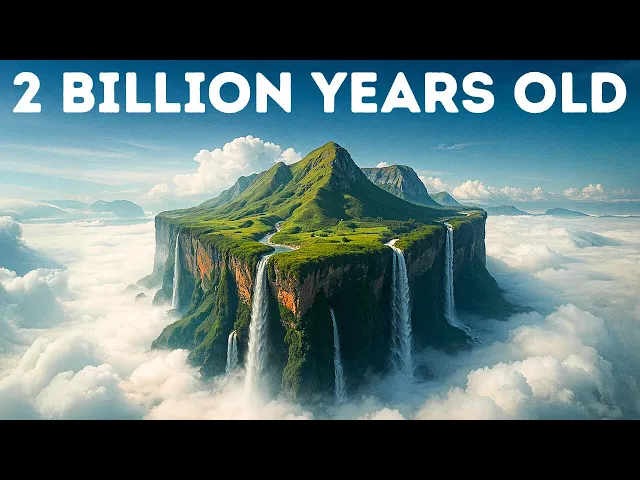
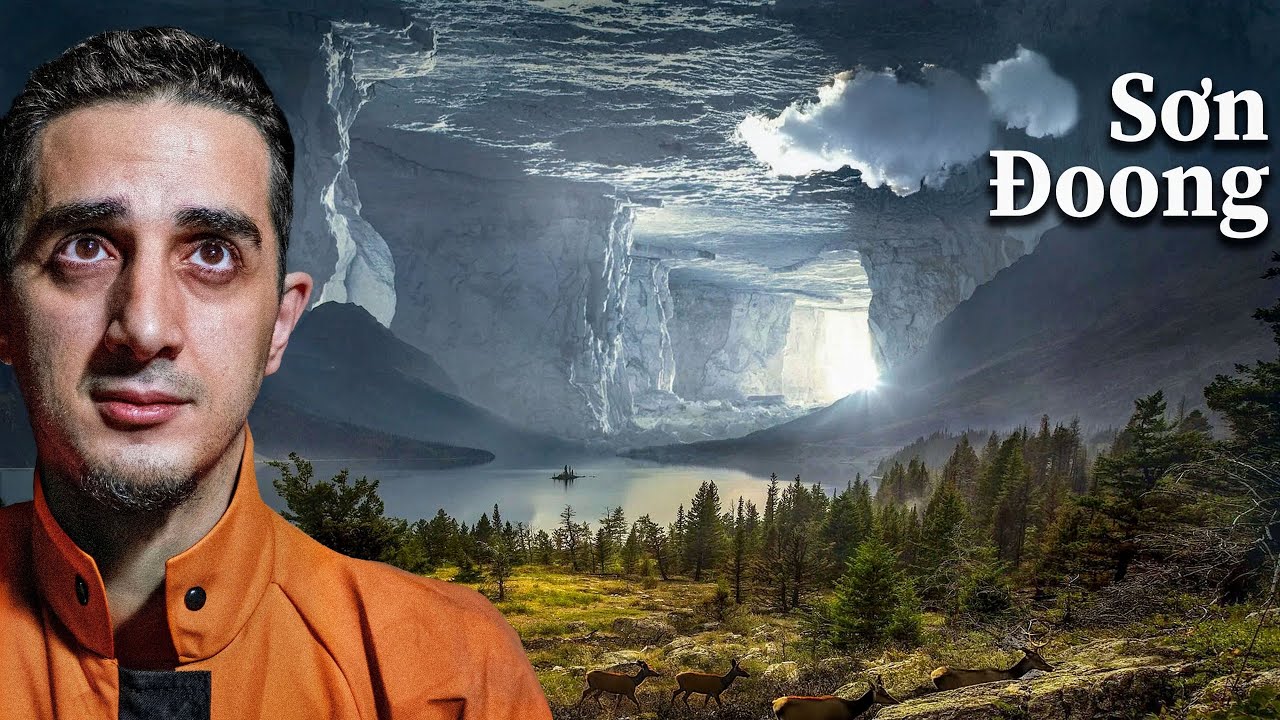
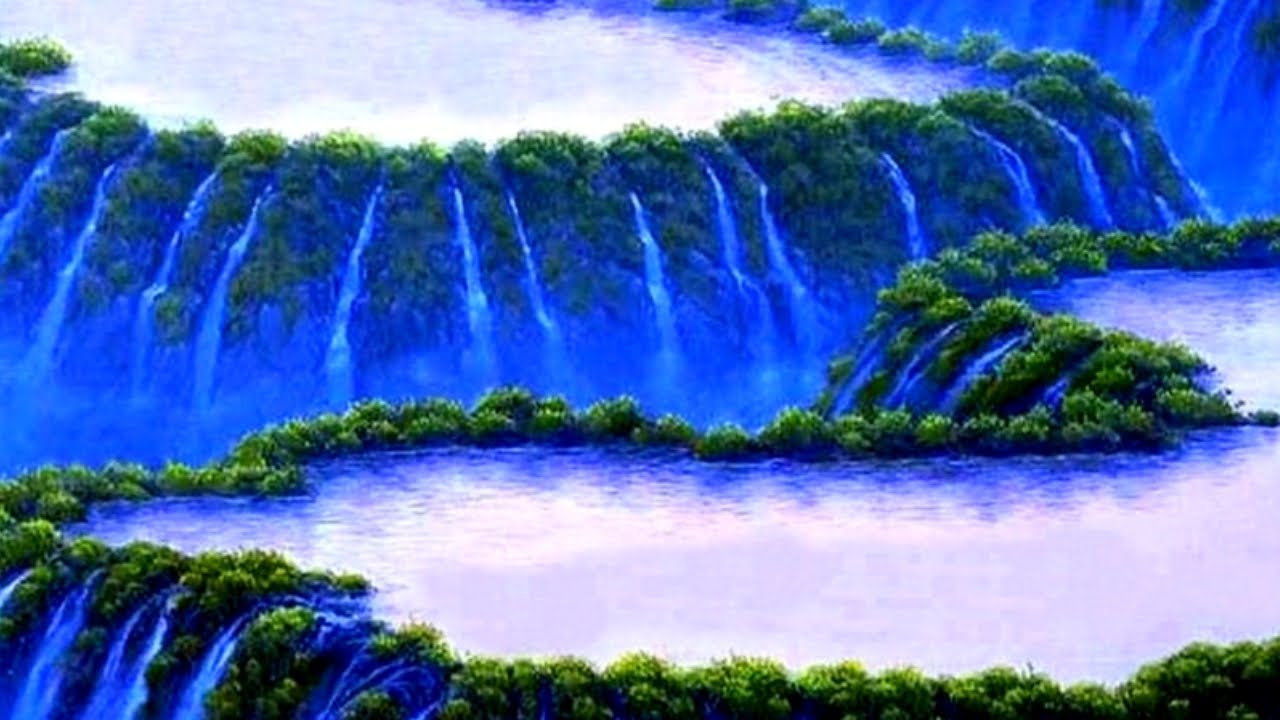
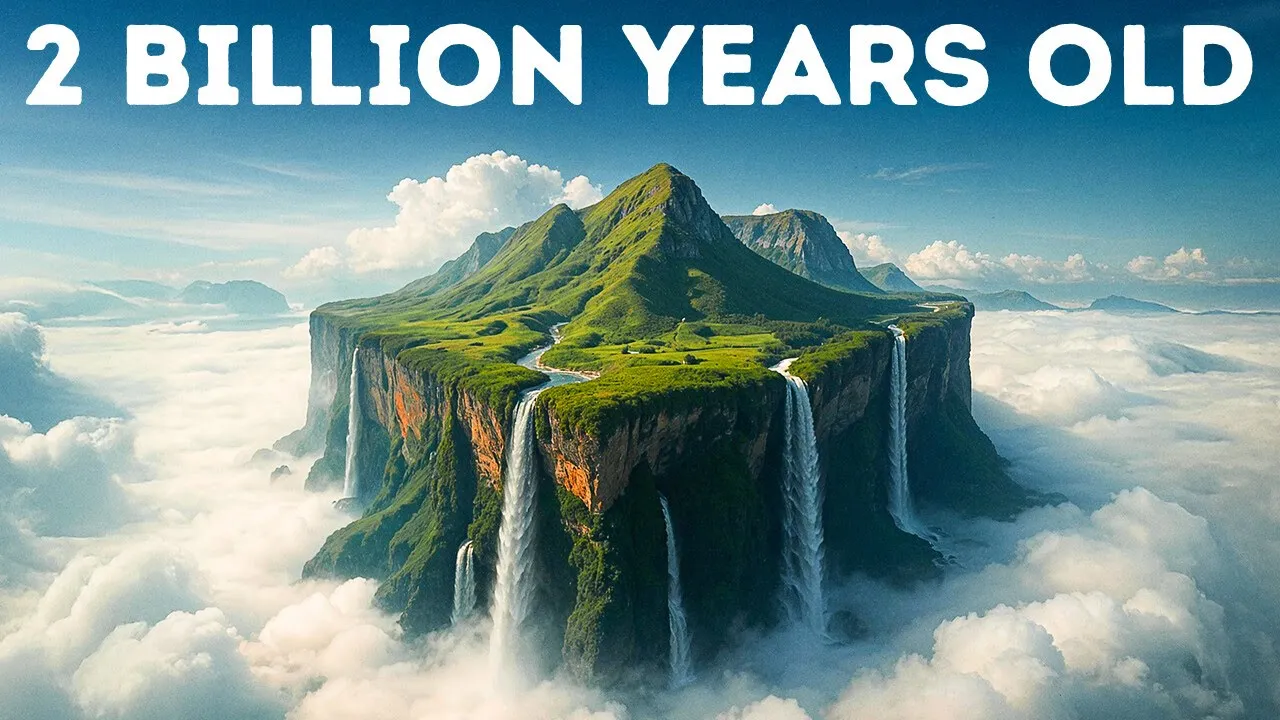
[Music] Wa! It's a huge flying island right above your head. In the era of AI, you may think it's nothing but a neural network video, but let me tell you that first, it's very much real.
Two, if you want, you can as well visit it. It may even hold the key to the El Dorado secret. This place is called Rorima, and it's actually not an island at all.
It's a mountain. Due to a number of factors, we get this vision of an island floating somewhere above us. But it's all about the flat top this mountain has.
There's no standard peak, so it looks flat and the thick clouds get blended into the skies, thus creating this optical illusion. Despite the advancements in satellite technology and affordable air travel, there are still few places on Earth that feel truly uncharted. like Mount Rorima is one of them.
It's been around for almost two billion years and it's one of the oldest formations on our planet. For comparison, dinosaurs appeared somewhere around 240 million years ago. Some scientists believe that this area used to be a part of the superc continent called Gondwanda Land.
And back then, it wasn't yet a mountain. When the superc continent split apart, the erosion created this magnificent tabletop mountain. But what's interesting about this place is not the age, but the fact that it still looks prehistoric.
It's almost untouched. The reason for that is late exploration of this part of South America. By the way, we still discover new flora and fauna species living there every year.
For a mountain, it's relatively short, only 9,220 ft. There are cities located at a higher pitch above sea level, say La Paz in Bolivia, whose elevation is 11,940 ft. So, people could be living in the area of Mount Rorima, too, despite its hard to get location.
But there's a twist to it. The Pemman people are the original inhabitants of this region and they have an incredibly rich tradition of myths. For instance, their mythology features deities that live on the Tepui, which are flat topped mountains found in the grasslands.
These mountains are considered sacred and are off limits to the living since they're believed to be the dwelling places of ancestor spirits known as Mirari. So there are traditions that restrict living in this area. But still some sources claim that local communities do dwell there.
But obviously modern problems lie not only in the spirits but in very much limited job opportunities there. However, guided tours are actually available. So what will you see if you ever dare to visit this place?
At the base of the mountain lies an evergreen rainforest featuring trees that range in height from 82 to 150 ft with some specimens reaching up to 200 ft. Some of them are endemic for sure, meaning that it's the only place in the world where you can find them. Like you can find orchids as large as a medium-sized tree.
It's not a surprise because due to the remoteness of this place, species here may have followed a completely different evolutionary trail. Unlike most of the flora and fauna on our planet, next you have all the chances to stumble upon a waterfall at the base of Rorima that's been flowing for millions of years. Fun fact, there are no rivers on Rorima summit, but the rainfall seeping through the porest rocks create this incredible view.
All combined together make it look like some lost world. Right. By the way, Sir Arthur Conan Doyle was inspired by Tepoi, these tabletop mountains when he was writing his The Lost World novel.
Yep, it's not only Sherlock he was famous for. Among these natural wonders, Rorima stands out as the most accessible Tepoi. There are more similar formations, but they're way less trekk friendly.
Yeah. Amongst other mountains, Rorima may be the easiest to get to. But still, it is very hard to get there, even taking into account all the modern technologies.
So, how did the discovery happen? Hard to say for sure, but there is a theory backed up by official records. Back in the 16th century, here was this Sir Walton rally.
Look at his fancy collar and mustache. He was one of the most important people during the Elizabethian period. In 1594, he got to know about a great golden city near the Coroni River.
That idea stuck in his mind. Maybe it was something like a get-richqu scheme for him. Anyways, one year later, he went to explore what is now Guyana and Eastern Venezuela.
And he described precisely Mount Rorima. On March 22nd, 1595, an English fleet led by Walter Rally showed up off the coast of Trinidad. Rally tried to make nice with the Spanish settlers there by trading and even inviting them aboard his ships for some entertainment.
After a few drinks, the Spaniards opened up about a person having some particular activities in Guyana, sharing insights about the land's geography and the treasures they believed were hidden in land. Fast forward to April 7th. Rally pulled off a surprise attack on the town of San Jose and managed to capture this very person.
After squeezing him for information, Rally declared his own plan to head into Guyana on a quest for the legendary Golden City. Since his ships couldn't navigate the narrow channels of the Oronoko Delta, Rally had his carpenters modify one of them, likely a Galas, to only draw 5 ft of water. This ship could carry 60 men while another 40 were split among smaller boats.
Progress was slow as they navigated through the delta, getting lost in what rally described as a labyrinth of rivers. Eventually, they made their way to the Canyo Manamo and then into the main Oronoko River. A bit further upstream where the Oronoko meets the Coroni, Rally encountered a native chief named Tokiowari and they hit it off.
Topioari revealed that his people had been pushed out of inland Guyana by a fierce tribe from the west. This fed into the prevailing belief shared by both the Spanish and rally that El Dorado was home to runaway Incas from Peru. Tokiwari also mentioned that the invading tribe was rich in gold, claiming that their nearest town, just a 4-day track south, was the source of gold plates that were being traded far and wide.
But he hinted that even finer treasures laid deeper in the land. Rally then made his way to the mouth of the Coroni, but strong currents halted any further progress. He sent out two scouting groups on land while he led a third one.
They unearthed a few shiny stones that they eagerly dug out of the ground, but most turned out to be worthless. They learned that a massive lake about 40 mi wide lay at the head of the Coroni filled with aluvial gold. However, with no way to move forward and the Oronoko's waters rising, Rally had to call off the expedition, hoping to come back when conditions were better.
It wasn't until 1616, over 20 years later, that rally got the go-ahad from James I for a second try in Guyana. He assured the king he could retrieve a lot of gold from a mine near the Coroni that he had heard about on his earlier trip. James specifically ordered him not to clash with the Spanish who were still controlling the Oronoko area.
When Rally arrived in South America, he stayed on the ship while sending Lawrence Chemies and a team to look for the mine. For reasons that remain unclear, Chemies ended up attacking and capturing the Spanish town of Sto. Toé, resulting in the demise of Rally's son Watt during the skirmish.
Unable to find the mine, the crew returned to the ship and facing Rally's anger, Chem took his own life. Back in England, Rally was put on trial for allegedly lying about the mine and trying to provoke a conflict with Spain, which ultimately led to his execution. Or maybe those were the Moari spirits who didn't appreciate the intrusion.
That's it for today. So hey, if you pacified your curiosity, then give the video a like and share it with your friends.