alrighty so we're moving on from the early medieval period into this time that is known as um one of creating romanesque arts so the art work that was created during this period is known as romanesque because a lot of the architecture that was created resembled roman buildings um however the methods that were used to create a lot of the architecture at this time were very different from the techniques that were used by the romans and we'll see a couple of those differences moving forward so by this point around a thousand ce the commotion of the
dark ages has more or less started to settle down there's not nearly as many um rotting hordes of barbarians and um different groups that are coming into this region we don't start seeing that again until the mongols come in from the east but things are finally settling down the fort invaders are converting to christianity and because of this these cities that had once not really been heavily populated or when they were they weren't populated for long because they were people would come in and pillage them our p so these cities are starting to settle down
and they're accumulating populations and wealth people are having more sedentary lifestyles again it's worth their time and effort to create larger works of architecture so um a lot of what's happening at this period too is that we are seeing the islamic caliphates coming in through northern africa and invading parts of southern spain so there's a lot of anxiety in western europe and because of this they're oftentimes retaliating to what they see as this muslim incursion through these campaigns called the crusades so the crusades were essentially these missions where people would go on these journeys and
then go pillage areas and take their stuff oftentimes in the name of god they would oftentimes like put targets on these like religiously significant items and sites there's lots of fighting over relics which i'll cover in just a moment so in western europe we're seeing lots of fighting among the people of western europe but things are more or less stable enough for trade um to exist between a lot of these groups um and for commerce to be stable enough for these cities to expand so one of the other things that we're seeing at this time
and we'll see um pretty frequently until the god the end of the gothic period is feudalism which is this relationship between lords and serfs so there's a lot of smaller kingdoms that are being ruled by lords power is not super centralized at this point in time so the lords basically own the land and then the serfs work on it so the serfs in exchange for being able to live on the land basically work the land and give most of their prophets not all of their prophets to the lords so at this point in time artists
are occupying a middle class they're oftentimes commissioned by wealthy patrons and patronesses to create secular and religious art so we're going to see a church in the romanesque unit and we're also going to see a secular work of art that talks about the battle of hastings over here so a lot of art um during the early medieval period and carrying over into the romanesque and gothic periods um was also created by uh members of the religious order oftentimes monks and nuns were tasked with eliminating manuscripts and so on we're also seeing a couple of women
artists emerge or kind of like arts that are typically reserved for um for women these are things like ceramics embroidery and eliminated manuscripts however a lot of artists at this point in time are still not signing their work so we're not entirely sure who made it a couple of things to keep in mind with regard to romanesque architecture before this point in time we were seeing churches and then of course in the byzantine era we in eastern europe we're seeing these extremely large buildings with lots of domes however in western europe we do not see
domes again for several hundred years and one of the reasons that is is because western europeans basically forgot how to do them so one of the ways that they are creating these large interior spaces however is through the creation of these very heavy cathedrals so instead of using wood for the roofs they're using stone and because the stone is so heavy there has to be a lot of support to keep them up so a couple of the ways that they do that is that they have this very heavy use of columns um especially along the
nave right here and in the transepts they have to have these very thick fortifications to keep the roof up because by this point in time they're like maybe we shouldn't use wood on the roofs because it burns down really easily another thing that is done to support the weight of the roof is that the walls are made extremely thick so you can see in this diagram right here that like in comparison to the interior space the walls are extremely fortified in these buildings and that's again to support the weight of these very heavy roofs another
thing that you start seeing developed in these spaces is rib faults so we talked a little bit about groin vaults when we were in the ancient rome unit and that's basically when you take two barrel vaults so basically like long arches that you're like kind of like two like half tubes of arches and you're intersecting them at a 90 degree angle this is a groin fault so a rib fault is basically the exact same thing as a grain fault but instead of having this very smooth arch you have a point in the middle so this
is again creating these large arched interior spaces this is called a rib vault all right another kind of advantage of using stone despite how heavy and kind of like difficult it is construction wise to use it is good in that it carries sound really well so you can have people on the way back um near the narthex of the church and they can still hear the sermon at the altar on the complete other side of the church so that's one of the advantages to using stone inside these buildings another thing that we start seeing a
lot in churches um is the creation of ambulatories so ambulatories are walkways they're these um basically this this pathway that's been created in the apps of the church so that large so that large crowds can travel um and grow through the church one of the things that we're going to start seeing is that people are going on pilgrimages so one of the most famous of these pilgrimages is the route to santiago de compostela which is basically said to be the burial place of saint iago or saint james so people from all over western europe are
embarking on this pilgrimage and they're visiting all of these um famous cathedrals and churches along the way and they're ha the churches have to be large enough to accommodate like the regular congregation of the people in town as well as all these extra visitors which is why the space is made a lot larger additionally there are these additional spaces that are created off of the ambulatory to house sacred objects called relics so relics are very often times objects that are considered holy in some way shape or form usually they are associated with something that is
described in the bible for example there is there are a lot of relics out there that claim to be a crown from jesus's crown of thorns or the finger of some saint or whatever so often times it's like these preserved body parts that are kept in these like really ornate containers we're going to see it's a similar reliquary in when we cover saint foy so these little areas called chapels are basically like little niches where these reliquaries are held think of um muse think of churches at this point kind of functioning as museums where they
are housing these important religious objects that people are coming to see another thing that we're seeing in um romanesque architecture is the development of the bay b-a-y so this is this repeating structure that we see on the interior of the churches where you have um this kind of three-part unit so the first part of the unit close to the ground is arches and then we have the triforium and then finally the claire story so we covered the claire story a couple of weeks ago when we were talking about the temple of omanron hypostel hall you'll
recall that um the claire story windows or these windows at the very top of the building that are allowing light on the interior of the building again the the walls of these structures are very thick um to accommodate the weight of the ceiling so oftentimes they don't really have windows at the ground level and most of them are relegated towards the top in the claire story so we'll see this um three unit bay construction and gothic architecture as well so moving on to our first romanesque artwork this is the church of saint foy so this
is one of the churches that is on the pilgrimage road to santiago de compostela which you'll recall is in this northern region of spain so there's a lot of these pilgrimage sites in france in particular and this is one of them so this um church was intended to accommodate large numbers you can see when you look at a ground plan of the church of saint foy that the ambulatory is quite wide in comparison to the size of the nave um you'll also notice that the church is cruciform it is cross-shaped so this is of course
in reference to the um the passion of christ um when when jesus was nailed on the cross so you'll see lots of cruciform imagery in churches so the interior of this building is quite um heavy it's not very well illuminated you're not getting too much interior lighting especially in comparison to a lot of the large structures that we're seeing in ancient rome so um this is the interior right here you can see that most of the light is coming from the apps up here and then some of the windows on the side aisles as well
so um yes again like many other buildings from the period you're noticing the thickness of the walls to support the heavy stone roof of this building you'll also notice too that there's a pretty big um like a large number of years that this church is being built in so this is fairly common of cathedrals um they really are a symbol of civic pride in a lot of these cities and because of that like they they're kind of like the crowning jewel of the city and they take a lot of time and resources to build so
they're oftentimes not even built within a single generation it will be um dozens if not hundreds of years to create these very large stable structures so um there's actually a separate bell tower to summon people to prayer so there's kind of a parallel between christian worship and muslim worship and that there's some sort of tower that is calling people to prayer so this is the narthex area so this is right here so here is um another view of the ground plan so basically um again like one of the most important things to remember about the
church of saint foy is that it is a pilgrimage site so there are modifications to the ground plan to make sure that pilgrims can visit this church and see all the cool stuff in kind of like one fell swoop so there's this region called the pilgrims path that is basically the in the terminal end of the church where they start in um one of the transepts and then they go immediately into the ambulatory and then there's these um radiating chapels that are coming off of the apps and then two off of the transepts and they
get to see all the relics and then they quietly exit this way without interrupting the sermon that is happening here or the people who are sitting in church here so here is um again like the narthex portion of the church right here and then you can see the transepts on this side and this side and you'll notice that there's also a large tower right here in the center so i discussed the nave already you'll see that like again we have this use of barrel vaulting not all churches at this point are using groin vaults some
of them are are still kind of sticking to barrel vaults um and then you'll also notice that there's some columns here that look like corinthian columns so this is one of the reasons that architecture from this period is called romanesque it's because it's incorporating these elements of roman architecture the use of stonework too in particular is kind of referencing like roman art another important part of the church of saint floyd that is part of the ap curriculum is the last judgment tympanum so at one point in time this was painted you can actually see some
remains of the paint still on there like a little bit of blue right here and a little bit of red over here um a tympanum is basically a um a semicircular stone that's over a portal or a door tympanum is actually latin for drum it's the name of actually the um your eardrum your scientific name for it is called tympanum in this case it's this half circle that is situated over these two doors right here so there's certainly a narrative that is being implied here so this is where one enters the church and then this
is where one exits right here so in the portion where the person is supposed to enter there is this um depiction of basically hell you have people who are being roasted on spits people who are being burned alive and eaten it's not a great time over here so this is basically um this this is like people who have sinned and they're going to hell so you go into the church and you are a sinner then through the grace of god and his forgiveness um and basically like changing your morals before you might face a cruel
judgment through the power of jesus you can then emerge from the church as a redeemed person and here is jesus right here who is centered hierarchically largest in this composition and also in the smack dab middle and you can see collections of saints um you can see a couple of angels as well on this left side so you enter a center and you come out a winner so you'll notice when you look at the figures in these images that they are very much situated to fit inside of these little niche spaces so this is very
similar to what we're seeing in roman artwork um especially artwork that is um situated with impediments um you'll remember the elgin marbles for example have the figures um situated in such a way that the tallest ones are in the middle and then the figures are shorter or reclining on the um on the furthest sides where the composition is shortest so instead of having the figures be different sizes and kind of like in different poses like we see in those like greek and roman artworks you're just seeing the artist be kind of lazy and make the
figures shorter and smaller so this is something that um artists are doing at this time they're not super concerned about creating an image that reflects like a literal reality they're a lot more interested in creating this image that a typical person who at this point in time is completely illiterate they can look at this and they are like okay i get the message and sometimes the way to do that is to create this um this sort of kind of like hyperbolic imagery have like the evil on one side and the good on the other and
to put these hierarchically important figures directly in the middle you'll also notice when you look at the figures that they're quite simplified the figures are very heavily clothed in such a way that the draper is concealing most of their bodies and the poses are very stiff so people again have kind of forgotten what contrapposto is at by this point in time and we won't really see it come back until the late gothic early renaissance period our last kind of element of the church of saint foy is of course the reliquary of saint foy so as
a reminder a reliquary is a vessel for holding a sacred relic often times the reliquary will take the shape or the form of what is contained on the inside so in this particular case this reliquary actually contains the head of a child and the the surrounding narrative of this is that there was a girl in a village and she refused to participate in a pagan ritual so she was murdered um and basically her remains were kind of deified in this way oh look at this person who died for their beliefs they have been elevated to
this almost kind of like godly status and outfitted as such so you have this very ornate gold and silver container that is used to contain this um these sacred remains and then over time patrons have um purchased um these very ornate jewels and other additions to the sculpture and these are basically like a symbol of patronage and like fealty um you'll see that the figure has quite enlarged um hands and an enlarged head this is pretty typical of figural work in the mid in the medieval period of europe um and you'll see it in images
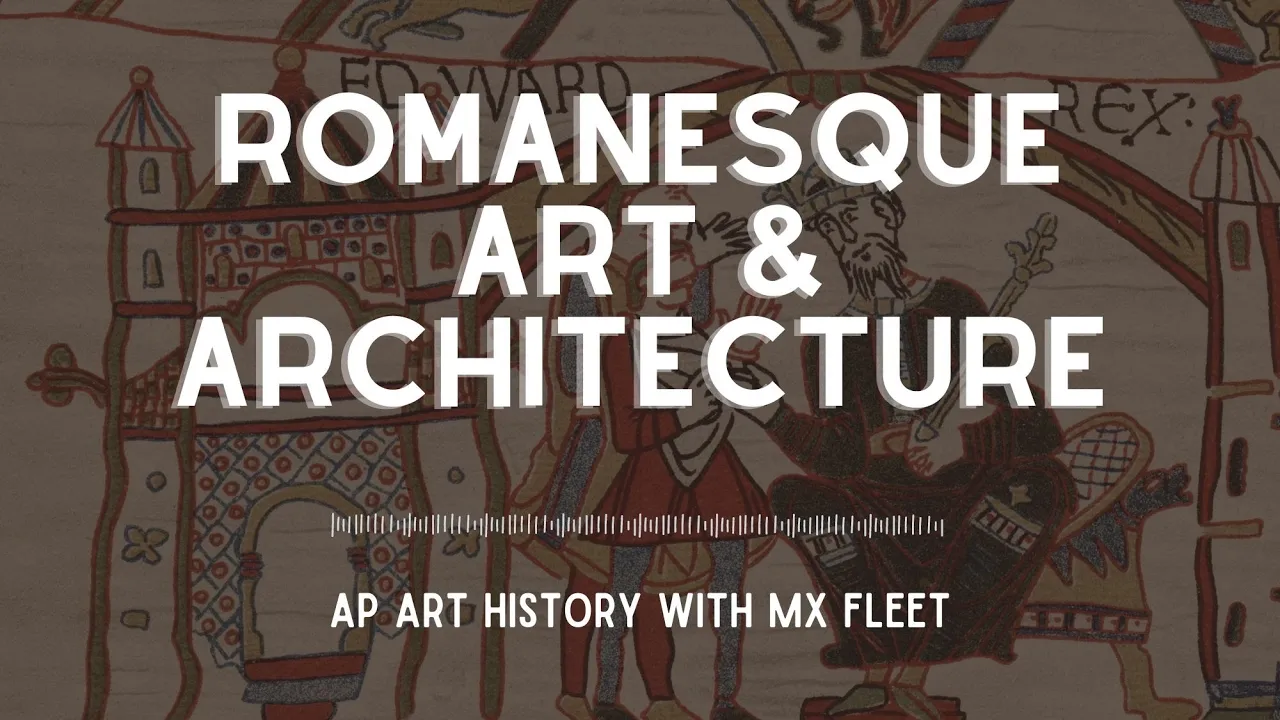
of adults as well as images of children and babies as well so our next work in the romanesque unit is the bay u tapestry which is not actually a tapestry but an embroidery so a lot of art historians have started calling it the bayou embroidery so the beige tapestry or embroidery is a 230 foot long continuous narrative so remember that a continuous narrative is a narrative where there's not really any vertical divisions between the events that are being described and sometimes you'll see the same figure depicted more than once in the same composition to kind
of show the progression of the story so there's actually a museum in bayou france where this tapestry is held my grandma actually went there a couple of years ago and purchased placemats from museums so we've had placemats in my house for like 15 years that have these elements from the bayou tapestry on them so i literally grew up with these images so the the narrative that is being discussed here is the story of william the conquerors conquest of england in the battle of hastings in 1066 um with the captions made in latin which you'll see
here so um there's over 600 figures in this composition and there's about 75 distinct distinctly different scenes in this kind of middle register right here um there's additional stuff that is happening in this in the upper and lower registers oftentimes you'll have like these um fantastic beasts um or you'll have like some events from the middle register continuing into the lower one like you can see the fallen soldiers over here in the bottom register there's also kind of like aesop's fables sometimes there will be figures um that are motioning towards the action to kind of
lead the eye so these these geese are kind of like looking down at this scene right here um what you'll notice is that the figures are relatively flat um there's a lot of sort of like twisted perspective that is being used here these kind of composite views of the figures um and they're oriented in such a way where you're trying to get some detail but they're not really oriented in space everything is very flat and that's perhaps most evident in this banqueting scene right here there's kind of like this hemispherical or this semicircular table right
here and the artist is is attempting to use kind of like this exploration of space to show that this is like a curved dining surface and then there's like a dude right here in the foreground and then there's other people in the background right here it's also assumed that these figures here are sitting on a bench but of course at this point in time artists have forgotten how to explore three-dimensional space in like a really effective way so especially at this point in time you're seeing this this flattening of picture planes also um due to
the limited number of colors and like difficulty of creating like half tones and blending in embroidery you're seeing a pretty limited palette in the bayou tapestry however the embroidery work that is present is extremely intricate and detailed embroidery for those of you who don't know is basically creating an image by sewing something into a piece of cloth and this is all hand done and it's just like an incredible amount of work so um in terms of the the narrative of events that is being shown here the images that are on the leftmost portion of the
bay utapa streets the stuff on the left is showing this journey from normandy which is basically a bother an area in northern france they're sailing across the english channel to gets to this region right here um so um william the duke of normandy is going with his army over here whoops um and then he has his army with him you can see that they have um their horses and their soldiers in the boats going across the english channel and once they get there they have a banqueting feast um and then you can see the bishop
odor right here who is very likely the guy who commissioned the um the fabrication of this tapestry right here he has a bowl and he's blessing the food and here's a bunch of dudes eating so we have this feast and then we have the preparation for battle you have these figures here that are assembling their weapons and then hitting each other in the head because why not and then in this portion right here you can see these soldiers that are digging and they're actually building this structure called a moton bailey which is um basically a
giant hill and then they put a base on top so it's a height advantage um that is strategically being installed so that the normans can have some sort of geographic advantage in this region that they're not familiar with so then are the cavalry seats which are depictions of these soldiers on horseback you can also see some archers in the lower registers right here um and then the bishop odo is shown here on his horse and he's got a club and then in the right most portions of the images you are seeing um the violent aftermath
of battle with these fallen soldiers and horses so there's actually some portions of the bayou tapestry that have been lost since its creation most art historians agree that it probably depicted the coronation of william the conqueror as the king of england we're not entirely sure though so there's a lot of um like cultural and and social stuff that revolves around the daily tapestry particularly within meme culture um there's actually this great meme generator um that you can use to create your own um bait you tapestry themed meme so you can actually type in and it
gives you like the font from the baby tapestry and then you can um click the figures and arrange them on this kind of linen um picture plane and you can like put in bits of architecture as well and this is all stuff from the bayou tapestry this was just like some german history students back in 2003 that were bored and decided to make this so it's a really fun tool if you want 10 minutes to just wind down at the end of the lecture if you want to go play with that fun meme generator