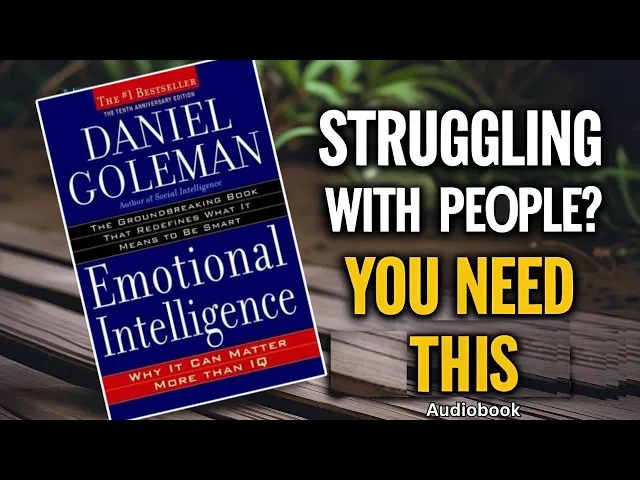
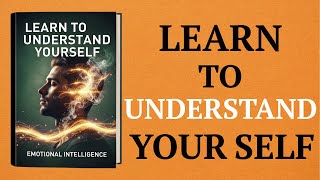
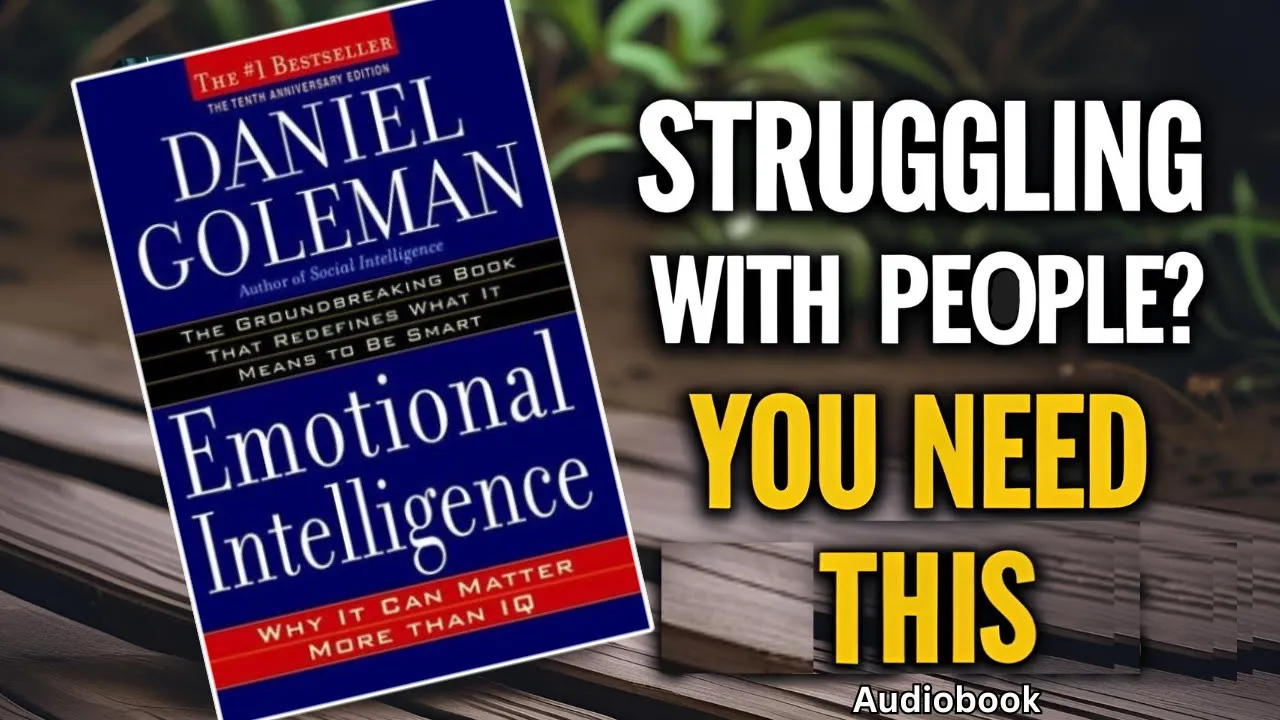
Emotional Intelligence by Daniel Golleman. Why EQ is more important than IQ. Why do some of the smartest people fail in life, struggling to hold a job, sabotaging relationships, cracking under pressure, while others, with average grades and modest backgrounds, seem to flourish effortlessly, building fulfilling lives and leading others with grace? The answer lies in something we've all heard of but rarely understand Deeply. Emotional intelligence. Emotional intelligence or EQ is not just a buzzword. It's the invisible force that determines how well we manage our emotions, relate to others, handle stress, lead teams, and navigate life's unpredictable storms.
And no one has brought this concept to light more powerfully than Daniel Golleman in his groundbreaking book, Emotional Intelligence. Golleman, a psychologist And former New York Times science journalist, challenges one of the oldest assumptions in society, that IQ is the most important predictor of success. Through decades of research, he reveals that when it comes to life satisfaction, high performance, and lasting relationships, EQ matters more, often far more than raw intellect. Let me tell you a quick story. A few years ago, two friends graduated from the same university. One Of them, let's call him Mark, was
the top student in his class. Straight A's, honors, internships with big names. Everyone expected him to skyrocket. The other Jamal was average academically, quiet, even overlooked. But Jamal had something Mark didn't. People loved working with him. He listened. He handled pressure without lashing out. He could diffuse tense meetings and inspire a team that was falling apart. Fast forward 5 years. Mark had burned out in Two jobs and struggled with authority. Jamal, he was leading a thriving division at a startup known for building strong teams and solving complex problems. Why? Not because of IQ, but because
of emotional intelligence. This video is not just a summary of a book. It's an awakening. It's an invitation to look inward, to reflect on how well you understand your own emotions, how you deal with frustration, how you communicate under Stress, and whether you truly empathize with the people around you. Golleman's research reveals that our ability to recognize, understand, and manage our own emotions and those of others is the silent force shaping every area of our lives. career, relationships, mental health, parenting, leadership, and even physical well-being. You might be asking, "So, can emotional intelligence be learned?"
Absolutely. That's the beauty of it. Unlike IQ, which is mostly fixed, EQ can grow with practice, with awareness, with intention. In the next chapters of this video, we'll explore exactly what emotional intelligence is, the five powerful pillars that make it work, how it shapes your everyday decisions, and most importantly, how you can build it starting today. By the end, you won't just understand EQ. You'll see your entire life through a new lens. You'll realize That every conflict, every opportunity, every setback has been influenced by your emotional patterns. And you'll walk away with the tools to
rewrite your emotional script. One skill, one habit, one relationship at a time. This is more than a book. It's a blueprint for mastering yourself and in doing so, mastering your world. Let's begin. Section one. What is emotional intelligence? Emotional intelligence, often shortened as EQ, is the ability to Recognize, understand, manage, and influence emotions, both our own and those of others. In his groundbreaking book, Emotional Intelligence, Daniel Gleman redefined what it means to be truly smart. For decades, society measured intelligence through IQ, the intelligence quotient, as if academic knowledge and cognitive skill were the ultimate predictors
of success. But Gleman showed us something deeper. The quiet strength behind our thoughts, Choices, and interactions, our emotional lives, shapes who we become far more than raw intellect ever could. At its core, emotional intelligence is made up of five key components. One, self-awareness. The ability to recognize and understand your own emotions. Two, self-regulation. The capacity to manage and redirect disruptive impulses and moods. Three, motivation, an internal drive to pursue goals with energy and Persistence beyond external rewards. Four, empathy, the ability to understand the emotional makeup of other people. Five, social skills. Proficiency in managing relationships
and building networks. These aren't soft skills. They're foundational life skills. They're what enable you to pause before reacting, to connect with others on a human level, and to lead without domination. Let's step back and compare IQ and EQ in real world terms. IQ, Measuring logic, reasoning, memory, and analytical ability, can get you through school. It might help you score well on tests or qualify for a technical role. But in the complex world of adult life filled with conflict, collaboration, leadership, heartbreak, parenting, and persuasion, it's emotional intelligence that becomes the dominant force. Consider this. Golleman's research
along with findings from Harvard, Stanford, and Carnegie Foundation studies shows That IQ accounts for only about 20% of a person's success in life, while the remaining 80% is determined by EQ and other non-cognitive factors. In workplaces, Golleman found that 90% of top performers had high EQ, while only 20% of bottom performers did. That means the best people, those who drive innovation, lead teams, and handle stress with grace, are those who've mastered their emotions and understood others. Think about it. Who do you trust More in a crisis? The person who can stay calm, listen deeply, adapt
to the needs of others, or the genius who panics, yells, or isolates themselves under pressure. Golleman argues that emotional mastery is not just useful, it's essential. Every human interaction, from a boardroom negotiation to a bedtime story with a child, is governed by emotions. And those who can read, guide, and regulate these emotions gain an incredible edge in life. Now, let's Look at a powerful example from the book that brings this to life. Golleman tells the story of a young boy named Jason, a kindergarter who showed astonishing emotional awareness. One day, while playing with classmates, Jason
noticed that another child, Billy, looked sad and was sitting alone. Instead of ignoring him like most kids might, Jason walked over and asked Billy if he wanted to play. When Billy said no, Jason didn't walk away. He sat beside him, Stayed quiet for a while, and then gently said, "It's okay. I'll sit here with you." This tiny moment revealed something profound. Jason didn't just see another child. He sensed Billy's feelings, respected them, and offered connection, not with words, but with presence. That's empathy in action. That's EQ. It's not just about understanding emotions. It's about responding
in ways That build trust, reduce pain, and create safety. Now, apply that same principle to adults. Imagine a manager who notices an employee under pressure. Instead of criticizing or piling on more tasks, she pauses and asks, "Are you okay?" That question might seem small, but it can open the door to motivation, loyalty, and productivity that no bonus ever could. The truth is, we've been trained to think emotional intelligence Is intangible, even weak. But the data says otherwise. Companies like Google, Apple, and Johnson and Johnson have run internal studies showing that managers with high EQs consistently
outperform their peers. Not just in revenue but in team morale, retention and innovation. Why? Because they build psychological safety. They lead with trust. They connect not control. In the education sector, programs that teach emotional intelligence like SEAL, social and Emotional learning in schools have been shown to improve academic outcomes, reduce behavioral issues, and enhance overall well-being. In short, children who understand and manage emotions perform better, not just in school, but in life. Even in health care, emotional intelligence is saving lives. Nurses and doctors trained in EQ are better at patient communication, reduce medical errors, and
create environments where healing happens faster. So, let's return To the original question. What is emotional intelligence? It's not just a skill. It's a way of being. It's how we navigate disappointment, anger, jealousy, and love. It's how we interpret a sigh, a silence, a smile. It's how we find meaning in connection and resolve in solitude. And here's the best part. Emotional intelligence is learnable. You're not stuck with the patterns you inherited or absorbed. With self-awareness and intention, you can Rewire how you respond to the world. And that changes everything. Daniel Golleman didn't just write a book.
He opened a portal, a new lens through which to see ourselves, not just as thinkers, but as feelers. And in doing so, he gave us a map. Not to control emotion, but to understand it, channel it, and use it as fuel. Because in the end, it's not the smartest person who wins. It's the one who understands people. And that starts by understanding themselves. Section two, the science behind EQ. To truly understand emotional intelligence, we need to go beyond theory and explore the science behind it. What's actually happening in the brain when we experience emotions? Why
do we sometimes say things we later regret? Why do some people freeze in pressure while others respond with clarity and grace? Daniel Gleman in emotional intelligence dives deep into the fascinating world of neuroscience to Show us that emotional intelligence isn't just a psychological theory. It's a biological reality. And to understand it fully, we must understand how our brains process emotions. Let's begin with two crucial parts of the brain. The amygdala and the preffrontal cortex. The amygdala is the emotional center of the brain. It's an almond-shaped structure deep within our lyic system, and it's responsible for
processing emotions, especially fear and threat. When you Suddenly slam on the brakes in traffic or feel your heart race in a tense argument, that's your amygdala in action. The preffrontal cortex, on the other hand, sits right behind your forehead. It's the rational brain, the planner, the decision maker. It helps you think before you act, solve problems, and control impulses. Now, here's where it gets interesting. The amygdala processes sensory information milliseconds before The rational brain does. That means it can hijack the brain's logical systems before we even know what's happening. Goldman calls this the amygdala hijack.
Imagine this. You get a critical email from your boss. Instantly, your heart races. Your palms sweat. Your mind fills with panic. You fire back a defensive reply only to regret it 5 minutes later. That's an amygdala hijack in action. Your emotional brain overpowered your rational mind. Here's a Metaphor to make this clearer. Think of your brain as a horse and rider. The horse is your emotional brain, powerful, fast, but impulsive. The rider is your logical brain, calm, thoughtful, but slower. When both work together, you move forward with balance and purpose. But if the horse gets
spooked and bolts, the rider is left clinging on for dear life. That's what happens when emotions take over. The horse outruns the rider. And these emotional reactions, they're Not random. They're shaped early in life through something Goldman calls emotional memory. From childhood, our brains are constantly wiring emotional patterns based on how we're treated, how emotions are modeled to us, and what we experience in relationships. A child who grows up in a tense household, for example, might develop a hair trigger response to criticism. Another child raised with emotional validation and calm communication might Grow up with
greater self-regulation and empathy. These early experiences leave deep emotional imprints, templates that the brain uses again and again throughout life. But here's the hope. Our brains are not fixed. Neuroplasticity, the brain's ability to rewire itself, means we can create new emotional habits. Just as you can strengthen a muscle, you can train your emotional circuits through mindfulness, reflection, and practice. Let's explore Why this matters so much in real life, especially in decision-m and learning. You've probably heard the phrase, don't make decisions when you're emotional. That's not just good advice. It's neuroscience. When the emotional brain is
activated, it floods the body with stress hormones like cortisol and adrenaline. These chemicals prepare us for fight or flight. But they also suppress rational thought. In that state, we struggle to listen, think Critically, or see the bigger picture. Our focus narrows, our patience disappears, and we often make reactive decisions that don't serve us well. This is why emotional regulation is a core part of emotional intelligence. It's the ability to notice your emotional state and choose how to respond rather than just react. Think of emotional regulation like a thermostat in a house. If it's too sensitive,
the house is constantly overcorrecting, blasting heat One moment and freezing the next. A well-calibrated thermostat keeps things balanced. In the same way, emotionally intelligent people keep their inner climate stable even in stressful situations. Now consider learning. We often assume that emotion and learning are separate. But neuroscience says otherwise. Emotional states influence how well we absorb, retain, and apply information. A student who feels safe, supported, and Engaged will learn better than one who is anxious, bored, or scared. In the workplace, emotionally intelligent leaders create emotionally safe environments. They don't just give feedback, they give it with
empathy. They recognize stress and offer support. And because of that, their teams perform better, innovate more, and remain resilient under pressure. Let's bring this home with a powerful image from Gleman's work. He describes a brain That's out of emotional balance as a car with no brakes. You may be smart, talented, and well-intentioned, but without emotional brakes, your intelligence spins out of control. You crash in conversations, blow up in meetings, or spiral into self-doubt when things go wrong. But with strong EQ, you become more like a Formula 1 driver, able to navigate sharp turns, make split-second
decisions, and stay composed even at high speed. You're not Avoiding emotion. You're using it, channeling it toward thoughtful action. In the end, the science of emotional intelligence shows us one undeniable truth. Emotions are not the enemy of reason. They're its foundation. When we understand how our brains work, how the emotional and rational systems interact, we stop fearing our feelings and start mastering them. And with that mastery, we gain something priceless. The ability to lead ourselves, uplift others, and Thrive in any environment. This is the biology of wisdom and it's available to anyone willing to understand
their own mind. Section three, the five pillars of emotional intelligence. In emotional intelligence, Daniel Gleman lays out five core components that form the foundation of EQ. These five pillars are not abstract ideas. They are practical, observable, and trainable abilities that determine how we manage ourselves and our Relationships. They are the emotional muscles that separate ordinary from extraordinary, reactive from wise, and disconnected from connected. Let's walk through each of these five pillars with clarity, depth, and real life application. One, self-awareness. Self-awareness is the cornerstone of emotional intelligence. Without it, the rest crumbles. It's the ability to
recognize and understand your own emotions as they arise. This isn't just About knowing that you're angry or sad. It's about knowing why, what triggered it, what story you're telling yourself, and how it's affecting your thoughts, decisions, and actions. Most people are sleepwalking through their emotional life. They react without reflection. They blame without examination. But emotionally intelligent people have a clear internal mirror. They see their emotional state with clarity. Golleman argues that naming your emotions gives You power over them. When you say, "I feel frustrated because my ideas weren't heard," you shift from being consumed by
the emotion to observing it. That shift creates space. And in that space, you can choose your response. Take the example of a leader who notices tension building before a major meeting. Instead of suppressing it or lashing out, she pauses. She asks herself, "What am I feeling? Why am I feeling this way?" That moment of inner clarity allows her to redirect that emotional energy into focus and assertiveness instead of anxiety or defensiveness. Self-awareness also includes understanding your emotional triggers. For instance, maybe you notice that you always feel insecure around certain people or overreact when your ideas
are challenged. These patterns don't disappear by ignoring them. They change through awareness. You cannot Change what you don't understand. And that's why self-awareness is the first and most critical pillar of emotional intelligence. Two, self-regulation. If self-awareness is seeing your emotions, self-regulation is managing them. We all get angry. We all get anxious. But what separates the emotionally intelligent from the emotionally reactive is how they respond to those emotions. Self-regulation means keeping your cool When others lose theirs. It's about pausing before reacting, choosing your battles, and staying grounded even when your world shakes. Imagine someone cuts you
off in traffic. Your body floods with adrenaline. You want to shout or retaliate, but instead you take a deep breath. You shift your focus. You choose calm. That's self-regulation. In action, Golleman emphasizes that emotionally intelligent people don't avoid emotions, they channel them. Anger becomes Assertiveness. Fear becomes caution. Frustration becomes problem-solving energy. There's a famous quote, "Between stimulus and response, there is a space. In that space is our power to choose our response. And in our response lies our growth and our freedom. That space is where self-regulation lives. Here are a few simple but powerful tools
to strengthen this pillar. Mindfulness. Regular meditation or breathing exercises to increase your ability to Observe without reacting. The pause technique. Whenever emotions rise, count to 10. Even a 10-second pause can prevent a 10-year regret. Journaling. Writing out your emotional experiences can help you understand and release them. Self-regulation builds trust. People feel safer around you when they know you won't explode, blame, or break under pressure. It also builds credibility. You become known as someone who leads With poise and presence. Third, motivation. Motivation in emotional intelligence isn't about rahrrah slogans or chasing rewards. It's about having a
deep internal drive. The kind that keeps you moving even when no one's watching. And nothing is promised. Emotionally intelligent people are driven by purpose, not pressure. They don't rely on constant praise or fear of failure to act. They have inner fire, a self-fueled engine that pushes them toward their Goals. Golleman found that people with high emotional intelligence tend to set long-term goals that align with their values. Have hope and optimism even in failure. Persist when things get hard, not because it's easy, but because it's worth it. Consider an athlete training for the Olympics. the early
mornings, the injuries, the setbacks. It's not fame or applause that keeps them going. It's inner purpose, vision, discipline. That's emotional motivation. In Business, look at entrepreneurs who keep building after failed launches. In education, look at students who keep learning after failing exams. In leadership, look at change makers who push forward even when no one believes in them yet. Motivation isn't hype. It's the quiet, consistent courage to keep showing up. To build this pillar, identify your core values. What truly drives you. Set meaningful goals that align with those Values. Practice gratitude and reflect on small wins.
It fuels persistence. Motivated people are emotionally intelligent because they manage their emotions in service of their mission. They don't let setbacks define them. They let them refine them. Four, empathy. Empathy is the ability to feel with others, to sense what someone else is feeling, even without them saying a word. It's not sympathy, which says, "I feel sorry for you." It's not Fixing, which says, "Let me solve your problem." Empathy says, "I see you. I hear you. I'm with you. Empathy is what turns good relationships into great ones. It's what makes people feel safe, seen, and
supported. And in Golleman's view, it's a core leadership skill, perhaps the most essential. In the workplace, an empathetic manager notices when an employee is withdrawn and checks in. In friendship, an empathetic person knows when to sit in silence instead of Offering solutions. In parenting, empathy builds lifelong emotional trust between parent and child. Empathy isn't a soft skill. It's a human power skill. One striking example Goldman shares is that of successful negotiators. They win not by overpowering the other party, but by deeply understanding their needs, fears, and goals. They listen between the lines. They make others
feel respected. That emotional intelligence creates cooperation, not Confrontation. You can grow your empathy through active listening, being fully present without planning your response. Perspective taking, asking, "What might this person be going through?" Emotional validation, saying things like, "That sounds really hard. I can imagine why you'd feel that way." In a disconnected world, empathy reconnects us and it's not optional if you want to lead, love, and live meaningfully. Fifth, social skills. The Final pillar of emotional intelligence is social skill. The ability to navigate relationships with grace, clarity, and care. It's about influence without intimidation, connection without
control, collaboration without conflict. People with high EQ don't just manage themselves, they also manage the emotional tone of groups. They resolve tension. They communicate clearly. They uplift others. Imagine two managers. One shouts when things go wrong, uses fear To drive results, and avoids difficult conversations. The other gives constructive feedback, reads the room, and builds trust. Who gets better long-term results? Golleman shows that emotionally intelligent leaders build high-erforming teams, not because they're perfect, but because they create environments where people feel safe, challenged, and valued. Social skills include clear communication, expressing thoughts without confusion or Defensiveness, conflict
resolution, staying calm in disagreements, and finding win-win outcomes, teamwork and influence, rallying people toward a shared mission. And perhaps most importantly, emotional connection. The ability to make people feel important, listened to, and respected. You don't need to be extroverted to have great social skills. You just need to care, listen, and engage with emotional intention. These Five pillars of emotional intelligence, self-awareness, self-regulation, motivation, empathy, and social skill are not talents you're born with. They're skills you build. They are life's real curriculum. They determine how well you live, love, lead, and learn. And unlike IQ, which levels
off, EQ can grow throughout your entire life. In Golleman's words, emotional intelligence is a master aptitude, a capacity that profoundly affects all Other abilities. When you develop these pillars, you don't just get smarter emotionally, you get stronger in every area that matters. Section four, emotional intelligence in real life. Emotional intelligence isn't just a concept tucked away in psychology books. It's a living, breathing force that plays out in everyday moments. It's in how we speak, how we listen, how we lead, how we raise our children, and even how we face pain. Daniel Golleman's message is clear.
EQ is not theoretical. It's transformational. Let's explore how emotional intelligence shows up in the real world across four major areas of life. In the workplace, emotional intelligence as the new superpower. In today's fast-paced, hyperconnected work environments, technical skills alone are not enough. Companies are waking up to this truth. People don't quit jobs, they quit Managers. And they don't stay for salary, they stay for culture. That's why emotional intelligence has become one of the most sought-after traits in hiring, leadership, and team building. Golleman's research revealed that EQ accounts for nearly 90% of the difference between average
and outstanding leaders, not intelligence, not experience, but emotional intelligence. Why? Because emotionally intelligent leaders manage stress Instead of spreading it. Listen more than they speak. Inspire rather than intimidate. Create psychological safety instead of fear. Navigate conflict without blowing up or backing down. Top companies like Google, PepsiCo. And Johnson and Johnson have integrated EQ training into their leadership programs. They've discovered that teams led by high EQ managers show higher morale, lower turnover, and better performance. In one powerful case study, a Manufacturing firm tracked the emotional climate of its different departments. The results were stunning. Teams with
leaders who modeled empathy, patience, and clear communication consistently outperformed those led by aggressive, emotionally volatile managers despite having the same resources and experience. The takeaway: Emotions are contagious. A leader's emotional state sets the tone. And when EQ is high, the culture thrives. In relationships, the Glue that binds us. Relationships are not built on logic. They are built on emotion. How we make others feel, how we respond to their needs, and how safe we are to be vulnerable with. This is where emotional intelligence becomes the silent architect of love, trust, and connection. EQ helps couples avoid
the traps of criticism, defensiveness, stonewalling, and contempt. The very poisons that psychologist John Gottman identified as predictors of divorce. High EQ partners don't just fight less, they fight better. They know how to pause before reacting to hurtful words. Name and express emotions without blame. Listen to understand, not just respond. Validate feelings even if they disagree with the facts. Imagine a heated argument where one partner suddenly says, "I think I'm just feeling unappreciated. I know you didn't mean to hurt me, but that's how it landed." That simple moment of self-awareness, Vulnerability, and empathy can diffuse an
emotional bomb. Emotional validation is one of the most powerful healing tools in relationships. Saying, "I get why that upset you or that makes sense," is not about agreement. It's about acknowledgement. And that acknowledgement builds intimacy like nothing else can. In friendships too, EQ allows us to show up as present, supportive, and Trustworthy. It's not the number of friends that matters. It's the emotional depth of those friendships. Golleman reminds us emotional intelligence isn't about being perfect. It's about being aware, being kind, and being willing to grow in connection with others. in education and parenting, raising emotionally
literate humans. Think about it. What if emotional intelligence were taught in schools with the same importance as math Or science? What kind of world would we live in? Golleman passionately argues that emotional literacy is more important than academic achievement, especially in early childhood. Why? Because a child who can name their feelings, calm themselves down, and empathize with others is already equipped for life's hardest tests. In schools that implement social emotional learning SEAL programs, the results speak volumes, improved academic Performance, fewer behavioral issues, lower rates of anxiety and bullying. Kids don't need more punishment. They need
more emotional coaching. They need adults who say, "I see you're angry. Want to talk about it?" Let's take some deep breaths together. What do you think you could do differently next time? Children don't learn EQ through lectures. They learn it through modeling. How we react when we're stressed, how we apologize, how we Handle conflict. Parents who develop their own EQ become emotional role models. They teach resilience not by shielding their kids from pain, but by showing them how to feel it, process it, and move through it. As Golleman writes, the emotional lessons children learn shape
the emotional habits of a lifetime. In mental health, the silent shield, life will hurt, disappointment, loss, rejection, shame, these are universal human experiences. But how we respond to that pain determines whether it becomes a source of growth or collapse. That's where emotional intelligence steps in. Not to remove pain, but to help us move through it with grace. Studies have found that people with high EQ are less likely to suffer from chronic anxiety, depression, and emotional burnout. Why? because they understand and accept their emotions instead of suppressing them. Have the language to describe their inner world.
Know when to seek help and how to offer help. Reframe setbacks as challenges, not catastrophes. Consider someone going through a breakup. A low EQ response might be emotional numbing, blame, or impulsive rebound behavior. A high EQ response might be feeling the grief fully, talking it out with friends, journaling the pain, and eventually seeing the breakup as a chance to grow. Emotional intelligence doesn't make you Emotionless. It makes you emotionally wise. It teaches you to sit with pain without being devoured by it. To validate your sadness without becoming it, to reach for support instead of isolation.
Mental health begins with emotional awareness and healing begins with emotional acceptance. EQ isn't a skill for a few. It's a survival tool for all. In the boardroom, in the living room, in the classroom, and in the quiet of your Own mind. Emotional intelligence changes everything. It helps you communicate when words fail. It helps you connect when others shut down. It helps you lead when chaos rises. And most of all, it helps you stay whole when life falls apart. Goldman's message is urgent and clear. EQ isn't a luxury. It's a life skill, and it's never too
late to build it. Section five, the cost of emotional illiteracy. Emotional intelligence isn't just a nice to have. It's not an Optional add-on to success or a soft skill you can afford to overlook. In fact, the lack of emotional intelligence, emotional illiteracy comes with a high price tag. One that's often paid in broken relationships, missed opportunities, toxic workplaces, and private battles with mental health. Let's face it, we've all known people who are brilliant on paper, but struggle miserably in life. They can solve complex equations, Deliver jaw-dropping presentations, or ACE exams, but their lives are a
mess. Why? Because they don't know how to navigate human emotion. Neither their own nor anyone else's. Daniel Goldman calls this the IQ trap. The belief that intelligence alone will guarantee success. But in the real world, it doesn't. Without EQ, brilliance often burns itself out. Broken relationships. When feelings go unnamed and unmanaged. Imagine a spouse who's Never able to admit when they're wrong. Who blames, stonewalls, or explodes over minor misunderstandings. Or a friend who constantly invalidates your feelings, turns every conversation into a competition, or disappears when you need support. That's emotional illiteracy in action. A low
EQ person may not even know they're causing harm. They lack the self-awareness to notice their impact, the empathy to feel what others are Feeling, or the regulation to manage emotional outbursts. Over time, this pattern fractures intimacy. Resentments build. Conversations become landmines. Silence becomes the default. and relationships, romantic, familial, or platonic, begin to unravel. What's tragic is that many people don't lose their loved ones because they stopped loving. They lose them because they never learned how to listen, how to Validate, or how to safely express vulnerability. Career sabotage. When smart people self-destruct. We've seen it before.
The technically gifted employee who can't work with a team. The manager who micromanages out of insecurity. The CEO who makes emotionally reactive decisions that tank the company's morale. These people may be brilliant, but they keep hitting invisible walls. Why? Because they lack Impulse control. So they interrupt, lash out, or dominate. Empathy, so they alienate and offend. Self-awareness, so they remain blind to how others see them. Social skills, so they isolate or intimidate instead of collaborating. In one famous case, a Harvard educated executive was fired not for incompetence, but for his toxic leadership. He belittled his
team, exploded under pressure, and refused to take feedback. The result, skyrocketing Turnover, falling profits, and eventually his own downfall. Golleman argues that IQ gets you hired, but EQ gets you promoted and keeps you there. In today's workplace, being emotionally intelligent is no longer optional. It's essential. Mental health meltdown when emotions rule you. Low EQ doesn't just hurt others. It turns inward, too. People with low emotional intelligence often feel like their emotions control them. They are Quick to anger but slow to understand it. Anxious without clarity. Feeling overwhelmed but not knowing why. Depressed, not realizing they've
been bottling years of unexpressed sadness, shame, or fear. And instead of processing those emotions, they numb them with food, with scrolling, with alcohol, with work. This emotional illiteracy leads to burnout, chronic stress, and relational patterns of sabotage. Because without the tools to Name, feel, and release, emotions don't disappear. They pile up. Gleman points to numerous studies showing how low EQ is tied to higher rates of addiction, anxiety disorders, and emotional exhaustion. It's not just a social problem. It's a health problem. The emotionally intelligent person, on the other hand, can say, "I'm feeling overwhelmed right now,
so I'm going to take a break. This sadness needs my attention, not avoidance. I'm going to talk to someone instead of bottling this up. That kind of self-awareness is a form of emotional freedom. And without it, we remain trapped, ruled by moods we don't understand and patterns we can't change. The pain of unlearning, facing our emotional blind spots. No one escapes childhood or culture without emotional wounds. Many of us were raised to suppress, hide, or invalidate our emotions. Maybe we were told, "Don't Cry. Be strong. Stop being so sensitive. Just get over it." So, we
learned to disconnect, to smile when hurting, to rage instead of cry, to avoid instead of feel. These emotional habits may have helped us survive, but they now hold us back. The cost of emotional illiteracy isn't just external, it's internal. It's the cost of never truly knowing ourselves, never fully connecting with others, and never realizing our potential. But here's the hope. Emotional intelligence can be learned. It starts by unlearning what no longer serves us. Replacing reactivity with reflection. Replacing judgment with curiosity. Replacing suppression with expression, replacing blame with responsibility. As painful as it can be to
face these patterns, it's the only path to real growth. Golleman writes, "The emotional brain responds to an event more quickly than the thinking brain. But with Awareness, we can train the emotional brain to respond wisely, not wildly. The cost of emotional illiteracy is high. broken hearts, toxic jobs, silent suffering, unlived potential. But the gift of emotional intelligence is even greater. It gives you back control of your emotional life. It empowers you to respond with grace instead of regret. It invites you into deeper relationships and clearer decisions. It opens doors not through force, but through Understanding.
So ask yourself, what emotional patterns have cost you? What might change if you mastered your EQ? The price of ignoring this skill is too high. And the payoff for learning it lifechanging. Section six. Can you learn emotional intelligence? Absolutely you can learn emotional intelligence. In fact, that's one of the most empowering messages of Daniel Gleman's groundbreaking work. Emotional intelligence is not a fixed trait you're either born with or without. It's a set of learnable, buildable skills. And thanks to neuroplasticity, the brain's ability to rewire itself, you can change your emotional habits at any age with
the right attention and practice. The key is intention. Emotional intelligence isn't built by accident. It grows when you pay attention to how you feel, how you act, And how you affect others, and when you commit to doing better every day. Let's break it down with practical tools you can use today. The brain can change. So can you. Decades ago, scientists believed the adult brain was fixed. that once you reached maturity, your emotional tendencies and thought patterns were locked in place. But recent research in neuroscience has shattered that myth. Neuroplasticity proves that the brain is Constantly
changing. Every new thought, reaction, or behavior creates and strengthens neural pathways. When you practice calm instead of rage or empathy instead of judgment, your brain literally begins to rewire itself to favor those emotional responses. So yes, you can become more emotionally intelligent and the transformation doesn't take years. Small daily habits create powerful internal shifts over time. Five practical ways to increase Your emotional intelligence. One, journaling emotional patterns. Start by observing your emotions like a scientist. Each day, write answers to these questions. What emotion did I feel most today? What triggered it? How did I react?
How would I like to respond next time? This builds self-awareness, the first pillar of EQ. The act of writing forces you to pause, reflect, and see yourself more clearly. Over time, you'll begin to recognize Emotional patterns that used to stay hidden, and only what's seen can be changed. Two, practice empathy exercises. Empathy isn't just being nice. It's a skill you can develop. Try this. When talking to someone, pause and ask, "What might they be feeling right now?" Watch a movie and try to identify the emotions behind each character's actions. When you disagree with someone, ask
yourself, "What would make me act the way they are if I were in their Shoes?" These practices strengthen your emotional perspective taking a key part of understanding and connecting with others. Empathy turns enemies into humans and creates bridges where walls once stood. Three, daily mindfulness or meditation. Meditation isn't about being zen all day. It's about building emotional regulation. The ability to notice an emotion without being swept away by it. Try this for 5 to 10 minutes daily. Sit quietly and focus on your Breath. When thoughts or emotions arise, they will notice them without judgment. Label
what you feel. anger, anxiety, boredom, peace. Return to your breath. Over time, this practice helps you respond to emotions rather than react from them. It rewires your brain to pause, observe, and choose your response. Four, seek feedback from others. Self-awareness has a blind spot. You. That's why emotionally intelligent people seek feedback from trusted Friends, colleagues, or mentors. Try asking, "How do I typically come across when I'm stressed?" "Have you ever felt dismissed or misunderstood by me?" "What's something you think I don't see about myself?" Yes, this can be uncomfortable, but it's powerful. Emotional growth thrives
in humility and honest reflection. Five, create emotional accountability. Pick one emotional Pattern you want to change. Maybe it's snapping at your partner, shutting down during conflict, or procrastinating out of fear. Now, find someone you trust and say, "I'm working on this. Here's what I'm trying. Can you check in with me once a week?" Accountability brings awareness, consistency, and encouragement. Emotional change is hard, but it's a lot easier when someone walks the road with you. A transformation story. The angry Leader who changed. Meet Anthony, a high-erforming sales manager in his 40s. Charismatic, driven, and relentless. But
his team hated working for him. Why? Because under pressure, he exploded, yelled, blamed, micromanaged. His team felt like they were walking on eggshells. He was brilliant, but emotionally immature. After losing two top performers, Anony's boss gave him a choice. Improve your emotional leadership or step down. He reluctantly Enrolled in an EQ coaching program. The first step, keeping a journal of his emotional triggers. Anthony realized he carried deep anxiety about failure and that his anger was a defense mechanism. With mindfulness practice and honest conversations, he learned to pause before reacting and to ask, "What am I
really feeling right now?" He began owning his emotional reactions, apologizing when needed, and listening more. Within 6 months, team Morale and performance skyrocketed. Anthony didn't just improve his leadership, he saved his career, he rewired his emotional brain. Your 30-day emotional intelligence growth challenge. Ready to grow your EQ? Here's a simple 30-day plan. You don't need hours, just commitment. Week one, self-awareness. Each night, journal your strongest emotion of the day. Identify three triggers that consistently push your buttons. Begin labeling emotions as They arise. I feel. Week two, self-regulation. Practice five minute mindfulness daily. When triggered, pause
and breathe before responding. Track how often you react versus respond. Week three, empathy and social skills. In conversations, focus fully. No interrupting or advice. Try the emotional mirror. Name what someone else might be feeling. Ask a friend for feedback on your emotional Presence. Week four, integration. Choose one emotional pattern to change. Create an EQ accountability pack with someone you trust. Reflect on what you've learned about yourself. Your EQ is your superpower. You don't have to stay stuck in old emotional cycles. You don't have to repeat the same mistakes, sabotage the same relationships, or let fear
and reactivity rule your life. Emotional intelligence is learnable, trainable, Growable. It's your key to better relationships, better decisions, better leadership, and a better life. Start today. Start small. Start honest. Because every moment you choose emotional growth is a moment you take your power back. Section seven, emotional intelligence and leadership. When we think of great leaders, we often picture individuals who are confident, articulate, and capable of making tough decisions. But what truly separates Exceptional leaders from the rest isn't just intelligence or expertise. It's their emotional intelligence, EQ. EQ is the number one predictor of great leadership.
Research consistently shows that leaders with high emotional intelligence outperform those with lower EQ, even if the latter have superior technical skills or higher IQs. The reason is simple. Effective leadership is not just about having the right answers. It's about understanding, Motivating, and guiding people toward success. And that's where EQ comes in. In this section, we'll explore why EQ is crucial for leadership, dive into Daniel Gleman's six leadership styles, and look at how emotionally intelligent leaders build trust, inspire high performance, and navigate crisis. Plus, we'll highlight real world examples of leaders who exemplify the power of
EQ. Why EQ is the number one predictor of leadership. Leaders with high emotional intelligence Are better equipped to create an environment of trust, motivation, and collaboration. They excel at navigating the emotional dynamics of their teams and adjusting their leadership style to meet the needs of the situation. Here's why EQ is so important. Self-awareness enables leaders to recognize their own emotions and how those emotions impact their decision-making and interactions. Self-regulation allows leaders to manage their impulses, remain calm under Pressure, and make thoughtful decisions rather than reactive ones. Empathy helps leaders understand the emotions of their team
members, building trust, and fostering a supportive environment. Social skills give leaders the ability to communicate effectively, resolve conflicts, and inspire others to follow their vision. When a leader has high EQ, they inspire loyalty, increase productivity, and create a positive workplace culture. High EQ leaders are Adept at recognizing the emotional climate of their teams and adjust their approach to enhance team dynamics and performance. The six leadership styles from Golleman's Harvard Business Review article. In his Harvard Business Review article, Daniel Gleman outlines six distinct leadership styles, each of which is influenced by different aspects of emotional intelligence.
Understanding these styles can help you identify your own leadership tendencies and improve Your approach. One, coercive leadership. This style is about demanding compliance and control. It's effective in situations that require immediate action, such as during a crisis, but can be detrimental in the long term. Leaders who use this style may be highly directive and authoritative, but their lack of empathy and flexibility can demotivate employees when it's useful in emergency situations Where rapid decisions must be made. risk can alienate employees, decrease motivation, and create a toxic work environment if overused. Second, authoritative leadership. The authoritative leader
inspires with a clear vision and enthusiasm. This style relies on empathy and optimism to guide teams towards a shared goal, and it's particularly effective in situations requiring change or innovation. These leaders build Confidence by aligning the team's work with a greater purpose when it's useful. When setting a new direction or leading through change. Example, Steve Jobs used this style to transform Apple, focusing on innovation and vision. Third, affiliative leadership. Affiliative leaders focus on creating harmony and building emotional bonds within their teams. They are skilled at conflict resolution, fostering a supportive environment, and making sure everyone
Feels valued. This style is especially effective in emotionally charged or high stress environments when it's useful to improve team morale and resolve conflicts. Risk can be overly focused on making everyone happy at the expense of performance. Fourth, democratic leadership. Democratic leaders seek input from their team members and value collaboration. They build trust by involving everyone in decision-making and make the team feel heard and Appreciated. This leadership style works well when fostering creativity and ensuring buyin from the team when it's useful when you need to engage employees in decisionm. Example, Oprah Winfrey demonstrates democratic leadership by
empowering her team to be part of the creative process which has contributed to her long-standing success. Fifth, pace setting leadership. Paces setters set high standards for Themselves and their teams, pushing for excellence and rapid results. While this style can drive high performance, it may also lead to burnout if overused. Pacy setting leaders often excel when working with highly skilled teams that don't need much direction. When it's useful, in environments where quick results and high standards are necessary. Risk can create stress and anxiety if team members feel they cannot meet the high expectations. Sixth, coaching leadership.
Coaching leaders focus on developing their team members personal and professional growth. They provide guidance and support, helping individuals unlock their potential. These leaders excel in environments that value long-term development and continuous improvement when it's useful in teams that are eager to learn and grow. Example, Nelson Mandela used coaching leadership by mentoring and empowering His followers to lead with compassion and wisdom. How emotionally intelligent leaders build trust, inspire performance, and navigate crisis. One, building trust. Trust is the foundation of any successful team. Emotionally intelligent leaders create trust by being transparent, consistent, and empathetic. They make their
team members feel understood, respected, and valued. These leaders build a Psychological safety net that encourages open communication and innovation. Leaders with high EQ are also attuned to the emotional needs of their team members. By addressing concerns and being responsive to emotional cues, emotionally intelligent leaders foster an environment of trust and cooperation. Second, inspiring performance. Emotionally intelligent leaders know how to motivate their teams. They inspire performance by Showing confidence in their team members abilities and aligning the team's work with a larger purpose. By being emotionally attuned, they can tap into what drives each individual and use
that knowledge to fuel motivation. Additionally, emotionally intelligent leaders are adept at providing positive feedback and celebrating achievements, creating a culture of recognition that drives team members to strive for excellence. Three, handling crises with Calm. In times of crisis, emotionally intelligent leaders shine. They stay calm under pressure and model emotional resilience for their teams. They don't let stress or panic cloud their judgment. Instead, they focus on finding solutions, communicating clearly, and maintaining a sense of direction even when things are uncertain. Leaders with high EQ also provide emotional support to their teams during challenging times, offering Encouragement
and stability. This ability to remain calm under pressure can be the difference between weathering a storm and faltering under its weight. Four, uniting diverse teams. Great leaders know that diversity strengthens teams. Emotionally intelligent leaders bring people together by appreciating their differences, fostering collaboration, and cultivating an inclusive environment. They create spaces where all voices are heard and Respected, and where team members can freely contribute their unique perspectives. Emotionally intelligent leaders are able to unite diverse teams by leveraging empathy to understand the needs and perspectives of others, ensuring that everyone feels valued and included. Real world example.
Nelson Mandela's emotional intelligence. Nelson Mandela exemplified emotional intelligence throughout his life, especially in his leadership of South Africa. He demonstrated the coaching leadership style by mentoring both allies and adversaries. Mandela's ability to empathize with people on both sides of the conflict allowed him to unite a deeply divided nation. Mandela's empathy was a powerful force in overcoming the emotional wounds of apartheid. He used self-regulation to maintain his composure during intense moments of personal and national adversity. His Leadership was not about commanding authority, but about using emotional intelligence to heal and guide his people through the most
difficult chapters in their history. Emotional intelligence isn't just a soft skill for leaders. It's a gamecher. The ability to manage your emotions, understand those of others, and respond with empathy and wisdom is what separates extraordinary leaders from the rest. By mastering emotional intelligence, you'll unlock The potential to inspire, lead, and unite in ways that change lives and organizations. Finally, as we've explored throughout this video, emotional intelligence, EQ, is not just an optional trait or a nice to have quality. It's the foundation of every thriving life, whether in your personal relationships, your career, or your mental
well-being. The ability to understand and manage your emotions is the key to unlocking Greater success, happiness, and fulfillment. But here's the truth. It's not just about knowing your emotions. It's about mastering them and using that mastery to transform your relationships, your career, and your destiny. Every single one of us has the capacity to grow and enhance our emotional intelligence. And by doing so, we gain the power to shape our lives in a way that resonates deeply with our values and our true Potential. You may have already noticed that emotional intelligence isn't just something that leaders
or CEOs need. It's a skill every individual must cultivate. Whether you're looking to lead a team, deepen your relationships, or simply navigate the ups and downs of life with grace and resilience, EQ is the difference maker. Why EQ isn't just optional, it's essential. Think about the most successful people you know. They might not be the ones with the Highest IQs, but they understand people. They connect with others on a deep level. They manage their emotions in ways that allow them to stay composed in the face of stress, handle conflicts constructively, and motivate themselves and others
to keep moving forward in the face of challenges. This isn't a coincidence. It's emotional intelligence at work. Goldman's research has shown us that emotions govern our thoughts, decisions, and actions more than we Realize. In fact, the very ability to recognize and regulate our emotions can dramatically improve our capacity for clear thinking, problem solving, and connection with others. This isn't a future skill or a soft perk. It's a critical life skill that will impact your success and happiness. Whether you're an entrepreneur trying to build a brand, a student navigating social dynamics, or a parent working to
understand your child, mastering EQ is Non-negotiable. Without EQ, your IQ will only take you so far. A challenge to you, begin your emotional intelligence journey. Today, it's easy to think of emotional intelligence as something only other people have. The truth is, it's a skill like any other that can be developed with practice and dedication. And I want to challenge you today to take the first step toward mastering your emotional Intelligence. Starting right now, I challenge you to observe your emotions today without judgment. Don't try to change them or suppress them. Just notice them. Pay attention
to the emotions that arise throughout the day and the triggers that lead to them. You'll be amazed at how much insight this simple practice will give you. By developing this self-awareness, you'll begin to understand what drives your reactions and behaviors. And that's the First step in gaining control over them. Take time to reflect on your emotions, particularly in moments when you feel stressed, upset, or triggered. What's really behind your emotions? What could you do differently in these situations if you had a bit more control over your feelings? Over time, as you continue this practice, you'll
notice a shift. You'll start to feel more empowered to manage your emotional responses rather than letting Them control you. And from there you'll be able to apply your emotional intelligence in every area of your life. I want to hear from you. Which of the five pillars of emotional intelligence do you want to improve first? Is it self-awareness, self-regulation, motivation, empathy, or social skills? Perhaps you've already started noticing patterns in your emotional responses. Share your thoughts in the comments below. I would love to Hear your stories, struggles, and successes as you begin this journey. Remember, EQ
is a lifelong journey, not a destination. Every small step you take toward emotional mastery will compound and help you become a better version of yourself. Final thought. As we conclude, I want to leave you with this quote by Daniel Gleman. Emotional intelligence is the ability to recognize, understand, and manage our own emotions as well as The emotions of others. This right here is the heart of emotional intelligence. It's not about being perfect or never feeling angry or upset. It's about understanding the eb and flow of emotions and using that understanding to live with purpose, to
connect with others, and to lead with empathy and wisdom. So, as you go forward, I encourage you to take action. Don't wait for the perfect moment to start improving your emotional intelligence. Begin now. The better you get at understanding and managing your emotions, the more you'll unlock in terms of your potential, relationships, and life success. Your emotional intelligence is your superpower. Start cultivating it today and watch as it transforms your world. Thanks for watching and I look forward to hearing how you plan to enhance your emotional intelligence in the comments below.