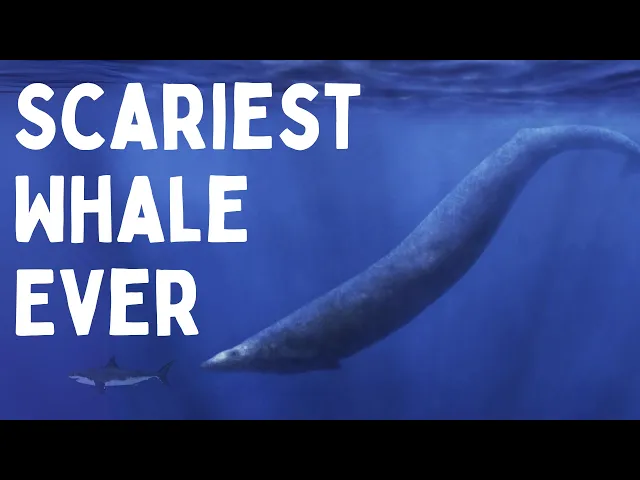
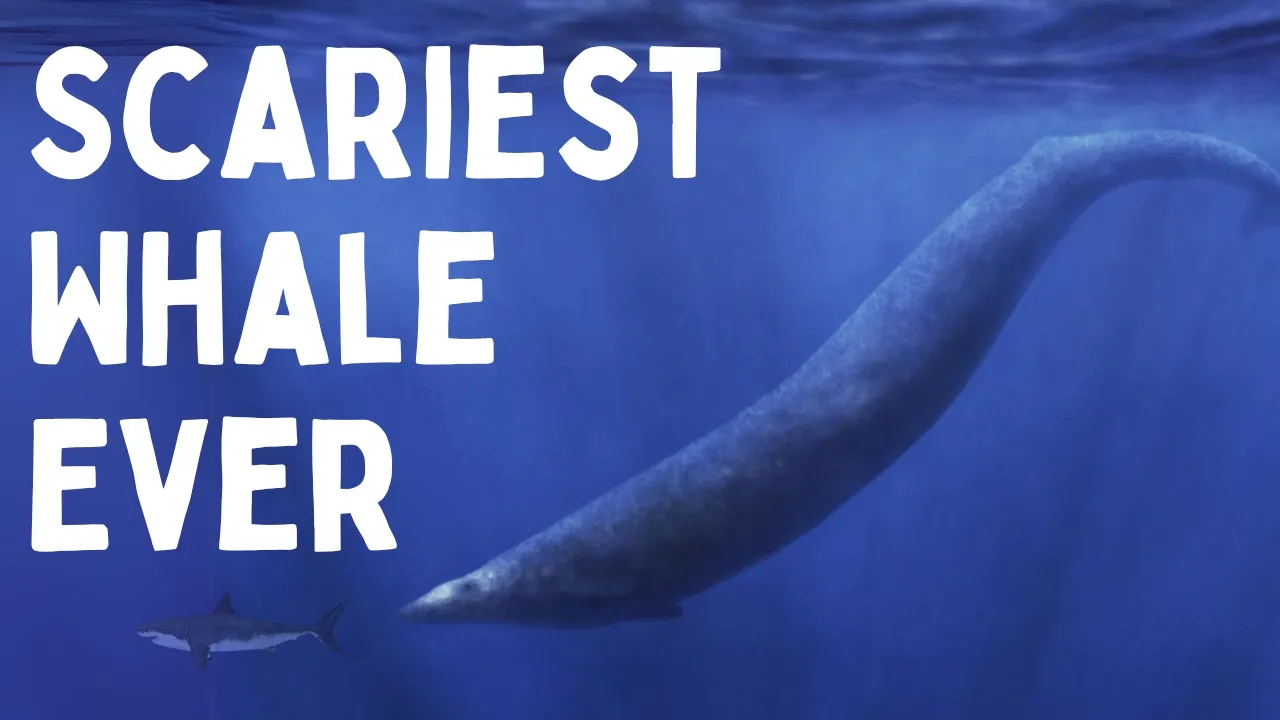
despite their usual portrayal being the gentle Giants of the oceans and seas whales can still be undoubtedly scary as after all the most dominant apex predator within the water is arguably a kind of whale at least in name and that is of course the orcas who are known to preon virtually anything including sharks and other cations yet even the most successful predatory whales don't necessarily look the part as their physical appearances are not particularly nightmarish at least not in the way that sharks or other aquatic creatures can be such as certain cephalopods or even non-
shark fish but a long time ago as in closer to the dinosaurs than now there was a whale that had a deeply unsettling appearance and looked unlike anything seen today and this prehistoric nightmare wasn't just all show and no tell since it basically was also the first marine animal after the most of sword's Extinction to become a multi-ton super Predator that was capable of hunting its own kind down and perhaps the strangest thing is that you could find this giant hyper carnivorous whale in one of the driest places of today the Sahara Desert this was
the basilosaurus while it's fairly well known for having lived in what is now the Sahara Desert the first remains of this prehistoric giant actually came out of the United States as in 1834 a group of paleontologists uncovered a diverse range of different body parts within the state of Louisiana the remains in question were massive in size and Strung Out Over an area of land greater than a soccer field which let paleontologists know right away that they had discovered something crazy but they had absolutely no idea what it could be as at the time no extinct
whale had ever been discovered so naturally based on its size they concluded that the only thing it could have been was a real life sea monster they also decided based off of the size of its vertebrae that it must have been longer than almost anything currently alive with an estimated length of 100 ft or 30 m and that it was reptilian in nature as its body shape which was unusually narrow and long did not match anything seen at the time in marine mammals instead more closely resembling the postcranial structure seen in snakes or mosasaurs and
this misclassification actually led to its name the basilosaurus which translates to the king lizard and sadly only more blunders would occur in following years sometimes occurring in ways that no one could have expected as best demonstrated by the naturalist Albert kooch who believed that the basilosaurus or rather hydros as he called it was a giant sea snake like monster that was even larger than a blue whale this outlandish belief was based off of his reconstruction of this creature which he did by stitching together five different basilosaurus skeletons it wouldn't be to the late mid 1800s
that this and previous confusions were resolved after multiple specimens were found with their teeth intact which in addition to being Giant and blad likee also heavily resembled those seen in fish eating tooth whales of today leading paleontologist to realize that it had been a primitive whale all along and with this new info it was finally reclassified as a whale and added to its very own family of cations the basilo sord who are defined by small hind limbs that have well-defined femurs lower legs and feet this group is an extremely important part of the evolutionary story
of citations as they are likely the first fully aquatic whales to evolv with the basilosaurus itself being one of the first members on the scene having appeared around 41.3 million years ago during the letian stage of the EOS scene within this family is joined by roughly 30 different species two of which belong to the basilosaurus genus the stoidis and Isis and of all the members in this group basilosaurus was by far the largest which along with its ancient age made it possibly the first animal to have evolved after the mososaurus that was capable of preying
on and challenging large sharks who after the KT Extinction had reigned Supreme for millions of years although while indeed massive it wasn't as giant as originally thought with current estimates suggesting that the basilosaurus at toes had a matured length of up to 20 M or 66 ft while the Isis species the smaller of the two grew to be around 18 M or 59 ft now this would still make the basilosaurus one of the longest whales of today but ironically it wasn't as heavy as most Bine whales which is due to the fact that its body
was heavily streamlined and narrow and some would even resembl that of a mosasaur nevertheless it was still heavy by most standards with individuals weighing over 7 tons yet some even think that this number is much too light given its measurements and believe that it was closer to 15 or 20 tons in either case its stature not only made it the largest Predator within its environment but also the largest animal on Earth for a good duration of its existence this rendered it the Earth's Undisputed apex predator but it wasn't size alone that granted it this title
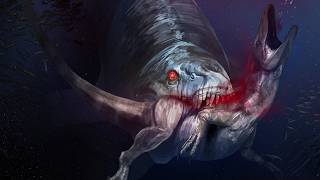
as like any great Predator the basilosaurus had a wicked weapon to complement its size killer jaws and it's even arguable that it had one of the most terrifying looking mouths and teeth of any known whale as it was proportionally extremely robust and full of large bulky teeth that widely varied in size and type resulting in the basilosaurus having both canines and mullers which is something not typically seen in modern whales but their canines and mullers were nothing like ours as the canines were curved and sharp while the mullers bore extremely large and deep serration that
allowed it to cleave through chunks of tough flesh the presence of the these two types of teeth further meant that it likely chewed its food a hypothesis corroborated by extreme wear and tear found on them which also implied that it could Chomp down with ridiculous power and this was proven after reconstructions which estimated that the basilosaurus Isis meaning the smaller of the species mind you could bite down with 20,000 Newtons of force meaning it could easily crush a human's femur the strongest bone in our bodies five times over with a single bite and with such
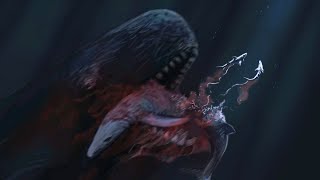
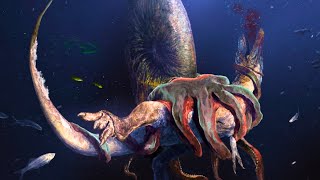
a vicious weapon the basilosaurus could virtually hunt anything and amazingly enough we don't even have to guess what that was as a highly unique specimen was located with its stomach contents in place which showed that these whales had a preference for large bony fish and sharks that even included species of the Odus A genus of shark that would eventually yield the largest shark of all time the Megalodon what's more is that they also discovered the remains of another whale within it the dordon a fellow basilo sord which while not being as large as the basilosaurus
could still get quite big with adults reaching 5 m or 16 ft in length while weighing well over 2 tons and to make the situation even more Grizzly General Studies on dordon skeletons found that dozens had catastrophic damage to their heads which was consistent with basilosaurus teeth this damage also confirmed that this whale had more than enough power to easily puncture thick skulls and implied the basilosaurus killed its prey by biting and crushing their heads and then tearing their bodies apart for consumption not a pleasant picture other animals that are thought to have been common
meals for the basilosaurus include a variety of primitive sirenians sea turtles tiger sharks and at least two other kinds of whales additionally a good amount of paleontologists actually think that the basilosaurus is voracious appetite cannot be contained to just aquatic animals as there is a fair chance that it occasionally hunted semi-aquatic animals too like the mor ethereum and possibly even terrestrial animals who ventured to too close to the water this notion was based on a one-of-a-kind discovery made in the most unlikely of places back in the early 1900s the Sahara Desert to be exact over
200 km or 124 mi from the Mediterranean Sea researchers located numerous fossils within Egypt that were in pristine condition and quickly deduced that they belonged to basilosaurus these fossils were located inside of a Desert Valley and they also subsequently Unearthed other animals as well including more ethereum and Pelicans both of which split their time between land and water leading paleontologist to realize that the Sahara Desert had once been not just wetter but partially submerged and this has been backed by other studies which report that during the EOS scene shallow warm Waters may have covered nearly
20% of the Sahar desert and that the area where the basilosaurus was found represented a vast Mangrove environment where individuals would occasionally travel in search of food or perhaps even a mate however recent Studies have actually pushed back on this long-held belief that this area represented a mangrove forest as further analysis found what was once thought to be fossilized mangroves were actually just Burrows of some unknown animal meaning it's not certain if this ecosystem was really a type of mangrove forest or another kind of coastal environment but whatever biome it was it's clear that basilosaurus
had a superior and important role in it due to the high number of fossils found and what's interesting and even a little disturbing is that this abundance was not a sign of it being a IAL creature but rather of just how efficient its design was as basilosaurus was a solitary animal that actually was quite hostile to others of its own kind one piece of evidence for its lack of socialness was its head as it lacked the adequate space needed for a spermaceti organ which is the organ responsible for echolocation and thus the lack of it
heavily implies that it did not possess this ability and therefore wasn't the most social creature as whales without a spermaceti organ tend to be on the solitary side but something it did possess which made it quite unique amongst the whales were visible hind limbs in other words this whale had legs although if you were getting chased by one of these guys I highly doubt you would notice the legs as they were severely reduced in size with each one only measuring just slightly longer than a ruler but this hasn't stopped some from making the bolt claim
that these legs were signed to the basil Source still some ability to go on land perhaps even using its little feet to Stage ambushes by kicking up onto land to catch any UNS expecting prey yet the vast majority of paleontologists do not support these controversial claims and believe that the hind limbs offer no locomotive purpose out of water or in and preferred the idea that if they were used for anything it was to help guide their long awkward bodies during mating and speaking of their strange elongated bodies it's believed that their shape and narrowness forced
the basilosaurus to adopt a rather creepy way of getting around is unlike modern whales they didn't have a large tail fluke to rely on resulting in them swimming in an undulating fashion like an eel or snake but just on a giant scale but they did not swim from side to side but rather they moved in up and down motion kind of like how a wave travels and because they also had weak muscles in the tail area paleontologists assume the basilosaurus was not the best of sustaining fast rates of swimming and would for the most part
slowly tread the waters for most of their lives only un leashing burst of surprising speed when it was ambushing prey what's more is that the morphology of its vertebrae showed that in life there were Hollow and filled with fluid which basically made the basilosaurus extremely buoyant resulting in it sticking close to the surface of the ocean at all times and preventing it from being able to perform deep Dives this was obviously good news for any deep sea dwelling creatures but for those near the surface it was just even more bad news and The Misfortune kept
piling on for all as the basilosaurus was a if not the first whale to have developed ears that not only allowed it to clearly hear underwater but also to pinpoint exactly where sounds were coming from so even if it couldn't see you as long as you were making enough sound you were never truly safe from its clutches suffice to say this whale had a few things going for it that allowed it to become highly successful a fact reflected by Twi distribution that along with the western coast of the United States and Egypt included Peru Pakistan
Tunisia Jordan Morocco and the Western Sahara most of these areas corresponded with shallow Coastal Waters and within within these regions basilosaurus further Niche down by sticking to ntic zones and Inland seas and because they could be found in both the Western and Eastern Hemisphere the basil Source ended up coexisting with a boatload of different animals no pun intended that consisted of the cynthus basileuterus protos siren morium paperas and many different sharks such as Gallo serto fogus Odus squattin stoia and ierus and while not meeting them on the regular its habitat was also heavily populated by
fully terrestrial animals like various snakes anthra hyenadons bethereum and dassis of all these animals the basilosaurus was clearly the king thanks to its size and robust bite and this domination would last for an extreme amount of time as this whale is known to have existed for over 7 million years specifically from 41 to 33 million years ago but alas at the end of the EO scene it disappeared this Vanishing perfectly aligns with the worst Extinction event to have taken place since the demise of the non-avian Dinosaurs the eosine alosine extinction event during which the Earth
saw the eradication of almost 2/3 of all mamalian species in certain parts of the world it's not 100% confirmed what triggered this catastrophic event but usually the two top contenders are glaciation event were a large impact event however what is for sure is that these whales were especially hard hit and only a handful of jera made it out alive and sadly for the basilosaurus this did not include itself in fact no basilo sord day survived the eosine and all that were left of whales were the neoset which have continued to survive until today thanks for
watching and until next time on Extinct Zoo