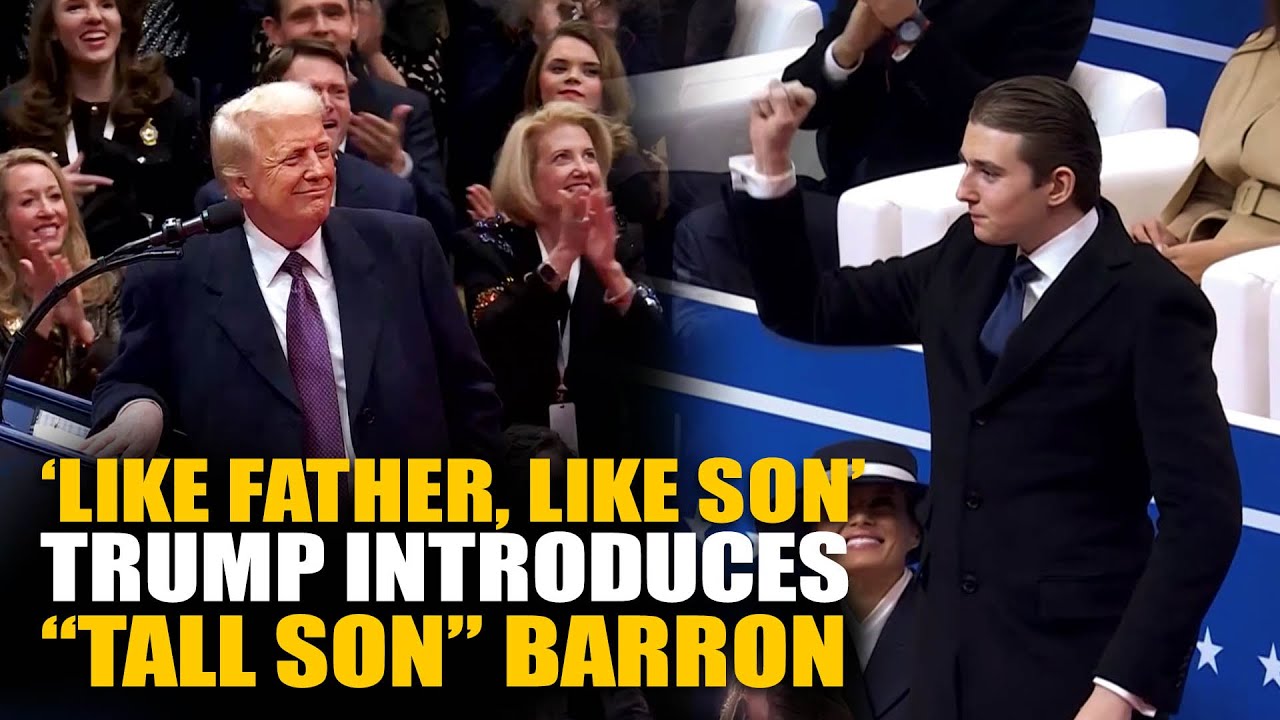
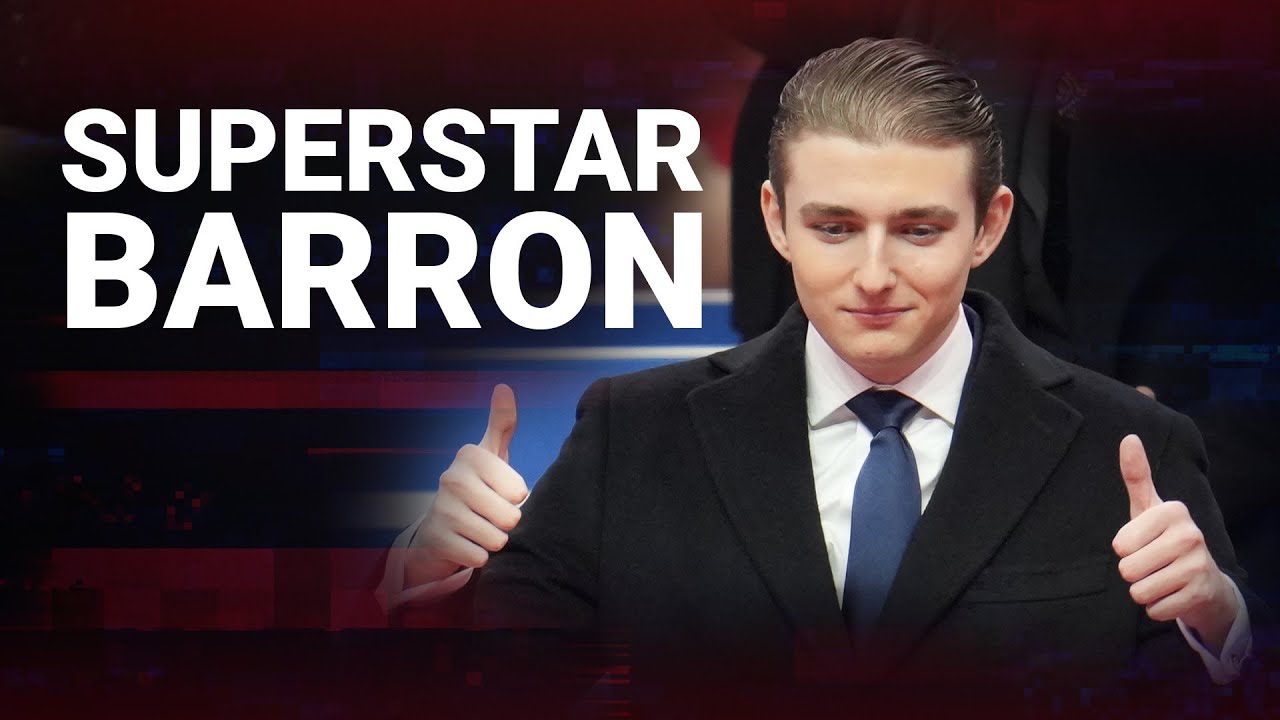
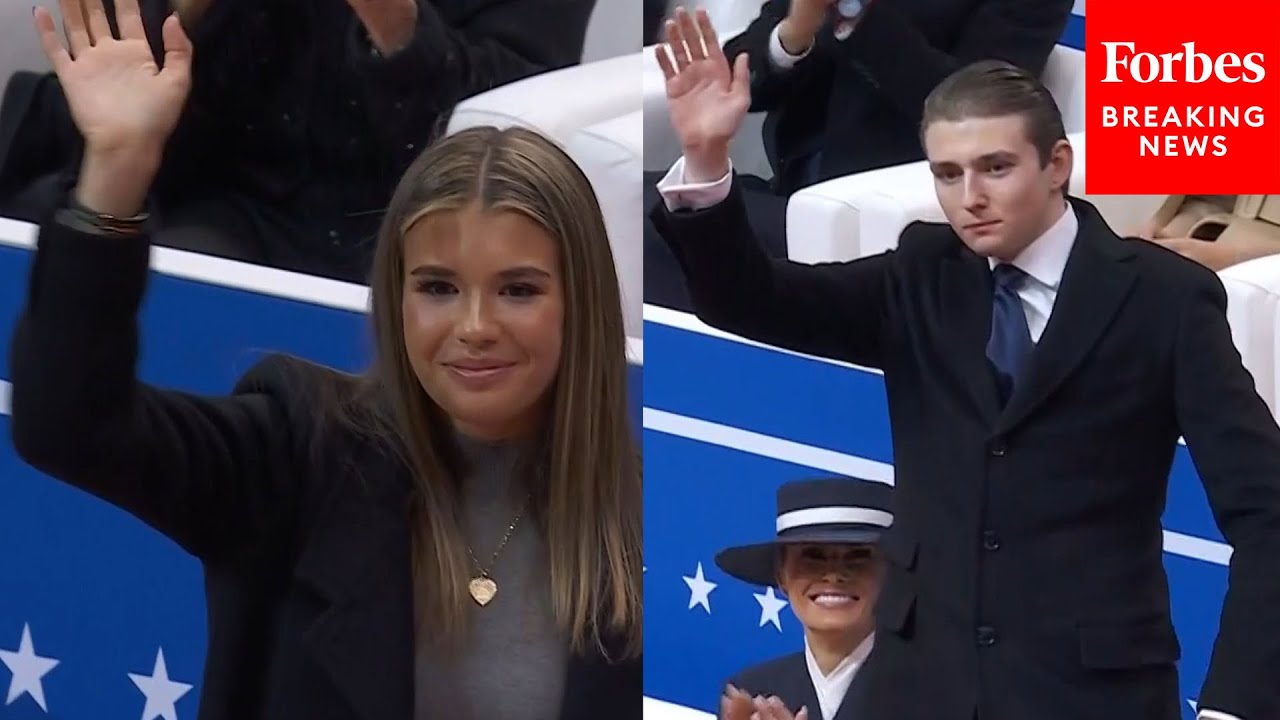
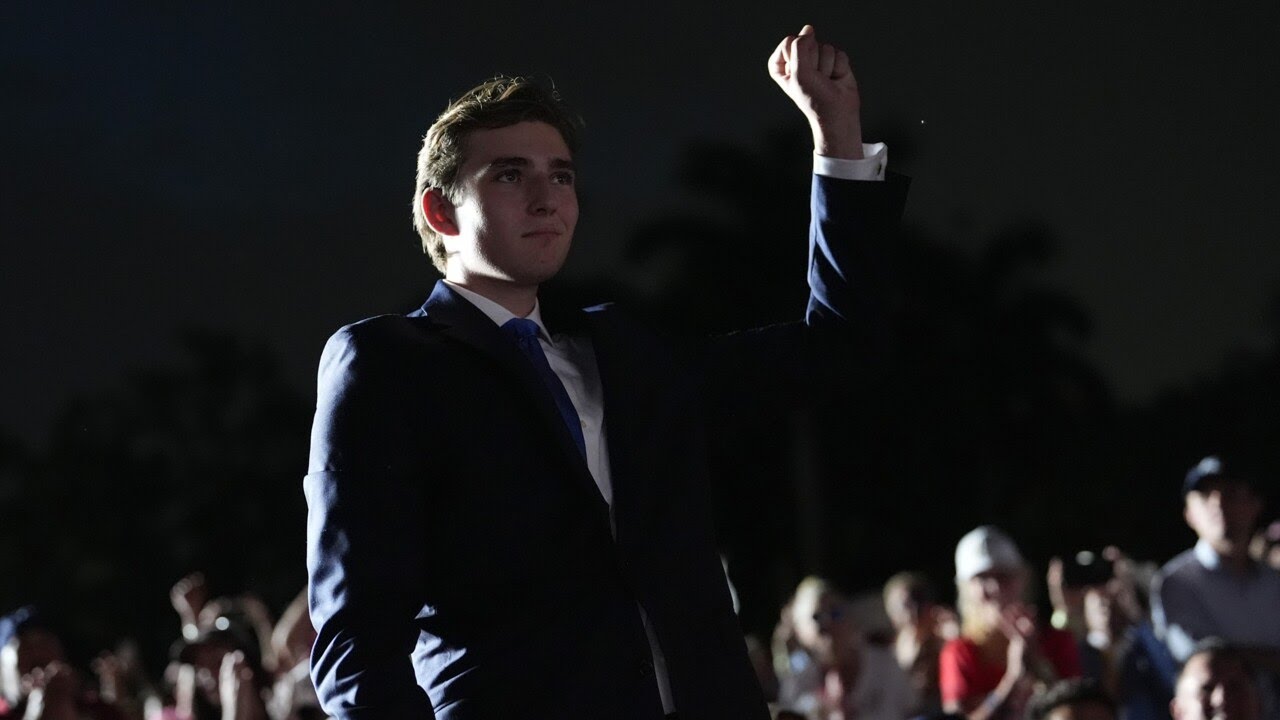
For years, they called him a mystery, a shadow, just another last name. Then, in one moment, Barron Trump proved everyone wrong. The convention center was packed, but the energy in the room was impossible to define.
It wasn't the usual excitement that came with a high-profile speech; it wasn't tense either. It was something else: a quiet, lingering uncertainty. People had shown up for different reasons.
Some were here out of genuine curiosity, wondering if this was the moment Barron Trump would finally step into the political world. Others were here because they expected a disaster, a train wreck they could dissect on cable news for the next week. And then there were those who were simply waiting to see if he had anything worth saying at all.
Cameras were already rolling; journalists sat poised, fingers hovering over their keyboards. Every major news network was broadcasting live, their anchors whispering hurried commentary over the footage of the stage. Barron Trump had never spoken publicly before, not in an official capacity.
We don't know if he's reading from a prepared statement or if this is something personal. The real question is: will he try to distance himself from his father, or will this just be more of the same? Speculation filled the room like static in the air, but behind the curtain, Barron Trump wasn't listening.
He stood still, fingers resting lightly on the polished wood of the podium. The hum of the audience reached him in muffled waves, but his mind was elsewhere. This moment wasn't about proving himself; it wasn't about changing minds or impressing critics.
It was about finally being heard. For years, people had talked about him, around him, for him. They had created their own version of him: a spoiled rich kid, a political heir, a mystery, a pawn.
But today, for the first time, they would hear his voice. A deep voice crackled over the speakers. "Ladies and gentlemen, please welcome Barron Trump.
" The murmurs stopped; the tension snapped into focus. The curtain swept open, and Barron Trump stepped onto the stage. A wave of camera flashes erupted across the room.
Every journalist, every politician, every spectator in that hall leaned forward, waiting. He reached the podium, adjusted the microphone slightly, and looked out over the thousands of eyes staring back at him. The applause was polite, measured.
There was no roaring welcome, no electric energy—just the sound of hands clapping out of obligation. But the real moment, the real shock, wouldn't come from his presence; it would come from his first words. The applause faded, leaving behind a stillness so thick it felt like the room itself was holding its breath.
Barron Trump stood at the podium, his tall frame unshaken by the weight of the moment. He didn't fidget; he didn't adjust his tie; he didn't scan the crowd nervously like someone searching for approval. He simply stood there.
For a second, he let the silence stretch—not out of hesitation, but out of control. He wasn't rushing to fill the empty space; he was owning it. And then, in a calm, steady voice, he spoke.
"I know what you expect from me, and you're wrong. " It was a statement, not a question, and it hit the room like a punch to the gut. A murmur of confusion flickered through the crowd—not loud enough to disrupt the moment, but enough to be felt.
It wasn't the kind of opening anyone had predicted: no pleasantries, no scripted charm, no easing the audience into comfort—just a direct challenge. He let it linger for a beat, his gaze sweeping across the crowd. Some people leaned forward; others stiffened.
Reporters who had been prepared to transcribe another forgettable political speech suddenly found their fingers frozen above their keyboards. And then he continued: "For years, I've been seen but not heard, and maybe that was a good thing. I had time to listen to hear what people say about my family, about me.
And the truth is, most of you have already made up your minds about me without knowing a single thing. " The silence that followed wasn't just listening; it was processing, because he was right. Everyone in that room, everyone watching from home, had already decided who he was.
They had formed their opinions based on headlines, assumptions, and the weight of his last name. They had put him in a box before he had even spoken a single word, and now he was forcing them to confront that. But here's the thing: if you spend too much time assuming who someone is, you miss the truth.
The tension in the room was palpable now. This wasn't just a speech; this wasn't just a moment. This was something unexpected.
Barron wasn't performing; he wasn't playing to the crowd; he wasn't trying to sound like his father, nor was he actively running away from him. He was just talking, and that's what made it so powerful. Somewhere in the back of the room, a reporter slowly put down his pen.
A few members of the audience exchanged quick glances. Even the most skeptical political analysts leaned in a little closer because something was happening here—something real. And what he said next would change the entire conversation.
Barron Trump didn't pause for applause. He wasn't looking for validation. He had them now—not because of his name, not because of the spectacle, but because what he was saying wasn't what anyone had prepared for.
He exhaled slowly, shifting his weight slightly before continuing: "This country is exhausted. Everyone is angry. Everyone wants to be heard, but no one wants to listen.
" A beat of silence. "I've watched my entire life as people yell over each other, politicians tear each other down like it's a sport. The media tells you who to hate next.
Families stop talking to each other because of who they voted for. " He let his words settle in the room. wasn't just listening; it was absorbing.
And I keep wondering, what's the point of all of it? There it was—the question no one ever asks out loud. Everyone thinks they're the main character, that they're the ones in the right, that their side is the one with all the answers.
But what happens when both sides believe that? What happens when no one is willing to admit that maybe, just maybe, the other side has a point too? It was the first time the crowd reacted—not loudly, not disruptively, but in subtle ways.
Some people nodded; a few arms folded across chests. Others sat frozen, their expressions unreadable, but they weren't dismissing him. "I'm not here to give you a perfect solution; I don't have one.
But I do know this: the only way forward isn't through division; it's through uncomfortable conversations, through being willing to hear the people you don't agree with. " He glanced toward the front row, a row filled with seasoned politicians who had spent decades turning every disagreement into a battle. "How many of you in this room have actually changed your mind about something important because you took the time to listen?
" A ripple of movement, a few uneasy shifts in seats. That was the moment people realized this wasn't a campaign speech; this wasn't a well-rehearsed performance designed to hit political talking points. This was something different.
And then he said something that caught everyone completely off guard. Baron let his last words hang in the air; he could feel the weight of the silence, the shift in the atmosphere. It wasn't just that people were listening—they were processing.
But he wasn't finished; his hands rested lightly on the podium, fingers grazing the edge—not in a nervous twitch, but in control. He took a slow breath, making sure his next words weren't rushed. "There's something people don't understand about growing up in my position.
" The audience leaned in, subtle but noticeable. "Most of you think I lived in a world of privilege, that I had everything handed to me. And yeah, I won't lie; I've never worried about where my next meal was coming from.
But do you know what I have had to worry about? " Another pause. "Being judged before I ever even opened my mouth; being reduced to a last name; being told who I am before I even got to decide for myself.
" Now the tension in the room wasn't just curiosity; it was discomfort. Because whether they wanted to admit it or not, he was right. The media had spent years speculating about him without ever hearing a word from him.
He had been the subject of countless theories, memes, and articles. People had argued about his future, his intelligence, his loyalty, his worth—without ever asking him. "I've had strangers tell me what I believe.
I've had people who've never met me call me everything from just another rich kid to a puppet of my father. And you know what's funny? " His gaze swept the room, landing on the reporters at the back.
"None of those people ever actually asked me what I think. " A few journalists exchanged glances; some adjusted their microphones, shifting uncomfortably. Others scribbled notes furiously, knowing this was turning into something they hadn't expected to cover today.
"It made me realize something. " Baron straightened slightly, his voice calm but firm. "If people could be so sure they knew who I was without ever speaking to me, then how often do we do that to each other?
" The room wasn't just quiet; it was still. Because that wasn't just about him; it was about all of them. Every politician in that room had done the exact same thing to their opponents.
Every journalist had written headlines that painted people in black and white. Every voter had, at some point, made a snap judgment about someone based on a name, a party, or a single sentence taken out of context. He let them sit with that for a moment.
"We're so quick to put people in boxes, so quick to decide who's good and who's bad based on a headline, a tweet, a rumor. But tell me something: when was the last time you actually changed your mind about someone after hearing them out? " That was the moment the first real shift happened.
It wasn't just engagement anymore; it was introspection. At the back of the room, a veteran journalist—one who had spent decades covering some of the most polarizing figures in politics—slowly put down his pen. He had covered speeches from every major political figure in the last 30 years; he had seen presidents rise and fall.
But he had never seen this. This wasn't a speech; it was a mirror. And for the first time in a long time, people weren't just hearing words—they were seeing themselves.
Then, from somewhere near the front row, a single person stood up. An older man in a navy blazer, likely a political insider, started clapping. It was slow at first—not dramatic, not exaggerated—just real.
Then another, then another. And suddenly, like a wave rolling across the room, more and more people were rising to their feet—not because they had been prompted, not because the cameras were rolling, but because they felt it. The sound swelled, filling every inch of the convention hall.
But while some in the crowd embraced the moment, others weren't happy at all. And that's when the backlash began. The applause wasn't unanimous.
Yes, a standing ovation rippled through the convention hall. Yes, there were people visibly moved by Barron Trump's words. But not everyone was clapping.
A handful of political figures remained seated, their arms folded, their expressions locked in stone-cold skepticism. Some whispered to each other; others barely concealed their annoyance. In the back, a well-known strategist for a major political party shook his head, muttering, "People are so desperate for.
. . " "Something different.
They'll eat this up without thinking twice. " One senator leaned toward a colleague. "This is all optics; he's just another Trump.
People will see through it. " But in the center of the room, the energy was different. People weren't just applauding; they were processing.
A woman in her 50s, who had once vowed never to listen to another Trump speak, found herself standing with the crowd, hands clapping before she even realized she was doing it. A younger political analyst, who had come in expecting a rehearsed performance, wasn't so sure anymore. And then the real storm began.
Within minutes, clips of the speech flooded social media. Political influencers from both sides of the spectrum rushed to give their take: "This is leadership; this is what our country needs. " "A well-packaged PR stunt, nothing more.
" "I never thought I’d say this, but that was impressive. Don’t be fooled; this is calculated. " Hashtags trended instantly: #AshBeron, #TrumpSpeech, #FutureLeader or #PRMove, #Unity or #Manipulation.
Some clips showed the thunderous applause, painting Baron as a rising leader who had captivated the country with his honesty. Others zoomed in on those who remained seated, claiming it was proof that not everyone was convinced. But the real firestorm was happening in the media.
Cable news networks scrambled to control the narrative. On one network, a panel of commentators argued over whether Baron had just reshaped the political landscape. "This wasn't a speech; this was a moment.
He's young, he's fresh, people are listening in a way they haven't in years. Mark my words: this will be replayed in future campaigns. " But on another network, the skeptics tore into it.
"Come on, this was carefully crafted. He didn't say anything real. He's trying to play the unity card, but he's still a Trump.
Notice how he avoided specifics. This is how you manufacture a moment without committing to anything. " Then came the conspiracy theories.
Some claimed the entire event was scripted—not by Baron, but by a team of strategists crafting his political debut. Others insisted he was being used—a pawn in a bigger game being played by his father's allies. And then there were the wild ones: "This is all a distraction.
What else is happening right now that they don't want you to see? Watch how they use this to set up 2028. He's not different; he's just better at hiding it.
" The divide was stark: for every person who praised him, another tore him down. For every clip showing a standing ovation, another focused on the unmoved faces in the crowd. And then the most unexpected reaction of all came from someone no one saw coming.
As the media firestorm raged, people dissected every second of Baron Trump's speech—every gesture, every pause, every reaction in the room. Some praised him as a breath of fresh air; others called him just another product of political theater. But then someone completely unexpected spoke up, and it changed everything.
At a speaking event in Los Angeles, Michelle Obama stood before an audience of young college students, answering questions about leadership, resilience, and the state of the country. It had nothing to do with Baron Trump until a journalist in the crowd took a chance. "Mr.
Obama, what do you think about Baron Trump's speech? " The room went still; the reporter's voice echoed. It would have been easy to dismiss the question.
Politicians and public figures deflect all the time. She could have laughed it off, dodged it, or moved on. But she didn't.
Michelle took a breath, nodding slightly as if considering her words carefully. "You know, I may not agree with his father on much," she began, her voice calm but firm, "but I respect when young people step up and speak for themselves. What he said about listening, about not making assumptions, we could all learn something from that.
" The room reacted instantly: some clapped, some gasped, some looked at each other wide-eyed. The comments spread like wildfire. Within minutes, news outlets ran with it: "Michelle Obama praises Baron Trump," "Michelle Obama: We could all learn something from Baron Trump," "Unexpected support: The former first lady reacts to Baron’s speech.
" The reactions came fast, and they weren't all positive. From the right: "Wow, even Michelle Obama sees the truth; maybe Baron is different. " From the left: "What is she doing?
She doesn't owe the Trumps anything. " From conspiracy theorists: "This was planned; don’t fall for it. " Even people who admired Michelle Obama struggled with it; some argued she had given the Trump family a gift they didn't deserve, while others saw it as a rare moment of sincerity in politics.
But regardless of intention, it fueled the fire. Baron's speech was no longer just a moment; it was a cultural event. For the next 48 hours, Michelle Obama's name trended alongside Baron Trump's.
Political analysts scrambled to interpret what her words meant: Was this a signal that people were desperate for unity? Did she just give legitimacy to the next generation of the Trump dynasty? Does this mean anything at all, or are people overreacting?
Late-night hosts mocked the situation, poking fun at both sides: "Michelle Obama praising Baron Trump? That's like finding out your grandma listens to rap. " Others took it seriously.
One talk show host looked straight into the camera and said, "If Michelle Obama can acknowledge that a young man who she has every reason to dislike made a good point, why can't we do the same in our everyday lives? " And for a brief moment, the conversation shifted. People weren't just debating whether Baron's speech was real or rehearsed; they weren't just arguing about his last name.
They were asking, "If she can listen, why can't we? " But while that idea caught on for some, others doubled down. Baron Trump had gone from an untested figure to the center of a national debate, and as pressure mounted, the biggest.
. . The question still loomed: what was he going to do next?
Barron Trump hadn't planned for this; one speech—that's all it was supposed to be—a moment for him to finally speak for himself, to challenge the assumptions people had made about him for years. But now, now he was everywhere. The speech wasn't just viral; it had become a cultural event.
Political commentators, late-night hosts, YouTube analysts, and social media influencers all had something to say. Every major network ran hour-long specials dissecting his words, his delivery, and his potential future. On one network, a panel debated his unexpected impact.
This wasn't just a speech; this was a declaration. "He's young, he's fresh, people are listening to him in a way they haven't with other political figures. Mark my words, this will be played in future campaigns.
" Meanwhile, another network ripped him apart. "He's testing the waters for a political career; this is all calculated. Notice how he avoided taking a clear stance on anything.
People are so desperate for a good Trump; they'll cling to anyone who sounds reasonable. " In living rooms, bars, and college campuses across America, people argued. At a coffee shop in Phoenix, Arizona, two friends nearly came to blows.
"I don't care what his last name is; he made a point. " "A point about what? He said a bunch of nothing!
" "No, he said exactly what people need to hear. We're all too busy screaming at each other to actually fix anything. " "He's still a Trump!
You really think he's different? " The debate played out everywhere on social media. "This kid just changed everything!
Y'all are so gullible; he didn't say a thing. " If nothing else, this was a master class in controlled messaging at political events. Republican strategists whispered about the long-term implications.
"He could be the one who actually brings moderates back," while Democratic leaders scrambled, unsure of how to respond. "If he keeps this up, he becomes a problem. " In a few years, the left and the right were suddenly united in one belief: Barron Trump wasn't just a name anymore.
Then the polls dropped. Major research firms ran quick surveys: "Do you have a favorable opinion of Barron Trump? " Before the speech: 24% favorable, 50% unfavorable, 26% neutral.
After the speech: 51% favorable, 30% unfavorable, 19% neutral. "Would you support Barron Trump in a future election? " Before the speech: 12% yes, 65% no, 23% unsure.
After the speech: 37% yes, 41% no, 22% unsure. That was the moment the political world froze. People who had spent years dismissing him as just another wealthy kid with a famous last name were reconsidering.
People who had written him off were now listening, and both parties knew it: the public wanted more. Journalists tried relentlessly to get a follow-up comment from Barron. "Will you be making another speech?
Are you considering a future in politics? What did your father think of your speech? " But Barron said nothing—no press statements, no interviews, no follow-up remarks—just silence.
And somehow, that only made people more obsessed. When people can't get an answer, they create their own. Some were convinced he was laying the groundwork for something bigger; others believed he had made his statement and was done.
But one thing was certain: this was no longer just a trending moment; it was history in the making.