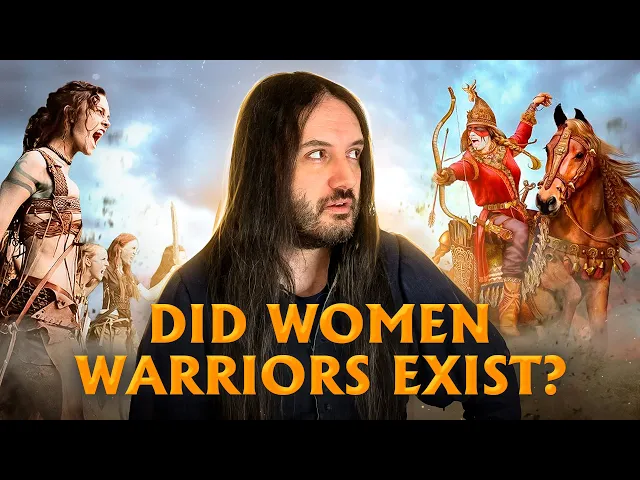
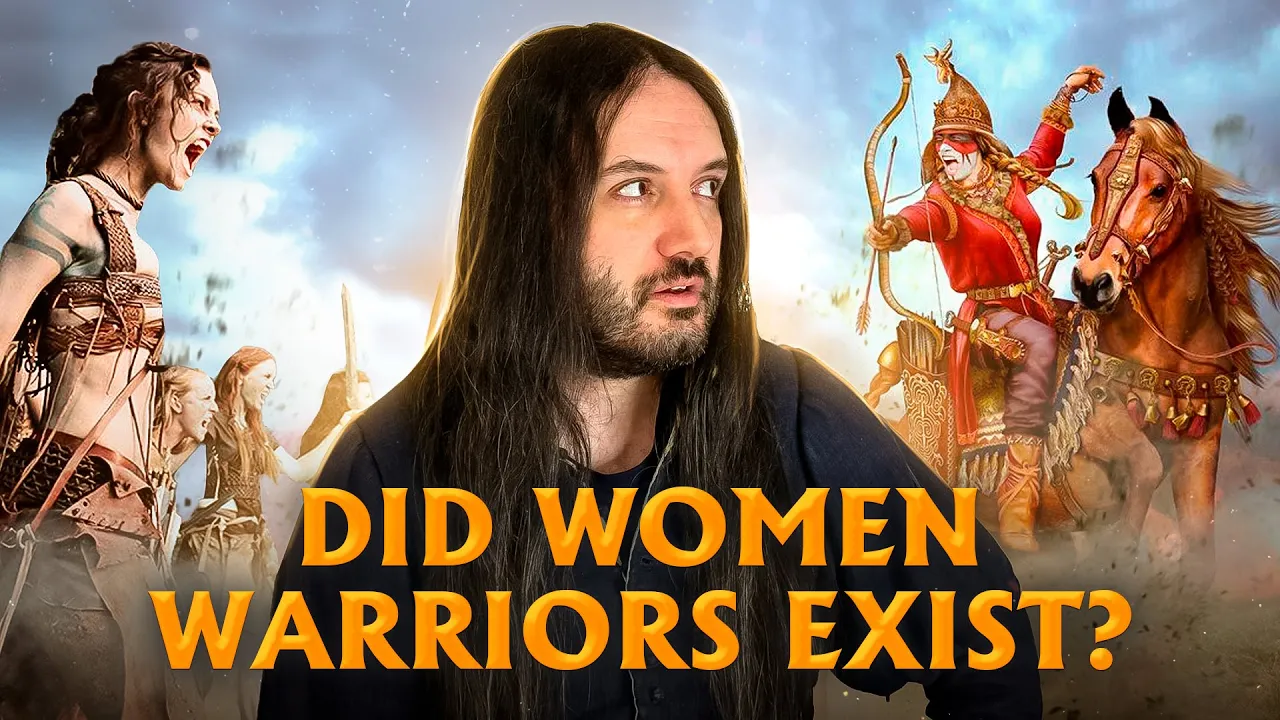
hey no ones welcome back to my channel this is the Metatron speaking and today we'd like to talk more about the concept of women warriors but specifically from the perspective of the ancient sources I think the concept of women warriors is a fascinating one because of the Rarity of the phenomenon of course as I've mentioned many times on this channel in the majority of cases throughout history it was men that went to war not women and of course some of this has to do with the biological differences between men and women AKA sexual dimorphism but
regardless of that I think that sometimes the people that mention this particularly when they go into the hypothetical they point at history and then they say it basically never happened that you had women warriors or if it did happen it was such an exceptional reality that doesn't have any statistical significance at a numerical level it is also true that people that say this I don't think they've ever actually seen the sources because we do have mentions of women warriors and whenever they do happen in history we are told how they performed so we don't need
to speculate when it comes to this we don't need to come down to percentage of this percentage of that and body mass and strength and eye to hand coordination and whatnot we have the Ancients and as far as I'm concerned I believe the Ancients so how about we jump into the actual documented sources so that we can formulate and have an informed opinion if the figure of Celtic Warrior women is indeed a Trope now rooted in the collective imagination partly due to cinematography we are probably dealing with a forced and specious interpretation of historical sources
in this specific case these sources certainly offer us the image of female figures who were more independent compared to those of the classical world but who did not Embrace a true widespread Warrior Tradition now the warrior woman is a recurring figure in Irish mythology for example however upon closer analysis it quickly becomes clear that this is not a realistic element but rather something filled with allegorical and initiatory characteristics to begin with the majority of the women who are warriors within Irish mythology well are not from Ireland they always come from another Nation or territory from
Scotland Britain or even cyia to emphasize a sense of otherness moreover Within These myths these women warriors always tend to have some form of Supernatural characteristic that defines them less as a normal human and more sort of semi- divine beings or once again mythological entities for example the warrior dorola Who falls in love with a Celtic hero I'll just put it on screen I don't know how to pronounce it originally from Scotland as her feet are reversed with her heels facing outward and her toes inward a characteristics that records inversion which in Celtic folklore is
typical of fairy beings in other words these are not real women they're mythological archetypes in particular in myth the function of the warrior woman is almost always to instruct the hero the protagonist of the story in martial arts secret moves and superlative and unknown combat techniques through their teachings the Warriors reborn a hero from a common fighter he becomes a heroic fighter a champion and therefore necessarily the figure that allows the warrior to carry forward this path must be female as it is a form of second birth so upon closer inp ction these women warriors
do not represent the everyday reality of the Irish people but on the contrary they are allegorical figures of the world of Legends the accounts of the classics have certainly contributed to some extent to the creation of the figure of the Celtic Warrior woman Celtic Women more independent in some respects than Greek and Roman women had struck the imagination of the Mediterranean people who in some cases describe them in great detail however if we analyze their writings professionally we realize that the classics never explicitly speak of a properly Warrior woman as far as the Kels are
concerned the first figure that stands out from the Chronicles is certainly that of bodika the queen of the ieni a Celtic people of Britain whom she leads into battle revolting against the Romans now of course bod's abilities as a tactician as a strategist are renowned they are in fact impressive bodika is described by takus as leading her troops from the top of a war Chariot into battle but rather than a warrior woman the picture that emerges is that of a woman leader which is of course different therefore we are talking about a queen an exponent
of the noble class not a common Celtic Woman and who is also a widow and has become at the moment the only point of reference for her people in an exceptional moment of Crisis which has led theeni to clash against their previous allies namely the Romans thus we are historically speaking of a very particular figure in a very specific context that is of course the opposite of the [Music] norm there is then a passage which is often used to leverage the interpretation of Celtic Warrior women by amanus marinus so let's read it almost all the
Gs are of tall stature fair and Ruddy terrible for the fierceness of their eyes fond of quarreling and of overbearing insolence in fact a whole band of foreigners will be able to cope with one of them in a fight if he calls in his wife stronger than he by far and with flashing eyes least of all when she swells her neck and nashes her teeth and poising her huge white arms proceeds to R punches mingled with kicks like shots discharged by the Twisted cords of a catapult to give you a little bit of context in
this specific passage amanos is writing in the 4th Century ad and he's talking about a specific area of goal which is transalpine G which has been Roman for over 350 years and we are clearly facing a passage that is deliberately satirical and comical the Romans would have loved this but it does not describe a combat or a battle but a sort of brawl with kicks and punches and which if anything can be used to emphasize how in the eyes of the Romans the women of Northern Europe were of an indomitable and violent nature and were
much less composed than the solemn Roman matons remember whenever we read something we also need to know as much as possible about the people who write their culture their preconceptions because if you don't do that then you're going to apply your own filters and read it differently to what it actually was meant to be regarding the barari people from what we know unius Brutus devastated their Villages just to give you a little closing on that story there is however a passage in Pluto that could be really interesting when it comes to the idea of could
a woman if she had to be effective in combat up to a certain extent in plut we read about the women of the kimri people the tons and the ambones who at the Battle of Aqua SE in 102 BC defend their wagons pushing back their own fleeing men and trying to repel the Roman legionaries let's read the passage here the women met them swords and axes in their hands and with Hideous shrieks of Rage tried to drive back fugitive and pursuers alike the fugitives as traitors and the pursuers as foes they mixed themselves up with
the combatants with bare hands tore away the shields of the Romans or grasped their swords and endured wounds and mutilations their Fierce spirit and vanquished to the end let me give you a little extra further context it should be noted that the Celtic and Germanic women are in a camp consisting of wagons they are not deployed on the battlefield and they intervene in an exceptional moment namely when what are objectively their homes are directly threatened in what is a desperate defense similarly in apan we read of the barari people of Gala whose women fight we
read open quote bearing arms with the men apan Spanish Wars 1272 also in the case of the barari the women arm themselves when yunius Brutus assaults The Villages again in an exceptional situation so we're not facing a specific cultural Warrior characteristic of the Celtic and Germanic women but rather a reaction in a moment of Maximum crisis that could manifest itself in any context of the ancient age if you're enjoying this video so far please take a moment to check out my patreon page with as little as a $5 support you can help us ensure that
we can continue to produce high quality and high researched content and at the same time you get access to polls extra videos and listed streams and much more thank you so much [Music] if the idea of a ro tradition of women warriors within the populations of Central and Northern Europe appears to be unlikely on the contrary there are many more elements to support their presence women warriors within the populations of the steps of Eurasia in an area that not coincidentally Greek myths connects with the Amazons now according to Herodotus the Amazons were originally from the
city of theis in pontus today's ter in turkey and just for those who struggle a little bit with Roman provinces so when we say pontus you have to imagine that area of turkey that is in the north and it's facing the Black Sea whereas for example the Roman province of celissia or gilia in ancient Greek but whatever celissia would be instead the South and would be facing the Mediterranean celissia being the same era where for example the Apostle Paul was from he was a Roman citizen defeated and massacred in battle by the Greeks the few
surviving Amazon had been crammed onto three ships to be taken into slavery in Greece but having freed themselves during the journey they had killed all their tormentos and taken possession of the vessel however knowing nothing about navigation they found themselves a drift in the Black Sea eventually Landing along the coasts of the mosan swamp that is the Sea of adov in Eurasia settled in the hinterland the Amazons would have clashed several times with the local populations the nomadic people of the cians until the two parties reached an agreement some young cians would marry the Amazons
but allowing their wives to maintain their customs thus remaining free to go into battle and ride horses The Young cians and the Amazons would thus give birth to a new people the sarmatians who would have moved Northeast on the tanise river that is the dawn writing about the saomai people another Greek author specifically hypocrates recalls among their Customs that these women would remain virgin and go into battle riding horses throwing the javelin and shooting with a bow and how it was tradition for them to give themselves to a man only after having killed at least
three enemies in combat after marriage the bellicosity of salm women tended to decrease but they still maintained the tradition of going into battle in case of exceptional [Music] operations now of course if the Anatolian origin of stian women as reported by herods should be considered myth or Legend and should be linked to the homeric myth that would have the Amazons participating in the Trojan War alongside King prium on the contrary the presence of warrior women within the Indo Iranian cultures of the Eurasian steps would seem to be confirmed by archaeological data which presents with some
recurrence female burials that display military kits usually consisting of a reflex bow arrows sagaris which is an Indo Iranian War pick ax like and swords sometimes also Spears and scale armor and not in this case just for the Nobles so that's different now if the presence of weapons within female burials does not as we have explained automatically mean their Dynamic use by the buried woman and could have a symbolic value in the case of the indo-iranian world of the Eurasian steps this is accompanied by literary references that often speak of women warriors and above all
by osteological data showing that the buried women have in many cases sustained injuries a sign of recurrent participation in violent context so it is very probable that even though Amazons are of course a myth they were based on a reality that probably impressed the ancient people such as the Greeks they were not used to it because as we said in Europe they were less common and this differently from what people say can be corroborated by not only the material Goods in burial references but also description and osteological record but we are not done because we've
got Casio deal [Music] according to Casio Dio during the marom manic Wars which ranged in the second half of the second century ad many Germans from Beyond the r fell upon the heart of the Roman Empire even managing to sack Italy where they were confronted and repelled by Emperor Marcus Aurelius thanks to his lieutenant perx and Banus what we're told in the sources is that following the clashes we're told by Dio that Romans found among the Cor corses of their enemies several women in armor we read many of the Germans too from across the rine
Advanced as far as Italy and inflicted many injuries upon the Romans they were in turn attacked by Marcus who opposed to them his leftenant pompus and pertina and perx who later became emperor greatly distinguished himself among the corpses of The Barbarians there were found even women's bodies in armor this is casuso from the epitome of Roman history so rather than hypothesizing the presence of warrior women among the Germans these armed women of which diorites are to be tracked back to another people that the aades the aades were a stian population who had settled in the
Carpathian Basin in the first half of the 1 Century ad thus coming into contact with the Germans the relationships between the aages and the Germans seem to be very proactive and in particular the aages seem to have contributed to the birth of the regnum wum a Proto State formation that included Slovak and Bohemia promoted by the king of the Germanic people of the quadi wanus consisting of the Germanic nations of the quadi and the marani and several tribes of STI aades from takus we learn that in 50 ad King Wu's Cavalry was indeed made up
of ayazi Warriors who were women and more than a 100 years later when quadi marani and many other Germanic tribes following King balar hled themselves against the empire the yadis were in fact at their side the warrior women of which casus Dio speaks should therefore be ascribed to this specific summation reality there are two further historical references to the presence of warrior women in the ancient age and they are circumscribed to the 3r century ad in the histor austa we read that aurelian in 274 ad celebrated an imposing Triumph in Rome parading elements belonging to
all the people and all the kingdoms he had faced and defeated among on them we have something interesting that is mentioned let's read it also 10 women who fighting in male attire had been captured among the Goths after many others had fallen these a plard declared to be of the race of the Amazons for plaats were born before all displaying the names of their Nations once again even in this case instead of trying to trace a Germanic tradition of women warriors which should see the origin of these captives to be once again station as historian
Ur maler writes The Goth during their migration towards the southeast and their settlement along the coasts of the Black Sea had come into contact with their armi by whom they had been deeply influenced so much so as to even give rise to a sort of partial Mutual assimilation there is another reference this time coming from zonas who speaks about the presence of women warriors within the saned Empire specifically the Persian Emperor shaur we read in the Persian army it is said that women were also identified dressed and armed like men this passage can be interpreted
in two ways it's kind of a little bit of a twofold interpretation either these are stian women in origin that have assimilated within the saned Empire and now joined the warrior core or it's a remnant of an ancient Indo Iranian tradition that was already part of the saned reality now the latter option it's tempting but appears to be the least [Music] probable in the parthan world we have the memory of utab the sister of the Persian General Aro aanes who in arms would have defended with her brother the pass of the Persian Gates against Alexander
the Great in 330 BC now her figure besides belonging to the aamit Past seems to be more mythical than real and the fact that utab in Persian means unique could be a clue that underlines a peculiarity of a woman fighting and not a customary nature so the presence of these fighting force that was female in the saned Empire is probably once again of some a origin in the 6th Century ad procopius of karea reports the presence of warrior women's among the ranks of the Hunts let's read it on many occasions when the Hunts made raids
into Roman territory and were confronted by those who encountered them some obviously were killed and after The Barbarians retreated the Romans searching the bodies of the Fallen found women among them this is from the book Wars of Justinian so the Hans also had women warriors although we do need to understand that procopius in this way is using the term HS in a very generalized sense in fact sometimes he indicates tanic populations such as the krius and the uigur or Indo Iranian populations who lived in the very vast area between the caucuses and the shores of
the Black Sea so which HS had the women warriors kind of difficult to identify people of the Eastern steps we have to consider the highly turbulent volatile and changeable nature of the that were born and died fragmented Federated into the steps of Eurasia during the late ancient age it is very difficult to clearly identify the ethnicity of the hanss mentioned by procopius the very concept of ethnicity in those context was incredibly volatile and subject to sudden changes and already attila's Huns a reality prior to the one mentioned by procopius were actually the results of a
mixture of various elements where a numerically small juranic SL mongolic Elite dominated over a Melting Pot of stian and Germanic peoples [Music] there is another less known story and the reason why it's less known is because it's not compatible with the Celtic Nordic Warrior woman but I think is still interesting is the story of the Greek poetress tesil of Argos in gree let's read it when CLE menus King of the Spartans having slain many ariv proceeds against the city an impulsive daring divinely inspired came to the younger women to try for their country's sake to
hold off the enemy under the lead of of tesil they took up arms and taking their stand by the battlements manned the walls all around so that the enemy were amazed the result was that Cleo Menace they repulsed with great loss and the other king demaratus who managed to get inside as Socrates says and gained possession of the pakum they drove out in this way the city was saved the women who fell in the battle they buried close by the ariv road and to the survivors they granted the privilege of erecting a statue of Aris
as a memorial of their surpassing Valor this is really interesting because did they die yes but did they manage to repel the men yes so of course this doesn't mean that women versus men is an equal combat situation it is not men have the advantage but we also shouldn't underestimate the possibility that even in hand to-and ancient combat as the sources tell us women can be an asset particularly when added together with the man in a situation of absolute crisis and we are told that they did in fact act successfully in repelling the enemy attacks
moreover the weapons used by tesil and the ariv women according to another passage of the moralia are extemporaneously taken from the sanctuaries where they compos the trophies that celebrated the past victories of the city according to a tradition common to many people of antiquity so these are not as one should expect professional women warriors but once again it's a situation of improvised combat but it also kind of underlines the fact that weapons are indeed equalizers they're not absolute equalizers until you get to I would imagine range weapons and Firearms of course but they can be
equalizers in the sense that if the same battle happened with just hand to hand this would have not have happened but when you give a spear which also helps with a range Advantage particularly if the woman is shorter and the man is taller but now you have a spear or even a sword is a weapon that can change the odds in favor of the we side the idea of using improvised weapons is also not uncommon when weapons were not available nearby they would be recovered from say the Fallen or from sacred installation or to be
snatched from the enemy and in these cases women used opportunistic weapons as it is with the access of the kimria women we also have a mention in plutar that is significant pluta tells us that an old arive woman hurled at the king pus of epirus while he was intent on fighting against a son killing him of of course he was distracted but many things can go wrong and there are a multitude of variables whenever we discuss combat it isn't just a matter of if you have more people you win against less people if you're stronger
you always win against who is weaker there are a lot of variables in combat as the Ancients tell us finally I would like to now explore the topic of the archaeological data which is sometimes presented as a way to support the idea of women warriors being common they existed but they were't common the idea of a conspicuous presence of warrior Women Within Celtic culture is not supported by the archaeological evidence even in this case however the data must be analyzed in a sophisticated and not specious or romantic manner one of the most common examples is
that of the burial of the ricana of oo this is a female burial from Northern Italy from oo pidmont in the territory of the V moori GS Northern Italy at this time was GIC territory this is subsequent to the entry of Northern Italy into the orbit of the Roman Republic and presents a military tro composed of sword shield boss spearhead and large knife as a ceremonial burial or funerary kit as in the case of bodika we are not dealing with a common Celtic woman but with an exponent of the highest strata of society in one
of the ceramics that make up the funerary kit we find engraved the words ranas meaning queen the woman buried in oo was the head of her community and as such had to show its symbols which we know within Celtic culture of military because there is a direct Channel between military equipment and social Prestige now whether or not the Rana ofo this woman that was buried with military gear and equipment was actually familiar with it or whether it was just a stat of symbol we will never know in the same way those female burials occasionally present
in Celtic or Celtic ized areas that show weapons inside should be treated with a little suspicion we will never know if the noble woman buried on the island of Brier for example or the women buried with weapons that are occasionally found in the celticize cultures in Poland actually use them frequently in life these could be elements exclusively linked to burial modalities and ever particularly symbolism or perhaps they could be elements linked to a father a son a husband or even status markers as explained so the important thing is that whenever we approach a burial situation
and archaeological when we have material evidence and we see the bones of a woman together with armor and weapons after we establish that this is a noble woman we don't know maybe she was familiar with it maybe she knew how to use them maybe not as for the Battle of Aqua sex it seems that the resistance of the amris women was effective in its own way in the sense that for that day plutar writes as we read after destroying many of the ambones the Romans withdrew and night came on and to clarify I will put
the entire passage in the video description and on screen right now for you to double check but there is a little section that I want to read after destroying many of the ambones the Romans withdrew at night came on but in spite of so great a success the Army did not indulge in payant of Victory or drinking in the tents or friendly Converse over suppers or that sweetest of delights for men who have fought and won a battle gentle sleep but that night more than any other was was spent in fears and commotions for their
Camp was still without Palisade or wall and there were still left many myriads of The Barbarians who had met with no defeat so did the Romans defeat these people whether it be their men running away whether it be their women fighting yes they did of course this is the most professional Army on the planet and yet even them still knew that there were many left men and women and because they didn't have Palisades they had to be very careful because these people could be dangerous give a weapon to someone they can still be dangerous and
you have to be in high alert that however it's not how it ended so just to let you know how the whole thing ended the clash with the amones is actually the Prelude a few days later there will be the decisive clash and Gus Marius will win over the Tuton the um bronis and the unspecified GIC allies so they were afraid but yeah they won of course they won the Romans won I would like to now close with a probably the most interesting hypothetical idea that I wanted to present in front of you now do
you remember that as we were reading casus Dio we read about the azes and how they were defeated by the Romans and then they found oh gosh these were women the Cavalry women that they were fighting in armor all of this following the marom manic Wars now what's interesting is that after defeating them the Romans require and impose reparations what do I mean by that well the aades are forced to provide the Roman army with 8,000 Horsemen who would have served as auxiliaries or or num a term that in the Roman army indicated irregular formations
alongside the legionaries of these 8,000 Horsemen casus Deo continues 5,500 had been stationed in Britain and from England comes a surprising discovery that emerged during the excavation carried out in the 1960s on the site of Bram the ancient fortified Camp of babum near Hadrian's Wall check this out at a cemetery site that was excavated in which the remains of 120 individuals were found we see these burials contained weapons and mounds that was partially cremated so these were Cavalry men now the methods of deposition do not seem particularly compatible with a properly Roman reality and on
the contrary we find points of contact with the Indo Iranian world of the Eurasian steps but the most incredible thing however is that at least some of these individuals were indeed women and they had mounds and weapon so it is very probable that these because of the connections that we made up to now were some of these auxiliary Cavalry men that were given to the Romans as a form of reparations by the people called aades and as you can see some of them were indeed women warriors in armor now I hope that you found all
of this fascinating but it is important I think whenever we talk about history and combat and Warrior not to make absolute statements I've seen people in the comments telling me Oh a woman could never defeat a man if you give a spear to a man and a spear to a woman the woman will always lose a woman couldn't wear armor a woman couldn't and all of these other hypotheticals but the reality is that when we see combat like hea or Japanese martial arts sometimes when weapons are included in the equation women will win against a
stronger man particularly depending on what type of weapon we're talking about of course these are exceptions in the majority of cases men have the advantage and that is a biological fact but when we talk about history it's important to underline that yes there have been situations in which women did go to war not so much in Western Europe very very occasionally as we saw today in situations of Crisis but when it comes to the steps or the populations of Eurasia or Indo Iranian populations this was actually more common than many people are ready to admit
or that many people know and of course we could also jump into other realities such as for example the women warriors that we find in the Kingdom of Kos or the kandake so the warrior black warrior queens that I've already SP spoken about a little bit so all in all the message of all of this is we all agree men are stronger than women in hand toand combat with weapons men still have the advantage but let's not say that it never happened that women were deployed as professional soldiers as Cavalry as archers heck even as
snipers from the Soviet Union because they were and they can be effective in some contexts as the Ancients tell us it is false the women cannot wear armor or the women cannot March or the women are not able to function as effective military they're not as effective as men but let's make sure we don't push the pendulum too far and state categorical ideas that then don't work when you actually read the sources anyways let me know what you think dear Noble ones and as always thank you so much for watching and remember the Metatron has
spread his wings goodbye