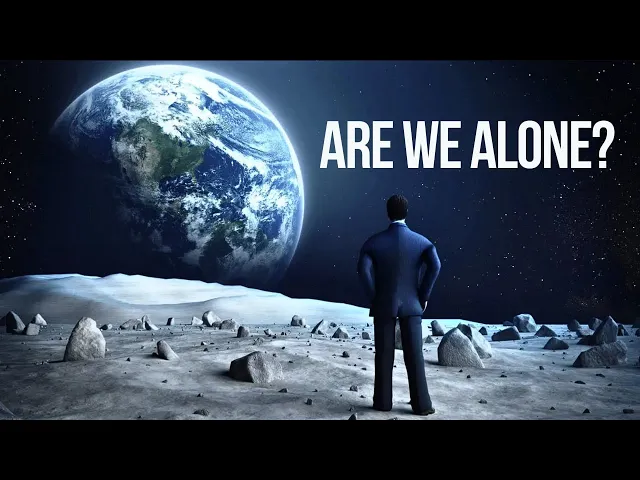
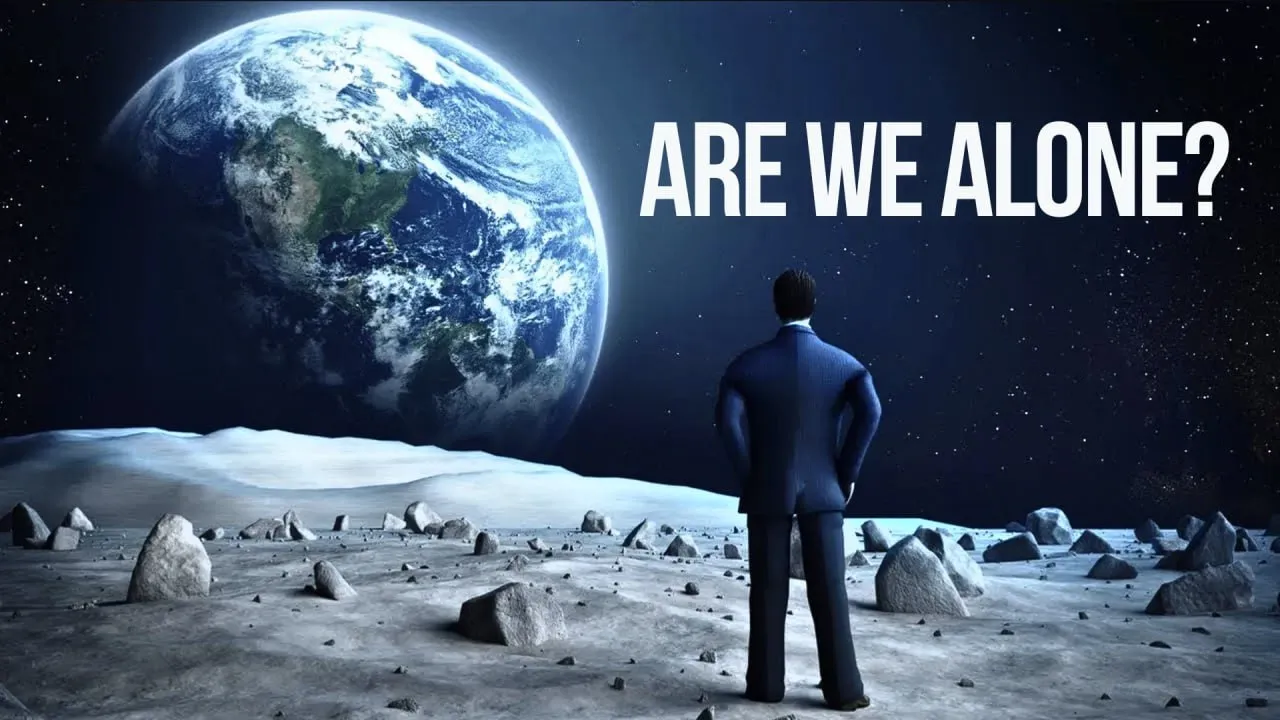
Arthur C. Clarke said, “Two possibilities exist: either we are alone in the Universe or we are not. Both are equally terrifying.
” Over the course of 50 years, we have had no luck finding extraterrestrial or Alien life. In 1950, Enrico Fermi asked a question, “Where is everybody? ” This question became one of the most famous paradoxes in science, the Fermi paradox.
Let’s understand this question and try to answer it. It’s hard not to be moved when looking at the night sky. Everyone experiences the beauty of a good, starry night in their own way.
Enrico Fermi felt something too- “Where is everybody? ” A starry night sky might seem vast, but the truth is, we are only looking at our local neighborhood. On a very fine night, with no light pollution or bad weather to block your view, you could see up to 3000 stars only and almost all of them would be less than a 1000 light years away from us.
So what we can actually see is a tiny portion of our galactic neighborhood. When we are talking about distant stars and planets, a question that almost everyone of us would have had is, Are there any other intelligent life out there? Let’s understand this from the lens of science.
Before going forward, we need to understand something called the Kardashev scale. The Kardashev scale helps us group intelligent civilisations into different groups according to their level of technology. A type one civilisation is the one that has consumed all the natural resources and energy of its planet.
Just so you know, we are 0. 75 at the scale. A type two civilisation is the one that has used all the energy of its host star, like the concept of Dyson Sphere.
A type three civilisation is the one that has colonized and used all the natural resources of its galaxy and will be God like to us. Our universe is one vast structure, so large that it’s hard for our human brains to comprehend. But we can try understanding it through numbers.
Our universe has around 2 Trillion Galaxies, each galaxy has around 200 Billion stars. These billions of stars have planets orbiting them, which are trillions and trillions in number. And if we assume that only 1% of all the planets in our universe have habitable conditions, that would mean there are 10 billion billion Earth-like planets out there.
These numbers are so hard for our brains to comprehend. It gets crazier. If we do the same math in our own galaxy, the Milky way we would find there are 1 Billion Earth-like planets in the milky way alone.
So if that’s the case, shouldn’t our universe be teeming with spaceships? Where are all the Aliens? This is the fermi paradox, and no one has an answer to this.
All we have are plausible explanations and theories. Let’s look at some of these theories in detail. Possibility number 1: There are no signs of higher (Type II and III) civilizations because there are no higher civilizations in existence.
This possibility says that there are no signs of higher civilisations because no higher civilisations exist. For this theory, we need to understand the concept of filters. Filters are a form of obstacles that are very hard for life to overcome and can be very scary.
These are walls that life has to overcome to reach a type 3 civilisation. Maybe we have already passed all the filters and we are rare. Maybe it’s more complex and hard for life to sustain than it appears.
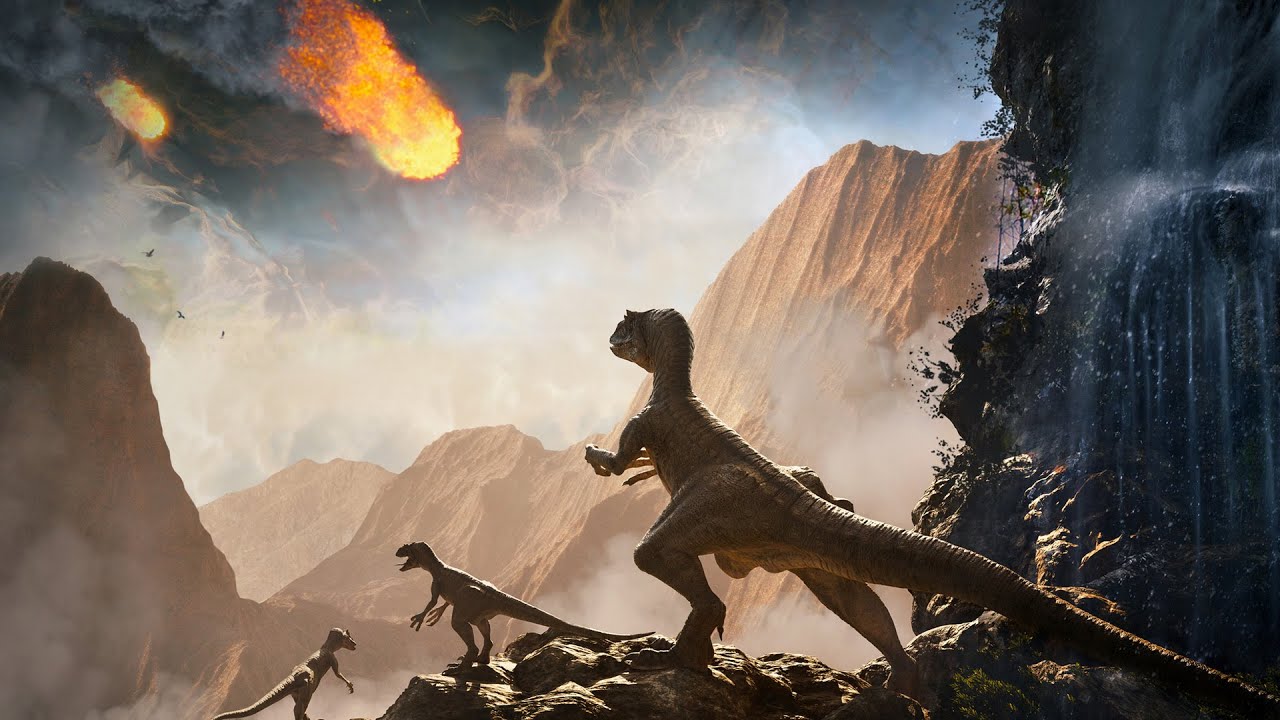
Or it can be that all the Filters are ahead of us and we would have to overcome them to prevail. Life exists at every point on our level, but it gets destroyed when it reaches a certain threshold. One potential future Great Filter is a gamma-ray burst, which has the potential to wipe out all life on Earth at once.
Another possibility is that virtually all sentient civilizations will end up killing themselves once they reach a certain degree of technology. Today, humanity has reached that level of technology, where we have weapons capable of destroying ourselves. Therefore, according to Oxford University philosopher Nick Bostrom, “no news is good news.
” The finding of even primitive life on Mars would be disastrous, as it would eliminate a lot of potential Great Filters in our wake. And if we uncover fossilized complex life on Mars, it would be “by far the worst news ever printed on a newspaper cover,” according to Bostrom, because it would suggest The Great Filter is very certainly ahead of us, finally dooming the species. For The Fermi Paradox, Bostrom argues that “the quiet of the night sky is golden.
” Also, the universe has been around for around 13. 8 billion years, whereas humanity has been around for only 250,000 years. Among these 250,000 years,we’ve had intelligent technologies for about 100 years only.
There might have been grand alien empires that existed for millions and millions of years and we might just have missed them. Considering this, it’s easy to argue that this might be our fate sooner or later. Intelligent civilisations might develop, prosper and die out.
Possibility number 2: There are scary predatory civilisations out there and are smart enough to remain discreet Another idea is that there might be scary predator civilisations out there and are smart enough to not broadcast their location and remain discreet. Well, this would mean that we are newbies and are risking our own existence. This also explains why we have found no signals at SETI.
Because as Stephen Hawking said, if they visit us, the outcome would be the same as when Columbus landed in America, which didn’t turn out well for the Native Americans. ” The scientists at SETI believe the aliens might be more advanced than us and not only technologically but altruistically, which means they will be kind and caring and have a pure selfless altruism. Is it so?
Most probably not. Because in nature there are two kinds of altruism. Let’s take an example of a squirrel that has the duty to guard its scurry.
When a predator chases them, we can hear a squirrel shout out a warning from a tree that would mean RUN FOR YOUR LIVES! In shouting the warning, it puts itself at risk and reveals its position. Why would it do that?
Well, it’s trying to prevent its offsprings and genetic information. If it doesn’t give a warning and a predator eats evryone, it’s the end of their clan. Nature has its inbuilt mechanism in which everyone protects their genetic information, just as we do for our children.
The other kind of altruism is the reciprocal altruism, in which I do something for you and you something in return and much of the world works like this. But could it work over interstellar distances? We don’t know that, but we should be a bit careful about provoking contact a bit too early.
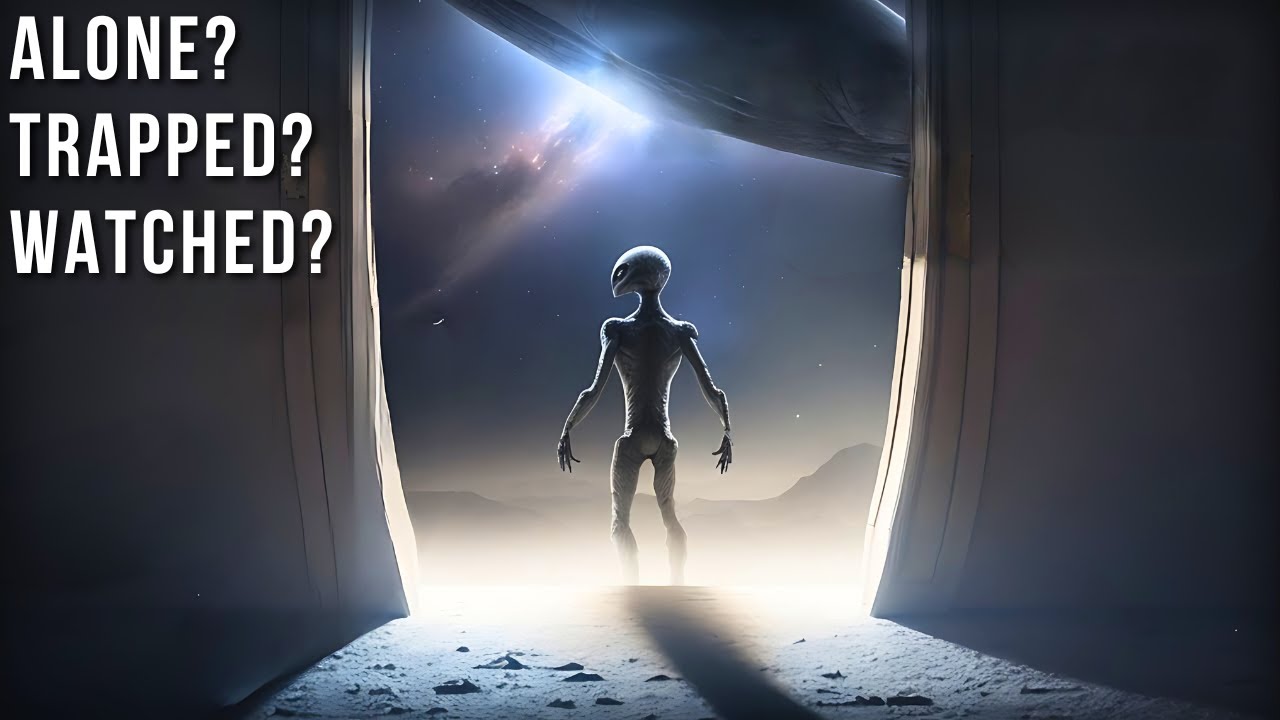
Possibility number 3: A God-like Type 3 civilisation is monitoring us Another idea is that there is a Godlike and very advanced type 3 civilisation out there that monitors the galaxy and once any civilisation reaches a certain level of intelligence, it destroys it. Maybe they passed all the filters and reached an advanced state of intelligence and prevented other civilisations from contesting them. They would think about us just like viruses that start and spread.
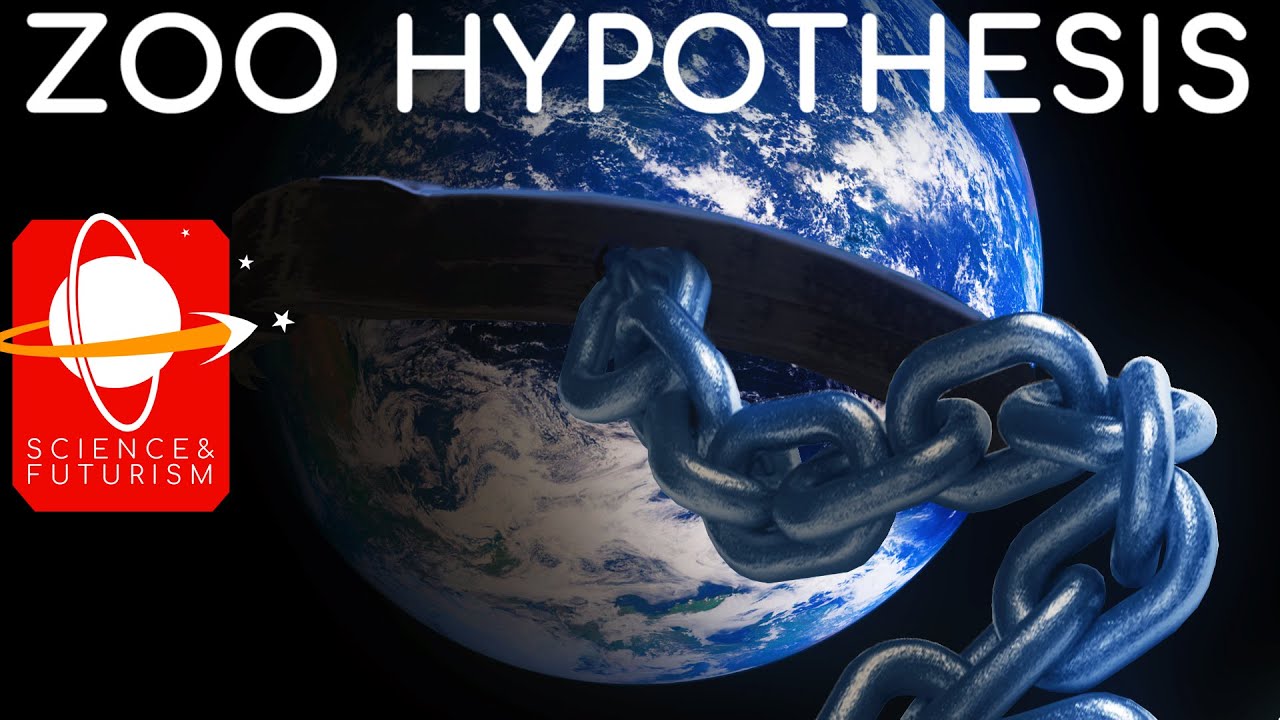
Or maybe they are observing us and once we reach a certain level of intelligence, then they contact us. We might be in a tightly regulated galaxy, and our Earth is treated like part of a vast and protected national park. This is known as the ‘Zoo Hypothesis’.
We cannot notice them as they are far smarter than us and have a rule when contacting us. Perhaps there is a law similar to Star Trek’s “Prime Directive” that forbids super-intelligent entities from initiating open contact with lesser species like ourselves or exposing themselves in any way until the lesser species reaches a particular degree of intellect. Possibility number 4: We haven’t observed enough Another idea is one of the least discussed ideas in this paradox.
There are a lot of ideas that exist in the Fermi paradox, but this idea has a certain level of optimism to it. The SETI has always been looked down upon by the world. Earlier it was established like an organization like NASA until Congress cut down its fundings and now it mainly relies on donations.
The scientists at SETI have had little resources to observe outer space, and that’s true. If we look at the milky way, we have observed only a very tiny space of our galaxy and that is represented in this picture. So we have observed little of the universe and our galaxy.
It’s just like going to a beach and taking water in your beaker and saying that there are no sharks in the ocean because there are no sharks in my beaker! We haven’t sampled much of the universe. Life can even occur in extreme environments.
We all humans are made up of stars and there are more stars in this universe than grains of sand on beaches. The universe is vast and life could easily exist. There are trillions of galaxies and an unimaginable number of planets.
Life could be forming everywhere. We know very little about life. Even scientists haven’t figured out completely how life formed on Earth.
But we have seen life form on Earth in even the craziest of places where a normal person would think, How the hell did you get there! ! Almost every end of the Earth’s surface is teeming with life.
So it’s highly probable that life might exist out there. We just don’t have enough resources. Possibility number 5: We are really Alone in the Universe!
One last convincing idea is that we might be alone in this entire universe. This thought is also scary! What if we are all that matters?
What’s so special about us that we are the only life in the universe? Are we the only ones looking out in a hope of finding life? Do we have to share this with anyone else?
And if that’s the case, we have to prevent life in this universe and it’s our responsibility to sustain and maintain life. We would have to become the first type 3 civilisation in this universe and advance ourselves. Though humans have always considered themselves as special, this idea is disturbing.
We may be completely alone in this infinite empty void of space. These were just a few plausible solutions of the Fermi Paradox. The list goes on.
If you ask 10 different scientists, they will tell you 10 different reasons of why they didnt find life out there. But one thing is sure, that we won’t stop looking anytime soon. And who knows we might get the first signals from an extraterrestrial civilisation.
To be honest, finding that we are either officially alone in the cosmos or that we are officially joined by others, would be creepy. But one thing is common for everyone, the Fermi paradox is deeply humbling for everyone. Because we know today that in this vast existence we are just a small little affair that do not matter in the large scales of the universe!