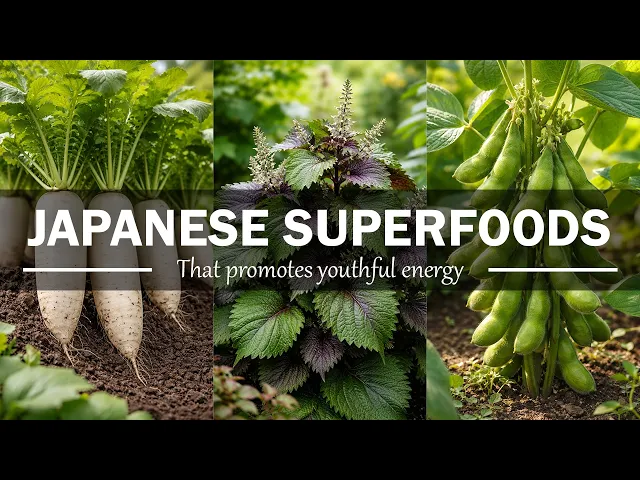
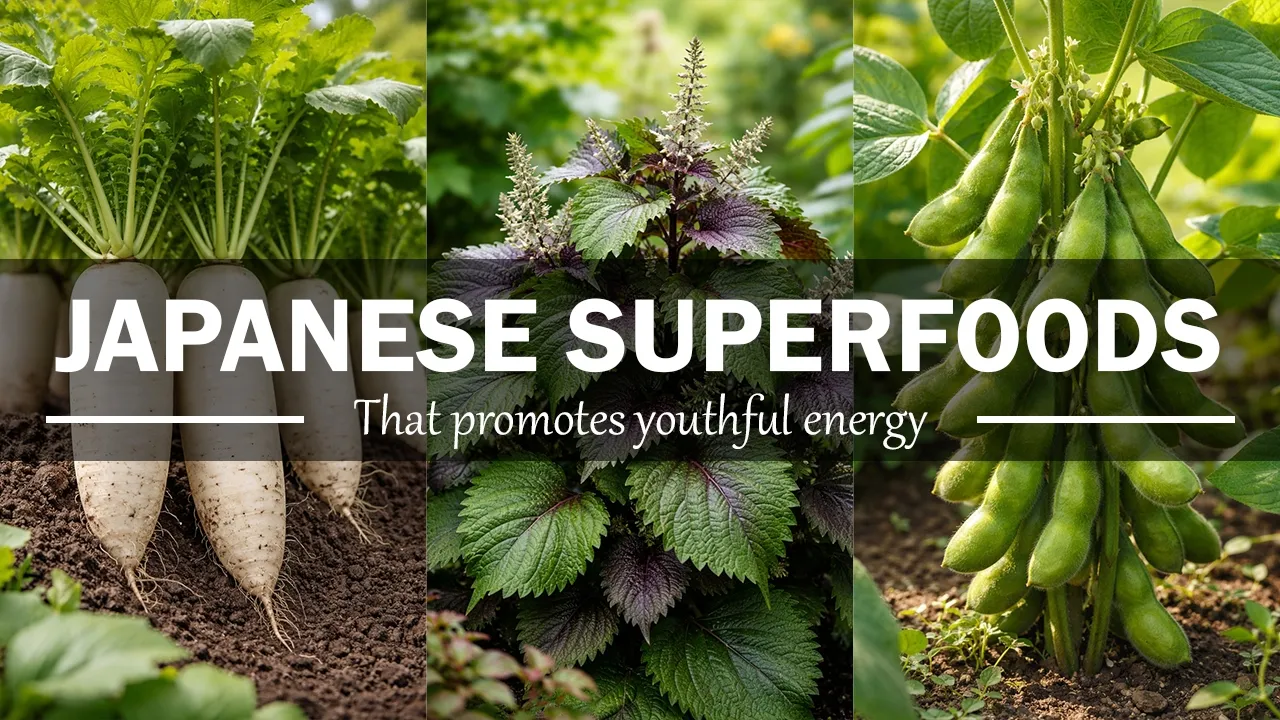
What if I told you that some of the healthiest, longest-living people on Earth aren't popping supplements or following trendy diets, but eating plants that have been part of Japanese culture for over a thousand years? Plants that scientists are now linking to slower aging, sharper minds, and dramatically lower rates of heart disease and cancer. Plants you can grow in your own garden or find at your local Asian market today.
Most people don't know this, but while we're all chasing the next miracle superfood from some far-off jungle, Japan has been quietly perfecting the art of eating for longevity for centuries. And today, I'm going to show you 20 Japanese superfoods that will change the way you think about aging forever. If you're new here, welcome to the Homestead Gardener.
We post new videos every week exploring the most powerful plants on the planet. So, hit that subscribe button and ring the notification bell so you never miss a video. Stick around because number 14 on this list is so powerful that researchers believe it's one of the key reasons Okinawans live past 100.
And number 20 might be the single most studied anti-aging compound in the world right now, and you can grow it in a pot on your patio. So, let's get into it. Here are 20 Japanese superfoods that keep you young, ranked from impressive to absolutely extraordinary.
Plant one, shiso. The ancient leaf that fights time. Let's start with a plant that most Westerners have never heard of, but that every Japanese grandmother knows by heart.
Shiso, also called perilla leaf, is one of the most beloved herbs in Japanese cuisine. You'll find it wrapped around sushi, tucked into salads, and floated in soups. But shiso isn't just a garnish.
It's a medical powerhouse hiding in plain sight. Perilla frutescens contains rosmarinic acid, one of the most potent natural anti-inflammatory compounds ever studied. Clinical research shows it suppresses allergic responses, reduces oxidative stress, and protects cells from the kind of damage that accelerates aging.
Studies published in peer-reviewed journals have demonstrated that perilla extracts have genuine antioxidant, anti-allergic, and anti-inflammatory effects. Here's what makes shiso special. It grows like a weed.
Seriously. You can plant it in your garden and it will self-seed year after year, giving you a renewable supply of one of the most anti-aging herbs on the planet. The Japanese have been eating it daily for centuries, and modern science is finally catching up to what they've always known.
Think of shiso as the herb that's been quietly keeping Japan young, one leaf at a time. And it's just waiting for you to plant it. Plant two, daikon.
The radish that cleans you from the inside out. Daikon is everywhere in Japan. Grated, pickled, simmered in soups, served raw.
This giant white radish is a staple that most Westerners walk right past in the grocery store. But here's what they're missing. Raphanus sativus var.
Longipinnatus is loaded with digestive enzymes, particularly diastase and amylase, that help your body break down food more efficiently. It's also rich in vitamin C, potassium, and compounds called isothiocyanates that research has linked to reduced inflammation and potential anti-cancer effects. In traditional Japanese medicine, daikon is considered essential for digestive health and detoxification.
Modern studies support this, showing that cruciferous vegetables like daikon support liver function and help your body eliminate toxins more effectively. It's easy to grow, stores well, and one plant can produce a root weighing several pounds. Daikon got overlooked in the West simply because it doesn't look exciting.
But the people who live the longest on Earth eat it nearly every day. That should tell you something. Plant three, edamame.
The snack that rebuilds your cells. You probably know edamame from the appetizer menu at your local sushi restaurant. But young soybeans are far more than a snack in Japan.
They're a cornerstone of a diet that produces some of the lowest rates of heart disease and age-related illness in the world. Edamame is packed with complete protein, fiber, and isoflavones, plant compounds that research has shown support bone density, cardiovascular health, and hormonal balance. Studies suggest that the regular consumption of soy isoflavones is associated with reduced risk of certain age-related conditions.
Japanese women who consume soy daily have significantly lower rates of menopausal symptoms compared to Western populations. And here's the gardening angle. Edamame is remarkably easy to grow in a home garden.
It fixes nitrogen in the soil, making it better for your other plants, too. It's a crop that feeds you and feeds your garden at the same time. Plant four, gobo.
The root they call the longevity broom. Gobo, or burdock root, is one of those foods that looks completely unappetizing, but has been used in Japanese cooking and traditional medicine for centuries. This long, dark, woody root is a fixture in dishes like kinpira gobo, and it's revered for its ability to support health from the ground up.
Arctium lappa is rich in inulin, a prebiotic fiber that feeds the beneficial bacteria in your gut. Modern research increasingly links gut health to everything from immune function to skin aging to cognitive decline. Burdock root also contains powerful antioxidants, including quercetin and luteolin, that protect cells from oxidative damage.
Traditional Japanese herbalists called gobo a blood purifier. Modern science translates that to liver support and improved detoxification pathways. It's a biennial plant that's straightforward to grow, though it does need deep, loose soil for those long roots.
Gobo is the unglamorous root vegetable that quietly keeps people healthy into their 90s, and almost nobody outside Japan is eating it. Plant five, myoga. Japan's secret ginger.
Most people know ginger, but almost nobody knows myoga, ginger's lesser-known Japanese cousin. Zingiber mioga produces fragrant flower buds that are used as a garnish and condiment throughout Japan. Prized for their crisp texture and unique, mildly spicy flavor.
Research on myoga shows it contains compounds with anti-inflammatory and antioxidant properties similar to regular ginger, but with its own unique phytochemical profile. It grows beautifully in shade, which makes it perfect for those tricky spots in your garden where nothing else thrives. It's a perennial that comes back year after year with almost no maintenance.
Myoga is the plant that proves the best superfoods aren't always the ones making headlines. Sometimes they're the quiet ones growing in the shade. Plant six, miso.
The fermented paste that protects your gut. Miso isn't a plant, exactly, but it's made from soybeans, rice, or barley through a fermentation process that transforms simple ingredients into one of the most powerful gut health foods on the planet. And in Japan, miso soup is consumed almost daily by millions of people.
The fermentation process creates a rich supply of probiotics, enzymes, and bioavailable nutrients. Research has linked regular miso consumption to improved gut microbiome diversity, better digestion, and even reduced risk of certain cancers. Studies following large Japanese populations have found associations between regular miso soup consumption and lower rates of cardiovascular issues.
Here's what's fascinating. The soybeans and grains used to make miso are all things you can grow in a home garden. Making your own miso at home is a tradition that Japanese families have kept alive for generations.
It's the ultimate homesteader food. Miso offers what it's offered for centuries in Japan, a daily dose of gut-healing, age-defying nutrition in a simple bowl of soup. Plant seven, shiitake.
The mushroom of immortality. Shiitake mushrooms have been cultivated in Japan for over a thousand years, and they weren't just food, they were medicine. Lentinula edodes contains a compound called lentinan that has been studied extensively for its immune-modulating effects.
In Japan, lentinan is actually used as an adjunct in certain medical protocols. Beyond immune support, shiitake mushrooms are rich in B vitamins, selenium, and eritadenine, a compound shown in studies to help support healthy cholesterol levels. They're also one of the few natural food sources of vitamin D when exposed to sunlight.
And here's the homesteading connection. You can grow shiitake mushrooms on hardwood logs in your own backyard. One inoculated log can produce mushrooms for 3 to 5 years.
It's low maintenance, doesn't require sunlight, and gives you a steady supply of one of the most studied anti-aging foods in the world. Shiitake is the mushroom that earned its nickname for a reason, and you can grow it yourself. Plant eight, wakame, the sea vegetable that feeds your thyroid.
Wakame is the seaweed you find in miso soup, and it's one of the most nutrient-dense foods on Earth. Undaria pinnatifida is exceptionally rich in iodine, which is critical for thyroid function, and fucoxanthin, a carotenoid pigment that researchers are studying for its potential effects on metabolism and fat storage. Studies have shown that fucoxanthin from wakame has antioxidant and anti-inflammatory properties.
Japanese coastal populations who consume seaweed regularly have notably lower rates of thyroid disorders and certain cancers compared to Western populations. Wakame also provides calcium, magnesium, and folate in highly bioavailable forms. While you probably can't grow wakame in your garden, understanding its role in the Japanese longevity diet is essential.
It represents how the Japanese approach to food covers every nutritional base. Wakame is the ocean's gift to longevity, and it's been part of the Japanese diet for over 10,000 years. Plant nine, umeboshi, the pickled plum that resets your body.
Umeboshi are pickled Japanese plums with an intensely sour and salty flavor. They've been a staple of Japanese cuisine for over a thousand years, often eaten with rice or used as a digestive aid. In traditional Japanese medicine, umeboshi were considered a cure-all.
Modern research is finding reasons to agree. Prunus mume contains citric acid that supports energy metabolism, along with polyphenols and compounds that show antibacterial properties. Studies have demonstrated that ume fruit extracts have antioxidant activity and may support liver function.
The alkalizing effect of umeboshi in the body is also valued in traditional health practices. Japanese plum trees are beautiful ornamentals that also produce the fruit for making umeboshi at home. It's a tree that decorates your yard in spring and fills your pantry in summer.
Umeboshi is the pickled plum that Japanese warriors carried into battle for energy and endurance, and it still works just as well today. Plant 10, natto, the superfood most people can't handle. Let's be honest, natto is challenging.
These fermented soybeans have a strong smell, a sticky, stringy texture, and a flavor that divides people sharply. But here's the thing, natto might be the single most powerful cardiovascular food ever discovered. Natto contains nattokinase, an enzyme that research has shown supports healthy blood circulation and cardiovascular function.
Clinical studies have investigated nattokinase for its fibrinolytic activity, meaning it may help maintain healthy blood flow. Natto is also extraordinarily rich in vitamin K2, which plays a critical role in directing calcium into bones and out of arteries. Regions of Japan where natto consumption is highest consistently show some of the lowest rates of cardiovascular issues.
The soybeans used to make natto are easy to grow, and the fermentation process can be done at home with minimal equipment. Natto is the superfood that tests your commitment. But the people who eat it regularly are the ones who keep their hearts strong and their arteries clean well into old age.
Plant 11, yuzu, the citrus that outperforms lemons. Yuzu is a Japanese citrus fruit with a fragrance so complex and intoxicating that chefs around the world consider it irreplaceable. But yuzu isn't just about flavor.
Citrus junos contains three times more vitamin C than lemons, along with unique flavonoids and limonoids that researchers are studying for their antioxidant and anti-inflammatory potential. Studies have found that yuzu extracts have mood-enhancing effects, and in Japan, taking a yuzu bath in winter is a centuries-old tradition believed to support circulation and ward off illness. The aromatic compounds in yuzu peel have been shown in studies to reduce stress markers.
Yuzu trees are surprisingly cold-hardy for a citrus and can be grown in many temperate climates. They're slow to fruit, but worth the wait. Yuzu is the citrus fruit that makes lemons look basic, and Japan has known this for a very, very long time.
Plant 12, shungiku, the edible chrysanthemum hiding in plain sight. In the West, chrysanthemums are flowers. In Japan, they're dinner.
Shungiku, or edible chrysanthemum greens, are a common vegetable used in hot pots, stir-fries, and salads, and their nutritional profile is remarkable. Glebionis coronaria is rich in beta-carotene, potassium, and a range of unique flavonoids. Research has explored chrysanthemum compounds for their antioxidant and neuroprotective properties.
These greens grow quickly, tolerate cool weather, and can be harvested multiple times from a single planting. Shungiku is the kind of superfood that slips under the radar because it's classified as a flower in most Western gardening books. But in Japan, it's a vegetable that's been nourishing people for generations.
Sometimes the most powerful plants are the ones we've been looking at wrong. Plant 13, kombu, the kelp that invented umami. Kombu, or kelp, is the foundation of dashi, the broth that underlies almost all Japanese cooking.
It's also the food that led to the discovery of umami, the fifth taste. But kombu's contributions to longevity go far beyond flavor. Saccharina japonica is extraordinarily rich in minerals, particularly iodine, iron, calcium, and magnesium.
It contains fucoidan, a sulfated polysaccharide that researchers have been investigating for its potential immune-modulating and anti-inflammatory effects. Multiple studies have explored fucoidan's biological activities, and the results are generating significant interest in the scientific community. Okinawa, the region of Japan famous for having more centenarians per capita than almost anywhere on Earth, has traditionally consumed significant amounts of kombu.
That's not a coincidence. Kombu is the ingredient that makes Japanese food taste like Japanese food, and it might also be one of the reasons Japanese people age so gracefully. Plant 14, satsuma imo, the Okinawan secret to living past 100.
Here it is, the food I teased at the beginning. Satsuma imo, the Japanese sweet potato, is believed to be one of the single most important foods behind Okinawan longevity. Traditionally, sweet potatoes made up roughly 60% of the Okinawan diet, and Okinawa has more centenarians per capita than almost any place on the planet.
The purple-fleshed varieties in particular are loaded with anthocyanins, powerful antioxidants that research has linked to reduced inflammation, improved cardiovascular health, and neuroprotective effects. Studies on Okinawan populations have found that their traditional sweet potato-heavy diet is associated with remarkable longevity outcomes. Here's what makes this relevant for you.
Sweet potatoes are one of the easiest, most productive crops you can grow in a home garden. They thrive in warm weather, store beautifully, and produce abundant harvests. Satsuma imo is the crop that may hold the single biggest dietary secret to living past 100, and you can grow it in your backyard starting this spring.
Think about that. Plant 15, adzuki, the little red bean with big anti-aging power. Adzuki beans are everywhere in Japanese cuisine, from sweet red bean paste in desserts to savory dishes and celebratory meals.
But these small red beans are far more than a culinary tradition. Vigna angularis is rich in polyphenols, particularly proanthocyanidins, that have strong antioxidant activity. Studies have shown that adzuki bean extracts have some of the highest antioxidant activity among beans.
They're also an excellent source of protein, fiber, folate, and minerals. In Japanese folk medicine, adzuki beans were used to support kidney and liver health. The beans grow well in home gardens, prefer warm weather, and are harvested and dried like any other bean.
Adzuki is the humble bean that proves you don't need exotic, expensive superfoods to age well. Sometimes, it's the simple, traditional foods that matter most. Plant 16, mitsuba, Japan's three-leaf treasure.
Mitsuba, or Japanese wild parsley, is a delicate herb used as a garnish in soups, egg dishes, and sashimi. It has a subtle, complex flavor that's unlike anything in Western herb gardens. And it's been valued in Japanese medicine for centuries.
Cryptotaenia japonica contains unique volatile compounds, vitamins, and minerals. Traditional Japanese herbalism used mitsuba to support respiratory and digestive health. The herb is shade tolerant, perennial in mild climates, and self-seeds readily.
It's the perfect herb for a woodland garden or shady border. Mitsuba is virtually unknown in Western gardening, which means almost nobody is growing it. But in Japan, it's as common as parsley is here.
Mitsuba is the herb that proves the Japanese approach to food is layers upon layers of gentle, daily nourishment from plants we haven't even discovered yet. Plant 17. Wasabi.
The real thing is nothing like what you think. Let me clear something up. That green paste you get at sushi restaurants is almost never real wasabi.
It's usually horseradish with food coloring. Real wasabi, Wasabia japonica, is one of the most difficult plants to cultivate, which is why it sells for up to $200 per pound in fresh form. And here's why that matters for aging.
Real wasabi contains isothiocyanates that research has shown have potent anti-inflammatory and antimicrobial properties. Studies have investigated wasabi compounds for their potential to support cellular health and reduce oxidative stress. Some research has even explored their effects on supporting healthy inflammatory responses.
Growing real wasabi is challenging. It needs cool, shaded, consistently moist conditions. But for dedicated gardeners, it's possible, and the reward is extraordinary.
A fresh wasabi root has a clean, complex heat, completely unlike the fake version. Wasabi is the superfood the world thinks it knows, but actually doesn't. The real thing is rare, precious, and medicinally powerful in ways the imitation can't touch.
Plant 18. Goya. The bitter melon that Okinawans swear by.
Goya, or bitter melon, is another Okinawan staple, most famously in the dish goya champuru. And yes, it's bitter, extremely bitter. But that bitterness is exactly what makes it medically remarkable.
Momordica charantia has been studied extensively for its effects on blood sugar regulation. Clinical research has demonstrated that bitter melon contains compounds that may support healthy glucose metabolism. It's also rich in vitamin C, folate, and a range of phytochemicals with antioxidant properties.
In Okinawa, goya is eaten regularly and is considered a key part of the traditional longevity diet. It grows as a vigorous vine in warm climates, producing prolifically through the summer. Many Japanese gardeners grow it as a living green curtain over windows, providing shade, food, and medicine all at once.
Goya is the vegetable that challenges your taste buds and rewards your body. The Okinawans who eat it into their hundreds are proof enough. Plant 19.
Ashitaba. The leaf of tomorrow. Ashitaba literally means tomorrow's leaf, because when you pick one, a new leaf grows back the next day.
That regenerative power isn't just poetic. It's a clue to what this plant does inside your body. Angelica keiskei contains chalcones, particularly 4-dimethoxychalcone, that researchers have been studying with real excitement.
A study published in a leading scientific journal found that this compound promotes cellular cleanup processes, the body's natural way of recycling damaged cell components. This process declines with age, and finding natural ways to support it is a major focus of anti-aging research. Ashitaba is native to the Hachijo Island of Japan, where it has been consumed for centuries.
Locals there are known for their exceptional health and longevity. The plant grows as a vigorous perennial in mild climates, with large, attractive leaves that can be harvested regularly for juice, tea, or cooking. Ashitaba is the plant that the cutting edge of longevity science is now studying, but that Japanese islanders have been eating for generations.
It's not mainstream yet, but if the research continues in this direction, it will be. And you could already have it growing in your garden by then. Plant 20.
Matcha. The green elixir of eternal youth. And here we are at number 20.
The plant I saved for last because it represents everything we've talked about in this video. Matcha, stone-ground, shade-grown green tea, might be the single most studied anti-aging compound on the planet. And you can grow the tea plant at home.
Camellia sinensis, when shade-grown and ground into matcha, produces a concentration of catechins, particularly EGCG, that dwarfs regular green tea. We're talking about one of the most researched antioxidants in nutritional science. Thousands of studies have investigated EGCG for its effects on cellular health, metabolic function, cognitive performance, and cardiovascular protection.
The research is extensive and compelling. Studies have linked regular green tea consumption to reduced risk of cardiovascular disease, improved cognitive function with aging, better metabolic health, and enhanced cellular protection against oxidative damage. Japanese populations that consume green tea daily consistently show better health outcomes in large-scale studies.
But matcha goes beyond regular green tea because you're consuming the whole leaf, not just a brew. That means you're getting the full spectrum of compounds, fiber, and chlorophyll that steeping alone leaves behind. Here's the gardening connection.
Camellia sinensis is an evergreen shrub that grows in many temperate climates. You can grow your own tea plants, shade them before harvest to boost chlorophyll and amino acid content, and process the leaves yourself. It's a long-term project, but it's one that connects you directly to the most powerful anti-aging tradition in Japanese culture.
Matcha never got forgotten. It's been at the center of Japanese tea ceremony for over 800 years, but we separated the ceremony from the science. We saw the ritual without understanding the medicine.
Matcha is the green elixir that monks drank to stay sharp during long meditations, that samurai drank before battle, and that Okinawan centenarians drink every single day. And the science says they were right all along. If you made it all the way to the end of this video, you've just learned something extraordinary.
Japan's secret to longevity isn't hidden in some expensive clinic or locked away in a research lab. It's growing in gardens, sold in markets, and simmered in kitchens across an entire nation that has figured out how to age gracefully, one plant at a time. These 20 superfoods aren't folklore or wishful thinking.
They're legitimate, science-backed foods that real people eat every day in the country with one of the highest life expectancies on Earth. So, here's what I want you to do. Smash that like button if this video changed the way you think about aging and food.
Drp a comment below and tell me which Japanese superfood surprised you the most. Are you team matcha and green tea? Team Okinawan sweet potato?
Team natto, if you're brave enough? I read every comment, and I love hearing from you. And if you haven't subscribed to the Homestead Gardener yet, what are you waiting for?
Hit that subscribe button and ring that notification bell so you never miss a video. We're exploring the most powerful plants on the planet, connecting ancient food wisdom with modern science, and helping you grow a healthier life right in your own backyard. Remember, sometimes the most powerful medicine isn't in a pharmacy.
Sometimes, it's in a bowl of miso soup, a cup of matcha, or a sweet potato fresh from your garden. The Japanese have known this for a thousand years. Now, you do, too.