Have you ever snapped and immediately thought they deserved it? Have you ever replayed an argument and realized you were not trying to understand, [music] you were trying to win? Have you ever felt so wronged that cruelty started to feel like fairness?
[music] You may not realize it, but those moments are not personality flaws. They are early levels. And good people are often the easiest to trigger because they believe their anger is righteous.
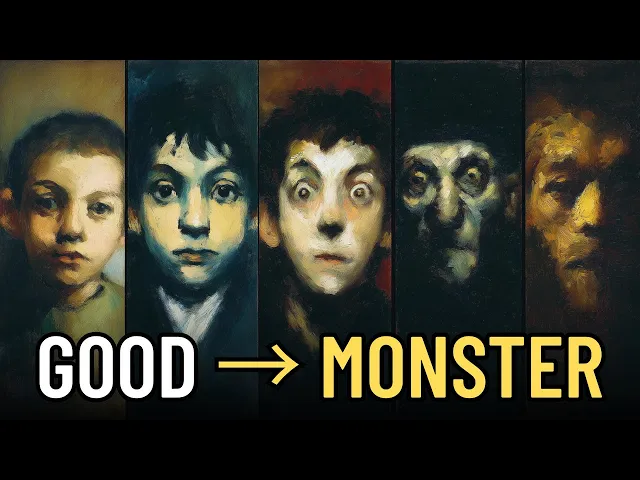
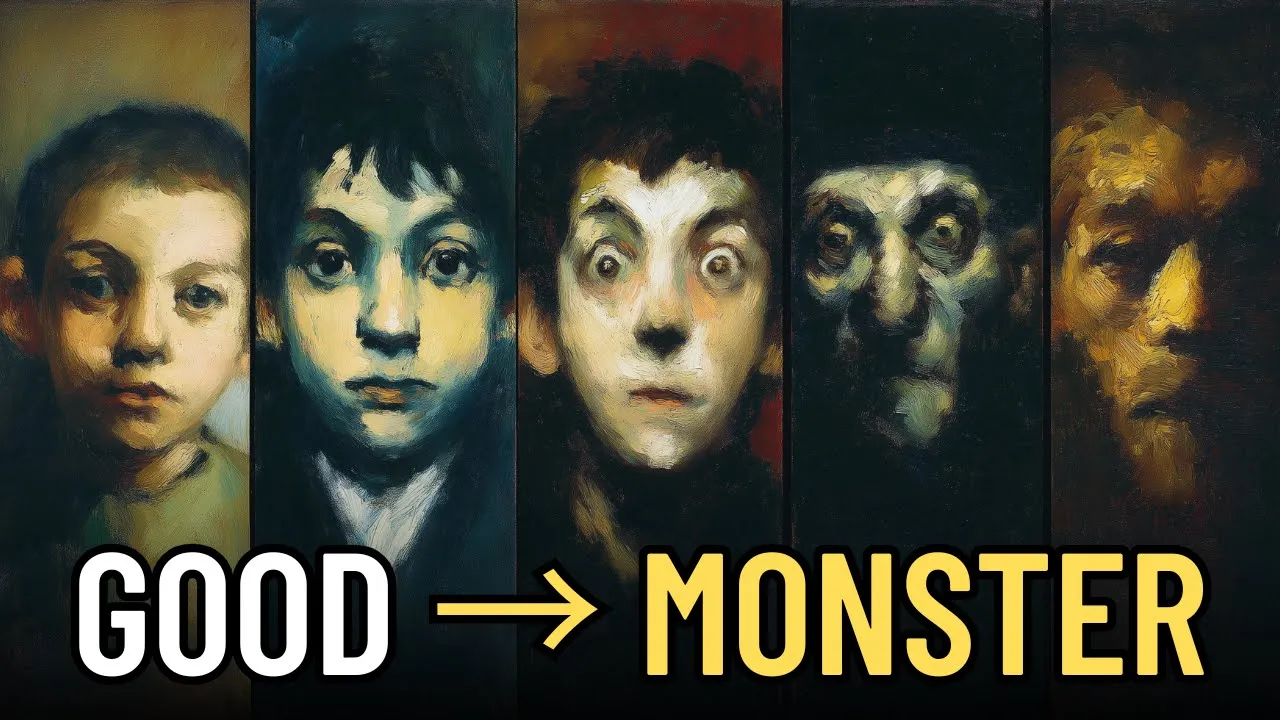
Most monsters don't begin as monsters. They begin as the good one, the reliable one, the patient one, the one who would never hurt anyone. [music] And that's the problem.
The fastest way to become dangerous is to be convinced you're incapable of it. Because the moment your identity is I'm a good person, your mind will protect that story at any cost, even if it has to destroy someone to keep it true. There's a hidden staircase inside ordinary people.
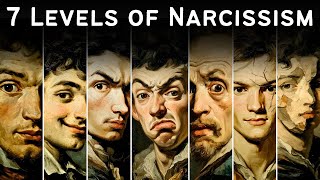
No dramatic evil, no sudden break, just seven small descents. Each one reasonable, each one defendable until one day you're doing something you used to hate and feeling strangely justified. The terrifying part isn't that you changed, it's that each step felt like the right step while it happened.
In this video, I'm going to break down the seven levels that turn good into monster. Not to shame you and not to preach, but to show you the exact psychological mechanisms that quietly rewrite your conscience. If you can recognize the level you're standing on, you can stop the disscent before your mind turns your worst actions into something you call necessary.
Level one, moral comfort. At this level, morality is not something you practice. It's something you assume.
I'm a good person becomes a settled fact, not a question. And once goodness is treated as an identity instead [music] of a responsibility, the mind relaxes. It stops watching itself.
This belief acts like a mental seditive. If you're already good, there's no urgency to examine your reactions. No reason to interrogate your motives.
No need to sit with discomfort when it arises. Any internal friction is brushed aside because friction doesn't fit the self-image. This is passive morality.
Never tested, never [music] challenged. You haven't done harm, but you also haven't been tested by power, pressure, or real loss. Your values exist in theory, not under stress.
And because they've never been strained, they feel solid, [music] even though they're fragile. The early warning signs are subtle. Discomfort is avoided instead of explored.
[music] Criticism feels irritating rather than informative. Defensiveness appears quickly because threats to behavior feel like threats to identity. [music] The mind isn't asking, "Was I right?
" It's asking, "How do I protect the idea that I'm good? " This is the danger of unexamined virtue. Not that it's evil, but that it's asleep, and a sleeping mind doesn't notice when it starts drifting.
Level two, justified self-interest. Exor. At this stage, [music] the person still believes they are good.
Nothing about their self-image has collapsed yet. What changes is the logic here, good intentions begin to bend around convenience, [music] not dramatically, quietly. The mind introduces a new phrase that sounds responsible, mature, even intelligent.
I had no choice. And once that sentence is accepted, almost anything can pass through it. [music] Small ethical compromises appear first.
Nothing extreme. A line is crossed, but only slightly. Someone is ignored.
A truth is softened into a halftruth. A decision is made that benefits the self while disadvantaging someone else just this once. The harm feels tolerable because it's framed as necessary.
This is where the language shifts. What once felt like I should becomes I must. What was optional becomes unavoidable.
And what is unavoidable stops feeling like a choice at all. Necessity is powerful because it erodess empathy without announcing itself. When survival, success, or self-p protection take center [music] stage, other people slowly fade into the background.
Their needs become obstacles. Their feelings become variables. You don't stop [music] caring.
You simply start caring less. And you tell yourself it's realistic. The danger here isn't selfishness, it's justification.
Because once a reason exists, the mind stops asking whether the action was right [music] and starts rehearsing why it was unavoidable. And when justification works once, it doesn't leave. It becomes a habit, one that quietly prepares the ground for the next descent.
Level three, emotional morality. This is the point where logic doesn't disappear. It gets overruled.
Emotion steps into the role of judge, jury, and evidence. At this level, morality is no longer decided by what is true, but by what feels true. The inner [music] rule becomes simple.
I feel it, therefore it's right. Anger feels justified, so it must be. Fear feels real, so the threat must exist.
Resentment feels earned, so punishment must be fair. This is emotional reasoning in its purest form. The mind stops asking, "What actually happened?
" and starts asking, "How did it make me feel? " And whatever answer comes back is treated as fact. Evidence that contradicts the emotion doesn't get debated.
It gets ignored. Facts feel cold compared to feelings and cold [music] things are easy to dismiss. Pain is what turns this stage dangerous.
[music] Pain doesn't just hurt. It grants permission. When someone feels wronged, the mind begins to loosen its restraints.
Cruel thoughts don't feel cruel anymore. They feel balanced. Sharp words feel deserved.
Withdrawal, sabotage, or aggression start to feel like self-respect. >> [music] >> This is where victimhood becomes moral armor. Once someone sees themselves as the injured party, almost any reaction can be reframed as defense.
I'm not attacking. I'm protecting myself. I'm not cruel.
I'm responding. [music] The identity of being hurt shields behavior from scrutiny. But emotions [music] don't want stillness.
They demand movement. Anger wants release. Fear wants control.
Resentment wants retaliation. And once emotion is crowned as truth, action feels not only allowed but required. This is the escalation.
[music] Beliefs born from feelings don't stay internal for long. They push outward. And when emotion starts driving behavior, morality stops being reflective and becomes impulsive.
[music] Level four, moral superiority. US versus them. This is where the inner shift becomes ideological.
The person no longer reacts to individuals. They react to categories. [music] At this level, the world splits cleanly in two, good people and bad people.
Complexity becomes suspicious. Nuance feels like weakness. Labels replace faces because labels are easier to judge than humans.
[music] Once someone is reduced to a category, empathy no longer applies to them in the same way. This is dehumanization without cruelty at first. Words do the work quietly.
Ignorant, toxic, dangerous, evil. Each label strips away individuality and replaces it with a simplified enemy. [music] You're no longer responding to a person with context, fear, or history.
You're responding to a symbol. [music] And symbols don't deserve patience. Moral binaries feel powerful because they simplify chaos.
Right and wrong become obvious. Allies and enemies become [music] clear. The exhausting work of understanding disappears.
And with that simplicity comes relief. There is comfort and certainty, especially when the certainty places you on the right side. [music] This is how righteousness kills nuance.
Once you believe your side represents truth or goodness, questioning your own behavior starts to feel unnecessary. Shenzhu dangerous. Doubt begins to look like betrayal.
Anyone who disagrees isn't just mistaken. [music] They're part of the problem. Having an enemy is psychologically stabilizing.
[music] It gives anger direction. It gives pain a cause. It gives frustration a target.
And most importantly, it gives meaning to hostility. [music] You're no longer lashing out. You're standing for something.
This is the turning point. Cruelty stops feeling personal and starts feeling principled. Harm is no longer a lapse in character.
It becomes a responsibility, something that must be done. Not because you want to, but because it's right. [music] From here on, the descent doesn't feel like corruption.
It feels like conviction. Level five, collective validation. At this level, the individual no longer carries their conscience alone.
It gets distributed, spread across the group until no one feels fully responsible for it. What began as a personal belief is now echoed back by others. Agreement becomes reinforcement.
Each nod, [music] each repetition, each shared phrase dulls doubt a little more. When harm is approved by many, it stops feeling like harm at all. It feels like alignment.
This is the power of the crowd. When others validate your view, your actions feel lighter. Responsibility thins out.
If everyone thinks this way, how wrong can it be? Thus, mind quietly adopts a new rule. If we agree, we must [music] be right.
Silence plays a critical role here. When people who notice something wrong say nothing, their silence is interpreted as consent. Objection fades, [music] dissent disappears, and what remains looks like unonymity, even if [music] it isn't.
The absence of resistance is mistaken for moral approval. This is where responsibility dissolves. No single person feels like the cause.
Each action is justified by the larger movement. I didn't start this. I'm just following along.
This is bigger than me. [music] Harm becomes a collective act. and collective acts feel strangely impersonal.
History is filled with moments like this. Not because people suddenly became cruel, but because systems formed that rewarded agreement and punished hesitation. Once harm is embedded in a group identity, [music] stepping away feels like betrayal.
Standing alone feels dangerous. This is the shift from personal failure to systemic danger. What one person might hesitate to do, a group will execute confidently.
And once the crowd moves, morality stops being questioned. It gets enforced. At this point, the disscent no longer belongs to an individual.
It belongs to the system they've helped create. Level six, moral immunity. This is the stage where accountability collapses.
Not because consequences disappear, but because the person believes they no longer apply. [music] At this level, the cause becomes sacred. The pain feels undeniable.
The righteousness [music] feels proven and from that certainty emerges a dangerous conclusion. Whatever I do in service of this is justified. [music] The ends begin to justify the means.
Not as a philosophical debate, but as a lived assumption. Criticism is no longer evaluated. It's dismissed.
Questions aren't answered. They are invalidated. [music] Anyone who challenges the behavior is seen as ignorant, hostile, or morally inferior.
The focus shifts from is this [music] right to who are you to question me. This is moral absolutism taking hold. The world is no longer complex.
It's settled. Right and wrong have been decided [music] and they happen to align perfectly with the person's position. There is no room for uncertainty because uncertainty would threaten the entire structure holding the identity together.
Self-doubt quietly vanishes here. Not because the person has become wiser, but because doubt feels dangerous. Doubt opens the door to guilt [music] and guilt would force accountability.
So doubt is framed as weakness. Reflection is framed as betrayal. Certainty becomes armor.
This is why this level feels cold. Empathy still exists, but it's conditional. Compassion is offered only to those deemed worthy.
Everyone else becomes collateral. Their suffering is unfortunate, but acceptable. At this point, the monster mindset is almost complete.
Harm no longer feels like a moral failure. It feels like a necessary outcome of being right. And when someone believes they are beyond consequences, there is very [music] little left to restrain them.
Level seven, the monster. Harm with a clean conscience. [music] This is the final transformation.
Not where harm begins, but where it is sanctified. At this level, harm is no longer explained away as accident, emotion, or survival. [music] It is reframed as good, necessary, even virtuous.
The person doesn't feel conflicted anymore. Their conscience is quiet, not because they've made peace, but because it has been overwritten. Cruelty becomes procedural.
Violence becomes preventative. [music] Destruction becomes cleansing. What makes this stage uniquely dangerous is not rage or chaos.
[music] It's calm. The monster here is not impulsive. They are convinced.
Every action is backed by a story that makes it feel righteous. Every consequence is dismissed as unfortunate but unavoidable. Suffering is no longer a warning [music] sign.
It's evidence that the mission matters. This is the most dangerous kind of monster. The one who believes they are doing the right thing.
[music] At this point, the individual no longer sees themselves as causing harm. They see themselves as enforcing order, protecting truth, or serving a higher good. Their identity is fused with their cause so completely that attacking the cause feels like attacking morality itself.
Anyone who resists becomes immoral by definition. And this is where the scale changes. [music] What begins in a single mind spreads outward into systems, institutions, [music] movements.
When moralized harm is rewarded, it doesn't stay personal. It becomes policy, doctrine, law. History is shaped not by villains who knew they were evil, but by ordinary people who felt justified.
This isn't an anomaly. It's a pattern. Every era produces monsters who believe they were righteous.
Every collapse is preceded by people who thought they were necessary. And once this level is reached, reversal becomes almost impossible because to stop would require admitting that the good person they thought they were no longer exists. At level seven, the transformation is complete.
[music] The monster doesn't hate what they've become. They believe they've arrived. If this descent feels unsettling, it should.
Because the most disturbing part of it isn't how extreme the final stage is. It's how reasonable every step felt along the way. [music] There is no dramatic moment where someone decides to become a monster.
No clear line where goodness suddenly ends. The change happens quietly beneath awareness, protected by stories that make each choice feel justified. And once those stories settle in, the mind stops asking dangerous questions.
The only interruption to this process is awareness, not confidence, not purity, not believing you're different. Awareness, the uncomfortable habit of turning the light inward when it would be easier to look away. This isn't about guilt.
[music] Guilt paralyzes. This is about responsibility. The willingness to pause and ask why does this feel so justified right now.
[music] To notice defensiveness before it hardens. To question certainty before it becomes identity. To recognize when pain is turning into permission.
Self-questioning is not weakness. It is the last remaining defense against becoming someone who no longer doubts themselves. Every level you've heard today thrives on sleep, on moral comfort, emotional certainty, [music] collective approval.
Awareness breaks that spell. It doesn't guarantee goodness, [music] but it keeps the descent from becoming automatic. At the beginning, we asked the dangerous question.
How do good people become monsters? [music] The honest answer is this. They stop watching themselves.
And the moment you believe you no longer need to, [music] that's when the descent quietly begins.